


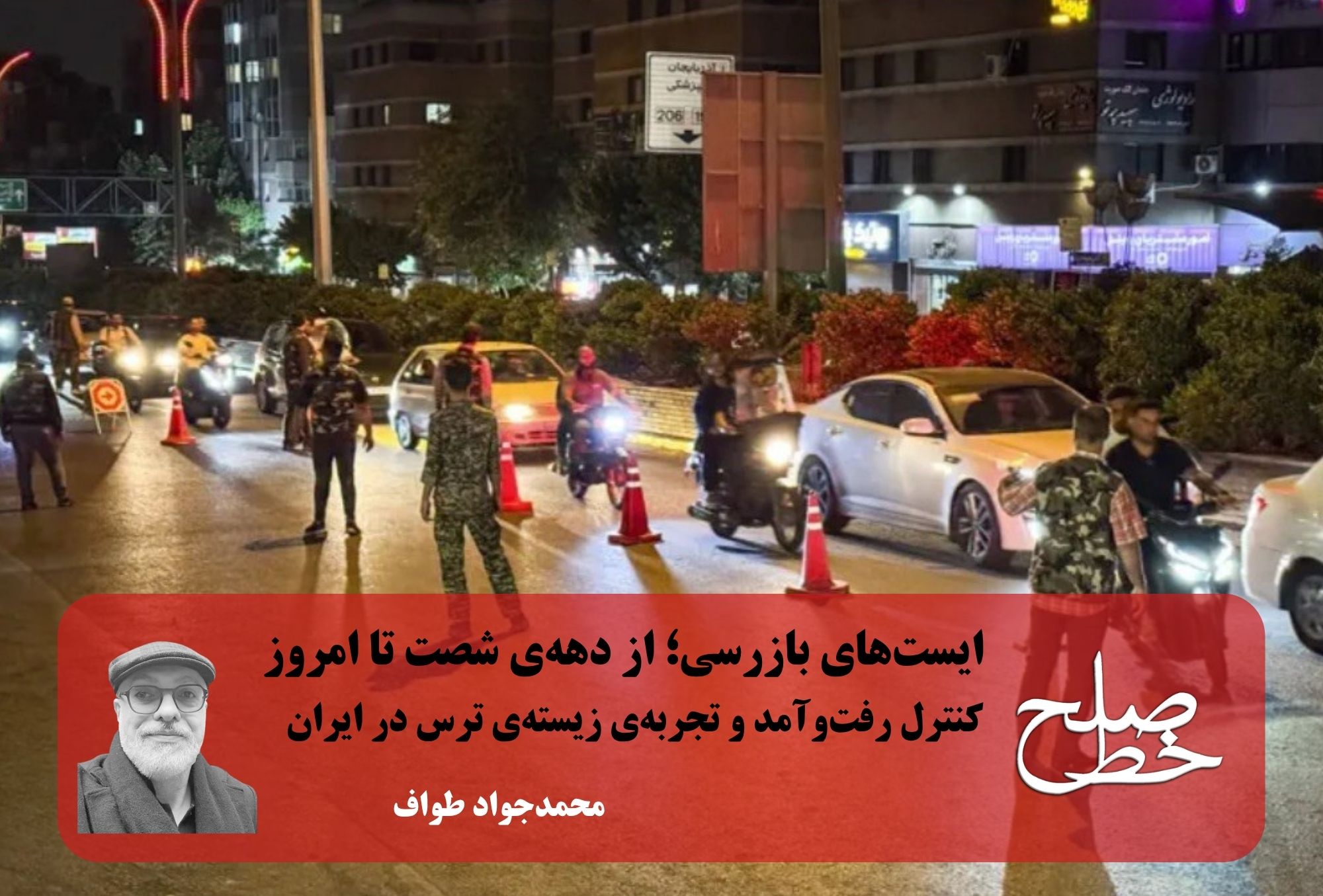
Checkpoint Stops; From the Past to Today/ Mohammad Javad Tavaf
One media activist has recounted a memory from the years of the sixties on social networks: “It was night, my cousin and I wanted to go from Khaniabad to Yousefabad, to our aunt’s house. I said: Hooshang, it’s a desert there, let’s take a little of this aragh too. He double-layered a freezer bag, poured the aragh into it and tied it. We got into the car. Just as he was about to start it, he said: wait a minute. Then he opened the hood and hid the bag of aragh under the hood. I said: why did you put it there? He said: Meydan Khaniabad has a checkpoint!
We reached the checkpoint; a bunch of thin kids in loose Basiji clothes. I was also doing my best to show that we had nothing, he shone a flashlight into the car, shouted: move along sir… move along. We passed. As soon as we passed, both of us suddenly started swearing at them, insulting their sisters and mothers. Hayedeh was singing: you, O goblet, you did not sit well with me…” (1)
This narrative is familiar to many Iranians who have experienced the sixties. Few are those who do not have a memory of checkpoints from those years. Young men with stubble, rosaries in hand, wearing American parkas and long-sleeved shirts over trousers, and of course armed, would stop vehicles, ask about the relationship of the passengers, and rummage through cassette tapes to ensure that the voices of “Los Angeles” singers were not being played from the car. Alongside this, the search for alcoholic beverages, which had been banned after the 1979 revolution, was a fixed part of these inspections.
Checkpoint stops in those years were not only a security tool; they had become part of everyday life. A tool for spreading fear and suppressing lifestyles other than the lifestyle desired by the ideological system.
Encountering patrols known as “Sarallah” or checkpoints inside cities and on roads was accompanied by stress for many people. The sudden silence in the car, pulling oneself together and trying to appear “normal,” was part of this collective experience.
In some cases, these interventions went beyond inspection. There are narratives from that period that tell of forced marriages between a girl and a boy who had been detained on the street or inside a car; decisions that sometimes had irreparable consequences for individuals’ lives.
The government in the early years of its establishment, simultaneously with the eight-year war, justified this atmosphere of control by citing security conditions: suppression of armed opposition groups, wartime conditions, and the necessity of maintaining security. But in practice, this situation led to the expansion of surveillance over the individual and social lives of citizens. As some leaders of the Islamic Republic have also repeatedly said, the war was a “blessing”; an opportunity to consolidate control at various levels of society and eliminate opponents.
However, a significant part of the reality of those years has still not been represented. The atmosphere of censorship and structural restrictions has caused filmmakers and writers to be unable to narrate the real and complete experience of that period as it was. What remains is mostly in the form of scattered memories and personal narratives; not a comprehensive and official account.
In recent years, especially alongside the rise of popular protests and particularly the government’s military confrontation with the United States and Israel, signs of the return of those same patterns have been seen. At the same time as the intensification of the security atmosphere, checkpoints have once again become active in cities; this time with the presence of Basij forces, plainclothes agents, and even underage teenagers. Reports published of shootings at citizens at these checkpoints, the killing and wounding of individuals, and violent confrontations have increased concerns about the repetition of past experiences.
In one of these cases, it has been reported that a 23-year-old citizen in Ahvaz was killed as a result of direct gunfire by forces stationed at a checkpoint, and another person was also injured. Similar cases had previously been reported; cases which, according to human rights sources, are only part of the reality and many of them are never recorded and published.
Alongside these, everyday narratives of encounters with checkpoints also continue: vehicle inspections, requests to hand over mobile phones, and confronting officers who themselves are sometimes inexperienced and in an ambiguous position. This situation not only does not create a sense of security, but also fuels increased anxiety and distrust.
From a legal perspective, these actions are also debatable. According to existing laws, including the Criminal Procedure Code and the Judicial Protection Law for the Basij, these forces are only permitted to intervene under specific conditions, such as the occurrence of an observable crime and in the absence of the police. Even the police, without a specific legal reason, are not authorized to stop and search citizens. However, what is seen in practice often goes beyond these limits.
The experience of the sixties showed that delegating power without oversight and accountability can lead to abuse and violations. There are reports from that period about extortion, unregulated shootings, and even abuse of the position of checkpoints. In some cases, individuals with problematic backgrounds entered these structures and used their power for illegal behavior.
Ultimately, checkpoints in Iran cannot be considered merely a security tool. This phenomenon, over decades, has become a symbol of control over movement, interference in privacy, and the formation of a kind of shared experience of fear and caution among citizens; an experience that began in the sixties and still continues, in various forms.
Footnote:
1- This memory belongs to Kambiz Hosseini, a media activist.
 Created By: Mohammad Javad Tavaf
 April 21, 2026
Tags
Freedom of speech Inspection Inspection station Iran-US war Justice in humanity Mohammad Javad Tawaf peace line Peace Line 180 Sixties Suppression The war between Iran and Israel. Violence War ماهنامه خط صلح