


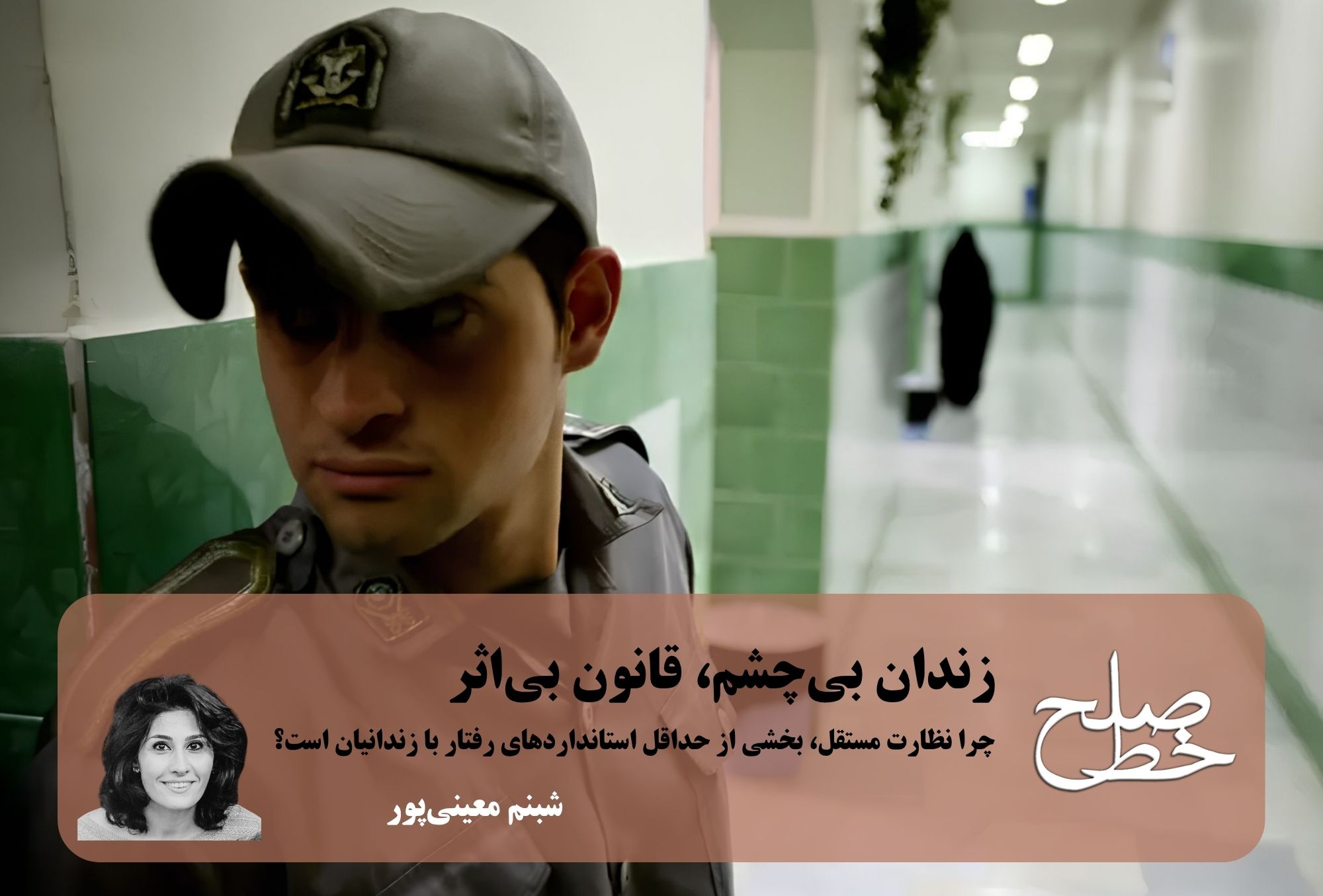
Why Independent Monitoring Is Part of the Minimum Standards for the Treatment of Prisoners/ Shabnam Moinipour
When prison doors close, the state does more than deprive a person of liberty. Water, food, medication, sleep, light, contact with family, access to a lawyer, the ability to lodge a complaint, and even the recording of what has happened to the prisoner all come under the control of the institution responsible for the detention.
This concentration of power makes prisons one of the most demanding tests of the rule of law. In a closed environment, the victim, the witness, the medical record, the surveillance footage, and the authority responsible for examining a complaint may all fall under the influence of the very structure accused of ill-treatment. The prohibition of torture and the right to medical care cannot be secured merely by enacting laws and regulations. A body outside the institutional chain of the prison administration, police, prosecution service, and security apparatus must be able to determine what is actually happening inside cells, prison clinics, and interrogation rooms. Prisoners’ rights become meaningful only when someone other than the prison authorities can see whether those rights are being respected.
When the Prison Inspects Itself
Independent monitoring is not the same as an administrative inspection. A visit by a judge, prosecutor, or government delegation to a prison administered by the same judicial system may generate information, but it does not in itself establish independence. A visit announced in advance, whose route is determined by prison management and whose interviews take place in the presence of officials, is more likely to present a prepared image of the prison than to reveal its actual conditions.
A genuine monitoring system must be independent of the institutions responsible for detention in its structure, funding, appointment of members, and decision-making. Monitors must be able to enter, without prior notice, every place where people are deprived of their liberty, including ordinary prisons, police detention facilities, intelligence detention centres, closed psychiatric institutions, and any other official or unofficial location that a person is not free to leave.
The monitors themselves must decide which facilities to visit, which records to examine, and which prisoners to interview. Interviews must be conducted privately and confidentially. Monitors must also have access to admission and release registers, medical records, solitary-confinement records, reports on the use of force, surveillance footage, complaints, and statistics on deaths and injuries. Prisoners, doctors, lawyers, family members, and staff who cooperate with the monitoring body must be protected against threats and reprisals.
The Nelson Mandela Rules provide precisely this model. Rules 83 to 85 distinguish between internal inspections and external monitoring and require external inspections to be conducted by a body independent of the prison administration. That body must have access to information and records, be free to select the prisons and prisoners it wishes to examine or interview, undertake unannounced visits, and speak privately with prisoners and staff. Each visit must result in a written report, and the competent authorities must respond concerning the implementation of its recommendations.
The Mandela Rules are not a treaty, and the United Nations General Assembly has expressly recognised their non-binding character. They nevertheless constitute the leading global benchmark for assessing prison administration and the treatment of prisoners. Their value lies in translating broad concepts such as “humane treatment” into observable standards. Does a prisoner have access to a doctor? Is prolonged solitary confinement being imposed? Are deaths in custody independently investigated? Can complaints be made confidentially? Can an external body enter a prison without prior authorisation?
Independent monitoring is not concerned only with uncovering violations after they have occurred. Its primary function is preventive. Regular and unannounced visits reduce the likelihood that prisoners will be concealed, medical records altered, evidence of injury removed, or prison wings staged for inspection. Confidential interviews allow prisoners to speak without fear of officials listening. Publication of reports also prevents monitors’ findings from being reduced to confidential and ineffective correspondence.
Such monitoring also protects prison staff. Many violations do not result solely from the conduct of individual officials. Overcrowding, shortages of medication, security directives, insufficient specialist personnel, pressure to obtain confessions, and weak record-keeping systems can combine to create a dysfunctional institution. An independent body can identify whether particular problems arise from management decisions, budgetary constraints, legislation, security orders, or individual misconduct. Without such a body, responsibility remains obscured and violations are often attributed only to a small number of junior officials.
What Does International Law Require, and What Has Iran Accepted?
International instruments relating to prison monitoring do not all have the same legal status. Some are treaties and are binding on states parties. Others are standards adopted by the United Nations which are not themselves treaties but are used to interpret states’ obligations and assess prison conditions.
The International Covenant on Civil and Political Rights is one of the most important binding treaties in this field. Article 7 prohibits torture and cruel, inhuman, or degrading treatment or punishment. Article 10 requires all persons deprived of their liberty to be treated with humanity and with respect for their inherent dignity. Article 2 requires states to ensure these rights effectively and to provide remedies when they are violated. The Covenant does not prescribe a particular model of monitoring, but the effective implementation of Articles 7 and 10 is difficult without an independent means of uncovering torture, denial of medical care, and inhuman conditions.
The Convention against Torture and Other Cruel, Inhuman or Degrading Treatment or Punishment contains more specific obligations. Article 11 requires states parties to keep under systematic review interrogation rules, detention arrangements, and the treatment of persons subjected to arrest, detention, or imprisonment. Articles 12 and 13 require prompt and impartial investigations into allegations of torture, recognition of the right to complain, and protection of complainants and witnesses against intimidation.
The most explicit treaty on preventive monitoring is the Optional Protocol to the Convention against Torture, known as OPCAT. It establishes a system of regular visits by independent national and international bodies. Each state party must establish one or more “national preventive mechanisms” with access to places of deprivation of liberty, authority to interview detainees, and the ability to make recommendations aimed at preventing torture. The principle underlying the Protocol is clear: the prevention of torture must not depend on a victim lodging a complaint or on the commencement of judicial proceedings.
Article 37 of the Convention on the Rights of the Child requires the detention of children to be used only as a measure of last resort and for the shortest appropriate period. It also requires humane treatment, separation from adults, and access to legal assistance. The Convention on the Rights of Persons with Disabilities is even more explicit. Article 16 requires states to ensure that facilities and programmes serving persons with disabilities are effectively monitored by independent authorities. This obligation may extend to prisons and detention facilities in which persons with disabilities are held.
Alongside these treaties, the Body of Principles for the Protection of All Persons under Any Form of Detention or Imprisonment, the Bangkok Rules on women prisoners, and the United Nations Rules for the Protection of Juveniles Deprived of their Liberty all emphasise inspection, access to complaints procedures, specialised care, and protection of vulnerable groups. Taken together, these standards demonstrate that independent monitoring is not a peripheral concern. It forms part of the architecture of minimum prison standards.
The Islamic Republic of Iran has joined some of these treaties but not others. Its obligations and reservations under each instrument are not identical.
Iran ratified both the International Covenant on Civil and Political Rights and the International Covenant on Economic, Social and Cultural Rights on 24 June 1975, before the establishment of the Islamic Republic, and entered no reservations. The change of government in 1979 did not extinguish these international obligations. The Islamic Republic therefore cannot rely on a reservation to limit the prohibition of torture under Article 7, the requirement of humane treatment for persons deprived of liberty under Article 10 of the International Covenant on Civil and Political Rights, or the right to health under Article 12 of the International Covenant on Economic, Social and Cultural Rights.
The position under the Convention on the Rights of the Child is different. Iran ratified the Convention on 13 July 1994 subject to an exceptionally broad reservation, declaring that it would not apply provisions incompatible with “Islamic laws and the internal legislation in effect.” The reservation is not confined to any particular article and does not identify which domestic rules might be treated as prevailing over which rights in the Convention. In effect, the government has sought to determine the scope of its obligations after ratification through a general reference to domestic law.
The Committee on the Rights of the Child has characterised this reservation as broad and imprecise and has stated that such a sweeping reference may obstruct the implementation of many provisions of the Convention. Article 51 of the Convention also prohibits reservations incompatible with the object and purpose of the treaty. The Committee has called on Iran to withdraw the reservation and bring its domestic legislation into conformity with the Convention.
Iran acceded to the Convention on the Rights of Persons with Disabilities on 23 October 2009 but declared that it did not consider itself bound by provisions that might be incompatible with the “applicable rules” in Iran. Although the United Nations Secretariat registered this wording as a “declaration,” its intended effect is to exclude compliance with an unspecified range of obligations under the Convention. The Committee on the Rights of Persons with Disabilities has treated it as a general reservation and has called on Iran to withdraw it. Article 46 of the Convention prohibits reservations incompatible with the treaty’s object and purpose.
Iran is not a party to the Convention against Torture or to its Optional Protocol, known as OPCAT. Nor is it a party to the First Optional Protocol to the International Covenant on Civil and Political Rights. Individuals subject to Iran’s jurisdiction therefore cannot use that Protocol to submit individual complaints against Iran to the Human Rights Committee.
These legal distinctions matter. Because Iran has not joined OPCAT, it cannot be accused of breaching an obligation arising specifically under that Protocol. The Nelson Mandela Rules are likewise not a treaty to which Iran can either be a party or a non-party. Nevertheless, Iran’s non-ratification of OPCAT and the broad reservations it has entered to two other conventions do not release it from its unreserved obligations under the International Covenant on Civil and Political Rights. The Islamic Republic remains required to prevent torture and ill-treatment, treat all prisoners humanely, provide safe and effective complaints mechanisms, and investigate deaths, serious injuries, and allegations of torture independently and impartially.
Iran’s reservations to the Convention on the Rights of the Child and the Convention on the Rights of Persons with Disabilities do not nullify its membership in those treaties, nor can they be treated as unlimited permission to disregard the rights of detained children or prisoners with disabilities. The validity and scope of these general reservations remain seriously contested as a matter of law, particularly because, under the law of treaties, a state may not generally invoke its domestic law as justification for failing to perform its international obligations.
The United Nations Human Rights Committee is not a court, but it is the expert body responsible for supervising implementation of the International Covenant on Civil and Political Rights. In its examination of Iran, the Committee has directly linked the Covenant’s obligations to the need for independent monitoring of detention facilities. It has called for regular, unhindered, and unannounced access to all places of deprivation of liberty, with interviews conducted outside the presence of officials.
The Gap Between Obligation and Practice
The problem in Iran is not the complete absence of inspections. Officials of the Islamic Republic have themselves referred to visits by judges and prosecutors, supervisory delegations, surveillance cameras, and complaints systems. In its 2023 assessment, the Human Rights Committee also acknowledged that the Iranian authorities conduct numerous inspections of prisons and detention facilities.
In the same report, however, the Committee described worsening conditions for persons deprived of liberty in both official and unofficial facilities. It referred to insanitary conditions, overcrowding, poor-quality water and food, denial of medical care, torture and ill-treatment, prolonged solitary confinement, and corporal punishment.
The coexistence of numerous inspections and continuing abuse reveals the central problem. Inspections do not become independent monitoring merely because they occur frequently. Where the inspector belongs to the same structure responsible for prison administration or prosecution, entry requires prior coordination, officials remain present during interviews, and reports are not published, the process remains an internal inspection rather than independent oversight.
The Human Rights Committee has called on the Islamic Republic to ensure that independent monitoring mechanisms have regular, unhindered, and unannounced access to all places of deprivation of liberty and can conduct interviews without officials being present. It specifically identified facilities controlled by the Islamic Revolutionary Guard Corps and the Ministry of Intelligence. This recommendation indicates that the existing system does not guarantee independent and comprehensive access to all security detention facilities.
A further gap concerns torture and the investigation of allegations of torture. In 2023, the Committee expressed concern about credible reports of the widespread and systematic use of torture and ill-treatment in official and unofficial facilities, particularly by law-enforcement officials and members of the Islamic Revolutionary Guard Corps. It referred to the use of torture to obtain confessions, the admission of those confessions in court, the denial of medical treatment to some victims, and the lack of sufficient information about independent forensic investigations into deaths resulting from torture or ill-treatment.
Iran’s obligation is not discharged merely by prohibiting torture in legislation. Every credible allegation of torture and every suspicious death in custody must immediately be removed from the control of any institution that may have been involved. The investigation must be independent, impartial, and effective. Medical evidence must be preserved, witnesses and family members must be protected, and the process must lead to accountability for those responsible.
The Human Rights Committee has called on Iran to conduct such investigations in accordance with the Istanbul Protocol on the investigation and documentation of torture and the Minnesota Protocol on the investigation of potentially unlawful deaths. Prisoners must also have access to an independent and effective complaints mechanism.
In practice, a prisoner’s right to complain is meaningful only where the complaint remains confidential and does not expose the prisoner to punishment. A prisoner who fears being placed in solitary confinement, deprived of family visits, denied or delayed medical treatment, or subjected to new charges after making a complaint does not have access to an effective remedy. A complaints box or online system cannot resolve the problem without guarantees of confidentiality, independent investigation, and protection against reprisals.
The Islamic Republic’s obligations begin at the moment of arrest. The Human Rights Committee has stated that an arrested person must be able to contact family members, have access to a lawyer of their choosing, be examined by an independent doctor, and be brought before an independent and impartial judicial authority within a maximum of 48 hours. Detention must take place only in officially recognised facilities, while pretrial detention must remain exceptional, limited in duration, and subject to judicial review.
The Committee has, by contrast, expressed concern about prolonged detention, incommunicado detention in undisclosed locations, and denial of access to lawyers and family contact. These safeguards are not procedural formalities. The risk of torture, enforced disappearance, and coerced confession is generally greatest during the first days of detention, before the detainee’s whereabouts have been formally recorded and before contact with the outside world has been secured. Accurate recording of the time and place of arrest, immediate access to legal counsel, and examination by an independent doctor form the first lines of defence against these risks.
Medical treatment is also a state obligation, not a privilege dependent on a prisoner’s conduct. Where a prisoner is entirely dependent on the authorities, deliberately delaying transfer to hospital, withholding medication, or disregarding medical advice may amount to inhuman treatment and may even violate the right to life. The Human Rights Committee has called on Iran to provide necessary medical care and bring prison conditions into conformity with the Covenant, the Mandela Rules, and the Bangkok Rules.
Overcrowding is not merely a question of comfort. It affects water, food, hygiene, sleep, ventilation, the spread of disease, violence, and access to doctors. The Committee has called on Iran to reduce its prison population through wider use of non-custodial sentences and measures.
All these problems share a common source: institutional self-monitoring.
Where prison management, prosecuting authorities, inspectors, institutionally dependent doctors, complaints bodies, and investigative authorities all belong to the same administrative chain, the ability to establish the truth is diminished. Even well-intentioned inspectors may lack authority to enter security detention facilities, obtain records, or publish their findings.
Meaningful reform requires the establishment of a body with independent members and funding, including doctors and forensic specialists, and with unannounced access to every place of detention, including facilities controlled by the Islamic Revolutionary Guard Corps, the Ministry of Intelligence, and the police. It must be able to interview prisoners in private, publish its reports, and require the authorities to respond within a specified period concerning implementation of its recommendations.
Iran’s accession to the Convention against Torture and OPCAT would be an important step, but ratification alone would not be sufficient. A mechanism described as “independent” on paper, but whose members, budget, programme of visits, or reports remain under the control of the judiciary or security agencies, would merely reproduce the existing system of self-monitoring under a different name.
The decisive question is this: can a body outside the prison and security apparatus enter any detention facility without prior authorisation, examine records, meet prisoners beyond the hearing of officials, publish its findings, and protect complainants from reprisals?
Until the answer is yes, the minimum standards for the treatment of prisoners cannot be regarded as guaranteed. A prisoner whose condition can be attested to only by the prison authorities is not under genuine oversight. That prisoner remains hidden behind prison walls.
 Created By: Shabnam Moinipour
 July 23, 2026
Tags
Individuals with disabilities Mandela's Rules peace line Peace Line 183 Prisoners Prisoners' harassment Prisoners' rights Rights of the accused Shabnam Moeinipour