


Execution
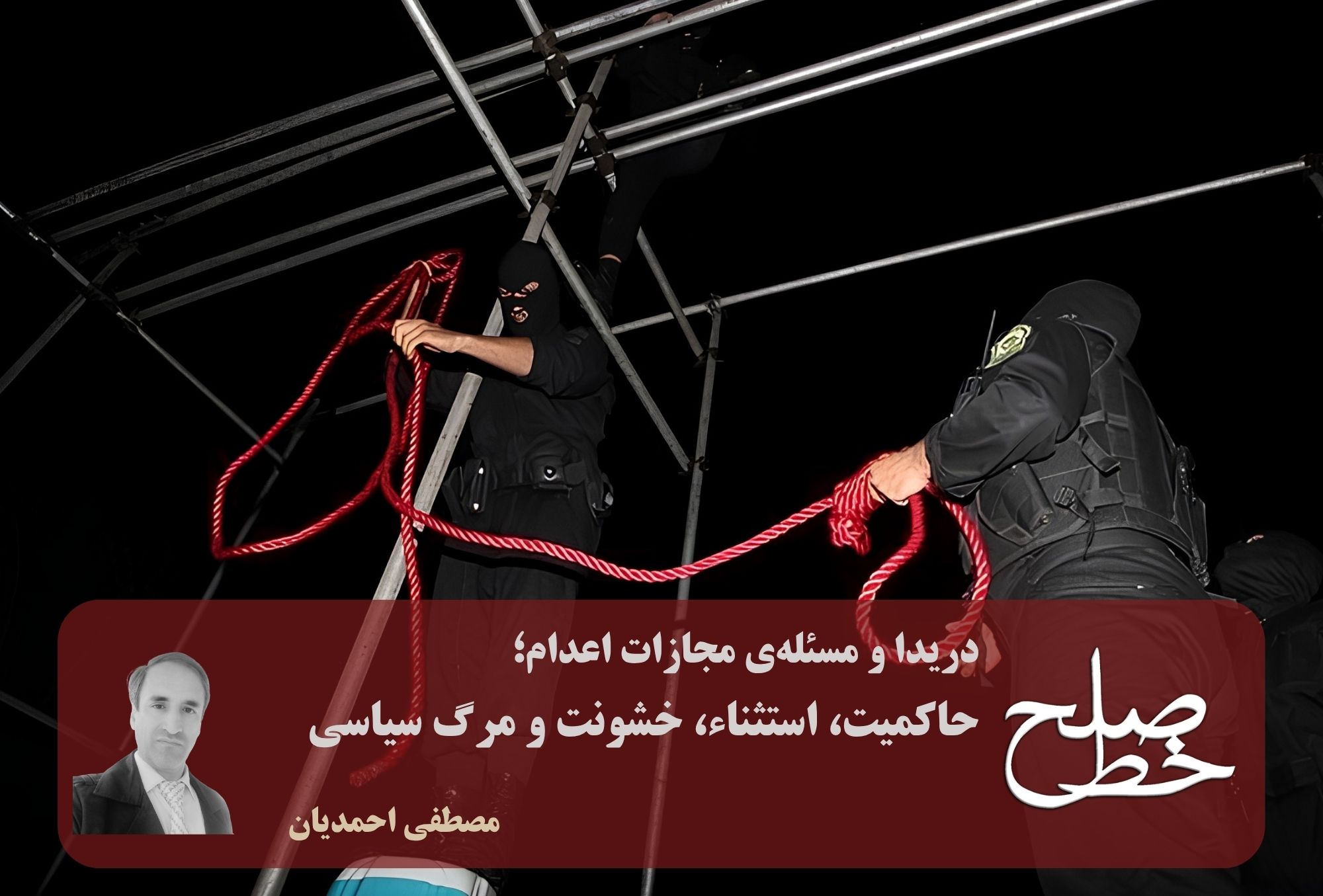
Derrida and the Question of the Death Penalty: Sovereignty, Exception, Violence, and Political Death/ Mustafa Ahmadian
Introduction: When the Law Arrives at Death Discussions of the death penalty usually begin from a point that the law has already determined: what constitutes a crime, what constitutes punishment, and in which cases the most severe punishment—the deprivation of life—may be applied. For this reason, a large part of the legal literature on the […]...
Read more By:
Mustafa Ahmadian
By:
Mustafa Ahmadian September 23, 2026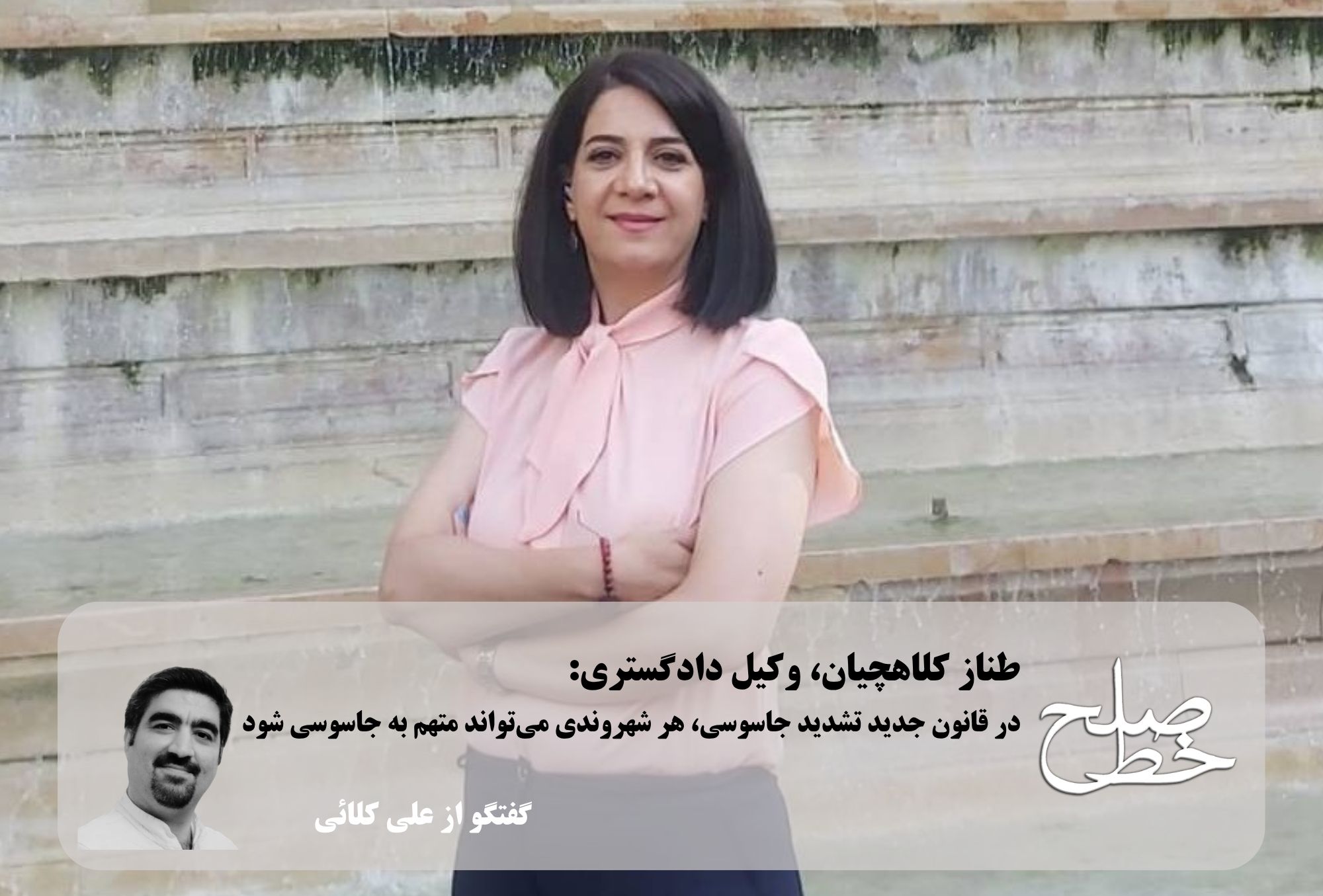
Tannaz Kolahchian: Under the New Law on Intensifying Espionage, Any Citizen Can Be Accused of Espionage/ Ali Kalaei
After the adoption and communication of the “Law on Intensifying Punishment for Espionage and Cooperation with the Zionist Regime and Hostile States Against National Security and Interests” in October 2025 (Mehr 1404), concerns have intensified in Iran over the expansion of the security atmosphere, the broadening of criminalization, and the escalation of severe punishments, including […]...
Read more
By:
Ali Kalaei May 22, 2026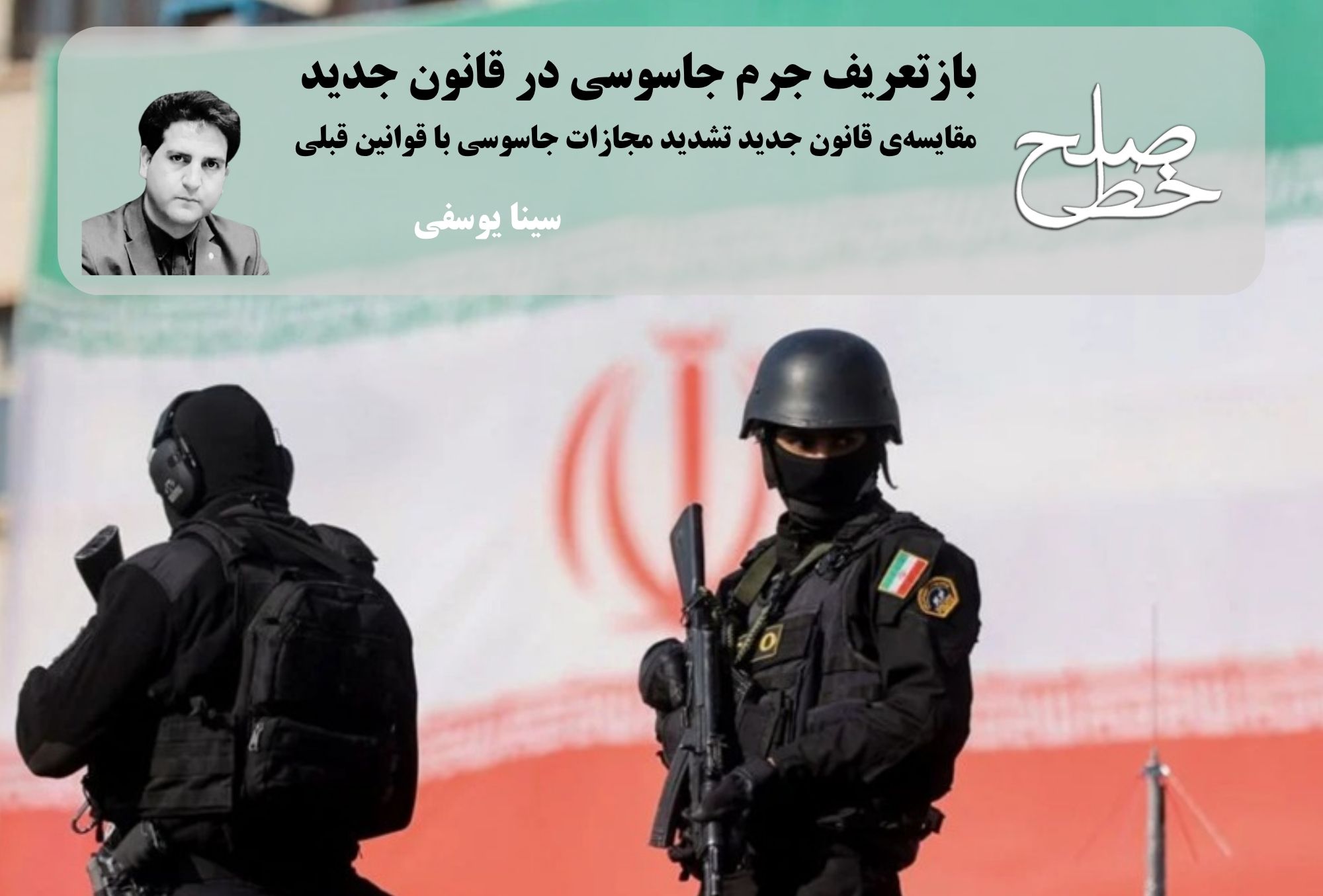
Comparing the New Law on Intensifying Punishment for Espionage with Previous Laws/ Sina Yousefi
In contemporary criminal law systems, the crime of espionage has always been classified among the most serious offenses against national security, because it concerns attacks on the fundamental interests of the state and the disclosure of information that may endanger the country’s political, military, or diplomatic security. However, the gravity of this crime has never […]...
Read more
By:
Sina Yousefi May 22, 2026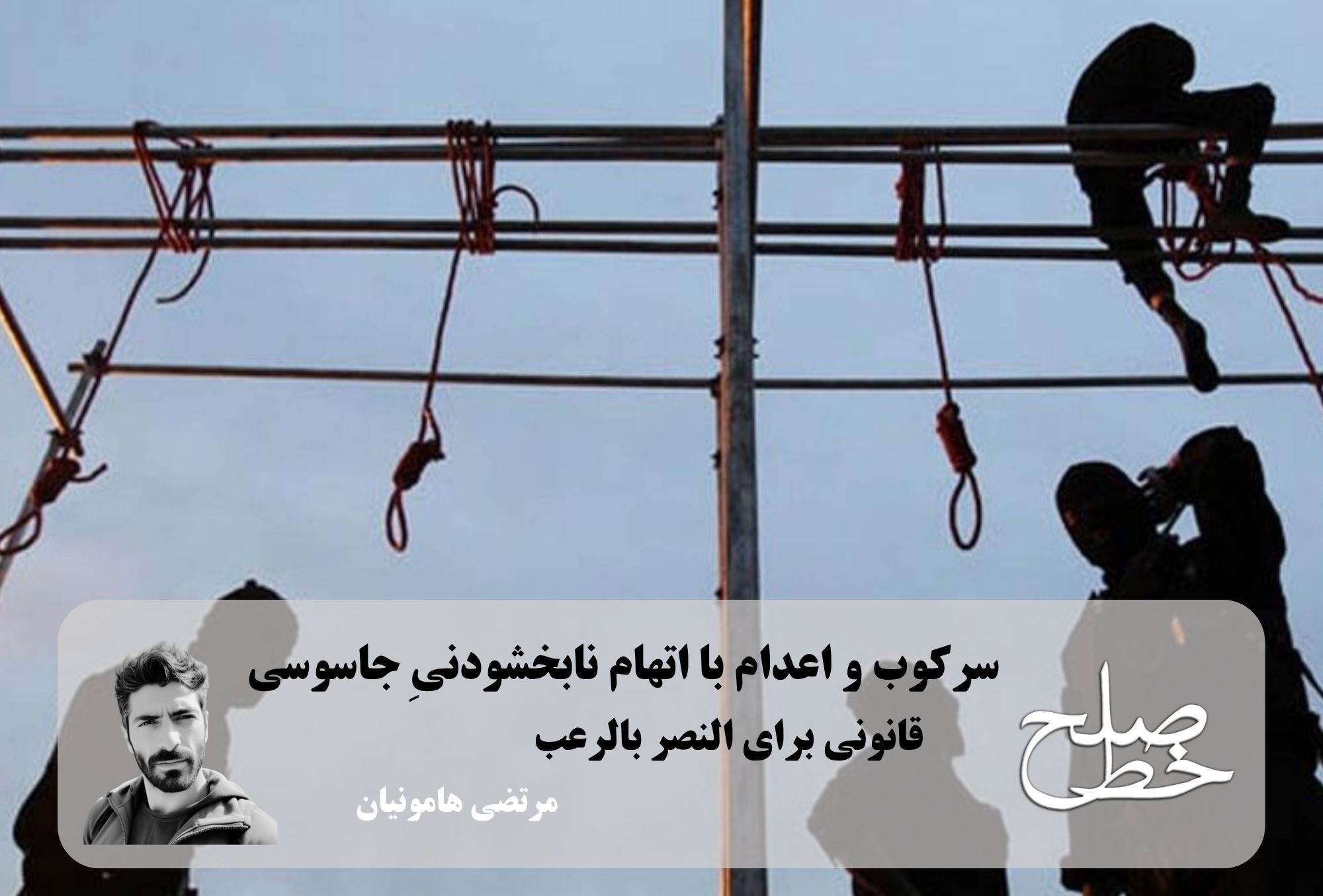
Repression and Execution Under the Unforgivable Charge of Espionage/ Morteza Hamounian
Each time, the government finds a new pretext to take human lives; a government that, throughout its existence, has shown that it places no value on the lives of citizens. The latest example became clear during the war between the United States and Israel and Iran, when it was revealed that for years, massive budgets […]...
Read more
By:
Morteza Hamounian May 22, 2026
From the Crime of “Espionage” to the Criminalization of “Intent to Collaborate”/ Maryam Abedi
Crimes against national security have always been regarded among the most sensitive and severe areas of criminal law. In all legal systems, governments consider the protection of secrets, classified information, vital facilities, and security structures to be among the fundamental elements of their political and sovereign survival. For this reason, espionage is recognized as one […]...
Read more
By:
Maryam Abedi May 22, 2026
Execution in the name of security; Intensification of the crackdown on espionage charges in Iran/ Nafiseh Motlagh
Following the escalation of military tensions and attacks by the United States and Israel, the judicial process of dealing with charges of “espionage” and “collaboration with hostile states” in Iran has entered a new phase. What is more controversial than the laws themselves is the way they are implemented: expedited proceedings, lack of transparency, and […]...
Read more
By:
Nafiseh Motlagh May 22, 2026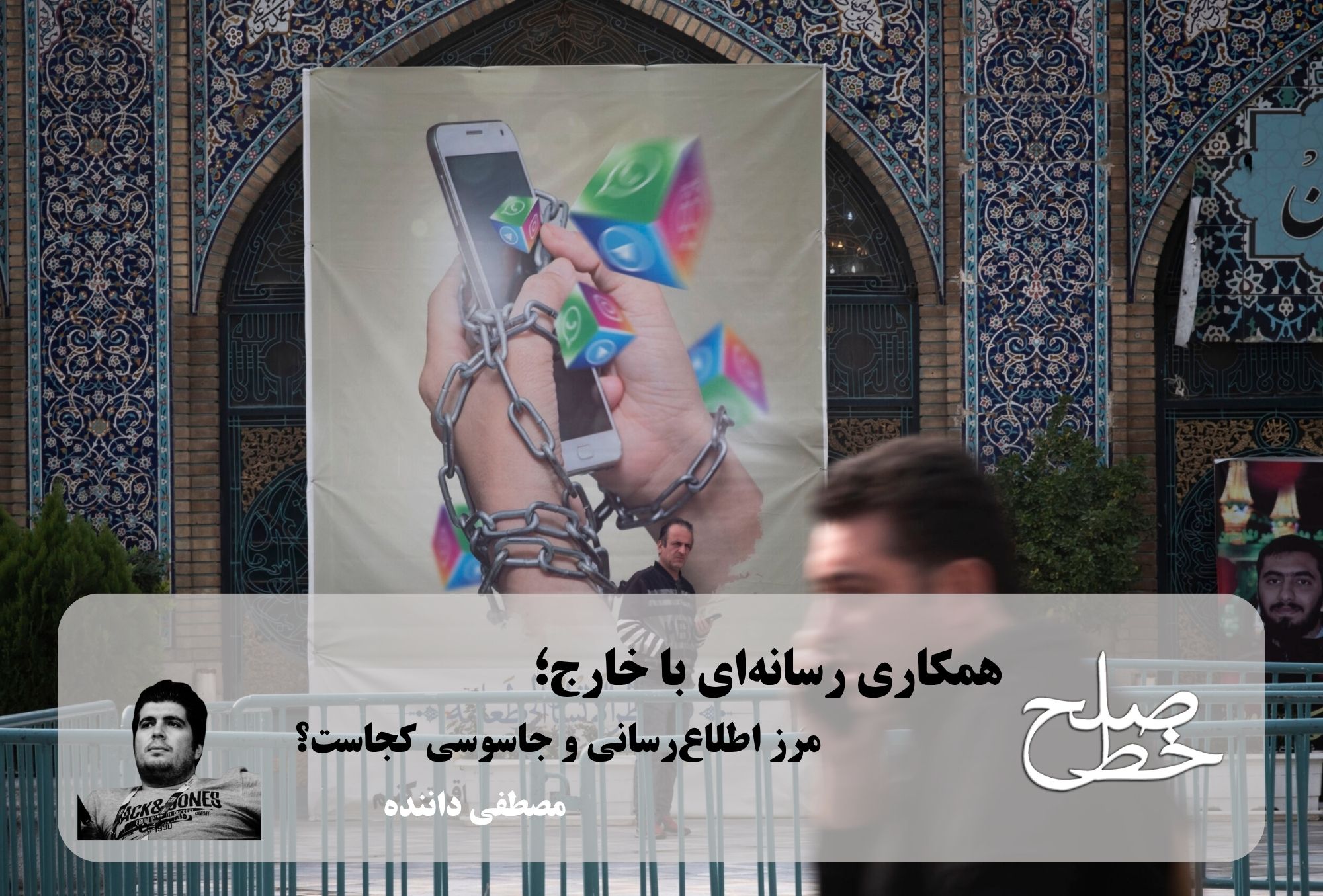
Media Cooperation with Abroad: Where Is the Boundary Between Reporting and Espionage?/ Mustafa Danandeh
During the two twelve-day and forty-day wars, the relationship between “media activity” and “national security” in Iran entered a new stage. A stage in which sending a video, publishing a report, or even speaking with media outlets outside the country can be interpreted under concepts such as “cooperation with a hostile state” or “espionage.” The […]...
Read more
By:
Mustafa Danandeh May 22, 2026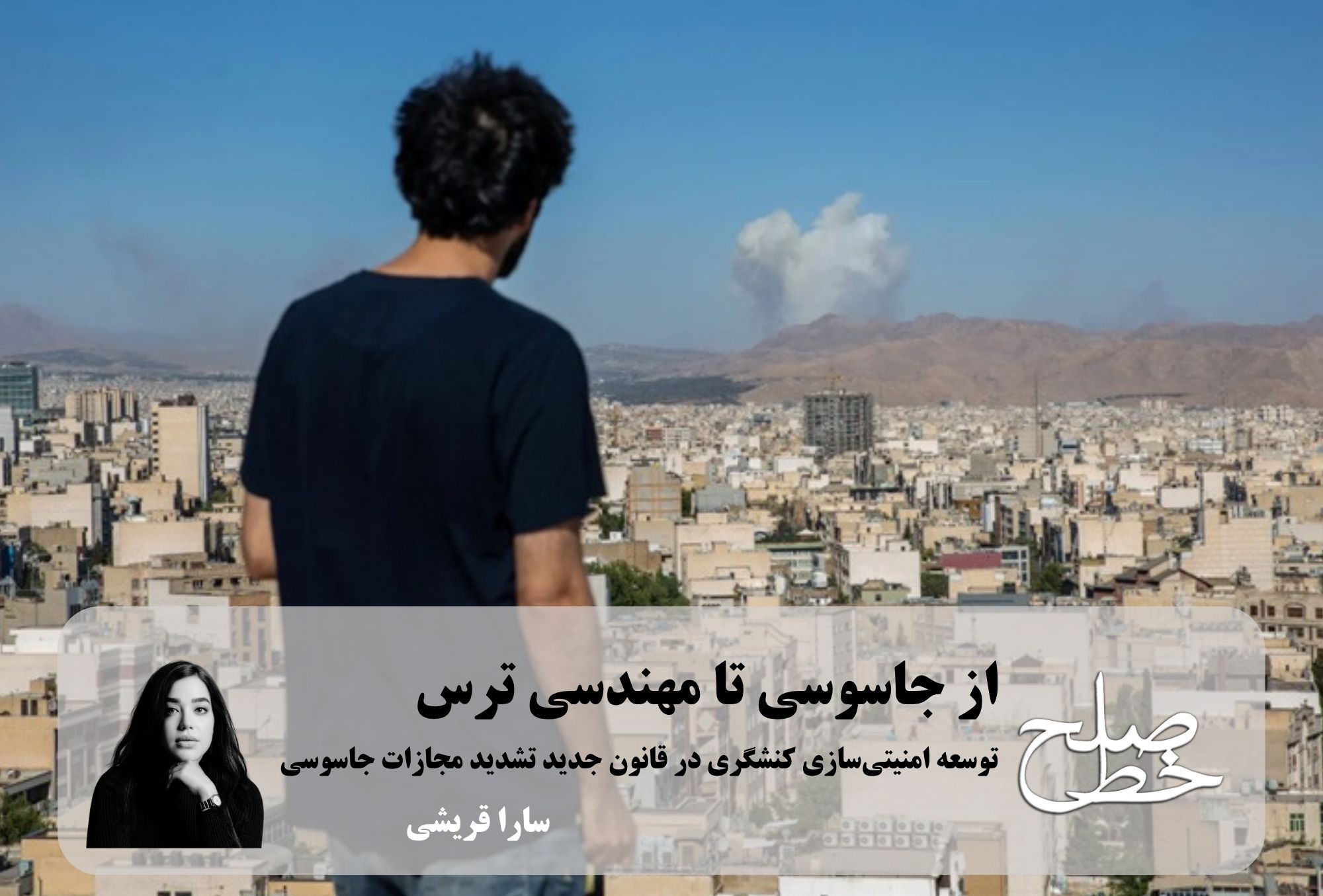
The Expansion of Securitizing Activism in the New Law Intensifying Punishment for Espionage/ Sara Qoreyshi
An Ordinary Day, an Extraordinary Accusation It is ten o’clock at night. From the window of your apartment, you hear chants. You pick up your phone, record a few seconds of video, and send it to a news channel outside the country. The next day, you face a summons whose title is not “publishing an […]...
Read more
By:
Sara Qoreyshi May 22, 2026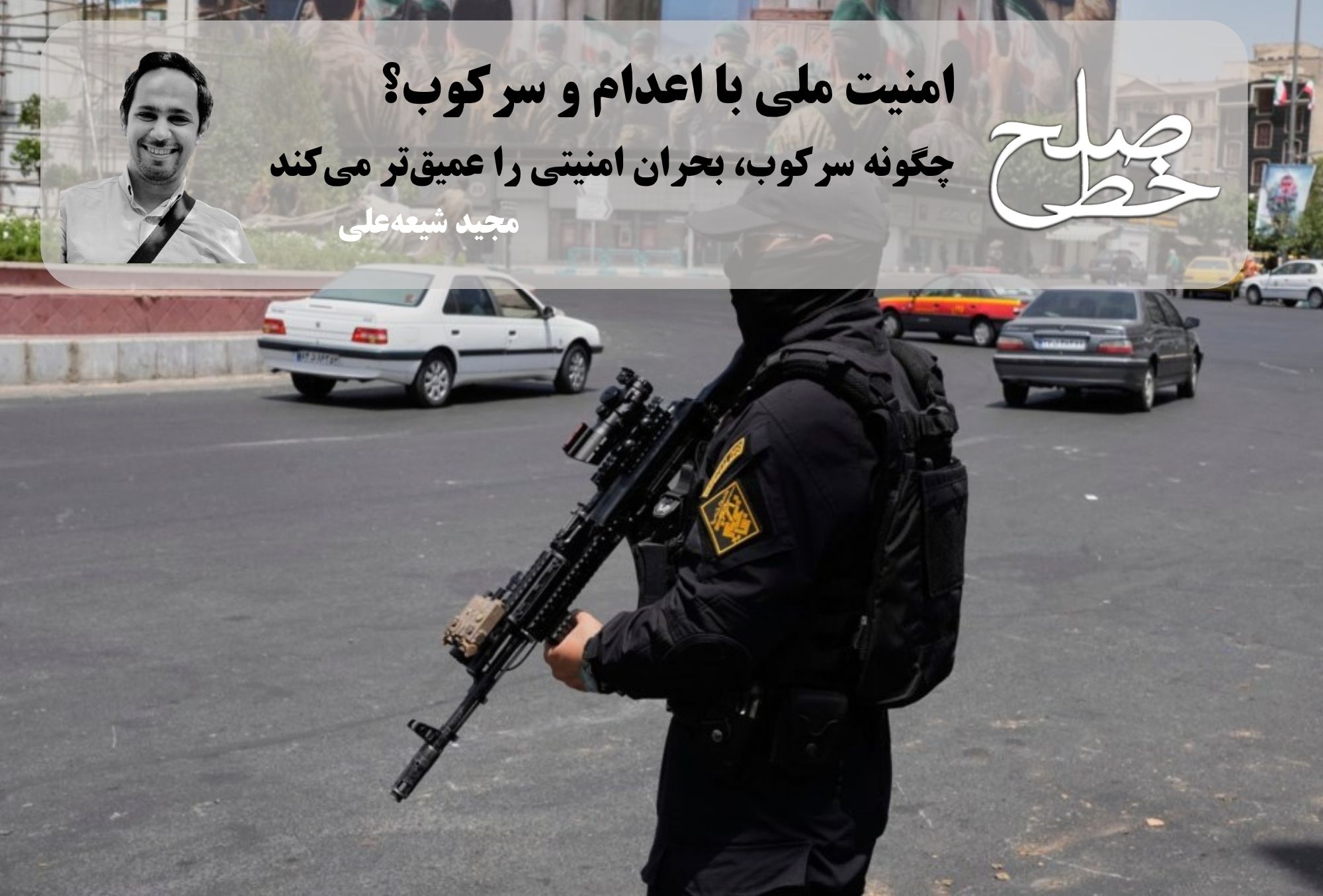
National Security Through Execution and Repression?/ Majid Shia’ali
Since the beginning of the war, human rights violations by the ruling establishment in Iran have increased significantly. In the days after the ceasefire, not a day goes by without news of executions carried out on the basis of death sentences issued through a deeply flawed judicial process and with clear political orientations. The process […]...
Read more
By:
Majid Shia’ali May 22, 2026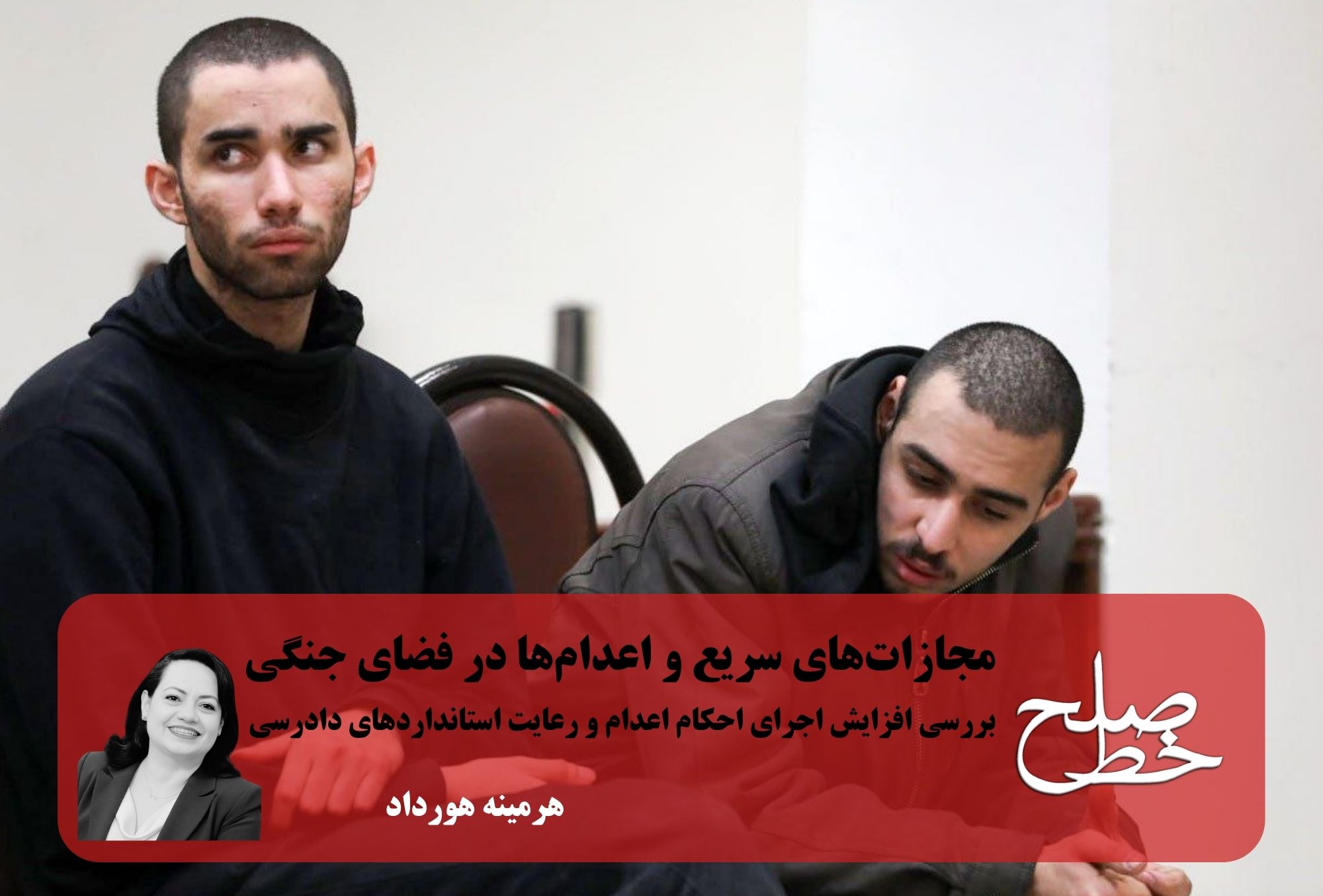
Rapid Punishments and Executions in Wartime Conditions/ Hermineh Hourdad
To understand the mechanisms of power in the Islamic Republic, no point is as significant as execution, because in this system execution is not merely a judicial punishment, but a political instrument for producing fear, silencing dissent, and pushing society toward silence and marginalization. Each time the Islamic Republic has faced crisis, war, or instability, […]...
Read more
By:
Hermineh Hourdad April 21, 2026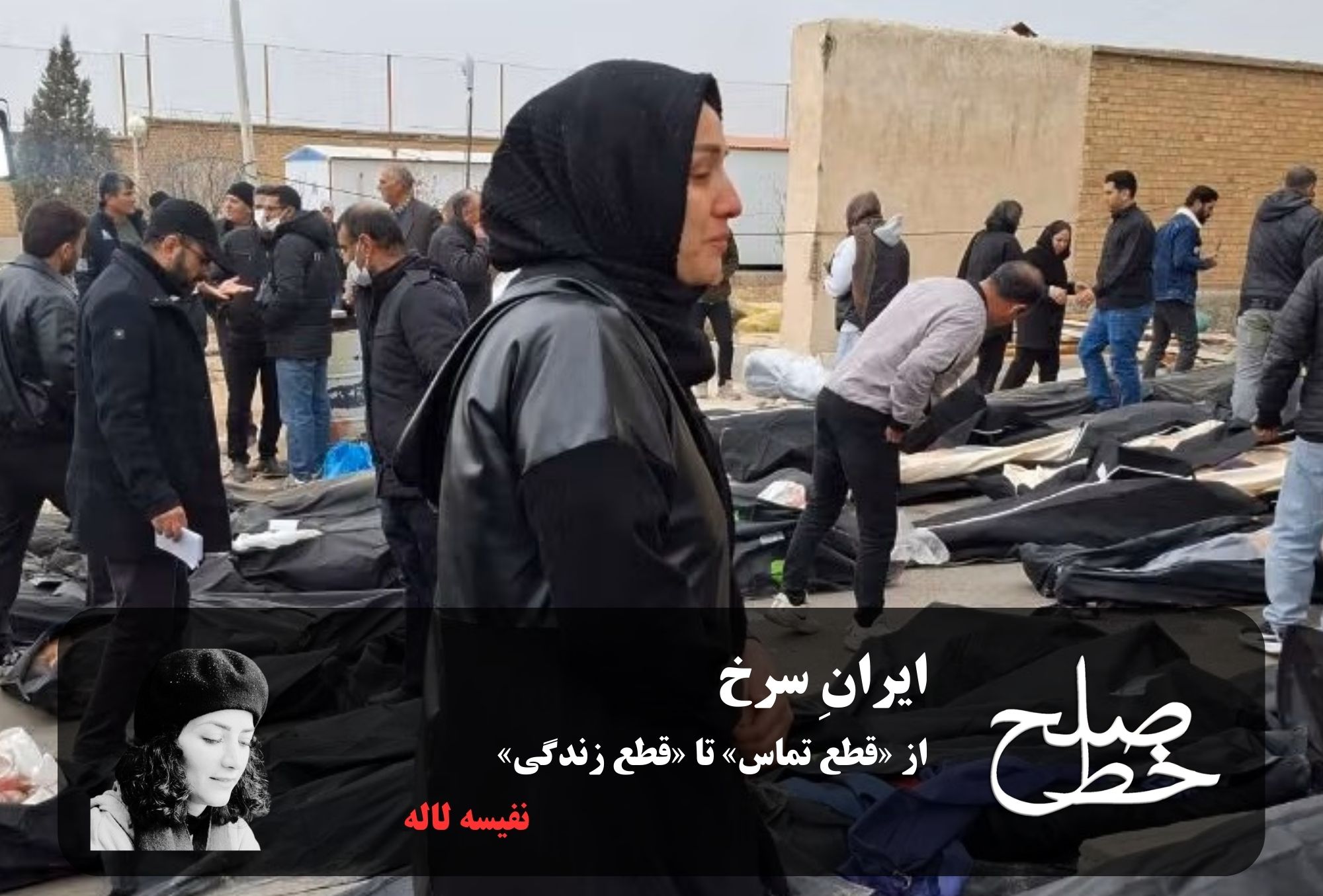
Red Iran; From “Disconnection of Contact” to “Disconnection of Life”/ Nafiseh Laleh
Tehran, evening of January 18, 1404, around 8:00 PM His excited voice echoes in the echo of the desperate voices of the street and my heart skips a beat. The call is cut off around the first minute and remains cut off for the following days and weeks; like ourselves, from life. We do not […]...
Read more
By:
Nafiseh Laleh February 20, 2026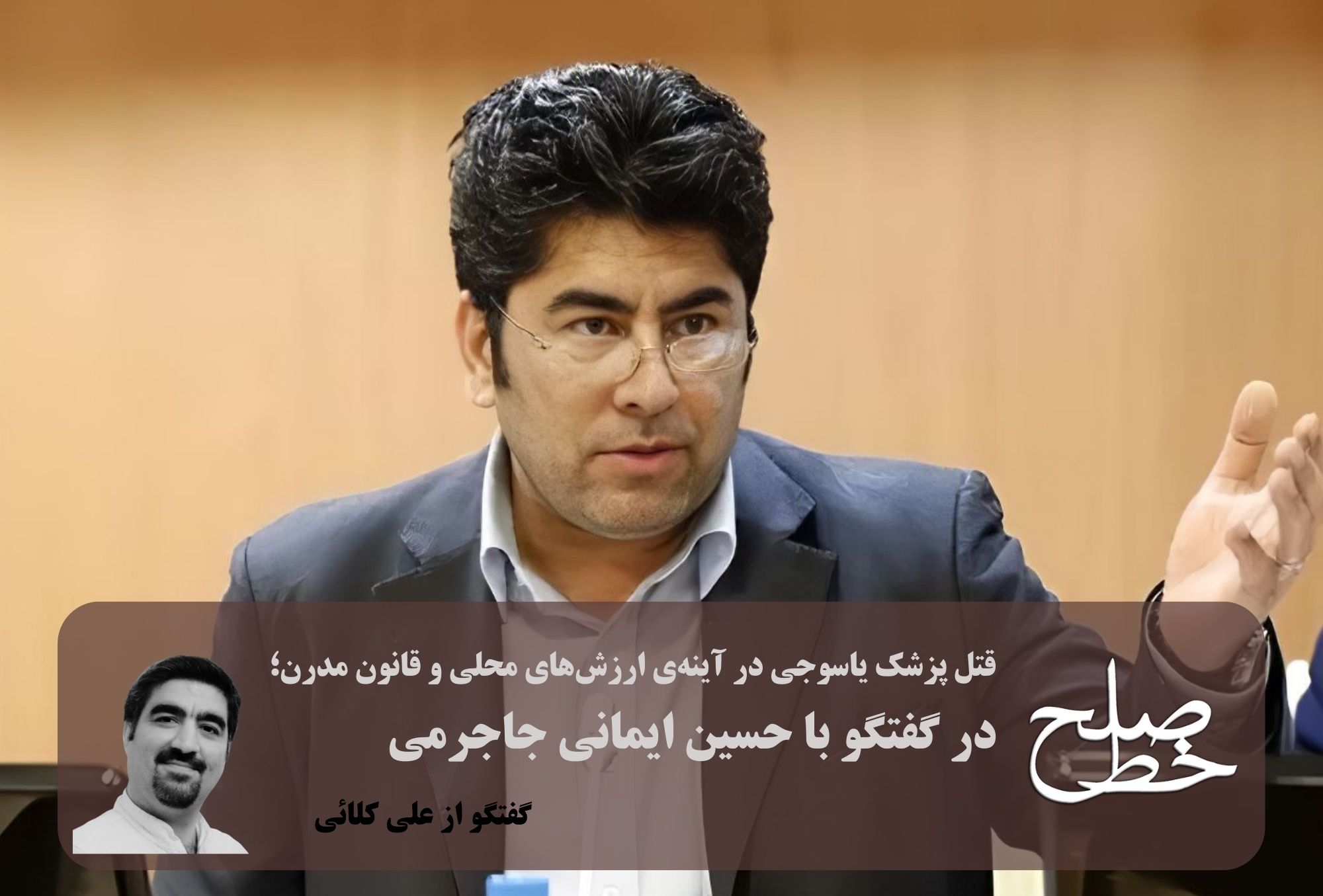
The Murder of the Yasouj Doctor Through the Lens of Local Values and Modern Law; A Conversation with Hossein Imani Jajarmi/ Ali Kalaei
The case of the murder of a doctor in Yasouj, the grand funeral of the convicted killer after his public execution, the participation of a local preacher in the ceremony, and ultimately the presence of a member of parliament at the home of the executed man to offer condolences have raised serious questions in the […]...
Read more
By:
Ali Kalaei December 22, 2025
