


Latest Posts

From the Streets to the Wilderness: The Looming Shadow of Stray Dogs An Interview with Dr. Iman Memarian / Pedram Tahsini
A stray dog refers to a dog that typically has no owner, is not confined to a home, yard, or private property, and roams freely. These dogs interact and mate with other dogs and, in some cases, with other canids—such as wolves—producing hybrid species like wolf-dogs, which can be highly dangerous. They may spend all […]...
Read More Created By: Padram Tahsini
 November 21, 2024
Mahdieh Jafari: Mismanagement is the Main Issue Facing Zoos in Iran/ Ali Kalaei
Zoos can be considered places that preserve part of the natural heritage and wildlife. However, in countries like Iran, numerous challenges surround the standards of animal care and the operation of such facilities. Issues such as inadequate space, insufficient resources, mismanagement, and lack of proper oversight have led to the neglect of animal rights in […]...
Read More Created By: Ali KalaeiNovember 21, 2024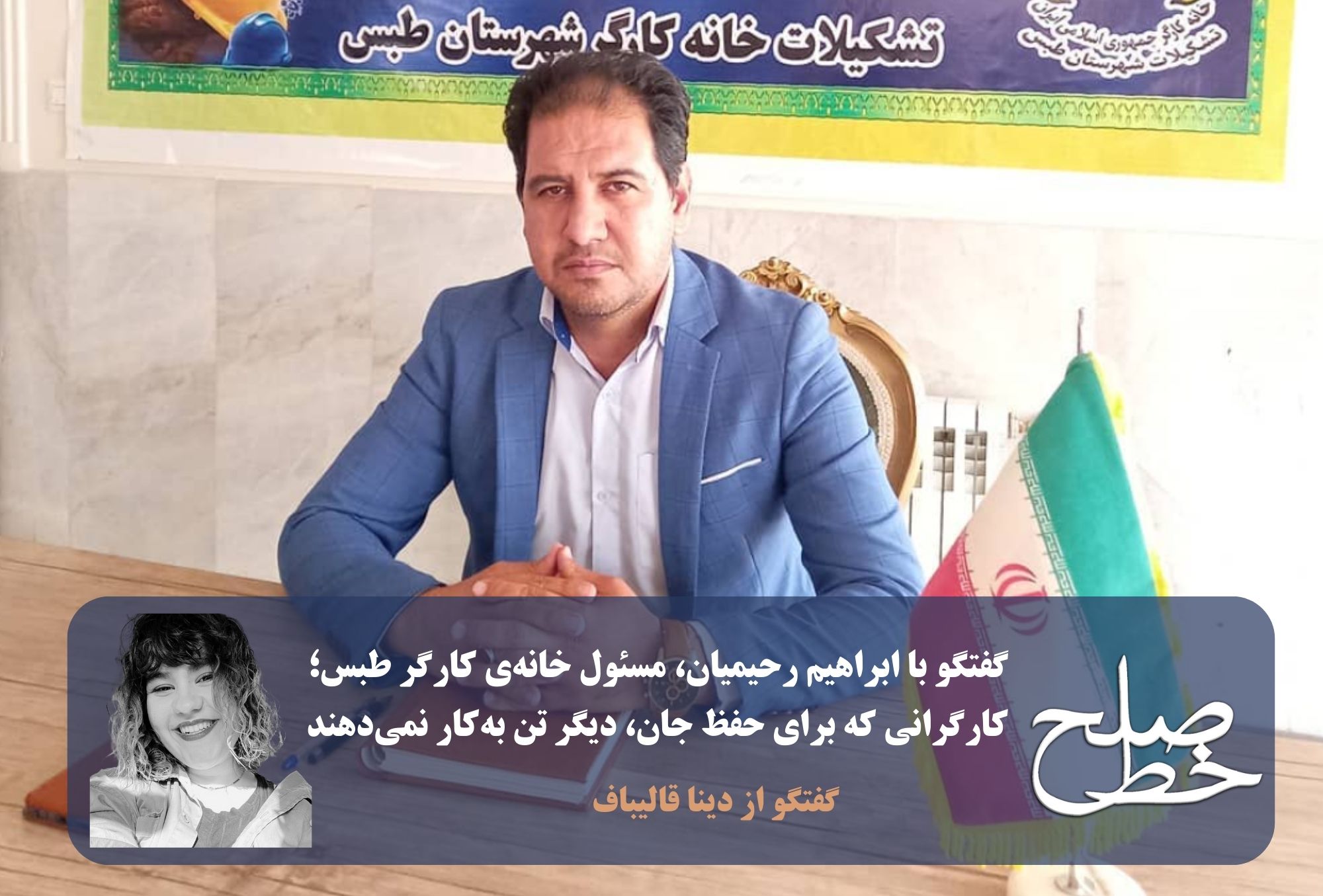
Interview with Ebrahim Rahimian, Head of the Tabas Workers’ House/ Dina Ghalibaf
The Tabas mine disaster, which claimed the lives of 52 hardworking individuals, brought the term “miner” and the concept of “hard labor” into the spotlight for a while in the minds of the public and the media. Following the incident, as videos of the victims’ families circulated, a crucial question became even more prominent: Why […]...
Read More
Created By: Dina GhalibafOctober 22, 2024
Interview with a Survivor of the Madanjo Tabas Mine: “Be Submissive and Say: Yes, Yes, Yes”/ Pedram Tahsini
His name is Abolfazl. He had three brothers, and both he and one of his brothers worked in the Madanjo mine. Now, that brother (Mohammadjavad Beheshtizadeh) has perished alongside 51 other miners, while Abolfazl survived. At first, he refuses to be interviewed. For several hours, he avoids the conversation with various excuses. Finally, he agrees […]...
Read More
Created By: Padram TahsiniOctober 22, 2024
Mansoureh Mohammadi: Drug Sanctions Are Just a Slogan/ Ali Kalaei
According to Mansoureh Mohammadi, a poet, writer, political-social activist, and member of the disabled community, “One of the factors causing mental health crises for children with disabilities in Iran is the national media.” She says, “This media never respects people with disabilities. It never raises their social status. It always portrays them as objects of […]...
Read More
Created By: Ali KalaeiOctober 22, 2024
Sara Siyahpoor, activist: Iranian women have learned the correct language and behavior of struggle/ Reza Dehlavi.
Since the beginning of the trade unions’ activities, there have been women activists who, alongside men, have fought for the rights of teachers and students. However, the presence of “women” in the teachers’ union movement has become more prominent since 2013 (1392). Their participation has significantly strengthened the teachers’ ability to pursue their union goals. […]...
Read More
Created By: Reza DehlaviOctober 22, 2024
Conversation with Solka; Rap, Gender Equality, and the Ongoing Struggle/ Morteza Hamounian
“Solka” is calling out; she is so well known by this name that her acquaintances have forgotten her real name, “Sara Bahreini”. Sara, also known as Solka, has numerous tattoos on her body and has a stylish gangster appearance; something similar to “Griselda Blanco” but the difference is that Sara is not a criminal, she […]...
Read More
Created By: Morteza HamounianSeptember 22, 2024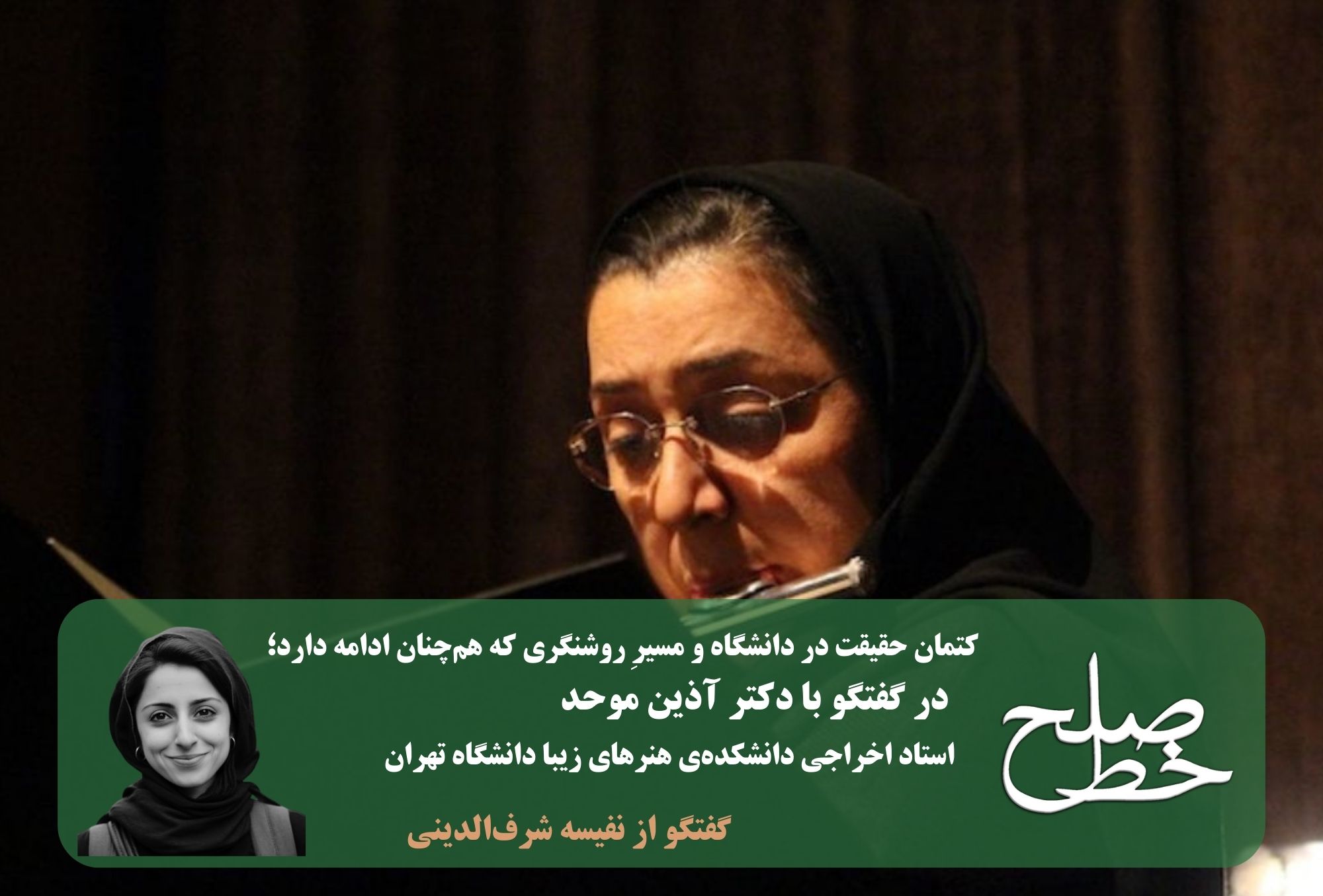
Conversation with Dr. Azin Moheb, Professor of the Faculty of Fine Arts, University of Tehran / Nafiseh Sharafaldini
During the Mihssa movement, Iranian universities were one of the main strongholds where the cry of “Women, Life, Freedom” was raised by students and professors. The demands of this section of the scientific community were completely in line with the demands of the people; demands that led thousands of people from their homes to the […]...
Read More
Created By: Nafiseh SharafaldiniSeptember 22, 2024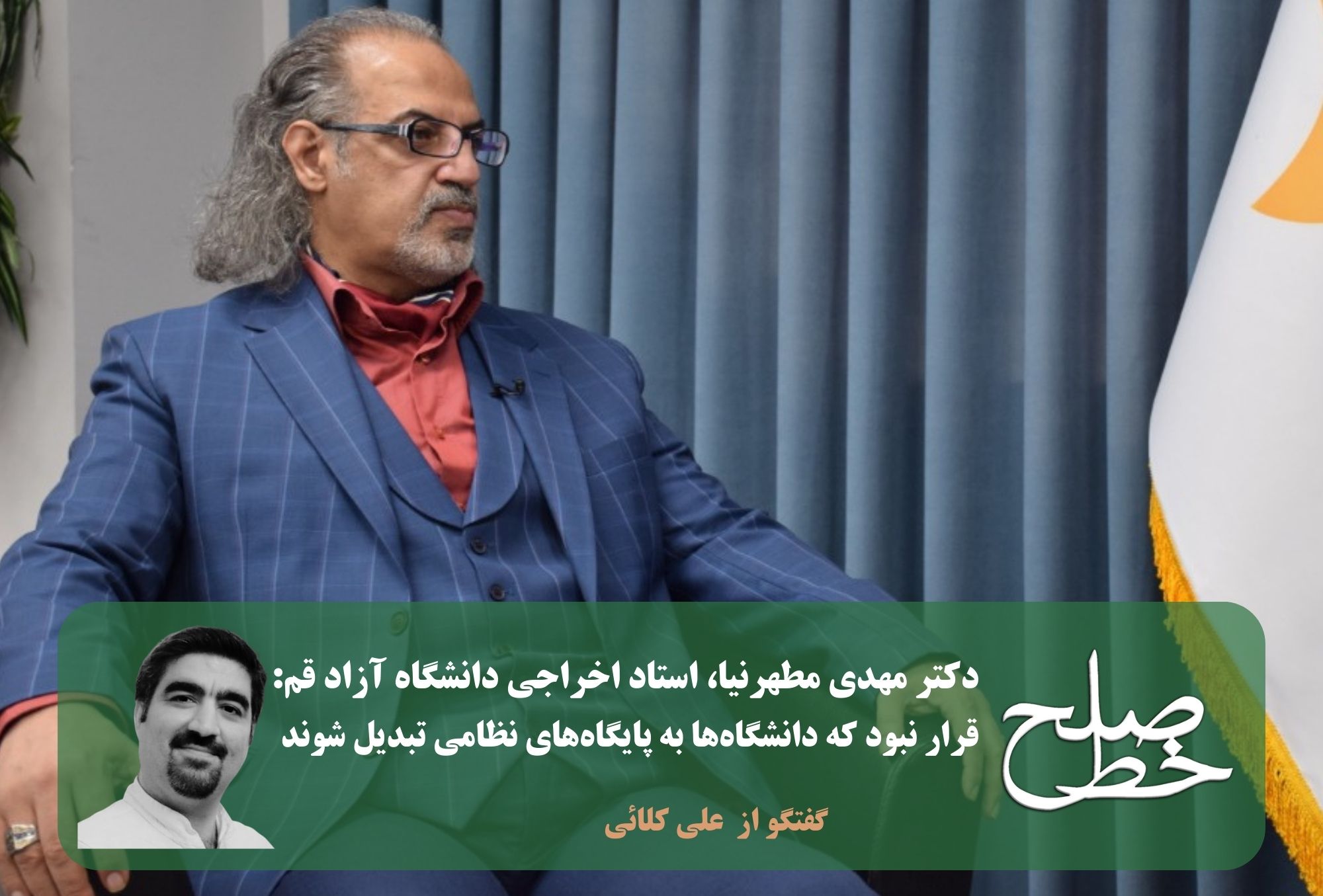
Mehdi Motaharnia: It was not intended for universities to be turned into military bases / Ali Kalaei
Mehdi Motaharnia, a professor at the Azad University of Qom, Tehran Central, and Tehran North, and a visiting professor at the National Defense and Shirazi Hunter universities in the fields of political science, futurology, sociology, and cultural management. He is one of the development theorists in Iran who considers himself a transformationist. In addition to […]...
Read More
Created By: Ali KalaeiSeptember 22, 2024
Mahmoud Nili Ahmadi: The day I was fired from my job, I felt a sense of relief/ Pedram Tahsini.
It took exactly one week to arrange a meeting with the former president of Tehran University. This was not due to their lack of willingness, but because of their busy schedule and constant presence in student defense sessions. As a result, the conversation was delayed for a week. Although even after that, we did not […]...
Read More
Created By: Padram TahsiniSeptember 22, 2024
