


Articles
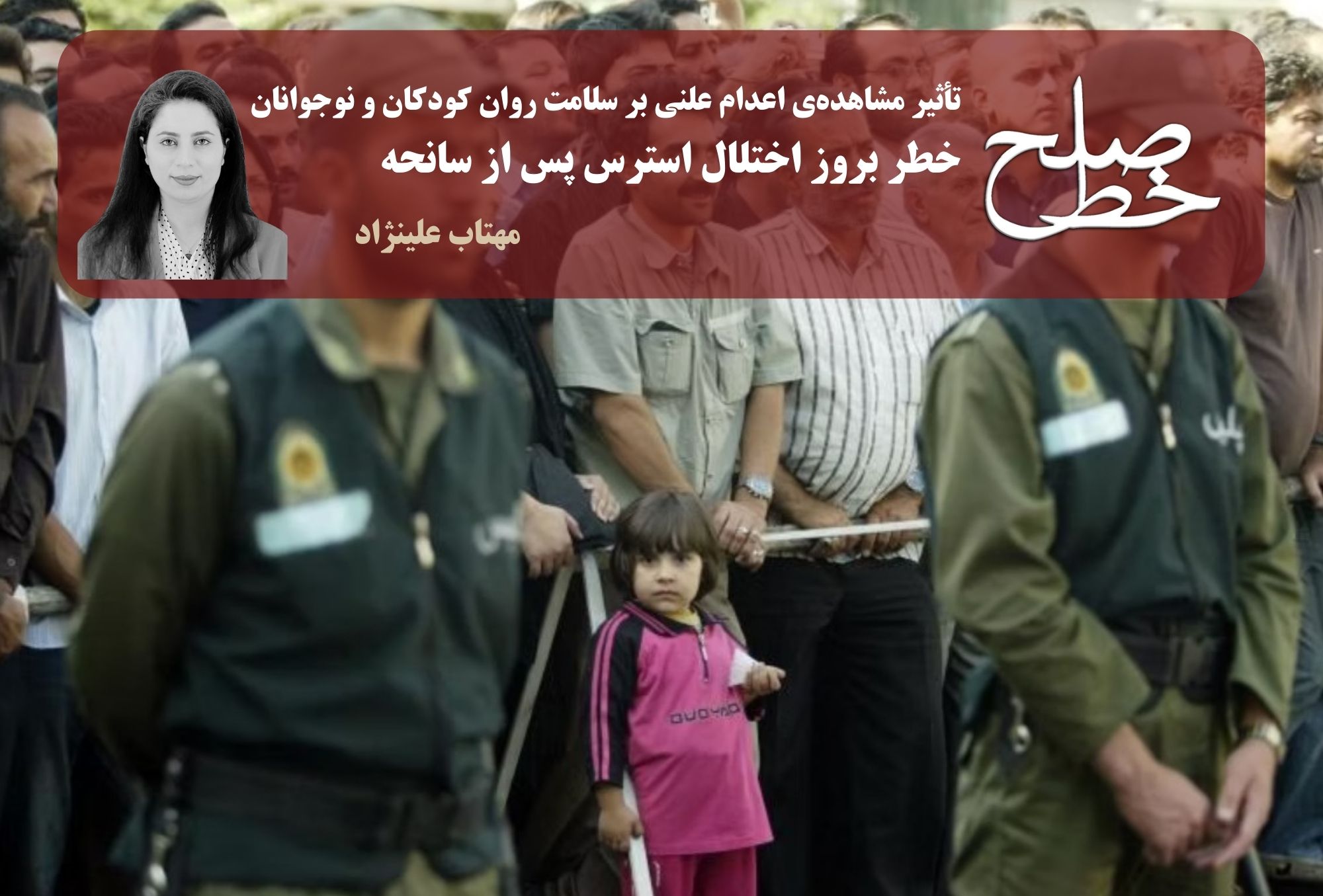
The Psychological Impact of Witnessing Public Executions on Children and Adolescents/ Mahtab Alinejad
On a cold winter morning, in the heavy silence of a city square, a crowd gathers to witness the public execution of a condemned individual. The murmurs of the crowd and the hurried steps of the guards ripple through the air. A 4- or 5-year-old child, puffed corn snack in hand, stands next to his […]...
Read More Created By: Mahtab Alinezhad
 September 23, 2025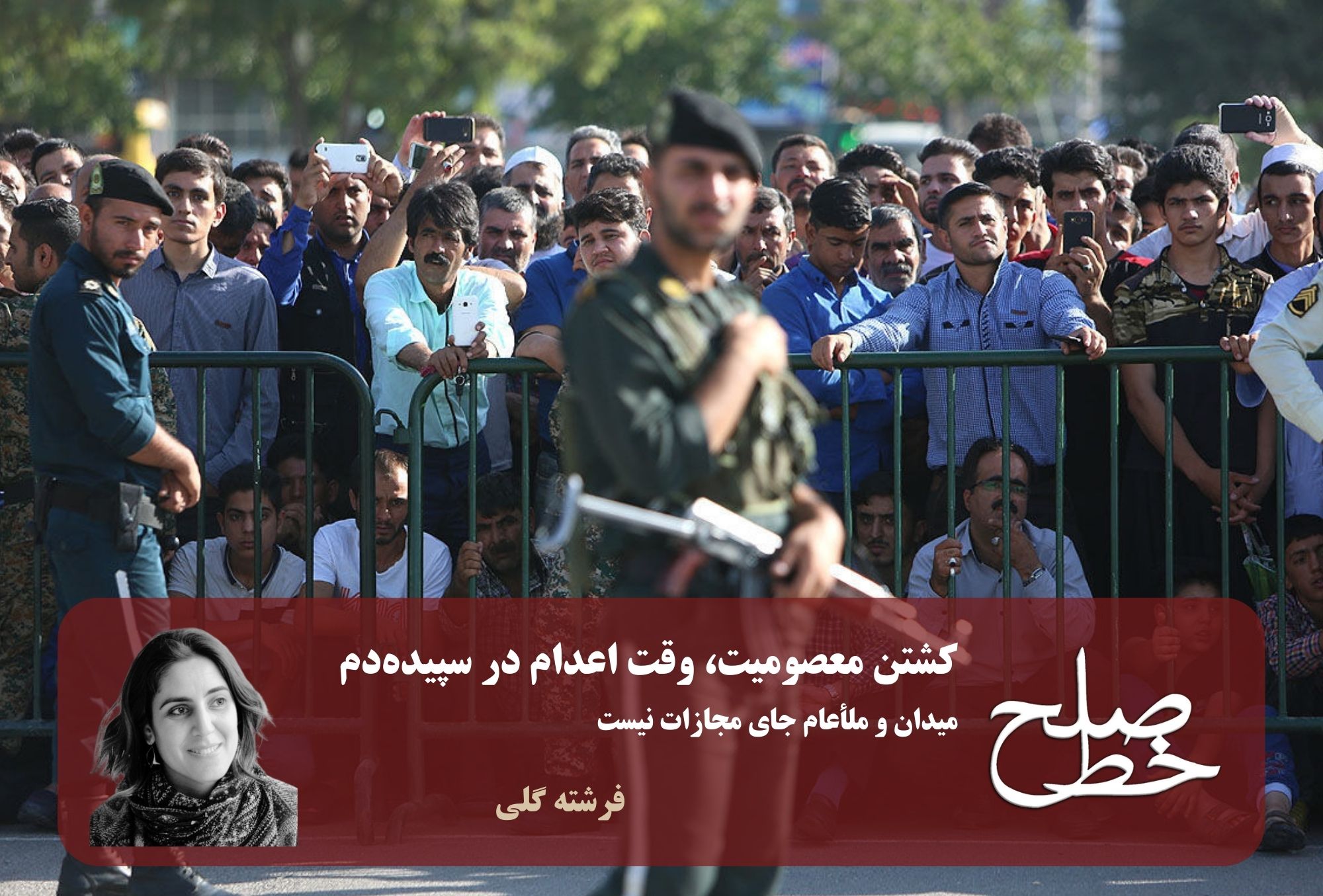
Killing Innocence at Dawn: A Public Execution/ Fereshteh Goli
As the sharp, cold morning wind swept autumn leaves across the cobbled alleyways of the city, a dense, silent crowd had gathered in the main square. Their breath turned into small clouds in the freezing air, merging into one another. Among the crowd stood women whose eyes reflected waves of fear, worry, and anxiety, and […]...
Read More
Created By: Fereshteh Goli September 23, 2025
A Look at the Role of Qisas in Murder Cases and the Distinction Between Justice and Revenge/ Sina Yousefi
In the legal system of the Islamic Republic of Iran, qisas (retaliatory justice) is not only prominently featured in Book Three of the Islamic Penal Code (2013), but its procedural structure and associated privileges are also legally codified. These include defining the scope of cases eligible for qisas, conditions for the equivalence of the weapon […]...
Read More
Created By: Sina Yousefi September 23, 2025
From Cheap Death to Contemporary Scaffolds/ Reza Harisi
Public execution—a phenomenon in which the final moments of a human being’s life are put on public display—goes beyond mere punishment and, in Marcel Mauss’s terms, constitutes a “total social fact” that encompasses all dimensions of a society’s life (legal, political, religious, economic, ethical, and cultural). While the global trend in the modern era has […]...
Read More
Created By: Reza Harisi September 23, 2025
Public Execution: Reproduction of Violence Instead of Deterrence/ Toutia Partovi Amoli
Public execution is a punishment that, in some societies, has been used as a tool aimed at deterring crime and instilling fear. Nevertheless, according to statistical studies and scientific findings, carrying out punishment in public not only has no significant effect on reducing violent crime rates but also leads to the normalization and reproduction of […]...
Read More
Created By: Toutia Partovi Amoli September 23, 2025
Why Should Public Execution Be Abolished?/ Neda Ghanbari
A thorough examination of historical experiences, human rights principles, and findings from psychology and criminology clearly indicates that public execution not only lacks any deterrent effect but also carries profound social, psychological, and moral consequences for society. Although some proponents view public execution as a tool for creating fear and reducing crime, in practice, it […]...
Read More
Created By: Neda Ghanbari September 23, 2025
Femicide in Iran and the World: Revisiting the Intersection of Gender, the State, and Structural Violence/ Elahe Amani
Femicide, the killing of women because of their gender, is one of the most extreme forms of gender-based violence. At its core, femicide stems from deeply rooted and long-standing patriarchal and misogynistic systems in which women’s lives are considered inferior and expendable, and the exercise of control over them is normalized. When women defy social […]...
Read More
Created By: Elahe Amani September 23, 2025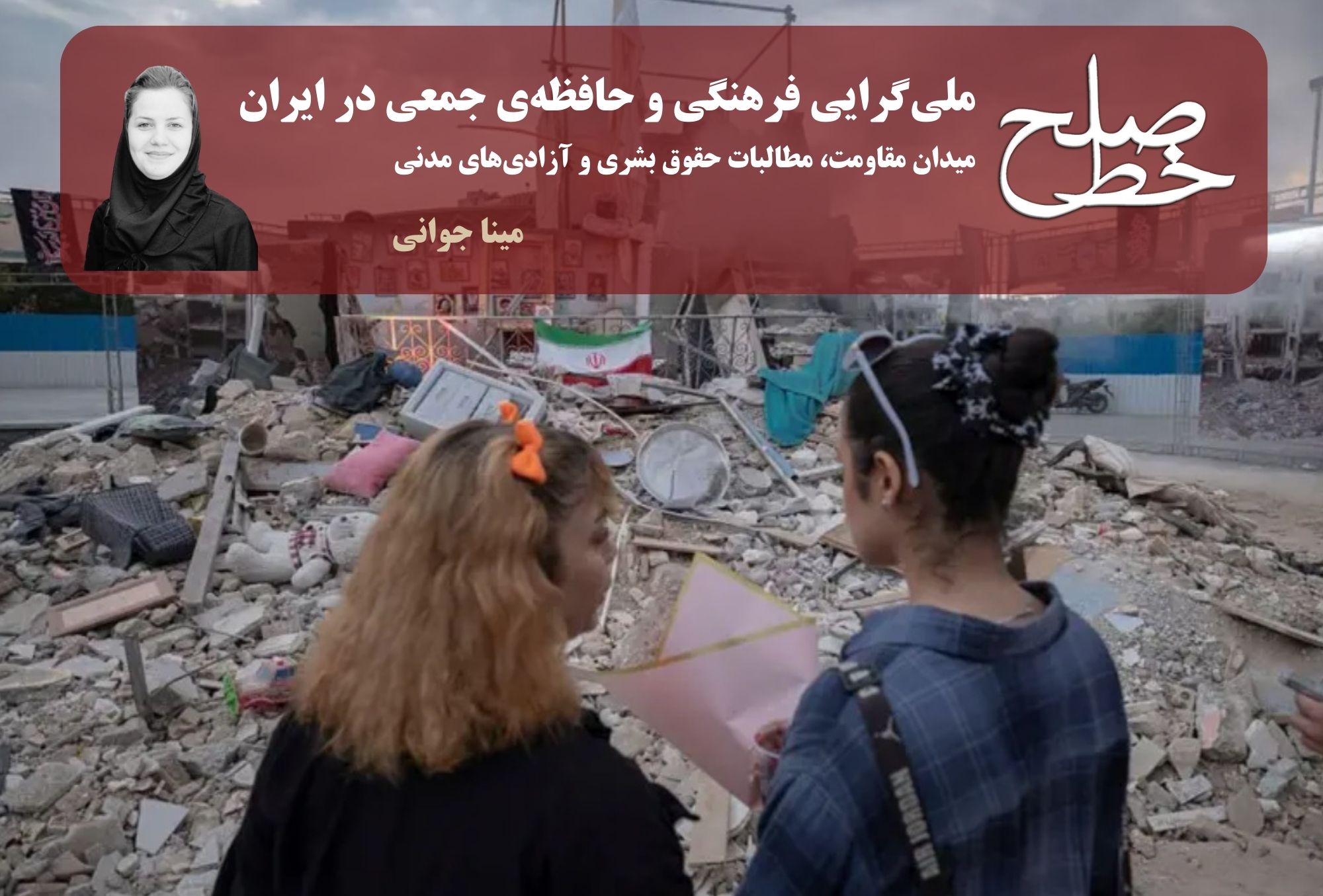
Cultural Nationalism and Collective Memory in Iran/ Mina Javani
Collective memory in societies grappling with political crises and repressive structures functions not merely as a recollection of the past, but as a space for cultural resistance, redefinition of social identity, and advocacy for human rights. In contemporary Iran, the representation of national symbols—ranging from flags and cultural rituals to patriotic poetry and music—has taken […]...
Read More
Created By: Mina Javani September 23, 2025
Breaking Taboos or Reproducing Vulgarity?/ Pardis Parsa
These days, few Iranians have not heard of the internet show Eshgh-e Abadi (“Eternal Love”). A group of young Iranian migrants gathers in a seaside villa in Turkey to choose a partner or lover from among each other. They compete, and their daily routines generate content that draws astonishing numbers of views online. The show’s […]...
Read More
Created By: Pardis Parsa September 23, 2025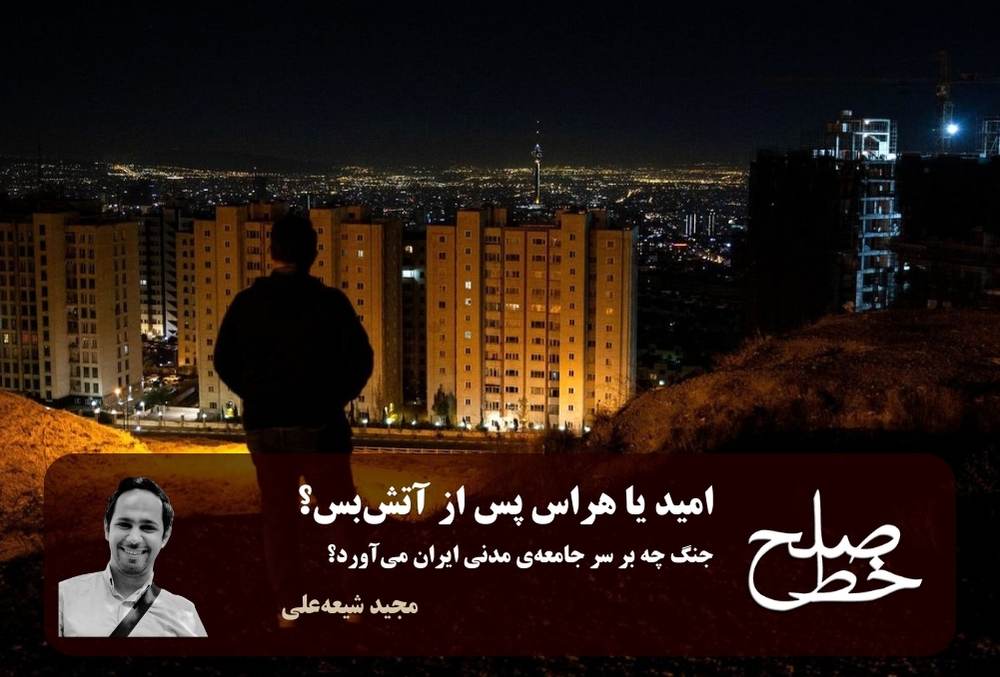
Hope or fear after the ceasefire?/ Majid Shia Ali
The twelve-day war has ended, but the war conditions have not ended. The shadow of war still looms over Iranian society. The threat of war, missile attacks, explosions, assassinations, and Israeli security operations in Iran are still serious. The continuation of the war situation, the inability of the government to take action to address […]...
Read More
Created By: Majid Shia’ali August 23, 2025
Cold peace as a model of governance in the post-crisis era/ Mina Javani
After the end of the twelve-day war, the situation in Iran has seemingly entered a phase of stability; a phase that in political discourse is referred to as “mutual restraint” or “controlled tension”, but at a structural level, it is not only a sign of a return to normalcy, but also a continuation of the […]...
Read More
Created By: Mina Javani August 23, 2025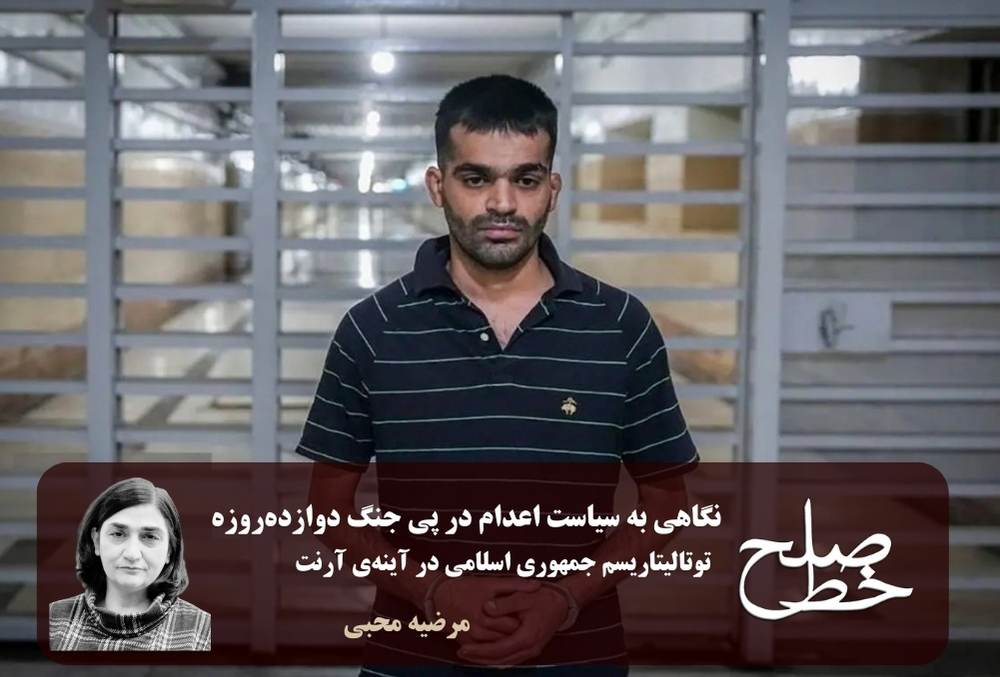
A look at the execution policy following the twelve-day war / Marzieh Mohabi
The 12-day war between Iran and Israel was one of the most intense military conflicts in the region in recent decades and marked the end of a dream for the leaders of the Islamic Republic to eliminate Israel from existence. This conflict began with Israel’s surprise attacks on nuclear facilities, military bases, and the assassination […]...
Read More
Created By: Marziye Mohebbi August 23, 2025
