Legal challenges of expanding women’s sports in Iran / Mohammad Mahbobi

Last updated:

April 21, 2026

Legal challenges of expanding women’s sports in Iran / Mohammad Mahbobi

This is a caption

This is a captionMohammad-Mohebbi
Mohammad Mohabbey

The process of urban development and changes in daily movement patterns has led to a decrease in physical activity, especially among women, putting their bodies and muscles at risk of serious consequences such as inactivity and physical weakness. To prevent or combat such issues, creating attractions and facilities to promote sports among women is an effective tool. However, is anyone considering the development of sports among women in Iran?

In examining the growth of women’s sports in domestic and international arenas, although there is evidence of progress in Iranian women’s sports, it cannot be ignored that compared to men’s sports, it is not experiencing desirable growth. Social factors have a significant impact on the abilities of Iranian women in sports. As a result, a lack of movement has been created in them, leading to a decline in their performance due to a decrease in physical strength. It is obvious that the ban on women participating in mixed sports should be accompanied by creating the necessary space and planning for the separation and segregation of genders in sports facilities. This is while the number of such sports facilities for women is very limited compared to the population. This issue requires more effort from the relevant authorities than ever before.

Women like Atousa Pourkashian, Fatemeh Karimi, Neda Shahsavari, and Kimia Rezaei are among the athletes who have repeatedly stated in media interviews that they exercise at home. In fact, if the families of these athletes did not make the necessary investments, it would not have been clear that Iranian society could have such successful athletes.

Currently, it is difficult to predict the future of women’s sports in Iran. The development and advancement of this field, like any other major issue, is naturally dependent on political will and social changes.

Improving the current state of women’s sports in Iran requires a change in the mindset of government officials towards women’s sports. This is a topic that, despite being witnessed by many female sports champions and pioneers, is not currently a priority for the Ministry of Sports.

The role of sports in women’s health

Health experts always recommend that in order to have a healthier and more active society, we should strive to add sports to the list of activities for people of all ages and physical abilities, both men and women. Enduring sports and physical activities in women can prevent many diseases such as osteoporosis, heart attacks, and strokes – which account for more than one third of women’s deaths – from occurring.

Physical activity along with a healthy and balanced diet can also prevent obesity in women. Women are more prone to heart disease, osteoporosis, and other health issues during menopause, but engaging in regular exercise such as walking and various physical activities can significantly reduce these risks. Additionally, exercise and physical activity can also reduce stress and depression in women, a problem that many are currently struggling with. It can even be said that according to Islamic teachings, a sound mind resides in a healthy body, and those who have a healthy body are more successful in performing religious duties such as prayer, fasting, and pilgrimage. It should not be overlooked that due to certain limitations, the presence of women in sports facilities is less noticeable. Therefore, paying attention to and promoting a culture of women’s sports can greatly contribute to maintaining and improving the overall health of society and its future generations.

The government officials of Iran should also be aware of the importance of this matter and it is necessary for them to not only create suitable conditions and develop women’s sports facilities, but also make more efforts and take steps towards supporting and providing the necessary platform for women to achieve their rights and share in sports.

Challenges

a) No sponsor

Despite all its potential, women’s sports is a world full of small and big problems, with one of the most important being the lack of financial support. Every team needs a financial sponsor to carry out sports activities, but since women’s sports are not reflected in any media and due to cultural restrictions and lack of advertising, there are not many spectators. As a result, there are almost no sponsors willing to financially support women’s sports teams, and therefore, in many sports, there are no cohesive teams. The reluctance of the Islamic Republic of Iran’s television to broadcast these competitions, due to religious issues and the emphasis on traditional Islamic teachings of not showcasing women in front of men, is also one of the problems. Sports without media, advertising, and sponsors will lead to weakness.

According to the resolution of the Supreme Council of the Cultural Revolution on October 6, 1993, women’s exercises and competitions must take place in designated areas and men are not allowed to enter these areas or watch these exercises and competitions. Therefore, broadcasting these competitions is illegal.

As mentioned, not broadcasting women’s competitions on television has led to a decrease in sponsor interest in women’s sports, causing significant economic problems for clubs. This has resulted in a memorandum being signed between the Physical Education Organization and all sports federations, requiring them to allocate at least 40% of their funds and revenues to women’s sports. However, many institutions and federations do not comply with this decision.

B) Defective Legal Structure of the Ministry of Sports

According to the vice president of the Softball Association, before the transformation of the Sports Organization into a ministry, the organization was responsible for women’s sports. However, when the organization became a ministry, due to organizational charts and limitations, they merged the departments of general sports development and women’s sports. This can be considered one of the main reasons for the failure of women’s sports in the planning and program section, as there is no focus and this lack of focus also affects the programs and decisions.

There is a flaw in the legal process, and that is that according to their statutes, federations are obligated to entrust women’s sports affairs to the women’s deputy in the same federation. However, in most federations, the scope of authority of this deputy is limited. There have also been constant controversies and ambiguities regarding the appointment or dismissal of these deputies.

J) Defective Constitutions of Sports Federations

It is necessary to focus on structural and legal discussions, regulations, and constitutions of sports federations and other institutions and organizations related to sports. One of the important tasks in this regard is to amend the constitutions of sports federations to address the improvement of women’s sports. These constitutions are mostly outdated and were written at a time when women’s sports did not have the same level of popularity as today. Therefore, it leaves the hands of those who oppose the expansion of women’s sports open. The structure and authority of women’s sports do not align well with their large audience in today’s Iranian society.

d) Coverage of Iranian female athletes and international competitions

The issue of “hijab” is one of the most controversial issues in the field of women in Iran today. It has completely taken on an ideological color and is considered the biggest symbol and sign of the Islamic Republic. Despite the various social problems and ugly behaviors that are destructive and damaging, such as lying, betrayal of trust, breaking promises, hypocrisy, usury, theft, embezzlement, obscenity, etc., which are rampant in society, and are strongly condemned in Islam, there are numerous verses in the Quran and hadiths about them, but the political system, which shows one-tenth of the sensitivity it shows towards hijab, does not address these issues.

In the same way, another issue that is one of the problems of professional sports for women in Iran is the discussion of the approved dress code by the ruling government in Iran, which has caused many restrictions. However, it has been seen that some female athletes from other Islamic countries also have a minimum dress code. But except in rare cases, it seems that these dress codes are the personal choice of the athletes. But in the case of Iran, this issue is completely mandatory and athletes do not have the right to deviate from it in international competitions, and even a non-Muslim Iranian athlete does not have the option to not observe the hijab.

Solutions/Strategies

Temporary and short-term solutions

Allocating budget and other supportive policies by legal institutions play a key role in promoting women’s sports. For this reason, the role of law and lawmakers, and consequently promoters in this field, is very important. National and local supportive policies are considered as appropriate tools for promotion in any field, including sports.

For example, in 2000, the Hungarian Parliament passed a law entitled “Sports Law” to ensure equal opportunities for men and women, girls and boys in sports in the country. According to this law, all sports organizations, foundations, federations, and committees related to sports and physical education must increase women’s participation in sports by 35% in the next four years.

Sports promoters for women can take action by negotiating and consulting with relevant officials such as city officials, members of the city council, representatives of the electoral district of the target community, officials of the Ministry of Sports and Youth, Ministry of Labor, Cooperatives and Social Welfare, the Deputy for Women’s Affairs of the Presidency, or any other relevant organization to allocate a budget for women’s sports and prioritize the allocation of a special budget for the construction of sports facilities for women. Through these activities, promoters can make a successful promotion and advocacy project in the field of women’s sports by influencing decision-makers and policymakers.

B) Long-term strategies

With the growth and development of sports worldwide and the emergence of various changes, the need for formulating sports laws, especially in the field of women’s sports in Iran, is strongly felt. Considering the wide range of diversity in sports disciplines and the considerable population in this field, Iran needs a comprehensive and complete law in this area.

Furthermore, all legal issues that exist in the world of sports are related to the field of sports law. Sports law deals with resolving problems and issues that arise in sports. Therefore, establishing a specialization in “sports law” at the doctoral level in one of the Iranian universities seems necessary.

We know that the sources of legal science include constitutional laws, ordinary laws, legal doctrines, and in our country, reliable sources of jurisprudence. Where a judge encounters a shortage in ordinary laws to solve a legal problem, he is obliged to refer to jurisprudential sources. The third principle of this law states the provision of free physical education. We do not see the word “sport” in the constitution and it is still unclear whether legal scholars believe that physical education is the same as sports or not, and the source of solving this problem is also the Guardian Council.

The collection of laws that exist in Iran regarding sports and physical education is related to the law of establishing the Physical Education Organization, which dates back to 44 years ago. This organization became a subsidiary of the presidency after the revolution, and after that we have the law of establishing the Ministry of Sports and Youth, which has been defined in a single article and its duties have been specified. This law also focuses on the privatization of sports and physical education, but it seems to be outdated and members of the parliament should update it according to the needs of the time.

In conclusion, it must be said that there is a fundamental need for a review of the rulings on women’s clothing, especially for those women who represent Iran in international competitions. Scholars are well aware that what is mentioned in the Quran about women’s clothing is not “hijab”. Hijab was only mentioned once and only for the wives of the Prophet, and it was recommended during the time of revelation to speak to the Prophet’s wives from behind a curtain. However, for other women, the word “satar” (covering) is used and it mostly refers to the adornment of women, not their entire body! Furthermore, the context of the verse emphasizes the custom of clothing. Another point is that the recommendation in the verse is mainly for the “jilbab” (outer garment) which is a means of covering the head.

The philosophy of covering oneself is primarily to prevent corruption, but everyone knows that the realm of sports, especially professional sports, is the most important means and barrier for preventing corruption and promoting the health of society. Professional and continuous sports can save women from the dangers of illness, corruption, isolation, passivity, and stagnation, and guarantee the health of half of the population of today’s society and the future mother of society. The jurisprudence of Imam Baqir is a comprehensive jurisprudence, not a one-dimensional one, and the rule of “al-aham fi al-aham” is the solution in this regard. Surely, if through sports, Muslim women are protected from corruption, unemployment, and the like, what harm is there in showing tolerance towards their clothing, even if it is only during a few hours of sports competition? What is the purpose of a woman’s clothing other than keeping her healthy?!

Explanation:

Parts of this article have been taken from the report of the Women’s Council of the National Olympic Committee.

Sports in Iran; Masculine and Centered/Mohsen Farshidi

This is not a complete sentence, so it cannot be translated accurately. Please provide a complete sentence for translation. Mohsen-Farshidi
Mohsen Farshidi

Discrimination has different layers. A person can experience various forms of discrimination based on their place of birth, skin color, mother tongue, age, sexual orientation, religion, or beliefs. However, the most widespread type of discrimination is gender-based discrimination. In Iran, women, as half of the population, regardless of their place of birth, mother tongue, religion, or skin color, are subjected to various forms of discrimination and injustices simply because they are women. But when a citizen in Iran is a Kurdish, Baloch, Turkish, or Arab woman, and their religion, beliefs, or mother tongue are different from what is officially recognized in the capital, they face more complex and severe forms of discrimination.

Since the beginning of the Islamic Revolution in Iran, women have been systematically removed from various social spheres. Traditions and patriarchal cultures, which have a historical background and were not limited to the past four decades, along with discriminatory laws, have restricted and limited women’s space in the country in the past few decades. One of these spaces was sports facilities and spaces. After the eight-year war, when sports slowly regained its place in Iran, its overall policies were seen as single-gendered and masculine, and all laws were based on the idea that women should be confined to their homes and household chores, and that other spaces outside the home, including sports, were reserved for men.

Women’s sports; center-oriented, limited, and with compulsory coverage.

In the past decade, with the efforts and struggles of women, they have entered society, including spaces and sports activities, despite the desires and wishes of men in power. However, this presence has always been faced with discrimination, obstacles, and numerous limitations. Today, with advancements in technology and information, it is no secret that the clothing and attire of athletes have a significant impact on their progress and success. Female athletes in Iran, whether in domestic or international competitions, are forced to participate with non-standard clothing. The designated sports spaces for them are mostly located in central and large cities and are more limited compared to men. Public and urban spaces are also mostly dominated by men due to patriarchal traditions and beliefs, as well as existing insecurity. In the past years, few sports spaces for women in some villages and small cities have been given to men with the excuse that women did not welcome them. Even well-known and experienced women’s sports teams in smaller cities do not receive support from officials. In

Watching sports competitions; women are not allowed to enter.

Discrimination against women in sports is not limited to just participating in athletic activities. Many sporting events are also prohibited for women to attend. In the past years, equality activists have made great efforts to eliminate these restrictions, but so far, these efforts have not resulted in any significant change. Religious extremists and conservative leaders are the main opponents of women’s presence in sports stadiums. Ayatollah Makarem Shirazi, in response to a question about women’s presence in stadiums, says, “The atmosphere in sports is not suitable for women to be present, and it is no doubt that the mixing of young people and their freedom is the source of many moral and social problems. In addition, in some sports, men do not have appropriate attire in the presence of women, so it is necessary for them to refrain from attending these events.” He, being a influential religious leader, also does not consider broadcasting women’s sports events or women watching men’s sports events on media as “permissible” and

The empty spot of support for male athletes.

In recent years, women have made great efforts to reduce discrimination in sports in Iran. They have worked hard to ensure that sports facilities are not limited to major cities and that women across the country can benefit from them. However, the lack of support from male athletes is clearly felt. In the past, when women were banned from watching football or volleyball matches, they would still participate in the games despite protests. Niloufar Ardalan, captain of the national futsal team, was banned from participating in the Asian Games due to discriminatory laws and not being allowed to travel with her husband. Despite widespread protests from civil society activists and advocates for equality, male athletes did not show their support for her. Countless other forms of discrimination have also occurred in the past, with male athletes continuing to participate in their games without paying attention to them. The reality is that the support of male athletes, who have a lot of fame and popularity in society, can make the path for women to achieve their most

Discrimination against women; global and widespread

Sports has been a male-dominated field since its inception and women have always been kept on the sidelines. In the past century, with extensive changes in global society, countries have become aware of the importance of gender equality and have formulated and implemented laws in this regard. Gender stereotypes, such as men being strong and women being weak, are taught to children. According to these stereotypes, many sports are considered “masculine” and there are numerous obstacles and restrictions for women to participate in them. Although this incorrect and unequal view has faded in some countries, on a global scale, men still have more opportunities and receive more attention in the world of sports media. They also have more access to wealth and receive higher prizes and salaries.

To bring about change in such a situation, the increased presence of women in all sports fields and international competitions, the elimination of discriminatory laws, equal pay, and equal opportunities among all members of society, regardless of their gender or geographical location, will be effective.

Gender discrimination, women’s human rights and sports / Elaheh Amani

This is a picture of a cat.Elahe-Amani
Goddess Amani

The right to access and participate in sports and group games is considered one of the human rights of women in many international documents, including the Universal Declaration of Human Rights (Articles 24 and 27), the International Covenant on Economic, Social, and Cultural Rights (Article 15), the Convention on the Rights of the Child (Article 31), the Convention on the Elimination of All Forms of Discrimination against Women (Articles 10-13), and the Convention on the Rights of Persons with Disabilities (Article 30). According to international laws, governments are obligated to take necessary measures to eliminate gender stereotypes (Article 5 of the Convention on the Elimination of All Forms of Discrimination against Women) in various areas, including women’s sports.

Despite the international laws that member countries of the United Nations are committed to, and despite the positive steps taken in the past 50 years towards providing women with access to sports facilities and physical activities, respect for women’s human rights, gender discrimination in the field of sports, and the restrictive policies of governments under the guise of culture, religion, and localization of international laws remains a long road ahead at the global level.

The reality is that sports is a phenomenon that includes cultural, social, political, economic, and governmental dimensions in the field of sports, especially women’s sports, reflecting their overall policies and gender policies. Gender discrimination against women and girls in physical education and sports exists in many countries. From the unequal pay for the US women’s football team – who have been a source of pride for the American society – to gender-based restrictions and prohibitions in the field of sports in many majority Muslim countries, from the lack of representation of women athletes in the media to the lack of supportive facilities and spaces for women, we witness gender discrimination in the realm of women’s sports.

The gap between the presence of women and girls compared to men in the field of sports is also one of the issues that requires social and cultural campaigns, which can be seen in many countries, even in countries where women have equal rights legally.

For example, in England, the gap in sports participation between girls and boys in schools is growing; because many girls do not have much interest in participating in this field due to lack of confidence in their athletic abilities. These trends, in the light of massive media discrimination in the field of “beauty” concepts, using women’s bodies as tools, objectifying women’s bodies with the standards of the fashion world and strict diet regimes, alongside the absence of women who can be role models in sports, create social challenges for women and girls in sports.

From a public health perspective, the presence of women in various sports can lead to a reduction in diseases that account for 60% of deaths worldwide. According to research by the United Nations on women, gender equality and sports, especially during the formative years, is crucial for the empowerment of girls; as young girls have fewer opportunities for social interactions outside of the family. In addition to the physical and mental benefits of sports, group activities can serve as a platform or opportunity for girls and women to acquire leadership and management skills. This is because women and girls can use the lessons learned from sports in other areas of their social presence, including civic engagement, professional life, and even family management. Abilities, determination, commitment, team spirit, collective action, solidarity, negotiation, interaction, and respect for the rights of others are values ​​that can not only enhance the sports experience for women and girls, but also play a crucial role in achieving gender equality and empowering women.

Susan B. Anthony, a 19th century American activist who made great efforts for social reforms benefiting women and played a key role in the women’s suffrage movement, has a thought-provoking quote. She says, “Of all the things that have been a source of freedom for women, bicycling has done more than anything else. Bicycling gives women a feeling of freedom and self-reliance.”

Despite the fact that today the rules and encouragement of physical activity and physical education for women and girls are recognized, the gender dimensions of sports remain one of the social challenges, especially in predominantly Muslim countries. These dimensions include topics such as women’s hijab and modesty in the field of sports, designing Islamic clothing, media coverage of women’s sports, integration of women’s sports associations into sports federations, and other issues. It should be noted that women in different Islamic countries and Muslim women are not a homogeneous group, and the interpretation and translation of Islam is also not the same in different countries. Therefore, women have different opportunities in the field of sports.

Although in some majority Muslim countries, women’s sports face legal opposition (such as the ban on attending sports stadiums in Iran), even if these legal barriers are removed, gender stereotypes and power dynamics will still perpetuate discriminatory processes. This calls for the development of equal laws and social policies to achieve gender equality and encourage women’s presence in public spaces, as well as a transformation in long-standing power dynamics within society.

Traditional concepts of “housewife” and “man outside”, limitations on women’s presence in public spaces, restrictions and prohibitions on women’s access to sports facilities, lack of encouragement for women and girls to engage in physical activities and participate in sports teams, not only are unhealthy processes in terms of public health and physical and mental well-being of half of society, but also contradict the growing trend of women’s and girls’ presence in the field of sports and are regressive.

The intersection of sports and human rights, which have many common values, has only recently received more attention. It is surprising that the human rights movement, its mechanisms and institutions, and the world of sports have not had a creative and active interaction until now. According to the United Nations Women’s report, this institution has seen progress in recent years through the International Olympic Committee’s allocation of quotas for women’s participation in sports organizations and institutions, while challenges such as the sexual identity of players and the presence of women in sports stadiums and participation in games still exist.

A comparative study of women’s football in England and America.

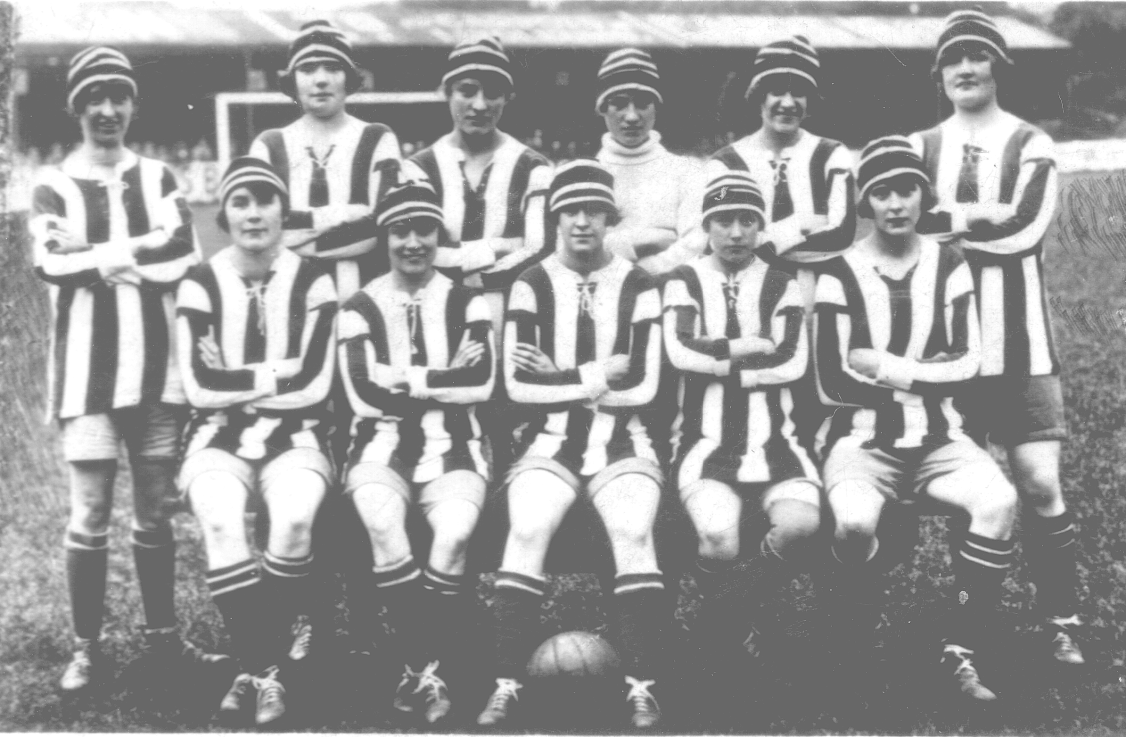
According to historians, football started in England in 1863 and quickly became a popular and masculine sport among countries in Europe and the world. The history of women’s football dates back to dual and non-dual women’s matches in Scotland and England. With the beginning of the 20th century, women in England, France, and Canada began playing football seriously, and there were also some women’s football matches held in Central European countries. One of the most memorable and historic women’s football matches in Europe took place in 1920 in Liverpool, England, at the city’s largest football ground. In this match, the teams of Dick, Kerr’s Ladies and Helen Ladies Lancashire faced each other in front of 53,000 spectators, and even the doors of the stadium were closed to tens of thousands of others who wanted to attend because the stadium could not accommodate them.

This is a picture of a beautiful sunset.Dick, Kerr's Ladies
The Dick Kerr Ladies team, one of the first women’s football teams in England – Photo of Jean and Peter Briggs.

The Football Association of London considered this match as a serious threat and in 1921, the most influential football association in England, banned women’s football for 50 years and deemed it illegal. This ban caused various challenges for women’s football in Europe for some time, but in the 1930s, women’s football teams emerged in France and Italy, which continued to operate in the margins and secretly until the end of World War II.

After World War II, the first European Women’s Cup was held in 1957. Until the legal ban on women’s football in England was lifted, many countries had women’s football teams and 35 countries participated in the Women’s World Cup.

Although football started much later in America compared to Europe, its formal and serious form began in this country in the 1970s. However, the first national women’s football team in America started in 1995 and interestingly, the first professional women’s football team in America began in 2001.

The noteworthy point is that the American society has never shown much interest in football. The men’s football team of America does not have a peak or special shine in its resume and currently holds the 24th rank in the FIFA rankings. In contrast, American football is highly popular. But what is the reason for the advancement of women’s football in America to the point of winning championships at the international level?

Researchers in the field of sports attribute the popularity of American football – a highly masculine sport – to, on one hand, the 1972 Title IX law which mandated gender equality in universities and educational institutions and required legal action. The field of sports is one of the areas where gender equality is being achieved in universities and educational institutions.

The book “Finding the Movement” (Women’s Movement) by Anne Enke invites researchers in 2007 (page 4) to examine feminism in unexplored spaces in order to accurately assess the dimensions of the women’s movement in America in the years following World War II. A movement that is referred to as the second wave of feminism in America.

In this regard, the challenges and tireless efforts of women who participated in American football teams in the 1970s and broke into the male-dominated world of American football have been highlighted. These women were actually pioneers who challenged their time and demanded that the public, especially the sports public, not ignore them and that the media cover their sports activities. Endor Lefevre, a professor of “Sports Management” at Adrian College in America, finds in interviews with women in American football teams in the 1970s that many of them, although they broke the structure and challenged the sports world, did not adopt a feminist identity and did not primarily see their activities in relation to the women’s movement. Despite all the efforts of women to enter the field of American football, the presence and popularity of this sport in American society was so heavy that women were unable to have a successful presence in it.

However, the completion of the Constitution has created many opportunities in the field of sports, including football, for women and girls. Neena Chaudhry, director of the Equal Opportunities in Sports Department at the National Women’s Law Center in the United States, states: “I have no doubt that the opportunities we see for women’s football and other sports are due to the passage of the 9th Amendment to the Constitution (which aims to eliminate gender discrimination in educational spaces).”

The American women’s football team participated in international competitions for the first time in 1985. The team, who had quickly come together, received their uniforms the night before departing for the international competition and realized that all the sizes and measurements were for men. The members of the national women’s football team spent the night sewing and tailoring in order to be able to participate in this global competition.

Despite the limited budget for travel and men’s size clothing and other challenges in this World Cup, the women’s football team of America tied 2-2 with Denmark.

After the US women’s national football team won the 1999 World Cup, the fever for football among women and girls in this country rose and this sport became extremely popular among girls. Currently, in many parks in America, on weekends, there are girls’ football teams (even 5 years old and up) playing football. This sport, which is not considered an expensive sport, is also accepted by many families. One of the challenges of football in America is the lack of racial diversity in women’s and men’s football teams. Football players in America are whiter, wealthier, and more educated than the average American society, while in basketball and American football teams, players from lower economic and social backgrounds have a presence in these sports.

“بهترین روزهای زندگی شما همیشه در آینده است، پس هر روز را بهتر از دیروز بگذرانید.”

“The best days of your life are always in the future, so make each day better than yesterday.”uswnt1
The US Women’s National Football Team – Photo of NBC.

Nowadays, more than 30% of American families have one person who plays football, and American football is gradually losing its popularity among young people due to the risks associated with this sport, such as brain injuries, etc. Families are more concerned than ever about the consequences of this sport. It is noteworthy that during the years 2012-1977, football grew more than any other sport among women and girls in America.

Women’s sports in Iran

One of the most important topics related to women’s sports is public health and hygiene in society. Iran ranks 104th out of 180 countries in terms of health, according to Abdulhamid Ahmadi, the cultural deputy of the Ministry of Sports. He has announced that 50% of Iranian women are overweight, which is a result of a lack of physical activity. Champion sports is one of the demands and desires of women in Iran, and in recent years we have seen more attention from the media towards women’s champion sports, although it is still a serious obstacle and discriminatory in the field of women’s sports.

Despite all the challenges and social obstacles, Iranian women have been able to have a stronger presence compared to other majority Muslim countries on the global stage. Sports and access to sports facilities are one of the human rights of women. In Iran, this right has been gradually improving over the past 37 years, taking into account religious and customary considerations, laws, and prohibitions regarding women’s presence in sports and public spaces such as the beach and the sea. The international community is also aware of the restrictions in majority Muslim countries for various reasons, including cultural and traditional ones, and for this reason, the International Olympic Committee has set a goal to have 50% female participation in majority Muslim countries by 2020.

Dr. Moradi, one of the sports officials, titles the challenges of women’s sports in Iran in the specialized conference on women, sports, and media as follows: “Social factors are the first category of these challenges, and weaknesses in information and necessary advertising, lack of successful role models, neglect of some officials, minimal support from social media, fear of physical injuries from sports, weakness in support from educational centers for sports issues, minimal support from friends for participation in sports activities, and social factors are the main causes. Fear of damaging religious beliefs, adherence to Islamic customs and preserving hijab (when international federations do not require women to wear hijab in sports) becomes a challenge. The presence of a male-centric culture in the sports community, a mindset based on negative effects of sports on women’s appearance, negative attitudes and baseless beliefs about women’s sports, and lack of participation of public institutions in women’s sports are cultural factors. Opposition from parents or spouses, pregnancy and childcare

RTR1DLXK

The challenges of women’s sports in Iran are in line with the challenges faced by women in other majority Muslim countries. Iranian women are currently involved in 40 different sports, but there is a significant gender gap in the participation of men and women in major sports, with men participating 8.6 times more than women. Gender segregation in sports facilities is another challenge, limiting the opportunities for women. Some Iranian female athletes, such as Atousa Pourkashian and Fatemeh Karimi, have to train at home. The government’s budget and investments are primarily focused on men’s teams. Although the media has taken some steps in covering women’s sports events, we still see a lack of enthusiasm and interest in this matter. Gender discrimination in sports is the root cause of gender inequality for women. In Iran and some other countries, women are not considered equal citizens, and discriminatory laws, traditions, and cultural norms, as well as the power dynamics of the patriarchal system, deprive

Sources:

Farsi

1- Shafaf News and Arman News websites.

English

2- The United Nations report entitled “Women, Gender Equality and Sport” on the UN website, December 2007.

Chook, Elizabeth, why is the United States strong in women’s football, website nbc, July 5, 2015.

4- Jenkins, Matt, three reasons for women’s dominance in football in the United States, 18 News website, February 2, 2015.

5- Carpenter, Las, The Challenge of Diversity in American Football: A Sport for White People, The Guardian, June 1, 2016.

6- Muslim Women in Sports, Football Politics Website – Middle East Section

7- Ventisky, Patricia and Hargreaves, Jennifer, “Physical Culture, Power, and the Body”, Routledge Publications, First Edition: November 30, 2006.

8- “Bloomental, Karen, Let Me Play: The Story of Title IX, Book Publication for Young Readers, Literary Society, First Edition: July 1, 2005”

A Brief Look at the History of Nazism in Iran / Reza Najafi

Small souvenir

Simultaneous but meaningful coincidence, or as Carl Gustav Jung puts it, an interesting synchronicity, is that the time of writing this article coincides with November 9th, the anniversary of the “Kristallnacht” or the Night of Broken Glass. On this day in 1938 in Germany, the Nazis, with the help of pressure groups and the support of the police and government forces, attacked the homes and businesses of Jews and, in addition to physically harming them, looted their belongings and destroyed their places of residence and work. In one night, 7,500 businesses, 1,400 synagogues and prayer halls, and countless homes and places of residence were looted and destroyed; according to some reports, 1,300 people were killed and many others were arrested. This event marked the beginning of the systematic massacre of Jews in Europe, known as the Holocaust. As a result, November 9th is declared as the International Day for the

History of German-Iranian Friendship

Iranians are still found in abundance who believe in the Nazi propaganda about the common Aryan roots of Iranians and Germans, and therefore hold a special place for them and believe that if Hitler had won World War II, he would have turned the capital of this Aryan country into another Paris. This raw greed is enough to create regret and sorrow for this simple-minded group, due to the defeat of Nazism during World War II and the regret that if only the Germans had won the war, we would have also received this cloak of glory.

Germany’s attractiveness to a significant number of Iranians reached its peak after the rise of Nazism, but even before that, there were a group of intellectuals in Iran who had their hopes set on other powers such as Germany (and later America) in opposition to Russian and British colonialism, viewing it as a “third force” that could be used against them. For example, writers of the Kaveh magazine such as Taghizadeh, Mohammad Ghazvini, Jamalzadeh, Hossein Kazemzadeh Iran Shahr, and others belonged to this group. It should be noted that Kaveh magazine was published in Berlin during the first World War and its policy was mostly in support of Germany and the allied forces against its enemies, especially England and Russia. The expenses of this magazine were always covered by the German government, which provided political and cultural subsidies.

It can be understood from this that advertising and policies to attract the attention of Iranians to Germany existed even before the Nazis and their Aryan slogans. This policy began during the formation of the Kaiser government in Germany and in an effort to compete with other European powers.

“With the unification of Germany and the emergence of its new empire, this country soon found itself in competition with the great powers of Europe, especially Britain. The German Kaiser believed that the best way to weaken the British Empire was to keep it occupied with colonial conflicts. Wilhelm II had the idea that Islamic countries would rise up against British colonization, causing this rival to be so preoccupied with these uprisings that it could not pose a threat to Germany. He pursued this idea by traveling to the Middle East and declaring, “I assure the 300 million Muslims of the world that the German Kaiser will forever be a friend to the followers of Muhammad.”

Wilhelm II, who had discovered the effectiveness of using religion as a weapon against his enemies, encouraged the Muslim colonies of Britain and France to engage in “Islamic Jihad against the infidels”. In 1898, he appealed to the “proud Islamic nation” in a message and visited the tomb of Salah ad-Din Ayyubi, the great commander of Islam in the fight against Europeans, in Damascus and praised his jihad against the invading infidels. He also proposed to the Ottoman Sultan on the eve of the First World War to issue a global jihad against the infidels (Britain). Some Shia scholars also welcomed this call to jihad. They called the German Emperor the “savior of Islam” and gave him the title of “Haji Wilhelm Muhammad”. Many sincere Muslims believe that God has sent Wilhelm to liberate Islam from the hands of the infidel Russians and British.

With the outbreak of the First World War, just like what happened during the Second World War, many Iranians wished for Germany and its allies to be victorious in the war so that Iran could be saved from foreign domination. This wish, however, remained unfulfilled as Germany’s defeat in the war left them disappointed, but they sympathized with the defeated and showed more support.

images

From friendship with Germany to Nazism among Iranians.

The defeat of Germany in the First World War, the feeling of humiliation among Germans for this defeat, and especially the excessive demands of the winning powers in the war, which included heavy reparations on Germany, are considered among the roots of the rise of Nazism in Germany. Hitler, with his nationalist slogans and promises of reviving the power and greatness of Germany, succeeded in exploiting the wounded sentiments of Germans to gain power. The exhaustion of the people from the chaotic economic situation, crises, and social unrest, and the lack of security, led the Germans to turn to Hitler.

Interestingly, during this time, similarities can also be seen in the reasons for the success of Reza Shah in Iran. Reza Shah, relying on the ideology of ancient Iran, attempted to free the country from the domination of England and Russia, modernize the country, and bring it out of chaos and social turmoil. This was met with enthusiasm by some intellectuals and people. It was Reza Shah who tried to replace the word “Iran” with “Pars” (Persia in European languages) both within the country and in the world, in order to emphasize the Aryan origin and kinship of this country with the Aryans of Europe. It is not surprising that Reza Shah also looked to Nazi Germany as an ally in his efforts to reduce the influence of Russia and England in Iranian affairs, especially since the Nazis were also eager to gain influence in Iran through attractive offers and promises. They had various plans to penetrate the Islamic world, especially the Middle East, in order to compete

One of the bribes that the Nazi government gave to Reza Shah to gain his support was exempting “Iranians as pure and untainted Aryans” from the Nuremberg racial laws. This decree led to a large number of Jews in Europe receiving Iranian passports and being saved from death by the help of Iranian embassy employees on this continent during World War II. In some cases, this assistance was given in exchange for money, and sometimes simply out of human kindness by some Iranian diplomats. However, sadly, except for a few cases such as a TV series in Iran called “Zero Degree Orbit” or a brief mention by Abbas Milani in his book “The Shah’s Look”, few have spoken about this chapter in the history of Iranian relations with Jews and praised Iranian Schindlers.

The efforts of the Nazis to gain the support of Iranians were met with welcome from groups of intellectuals and ordinary people in Iran. If the publication of Kaveh magazine in its first period showed a friendly inclination towards Germany, it was the ancient Iran magazine that took a more extreme approach during the Nazi era. This magazine, which began publishing around the time of the Nazis’ rise to power in 1933, gradually took on a stronger scent of racism and Nazism and defended Nazi theories. Although this magazine was only published for one year, it was able to spread racist discourse and strengthen it. After World War II, the ancient Iran magazine was published again. On the other hand, Nazi sympathies among the common people in Iran became even more intense. The strange and sometimes superstitious beliefs that some of the Iranian masses had about Nazism and Hitler were mostly seen as jokes, and it was difficult for rational people to believe that these jokes were actually based on reality. But sadly and fortunately

A new book titled “Germans and Iranians” by Matthias Kuntzel has recently been published in Berlin, which has interesting references to our topic. The author of this book provides evidence that some clerics in Qom considered Hitler as an enemy of the Prophet of Islam and a group of scholars went so far as to say that Hitler was the “Imam of the Time” who has appeared to revive the religion of Muhammad.

Another interesting document is a report sent by Erwin Ettel, the German ambassador to Tehran, to authorities in Berlin in February 1941. He writes: “Our embassy has been informed for several months now from various sources that some of the clergy throughout the country are speaking about a new phenomenon; indicating that God has sent the Imam of the Time to Earth in the form of Adolf Hitler. Throughout the country, and without any intervention from our embassy, it has been rumored that the leader of Germany has come to save this country… In Tehran, a publisher has printed pictures of the leader (Hitler) and Imam Ali, the first Imam of the Shiites. These large pictures were hung on the right and left sides of the entrance to the printing house for several months. These pictures had a clear message: Ali is the first Imam and the leader is the last Imam.” He also writes: “If we can combine the clergy of the country with German propaganda, there is no doubt

The author of the book describes the Germans and Iranians that before the occupation of Iran by the Allies, strange rumors were circulating about Hitler. Some preachers were claiming that Hitler was an enemy of the Prophet of Islam and had a picture of Imam Ali under his shirt. On the other hand, some believed that Hitler was not originally a Muslim, but had become interested in studying and researching Islam. Some also said that the broken cross symbol that Hitler and the Nazis wore on their arms was actually the name of Ali written in a new calligraphy. Sadegh Hedayat mentions this ridiculous belief in his book “Haji Agha”.

Nazabad neighborhood in Tehran was founded during the period of Hitler’s popularity in Iran and its name was also derived from the word Nazism. This should be seen as a meaningful metaphor, as one of the areas of our capital that had a hand in igniting the flames of the Islamic Revolution, still carries such a shameful name and our ignorance of the origins and history of this naming remains the same as our ignorance of the hidden roots of Nazi ideology in society.

Soumkaa

From Nazi friends to Iranian Nazis and the Third Party.

Unfortunately, it must be said that Nazism among Iranians did not only remain in the realm of ideology, but also manifested in action. Iranian Nazis were found who strived to achieve their racist and totalitarian beliefs. One of the most well-known of these Nazis was Davood Monshizadeh, the founder of SUMKA (the abbreviated name for the National Socialist Workers Party of Iran).

He, who was studying in Germany in his youth, first tried to promote the unity of Iran and Afghanistan in Munich and was active in the Iranian and Afghan Association. From 1939, he collaborated with Bahram Shahrokh (son of the lord Keykhosrow), a famous presenter of the Persian section of German radio. Interestingly, Bahram Shahrokh often accompanied his ideological interpretations with verses from the Quran. Like other Nazis, these two preached that the root of all evils is British colonialism and that this country is being led by Jews.

Behram Shahrokh and some other Nazis justified Hitler’s anti-Semitic policies by comparing them to Muhammad’s conquests against Jewish tribes. During these years, Manuchehr Monshi-Zadeh had become a member of the Nazi party and was trusted by its leaders. He began working with the Nazi propaganda organization and wrote for “Das Reich,” the Nazi party newspaper. Monshi-Zadeh was so enamored with Hitler that he styled his hair and mustache in the same way and displayed a strange enthusiasm during his speeches, just like Hitler. He played a significant role in the relationship between Nazi Germany and Iran. His Nazi sympathies were so strong that, despite being a literature professor at Ludwig Maximilian University in Munich, he was severely injured while collaborating with the SS forces a few days before the fall of Berlin, when Soviet forces were at the gates of the city. He spent two years recovering in hospitals in Potsdam, Berlin, and Munich. Monshi-Zadeh returned

The ideology of the Third Way was based on the same slogans as the Nazis. The party in Iran initially worked against the occupying allies, but its main goal was to fight against communist ideology and it made great efforts to oppose the mass party. Eventually, this party clashed with the Pahlavi government and its leadership was transferred abroad. After some fundamental changes within the party, the remaining members joined forces with the forces of Bahram Aryana. Hatred towards Arabs and communists and the attraction of intellectuals were characteristics of the Third Way party. It is said that the forces of the Third Way later became active in the form of Pan-Iranian parties and attracted these groups; however, Pan-Iranians have always rejected their solidarity with Nazi racists.

The end result.

Perhaps Nazism in Iran can be considered a tendency towards the past that has now become apparent to everyone. Today, not only the Aryan identity of Iranians, but also the possibility of racial purity among any other nation, including Germans, has come into question. Not only now, but even during the time of the Nazis, they did not believe in the Aryan identity of Iranians or their racial connection with Germans. Nazi theorists, such as Alfred Rosenberg, believed that modern Iranians had no connection to the “Aryan race,” but still saw the use of Iranian emotions for their own advancement. He followed the teachings of Count de Gobineau, which heavily influenced the Nazis’ ideas about racial inequality, and looked down on Iranians and Easterners in general. It is easy to imagine that figures like Hitler and Goebbels considered Iranians to be their equals. The only thing that is missing from this picture is the political necessity behind the Nazi propaganda. This political necessity led Hitler to ally with the

Despite all of this, human rights activists in Iran always follow the activities of neo-Nazi groups with concern and caution. Just as our ancestors’ superstitious beliefs about Hitler and the Nazis were once thought to be jokes, the reality is that there are Iranian neo-Nazi parties, although they may seem like jokes, unfortunately they still exist. This is where we must remember the words of Griboyedov, who once wrote: “I will tell you truths that are more unbelievable than any lie.” The point is that due to the prohibition of such organizations, neo-Nazis have underground activities and as a result, it is impossible to accurately estimate the overall size of this iceberg that we only see a piece of on the surface. However, because it is possible to remain anonymous in the virtual world, Nazi sympathizers can freely express their views in that space. Therefore, exploring and investigating the virtual world is an appropriate method for guessing the seriousness of the racist movement in Iran. Browsing the virtual

Sources:

Amini Najafi, Ali, Germany and Iran Relations, “Aryan Race Unity”, BBC Persian Website, 15 December 2009.

2- The BBC Persian website, 6 Bahman 1384.

Negotiations and human rights activists/ Amin Qazaei

[/caption]

No text provided. Please provide text to be translated.Amin-Ghazaei
Amin Ghazaei

When in early April of this year, the Islamic Republic, along with the negotiating team of the 5+1 countries, read a framework or draft of a possible agreement in the future (and with different readings!), some inside Iran, especially those who are supportive of the so-called reform movement in Iran, considered it as a definite victory for the reformist government over the principlists. These individuals simply ignored the statement that clearly stated “until everything is agreed upon, nothing is agreed upon.” It only took a short time for this wishful thinking to be shattered. Some Iranian military officials declared that contrary to the terms of the agreement, they will not allow any inspections of Iranian military facilities (1) and even Hassan Rouhani claimed that the day after the agreement, all sanctions should be lifted at once (2); something that is both impossible and against the terms of this statement. The more interesting issue is that there are clear contradictions between the published terms of the agreement by the Western negotiators

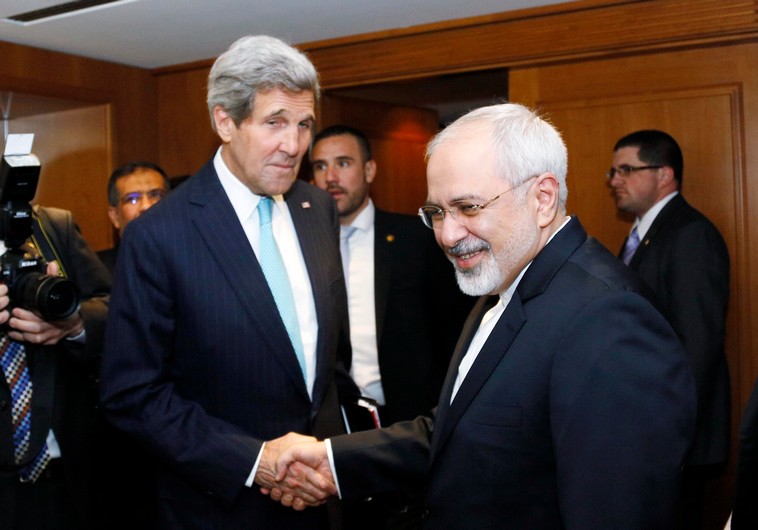
This agreement, whether it happens or not, has no relation to the Rouhani government, as we all know that the negotiations, even if indirect, are under the supervision of the leader of the Islamic Republic and no agreement will be reached without his prior approval. Therefore, the result of the negotiations, whatever it may be, should not be attributed to the Rouhani government. This conclusion is important for the future of human rights, as it shows that the Rouhani government and its representative, Zarif, are not the ultimate decision-makers and even if they have good intentions, they will not have the power to influence the issue of human rights. The nuclear agreement is a decision made at the leadership level and should not be seen as the result of government efforts, which can or want to negotiate on human rights. It is wishful thinking to assume that the Rouhani government has the will or good intentions to improve the human rights situation in Iran; as statistics also show an increase in human rights violations

However, some may argue that the resolution of the Iranian nuclear issue will shift the focus of media and reports towards human rights issues in Iran. In other words, the Iranian nuclear crisis has shed light on the human rights situation in Iran and resolving this issue could potentially lead to international pressure on human rights in Iran. To reject this notion, we must once again refer to the contents of the statement. In most clauses, it is stated that:

The IAEA will have regular access to all nuclear facilities in Iran, including the facilities in Natanz and the former enrichment center in Fordow, and will use the most modern and up-to-date inspection technologies.

The specified time period in this statement is ten to fifteen years for these inspections and fulfilling Iran’s commitments. Therefore, it is highly likely that media attention will continue to focus on these inspections, delays, and potential restrictions, as well as reports from sending bodies, potential violations, and suspicious activities of the Islamic Republic and others. It is certain that the Iranian nuclear crisis will not be resolved by any agreement and will not be archived. Even with Iran’s closer approach to the ability to produce nuclear fuel, there is a high probability that Western reactions to these violations and lack of cooperation will become more severe.

It is also a naive thought to believe that with the signing of an agreement, Iran will return to the international community, as Obama’s propaganda phrase after reading the agreement in Lausanne suggests, normalize relations with the West, and the Islamic Republic, in order to maintain this new position, will show a stronger reaction and sensitivity towards human rights conditions in Iran.

Both lifting the sanctions to have an impact on the economy of this country will take time and re-imposing them. It has been mentioned in the statement:

“Sanctions by America and Europe against the nuclear issue will be lifted after the IAEA confirms that Iran has taken key steps towards its nuclear rights. However, if Iran fails to fulfill its commitments, these sanctions will be reinstated.”

These statements are also ambiguous and impractical. First of all, it is not clear what the key steps are. How is it possible that while Iran has less than a year to produce fuel for building a bomb, the lifting and then re-imposition of sanctions can force them to retreat? Also, how can companies and economic enterprises open accounts and invest in Iran or engage in economic transactions with Iranian authorities under such uncertain conditions that can be lifted or re-imposed at any time? Under such an unbalanced political situation that can change with an IAEA report at any moment, Iran’s economy will be completely insecure for foreign companies. Contrary to the statement, sanctions do not have buttons that can be turned on and off at will. Considering that the imposition of sanctions and observing their impact on the behavior of the Islamic Republic took at least two years, it is impossible for the West to suddenly or gradually lift the sanctions and thus disarm itself for negotiations and pressure on Iran.

With the complicated situation of Iran’s nuclear crisis, it is completely wrong to assume that any future agreement will open the way for pressuring the Islamic Republic towards violating human rights. There will be no definite agreement, sanctions will not be lifted all at once, and even in the short term, tensions between the Islamic Republic and Western countries will not disappear.

After all these years, it must be clear to everyone that international pressure (which usually remains at the level of rhetoric and condemnation) has had and will not have any effect on the behavior of this government towards human rights. The problem with those who hold these views is that they do not want to accept two simple and obvious realities:

  1. The violation of human rights has been institutionalized in the Constitution of the Islamic Republic.

  2. The laws of Shariah mean the foundation and basis of the judicial laws of the Islamic Republic, which inherently conflict with the most fundamental human rights.

Therefore, it is better not to pretend that the violation of human rights in Iran is solely due to the extremism or reactionary beliefs of certain groups (such as fundamentalists) within the Islamic Republic. The contradiction between the laws and actions of the Islamic Republic and human rights is inherent in its nature and will not be resolved by simply shifting positions or changing policies. As I have shown, not only will the (unlikely) resolution of the nuclear crisis not lead to a change in the behavior of the Islamic Republic towards human rights, but fundamentally, the violation of human rights in Iran is rooted in Islamic law, the constitution, and the nature of this regime, and will not change with a change in behavior or political stance. It is very regrettable that a human rights activist would be pleased that the Islamic Republic, solely for the sake of maintaining its relations (or credibility) with the international community, would show respect for human rights or align its laws with them. The attempt to gain points or appease

I’m sorry, there is no Farsi text provided. Please provide the text to be translated.

Sources.

We will respond to the request for a visit to Iranian military centers with “hot lead”, choice, 30 Farvardin 1394.

Rouhani: We will not sign any agreement unless all sanctions are lifted, handwritten, 20 Farvardin 1394.

3- According to the annual report of 2014, the status of human rights in Iran, Harana News Agency, 9 Bahman month 1393.

The right to peace in life and death / Dr. Farhad Sabetan

The characteristics that differentiate various religions from each other are not few, but it can be said that at least in terms of two fundamental principles, religions agree: the sanctity of life and the reverence for death. Religions consider human life as a journey that usually begins with birth and continues after death. In some religions, life even begins before birth and humans continuously embark on different stages of their journey in the earthly world. Even those who do not believe in religion still value life and view death as a respectable phenomenon in the cycle of nature.

However, in the midst of all this, when the fire of prejudice and narrow-mindedness blazes and the pride and desire for superiority of the powerful becomes so overwhelming that it tramples upon the peace of life and death, it seems that even the fundamental principle agreed upon by the religious and the non-religious is sacrificed and the meaning of living and dying is lost, and the respect for life and death is buried deep within the ground.

This is an image that the Baha’i community in Iran has been facing since the early days of the revolution. The birth of a human being, the honor of creation, which is celebrated and revered in every society, is conditional and dependent on one’s beliefs in Iran. If one is born with a certain belief, their life is considered sacred and blessed, full and active, happy and attached. A newborn who has not yet chosen their own beliefs, is sent to prison from the beginning of their birth with their mother, is humiliated and ridiculed from the start of their education in kindergarten and elementary school, is punished and reprimanded in high school, and ultimately deprived and neglected in university. The continuation of their journey in this tumultuous life does not include any celebrations, as they are deprived of employment and prohibited from doing business. Their marriage is considered abhorrent (and in fact, not recognized at all according to their beliefs), and their blood is wasted. They are not

In the midst of all this destruction, humiliation, excommunication and annihilation, why the resting place? A sacred place for eternal peace, and a place that only serves as a reminder for the survivors, what else is safe? How is it that every religion and belief, even the non-believers and atheists, do not do this one thing? But in Iran, the Bahai cemeteries and shrines in several cities, including Najafabad, Isfahan, Qaemshahr (which has been destroyed not once, not twice, but four times), Yazd, Marvdasht (twice), Abadan, Gilavand, Mashhad, Borujerd, Jiroft, Semnan, Sangsar, and Sari have been destroyed and this destruction and disrespect continues. In many of these cemeteries, in addition to destroying the shrines, they even set fire to the mortuary buildings. In Mashhad, the

On the 11th of Ordibehesht month this year, the Islamic Revolutionary Guard Corps of Iran began excavation at a cemetery in Shiraz that was once owned by the Bahá’í community and holds historical significance for them. This cemetery, known as the “Eternal Garden” by Bahá’ís, has been in their possession since the early 1920s and has been used for burials in Shiraz. In 1984, it was confiscated by the government and at that time, the gravestones were destroyed and the main building was demolished. Ownership of the land changed hands and three years ago, the Revolutionary Guard Corps of the province announced that they are the owners and plan to build a “cultural and sports center” on the site. Was the unjust, unreasonable, and inhumane confiscation of this cemetery not enough, that now the honorable citizens of Iran must “exercise” on the bodies of the dead and engage in “cultural”

In that eternal garden, approximately 950 Bahá’ís have been buried, among them 10 Bahá’í women from Shiraz who were hanged on June 18, 1983, at the peak of the campaign against Bahá’ís and their condemnation to execution. These 10 women, the youngest of whom was 17 years old and the oldest was 57, were accused of completely fabricated, baseless, and meaningless charges (such as being “Zionists”) and an illegal accusation that is not even considered a crime (such as teaching children’s classes). They proudly chose the noose over this fleeting world. They were deprived of the right to live and the right to choose. They endured immediate torture for the sake of an eternal reward, to rest in peace in the heart of that eternal garden. But the hand of injustice and the heart full of hatred took even that peace away from them. Just as they were deprived of the right to live and the

I swear to you, what you believe in, the dead have nothing to do with you. At least do not take this one right from them. Let them rest in peace…

Invalid line of activists on reporting “Let him be human” / Witness Alavi

The story of human rights violations in Kurdistan is a tearful tale. However, this bitter narrative, this open wound, was either denied for a long time or portrayed as a great lie to victimize the oppressed, or it was told in such a vague and sometimes heroic way that it was difficult for the audience to believe. In this unfortunate land, for a thousand and one reasons, and most importantly for their seemingly unbreakable resistance, the people have been experiencing oppression, imprisonment, torture, and execution as a daily part of their lives for years. And the bitterest part is that they had gradually become accustomed to not being heard and even worse, hearing the cheers of the opposition, who themselves have been wounded by the oppressive regime.

But the issue was not just the suppression of the margins by the center and the indifference of the opposition to the center. The bigger tragedy was the silence of the supporters or the endless doubts of the movements and individuals whose title was “human rights activists” or their job was reporting human rights violations. This group, who had made their political interests the guiding light of their human rights activities, were a perfect example of human rights monitoring and reporting, where “we are the voice of humanity”.

In this way, defending the rights of a victim of human rights violations was dependent on identifying their political interests, methods of struggle, and their identity. It was clear that the reporter’s perception of the victim’s human rights violation was related to the issue of territorial integrity, and it determined whether a human right had been violated and whether it should be reported and exposed, or if it was simply a case of “armed separatism” being punished.

“این تصویر یک پرنده زیبا در حال پرواز است.”

This image shows a beautiful bird in flight.sanandaj-01
Reporting from Kurdistan – 1378 – Photo from the archive of human rights activists in Iran.

According to this perspective, the victim of human rights violations in Iran is a political or civil activist who has peacefully opposed the entire political system or certain parts of it and could not, in principle, be Arab or Baluch, and his territorial integrity of Iran was also his red line. This political perspective on the issue of human rights, which excludes Kurds and Baluchis in particular and “other non-conformists” in general, has been the guide for many years for the human rights reporting – an important and effective part, not all – political human rights activists in Iran and, of course, a guiding light for the positions of many opposition forces and even major independent media outside of Iran.

The red lines of my writing, however, had an impact on independent media, something that is referred to as the essential necessity of “preserving national unity and avoiding catering to ethnic interests.” In this way, the belief that regular and responsible reporting of suppressions in regions like Kurdistan or Baluchistan can intensify separatist interests in these areas, pushes news of their oppression to the margins.

This non-humanitarian perspective, influenced by political interests, contributed to the violation of human rights in Iran, leading to further polarization and deepening of the gap between the center and periphery. It moved in a completely opposite direction from its intended goal and victimized Kurds, Arabs, and Balochs. Their silence and acquiescence were seen as a natural response, and they were unable to envision their political future in harmony or even tactical cooperation with the opposition. Furthermore, they could not find a place for themselves in a human rights-based society, as envisioned by the high standards of human rights reporting.

In such a discouraging atmosphere, and despite the fact that glimmers of hope are visible, the establishment of a new human rights organization ten years ago must be seen as the birth of a source of light that could be seen from the end of the tunnel. “The birth of the human rights activists in Iran” should be seen as the beginning of the end of politicized and centralized human rights reporting in Iran. The organization had two distinct characteristics from the very beginning of its activities, which indicated a serious and different approach. Firstly, the organization clearly introduced two of its main officials, and secondly, it published its news and reports with precise details and non-political and human rights literature.

“این تصویر یک پرنده در حال پرواز در آسمان است”

This image shows a bird flying in the sky.mahabad-04
A collection of protests in Mahabad is reported – 1378 – Photo from the archive of human rights activists in Iran.

But in addition to these two points, what distinguished the news of the activists from the paper or real organizations in those years, was the high volume of news about the violation of the rights of minorities, the same divisive ones, among the news of this group. This high volume of news about the violation of human rights in Kurdistan, specifically, created two perceptions in the audience at first glance: either the officials of the Kurdish group are responsible and have more access to news from Kurdistan and probably exaggerate in reflecting the news, or this is just a way to create marketability and attract more audience by publishing both true and false news from a source that cannot easily be verified.

However, neither the officials of that time were active in the group, nor did the group’s approach to reflecting the news change, and almost none of the group’s news was denied or its falsehoods revealed. The story was simply that the human rights activists group was truly a group of mostly experienced prisoners whose concern was not political orientation or method of struggle, but rather the victims of human rights violations, regardless of their identity, ethnicity, or religion.

Kurdistan news on the website of the collection and its periodic reports were seen more than news from other regions, as there are a high number of human rights violations in Kurdistan and the collection did not have a basis for censoring news and reports. In a short period of time, many people were attracted to the collection and the possibility of verifying the truth and ensuring the accuracy of the news, and as a result, their rapid dissemination increased even more than before. This led to an increase in the volume of news related to Kurdistan and, of course, other ethnic minorities on the website of the collection.

The commitment of the officials of the organization to human rights principles and their avoidance of political games within the organization, as well as their steadfastness in reporting human rights violations throughout Iran, greatly contributed to the promotion of the organization’s name. The organization’s commitment to explicit and accurate reporting of human rights violations in the long term has gained the trust of many audiences, including Kurds, Turks, and Balochs, who have joined the organization’s website and collaborated with the organization.

The suffocating atmosphere of censorship regarding human rights violations in Kurdistan has been shattered, and the news and reports published by the organization were republished in reputable media outlets and on other organization’s websites. Now, labeling victims of human rights violations as “separatists” or “terrorists” can no longer prevent their situation from being reported. Regardless of their political stance or type of activity, everyone has fundamental rights that must be respected and any violations must be reported.

In the past ten years, the human rights activists in Iran have not only trained themselves to have the ability and desire to hear the cries and see the wounds of minority/marginalized prisoners, but have also practically forced other individuals and organizations reporting on human rights to put their own interests aside while reporting. Now, seeing news related to Kurdistan, Baluchistan, and Khuzestan among the daily news of almost all serious human rights organizations does not immediately lead to accusations of being criminals. This is one of the most important tasks that the human rights activists in Iran have accomplished over the past ten years.

Horse and Blue Moon – A Poem by Manifestations of Courage

Someone has stolen the horse from the hidden words.

Right in the moments.

That the nurse is not very young.

Anesthetize the patient first.

No lips.

In countless floors of the hospital.

Forgetting.

The snake is still slithering in the darkness of the leaves.

Still.

The story of poison on the asphalt street is repeated.

The moon is still shining on my forehead.

Still…

Come, let me hold your hands a little from the winter.

Come, let me deceive you a little.

Let’s be adorned with beautiful lies.

Come…

A horse without teeth is not white with these words.

The nurse is not very young.

He/she has blue hands.

The elevator that lifts the hair up, bones melt.

Someone is riding through the dark leaves.

And he/she wants to lie a little.

My nails are a bit similar to dog’s teeth.

Your corners.

It mocks with a shiny skin.

I am thinking about a little bit of a dog’s teeth.

And from the darkness.

I draw a line on your glowing skin.

You are becoming irregular geometry.

Red veins.

In your jade eyes, something can be seen.

In search of the historical roots of health and economic corruption / by Tous Tahmasebi

This is a caption

This is a captionToos-Tahmasebi
Tous Tahmasebi

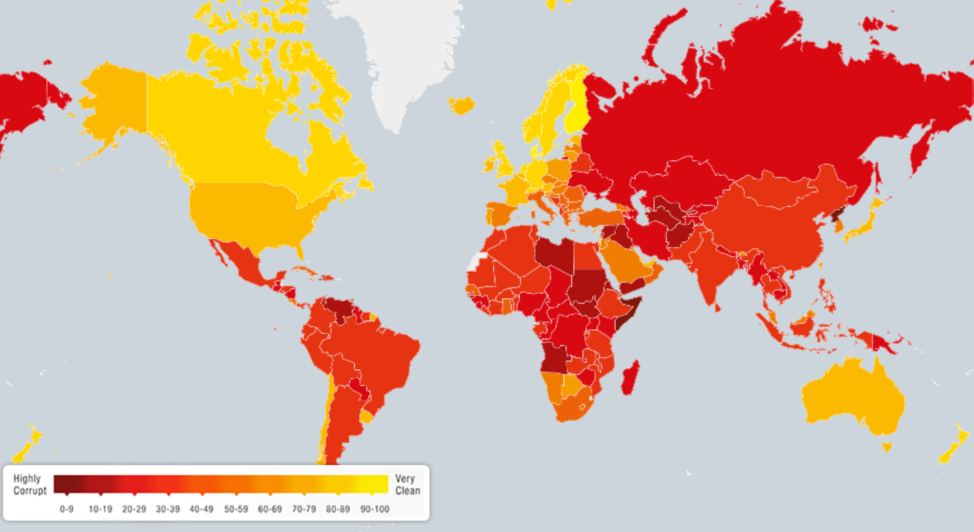
When you look at the global map of corruption, you are faced with important facts and wonders. In this map, which is annually published by the non-governmental organization Transparency International and uses criteria such as embezzlement, bribery, buying and selling of government positions, corruption in the judiciary system, and financial corruption among politicians and government officials as a basis, countries of the world are marked with a spectrum of the healthiest ones in bright yellow to the most corrupt ones in dark red. It only takes a few seconds for the story to become clear to you. The most corrupt are the current and former communist countries, as well as some countries in the Middle East and Africa that share the common feature of nationalist, populist, or Islamic fundamentalist governments. This list is completed by some developing countries in Asia, Africa, and Latin America that have not been able to provide the necessary institutions and structures for the rapid changes in population and urbanization in recent decades. On the other hand, the chart

Corruption in administrative and economic systems has a history as long as civilization. Plato believed that anyone who receives an extra gift for performing their duty should be executed. The historian Ammianus Marcellinus wrote in the 4th century AD that in ancient Rome, judges even demanded money for drawing a bow, and if the accused pays a good amount, even murder can be overlooked. In East Asia, rulers would turn to priests to learn about the future and the will of the gods, by observing the paths of stars or interpreting the entrails of sacrificed animals in temples. These priests, with their influential positions and their ability to manipulate their predictions for their own gain or loss, would accept large bribes to align their prophecies with the desires of the authorities or classes.

The main focus of intellectuals and philosophers on the issue of corruption until the 18th century AD was not on a structural or systemic level, but rather on an individual, existential, and moral level. For example, Dante, in his Divine Comedy in the 14th century, refers to the issue of “corruption” and sees its root in the moral weakness and decline of virtue and piety in people’s souls. Even a century later, Machiavelli, who is one of the founders of the new perspective and worldview on politics, although to some extent deviated from the classical perspective of the ancients, still did not reach a systemic understanding of corruption. Machiavelli believed that because most people are weak and lack piety and self-restraint, the ground for corruption always exists in them unless they are under the guidance and control of a great leader. When we reach the era of thinkers like Montesquieu and Rousseau, a change in perspective begins. Mont

The strong political movement that, parallel to Protestantism, changed the coordinates of the ancient world and established a new political-administrative formation in a part of the world, was limited by the traditional political tradition and the mutual commitment of the Anglo-Saxons. Dissatisfaction of English barons and farmers with the expensive wars and foreign policies imposed on them by Richard the Lionheart and his successor, led to a historic transformation known as the Magna Carta. John, in order to finance his wars, would periodically increase taxes and also try to reduce his expenses by cutting back on government services. This also caused great disruption and harm to the lives of his subjects. One of the services he cut off was the appointment of judges by the king to settle disputes. Without these judges, there was no one to resolve the conflicts and disputes of the people. The opposing nobility, citing a decree issued by John’s brother, King Henry I in 1100 AD, which recognized certain freedoms for the

When looking at the political map of the world one century later – in the late 19th or early 20th century – democracy is only present in the Protestant-Anglo-Saxon areas plus France. Once again, look at the map of corruption and economic health in 2015: the same yellow areas!

Fighting corruption goes through the path of gender equality / Naimeh Dostdar

This is a caption.Naeimeh-Doustaar
Naeimeh Dostdar

Are women inherently incorruptible? Do they have no inclination to bribe, collude, embezzle, or engage in illegal transactions? Is gender a factor that has led to the lesser involvement of women in forgery, document destruction, and abuse of power and position?

These questions are very old, but their investigation does not have a long lifespan. However, the attractiveness of these questions has led to the creation of a specific field for studying the “relationship between corruption and gender”, and groups of researchers are seeking to answer this question: If corruption and gender have relationships, what is the nature of this relationship and can we reduce administrative corruption in the political, economic, and service sectors by relying on gender?

Another important question in this area is whether “gender equality relations in the public sphere and politics and the level of corruption in a specific society are established or not?”.

These questions, in addition to being examined in global research, have also been studied in a research conducted in Iran by Davoud Hosseini Hashemzadeh and Leili Habibi. This study, titled “A Comparison of Perceptions, Experiences, and Attitudes of Male and Female Employees towards Administrative Corruption”, has been published and used as a source in this note.

Corruption.

What is it?

The International Transparency Organization defines corruption as the misuse of power for personal gain.

The first article of the Law on the Promotion of Health in the Administrative System and Combating Corruption in the Islamic Republic of Iran defines corruption as follows: “Any action or inaction by any natural or legal person, individually, collectively or organizationally, which is intentionally and with the aim of gaining any direct or indirect benefit or advantage for oneself or others, in violation of national laws and regulations, or causes harm or damage to public or collective property, interests, resources, or health and safety, such as bribery, embezzlement, profiteering, abuse of power or administrative, political, facilities or information positions, receiving and making illegal payments from public resources, and deviation of these resources towards illegal allocations, forgery, destruction or concealment of administrative and financial documents and records, is considered corruption under this law.”

Different forms of administrative corruption, such as receiving money and various rewards for contract agreements, disregarding protocols for personal gain, using government property for personal purposes, turning a blind eye to illegal activities, interfering in the judicial process, hiring friends and relatives, underreporting income, and ignoring taxes for eligible individuals, exist and continue to exist with varying degrees of severity and weakness in different societies.

Corruption, in terms of its size and extent, is divided into small and large corruption. Small corruption refers to bribery, where employees receive direct payments from their superiors due to their low salaries. Large corruption refers to the misuse of power by high-ranking political officials for personal or group gain.

Hayden Hammer, one of the researchers in this field, considers administrative corruption to include black, gray, and white corruption. The first type is considered undesirable and deserving of punishment by the general public, the second type is seen as undesirable by political elites, but often ignored by the general public, and the third type is not considered important by either elites or the general public.

Corruption.

And.

Gender.

In the first decade of the present century, many studies examined the relationship between gender and corruption. A study by the World Bank, published in 1999, showed that women are more trustworthy and have a higher social spirit compared to men. This research stated that the presence of more women in parliament leads to lower levels of corruption.

However, the belief that women are inherently more honest than men and therefore less prone to corruption has been called into question by subsequent research.

Another researcher named Goetz has said that supporters of this idea have ignored the limitation that gender relations create in accessing positions involved in corruption, especially in cases where corruption takes place through completely male networks without the presence of women.

This means that the reason for less corruption in women is that they are generally not present or have less presence in situations where corruption occurs.

In 2003, another argument was raised, which was that a fairer and greater presence of women in government and politics, meaning the existence of a more democratic system, and in fact, this democratic system, due to its democratic structure, leads to a reduction in corruption, not because women are inherently more honest than men.

Researcher Pembsdrof has studied the relationship between corruption and gender, and his temporary conclusion is that “if women are involved in potentially corrupt transactions, they are more likely to fail. This is not because women are inherently more honest, but because when they have the chance to engage in a corrupt deal, they act more opportunistically.”

Evidence about whether women have less tendency towards corruption compared to men is not conclusive enough and cannot provide a definite answer to this question.

A study titled “Attitudes towards Corruption” conducted in 2006 in Australia, India, Singapore, and Indonesia challenged the idea that women are less inclined towards corruption.

Prior to this, the research that had been conducted in this field suggested that the attitude of each gender towards corruption plays a fundamental role in its occurrence and continuation. However, the findings of this study showed that the gender differences observed in previous research were not as global as claimed and were likely more specific to certain cultural contexts. In countries such as Australia, India, Singapore, and Indonesia, no significant and distinct differences were seen in the attitudes of men and women towards corruption, and the responses of participants in this study showed that men and women are almost equally likely to give or take bribes. Regarding the punishment of bribe givers and receivers, no significant statistical differences were found between the responses of women and men.

Given that the actions of each individual in different matters are highly dependent on their awareness of the consequences and dimensions of those actions, and also considering that there must be necessary resources and conditions in place to carry out an action, in many cases women refrain from participating in administrative corruption or engaging in it because they do not fully understand the consequences and dimensions of it and do not have the means to do so. This means that women generally have less access to sources of power (management, employment, and political positions) and economic resources (capital) compared to men.

Despite these gender differences in understanding and observing corruption, it has never been completely denied. It has been shown that women witness and feel a greater degree of corruption and are more affected by it. According to research, women around the world deal with less corruption than men.

Effect.

Corruption.

Bar.

Women.

Another interesting point in the relationship between corruption and gender is the impact that corruption has on different genders. In fact, more important than whether women have the ability to engage in corruption or not, is the unequal system that results from administrative corruption, which limits the abilities of women and disrupts their path towards gender equality, ultimately reducing their ability to pursue their rights.

Based on this, various forms of sexual discrimination fall under the category of corruption, which women in particular experience in a biased and unjust manner.

One of the most significant impacts of corruption on women is its effect on their economic situation. Corruption weakens women financially and economically. For example, in Africa or Asia, due to cultural traditions, women do not have the right to own property and do not have access to capital. In such circumstances, if there is corruption in government financial support programs for women’s economic empowerment, women are practically deprived of access to these supports.

Furthermore, the existence of corruption in the political system causes women to face even more limitations in their political participation. In a situation where relationships, bribery, vote buying, etc. determine the political fate of individuals, women lose the opportunity to participate in politics because they do not have the ability to compete in these arenas.

In the field of women’s rights, corruption in social and legal structures such as security forces, police, and the judicial system has negative effects on women. The existence of corruption in these security and legal systems increases the possibility of human trafficking networks or men taking advantage of domestic or workplace violence, and women do not have the ability or courage to seek help from these institutions due to the presence of corruption. Offenders also remain unpunished by using this corruption (for example, by paying bribes). In some cases, even the police and support institutions themselves subject women to violence due to corruption.

Another point is “limited access to resources”. Corruption affects women’s access to resources and services. Although all members of society see the harm of corruption in the system, the situation is worse for women. For example, in societies where bribery is common, women, due to poverty and lack of access to money and capital, practically lose the opportunity to benefit from services obtained through bribery. These services may include educational facilities, which depriving women of them puts them in a cycle of violence and discrimination.

A look at research on the relationship between corruption and gender reveals a relatively clear result: in order to reduce corruption in a society, efforts must be made towards gender equality; because it is only in the shadow of gender equality that a democratic society emerges, and democracy may be the only known means through which corruption can be fought.