Different Lines – A Poem by Reza Ekvanian

Last updated:

April 21, 2026

Different Lines – A Poem by Reza Ekvanian

نکن

“Do not introduce your life and its various problems to me.”

It makes me laugh a little, even though I can’t handle it. Love for me. می‌برد

It becomes precious and erases the lines of happiness from memory.

I am a slave. They want me to forget the lines. از برابرت می‌گذرند

There are many; lines that pass through you. از آنها نیستم

They pass by you and there are many; lines that I am not one of.

I am one of them. In prison, I saw the lines.

I saw prison walls in the courtyard, I saw them in the rooms, I saw them on the walls.

I saw a time when people went from individualism to collectivism. همیشه

“Varied with broken faces and their fate and stories forever”

I, who am a poet in middle age, find pleasure in delightful activities. خطوط زنده توجه کنید

Pay more attention to extinct and forgotten lines than living lines.

I love the forgotten people, their mythical relatives are with me. شادی و سرخوشی به آن‌ها می‌بخشد

Their loneliness gives them a friendly appearance and in their company, they bring joy and happiness to them. نوشته شده

I have a smile on my lips. There are many lines written with pain.

They are being pulled. They are many; lines that carry a sad narrative with them. همیشه با من هستند

And many more; lines that are always with me. پیشانیِ مادرم انداخته‌ام، دنبالم می‌کنند

I have thrown myself on my mother’s forehead, they are following me; sometimes on the street, I have thrown myself on my mother’s forehead, they are following me.

They are tapping my shoulder and I am afraid of turning back and bringing them back. آدم‌ها

I know them and remember each one of them. Among all the people. جوان

“Only lines, just a few lines fallen on the forehead of that young woman.”

It is heartbreaking that it seems like they will never leave my mind.

Investigation of the issue of 12 missing Iranian Jews in an interview with Bijan Khalili.

12 Iranian Jews who at different times intended to illegally leave the country from the Iran-Pakistan border, never reached the other side of the borders and after almost 20 years, it is still said that there is no information about the fate of these individuals. Despite the remarkable silence, the pursuit of the status of these missing persons has progressed to the point of filing a complaint against the then President of the Islamic Republic of Iran, Seyyed Mohammad Khatami, by the lawyer of these individuals in the courts of the United States of America.

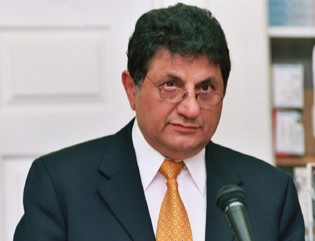
Bijan Khalili, one of the publishers of books in Los Angeles, America, who manages “Book Company” and himself was arrested shortly after the February 1979 revolution and spent some time in Qasr prison in Tehran, is one of the knowledgeable people in this field. In addition to having connections with many of their families, he has been one of the few individuals who, for a long time, has been informing about the situation of these individuals.

He believes that in a closed country like Iran, where they do not allow information to be disseminated in a normal manner and people to become aware, it is natural that they do not allow any documents in this regard to be broadcast and do their best to prevent it.

In order to investigate the issue of these missing individuals, we went to Mr. Khalili and asked him to provide us with more information in this regard.

Mr. Khalili, as the first question, please kindly explain what is the subject of the disappearance of 12 Iranian Jews and what period it is related to?

The subject of these individuals started from 72-73 (as far as I can remember); a group of Iranian Jews who wanted to cross the border of Iran and Pakistan and reach the other side of the border and go outside of Iran, went missing and since then, there has been no news of them.

Was the journey of these individuals a collective and joint action or was it an individual and unorganized work?

No, it has been an individual and unorganized action as they have attempted to cross the border at different times and have practically disappeared at different times as well. Therefore, this shows that this incident was unorganized.

In your opinion, why do these individuals have to resort to such dangerous and illegal methods to leave their country?

Unfortunately, there was an unwritten law in Iran during that time (1980s and 1990s) that did not allow Jews to leave the country. They had to provide a guarantor and put their house as collateral in order to obtain permission to leave Iran. Some of them, such as Mr. Shahin Nikkhoo who was also serving in the military, were not granted permission to leave the country. As a result, they would decide to illegally cross the border and if caught, they would face consequences such as 6 months in prison and possibly a longer military service.

It is evident that the reasons for these individuals leaving their homeland are due to existing pressures and continuous violation of their rights, as part of the Iranian Jewish community. However, on what basis do you hold the Iranian government responsible or accuse them of playing a role in their disappearance? Are there any documents regarding this matter?

In any case, the Islamic Republic of Iran must be accountable for where these individuals are; meaning when they are questioned, they must say what has happened to them; whether they have been arrested or what has happened to them after their arrest. In reality, since the moment when the question was raised by the families of the victims, activists, or human rights organizations at the international level, no answer has been given in this regard. However, some of the families live in Israel and therefore have been forced to hire lawyers to pursue this issue, and their lawyers have filed complaints against Mr. Khatami during his presidency, for this matter, in American courts. When Mr. Khatami traveled to America, the court even summoned him, but he immediately left America within 24 hours and never set foot on American soil again.

Bizhan1

Mr. Khalili; In your opinion, what possible benefit could there be for the Iranian government in regards to the disappearance of these individuals?

The answer to this question is $1 million! We don’t know either and in fact, it would have been great if we did. There is no answer and no one takes any responsibility, in reality we are all confused about this issue; the only thing that is always said is not to bring it up and not to do such and such because it will probably bring an answer. But in the past 20 years, since the first people disappeared until now, no answer has been given in this regard.

During this time, has there been any indication of the survival of these individuals or anything that could determine what has ultimately happened to them?

Specifically, the only ones who truly pursued and chased this issue were the families of the victims, who of course have different and numerous definitions. Some of these families were forced to stay in Iran during these years in order to have better follow-up. These families have had multiple trips to Zahedan, the border, Iran, and Pakistan, and one of their feet is also in Tehran and prisons to search for their loved ones and relatives.

Different accounts also state that, for example, a certain soldier said that we saw them, but when they went to find the soldier, he was no longer there; he either disappeared, deserted, or his service was completed, it is not clear. In other words, the situation is confusing. However, the only ones who can provide answers to this situation are the officials of the Iranian government; because there is evidence, such as prison documents, that no one has access to. The representative of the United Nations Human Rights Organization also does not have access to the prison files due to not being allowed to enter Iran, and we do not know if these victims were taken to official prisons of the Islamic Republic, or if they were in unofficial and private prisons, or if they were in the prisons of the Ministry of Intelligence. The only thing that is certain is that they did not leave Iran’s borders, because their families and some Jewish organizations in Pakistan searched for them and found no trace of them.

According to your statements, so far the Iranian government and other relevant organizations have not taken a clear position towards these individuals…

No, they do not show any practical reaction at all and it is not clear what specific policy exists in this regard.

Have human rights organizations – both inside and outside – taken positive steps to encourage or compel the Iranian government to clarify the issue of the disappearance of these individuals?

Unfortunately, no, at least I haven’t seen anything in this regard so far. We even contacted Mr. Shahid, the representative of the United Nations Human Rights Organization, and provided him with all the information and documents. They also interviewed two of the families of the victims who are in Los Angeles, and I was one of the people who prepared the groundwork for this and it happened in my own office, but in Mr. Shahid’s report, this issue was not seen.

See, our problem is that we have a police state like Nazi Germany. Imagine if the Nazis hadn’t been defeated by the Allies and their documents and archives weren’t seized, it would have been impossible to find evidence of the killing of Jews, Gypsies, and others. The opening of Germany’s Gestapo and SS and the discovery of extermination camps like Auschwitz and the liberation of those who remained there, exposed these killings. In a closed country like Iran, where they don’t allow information to be disseminated freely and people to become aware, it’s natural that they won’t let any documents in this regard be distributed and will do everything in their power to prevent it.

So having many documents by ordinary people seems unlikely, but besides the fact that these documents exist within the Islamic Republic, the intelligence organizations of major countries in the world also have access to this information; for example, we cannot claim that the massacre of 1367 in the prisons of the Islamic Republic has been hidden from the eyes of the intelligence organizations of America and Europe. Basically, it is impossible that, within a period of about 3 months, 5-6 thousand young Iranians or those who had a political background were executed and they did not give them. In fact, Western intelligence organizations do not make these documents available to the public in a timely manner, as they may want to use them for their own intelligence purposes, and they keep them for themselves and do not care about human rights.

This is not the Islamic Republic that I am talking about here, because the Islamic Republic is not committed to any principles or framework that we want to adhere to; we also expect human rights groups and civil society to expose internationally, and to put pressure on the government using their existing capacities, but we expect from Western countries, especially those who define their government within a democratic framework, to share any information they have about this with the people.

As a final question, why do you think that despite the numerous reports being published about various human rights issues and some of them gaining public attention, there has not been any specific news or report about the situation of these 12 individuals? As far as I know, it seems that your efforts in this field have only resulted in breaking the absolute silence…

The reality is that now the issue of the Islamic Republic must be so big that it receives attention and becomes a headline, otherwise it is not important for major news organizations in the world. For example, if six people are executed in a day, it is not enough and no one pays attention, but it must be at least 60 people to receive attention. This means that the horror of these issues has become commonplace and now the issue of executions in Iran has become normal, as well as the issue of arresting a group of people. For example, suppose before the detention of some minorities was a headline in Western media, but after repeated detentions and nothing happening, the appeal is lost – of course, this is how it is in Western systems and news must be appealing – and this is while this news exists, whether it becomes a headline or not…

Even if we look at the recent report by Mr. Shahid, there is no mention of any issues regarding Jews in Iran. One of our main problems is self-censorship. When the issue of Jews is brought up, people think it is related to Israel and Zionism, which leads to Mr. Shahid himself hesitating to write or mention the name of Jews in general. However, in the past 2-3 years, we have had two cases regarding Jews, one of which was very important and involved the killing of a Jewish woman in Joubareh, Isfahan. In this case, there was a mosque near the house of the Jews, and they wanted to expand it by taking over the land of their house. However, since this Jewish family did not want to sell their house, one of the Jewish women was attacked and killed by a group of hooligans – it is not clear if they were actually hooligans or not. We do not

We thank you for the time you have given us in the Khatt-e-Solh magazine…

Loss – A poem by Reza Ekvanian and Ali Hosseini

In the past, those days when we were still twenty years old and had a strange sense of poetry, “Dehdasht” was young and still had the scent of life. I and “Ali Hosseini” were good friends, always together, and still spent the late nights of the weekends together, reciting our shared poems; nights and poems that became known as our “Cheriki” nights and poems. After many years, we wrote poetry together again with Ali.

I have written about your arrival;

With my friends

Who are prisoners

We come from the meeting of death

From the meeting of the moon.

From the path we returned

The sun,

Had a heavy red sunset

In constantly burning

From the candles of your name

That with the wind

Dancing in the sky in all directions.

The interrogator says:

We know everything

And your white-haired wife

Has skillful meaty hands;

I look at her

And I don’t cry

Have you ever been calm like me

And have you tasted

The words of death

In your mouth?

Do this, my dear

Before you say

I am a death-obsessed and sad poet

And I don’t have a healthy soul and mind,

Do this, my dear.

I allow you to

Be in my place tonight

And at the age of six, fall from a fig tree;

I allow you to

Fall in love at the age of

9 Khordad 1395

Reza Akvanian

Ali Hosseini

Human dignity in international human rights treaties / Mohammad Mohabi

This is a caption

This is a caption.Mohammad-Mohebbi
Mohammad Mohabbai

The concept of human dignity, humanity, and human dignity refers to the honor, status, and inherent respect for humans, which has been a subject of great attention for religions, philosophers, and humanistic thinkers since ancient times. In fact, the history of human civilization is a testament to the efforts of prophets, philosophers, and humanists from the East and West to elevate the status and dignity of humans and defend their fundamental rights and freedoms. In the present era, the issue of human rights is still a significant topic. These rights, starting with the right to life which is the most natural right of humans, extend to spiritual rights that lead to human perfection and elevation, such as freedom of expression, freedom of the press, and freedom of thought. In the Universal Declaration of Human Rights, rights are mentioned that individuals benefit from simply because they are human. The foundation of these rights is the principle of equality, as all humans are equal in their human status. Therefore, it is not possible to

Human dignity and philosophy of human rights

The main essence of human rights is the protection of dignity and human worth. Every individual, regardless of gender, race, ethnicity, or religion, possesses equal human worth. The equal possession of human dignity and worth is a fundamental principle of human rights that cannot be compromised under any circumstances. Therefore, the source of equal and universal rights is equal and universal human worth, not based on gender, race, religion, or even dominant political ideologies. Therefore, the most important challenge of today’s world is the issue of paying attention to human rights and addressing the problems caused by their violation by governments. It can boldly be claimed that the present century is a period of focusing on this issue and establishing governments that can institutionalize human rights and guarantee their implementation domestically.

“Fundamentally, the right to life and human dignity is the basis and origin of human rights, which is supported by sociological and historical studies of human societies. These studies indicate that the connection, coherence, and unity of various human rights, such as the right to life, are so precise, mutual, and comprehensive that violating it in one area is equivalent to violating all of these rights, including political, social, economic, and cultural rights. Therefore, considering the increasing importance of these rights and acknowledging that international law discussions generally have a strong inclination towards the centrality of individuals in international affairs, and recently, there have been many efforts towards addressing human rights issues on a global scale, it is undeniable that addressing this issue is a necessity.”

Throughout history, reformers have strived to preserve the dignity of human beings.

Human rights and the promotion of individual and collective dignity of humans have always been a concern of humanity. In line with human dignity and rights, countless efforts have been made in the East and West to revive the lost rights of oppressed individuals, which have manifested in various forms. If Eastern thinkers have left valuable works on the nature of truth, the human spirit, and moral obligations of humans, Western scientists have also played an important role in the development of theories on the relationship between government and people. The history of human civilization is witness to the efforts of prophets, philosophers, and other humanists to elevate human rights and freedoms. The Code of Hammurabi, which was written three thousand years before Islam, took the initiative to regulate the rights of citizens and foreigners. Similarly, the Cyrus Cylinder contains explicit references to some of the principles now known as human rights, including freedom of belief and expression and the rights of minorities.

Most declarations and documents related to supporting fundamental human rights, although they have not been fully enforced and have faced many ups and downs, can be traced back to the late 18th century in the fundamental rights and other laws of Western hemisphere countries. These efforts have prevented inequality and injustice throughout human history and have compelled contemporary leaders to complete past actions, making these issues the most important topic of concern in international scales and global declarations. International organizations must follow up on these actions by establishing international rules and regulations to address this essential need.

International documents on human dignity and human rights.

Since 1948, when the Universal Declaration of Human Rights was adopted by the United Nations, numerous resolutions have been passed by member states of the organization. These include declarations, guidelines, statements, and others, which are not considered part of global treaties and are often not ratified by countries. The legal impact of these resolutions on human rights is not always clear, and they have been formed by the United Nations General Assembly.

In addition to statements, there are also less important declarations known as principles or guidelines. The desirable and influential outcomes of these statements, declarations, and guidelines are of interest to the United Nations General Assembly.

Governments, in practice, approach these rules in a selective and vigilant manner, with careful consideration and various examinations, and in many cases, based on international law, they impose certain conditions for themselves when approving and declaring. Some of these rules apply to all of humanity, while others apply to specific social groups (such as children, women, minorities, etc.). Some of these regulations, which apply to each group, are as follows:

  • Convention on the Rights of the Child 1959

  • European Convention on Human Rights of 1953

  • The American Convention on Human Rights of 1969

  • Convention on the Rights of Persons with Disabilities, 1975

  • The Convention on the Elimination of All Forms of Discrimination Against Women of 1979.

  • African Charter on Human and Peoples’ Rights of 1981.

  • The Convention against Torture and Other Cruel, Inhuman or Degrading Treatment or Punishment of 1984

  • Convention on the Rights of the Child of 1989

  • European Social Charter of 1990

  • Islamic Declaration of Human Rights of 1990

  • The Law on Elimination of Violence Against Women, 1993.

  • Declaration Against Racism and Racial Discrimination 2001

  • Statement Regarding the Fear of Attack from Foreigners and Unbearable Issues in 2001

  • ی کردن

    Resolution 43/173 of the United Nations General Assembly adopted in 1988 to support the protection of all individuals against any form of detention or imprisonment.

  • The Declaration of the Rights of Persons Belonging to National, Racial, Religious and Linguistic Minorities, dated December 18, 1992.

  • The Law for Protection of Ethnic and Cultural Minorities in 1993.

  • Optional Protocol to the Convention on the Elimination of All Forms of Discrimination against Women adopted in 1999.

These are among the steps that have been articulated in this field and in various legal declarations; although the failure of human rights organizations, which number more than 120 agencies, has led to major abnormalities at the global level today and has posed significant challenges for humanity, the approach and support of nations and governments can provide a suitable platform for transformation. Therefore, there must be a movement beyond the affirmation of concepts and principles, and the transformation of human rights into a living reality for all, by all nations.

The scope of human dignity and human rights measures

a) Legal Inclusivity of Standards:

In general, human rights and freedoms can be divided into three categories from an executive perspective. The first category includes declarations and statements of international organizations that do not have legal obligations, and even if governments implement them, it is due to observance of international courtesy or temporary expediency. However, the second category includes fundamental and essential rights that must be universally respected and their violation is not permissible, and their existing rules have been recognized by the international community as non-derogable rules (Article 53 of the 1969 Treaty). Violation of these rights can lead to reactions from global human rights organizations, even the Security Council, as the final stage. The third category, despite being obligatory at the level of rules, is not mandatory; therefore, human rights are superior to other types of human rights.

b) Geographical Scope of Comparisons:

Human rights standards can be divided into two categories from a geographical perspective. The first category is international standards, which are established through global bodies such as the United Nations or other international organizations, or global conferences. Declarations and statements from international bodies mostly fall into this category, such as the International Covenant on Civil and Political Rights. The second category, however, is regional standards, which are developed in accordance with the global human rights movement in different regions of the world, taking into account the specific situation of each region. Examples of this category include the European Convention on Human Rights and the American Convention on Human Rights.

c) Scope of Executive Measures:

Human rights treaties, some of which are binding and others merely declarative, have general and specific coverage in terms of their implementation. Universal standards are those that encompass all individuals and groups, disregarding specific groups and focusing on the rights of all individuals regardless of incidental characteristics such as gender, religion, nationality, race, etc. Most of these standards fall under this category. Specific standards, on the other hand, do not include all individuals and groups, and their goal is to protect a specific social group such as women, children, people with disabilities, workers, migrants, prisoners, war victims, or racial, ethnic, or religious minorities. Examples of such standards include the International Convention on the Rights of the Child and the International Convention on the Political Rights of Women.

Last word

Human rights and protection and preservation of human dignity are considered one of the most important concerns of societies yesterday and today and are desirable and preferred. In fact, the existence of mass killings, racial discrimination, poverty, human trafficking, etc. indicate that human societies are always at risk of violating fundamental human rights and safeguarding human dignity requires practical mechanisms to achieve common human ideals such as peace, security, elimination of discrimination and respect for human dignity.

In the current era, the development of human rights – which undoubtedly was a truly idealistic step for humanity and through which values such as human dignity, justice, freedom, equality, etc. were recognized at a global level for humans, despite being devoid of flaws and criticism -, is commendable and praiseworthy. In this regard, it seems that the problem is not in the weakness of the principles of the Universal Declaration of Human Rights; rather, the problem lies in the lack of a decisive and effective solution for its implementation. The rights that are placed under the title of “human rights” are natural and inherent rights, not necessarily subjective. Natural human rights do not mean anything other than that their observance will make human life more humane and rational, and will bring more security, well-being, prosperity, and flourishing for humans. These rational goals are the result of the long and historical experience of humanity and are accepted by the general public.

In the Universal Declaration of Human Rights, the meaning of “human” refers to a being whose nature and essence surpasses religion, race, skin color, and the like. This means that a human is first and foremost a human, and then chooses their religion, customs, beliefs, thoughts, and way of life. Therefore, the ultimate principle of human rights is the inherent dignity of every human being.

Sources:

  • Philosopher, Hedayatollah, The Place of Human in Contemporary International Law, Legal Research Journal, Issue 35-36, Shahid Beheshti University Press.

  • Qari Sayyed Fatemi, Sayyed Mohammad, The Ethical Justifications of Contemporary Human Rights, Legal Research Journal, Issue 35-36, Shahid Beheshti University Press.

  • Amir Arjmand, Ardeshir, the ambitious global leader: Reflections on human rights, Legal Research Journal, Issue 21-22, Shahid Beheshti University Press.

  • Philosophy, Guidance of God, United Nations and Human Ideal, Legal Research Journal, Issue 18, Shahid Beheshti University Press.

  • Zou Al-Ayn, Nader, Supporting Minority Rights in International Law, Legal Research Journal, Issue 15, Shahid Beheshti University Press.

  • San Jose, Amparo, The Responsibility of Governments for Violations of Human Rights, Translated by Dr. Ebrahim Bigzadeh, Legal Research Journal, Issue 29-30.

  • “Growth of Spiel, Hector, Universal Human Rights and Cultural Diversity, translated by Dr. Ebrahim Bigzadeh, Legal Research Journal, Issue 38, Shahid Beheshti University Press.”

  • Qari Sayed Fatemi, Sayed Mohammad, Human Rights Treaties, Legal Journal, Issue 28, Publication of University Office of International Legal Services, 1382.

Naghbi at the beginning of the days of human rights activities of activists / Behrouz Sadegh Khanjani

“این عکس یک پروفایل است”

This photo is a profile picture.
Behrouz Sadegh Khanjani

I first met Kian Rafiei in the winter of 1385 in cell 209 of Evin Prison. He was a young man who was trying to contribute to the advancement of human rights in Iran. I remember they transferred him to our cell alone and he had some conceptual paintings in his hands; all of Kian’s paintings showed his concern for human rights.

Despite all the dangers that existed during those years, Kian Rafiei tried to bring the voice of political prisoners to the outside world. At that time, social networks were not as strong as they are today, and people like Kian, with their limited abilities, tried to make the voice of prisoners heard by the world so that they would not be forgotten. As I mentioned, due to the lack of widespread use and power of social networks, it was common for civil, human rights, and political activists to be imprisoned and for no voice to leak out. Many were completely forgotten during those years and suffered a bitter fate. I think this was the need that led Kian and his friends to think about establishing a human rights activist group. A group that has been able to be the impartial voice of countless spectrums and groups. This group has confronted the countless executions of the Islamic Republic, which have terrified the international community, and has repeatedly denounced the oppression against religious and political groups, as

Regarding the dissemination of information about the situation of Christians in Iran, there were two active groups at that time. The first group was our friends and other Christians, who were mostly non-Iranian; but among the Persian and non-Christian media, the only group and source of news was the active community. This has been the case throughout these years and the community has always been able to make the voice of Christian prisoners in Iran heard. For example, in the same year of my own detention, about 15 Christian citizens were detained throughout Iran; at that time and in that chaotic news environment, the only media and group that considered our detention important and informed about it in Persian media was the active community.

This is a picture of a beautiful sunset over the ocean.rafiee01
Efforts of a group of activists to support Kavon Rafiei – 1386 – Photo from the archive of human rights activists in Iran.

It must be said that the secret to the success of the group of activists is that they have made human rights their top priority and do not even have the slightest bias towards green or purple tendencies. Unfortunately, many Persian-language media outlets, with their own biases and agendas, sometimes sacrifice human rights. Additionally, this group of activists has been able to recognize the Iranian identity of all ethnicities and minorities without discrimination, and more importantly, they pay special attention to the rights that every human being deserves. For this reason, this group even pays attention to the rights of criminals that we all know, for example, drug traffickers. In this regard, the issue is not that the group of activists approves of drug trafficking, the issue is that they are seeking transparency in judicial proceedings and defending the rights of those who have committed a crime.

This humane and violence-free perspective is a great success for the group of activists, and I hope that all those who work with this group will become more successful and triumphant in their goals day by day.

Confronting Discrimination in Ethnic/Racial Issues – Karim Khalaf Dahimi

In the absence of impartial and independent news media, the human rights activists have exposed human rights violations against Arab people and other ethnic and religious minorities, leading to the failure of the closed media space of Persian-language media outlets. We have witnessed this news organization being used as a source by some human rights organizations and even media outlets, which is commendable.

Connecting with human rights activists of different ethnicities and documenting human rights violations in various regions is not an easy task and requires a lot of resources and capabilities. However, the group of activists and the news agency of Herana have been able to cover these news to some extent.

IMG_3264

It is expected that this human rights organization and its news agency -Hrana- will expand its activities and reduce discrimination in reporting ethnic issues, and will not consider red lines for its activities in order to clarify human rights violations in different regions. It should defend and publish news about individuals, especially prisoners, without taking into account their political beliefs.

Mahmoud Amiri Moghadam: The group does not have any specific ideology or political direction.

Mahmoud Amiri Moghadam is the founder of the Iranian Human Rights Organization. The main focus of this organization is on the issue of fighting against executions.

Mr. Amiri Moghadam, in an interview on the occasion of the tenth anniversary of the establishment of the Human Rights Activists Group in Iran, emphasizes that “discrimination exists in all levels in a country like Iran” and speaks of peace: “The Activists Group publishes all human rights violations without discrimination and without considering the political, intellectual, religious, and sexual affiliations of these individuals, and in fact, any group in Iranian society can find news related to themselves among the news of others.”

He mentions “having a cohesive structure and not representing a specific ideology and political direction” as one of the most important reasons for the longevity and continuity of the activities of the group of activists.

How would you describe the human rights activists in Iran and if you could highlight one positive aspect of their performance, what would that positive aspect be in your opinion?

It can be said that the group of activists has the highest production in the field of human rights violations news among Iranian groups, and this news production greatly helps to raise awareness and also informs all individuals who are following these issues. Of course, I am more of a follower of the group of activists in terms of news, but I know that they also have other activities.

Another positive point is that in reality, all cases of human rights violations are published without discrimination and regardless of the individuals’ political, ideological, religious, and sexual affiliations. In fact, any group in Iranian society can find news related to themselves among the news on this platform. This kind of behavior is very valuable, considering the country’s conditions where discrimination is seen in all levels of society. This discrimination is prevalent in the government system, but it also exists in other forms among society and even within the civil society, and it is visible and evident in news reporting. I believe that this feature of rejecting discrimination is perhaps one of the most important characteristics of this platform.

This is a picture of a beautiful sunset over the ocean.03
The activist group reports violations of Dervish rights – Photo from the archive of the human rights activist group in Iran.

What do you think is the most important factor for the sustainability and continuity of a human rights organization? Specifically, what differences can you mention for the human rights activists in Iran in this regard?

I believe that the concept of a civil society in Iran, both inside and outside the country, is a relatively new phenomenon. The collective is one of the groups that has a lot of resources in Iran and has continued its activities outside the country, and it is also one of the oldest institutions working in this field. I can guess that the reason for this is having a cohesive structure and not representing a specific ideology or political direction.

One of the reasons that groups cannot survive in Iran is most likely due to conflicts. It must be said that although most individuals who pursue such activities are concerned about human rights issues, personal matters usually lead to a decrease in activities or the group’s inability to continue. This is in a situation where when activities are based on an ideal of human rights, it can attract more individuals and even if those who are currently involved do something else tomorrow, new individuals can come and fill their place. The fact that new individuals can join the group and its sustainability is not dependent on one or a few specific individuals is a characteristic of a group that can endure.

As I mentioned, considering the fact that our civil society is young, ten years of activity is a lot of time for a group that was under pressure and suppressed within the country. Despite all of this, they have been active and deserve congratulations.

Mr. Amiri Moghadam, if you were to speak to your colleagues and companions of this group in the past decade, what would it be?

“این عکس یک منظره زیبا از کوهستان است که در طبیعت اطراف آن قرار گرفته است.”

“This photo is a beautiful landscape of a mountain that is surrounded by nature.”04
The group of activists reports the violation of rights of dervishes – Photo from the archive of the human rights activists group in Iran.

I truly say to them, do not get tired. Everyone who works to defend human rights sometimes faces difficulties, criticism, and pressure, but as you have continued so far, continue your path; because the work you are doing is very valuable and strongly needed, and we all benefit from these activities. Of course, above all, those whose rights are violated, the activities of human rights organizations and institutions are important to them, but for all those who care about human rights, these activities are very important.

In conclusion, I hope that human rights violations will decrease so that your work will also be reduced. But as long as human rights violations exist, continue your work and path with energy.

We are grateful for your time that you have given us.

Naghbi on the story of the deprived lives of the messengers/ Amir Chamani.

This is a caption

“This is a caption”Amir-Chamani
Amir Chamani

His name is Rasoul. He is a villager whose fate is like the fate of all villagers, the underprivileged, and the hardworking who have been pushed to the margins. It seems that the history of these people is a history of suffering, hardship, poverty, deprivation, and class oppression. Rasoul was born in a year when the slogan of contemporary Iran was the elimination of deprivation and the government was that of the oppressors and the tormentors. It was the year of revolution, the year fifty-seven. Now, thirty-seven years have passed since those days and Rasoul, with a severed finger from his work in the factory, has returned to the village with his two children, aged eight and two, leaving behind his life as a single worker in the city. He spends his retirement in a village in the suburbs of Ahar (in East Azerbaijan province).

When Rasoul was a teenager, he migrated from his village to the city of Ahar with a thousand hopes and dreams to continue his education. Don’t get me wrong; by education, I don’t mean university. In the village school, only up to middle school was available, and those who wanted to continue to high school had to go to the city. He spent a few years and a lot of money from his family’s hands, working part-time and doing summer farming in the village, and got his diploma. He thought it was a step forward and had his diploma in hand, and if he also had military service, he could definitely get a job somewhere and escape the fate of deprivation in the village and become someone who didn’t have the bitterness of his father’s life. He immediately went to military service. He had gone from one deprivation to another. He didn’t know anyone to order his service to be in a suitable place. Like all the deprived, he was sent to

After completing his service, with a high school diploma and the end of his service, after a few months of searching for a job, he returned to the village to be the inheritor of his father’s fate. He worked in agriculture for a few years until he got married. The income from agriculture, which had declined, was not enough to meet the needs of his family. The traditional farming methods and the drought and drying up of wells, rivers, and springs had left them with no solution. Like other young people in the village, he had to go to the city to work. He started working in a bakery and for years, he would travel from one city to another, away from his family, and work in bakeries. Until one day, upon the request of an old friend, he returned to Ahar and started working in a private water management company, with a salary according to labor laws but without insurance. After a few years, when he complained to his employer about not

He returns to the village and uses one year of unemployment insurance. Until three years ago, he finds a job in a small brick and block workshop. This time with the approved salary of the labor law and insurance deposit. He says that this small workshop was completely non-standard and the issue of work safety there was almost like a joke. There wasn’t even a simple first aid box there. Production was done in a primitive and traditional way and most of the machines were outdated. Nevertheless, there was no other solution but to work and receive a meager salary to feed his wife and child and cover their living expenses. About three months ago, while working on the hydraulic oil machine used for block making, the hose of the machine gets punctured due to decay and Rasoul, without knowing that the pressure of the oil can cause serious harm to his body, puts his finger on the hole to prevent the oil from spilling and causing a mess. A tragedy happens. The pressure of the oil punct

Up to this point, the situation has been completely disastrous. But there are other tragedies as well. This workshop was not covered by accident insurance and the workers were only covered by social security insurance. They say that for the past two years, we have repeatedly told the employer that accident insurance is a major issue and the workshop must be covered by this insurance. But there is not enough supervision over these types of workshops and accident insurance is not mandatory. On the other hand, the employer, in this state of economic recession and reduced production capacity, has no desire to incur additional expenses; therefore, he has refrained from taking this action. As for Rasoul, the insurance has only paid for a portion of his medical expenses and rest period salary. According to insurance experts, if the workshop had been covered by accident insurance, they would have paid him approximately twenty million tomans as compensation for his severed limb. But he has been deprived of this right as well. The only solution is to file a