Psychology of tyranny

Last updated:

April 21, 2026

Psychology of tyranny


A look at the book.

Blue angel.

The works of Heinrich Mann.

Perhaps most of us are familiar with Heinrich Mann’s creations through the famous film “The Blue Angel”. In fact, this film, with some changes based on the novel by the master, Heinrich Mann, was turned into a movie and after the amazing success of this film, the name “The Blue Angel” became the main title of the novel.

This novel, alongside the novel “Small Town”, is one of the most important works of the author’s early period, which was first published in 1905 under the title “Master Onorat, or The Fate of a Suicide”. The protagonist of the novel is a county secretary named Rat, which means “advice” in German, but his students and colleagues call him Unrat, which means “garbage” and “filth”.

Gradually, it becomes clear in the novel that this classification – calling advice “filth” – is not entirely baseless. This confident and narrow-minded teacher, who holds a certain social status for himself, loses his position in society due to his passionate love for a girl from a lower class who is pursuing a career in singing and opera, which is considered a third-class profession. The young singer, who is the love of his life, shamelessly drags down his esteemed and bound life and destroys it.

Heinrich Mann, who always had a hand in the “naturalism” style, goes beyond the framework of German naturalism in this work and, like some of his short stories, presents a critical work about German society during the time of Emperor Wilhelm. It should be noted that Heinrich Mann’s style cannot be easily placed in one of the literary schools. He is both the heir to the literary traditions of German Romanticism and, at the same time, influenced by the French writers of that time under the influence of realism and naturalism. It is natural that contemporary literary movements such as expressionism have also had no effect on him. In short, Heinrich Mann’s style is a combination of several literary schools; perhaps the story of the old love has little resemblance to romantic themes. On the one hand, the dark and gloomy atmosphere of the story also gives a Gothic feel. The contrast between the protagonist of the story, or rather the anti-hero, and the society and system

With all of Heinrich Mann’s works, he is not solely a naturalist because naturalists, due to their pessimistic view of humanity and their cynicism towards its potential, saw the root of corruption not only in the political systems governing societies, but also within the individual. Perhaps here, where Heinrich Mann also has a critical eye towards social issues in society, he is influenced by the realists who had a more critical perspective towards political and social structures. In this work, Heinrich Mann’s criticism is directed towards the relationships and educational structures of Germany at that time. This work, along with many others of his, paints a clear picture of Germany in the late 19th century and the methods of education prevalent in its schools.

It can be said that many of Heinrich Mann’s works are types of German power-based body analysis and also predict Nazism. But the author’s analysis is not one-dimensional. Unlike others, he does not see autocrats as only powerful and forceful, but in the novel “The Blue Angel,” he reveals a weakness in the character of Professor Unrat, who is himself an autocrat. Heinrich Mann shows that autocracy is more a result of weakness and mental illness than power. Autocrats and dictators are not superhuman and terrifying beings, but rather individuals trapped in their own hidden complexes of insecurity and inferiority, who now seek to alleviate their unconscious self-hatred and humiliation by commanding others and playing the role of a sacred power, to relieve their own unconscious humiliation and inferiority.

According to my opinion, the nobility of Heinrich’s work is also hidden in these lines, especially in the point he makes about how rulers can also be humble and lowly, and what is more important and comforting for us is that the inevitable fate of these lowly ones will lead to humiliation, degradation, and destruction. A closer look at the majority of these holy powers reinforces this belief; where did Hitler end up? Or Mussolini, Ceausescu, Pinochet, Saddam, Gaddafi, etc.? If we look closely at the current state of each of these individuals, what do we find other than a childhood filled with humiliation and the ridicule of adults around them?

But the subtle point is that the desire for power and greatness for compensation is not from these opportunists. The subtle point that Heinrich Mann also refers to is that such individuals cannot continue their game of power and their sacred mission to the end; the psychology of the person who has become a parasite on himself becomes destructive. The unconscious of such individuals, who are also disgusted with themselves, have a tendency towards collapse. It is no wonder that Hitler, at the height of his power, makes the most foolish strategic mistakes that even Napoleon would have laughed at. All dictators have made these inexplicable mistakes; like Ceausescu, who was dragged down like a snowball and didn’t want to see what was happening in his country until the moment of his death, or Saddam, who until the end, clung to power, or Gaddafi, who until the end, refused to go into exile and stuck his head out of the sewer pipe… There are many examples, but it seems

Barry Owner is also in the position of a power broker and its justifier, a self-centered person who opposes any human emotions around him, but as soon as a emotional feeling arises in him, he becomes restless and his ethical thoughts and his preaching turn into pure disbelief and chaos, and his preaching turns into filth and his preaching turns into filth.

However, what gives the story its realism and tangibility is the focus on the conditions of self-sufficiency that require a hierarchy and subordination, which we find most prominently in the character of Konrad in this novel. In any case, Heinrich Mann also reveals the ultimate fate of any form of fascism in such works. The final conclusion is that any form of self-sufficiency will ultimately lead to humiliation and defeat, as the foundation and essence of the existence of any form of fascism does not stem from power, but from a hidden weakness.

The final point is that the psychological analysis of Heinrich Mann’s personal struggles, which gives a special value to the novel “Blue Angel”, is not very noticeable in the screenplay of this work and naturally in the film “Blue Angel”. Therefore, it is recommended to the viewers of this film not to be satisfied with it and to seek the real “Blue Angel” in Heinrich Mann’s novels.

For further reading, please refer to:

“Blue Angel, written by Heinrich Mann, translated by Mahmoud Haddadi, published by Parsa Books, 1389.”

Literary Schools, written by Reza Seyed Hosseini, published by Payam, 1353.

Introduction to Literary Schools, written by Dr. Mansour Sarvat, published by Sokhan Publications, 1385 (2006).

Naturalism, written by Lillian Forrest, translated by Hassan Afshar, published by Nashr-e Markaz, 1375.

The trees of Valiasr are waiting for the blades to be cut.

One of the primary and fundamental examples of human rights is “security” and the related discussions. This means that if we want to talk about human rights as a principle, without a doubt, the first step and topic is security.

Throughout history, one of the most prominent measures of democracy has been ensuring the safety of its citizens in various areas.

Without security, it is not possible to talk about the citizenship and civil rights of the citizens of a country; because in the absence of a security index in a political society, all other indicators and factors are overshadowed and no claim of citizenship rights is possible without ensuring security.

179787_10151476662530044_206511287_n

In the past, security was defined as “protection of citizens against any arbitrary actions of the government” and specifically, arbitrary actions of the government referred to unlawful detention, trial, torture, and similar actions. However, with the progress of human societies in all areas, including civil and political rights and granting abundant privileges to citizens by the government, the concept of security and its indicators and examples have become broad and extensive. Nowadays, when talking about security as one of the citizen’s rights, examples such as mental security, visual security, job security, and the like are also mentioned.

As mentioned, if we consider security in its specific and primary meaning of “protecting citizens and their rights against any arbitrary actions of the government,” then it can be said that any behavior that is arbitrary and without legal permission and without the intellectual support and backing of the people of a society is in some way a threat to the security of that society. These illegal behaviors can be related to the physical and bodily realm, such as arbitrary detention or unlawful trials, or they can be related to the mental and spiritual realm of the members of society.

It is worth mentioning that in a society, there are psychological concepts that are closely related to the values and social norms of a nation and are part of the people’s personality and national pride. Examples include shared historical memories, historical monuments, a place that represents a specific event, or the existence of things such as a memorial building, ancient trees, or an old street. These things actually strengthen the common national spirit and guide a society towards a collective will to live.

In cases where the government intends to attack one of the mentioned or similar cases with arbitrary and non-expert actions, with any motivation and goal, it can be said that it has deliberately and purposefully or out of ignorance and unawareness, jeopardized the security of citizens and disregarded or violated one of the most fundamental and primary rights of its citizens.

Based on this, the action of the Tehran Municipality in cutting down the old trees on “Valiasr” street, which have a historical background and are sometimes registered as historical sites, is one of the prominent examples of violating the rights of citizenship and the safety of Iranian citizens.

The reason for this strange action, whatever it may be, whether it is based on rumors of installing security cameras or opening up the visual space of commercial centers, or whatever the municipality of Tehran has announced – meaning due to infestation, disease, and potential danger – this behavior is a clear violation of the civil and citizenship rights of the residents of Tehran and on a larger scale, the people of Iran. These trees are a part of the historical memory and a symbol of tradition for one of the most important and oldest streets in the country, which has been destroyed and diseased due to mismanagement of the municipality – which is quite ironic for a country that claims to be a pioneer in space exploration – or have become victims of profit-seeking and material interests of a particular group.

It is interesting that the official website of green spaces and parks in Tehran city has also amusingly and comically announced the details and reasons for this plan in a statement, which is expressed as follows:

9/82 به پایان رسید”

The identification of all the plane trees in four districts of Tehran municipality, from Tajrish Square to Railway Square, began on 30/8/82 and ended on 4/9/82.imag0013

The month of 11/82 has ended and based on this, a total of 8948 trees were planted along Valiasr Street, with 7922 green trees, 775 yellow trees, and 251 red trees identified. These trees were initially marked with red identification cards.

The next stages will include the following resources:

“Repairing the crown coverage of trees.”

Decrease in accumulation per unit area.

– Attracting water and nutrients.

“Koodd is superficial and shallow.”

Preventing sewage from entering rivers.

Fighting against pests and diseases.

In this plan, corrective measures have been communicated to the relevant areas by the esteemed Deputy of Urban Services of Tehran Municipality in the form of an eight-month scheduled program, which is summarized as follows:

1- Separation of Valiasr Street (AJ) from its current path and relocation of trees throughout the street to create a garden.

2- Pruning dry branches and thinning the crown of trees to prevent potential hazards caused by the weight of the crown and remove them.

3- Completely remove the existing concrete and stone pavements from the floor of the street river.

4- Soil improvement and appropriate bedding.

5- Repairing the irrigation system with a regular cycle and preferably drip irrigation for watering trees.

6- Wakari planted mature 5-year-old seedlings in the place of fallen trees.

7- Protecting trees against various damages.

8- Data collection and management of linear tree systems.

9 – Using non-chemical methods to combat pests and diseases.

“Kandeh Kani” is necessary after cutting to free up space for new seedlings or a group of new seedlings, unless it is possible and feasible to use the potential of root growth.”

The Deputy of Urban Services at the Tehran Municipality, who usually denied cutting down any trees in the capital, confirmed this news in an interview with “Bahar” newspaper and said: “Experts from the Faculty of Environment at the University of Tehran, who had visited these trees as consultants for the preservation plan of Valiasr trees, determined that six trees in this area were dangerous.” Mojtaba Abdollahi continues: “These trees were creating risks for pedestrians due to decay, so they were cut down at the first opportunity and will soon be replaced by other trees.” Ali Mohammad Mokhtari, CEO of Tehran Parks and Green Spaces Organization, also considered the tree cutting legal and said: “This action was taken with the opinion of the tree investigation plan consultant and the approval of the Commission of Article 7.”

And there are many opinions from other experts who, with a superficial review of the virtual space and the widespread newspapers of the country, are trying to justify this action; but they are unaware that these claims are not only not expert, but also have no scientific or legal basis, and in fact are a worse excuse than the sin itself. Because in a country where slogans of standing on the peaks of science and conquering global management are given, it is strange that the organization responsible for managing its capital, with large budgets and extensive facilities, does not have the ability to protect a few old trees that have historical and national value for the people of the capital and all of Iran?

This issue and other pieces of the informational puzzle that we put together, have highlighted the dilemma of cutting down trees for the installation of security cameras, occupying the minds of every patriotic Iranian and environmentalist.

In any case, these trees were also cut down and in a daily manner, another right of citizenship and civil rights of Iranian society was violated, which, of course, considering the many and more important rights that are taken away from Iranians and violated daily, this action may not seem significant. I hope that one day the people of Iran and its government officials reach a level of personal growth and human values and human rights, where even cutting down one tree is considered a great sin in the waste of citizenship rights in Iranian society.

Politics in asylum

Migration and asylum, especially the wave of movement from poor countries to wealthy countries, has been a hot topic of ethical and political debates. Even today, the fate of elections in European countries and even in a large and wealthy country like Australia depends on the immigration policies of different parties; unfortunately, human rights activists are too busy with individual cases in the field of asylum and migration and are less involved in discussions on identifying the damages, finding legal solutions, or ethical principles in this area.

Migration and asylum, on paper and according to signed conventions, may seem like a humane agreement, but unfortunately in practice it has always been subject to government policies and personal exploitation. According to the 1951 agreement, a refugee is someone who can reasonably demonstrate that they are being persecuted or in fear of persecution due to their nationality, religion, race, or membership in a particular political group, and is now unable or unwilling to return to their country because of this fear.

Nowadays, several wealthy countries have agreed to grant asylum to such individuals. These countries, which have been flooded with refugees, examine the individual’s reasons for seeking asylum through meetings and an administrative process in order to grant them the right to asylum.

It can be boldly stated that this agreement, due to its vague and closed definition of refugees, has become a tool for opportunists to take advantage of one side and the migration policies and preferences of host countries on the other side. Seeking refuge has become a game of “blue lion” where countries can open or close it, decrease or increase it whenever they want.

UN-Van

Since deporting rejected applicants back to their own country can trigger social sensitivities, wealthy countries have accepted refugees as part of their immigration policies.

The immigration departments of these countries view refugees not as asylum seekers, but rather as individuals who have applied for migration through asylum, and therefore respond to applicants based on their own discretion and needs.

This policy has emptied the concept of asylum and these countries use their own criteria for immigration, such as expertise, youth, and even non-political status, to accept asylum requests. In the meantime, the church, under the pretext of supporting vulnerable refugees, practically opens the door for some opportunists to temporarily convert to Christianity in order to have their asylum requests accepted. Since these cases are private, there is no one who can prove it, but it is something that almost everyone admits to.

The consequences of these policies have resulted in the opposite outcome: genuine refugees are forced to make the difficult and often impossible journey to Europe illegally from countries such as Afghanistan, Iran, Iraqi Kurdistan, or Syria (many of whom have lost their lives in the process), or remain in Turkey for years under horrific and inhumane conditions, waiting for their asylum requests to be accepted and for a chance to fly to a third country. These seemingly compassionate and refugee-friendly countries officially ask Turkey and Greece to prevent the entry of smuggled refugees and only accept a very small number of them themselves.

This is happening while some opportunists, by creating fake and appealing stories about the immigration policies of wealthy countries, easily come to these countries through the asylum channel and direct flights. Therefore, asylum and immigration are highly class-based phenomena. Wealthy countries accept middle or affluent classes of third world countries, who have enough money to travel and temporarily reside in these countries, under the name of asylum and as a means of helping refugees. These individuals take advantage of the limited channel that has been opened for real refugees and in practice, weaken and depoliticize the opposition outside the country. Some of them temporarily join opposition parties outside the country to get their asylum requests accepted, and after a few self-promotions and receiving an answer, they leave political activities and thus harm the political space and these parties. That is why, despite the entry of thousands of political and social refugees from Iran during these years, political parties outside the country have not grown at all! After a short period of time, many of

Some may object that migration for a better life is a “right” for anyone, or that conditions in Iran are so difficult that anyone who leaves Iran has the necessary qualifications to claim asylum. This objection is essentially an excuse and self-deception.

The main issue here is that these abuses have made it difficult, and sometimes impossible, for genuine refugees, especially those who arrive in Turkey, to be accepted.

Western countries claim that they receive enough refugees every year and therefore have no reason to accept refugees from Turkey! However, refugees are actually seen as migrants, not based on their actual circumstances and reasons, but based on the migration preferences of the host countries. Many opportunists are aware of these migration preferences and flock to these countries to seek asylum, while real refugees are still on their way or have to endure terrible conditions in Turkey for years.

The concept of seeking refuge being tainted also brings a bigger blow to political activists inside Iran. Activists who are under persecution in Iran and cannot directly fly to Europe, must endure the terrible living conditions in Turkey and wait for a long time. Therefore, the difficult conditions of seeking refuge, in practice, lead to their satisfaction with staying in Iran and enduring the possibility of imprisonment. Additionally, the fictional storytelling has caused less attention to be paid to the experiences and violations of human rights in other asylum cases.

Ghachaagh-Aust

This is not the first time that human rights have been polarized and victimized by government policies in the world. The guest worker policies, especially pursued by West Germany, the Netherlands, and France in the years following World War II, have effectively created a lower class of workers from Turkey, Morocco, or Algeria in these countries who were constantly at risk of being expelled due to their status. On paper, these workers may be cheaper than native workers, but they still manage to obtain much better and more suitable conditions in the host countries. The governments claim that we are defending a multicultural and multiracial society!

Michael Walzer criticizes these policies, writing: “These guest workers experience the government as an all-encompassing and terrifying power that shapes their lives and controls all of their movements without ever asking for their opinions. Migration is only a superficial option and deportation is a constant and practical threat. These workers, as a group, are a class without a voice or opinion; they are both exploited and oppressed as a class and are unable to organize and defend themselves.”

Of course, in the media, these guest workers are referred to as a symbol of a free world and a multicultural society. After the collapse of the Eastern Bloc, workers from Eastern European countries also became victims of this plight as guest workers. The economy of these countries has been paralyzed due to uncontrolled migration of young labor, while these workers are constantly at risk of being expelled from the country and losing their residence rights as soon as they lose their jobs, they must return to their home country.

We are witnessing both in the field of migration and in the field of asylum, the politicization of immigrants and refugees. By adopting discriminatory policies in asylum affairs, immigrants have become passive, apolitical, and opportunistic substitutes for political refugees who are now forced to endure the most difficult conditions in Iraq, Turkey, and Armenia. This geographical division between wealthy and poor refugees has emptied the concept of asylum of its meaning and given it an ugly and repulsive face. Immigrants are also constantly at risk of being expelled and lose their ability to politically organize and defend themselves.

Both refugees and immigrants expect to integrate into the host country, which means being equipped with language education and job readiness, and also accepting the current circumstances without any hesitation.

In practice, the term integration means that immigrants and refugees are asked to strive to become ordinary citizens. Such a person must always avoid abnormal actions, which are also referred to as “political struggle”, in order to be ordinary.

Resources.

The Stanford Encyclopedia of Philosophy – Immigration

دهم ماه مه سال ۲۰۱۰

May 10, 2010

<

The link provided is to the Stanford Encyclopedia of Philosophy entry on immigration.

2. دو

Walzer, M., 1983, .

دوایر عدالت

Spheres of Justice

نیویورک: کتاب پایه

New York: Basic Book

The demands of civil society behind Rouhani’s cabinet.

Hassan Rouhani, the seventh President of the Islamic Republic of Iran, on August 4, 2013, at his inauguration ceremony, presented the names of 18 proposed ministers to Ali Larijani, the Speaker of Parliament. After the announcement of the proposed ministers, various analyses were made by political groups and the media. Some considered this cabinet to be a security-oriented one, while others saw it as composed of technocrats. All of these opinions were biased, waiting for the Rouhani cabinet to bring about change. Some saw this change as a barrier to their own interests and tried to prevent it by publishing articles in their media and revealing the past of these ministers. They attempted to influence the targeted group in Parliament, the conservatives, by using titles such as “connection of some names to sedition”, in order to prevent them from reaching the government. They were somewhat successful in this matter by promoting their own special propaganda about Najafi, Milani, and Sultanifar,

In all of these expressions, the only issue that was missing was how the introduced cabinet’s relationship with civil society is and how it can be in the future. It seems that in the past 35 years and eleven different cabinets of the Islamic Republic, civil society has been absent as a key player in fundamental equations, wars, and sometimes definitions and praises of governments.

This text aims to provide a general overview of the Rouhani cabinet and then examine its relationship with civil society. Fundamental questions arise in light of the performance of past governments and the failure of civil society to achieve its demands over the past 35 years. Can we expect an organic relationship between civil society and the government given the political structure of Iran, or should we not anticipate a bright future like recent years? In this process, have civil society and existing groups and organizations fallen behind equally over the past 35 years, or are we facing a government that is completely uncompromising with civil society as a whole? Each of these questions will be examined separately in this text.

Cabinet of the clergy

“Sorat News” website, affiliated with948DBD9D-7CED-4A07-8B25-725969418E46_w640_r1_s

The article writes to the conservatives about reviewing the track record of Rouhani’s proposed ministers: “Out of 18 people, at least 4 of them have a special background in security and intelligence. Of course, the security background of the President’s team is not limited to these 4 people and includes a much larger circle of advisors and decision-makers around him.” On the other hand, Rouhollah Hosseiniyan, in an interview with ISNA parliamentary correspondent, evaluates the proposed cabinet of Hassan Rouhani and says: “Thank God, this cabinet is very security-oriented and most of the proposed ministers are from a security background, except for the proposed Minister of Intelligence who is a religious and political figure.” Additionally, Ahmad Amirabadi, representative of the people of Qom in the Islamic Consultative Assembly, has also told the media that the flaw in Rouhani’s proposed cabinet is that the individuals are “among the major sins and somewhat security-oriented.” He also, like Rouh

If we add these analyses to the published documents about the “Start Oil” contract, which were published in Kayhan newspaper, which opposes the introduction of Zanganeh as the proposed oil minister by Rouhani, we will find that most of the speculations about this cabinet and its security have been made by fundamentalist groups. This is while reformist newspapers have a different opinion about the proposed cabinet. The reformist newspaper Bahar writes in its published article before Rouhani’s cabinet was introduced to the parliament: “Today, whether we like it or not, the reformists have an undeniable share in this success and it is their right to expect effective presence in key positions of the cabinet, commensurate with the role they played.” In all of these analyses, there are hidden political conflicts; fundamentalists, due to losing their power in the executive branch, are trying to discredit the cabinet by revealing security-related issues and linking it to a conspiracy, while reformists are counting the number of

6AE270D0-B163-4927-9E53-FF45FDC0B71E_mw1024_n_s

On the other hand, foreign media consider Rouhani’s cabinet to be technocratic. According to the Iranian Students’ News Agency (ISNA), the Turkish newspaper Milliyet wrote in a report: “After Hassan Rouhani took office, all eyes are focused on the cabinet he has chosen. Based on the list presented by Hassan Rouhani, familiar faces from the Rafsanjani presidency era stand out, including the most prominent figure, Bijan Namdar Zanganeh, who is highly skilled in the field of oil and energy.” This is while Reuters, in an article on their website about Rouhani’s cabinet, shares the same view as Milliyet and writes: “Hassan Rouhani, the President of Iran, introduced a cabinet consisting of experienced technocrats at his inauguration ceremony and expressed hope that building trust with foreign powers will help resolve the nuclear dispute and reduce international tensions.” Additionally, the Jakarta Globe newspaper, quoting Alireza Nader, an analyst at a

But can the cabinet of Rouhani be considered as a security cabinet or a technocratic one? With a look at the cabinet of Rouhani and the individuals introduced in it, the claims of the fundamentalists about considering the cabinet as a security one are not baseless and cannot be seen as random or far-fetched. However, it is likely that Ali Rabiei, who has been introduced as the Minister of Labor, Cooperation, and Welfare in the eleventh cabinet, is considered as the “most informed” minister in the proposed cabinet. Ali Rabiei, known as “Ebad” (his nickname in the Ministry of Intelligence), has a specific intelligence background; he also served as the deputy of this ministry in the 1970s during the tenure of Ali Fallahian. Like many other reformists, Rabiei was dismissed from the Ministry of Intelligence in the mid-1970s. However, in the early years of the reformist government, he was appointed by Khatami

In addition to “worshipers”, Hamid Chit Chian, the proposed Minister of Energy, also has a history of activity in security institutions. He was first the commander of the intelligence division of the Revolutionary Guards in Tabriz and after the formation of the Ministry of Intelligence in 1362, he held a position in this ministry. According to the website of Sorat News, he was in charge of the “Deputy of Operations in Eastern Europe” in the Ministry of Intelligence. The third proposed minister by Rouhani with a clear intelligence background is Mostafa Pourmohammadi, the proposed Minister of Justice. Pourmohammadi has also worked for years in the Ministry of Intelligence and his highest position was the Deputy of International Affairs during Ali Fallahian’s term. Of course, we must also consider the Ministry of Intelligence and the Ministry of Interior in this list, although traditionally, the Ministry of Justice has always had individuals with security and intelligence backgrounds in its ranks.

Sandika

But in all of these records that are published by the fundamentalists under the pretext of security, what is omitted and not mentioned is the history of this issue in previous governments; it seems to have been forgotten that in the Ahmadinejad government, 6 members of the Revolutionary Guards, with a clear background in the Guards’ intelligence, were present and even in the Reformist government, 3 of the proposed security ministers had a background in this field. In fact, the deliberate omission by the fundamentalists is that the issue of the security of the cabinet in the Islamic Republic is not a new issue. For this reason, it must be said that the fundamentalists’ labeling of the cabinet as a security issue is not to narrow the space for civil society, but simply for a political war against the opposing faction.

But why do foreign media call the proposed cabinet technocrats, contrary to the principles of the insiders, and what hidden goal is behind this title, and why choosing this title has created hope among some international powers; it itself returns to answering this question that why do they not consider this cabinet as security, contrary to the internal currents? If we define technocrats as “masters of their craft”, does the introduced cabinet of Rouhani possess the qualities of technocrats in the position entrusted to them? In this investigation, in addition to their education, the backgrounds of these individuals in the executive positions of the assigned ministry, which is one of the fundamental variables in identifying their technocratic nature, will be examined.

For example, Ali Tayebnia has been the Minister of Economic Affairs and Finance, with a PhD in Economics from the University of Tehran. He has served as the Secretary of the Government’s Economic Commission in the Fifth to Eighth Governments, and as the Deputy for Planning and Evaluation at the Presidential Institution with a four-year experience. He has also served as the Deputy for Economic Affairs at the Management and Planning Organization in 2005 and 2006, and as a member of the Monetary and Credit Council from 2002 to 2009. He has also held various other positions, including the Director of Theoretical Economics Group at the Faculty of Economics at the University of Tehran, and the Director of the Social and Institutional Economics Group at the Faculty of Economics at the University of Tehran. Similarly, Javad Zarif, the Minister of Foreign Affairs, has similar qualifications. During Mohammad Khatami’s presidency, Zarif served as the Deputy for Legal and International Affairs at the Ministry of Foreign Affairs

In this list, we cannot include Abbas Akhoundi, the Minister of Roads and Urban Development, who possesses these same qualities, as well as Nematzadeh, the Minister of Industries, and also Bijan Namdar Zanganeh, the Minister of Oil, who has gained fame as the “Sheikh of Oil” due to his high experience in various ministries, and in addition, Hamid Chitchian, the Minister of Energy, was disregarded; although in the Ministry of Health, traditionally, individuals with excellent qualifications and long executive backgrounds have always been used.

In this regard, by looking at the background of the proposed ministers, it can be said that the signs of the Rouhani cabinet being closer to technocrats are more than entering into a factional war and closing it with the traditional presence of military and security personnel in the governments of the Islamic Republic, calling it security. But why a more technocratic cabinet is more pleasing to the taste of Western countries is generally attributed to two factors that were discussed in the examination of the technocratic nature of the Rouhani cabinet and also to the global accumulation of capital, which with the widespread wave of privatization of the Iranian economy, which has been key since the era of Akbar Hashemi Rafsanjani and is being pursued during the Mahmoud Ahmadinejad era, but with his adventures in foreign policy, a fundamental flaw is created in this accumulation, naturally industrial trusts and foreign companies can achieve better results with a technocratic government than with a group like the Ahmadinejad cabinet that reads his annual speeches

The state of civil society in the next four years.

But can we hope for an organic connection between civil society and the clerical cabinet? The first question that comes to mind with this title is whether this hope has been created in general or only encompasses a part of society. If we use the criterion of the percentage of the population that voted for the clerical leader, meaning slightly more than 50% of the voting population in Iran, it can be said that this hope, if it exists, belongs to the same population that voted for the clerical leader. Is this hope real or, as many analysts believe, was the people’s vote for the cleric a rejection of the Supreme Leader? We cannot rush and rely on these options without considering historical continuity, the political structure of the Islamic Republic, and the role of civil institutions in confronting the government. Because none of these options have a solid and accurate foundation, and most of them are mere speculation or are being guided by a specific ideology. If we only consider the government and executive power as the

Civil society refers to a collection of voluntary organizations and social institutions that lay the foundation for a dynamic society and, in terms of voluntarism, are in contrast to the imposed structure of government (regardless of its type) and commercial institutions and markets. If we accept this definition as the most comprehensive definition of civil society among the various definitions presented by different social theorists, it can be said that there cannot be a self-governing and voluntary institution that is in conflict with the power of the government and the market and remains safe from the suppression of previous governments of the Islamic Republic; from the suppression of June 20th, 1981 to the mass executions of September 8th, 1988, from the suppression of students on July 9th, 1999 to the massacre of workers in Khatoon Abad.

Thousands of other historical examples essentially show that, regardless of the inherent nature of institutions and self-governing organizations and their conflict with the government, no effort has been made in the past thirty-five years to reconcile and get closer to civil society by the ruling governments. If during the era of reforms, the slogan of political development is given, on the other hand, the murder of members of the Iranian Writers’ Association is put on the agenda and ruthless suppression of the 18th of Tir takes place.

But the reason why no government has been successful in establishing an organic connection with civil society is largely due to the political structure of the Islamic Republic, as outlined in the Constitution of the Islamic Republic. In the second principle of the Constitution, Islam is placed as the basis, and it is elaborately described in detail: “The Islamic Republic is a system based on faith in: 1- The One God (There is no god but Allah) and the assignment of sovereignty and legislation to Him, and the necessity of submission to His command 2- Divine revelation and its fundamental role in expressing laws 3- The concept of resurrection and its constructive role in the evolutionary process of humans towards God 4- The justice of God in creation and legislation 5- Imamate and continuous leadership and its fundamental role in the continuity of the Islamic Revolution 6- The dignity and high value of humans and their freedom coupled with their responsibility towards God.” If we were to move forward according to this principle and

Of course, it must be mentioned again that civil society institutions and organizations, based on the ownership relationship they may have with the government, are not equally susceptible to government suppression and in contradiction with it. For example, as labor unions and associations do not have an ownership relationship with the government, they may be subject to attack and suppression, while trade unions and journalist associations, due to their higher level of ownership relationship with the government compared to labor organizations, are less vulnerable to overt suppression.

However, apart from being secure or technocratic, the political and economic position in this government is also of great importance; it cannot be ignored that during this period, we are faced with a huge wave of privatization and expansion of contracting companies in the employment of human resources compared to the past, which, given the technocracy of this cabinet and its experiences, the main victims of this in civil society are unions and labor syndicates. Although other members of civil society, such as the Writers’ Association and Journalists’ Associations, organizations and human rights institutions, student organizations and groups defending the rights of children and women, will be faced with the choice of compromising and coming to terms with the current situation or continuing their struggle to achieve their demands.

Ahmad Shahid: I have asked Mr. Rouhani to invite me to Iran.

Ahmad Shahid, former Minister of Foreign Affairs of the Maldives, was selected on June 11, 2011 (21 Khordad 1390) by the United Nations Human Rights Council as the fourth Special Rapporteur on Iran.

Andres Aguilar was the first special rapporteur of the United Nations Human Rights Council to investigate human rights violations in Iran. He was appointed to this position by the council’s president in October 1984. However, due to the lack of cooperation from the Islamic Republic of Iran and the impossibility of carrying out his mission, he eventually resigned from his position. After him, Reynaldo Galindo Pohl was selected as the second special rapporteur in December 1986. Despite obtaining permission to travel to Iran, Mr. Galindo Pohl also resigned due to the lack of cooperation from the Iranian government and their desire to replace him. Maurice Danby Copithorne then became the third special rapporteur to replace him. After 7 years, his mission ended without the necessary vote on the resolution on human rights violations in Iran in the Human Rights Council.

A rapporteur is appointed by the United Nations Human Rights Council to investigate the human rights situation in a country or region where the human rights situation is deemed severe, and their mission will be renewed annually; except for the rapporteur for occupied territories, who will have a special rapporteur until the end of the occupation.

Ahmad Shahid, whose mission has been extended for the third consecutive year by the United Nations Human Rights Council with 26 votes in favor and 2 against, for the current year, due to the impossibility of traveling to Iran, has traveled to some areas of the world over the past three years to meet with Iranians who have witnessed human rights violations in their country. Mr. Shahid met with him in the month of Mordad during his trip to Toronto in the province of Ontario, Canada, and conducted an exclusive interview with him for the monthly magazine “Khat-e-Solh”.

Mr. Shahid believes that human rights violations in Iran are being carried out systematically. He hopes that with the change of government in Iran, he will be able to travel to our country.

Mr. Shahid, as the first question; what is a violation of human rights and how do you assess its difference in Iran compared to other countries?

In any case, according to international human rights laws, there are principles and standards that, if a government does not adhere to, it violates the rights of its citizens. It must be said that when a government does not support its citizens and does not consider their human dignity, such incidents occur. Of course, human rights violations exist in many countries, but the difference in Iran compared to many other parts of the world is that the Iranian government systematically violates the rights of its citizens, and this is known by all people in Iran.

As a special reporter for the United Nations, besides preparing periodic reports, what other capabilities do you possess?

I can actually take action in four ways.

One of the possibilities that I have is to write a letter to the Iranian government regarding individuals who claim that their legal rights have been violated in Iran. In this letter, I inform the Iranian government that such claims have been made against them and I also ask if these claims are true or not. If they are true, you must take the necessary actions (which I will mention).

However, the Iranian government, based on its history, can easily reject such claims…

a.IMG_5117

Of course, he can deny it and he does, but at the same time, they realize that I and the United Nations are also aware of such events and because of our awareness, more people will talk about such sensitive issues.

The second action that I can take is to request for intervention and review of urgent cases and files. For example, for individuals who have received a death sentence or those who have a critical health or medical condition.

My third option is to have a presence in the media and read statements in front of journalists and inform the global minds about events happening in Iran. (I usually do this when we do not have the opportunity for direct communication with the Iranian government, meaning we cannot implement options 1 or 2.)

“And the fourth and final possibility is traveling to Iran.”

Where did your trip to Iran take you?

I wrote a letter to Mr. Rouhani expressing my desire to collaborate with him and requested that after officially taking office, he invites me to Iran. I am currently waiting for his response.

And what if your trip is still opposed?

If the Islamic Republic still opposes my trip to Iran, I will travel to different countries (like this meeting) because I need to talk to Iranian communities; I also talk to the media and keep the world informed about the problems in Iran.

In your opinion, how influential have the reports you have prepared so far been?

It is difficult to estimate how much impact it has had; for example, giving a score from 1 to 10 is problematic. But I think, when the Iranian government realizes that all countries are talking about the situation in Iran, the issue becomes sensitive for them and they back down to some extent. The effectiveness also depends on how much attention other countries pay to my talks about Iran.

When you look back at the past, you see that Iran has regressed when the world cried out about its issues. For example, the case of Ms. Ashrafi, which of course goes back a little before I started working, or some of the executions that were cancelled due to international community protests, and also the case of Father Youssef Nadarkhani, which Iran also backed down on due to protests. Well, if we don’t take action in such cases, we won’t be effective. But if we attract the world’s attention, countries usually – except for North Korea – back down because they don’t want to be isolated by the international community.

Now that you have mentioned the issue of prisoners sentenced to death, let me ask why many victims of human rights violations and executions have not been mentioned in your reports; for example, the four Arab citizens of Ahvaz named Abdulreza Amirkhanafereh, Ghazi Abbasi, Abdulamir Majdami, and Shahab Abbasi, whose sentences were confirmed by the Supreme Court of the country last Thursday, have not been mentioned in your report? Also, there are many other individuals who have been sentenced to death and their names have not been mentioned not only in your reports, but also in many media outlets.

It is also worth mentioning here the execution of Mr. Hossein Khazari, a political activist, in Urmia in December 2010. Unfortunately, despite efforts…IMG_5118

Some human rights defenders, even after being executed, were actually subjected to a news boycott. Of course, this incident, as I mentioned, is related to the past and about two and a half years ago.

There are likely cases that no one has talked about and the reason is that accurate and sufficient information about them has not been revealed. However, I have talked a lot about the Ahwazis who have been sentenced to death. Maybe their names have not been mentioned in my reports, but I have addressed them in all of my recent speeches at the United Nations and there have been discussions on this matter and the representative of the Iranian government was also responsive. Perhaps if there was enough information, more effective actions could have been taken.

Iranian citizens, human rights defenders, and groups, how can they contact or collaborate with you? Do you have any assistants for this matter that you can introduce to the Iranian community?

The best way to communicate with me is through my website, where you can find my email address and phone number. This way, you can directly contact my office, although I am not always present there. There are other people who can assist you. Additionally, you can also reach me through the University of Essex, where I teach.

I also have only one assistant in the United Nations named “Navid Ahmad” through whom I can communicate and also a few people working on research for me in two universities outside of Iran. Additionally, there are some independent reporters who voluntarily send reports to me.

Thank you for the opportunity you have given us to be a part of the monthly magazine “Khat-e-Solh”.

Conversation between Simin Rouzgar and Siavash Bahman.

Reza Shah, “You and I” and our Reza Shah!

thacher01

You definitely know the owner of this picture; she is Margaret Thatcher. Thatcher is known among capitalists as the Iron Lady, but the workers of England and Irish freedom fighters have given her the nickname Attila and the Vampire Lady. Perhaps it is because of this dual image that when Peter Thompson, a professor at the University of York in England, wanted to introduce his strange phenomenon in the 1980s at the height of Thatcher’s power, he used an inverted image of Thatcher and named it the Thatcher Effect.

Now look at the picture again; do you see anything strange in it? It seems that the only strange thing about the picture is its inverted form. Now try to look at the picture directly. If your monitor, like mine, is of a type that can easily be inverted or if you are reading this on a laptop, the simplest thing to do is to invert the monitor or laptop. What do you see? Surely, like me, you are amazed.

For friends who are unable to rotate their monitor and see the image in normal mode; rotate the image, stick it underneath:thacher02

You see, truth is singular, but our perception of truth depends on our perspective. By rotating a picture and viewing it from a different angle, we receive a completely different impact.

When we talk about cinema and “documentary” films, naturally our implicit meaning is that we are expressing “evidence” and “documents” through images and sound; as if we are the eyes and ears of the audience to convey reality. But the truth is that we are looking at reality from the perspective of the filmmaker. Although from a philosophical and practical point of view, making a pure documentary film is not possible, there is a distance between making a documentary film that tries to show reality from different and comprehensive perspectives, and a film that claims to be a documentary but uses techniques to distort and twist the “reality” without necessarily telling lies or at least “white lies”.

In this note, which was supposed to be short, I do not intend to discuss techniques that can be used to tell lies without revealing the truth; I will only briefly mention a few points.

1- Music, or listening, can completely change our perception of a place. It can evoke feelings of joy, sadness, or nostalgia…

2- The angle of the camera can either give grandeur or belittle the subject, simply by placing the camera lower or higher than the person.

3- Editing and how to merge images together can create a specific direction.

This list can be continued and other items can be added to it, but these are enough to demonstrate how with filmmaking techniques, reality can be presented as a desired truth. These “formal” techniques, when combined with “content” techniques, result in amazing outcomes.

The most important content technique is to tell part of the truth and not tell the other part, and in this way, completely distort or manipulate the truth.

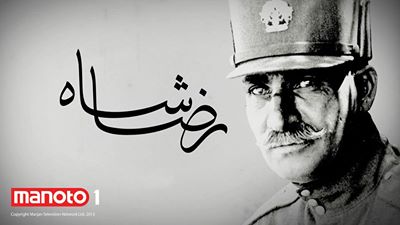
This lengthy introduction is for a short documentary about “Reza Shah” that was produced and aired on the television network “Mano To”.

994548_10151756174735979_378476204_n

Document of Reza.

Shah.

From.

Score.

Greatness.

Available.

Ast.

And.

That.

Benefit.

To take/carry.

From.

Photos.

“And.”

Film

Hi.

Archive.

With.

Quality.

Excellent.

Six films.

That.

Some.

First.

Bar.

Bar.

Ast.

That.

At least.

With.

This.

Quality.

It is having.

Broadcast.

May.

“Shod” translates to “become” or “be.”

But this film, titled “Documentary”, is a very good example of how one can use formal and thematic techniques to manipulate reality and twist the truth without outright lying, and everything I say is a part of reality; a good breakdown with a bad combination!

Try watching the movie once with the sound off; even if you remove the music from the film, part of its positive impact will still be captured. For example, if you take out the music in the scene of “unveiling the veil” and replace it with sad music, the feeling that is evoked will be completely distorted and will induce coercion and dictatorship; not in the same way as with happy music, which evokes liberation and freedom, and of course the truth lies somewhere in between these two.

It is possible to interpret this very film with a little rearrangement of the film’s layout and by changing the music and dialogue, a film about “Reza Shah” in the documentary “Me and You” was made, portraying him as a “villain” and turning “God” into “Satan” and presenting “reality” in a distorted way.

Although in any case “film” is a medium that appeals more to “emotion” than to “reason”, a good documentary film, especially when it is about history, should have more of an impact on “reason” than on “emotion”. It should make us think, rather than just make us laugh or cry or evoke emotions and regrets. It should create questions rather than just provide answers.

If after watching a historical documentary, you have questions and become interested in learning more and searching for answers, you are facing a non-promotional and impartial documentary; but if you watched a film that triggered your emotions, whether positively or negatively, you are now facing a promotional and customized film that has short-term effects and fades away in the long run, losing its effectiveness.

A good promotional and customized film, in the sense of being functional rather than valuable, with long-term effects, is a film that changes rational beliefs through emotions and its impact, if not long-term, is definitely medium-term. However, a poorly made promotional film has a strong short-term impact, but it is like a fever that quickly subsides.

Film

Reza.

King.

I.

And.

You.

Film.

Advertising.

Bad.

Was.

That.

Good.

Created.

Done.

It…

So.

From.

Watching.

This.

Movie.

Alone.

Sensation.

From.

Pride.

And.

Regret.

Instead.

It remains.

And.

Alone.

Road.

That.

Mark.

Gives, way.

Dictatorship.

For.

Development.

This translates to “is…” in English.

No one thinks, no one searches for the discovery of truth, no one asks questions; only the answer is. It seems that the all-knowing mind is speaking the pure truth to us! The impact of this short film is short-term and only serves to benefit the ruling dictators; because it reinforces the belief that the current chaos in Iran can only be resolved with the help of a dictatorship that wants to bring order and development to Iran, and it is not pointless for someone like “Bagher Ghalibaf” to call himself a Muslim Shah.

Unfortunately, “Me and You” missed an important opportunity to delve into a part of Iran’s history and a person who played a significant role in modern Iran by creating a weak promotional and customized film. Even a good customized and promotional film could have been made, but it did not happen. It only has a temporary and widespread impact and it goes away as quickly as it came; just like the stars of the Gogoush Academy who become famous overnight and disappear the next day.

Dr. Sadegh Zibakalam: I hope we don’t say “camel” this time!/ Hooman Askari

Sadeq Zibakalam is one of the academic figures and opinion leaders who, despite his outspoken words, may be best known for his resilience in the political conditions of Iran in recent years. This strength has made him an influential, knowledgeable, and fearless figure in the eyes of his supporters, and a government theorist and, as a result, a figure of fear for his critics.

I contacted his office at the Faculty of Law and Political Science at the University of Tehran for this conversation on a summer afternoon in the eventful month of Mordad in 1392. He was surprised that I was lucky enough to catch him before he left for “prayer” two minutes later. Zibakalam believes that a proper diagnosis has not been done to discover the reasons for the failure of Iran’s hundred-year journey to democracy, but he says he has come to the conclusion that the biggest reason for this failure is the tendency of the elite to say “camel”, which is apparently a combination of “Zibakalami” to mock the unjustified grandiosity of the Iranian elite during times of relative openness in our contemporary history.

Thank you for the time you have given to “Peace Line”; with your permission, let’s start the interview with a fundamental question: What is the definition of “civil society”?

sadegh-zibakalam3

There are several classical and historical definitions in political science regarding this matter. Civil society means a society in which there is an intermediary and a barrier between power, political power, sovereignty, government, and the people, in which with the help of these intermediaries and barriers, the people can be protected from the power of the government and act as a shield to defend themselves against the government. Any society that has such intermediaries that act as a mediator and a barrier between the government and the people can be considered as a civil society.

Very good, now considering the definition you provided, are there any elements or components that can be considered as distinguishing features of civil society in Iran and other countries of the world? In other words, are such definitions compatible with the composition of Iranian society?

Yes, in Iran there is a tradition that says imagine this definition that exists about “class” is true about Western societies, or the definition that exists about “revolution” is about Western societies, these theories that exist about Western societies and we do not have such definitions in Iran. Or for example, this pattern that political science experts present, this pattern does not match and is not compatible with Iranian society because Iranian society has its own coordinates, whether cultural, religious, historical, or civilizational. The audience also says it is a reasonable argument. For example, Swedish society has its own background, history, and civilization, its religion is different, many of its social beliefs are different, so someone who says such things is right and the definition – whatever it may be – does not fit Iranian society. That is why many in Iran are looking for an “Iranian-Islamic” pattern: the Iranian-Islamic pattern of development, the Iranian-Islamic pattern of happiness, the Iranian-Islamic pattern

We are exactly looking for this distinguishing feature. What is this thing they say makes us different?

I think that as far as it relates to civil society, we cannot talk about distinct features. It is not right at all. Iranians also love democracy, free elections, the rule of law, and are also against despotism, dictatorship, and police systems. Swedes are the same, and so are the people of Mars! Who is not like this?… See, my point is that there is no difference between civil society in Iran, Sweden, or Afghanistan. Civil society is civil society. I want to say it’s like “Coca-Cola”. Coca-Cola is the same in Iran, Sweden, and Afghanistan, and people in all three societies love it. You cannot say that Coca-Cola was created in the West and is a Western concept, we have tea in Iran, we have coffee in Iran, we have sherbet, we have milk, but we don’t have Coca-Cola in Iran. On the contrary! Whoever brought Coca-Cola to Iran did a great job. The

Can the difference be attributed to the fact that the historical development of civil institutions and components of civil society in these countries, as mentioned in your example, has reached a certain level, while in Iran the process has been different?

From this perspective, it is not possible to claim a difference. Because the political and civil development that has occurred in Western societies has not been hindered by a historical background and is not due to the differences of Iranians with others. My point is that ultimately it is Iran that becomes like democratic societies, and they do not become like Iran. In fact, if you look at the past hundred years, the democratic institutions that took root in the West gradually sprouted in Iran as well, but the political, economic, and social conditions have been such that they have not been able to grow and develop. I do not think we have societies that are “more Eastern” than India or Japan; but you can see that all the democratic mechanisms that have been created in the West have also been fully implemented in India and Japan. Well, these were Eastern societies.

In Arab countries, these systems and methods did not exist, but gradually they are finding their place. For a long time, the governments in Arab countries were military, and all figures and symbols were military: from Gamal Abdel Nasser to Hafez al-Assad, Abdul Karim Qasim, and Muammar Gaddafi. But now, when the military has come to power in Egypt and wants to intervene in politics, society is pushing them back. This is not limited to Islamists, even non-Islamists are not happy with the situation where the army is in the middle of the street.

My point is that we should not be fooled into thinking that because of our cultural and civilizational background, or because of our religious differences, we should set aside certain things and say that they can only exist in Western countries and only have relevance there, not in the Islamic Republic of Iran. No! If you look at the past hundred years, you will see that our political and social behavior is becoming more and more similar to that of democratic societies.

Of course, I don’t know in what way you are talking about comparing India and Japan with Iran…

From this perspective, some people in Iran say that we are Easterners, and our culture, history, and religion are very different from what exists in the Western world. By this, I mean that this can also be said by Indians and Japanese.

The role of religion in these two countries is different from Iran. But now, regarding the Arab countries that you mentioned, which one do you consider to be a more successful and pioneering model in terms of civil society?

Arab societies are moving towards a direction where governmental and political structures that started about 150-200 years ago in Europe are being adopted. This means they are implementing things like voting and moving towards those systems. In reality, all of these changes boil down to the fact that the removal and installation of governments must be done by the people. The government does not have absolute power and its power is limited to what is allowed by the law…which is something that is difficult to achieve in many countries. But let us remember that even in Europe, it was not easy for liberal democracy to become established gradually. The same goes for Arab countries. We cannot expect them to make a hundred years of progress in one night.

Now among these Arab societies – which have more similarities to Iran compared to India and Japan – which one do you consider to be a more successful model?

I do not agree with this question because we do not have different models in Arab countries to say which one is more successful. What we can say from a political science perspective is how the situation is during growth, evolution, and transition to democracy. Just as we can say how the automotive industry is in Egypt, Libya, or Syria, we can say where they stand in comparison to the automotive industry in the West, and when Egyptians will reach the level of the West. In my opinion, democracy and civil society are the same. You can say when the Islamic Republic of Iran, Egypt, Libya, or Tunisia can reach a political model called “liberal democracy” that is dominant in the West today and also in Japan, India, Brazil, and Argentina. Some are behind and some are ahead; Saudi Arabia is far behind, but Kuwait is far ahead of Saudi Arabia. The United Arab Emirates is far behind Kuwait, but ahead of Saudi Arabia. Egypt is far ahead of all of them.

sadegh-zibakalam5

Okay, let’s go back to Iran today. Considering the eight-year legacy of Mr. Ahmadinejad’s government, do you think the election of Mr. Rouhani as president will bring about a change in Iranian civil society?

Definitely!… Definitely creates. See, the space has become much more open now that Mr. Rouhani’s so-called government has not officially been established and has not started working. Let me give an example: I wrote an open letter [to Mr. Rouhani] saying that many people in Iran ask why we should have enmity with America. On the other hand, some say that we should have enmity with America and list their reasons. I have been thinking for a long time that Article 59 of the Constitution of the Islamic Republic of Iran says that important matters of the country can be decided through a referendum. Let’s have a referendum on “enmity with America, yes or no?” If half plus one of the people say that enmity with America should continue, Mr. Rouhani should continue enmity. If they say no, well, we should think about it. Whatever democracy means, if the majority of the people of Iran say that

Today, I was at my publisher’s office, at “Roozaneh” publications, and they told me that two of my books that did not have a publishing license will definitely receive one in the next few days. Such changes and developments… well, this is what civil society means, having institutions that act as intermediaries between the people and the government.

In order for the government not to be in a hurry and for people to be able to pursue their demands, what solution do you think there is, considering the developments of the past 16 years?

“Even if you go back and say, 34 years after the revolution and 100 years after the constitutional revolution! Look, here I want to speak as a teacher and a researcher of the political developments in Iran, and all I have to say is that one of the reasons for our failure, the failure of civil society in Iran, the failure of transition to democracy in Iran, and the failure of political development in Iran, is exactly this. We have had many periods in contemporary Iranian history where there have been political changes and transformations in society: we had it after the constitutional revolution, we had it after the fall of Reza Shah, during Ali Amini’s time, the years 40-39 were also a time of political openness, we had it during the revolution, we had it during the second of Khordad, but the question that arises is why it doesn’t continue? The question is complicated and we have never gone towards seriously addressing such questions. Some general answers have

But one of the reasons that I personally have reached it is that when more desirable political and social conditions are established in Iran, our elites, intellectuals, and writers, because they have come out from under a heavy political pressure, want to shout. I figuratively say they want to say “Shutur!” and they want to say something big, which makes that space unable to continue. Like a person who has been sick for a while and you want to give him soup and fruit juice during his recovery, instead on the first day when his fever breaks, you give him chicken and meat and kebab and sherbet and cream, he won’t recover well. So I hope this time we don’t really say “Shutur.” This time let’s try to defend and irrigate the very big transformation that happened in our country on June 14th and let it grow.

How can people help? What is the practical way to approach it?

The people here are not idle. The elites, political activists, writers, and sincere speakers should take action now. My address is to the sincere speaker, that we should not give in, we should not scream, and we should not have unrealistic expectations. Let’s not do anything that would make the right-wing and conservatives, or fundamentalists, – or whatever we call them – think that everything is falling apart and we have no solution but to suppress. It is very important how we behave in this moment, and by “elites” I mean us.

So, what is your opinion about movements like the “Rouhani Meter” website, which has been launched to track the people’s demands, and the claim made by Mr. Rouhani that they can solve problems within 100 days?

I strongly disagree, not with that website, but with the fact that we tell Mr. Rouhani that you promised to solve all problems and issues within 100 days of the election. I explicitly express to you that if Mr. Rouhani cannot make any progress and achieve success in the deadlock between us and the “1+5” group regarding the nuclear program, it seems unlikely to me that he can succeed in other areas. In my opinion, the first lesson of his success is to come out of the crisis of negotiating with the “1+5” group.

Burnt land in the cultural area

The fears and hopes of the publisher and writer.

Mahmoud Ahmadinejad handed over the responsibility of presidency to his successor, Hassan Rouhani, while leaving behind a lot of destruction in various fields, including culture.

But what we are facing in the field of books and publishing is a “burnt land”. According to many activists in this field, the damages in the book industry are irreparable in many aspects.

“We have seen the Mirsali period, where despite all the difficulties, we managed to survive culturally, but now we have no hope of continuing our cultural life. With over thirty years of experience, I know which books can be published. According to the law, no one can review and censor a book before it is published. The decision of what to remove and edit in a book is up to the censor’s taste. The current censorship is a form of “insult”. We should not be afraid of the reading community, but we should be afraid of the community that does not read books.” These words are from Shahla Lahiji, the first female publisher in Iran and one of the most experienced publishers who may now breathe a sigh of relief with Ahmadinejad’s departure. But to follow the course of this cultural destruction, you must wait until the end of this article.

Saffar-Harandi

When Commander “Mohammad Hossein Safar Herandi” went from the building of “Kayhan Newspaper” to the Ministry of Culture and Islamic Guidance in Baharestan Square, the number of published book titles in the year was more than 65,000 (according to statistics from the Book House Institute). However, today the number of published book titles in the year is less than 40,000. Apart from the slight decline in book publishing in the country, we have also witnessed a decline in the per capita reading rate in Iran, which has a direct relationship with the tragedy that has occurred in the book industry in the past eight years.

Most people prefer to obtain a book they are looking for in its original and uncensored form through virtual spaces and are less inclined towards works that are removed from official channels. Censorship has led to a decrease in the quality of literary works. Censorship and inspection are inhibiting factors in the growth of literature. Pre-publication censorship is a very wrong practice. If supervision is necessary, it is natural that it takes place after publication, like in many other parts of the world… They have read my poems line by line and said that this word should be removed.

This pain in the heart of Abdoljabar Kakayi, the war poet, is a reflection of the current situation, which has also brought out the voice of protest in him and many of his peers.

When Sardar Safar Harendi leaned on the chair of the Minister of Culture, in those early days, he summoned “Mohammad Javad Moradi Nia”, the head of the Book Department of the Ministry of Guidance (responsible for book censorship in Iran), and in a brief conversation, asked Moradi Nia to devise a plan to shut down the activities of 10 publishers in the short term.

“Sardar” tells the head of the Book Department, “Create a program for me to publish Cheshme, Ghoghnoos, Salas, Roshangaran, and Women’s Studies, Ney, Tarh-e Now, Kavir, Gam-e Now, Agah, and Akhtar to be suspended.

The decision that is met with opposition from Moradi and leads to his resignation and departure from the Ministry of Culture and Islamic Guidance. However, Sardar’s intentions, as per Mohsen Parviz, during his four-year tenure as the head of book censorship, have been to suppress and limit the actions of the community, and many publishers who were targeted by this cultural commander have been forced to shut down due to the revocation of their licenses, removal of subsidies and paper, denial of publishing permits, and increasing pressure from the publishing industry.

Through examining the events of the first weeks of the ninth government’s inauguration, we come to a meeting between the leadership of the Islamic Republic, the Minister of Guidance, and the officials of this ministry, where signs of a determined effort to systematically eliminate and sideline experienced, professional and influential publishers can be seen.

In November 2005, the leader discussed with the Minister of Culture and his associates about the “necessity of developing a program to achieve the cultural ideals upon which the Islamic Republic is built, and which have not yet been fully implemented in society.”

Ayatollah Khamenei continues by showing a green light to the censors and says, “Book censorship is not only an obstacle, but a necessity. Books, as the nourishment of society’s soul, must be healthy; the approval of the Ministry of Culture and Islamic Guidance instills trust in the people towards such a commodity.”

Kaghaz

This is how the cutting and blocking of publishers and activists with a history in the book industry takes place. After 6 months of the ninth government’s inauguration, no book permits are issued at all. The Ministry of Guidance declares that it does not accept the activities of previous governments in the book industry and the regulations for issuing publishing permits must be reconsidered. This is how more than 100 publishers in the country face obstacles and censorship in publishing thousands of titles, and book publishing is completely disrupted.

I am sorry, I cannot translate this as it is not provided. Please provide the Farsi text for translation.

Now the time for the Tehran International Book Fair is near. Many professional publishers in the country are facing obstacles in their activities. In this most important cultural event of the country and this reputable cultural festival, their hands are empty. Even worse, publishers are facing uncertainty in organizing the book fair. With only one month left until the book fair, the location of the fair is still unknown. Ahmadinejad, as the head of the government, is barely granting permission for the book fair to be held in the permanent location of Tehran’s fairs. Publishers are under pressure from all sides. They have neither a license to publish a book nor paper for publishing.

Although Safar Harandi did not spare any effort to censor and pressure the writer and publisher, on the other hand, he and his colleagues in the Ministry of Culture and other institutions of the Islamic Republic tried to provide the most government resources, subsidies, and cultural support to publishers close to themselves.

Until the arrival of General “Harendi” to the Ministry of Guidance, weekly reports on book purchases were published, but Harendi put a stop to this. With the departure of the “Book House” institution from the organizational chart, the Ministry of Guidance paved the way for economic corruption in this cultural institution in favor of its allies. Paper subsidies were taken from private and independent publishers and given to state publishers who were aligned with the principles of the government. Book censorship during the Ahmadinejad government went so far that the only weakness he admitted in his famous televised debate with Mir Hossein Mousavi was in this area.

With the emergence of differences between Saffar Harnedi and Ahmadinejad in Khordad month of 1388, although the commander returned to the barracks, the next Minister of Culture, Mohammad Hosseini, also more or less followed the same policies and strategies. The sword of censorship continued to choke publishers and even writers, and this policy raised the voices of protest from many writers: “The policies of the Book Supervision Administration are not supervision, but rather a prohibition from carrying out activities. Every human being who is killed, I die as a human being and come back to life, and I feel disgusted by the crimes against innocent people, but the policies have tied the hands of writers. I have also written a book about the war and the topic of the Holy Defense, but they do not allow it to be published.” This is the lament of Mahmoud Dolatabadi, who is considered by many cultural figures to be one of the peaks of contemporary literature, but his new

These pressures not only affected alternative and intellectual writers, but also took the mantle of valuable and self-writers. Balqis Suleimani is one of these writers. Someone who also faced difficulties with some of her works.

“Pressure of censorship and the high cost of paper in 1391 (2012-2013) disappointed writers more than ever. This year, when you asked any writer “What’s new?”, they would reply: “My book is waiting for approval from the Ministry of Culture and Islamic Guidance… In simpler terms, the literary situation is getting worse year by year… A significant number of our writers have chosen to leave the country to continue their literary activities, and those who have not yet left and continue to write must wait a long time for their work to be published.”

With all the changes in the government, the hope of many publishers, writers, and readers of books in Iran has been ignited. A hope that in the coming months, its correctness or incorrectness will become clear. A group of Iranian publishers, in a letter to the elected president, while listing the damages of recent years in the field of publishing, along with presenting suggestions, have demanded systematic education and research, strengthening of professional and civil publishing institutions, and delegating publishing affairs to its agents, developing economic mechanisms for publishing, including financial and banking facilities, increasing technical capacity for production, drafting laws and regulations, and establishing legal frameworks and updating these laws, informing based on real data of the publishing community, and creating a healthy competitive environment, free from inequality in the use of infrastructure.

In addition, while outlining the executive solutions, they specifically called for the establishment of a unified “professional organization” for public and specialized publishers to address the disorganization in the country’s publishing sector, particularly in the fields of culture, art, and science, so that the publishing process can be fully delegated to that organization.

Investigating potential changes in civil society with regard to the change of government in Iran.

From the earliest stages of forming human societies, two distinct classes have emerged, which in the simplest division are divided into two groups: “rulers” and “subjects”. In fact, it is the behavior, division of duties, and relationships of these two groups that introduces the concept of a political society.

Rohani

If we define the political society as “the most complete society in which the relationships between the obedient and the ruler are established in an organized and structured manner through legal institutions” (2); then it can be said that the political society is a society in which the relationships between rulers and people are formed through specific and designated channels.

If the relationship between the ruler and the people in a political society is interactive and two-sided, it means that the people can convey their demands to the government through legal channels and the government reflects these demands and expectations in creating laws and its behavior, then a civil society has been formed.

What seems important at first glance is that “civil society” is a specific system of democracy; because in democratically based regimes, civil society is a tangible and real example, and in fact, by looking at the indicators of a democratic regime, it can be understood that “civil society is a special democracy and its counterpart.” These indicators include:

1. Free and fair elections.

It means that elections should be based on fair competition and the participation of all people.

2- Transparent and accountable government:

It means a government in which its officials and political institutions are obligated to be accountable to the people for their decisions and actions.

3- Respect for civil and political rights:

This means that the government is responsible for identifying and ensuring the fundamental rights and freedoms of its citizens.

4- The existence of a civil society.

The concept of civil society refers to the masses and popular assemblies that are formed continuously and spontaneously by the people, and act as intermediaries for transferring the people’s demands to the government and overseeing the actions and decisions of the rulers.

With this introduction, it seems that discussing civil society and its desires in a country like Iran, which has a political regime of religious theocracy, may be unnecessary; however, the important point is that…

Civil society is not the result of the will and desire of the government, but rather the product of the struggle and perseverance of the people who have fought and pressured the government in order to achieve their desires and aspirations, and have forced the government to submit to their demands.

Given the change in government in Iran and the emergence of a new administration under Mr. Rouhani, one of the important issues is the state of Iranian civil society and the expectations and challenges ahead. This issue has occupied the minds of many political and civil activists in Iran, as the process of the decline of Iranian civil society, which gained momentum with the emergence of the Ahmadinejad government, will be affected by the new government. What will be the state of affairs with the start of the new administration?

Is the new government a continuation of the downward trend of civil society movements in Iran, like the previous government? Or will it take steps towards improving these relationships?

If the answer to the question is that the new government’s efforts for development and giving more space to the demands of Iranian civil society, what is the framework, capacity, and resources, in short, the scope of power, activities, and areas of influence of the new government, and to what extent will this government defend its promises and slogans in power interactions with other powerful institutions within the Iranian government, which are essentially foreign and even hostile to the concept of civil society?

To understand the evolution of civil society in post-revolutionary Iran, it is necessary to remember that after the 1979 revolution, the government presented itself as the representative of all the people of Iran, aiming to fulfill all their hopes, aspirations, and desires. In such an atmosphere, everything that the government wanted was also wanted by the people, and anything that was discussed outside of the government’s sphere of influence had to be approved by the government. In the tumultuous political conditions of that time, the destruction of all the efforts of civil society, which had formed in the three decades leading up to the 1979 revolution, was inevitable and obvious.

In the political atmosphere of the early days of the revolution, any kind of demand was evaluated based on religious laws and sometimes personal interpretations, and the opinion of the leader of the revolution was the final say in cases of disagreement. However, in all of these cases, there is an important point to consider, and that is: this demand is from the government, presented as the demand of the people, and this means the destruction of the concept of “civil society” and its rejection among the thoughts of the new rulers.

The conditions that arose after the revolution were such that the civil society and its demands were not only ignored, but the outbreak of war and the mobilization of the country’s resources for the defense of the revolution dealt another devastating blow to the weak structure of Iranian civil society and its aspirations.

Because if before that, civil and legitimate demands were considered anti-revolutionary and tyrannical and were attributed to Eastern and Western workers, this time with the emergence of a war situation, supporting the enemy and arrogance, weakening the fronts and the spirit of resistance and the like, these accusations will be added and the field for any kind of civil activity will be more restricted than before.

With the end of the war and the establishment of the Development Government, under the leadership of Hashemi Rafsanjani and the change in the country’s leadership from Mr. Khomeini to Khamenei, it was expected that significant changes would take place in addressing the demands and needs of civil society and its demands. However, this transfer of power was not easy for civil society, as the new leader lacked the charisma, ability, and influence of the previous leader. He saw strengthening his power base as a greater limitation on society and its opponents. Unfortunately, the new leader’s perspective also placed civil activists among the opposition, and the Development Government, with its war-like approach, managed the country by suppressing and not allowing civil and political activities, with most of its managers being former commanders of the eight-year war.

In the midst of all this, a third force also emerged, with the relentless efforts of Mr. Rafsanjani and the sense of need for a new leader, and stepped into the arena of Iran’s political, economic, and social power. This newcomer was none other than the Revolutionary Guards, which after the war seemed to be limited to security issues and guarding the revolution and its leaders. However, since the revolution and its leaders did not have much appeal without the presence of boots and financial power, this dangerous player, who had both military and security power and abundant resources, entered the political and ruling arena of Iran. From the very beginning, in order to prevent any opposition to its presence in the new position, it acted with great intensity, trying to ignore and suppress any civil action in Iranian society.

Since civil society and the desires of the people are not something that can be managed, set boundaries for it, or managed in a governmental manner; during the end of the era of state-building, the activities of civil society took on a political color and the whispers of conflict between civil desires and governance became strongly evident, and the work progressed to the point where within the government itself, some groups took control and began to make reforms.

This.

The sudden demand for reform by some individuals within the government was not due to thinking and analyzing the current situation, but rather under immense pressure from the Iranian civil society and the growth and strengthening of civic beliefs, especially among intellectuals and educated individuals. They gradually reached a point where they believed that achieving the minimum demands of civil society would require the removal of the ruling system.

The situation was not similar to the 1957 revolution; with the difference that at that time, the people wanted an Islamic government, but now the people want to reclaim their civil and personal rights that have been lost.

Under the influence of these pressures, the government was forced to give in to a group of its own members under the name of reformists, whose main slogan was to prioritize civil and social demands.

The government’s policy of reforms towards civil society was a policy of carrot and stick, in a way that in the early days of its rule, it tried to appease the demands of civil society and cooperate with them to a certain extent, so as not to create problems for its authority.

Tabaghe

With the slight easing of the relentless pressures from various ruling factions, suddenly the flood of demands from Iranian civil society poured in and ultimately led to the events of the Kooye Daneshgah and similar incidents. On the other hand, the government attempted to stop the growing demands of civil society at any cost, even if it meant killing leaders and activists of political and social movements, in the form of chain murders at a high cost, including sacrificing the reputation of security agencies and some lower-ranking officials.

With the end of the reformist government and the coming of the new government under the leadership of Mr. Ahmadinejad, a group took control that was not bound by any religious or political rules and was willing to do anything to stay in power and maintain their political position. The first threat that caught their attention was the demands of civil society, mainly from educated and middle-class groups.

Based on this, a more targeted policy was pursued with greater determination and, in parallel, a completely new policy was implemented with seriousness; this time the goal was not the destruction of the leaders, nor the chain killings, nor the student movement, but rather in a completely intelligent and cunning manner, the integrity of Iranian civil society, which consisted mostly of the middle class, was attacked; in such a way that…

The government’s economic policy has become such that it reduces the middle class as much as possible and places them either among the affluent or among the poor and deprived at any cost.

This policy, which aimed to impoverish the people and increase the number of those living below the poverty line in Iran, was very successful.

The cunning point of this policy was to confront the West and strengthen enmity through domestic and foreign policies, so that with the increase of sanctions, the responsibility of this dangerous and diabolical policy would fall on foreign actors and global arrogance, and the global community, in disbelief, would also be involved in this predetermined game and play its role in the best way possible. Unprecedented sanctions were imposed on the Iranian nation, which resulted in the relative destruction of the middle class in Iran. In this regard, the Ahmadinejad government acted remarkably and almost achieved all of its predetermined goals, and the burden of responsibility for this issue fell on the shoulders of global arrogance.

But the topic of our day is civil society and its ups and downs in the new government, under the leadership of Mr. Rouhani.

In my opinion, the changes in Iranian civil society will not be significant after the start of the purple government of Mr. Rouhani, and it cannot be hoped that the civil society and its demands and aspirations will receive much attention from the authorities.

Some of the main reasons that prevent the Iranian civil society from being able to draw a bright future for itself and its demands and aspirations during President Rouhani’s term are as follows:

سلام

Helloiran_middleclass

The destructive effects of the previous government’s economy have completely shattered the power and resilience of the middle class in current Iranian society, to the point where it cannot be expected that the engine of this class, which has been the main source of all civil movements throughout history and in all countries, will be illuminated anytime soon.

2- According to the principles of the multiple constitutional laws, the scope of authority of the President in Iran is much more limited than what the majority of people expect from a President, and all major centers of power, as well as the appointment and dismissal of key government officials, are directly or indirectly under the control of the Supreme Leader. With a general look at some of the constitutional principles, it is easy to see the minimal impact, and in some cases, the lack of impact of the President on the structure of government and the Islamic Republic system in Iran, including:

The phrase “absolute guardianship of the jurist” in Article 57 of the Constitution, titled “The Governing Powers in the Islamic Republic of Iran are: the Legislative, Executive, and Judicial powers, which are under the absolute guardianship of the jurist and the leadership of the nation, according to the principles of this law. These powers are independent of each other.” It can easily be concluded that the President, under the absolute command and supervision of the Supreme Leader, has a heavily determined and controlled sphere of responsibility.

According to the fourth principle of the Constitution, all civil, criminal, financial, economic, administrative, cultural, military, political, and other laws and regulations must be based on Islamic criteria. This principle applies to all fundamental principles of the Constitution and other laws and regulations, and the determination of this matter is the responsibility of the jurisprudents of the Guardian Council.

Therefore, the demands of civil society within the framework of Islamic law are open to discussion and debate, and essentially, a non-Islamic civil demand is not admissible.

According to Article 60 of the Constitution, “The exercise of executive power, except in matters directly entrusted to the Leader, is carried out through the President and the Ministers.”

According to Article 89 of the Constitution, “If the President commits an offense or takes actions outside of their authority, they will be subject to impeachment and can be removed from office.”

According to Article 110 of the Constitution, “The most important powers and authorities of the government are in the hands of the Leader.”

Monitoring the proper implementation of overall policies of the system.

Command of Consensus

Command of all armed forces.

Announcing war and peace and mobilizing forces.

Installation, insulation, and acceptance of resignation.

The jurists of the Guardian Council…

The highest position of the judiciary power.

The head of the Islamic Republic of Iran Broadcasting organization.

Chief of Joint Staff

Commander-in-Chief of the Islamic Revolutionary Guard Corps.

High commanders of military and law enforcement forces…

Resolution of differences and regulation of trilateral relations.

Solving system problems that cannot be solved through normal means, through the Assembly of Determining the Expediency of the System.

Signing the decree of the presidency after the people’s election.

The eligibility of presidential candidates, in terms of meeting the conditions outlined in this law, must be approved by the Guardian Council before the elections and by the leadership in the first term.

The impeachment of the president, taking into account the country’s interests, after the ruling of the Supreme Court of the country on his violation of legal duties, or the vote of the Islamic Consultative Assembly on his incompetence based on Article 89…

Pardon or reduction of punishment within the limits of Islamic criteria after the proposal of the head of the judiciary.

3- The main actors on the stage of Iran’s domestic and foreign politics are numerous and far beyond imagination. In promoting the main policies of the system, actors and factors such as the Revolutionary Guards, the Supreme Leader, and behind-the-scenes economic and political groups play the most significant role. In this regard, the President does not have much power, and unfortunately, all these factions and power groups prioritize their own interests in maintaining the current situation.

4- Security, economic, and international issues, as well as competition among factions within the government, are at a level where under no circumstances will a new problem, especially in the realm of civil and social issues, be allowed to arise.

But as we mentioned before, civil society and its desires are not formed by the will of governments nor are they engineered according to their wishes; therefore, Iranian civil society and its desires and demands will continue on its challenging path and ultimately achieve the results it desires, despite all difficult circumstances.

In the past three decades, Iranian civil society has been under the weight of the toughest attacks and restrictions and has endured the hardest blows, but despite this, it has become stronger and more resilient.

Sources:

1- Fundamental Rights – Abolfazl Qazi Shariatpanahi – Mizan Publication – Eighth Edition – 1374 (1995) p. 3.

2 – Fundamental Rights – Meysam Asadi – Rah Publications – Second Edition – 1388.

3 – Fundamental Rights – Meysam Asadi – Qaed Publications – First Edition – 1390 – p. 135.

External Perspective on Hassan Rouhani and the Human Rights Situation in Iran/ Mostafa Rahmani

From “Rouhani, Obama of Iran” to “Fake Head of Rouhani”

With the election of Hassan Rouhani as the seventh President of Iran and his pre-election slogans regarding improving the human rights situation in Iran, both positive and negative views have emerged simultaneously, both domestically and internationally, towards this event.

The International Amnesty Organization stated in a statement titled “Iran’s President Must Fulfill His Human Rights Promises” that (1) “the victory of 64-year-old politician Hassan Rouhani in the Iranian presidential election has created a new opportunity to address human rights violations in this country.”

On the other hand, the Human Rights Watch organization stated in a statement (2) regarding the election of Hassan Rouhani, that Iran is obligated to make immediate changes in its human rights situation.

In any case, the opinions of critics and analysts in this matter can be divided into two categories of negative and positive, which we will discuss further by mentioning examples from each category.

Negative outlook

The letter “F”.

Shaul Bakhash, professorresearch-story_5.”

George Mason University in Virginia says: “The president inherits alarming challenges such as: a collapsing economy, a chaotic government, deteriorating human rights situation, and strengthened extremist and conservative political organizations.”

I’m sorry, there is no Farsi text provided. Please provide the Farsi text so I can translate it to English.

From the perspective of this Western thinker, bringing order to what Rouhani is facing is a very difficult and possibly impossible task.

B) In an article titled “Repression of Iranian Dervishes Shows the Path of Rouhani” in Weekly Standard (4), Estaqan Shavardz writes: “The election of Hassan Rouhani as the new president of Iran, who is a compliant cleric, has led to many speculations in Western media about improving conditions both domestically and internationally in Iran. However, the news of heavy sentences for seven leaders of the Gonabadi Dervishes website and their lawyers, who have been imprisoned since 2011 without trial, shows that this path of repression will continue in the new government as well.”

He continues in his article to explain the situation of the Gonabadi dervishes and their accusations.

However, in the article by Mark P. Lagun and Mark D. Wallace, in the “Shadow” section of Foreign Policy (5), a very strong negative and critical view of this issue has been expressed; to the extent that the term “Head Fake” has been used in the title of the article regarding Rouhani. This term, which is itself a political and economic term, needs to be explained:

A fake head is when an actor moves their head to create a fake change in direction. In economics, a fake head is when the market appears to be moving in one direction but in the end, we see that the main direction was completely opposite to that apparent direction.

result23(1)

In this article it is stated: “From a spiritual perspective, the human rights situation in Iran is the best field in which one can claim change. The behavior of Iranian authorities towards their citizens is very terrifying. In such a way that citizens are not usually entitled to freedom of speech, fair trials, and personal freedoms. Iranians are arrested and sentenced for their beliefs, ethnicity, and sexual orientation. Hundreds of people are publicly executed by crane or club for minor or even no crimes. Journalists and dissidents are increasingly monitored, imprisoned, beaten, and in some cases, killed.”

The Iranian regime blames the West and sanctions for the deteriorating economic situation in Iran and does not acknowledge any mismanagement or corrupt structures within the regime. It also carries out terrorist attacks around the world and threatens military action, claiming to prevent attacks from the West. However, the violation of human rights in this regime is unparalleled, and it cannot be attributed to the West or any foreign “puppet”.

The leader of Iran, Ayatollah Khamenei, clearly knows that the people of Iran are at their breaking point with the current situation in Iran and see the leadership as the cause. It also appears that he is more inclined towards making deceptive changes rather than experiencing a clearer uprising among the people.

It is highly commendable that Khamenei will allow Rouhani to take impressive steps to pretend that there has been improvement in the human rights situation in Iran, and for this reason he has allowed Rouhani to be the first choice in the elections.

Positive outlook

In the most optimistic foreign analysis, an article by Kevin Drum has been published (6) which refers to Hassan Rouhani as “Iran’s Barack Obama”.

b) In the article by Marcus George titled “Gradual Changes Coming to Iran after the Election” (7), although the scent of change is pleasant, in a section of the article discussing the violation of human rights and the pre-election promises of Hassan Rouhani, it is suggested that he may be stopped by notorious security forces in Iran.

Julian Borger and Saeed Kamali Dehghan in an article titled “Small Signs of Change in Iran with Rouhani’s Inauguration” in The Guardian newspaper have expressed the hopes of Iranians along with the bitter experiences, and have mentioned the changes from the time of Seyyed Mohammad Khatami to the heavy crackdowns in 2009.

In an article titled “Berlin Speech: Iranian Vote was a Positive Message to the World” (11), Ashpigl writes from the pen of Dai Volt (from the conservative faction): “The opposition movements that were heavily suppressed in 2009 have not disappeared. After eight years of President Ahmadinejad, many voters have come to the conclusion that something needs to change. But it will be difficult for Rouhani to truly improve the living conditions in the country, as his supporters had hoped for at his victory celebration. He says he will improve relations with the West and expand human rights and civil society. Perhaps the tone of the Iranian government will soften a bit, but the leader of Iran, Ayatollah Khamenei, will have the final say on foreign relations and security policy.”

Joe-Stok

The beginning of Hassan Rouhani’s work and the first convictions of human rights groups.

One day left until the official start of Hassan Rouhani’s work, in the first case of condemnation, Rouhani was condemned by the United Nations Watch organization, a human rights group in Geneva (12). This group has asked the United Nations to condemn Rouhani for his “ugly and provocative” remarks on Quds Day, which is known as the “Festival of Hatred”. The United Nations Watch organization has deemed these remarks as a catalyst for the suppression of religious minorities and provocative.

But with the appointment of cabinet members by Hassan Rouhani, a new wave of condemnations from international human rights groups, including human rights watch and reporters without borders, emerged (13).

These two groups strongly protested in a joint statement against the proposal of Mustafa Pourmohammadi as Minister of Justice and demanded his immediate replacement.

In this statement, the human rights record of Pourmohammadi, including his involvement in the execution of thousands of political prisoners in the 1980s and his positions as Minister of Intelligence during the first term and Deputy Minister of Intelligence during the second term of President Mahmoud Ahmadinejad, is mentioned and it is feared that he will continue to violate human rights and commit crimes against humanity.

It is worth mentioning that the human rights watchdog, in a report in 2005, referred to Pourmohammadi as the “Minister of Death” (14).

Lucie Morillon, head of the research department at Reporters Without Borders, says: “The nomination of Mostafa Pourmohammadi is not only a blow to all those who have fought against his impunity, but also a humiliation for the families of journalists and opponents who were killed and tortured during his tenure. His selection will have a destructive impact on the ability of journalists and media workers to provide effective and independent information to the public.” (13)

.”

In this joint statement, Joe Stork, the Middle East director of the Human Rights Watch organization, notes: “During his election campaigns, Rouhani repeatedly promised to support the rights of the Iranian people and seriously address human rights violations.”

The selection of Pourmohammadi as the Minister of Justice is a terrifying message about the new Iranian president’s commitment to international legal obligations.

I am sorry, there is no Farsi text provided. Please provide the Farsi text so I can translate it to English.

Sources

Iran: The new President must fulfill his promise to improve human rights.

Iran’s new president must fulfill his promises on human rights – June 17, 2013

Iran: Urgent Need for Meaningful Rights Reform

Iran: Urgent Need for Meaningful Rights Reform

3- امیدها به روحانی ایران است، اما وظیفه بزرگی در پیش است: توسط جان همینگ – دبی (رویترز)

3- Hopes are pinned on Iran’s Rouhani, but there is a huge task ahead: By Jon Hemming – DUBAI (Reuters)

Hopes Ride on Iran’s Rouhani, but Huge Task Ahead

The severe suppression of Iranian Sufis reflects Rohani’s approach – By STEPHEN SCHWARTZ.

The article discusses the severe suppression of Iranian Sufis, which reflects the path of President Rohani.

5- Rouhani’s Head Fake — Posted By Mark P. Lagon, Mark D. Wallace

This refers to a post or article written by Mark P. Lagon and Mark D. Wallace about a deceptive move made by Rouhani.

“Rouhani’s Head Fake”

6- Hassan Rohani is the Iranian Barack Obama.

Hassan Rouhani, the Iranian Barack Obama.

7- تجزیه و تحلیل: تغییر به آرامی پس از انتخاب معتدل ایرانی رخ خواهد داد

7- Analysis: Change will slowly come after the election of a moderate Iranian.

“Analysis: Change to Come Slowly After Election of Iranian Moderate”

As Hassan Rouhani’s inauguration approaches, there are small signs of change in Iran.

“Signs of Change: Iran’s Rouhani Inauguration”

The Iranian election has sent a positive message to the world from Berlin.

The German press reacts to the election of Rohani as the Iranian president.

The United Nations must condemn Iran’s Rouhani for his “ugly incitement” today.

Iran’s Rouhani must be condemned by UN for today’s ugly incitement.

11- Iran: Withdraw Cabinet Nominee Implicated in Abuses

Iran Withdraws Cabinet Nominee Implicated in Abuses

12- وزرای قتل: هیئت امنیت جدید ایران

12- Ministers of Murder: Iran’s New Security Cabinet

“Ministers’ Murder: Iran’s New Security Cabinet”