“Rospegari” is a description of the present situation!

Last updated:

April 21, 2026

“Rospegari” is a description of the present situation!

“Rospi” women! This is a word that we have all heard of. It doesn’t matter where we are in this city, we have all seen them in every corner and neighborhood; when they are being chased like shadows, they listen to suggestions and even argue over high prices; that’s when you realize that near you, in this very city, there are people who willingly jeopardize social security!

And does the presence and activity of this group truly endanger our social security? Who is a spy and what is espionage? Is a spy an offender or a sick person, and is espionage a crime or an illness?

“Rospi” in Persian means a promiscuous, immoral, and wicked woman, and its Arabic equivalent is “rosbi” which was also used during the time of the companions and followers of the Prophet. “Rospi” is actually an abbreviation of “rospeyd” which comes from the concept of “naming something with its opposite” and was used as a mockery and insult towards dark-skinned women in Russia.

Researchers, however, prefer to use the term “sex worker” instead of “prostitute” or other definitions, because words like prostitute, whore, street women, etc. carry a negative and insulting connotation. Therefore, as an alternative, they mostly use the term sex worker, which simply describes the working conditions of this group of women.

The term “espionage” in the world of law and criminology also has a specific definition, which refers to three definitions.

A) “Rospi is a term used for women who earn a living through self-employment and have no other profession. They continue their work under specific regulations of this profession.”

B) “Prostitution means creating a temporary sexual relationship with someone who pays for this relationship with the intention of sexual gratification. In other words, the main criterion in this relationship is the sexual satisfaction of the buyer.”

Prostitution is when someone provides sexual services to another person and receives money in exchange.

139ی

According to the World Health Organization in 2001, sex work or prostitution is one of the most dangerous professions. Prostitution is defined as the exchange of sexual services for money or material goods, and it is also a general concept that involves selling one’s body and giving it to someone else for sexual pleasure, where sexual pleasure is of secondary importance.

The vast and boundless scope of concepts related to prostitution in the world has made addressing this phenomenon difficult. This is because prostitution is directly linked to issues such as poverty, education, domestic and non-domestic violence, sexually transmitted diseases, family problems, addiction, migration, human trafficking, AIDS, human rights, social policy-making, and many other concepts.

Furthermore, due to the underground nature of this phenomenon in most parts of the world and the secrecy resulting from the social stigma surrounding those involved, conducting accurate and comprehensive research on this issue is either impossible or accompanied by numerous challenges; especially in areas such as child trafficking, where people even refuse to acknowledge the existence of such a problem in society.

On the other hand, addressing this issue has its intricacies that should not be overlooked. For example, Saeed Modani (1389, taken from the Iranian Women’s Association website) refers to the negative connotations of the word “prostitution” and claims that in cases where interviewers have mistakenly used this word, the interviewees have been embarrassed and considered it disrespectful to their clients. The use of the term “sex worker” has also been deemed legitimate and associated with libertarian ideologies, and has been criticized. Working on a phenomenon that even mentioning it is controversial, yet has a history almost as long as human societies, certainly has its own complexities. On the other hand, the phenomenon itself does not manifest itself in the same way in different places.

According to most social experts, issues such as income acquisition, sexual needs, poverty, diversity and forced marriages are among the most important reasons for this social abnormality. Unfortunately, this problem has also affected married women, as stated by the Director General of Social Welfare Organization, where more than 50% of female sexual workers are married, most of whom are considered part of the middle class of society.

Based on this, it can be said that prostitution, which has been abandoned without any control and without social, cultural, health, moral, and even economic supervision, has infiltrated other official social organizations and institutions; in any place where sparks and signs of demand for this service arise, its supply also takes place.

Furthermore, as human life and societies have become more complex in modern times, this phenomenon has also undergone transformations and newer forms of it have emerged in society.

However, it can be firmly stated that the person with schizophrenia is neither a criminal nor a patient, but rather a victim of social disorder. This is because if we conduct a behavioral study among street vendors, we will observe that they fall into three categories:

A group of girls and women who, for various reasons, have fled their homes and families and fallen into the clutches of cultural mafia gangs, and have been forced into sexual labor through them.

The second group also includes women who do this work due to financial need, although stating financial need and poverty as the reason for prostitution is not socially acceptable from a sociological perspective.

And finally, the third group includes women who have an insatiable sexual desire and engage in prostitution due to sexual diseases, as this group is also victims of cultural norms.

This social phenomenon is considered a profession in some countries around the world, but in Iran it is recognized as a crime due to cultural and religious conditions. Some sociologists and social analysts, contrary to the legal system in Iran, classify this phenomenon as a social harm and advocate for a serious analysis of it.

However, so far no official statistics or accurate reports have been published about the problems of prostitution in Iran. A few days ago, the director of the Office for Socially Vulnerable Affairs of the country’s Welfare Organization admitted in a press conference: “We have no access to female prostitutes and there are no statistics available in this regard.”

In general, expressing opinions about the prevalence of superstition in Iran and the forms of this phenomenon, given the sensitivities surrounding this issue, makes it difficult to investigate this hidden social phenomenon. It could be said that the latest statistics and research on the prevalence of this issue were published in July 2012, in which period, Seyyed Kazem Rasoulzadeh Tabataba’i, the director of the psychology department at Tarbiat Modares University, said: “In the 1960s and 1970s, the age of superstition was over 30 years old, but now the age of superstition has reached 15 years and above.”

This statistic was published during a period of time when some researchers believed that the age of puberty had reached 12 or even 10 years. Among them, Saeed Madani, a social researcher, also considers other statistics; he believes that “the most common age of puberty in Iran is 18 to 25 years old,” which has significantly decreased in recent years.

It must be said that this is a phenomenon that still plagues all countries of the world, and various and different solutions are adopted for it based on the norms of their society, in the direction of management, reduction, or prevention, and since the norms of each society are defined according to customs, traditions, rituals, and customs prevailing in that society, therefore, a social phenomenon that is considered normal in one society may be considered abnormal in another society; if it is widely accepted in some societies and has been institutionalized and managed as an inevitable necessity, it is strongly condemned and fought against in others.

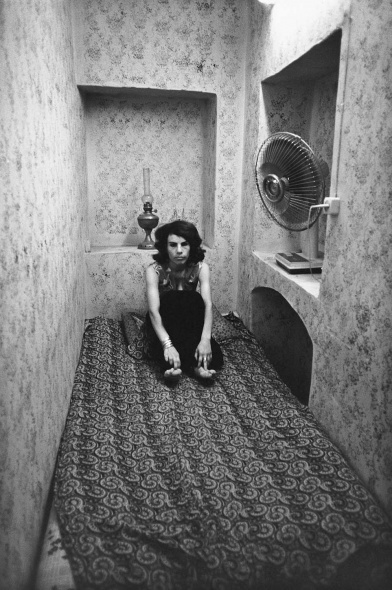
The rebels in a performance/ Simin’s journey.

From this issue, in the “Face to Face” section of the Peace magazine, we will focus on conversations or memoirs of torture victims in prisons. In this series of conversations, we will try to document the various forms of torture that are practiced in prisons, as told by the victims themselves. The purpose of this is to examine the history, reasons, and roots of using psychological torture instead of physical torture over time.

“White Torture” is a type of torture known as “clean torture” in the CIA and is also referred to as “soft torture” in Iran. It is a form of torture that aims to manipulate the prisoner’s mind and soul instead of physically harming them (unlike other forms of physical torture). This type of torture forces the prisoner to retreat into themselves and experience mental breakdown. The principles of this type of torture are based on the findings of psychologists and it is believed to have emerged after World War II.

In this issue, we have gone to meet Hossein Ghabraei, a former member of the Organization of Iranian People’s Fedayeen.

Hossein Ghabraei, in the month of Mehr in the year.IMG_5007

In the city of Langroud, he was born into a large family. He completed his elementary and high school education in the same city and then moved to the city of Rasht. Due to his activist activities, he has experienced two periods of detention and torture before and after the February 57 revolution. He currently resides in Canada and has remained silent throughout these years. As he puts it, the pressures he endured during the 90s forced him to empty his mind, just like erasing a tape recording, in order to not break.

We insisted and forced Mr. Ghabraei to review the memories of those years and share his experiences of detention and interrogations. He was first arrested in the month of Ordibehesht in the year 1354 near the city of Anzali and was sentenced to life imprisonment with a reduced sentence.

He describes his arrest as follows: “I was a primary school teacher in one of the suburbs of Anzali city. At 9 o’clock in the morning, while I was teaching in the classroom, I heard a noise and then saw a few soldiers rushing into the schoolyard from the classroom window, accompanied by several plainclothes officers and their military vehicles circling around the school. Within a few seconds, after seeing various Gendarmerie and Savak vehicles entering the school by opening the gate, I realized what was happening. As I was also the principal of the school, I went out of the classroom and approached them. They had a photo in their hand and said they were looking for Mr. Ghobrayi. I told them he didn’t come today! They showed me the photo and asked if it was me! I said yes, why? They said come down and as I was going down, four or five people pointed their guns at me. Immediately after

An interesting point that was completely recorded in my memory during the arrest was that hundreds of children had come out of their classes and were looking at us curiously!

After mentioning that during the journey, the Savak agents tried to create a climate of fear and terror, it continues: “They took me to the Savak headquarters in Rasht. When we arrived, I saw some of my belongings – from under my coat that was on my head – and realized that before my arrest, they had visited my house. Well, this was a very important and vital matter. If I didn’t see my belongings, I wouldn’t give the interrogators my home address, which only one other person besides myself knew. But then, the first solution that came to my mind was to say that the address of my house had been leaked. But I had to search my mind and understand how this had happened…”.

Mr. Ghabraei believes that one of the tactics to deal with an interrogator is to know what they already know and slowly reveal the same information. This behavior makes them think that you are cooperating or lying; otherwise, if they realize that you are trying to hide information and resist, they will put so much pressure on you that they will extract the information from you.

“He continues, ‘One of the things that I was successful in seeing and was important to me was a red suitcase that contained some electronic devices such as transistors. We used to make radios and receivers according to the instructions of the “Scientist Magazine” that was published at that time. This magazine explained and taught us how to read transistors and resistors.'”

Fortunately, I did not see two pieces of my belongings that could have caused me trouble: the first one was a closet that I had a hidden compartment in; the walls of the closet were double-layered and I had painstakingly created another thin wall behind it to store some of my notes and hidden items. I also had a pit oil lamp that I had created two levels in by cutting its bottom. I would fill more than half of it with oil, but the empty bottom part was where we hid our secret belongings.

Ghobrayi, referring to the fact that after six months of detention, he was able to establish contact and meet with his family, with a smile on her face, says: “The wardrobe and the oil stove were so important to me that in the first meeting I had with my mother, I told her to go to my house and quickly remove them from there!”

This political prisoner was sent to Tehran shortly after being transferred to a small cell, accompanied by 17 armed individuals, in the afternoon of the same day. “They tied my hands to the mini-bus poles that were carrying me and the armed forces. When we arrived in Tehran, it was early morning. They took me to the Joint Anti-Sabotage Committee in “Sepah Square”. In this committee, the security forces of the Shah’s regime worked together, and in fact, it was managed by representatives of the army, gendarmerie, city guard, and SAVAK. The purpose of establishing such a place was that when, for example, one of these organizations arrested someone, the other organization would not be informed that previously, such lack of coordination had caused problems for them. The Joint Anti-Sabotage Committee was the main center for interrogations and essentially the worst torture chamber of the Shah’s time. If the agents intended to severely torture or even kill

Hossein Ghobrayi adds that after handing over their weapons and blindfolding, the officers took me to the prison. “They introduced me and the man who was three times my size opened my blindfold and said, ‘Look at me!’ And while raising one hand, he said, ‘Do you recognize me?! I am Hosseini! Now do you recognize me…?!”

IMG_5002

Only ten minutes after receiving my prison uniform and being transferred to a cell by a guard, I was called and taken to an interrogation room. The interrogator opened my blindfold and introduced himself, emphasizing that I should cooperate and answer all his questions. He placed papers in front of me and wrote “SIN” on them, asking when I had contacted the organization, who had introduced me, and what actions I had taken. A few lines below, he wrote “JIM” (which is actually a combination of SIN and JIM from this point on). I wrote: I had no contact. What organization?! He repeated the first question and emphasized that answering like this was useless, and then moved on to the third question, calling for Mr. Hosseini!

After they blindfolded me again, they transferred me to a higher floor and brought me to a room with my eyes still closed. They threw me onto a hard bed, pulled and tied my hands and feet, and then started whipping the soles of my feet with short, sharp strokes. I counted twenty blows and didn’t say a word. After that, I could feel the blows but no longer felt any pain. They, knowing what they were doing, poured a liquid – which I assumed was cold water – on my feet every few minutes to get the blood flowing again and continue the whipping, so that the pain of the initial blows could be felt again. They also forced me to walk after untying my hands and feet, even though it was impossible for me to bear my own weight. They would hold onto both of my hands and put pressure on my feet, which seemed to have gone numb, so that the blood would flow and I felt like I was flying…

After ten steps, they tied me back to the bed and beat me. It was the same Mr. Hosseini who had complained about me not talking, he threw himself on top of me and pressed my throat and neck so hard that I started screaming. He grabbed me again and encouraged me to say something, but I couldn’t. I thought if I didn’t speak, they would stop hitting me, and on the other hand, I believed that screaming in front of the enemy would not make them happy… but they continued this process until I either opened my mouth or passed out.

He believes that being whipped is like having your leg numbed after ten strikes, and due to the intensity of the strikes – even with each strike being delivered by an electric cable with a heavy weight – the leg swells at least two centimeters and turns completely black; the sound of the strikes can be heard, but it’s as if they are landing on an object resembling a pillow.

Mr. Ghabraei continues in this way: “The Organization of Fedaian-e Khalq had come to realize that forms of torture such as whipping or submerging the head in water until suffocation, which is done to simulate artificial respiration, are unbearable if continued. Therefore, it was decided to resist for a maximum of six hours after being detained, and after that, revealing many issues would no longer be considered a betrayal.”

Our meetings were once every six hours and through this we would stay updated on each other’s well-being. If we didn’t see signs of good health, we would suspect the person’s arrest and evacuate the location. It was previously said that there should be constant resistance, but the assurance that committed individuals wouldn’t confess had caused ninety percent of those who were arrested to reveal everything after a short period of time (for example, ten hours). Hundreds of people were mistakenly killed because they never believed that their comrade would say anything about them, especially their place of residence.

With all these characteristics, I had promised myself not to speak for twelve hours, as from the time of my arrest until my transfer to Tehran, practically twelve hours had passed and it was only after that that the interrogations and beatings began. I didn’t say anything for another twelve hours. And when I finally started talking, I tried to only say things that would ultimately harm myself and not others.

He continues his conversation and then goes back a little: “On the way from Rasht to Tehran, behind one of the red lights, a newspaper vendor appeared and loudly read the headline of his newspapers: ‘Five terrorists killed’, ‘Five terrorists killed’. With this news, the possibility that the victims were related to my arrest was very high. But who was killed that had my address? We never kept addresses written down so that it would be revealed with the death of someone. Therefore, a secret had been discovered. But which secret and by whom? … In any case, I had to quickly come to a correct conclusion that if they showed me a picture of that person, I could identify him as the same person who was dead and say that I knew him, otherwise they would realize that I had something to hide.

The organizational name of the responsible person was “Mohammad”. I put a 99% chance that he, being armed, had fought and been killed in a confrontation, and the Savak agents, after identifying the code they found from him, identified me. Otherwise, if they had succeeded in arresting him and exposing me, they would not have needed to torture me and could have completed the job by confronting the two of us. The only chance I had was that I had nothing strange or unusual in that house; for example, I did not have a weapon.

In our organization, in addition to individual homes, each person was also connected to a communal home. Individual homes consisted of the simplest items such as a bed and at most, basic items that needed to be hidden. The philosophy behind the existence of this place was that if there was a problem with the communal home, the individual would have a place to hide, where only they and one other person (responsible for them) would know the address.

Mr. Ghobrayi adds: “In any case, considering that I had seen my own belongings, denying everything was foolish. I was actually exposed and in such a situation, you can’t say there was no connection. They hit me so much to make me talk. They had a lot of evidence against me collaborating with the Mujahedin-e Khalq organization: writings, statements, books, and other organizational materials, even a radio through which we would track and listen to Savak conversations. Of course, they spoke in code, but after a while we would decipher the codes; in fact, we were growing up together in two groups.”

Hossein Ghabraei continues, “They took me back to the interrogation room and asked who introduced me to you, and I said Mohammad. They asked for his real name, which I didn’t say. (His real name was Behrouz Armaghani, who was killed during the arrest in Rasht.) Then they immediately brought out the photos, at least a hundred of them. I had dozens of photos that I recognized, but I didn’t say anything about them and only showed the photo of Behrouz. They asked who else you were working with, and I said no one. They asked who introduced you to Mohammad, and at that moment I looked for someone… the girl that I had introduced to the organization myself a few months ago and was killed, I introduced her as my contact! They said, she’s the one who was killed. I said, well what can I do!? They asked again, where did you meet her? I said in front

All the information that Savak had was just this. Of course, he didn’t know anything about that girl, but due to the fact that she had been killed four months ago, it was obvious that there was no danger of control or detention affecting her.

He is trying to find a book and show it to me: “Recently, the Islamic Republic of Iran has published a book called “Shah’s Time Files” which includes documents and files from SAVAK, including my own file in a section titled “Individual Files”. It mentions that I was detained alone and did not have a previous or subsequent person, but we had many people who, as a result of severe torture, which is not a joke, would introduce a large number of people they knew.”

IMG_5044

As a result of torture, if the person does not break, they die. And choosing death is by no means easy. They won’t even let you die. As soon as you start to deteriorate, they transfer you to the operating rooms, inject blood into your body, and force you to drink milk. There were people who had undergone surgery ten times and had skin from other parts of their body grafted onto the soles of their feet. They even change methods: when they see that your feet can no longer withstand the whip, they use electric shock, pour water into your lungs, put you in a very tight cage where you can’t even move a muscle, and keep you in the sun. They put simple two-layered hats on your head and pour drops of water on them. The sound of the water dripping drives you crazy, and after ten to twelve hours of these sounds and the pressure from excessive wetness on your ears, you go insane, and they hang you

Hossein Ghabraei believes that one of the major differences in the behavior of officials and interrogators before and after the revolution is that, due to the global reputation of the monarchy, their efforts were focused on ensuring that no one would be tortured and at the same time, they valued you as a human being. This is in contrast to the interrogators of the Islamic Republic, who do not consider you as a human being. They saw you, who did not even have a religion, as a filthy animal that they were not even allowed to touch. “In situations where we were blindfolded, they would not even take our hands while transferring us to interrogation rooms and passing through stairs and other floors. We would hit walls and doors and be thrown down several stairs. Eventually, they would grab metal bars, one end in your hand and the other in their own, which was not very helpful in determining the direction while moving.”

“After this period, I was sent to the prison of the palace and all the ridiculous stages of the court, such as appointing a lawyer, were followed; even though my lawyer was a military supporter of the Shah. Only those who had large sums of money or were favored by the Shah could afford to hire a non-military lawyer. However, even these lawyers did not have the courage to defend their clients. Our lawyers in court would dictate phrases such as “we know you were a supporter of the Shah, but you were deceived” and even you yourself admitted to this deception, and so on, in their defense.”

In fact, everything is just a show, a prisoner can have a lawyer and defend their case.

Ghobrayi concluded, “Going to court was truly enjoyable for me. After enduring five to six months in solitary confinement, seeing things like the sun, streets, and people was really nice. My cell was very small and dark. It had no windows and the only source of light was a dim bulb covered with a mesh screen. I never had the opportunity to tell day from night. On the other hand, during this time, I had not seen anyone except my interrogators. Of course, in the beginning, the light was too intense and I couldn’t open my eyes, but after that, seeing the trees and their greenery really brought me joy.”

Hossein Ghabraei, in the Shahanshahi court, was sentenced to death on charges of membership in the People’s Mujahedin Organization of Iran, but in the appeal court, his sentence was reduced to life imprisonment. He was among the last group of prisoners who were released from Evin prison by the people in February 1979.

End of Part One.

The human rights situation in Turkey is critical.

In late May of 2013, tensions and conflicts erupted in Taksim Square in Istanbul, Turkey, which quickly became the top headline in many news outlets around the world. These protests not only spread to other cities in Turkey, but have continued until today. The events, stemming from the Gezi Park issue, turned into a widespread and anti-government protest against the policies of the country’s Prime Minister, Recep Tayyip Erdogan.

The monthly journal of the peace line has conducted an interview with one of the representatives of the Human Rights Association in Ankara (IHD). Mr. Mendilalli Oghlu, in this interview, emphasizes the dire human rights situation in Turkey and mentions a minimum of 6 casualties in recent events in the country. He also states that the Turkish police’s treatment of protesters has been very violent.

He also believes that for more than 10 years, the Turkish government has been interfering in the private lives of its people in a targeted manner and trying to Islamize the country.

Please introduce yourself and then tell me what was the starting point of the recent protests by the people in Turkey?

I am “Cengiz Mandilali Oglu”, a representative of the Ankara Human Rights Association. The events and protests of Gezi Park, as the name suggests, are related to a park and green space in the center of Istanbul in Taksim Square, which the government intended to demolish and build a shopping center there under the guise of urban renewal. These protests initially started in a completely civil, democratic and peaceful manner, but the violent suppression by the government caused it to take on a much wider and popular dimension and spread throughout Turkey.

How did the issue of removing the park’s geese become so important that we witnessed such widespread protests after only three days?

Although it is a starting point.960010_10151385879661371_469225824_nی

Protests erupted due to the destruction of Gezi Park, but within a few days this incident turned into a protest movement that included all opposition and dissatisfied groups against the ruling party “Justice and Development Party” (AKP). If we look closely, this question comes to mind for every person: how can the destruction of a park lead to such protests? However, these events did not start today and are not solely related to a green space.

For many years, activists and various civil groups have been fighting against the excessive use of energy resources that lead to the destruction of the environment and nature. The fight of the people of “Bergama” village in “Izmir” against environmental destruction is a prominent example of this. Currently, they are also destroying all running waters for electricity production, and there is a fight against this as well. Unfortunately, this issue has not been discussed enough until now.

Of course, these protests were not only about environmental issues, but the main reason behind them was the interference of the ruling authority in people’s private lives, which has been going on for over 10 years. For example, decisions and interventions about how many children a family should have, what they should drink (according to the Prime Minister, they should drink yogurt), which schools students should attend, how women should dress, and even if there is a protest against the government, they determine the policy and direction. The reality is that so far, the Prime Minister has tried to give his opinion and establish laws regarding all of these issues, and he is currently working towards that goal. He openly talks about raising religious youth in the parliament; he even wants to impose his own preferences on religious matters.

I can talk for hours and write pages about these issues, but just by saying that citizens are not even socially equal and discrimination exists, I am content.

Do you think it is possible to call these protests a movement or even refer to it as “Turkish Spring” by borrowing from the recent protests in the Middle East?

Such protests are always present in our country and in my opinion, directly comparing it to the Arab Spring is not accurate, although they do have some similarities. Currently, those who demand a change in political rule are in a weak position and are not directly working towards overthrowing the government, but if state violence continues, it will make predicting future events more difficult.

As you are witnessing the situation up close, how do you assess the police force’s treatment of the people in terms of violence?

The talk is about a 30-year-long internal war in Turkey, and during all these years, in Kurdish areas of the country, our Kurdish compatriots were under constant pressure, but in the eastern part of the country and at different times when events of this nature occurred, it did not lead to such intense police intervention. This issue has been confirmed by the observers who were present at the conflicts. However, currently, the talk is about the very violent intervention of the police in popular protests, which they were obligated and even believed to protect. In fact, it must be said that the police sees the people as enemies and behaves accordingly.

Intentionally, they use tear gas capsules as weapons and it can be boldly said that most of the protesting women who were arrested have been subjected to some kind of assault. However, they are still protected by criminal police forces and ultimately, there is nothing but show trials in which the accused is not present. In some cases, it has been seen that by giving money to the perpetrators, they encourage them to do this. Even in the case of the murder of one of our members named “Atom Sari Solok”, who was killed by a bullet fired by a police officer, no arrest warrant was issued for the perpetrator.

This is all happening while the available videos and images of recent protests clearly show the extent and magnitude of police brutality, but currently the situation is like this…

Is there an accurate and reliable statistic of the killed and injured?

So far, during these protests, 4 protesters have been killed, and one passerby has also died due to suffocation from excessive use of tear gas by the police. One protester was also thrown off a bridge and killed when the police attacked the demonstrators. The number of injured and wounded has reached over 8,000, with at least 15 people losing one of their eyes and over 100 people being injured by tear gas canisters. Additionally, 4,900 people have been placed under surveillance and 133 people have been arrested for trial.

After a short while, the demands of the protesters quickly changed and even the discussion of “government resignation” was brought up; considering this, it would be helpful to explain a little more about the people’s demands.

As a result of widespread government violence, which millions of people in various regions were involved in, the resignation of the Justice and Development Party from the government became one of the demands of the protesters, and this situation is one of the consequences of the imposition of power by the Justice and Development Party, under the slogan of “I did it and it happened”.

What were the popular slogans during this period centered around?

“Resignation of the government”, “United movement of the opposition”, “Preservation of nature”, “Recognition of fundamental freedoms”, “Arrest and trial of all perpetrators and leaders of recent protests”, and “Increasing the capacity for democratic discourse in the country”.

In your opinion, to what extent has the current government of Turkey restricted the civil rights of the people compared to the past?

The Republic of Turkey, since its formation until now, has been one of the countries where human rights have always been in a critical situation. According to existing laws, it is one of the few countries where individuals are accused of “terrorism” and it is one of the biggest enemies of press freedom. We are talking about a country where simply holding a cloth banner can lead to being accused of terrorism.

The Justice and Development Party, with the slogan and promise of opening the roads of democracy in the country, came to power and also gained serious popular support. However, in recent years we have seen that this party’s approach to human rights has not differed from previous governments.

Critics, lawyers, students, and workers are constantly under pressure and thousands of opponents are currently imprisoned, and the judicial system has become completely politicized. Especially courts with special permits have been established that do not adhere to any international laws.

Human rights activists are also under the influence of this government pressure and are under systematic pressure and threats, and in society they also try to blind the people with constant attacks in neighborhoods known as “local pressure”.

In your opinion, how much will the decision of the Justice and Development Party to illegally ban the sale of alcohol after 10 pm violate people’s privacy?Protesters in Istanbul

This party repeatedly accuses those who consume alcohol of immorality and excludes those who do not follow a conservative lifestyle from their group. It has also been successful in certain areas. The restrictions imposed on alcohol consumption are part of the government’s interference in people’s lives, although when we examine this law alone, we do not understand what has happened.

Of course, I also consider it necessary to mention this point so that a wrong interpretation does not occur: “These protests have not only been against restrictions on alcohol consumption in Egypt.”

In any case, this was a matter that attracted a lot of attention; but has the government recently made a similar decision in line with the goal of Islamization of Turkey?

The Prime Minister had previously announced his intention and openly stated that he intends to educate religious youth and the country’s educational system has changed accordingly. In some cases, they have also completed this through the establishment of religious universities. If we consider the amount of budget allocated for religious promotion, we will better understand this issue; the money spent in mosques is more than the country’s management budget and the budget allocated for education. Recently, laws have been passed to make it easier for those studying in religious schools to obtain government jobs.

As a final question, please tell us at what stages have the protests been in after the government finally decided to determine the status of Gazipark through a referendum?

The decision to hold a referendum had no effect and when this decision was made, the demands of the people had gone beyond it.

The foot of the government on the drum of life/ Simin the wanderer.

Privacy, while seemingly simple, is considered one of the most controversial and difficult concepts in the field of law, and it is a concept that almost defies a single, uniform definition. This is despite the fact that in many legal cases, especially in the realm of human rights, lawyers have reached relatively clear and consistent definitions. The reason for this may be the existence of different cultures and social environments around the world, which have given different definitions to privacy, both in people’s minds and in domestic laws; although most countries lack a comprehensive law to protect privacy.

Some researchers in this field believe that even the definition of privacy differs among individuals. On the other hand, individuals like “Willie Fernando” consider the scope of this privacy to be so extensive that all human rights, dimensions, and aspects of privacy are considered.

Privacy violators.

Each of us definitely has a solitude that we will not share with anyone but ourselves and some others, or sometimes we prefer to remain anonymous in some matters and stay out of public view. No one other than our doctor or lawyer should know about our medical or legal records. We may write letters, notes, or diary entries during the day that we do not want anyone other than a specific recipient or recipients to read. We make online purchases with our credit cards and similar things.

Imagine that data of this kind, after being collected, which nowadays with the growth of technology, especially in the electronics sector, has taken a much simpler form, falls into the hands of someone other than yourself and your personal space becomes vulnerable and your rights are violated; the first scenario is that individuals violate each other’s privacy. In this case, many social systems have considered laws and authorities that one can seek refuge in and file a complaint against the violator and condemn them.

But the main problem is that privacy is not only violated by individuals. There is another type of violation that does not leave room for recourse and punishment, and that is the violation of privacy by the government and government organizations.

In such conditions, where “relative right” is considered and governments only defend a right that is in line with their goals of establishing order and justice, the right becomes a social obligation and a tool in the hands of governments. In order to determine misuse of the right, there is no specific criterion and it is up to the judge to determine whether the implementation of the right is in line with its social purpose or not. This also leads to the discussion of individual rights and the determination of whether granting a right is beneficial or harmful to society, falls into the hands of the legislator.

Nowadays, we are witnessing governments using various methods and tools such as installing CCTV cameras, using wiretapping systems, recording and tracking phone conversations, monitoring correspondence and postal packages, controlling internet communications, using body scanners and inspections at airports, using gates that display images of people without clothing, and tracking movements and activities through Bluetooth-equipped mobile phones. These actions have left no room for privacy and information security; in a way that if we had read George Orwell’s novel 1984 before, we could have imagined at least some parts of it. Now, the trap screens are scattered throughout the environments where we interact with them on a daily basis, closing the way to even that small imagination; as if we are truly present in the text of the book.

According to the report of the German news agency (Deutsche Welle), based on statistics provided by the International Privacy Ranking organization, government interference in individuals’ privacy is facing an upward trend every year. According to the statistics of this organization, in 2007, the United States, England, Russia, and the People’s Republic of China are the top four countries violating privacy, and Greece has the best situation in terms of privacy protection among countries in the world.

Final(last page of this report) Governments’ concerns about increasing migration and border control are the most important indicators that the International Privacy Protection Organization has listed for monitoring government’s control over privacy. This means that being “human” is only a necessary prerequisite for being a “citizen” in order to enjoy rights. This prerequisite is immediately erased and loses its significance; meaning that in order to benefit from rights, one must not only be a human, but also a citizen.

In some countries, including America and Canada, in recent years people have been monitored through closed-circuit cameras equipped with facial recognition software in public places. This system can capture images of individuals in restaurants and other public places and match them with existing records to identify offenders.

In Iran, due to the lack of access to information, people have been most affected in terms of information and dignity. Apart from the fact that in recent years, the people of Iran have been subjected to numerous abuses through the dissemination of information, especially their private images and videos on the internet and mobile phones (which are often used by individuals against each other), the violation of privacy has become a major concern after the tenth presidential term, when the minds were more preoccupied than ever before. The Islamic Republic of Iran, in order to prevent the free flow of information, has interfered with the most private communications of individuals. Although the trend of violating such rights in Iran has been present in a different form, in the early 1990s, when the government decided to identify and condemn opponents, a plan called “Landlord and Tenant” was implemented. According to this plan, the landlord was required to provide information about their tenants to the government.

Edward_Snowden_Guardian

Government interference in the private affairs of individuals in Iran encompasses a wide range of actions; while according to Article 22 of the Constitution of the Islamic Republic of Iran, the dignity, life, property, rights, housing, and occupation of individuals must be protected from any violation, even the smallest matters such as not entering people’s homes at night and insulting and physically assaulting them during arrests are not taken into consideration. Furthermore, according to Article 23 of the Constitution, the inspection of beliefs is prohibited and no one can be accused or persecuted for holding certain beliefs. However, it is a clear violation of this principle that individuals are not allowed to freely choose their religion and faith.

Free circulation of information and disclosure of privacy violation.

In situations where intelligence organizations are striving to obtain a larger budget, they often use the excuse of defending national security, as previously described, to pressure governments. This is why the presence of free media, independent and non-governmental organizations, and human rights organizations, especially those with minimum standards, is crucial.

Recently, Edward Snowden, a former contractor for the US National Security Agency (NSA), released highly classified documents to the media regarding the extensive digital surveillance activities of the agency on the public. The first publication of these documents was made by The Guardian newspaper. Following this, James Robert Clapper, the Director of National Intelligence, confirmed that the US government has been collecting vast amounts of data from companies such as Google and Facebook for the purpose of identifying threats to national security for the past six years.

Camera1

The Guardian newspaper has announced that in continuation of these revelations surrounding the controversial “Prism” project at the US National Security Agency, it has obtained highly classified documents showing that Microsoft, the owner of the popular Skype service, has provided the agency with the ability to spy on users’ text, audio, and video conversations on Skype. The release of these documents marks the end of the belief that conversations on Skype are secure and uncontrollable, a common misconception in the world that, according to these documents, has not been entirely true.

Edward Snowden, who has been accused by the US government of treason and leaking confidential documents, knew that this action would put his life, freedom, and even those around him in serious danger. In a note, he wrote: “I am willing to risk my entire life because I cannot allow the US government to trample on the privacy of individuals, freedom on the internet, and basic freedoms of people around the world with their extensive surveillance and control of communications that they have created and destroy them.”

Private section.

In work environments, companies are trying to exert more control over their employees through various methods such as monitoring and controlling the websites that employees visit, listening to phone conversations, installing CCTV cameras even in changing rooms and bathrooms, etc. in order to prevent the violation of individuals’ privacy with the various tools that the private sector uses today to expand its economic activities, without any restrictions or oversight from a regulatory authority.

This shows that since governments consider themselves representatives of the people and enforcers of the law, they also determine their own borders and what is and isn’t allowed in terms of violating their privacy. Ironically, the same governments that are major violators of privacy are, in a completely opposite manner, declaring the economy to be private and free, with the aim of seizing the means of production for a minority of society (or at least putting society in such processes), and taking into account a very wide range of powers for this sector.

Legal form of violation of rights.

Immediately after the attacks of September 11, 2001, bills known as the PATRIOT Act were introduced in the United States Congress and were passed with a high vote by representatives of the Senate and Congress. After being signed by then-president George W. Bush, it became a necessary and enforceable law. This law, which seriously violates the privacy of individuals, considers any court order regarding wiretapping as a national order, meaning that a court order issued by a court in one of the fifty states is enforceable throughout the country.

In reality, by integrating itself into the face of the police and using the excuse of maintaining security, it violates privacy and, relying on this matter, gives a legal appearance to its actions in order to achieve its goal of controlling all aspects of people’s lives more than ever before.

Sources.

  1. Katozian, Naser, Introduction to Jurisprudence, Joint Stock Company of Publication, 64th edition, Tehran 1387, page 318.

  2. Agamben, Giorgio, Useless Tools: Notes on Politics, translated by Omid Mehragan and Saleh Najafi, Cheshmeh Publishing, 2nd edition, Tehran 1390, page 31.

  3. Truth, unity, governments are the biggest violators of privacy, Etemad newspaper, issue 1853, published on January 27th, 2009.

  4. Holman, Carl, Respect for Privacy Rights in Relation to People’s Right to be Informed of Events, Media Journal, Issue 3, Tehran 1375.

Against privacy infringement

“Origin of freedom”

Regarding the concept of privacy, there is neither a precise definition nor a consensus on its boundaries. The first time Aristotle defined private space and household management in contrast to public and political space; however, here we are interested in this concept in relation to human rights. We want to know if there can be something called private space in legal terms or not. In other words, are there actions that humans are not allowed to do in public space but are allowed to do in private space? It is also questioned to what extent laws can interfere in the private space of individuals.

morality1

Before starting the discussion, it is important to mention that the laws of a society should be based on the principle of human freedom, not on the preferences of rulers, moral and customary principles of the society, or religious laws. The preferences of rulers should not have any influence on human rights. What they personally consider to be in the best interest has no importance. Similarly, religious laws and moral principles should not be the basis for determining the fate of people. The right of a human being or what is good or bad for them is not determined by a fictional deity. Such actions are clear examples of oppression and violation of human rights.

In a military system like the Islamic Republic of Iran, where the rule of Sharia and the religious law determines what is right and wrong, it is not possible to talk about human rights. Under this system, there is no fundamental right, because as we have mentioned before, rights must be based on the principle of freedom. From this, we can conclude that expecting human rights to be respected from a system that is fundamentally against human rights is futile. Any laws or system that is not based on the principle of freedom is inherently unjust and must be abolished, even if it hypothetically benefits some individuals or humans.

But what is the essence of freedom? Everyone is free to do any action in society, unless that action hinders the actions and freedoms of others. The rights and therefore the laws of a modern society should be based on this principle. In other words, if it is determined that my action does not harm others, then I have the right to do that action. A brief look at the laws of the Islamic Republic shows that these laws are far from this principle.

Privacy policy

Taking into consideration this brief discussion and the principle of freedom as the basis of human rights, we turn to the concept of privacy. The Islamic Republic, which has established its laws based on the principles of Sharia, easily violates the privacy of individuals, as any action that goes against the command of God, whether in public or private, is considered evil and must be prevented. The most basic and fundamental human rights, under Islamic titles such as adultery, fornication, corruption, homosexuality, fasting, disbelief and apostasy, are violated. This has led many to openly protest against this violation of the rights and privacy of individuals. These friends proudly declare that certain actions such as marriage and parties, consumption of alcohol, and sexual relations fall under the private sphere of individuals and the government should not interfere in this sphere. Therefore, the private sphere of individuals is sacred! Contrary to modern appearances, these expressions forget the principle of freedom and fundamental human rights.

In fact, with this defense of human privacy, it is implicitly accepted that the Islamic government has the right to prohibit these same human rights in the public sphere. This tolerant idea accepts that the Islamic Republic can ban drinking, eating during Ramadan, and free dress in public, but is satisfied with allowing people to do these things in their hidden and private spaces, such as wedding ceremonies, mountains, deserts, seclusion, and solitude. This idea is contrary to the modern and progressive appearance, and is completely in violation of the fundamental human right. If eating and drinking do not harm anyone, why should I only have the right to do so in private and not in public? The principle of freedom dictates that if my actions do not contradict the freedom of others, then that action is absolutely and fundamentally my right, whether in private or public. A system should not allow the violation of freedoms and human rights in any sphere or place.

This discussion is also relevant in the field of law. Supporters of privacy claim that certain actions may be prohibited in public while permissible in private. My view, which relies on the principle of freedom, is called “reductionism”. Reductionists do not believe in drawing lines for human rights such as privacy and publicity. All freedoms related to human privacy can be explained based on the principle of freedom, and there is no need to introduce the concept of privacy into the realm of law.

Despite the fact that the argument of reductionists against the concept of privacy is prominent and acceptable in many cases, it can be controversial in some situations. According to the reductionists’ viewpoint, if an action is my right, then it does not have a private or public domain. (Note that the public domain does not refer to specific places such as offices or private places with defined and predetermined regulations. For example, it is obvious that the organizers of a masquerade party have the right to prohibit people from entering in casual clothes.) Therefore, in this case, actions such as nudity and public sex should be considered as part of human rights. Opponents of reductionists usually refer to these same moral principles to show that the concept of privacy can be incorporated into the philosophy of law to some extent.

As someone who considers privacy to be a fundamental right in the discussion of human rights, what response can I have to this criticism? Actions such as nudity and sex do not harm others and everyone has the right to engage in these activities even in public. If traditional moralists are not accustomed to these actions, it is their own problem. Adherence to the principle of freedom is much more important than the moral fears of a group of people. We must defend freedom even if it goes against the norms of society in some cases. We must accept that in society, we may encounter actions, behaviors, and beliefs that may not be desirable to us. It is a challenge, but it is worth it.

“We, as defenders of human rights, believe that human rights do not recognize borders and cultures. No system or government has the right to violate the fundamental rights of humans under the pretext of customs and culture prevailing in society (even if it is proven to exist). If human rights do not recognize political and cultural boundaries (which unfortunately has not been achieved yet), why should we recognize the boundaries of our homes and streets? Is this not contradictory to our modern assumptions about human rights?”

Criticism of feminist and Marxist views on privacy.

Privacy in practice can be much more restrictive and inhumane than these words. When supporters of privacy talk about limiting laws, they forget that many actions and behaviors of humans in privacy are oppressive towards each other. The oppression of men over women is one example of this. Feminists attack the liberal idea of privacy and private property on this basis, showing that the defense of the private sphere by liberals is in a way a defense of the rights of patriarchal family members, not individual humans.

Let me give an example: Liberals and unfortunately some leftists defend the idea that Muslims in Western countries should have the right to practice their religious rituals. This statement may seem very humane, but in reality, when we replace “individual” with “Muslim family”, it becomes completely unjust; female genital mutilation, compulsory hijab for children and women by male family members, imposing religious rituals on children, and even confining women to their homes are all part of these so-called religious rituals. Note that all of these heinous and inhumane acts have been made possible by the ridiculous concept of privacy and religious freedom! In these countries, of course, if women and children escape from their families and seek refuge in the arms of the law, they will be protected. But that’s not the issue. The issue is that terms like privacy and religious freedom are non-legal and completely misleading terms that justify injustice. Of course, everyone has the right to practice any religion, but with the introduction

So the issue is “individual” and not their family and personal privacy. It is this individual who has the freedom to practice their religious rituals, not a family, tribe, or religious minority. These concepts should be set aside in law and only the freedoms of an individual as an individual should be considered.

Investment and exploitation that employers impose on their workers and employees are also considered part of the agreement in the employment contract. Again, in accordance with the principle of non-interference of the government in private transactions of individuals and their privacy, the government does not have the right to interfere in these matters. Here, instead of the individual, private ownership and individual transactions are considered. The principle of freedom is based on the freedom of governments, governments, capitalist cartels, families, tribes, and religious sects, but it is based on the freedom of the individual.

Self-sufficiency and privacy

Milan Kundera, a Czech writer, in one of his novels, recounts a true story of the period of dictatorship in his country, full of laughter and forgetfulness. He tells how the plots that the security organization had planned against two government critics had the opposite result. Security agents had eavesdropped and recorded private conversations of these two intellectuals. People are more careless and reckless in their private conversations. They may say things that they would be ashamed to repeat in public gatherings; they may make jokes with their friends that would be offensive to others; they may use insulting language about an absent person, but in their presence, they would never want to insult them…

kundera

The country’s security apparatus believes it has found a golden opportunity to discredit its critics. The release of private statements by these political critics was meant to show everyone the depravity of anti-government thinking; it was meant to show that these intellectuals, freedom-seekers, and anti-dictatorship individuals behave differently in private, and how much their private actions contradict their social behaviors…

Whistleblowing is taking place and private criticisms of society are being broadcasted. However, the reaction of the people shocks the self-proclaimed critics. Instead of expressing frustration towards these opponents of the government, the people show empathy towards the victims and protest and express disgust at the government’s takeover of private homes and conversations. The efforts of the agents of tyranny are backfiring.

But why did this happen? Why did the self-appointed rulers take control? Undoubtedly, if the people of Czechoslovakia had not respected the privacy of their own space at that time, the situation would have been exactly what the security planners wanted.

Governments with totalitarian tendencies want to eliminate the border between private and public domains. Kundera says in this book that the more power leans towards darkness, the more it wants the lives of citizens to be transparent. A citizen does not have the right to hide anything from a party or government, just as a child does not have the right to hide anything from their parents.

Kondra reminds us that everything that happens in politics at a macro level also happens in our private lives and on a micro scale. In fact, the world of politics and the personal world are not separate from each other. The fears of the political scene are strangely but inevitably similar to the fears of our private lives.

Kundrea-Book

Kundera states in another place that what happens within dictatorial societies is not political disgrace, but rather the disgrace of the people. His question is how far human capabilities can be pushed. He says that everyone talks about the tyranny of the communist regime, the gulags, political trials, and Stalinist purges, but they always forget the obvious truth that a political system cannot do more than what its people are capable of. If humans are not capable of killing, no political regime can start a war.

Therefore, automatons try to institutionalize forgetting the right to privacy in individuals through this analogy, and of course in reverse ways. Undoubtedly, controlling and commanding individuals who do not have privacy is easier.

If we want to explain it, the suppression and opposition to individual freedoms and even private relationships of individuals in society by a totalitarian government happens for several reasons. These systems, being based on intimidation, are forced to isolate and alienate individuals in order to control society. Taking away personal space and relationships is the first and most important way to create this isolation and loneliness. Such a government, based on its totalitarian nature, does not tolerate any personal space or privacy and does not allow individuals to maintain their individuality in the system, turning them into shapeless masses in order to mobilize them for their own goals. Only by destroying personal space and relationships can rulers create and control these shapeless masses. In fact, there is a direct relationship between the intensity of a political system’s inclination towards totalitarianism and the level of suppression and limitation of individual rights and privacy in society. The more intense the suppression and opposition to personal space, the more totalitarian the political structure of the system will be. That is

Based on this, it is on this basis that ideological apparatuses with fascist tendencies, in their rejection and condemnation of individual freedoms and personal privacy, resort to populist slogans and compete with their rivals, namely liberals on one side and leftists on the other, accusing them of pursuing material and welfare goals and therefore being contemptible, while claiming to be advocates of a kind of collective spirituality. From the perspective of this group of self-proclaimed mass-oriented individuals, liberals are individualistic and selfish, and leftists are only concerned with their own class interests and promote materialism and base needs. Meanwhile, fascism – even if it does not identify itself by this name or, despite its totalitarian tendencies, has not yet succeeded in achieving its desired society – declares itself as the champion of the “nation” or in reality, the “ummah”.

Slowly and surely, the followers of spiritual values are being pushed aside in favor of economic and welfare issues in this “nation”. In this propaganda campaign for the fascist ideology of totalitarianism, which promotes the call for holiness and spirituality against its earthly and unholy rivals, the only solution left is to belittle and suppress the so-called liberal and materialistic phenomena, where at the forefront of all of them are sexual freedoms, private relationships, and ultimately the right to privacy. This structure must convince its people that they sacrifice themselves for the noble ideals and have low and insignificant personal goals, and that one must think of society and ignore their personal and private desires for the sake of the values of the “nation” or “nation”. It is obvious that in this process, personal and private space is inevitably more and more vulnerable to government intrusion..

But the truth is that even such efforts to destroy privacy and personal space do not drive people towards universal values as claimed by the self-proclaimed. In societies where its leaders are opposed to individual freedoms and personal lives, the result will be the spread of hypocrisy, secrecy, moral corruption, and the decline of society.

In the opposite point, the increase in human ability to protect and defend privacy and individual rights is self-defeating. It is not surprising that even politicians have now realized that the best and most effective way to overthrow dictators, pressure for social and individual rights, and protect the privacy of society is. Of course, it is regrettable that self-defeating individuals also understand well that the elimination and limitation of human rights is the best way to dominate them. In other words, the battle between defenders of privacy and invaders of it is a battle between self-defeating individuals and freedom-seekers.

But we must also say to Kondra that this story, although inevitable and especially due to your self-sufficiency, extends to the realm of politics, is fundamentally not a political matter but a human one. Defending one’s personal and private rights and freedoms is a human duty, even if it is seen as a political action against those self-sufficient individuals. It is also vital and crucial that we teach people who are averse to politics to not consider the right to have personal boundaries as a political matter and to not forget it, because this ignorance and forgetfulness will truly be a disgrace to human dignity and a source of humiliation and dishonor for humanity.

Human rights and religion

Religious beliefs have long been one of the main causes of enmity and war among humans. Many people have been killed or subjected to torture and persecution because of their religion. In modern times, we can also see examples of major wars between followers of different beliefs. Therefore, human rights must have an appropriate approach to this issue in order to prevent injustice. In this article, we will try to examine the place of beliefs in human rights.

Beliefs and doctrines in the Universal Declaration of Human Rights.

jj

Article 18 of the Universal Declaration of Human Rights is the most explicit section regarding religion, and its text is as follows: “Everyone has the right to freedom of thought, conscience and religion. This right includes freedom to change religion or belief, and freedom to express one’s beliefs and faith, as well as the right to practice and observe religious teachings and ceremonies. Everyone has the right to enjoy these rights individually or in community, privately or publicly.”

Other provisions also promote freedom of belief along with other issues in various forms. Article 19 emphasizes freedom of belief and expression and the spread of ideas, Article 2 promotes equality among followers of different beliefs and non-discrimination between them in the use of human rights laws, and Article 16 emphasizes the freedom of marriage for individuals regardless of their beliefs. Additionally, Articles 28 and 29 aim to protect the rights and freedoms of all members of society.

In this way, individuals should be able to freely choose or change their preferred religion and practice its teachings. For example, they should be able to pray in private, fast, or hold religious ceremonies. They should also be able to express and expand their beliefs and create groups of followers of different religions. The majority of society should not cause harm to religious minorities or impose beliefs on individuals. Naturally, not insulting the beliefs of others is a necessary action for believers in human rights, but criticism of issues is allowed. The tangible manifestation of these issues in advanced countries is that people rarely question each other’s beliefs. Of course, individuals can have differences with believers of certain religions in private, and for example, not have relationships with some, but they should not oppress anyone.

Alongside these issues, it must be emphasized that no one should use religion as a means to harm others and violate the rights of society. Article 29 of the Declaration generally emphasizes: “Everyone is subject to restrictions on the exercise of their rights and freedoms, which are prescribed by law and solely for the purpose of securing, recognizing, and respecting the rights and freedoms of others, and for the proper observance of ethical requirements and public order and the well-being of society in a democratic society.”

HRA-Tehran-Hejab

In general, individuals are free in all aspects and including religion, unless they harm others according to the law. Laws regarding harm to others or limits of freedom are defined to a large extent in democratic countries, but there may be slight differences in some regions.

In the discussion of religious freedom, no one can impose their beliefs on others or even advise others if they do not wish to. No one has the right to practice any religious teachings in a way that would harm others. For example, making loud noises that disturb people or praying in the middle of a busy highway. Another example is the issue of hijab, which is optional in almost all democratic countries and individuals can choose to wear it or not. However, if someone covers themselves completely and authorities become suspicious, they can force them to show their face. The government may also prevent the formation of violent religious groups so as not to harm the people later on. Of course, all of these issues and similar cases depend on social conditions and the will of the majority of the people, and we will refrain from discussing them further here. In conclusion, it must be boldly stated that if someone does not bother others, they have no problem with their religious and personal beliefs according to human rights.

Beliefs in other human rights laws

Similar approaches exist in other human rights declarations, which can be said to be better expansions of the Universal Declaration of Human Rights. In Article 18 of the “International Covenant on Civil and Political Rights” we have:

1. Everyone has the right to freedom of thought, conscience, and religion. This right includes the freedom to have or adopt a religion or belief of one’s choice, as well as the freedom to express one’s religion or beliefs, whether individually or in community, openly or in private, through worship, observance, practice, and teaching.

2. No one should be subjected to coercion that would infringe upon their freedom to have or accept a religion or beliefs of their own choosing.

3. Freedom of expression of religion or beliefs cannot be subject to restrictions except those specifically provided by law and necessary for the protection of security, order, health, public morality, or the fundamental rights and freedoms of others.

4. The participating states in this alliance commit to respecting the freedom of parents and legal guardians to provide religious and moral education for their children according to their own beliefs.

The emphasis is on complete freedom of belief, but its implementation is conditional on not causing problems for others. Article 20 also prohibits the promotion of religious hatred and animosity, which can incite conflict and violence. Article 27 also emphasizes that religious minorities have the right to believe in their own religion. Therefore, no one should insult the beliefs of others.

“The declaration of nullification of all forms of discrimination and bias based on religion or belief is a special document in these matters. Its first article emphasizes complete freedom of belief and abundant expression of it, while still recognizing limitations in certain circumstances where: “Freedom of expression of religious or belief affiliations has no restrictions, except for those provided by law and necessary to protect public safety, health, morality, or the fundamental freedoms of others.”

The next articles also recommend measures for freedom of belief, non-discrimination based on belief, and the freedom of parents to provide religious education for children and similar cases. The last article (eighth) also emphasizes that none of the provisions of this statement should be interpreted in violation of the Universal Declaration of Human Rights or international human rights conventions.

Separation of religion from government

The government includes the main pillars of power in the country in the three branches of executive, legislative, and judicial. As a result, its approach to religion is very important and influential in most social affairs, and therefore the best models for the government’s interaction with religion must be determined. We have previously seen that the government has a duty to act in the direction of respecting human rights and preserving the freedom of all. In this regard, the government cannot practically interfere in the personal and religious beliefs of individuals. As a result, almost all democratic and free countries have come to the conclusion that the government should have nothing to do with religion and the two should be separate. This has emerged after numerous experiences and is now an accepted principle in free countries.

In this state, laws are formulated based on the desires and interests of the people (conditions of society) and in consideration of the advancement of legal science, not based on religious teachings. Furthermore, the role of governments is to uphold the law and promote the interests of all people (not just followers of one religion), including the preservation of freedom, scientific, economic, cultural, etc., rather than solely focusing on fulfilling religious duties. Therefore, governments usually do not have any involvement with religion and religious institutions, but may assist them in certain cases. Religious institutions are also independent from the government and have the freedom to promote their beliefs. This issue is now known as secularism and laicism.

In summary, it can be said that human rights laws have three general approaches in the discussion of religions, which are:

Individuals are completely free to accept or reject beliefs and no belief should be imposed on anyone. Additionally, individuals with any belief can enjoy all the provisions of human rights.

There is a right to express beliefs and act according to religious teachings and form groups to spread these beliefs for everyone, unless these actions violate the rights and freedoms of others according to the law. The law must also be formulated in a democratic and free environment.

A government based on human rights should not interfere in the personal beliefs of individuals, but rather should be a defender of the freedom of all people. It is now a universal norm that religion should be separate from the government. Laws should be based on the will and conditions of society and developed with the progress of legal science, rather than being based on religious texts. The government should also pursue the interests of all people and abide by the law, rather than trying to enforce religious obligations. At the same time, religious institutions should be independent from the government and free to carry out their work.

Who controls the internet network?

Facebook regularly abuses the privacy of its users. Google no longer supports its popular RSS feeds. Apple has banned all iPhone apps that are political or sexual in nature. Microsoft may collaborate with some governments to spy on Skype calls, but we do not know which governments. Recently, both Twitter and LinkedIn have experienced security breaches that have affected the data of hundreds of thousands of users.

googlebrother2_320x245

If you consider yourself a helpless villager in the power struggle of the “Aryka game”, you have thought correctly, more than you can imagine. These are not traditional companies, and we are not traditional customers. They are feudal lords and we are their subjects, peasants, and slaves.

Power in IT has also shifted in favor of two spectrums: cloud service providers and packaged platform vendors. This power shift has greatly affected many issues and deeply impacts security.

Traditionally, computer security was the responsibility of the user. Users would buy their own antivirus software and firewalls, and any flaws were their own negligence. This was, in a way, a foolish business practice. We usually assume that the products and services we buy are secure and reliable. But in IT (Information Technology), we have tolerated countless low-quality products and services, and by buying them, we have actually supported them.

Now that the IT industry has reached maturity, we expect to see automatic installation of more security measures on devices (out-of-the-box method). This has been made possible on a large scale by two technological trends: cloud computing and operating systems (platforms) controlled by vendors. The first means that most of our data is now stored on another network: Google Docs, Salesforce, Facebook, Gmail. The second means that our new internet devices are both locked and controlled by vendors, limiting our ability to configure them: iPhones, Chromebooks, Kindles, Blackberries. In the midst of this, our relationship with IT has changed. Previously, we used our computers for specific tasks, but now we also use vendor-controlled devices to go places; all of these places belong to someone else.

A new security model is being taken care of by someone else, without informing us of the details. I have no control over the security of my Gmail or my photos on Flickr. I cannot demand more security for the content I have presented on Prezi or the tasks listed on Trello, no matter how serious they may be. I cannot audit any of these cloud services. I cannot delete cookies on my iPad or ensure that my files have been securely deleted. My Kindle updates automatically without my knowledge or consent. I am only vaguely aware of the security on my Facebook, and I don’t even know what operating system they are using.

Bruce-Schneier1

There are many good reasons why we have all flocked to these cloud services and vendor-controlled operating systems, and of course, their benefits are countless, from cost to ease, from reliability to their own security. However, this is inherently a feudal relationship. We entrust our data and computing operating systems to these companies and trust that they will treat us well and protect us from harm. Also, if we are completely loyal to them – if we allow them to control our emails, calendars, address books, photos, and everything else – we will also reap even more benefits. We become their subjects, or perhaps in the worst case, their slaves!

There are many feudal lords. Google and Apple are the most prominent, but Microsoft is trying to control both user data and the user’s operating system. Facebook is another lord that controls most of our social interactions on the internet. Other feudal lords are smaller and more specialized, such as Amazon, Yahoo, Verizon, etc. But their pattern is the same.

Undoubtedly, feudal security has its own benefits. These companies operate with much better security than average users. Many automatic backups store data after hardware failures, user errors, and malware vulnerabilities. Automatic updates also significantly increase security. This applies to small organizations as well; they are more secure than when they did this themselves. For large companies with dedicated IT security departments, these benefits may be less obvious. Undoubtedly, even large companies outsource important functions such as tax preparation and cleaning services, but they still have requirements for maintaining security, data retention, auditing, etc. which may not be possible with most feudal lords.

Feudal security also has its dangers. Sellers can make security mistakes and affect hundreds of thousands of people. Sellers can imprison people in relationships that are difficult to escape from and leave their data and problems behind. Sellers can act selfishly against our interests; Facebook regularly does this by changing people’s default settings, introducing new features, or changing its privacy policy. Many sellers give our data to governments without our knowledge or consent; they almost sell them for profit. This is not surprising, as companies are expected to act in their own interests, not the interests of their users.

The feudal relationship is inherently based on power. In medieval Europe, people would pledge loyalty to feudal lords in exchange for protection. These relationships changed as the lords realized they held all the power and could do as they pleased. The common people were exploited and taken advantage of, farmers were tied to their land, and became enslaved.

This popularity of internet lords and their widespread presence enables them to profit; government laws and regulations facilitate the preservation of their power. These lords compete with each other for profit and power. By spending time on their websites and giving them our personal information – whether through search engines, emails, status updates, likes, or simply our behavioral traits – we provide them with raw material for their battles. In this way, we are like slaves toiling on the feudal lands of lords. If you don’t believe it, try it out, see if you can take your information with you when you leave Facebook! When the war between superpowers rages, we suffer damage from both sides…

So how do we keep our souls safe? We have limited alternatives on a daily basis, but we also need to trust someone and decide who to trust and who not to trust, and then act accordingly. This is not easy; feudal lords deviate from their path to not be transparent about their actions, their safety, and everything else. Use whatever power you have – as an individual, it’s almost nothing, as big companies it’s more – to negotiate with your lords. And finally, do not be extreme in any way: not politically, not socially, not culturally. Yes, you can survive without having a closed source, but these are usually the edges that are influenced. I agree that it may not bring much peace, but it is still a bit of peace.

In the policy section, we have a work plan. In the short term, it is necessary to “circumvent”, meaning the ability to change our hardware, software, and data files, to still legally maintain the neutrality of the network. Both of these reduce the amount of profit that bosses can take from us, and increase the possibility of forcing their market to adopt a more benevolent approach; something we definitely do not want is for the government to spend resources on strengthening one business model and its priority over other forms and suffocating competition.

In the long term, we need to reduce the power imbalance. Feudalism in the Middle Ages transformed into more balanced relationships where lords had responsibilities alongside their rights. Internet feudalism today is both temporary and one-sided. We have no choice but to trust the lords, but in return, we receive very little assurance from them. Lords have great rights but limited responsibilities or restrictions. We must balance this relationship and government intervention is the only way to help us achieve this goal. In medieval Europe, the rise of centralized government and stable rule, which feudalism lacked, was provided. The Magna Carta (personal freedom) treaty obligated the government to accept responsibilities and empowered individuals to create a government for and by the people. We need a similar process to control internet lords and this is not something that market forces can provide. Power, in the true sense of the word, is changing and there are much larger issues than the internet and our relationships with technology providers.

Bruce Schneier is a world-renowned expert in digital security.

Beyond the appearance of “Fata Police”

In the Islamic system ruling over Iran, more emphasis is placed on not corrupting the people rather than understanding them. This characteristic is derived from the clergy who have always considered themselves as “knowledgeable” and others as “ignorant” throughout history. The clergy of present-day Iran have no new words for those who understand and for those who need to improve their scientific needs. In the midst of this, although the formation of an organization called FATA police has been advertised to justify the prevention of internet users from entering moral corruption, the essence of this organization is based on not allowing people to understand their true nature.

feta

A user who is searching for corruption does not settle for the internet. Because the internet is a virtual space and the pursuit of corruption cannot be justified by describing and promoting a virtual pleasure. We never deny the harms of the internet – in any form or shape – but rather reducing a general concept to a specific term called corruption is an insult to the same understanding that our religious leaders fear from its prevalence.

These days in Iran, for years the average intelligence and knowledge of non-clerics has been surpassing that of clerics. This scientific and informational advancement has posed a great crisis for the less intelligent and knowledgeable clergy. In the past, the majority of people were illiterate and clerics were seen as “mullahs” or “ayatollahs” due to their education. Literacy, or the ability to read and write, in the field of jurisprudence gave clerics an advantage over the illiterate. However, the situation turned into a crisis when the literacy and awareness of others overshadowed that of the clergy. According to Iranian religious leaders, the main cause of this is the excessive use of social media and the internet, which accelerates the spread of knowledge and leaves no room for the effective presence of clerics in the future.

It is known that the establishment of the FATA police or organizations under the name of the Cyber Corps was intended to control and analyze free and non-governmental political and social information. This mission, from the very beginning, proved to be unsuccessful and unstable. This is because obstructing thoughts is much more difficult and destructive than closing a newspaper or a newsstand.

Sattar-Beheshti

The emergence of individual and collective websites and blogs has become so widespread that it has limited the power of rulers and censors, causing them to accelerate their efforts to block and filter them. The Cyber Army hired a group of young people who were both seeking employment and believed in the steps taken by the army in this field. Their mission was to hack and destroy corrupt websites, even those of Iranian scientists and elites who had brief disagreements with the policies of the Islamic regime.

If the Cyber Corps does not fit within the framework of the law and, like many activities of the Corps and Basij, is outside the general rule of law, the Cyber Police was established to both legally deal with offenders and to always have the shadow of a legal entity over the heads of social network users.

Today, the Cyber Police has organized numerous cases and handed them over to the judicial system. In these cases, we sometimes come across funny subjects that make a person laugh uncontrollably. For example: Why have you paid tribute to the glory of the Achaemenid Empire on your website? Or why do you consider a student to have the right to protest and strike?

Since 1988, the decline in the importance of “actions against national security” and the commission of crimes such as spreading false information with different wordings, even on a personal blog, has accelerated to the point that a group of prisoners these days, after 1988, are somehow connected through the same writing and blogging and managing related websites. This whole attack on the realm of knowledge and critical thinking of the people, especially the youth, is the same concern of the rulers who are afraid of the direct understanding of their audience. Otherwise, they themselves know better that creating difficulties for a young person will definitely make them more eager to sell themselves to the same greedy government’s forbidden desires.

These days, the Cyber Police in Iran has its own laws, regulations, structures and special officers. This police force was directly established and funded by the leadership and its duties were predetermined. The story began when the leader’s office, which until yesterday had enforced respect and compliance with the government’s red lines through a two-line memo in all publications, suddenly found itself face to face with a vast and chaotic space, and to put it figuratively, a “rebellious knot” that completely rejected these orders and obligations and instead insisted on releasing its pent-up frustrations on the keyboard and sending it to thousands of others. This is where the sanctity of that memo was broken. And later, this breaking of the shackles of the repressive regime became the slogan of the people in the protests of 1988.

I sometimes see myself alongside the FATA officers, who consider their appetite for these days to be indebted to the blood of the martyrs of paradise. I think of a solution for the struggles and difficulties of these police and internet organizations. I see that the problem is spreading because the central issue of the FATA police mission is a transgressive technology. Something that if you capture it today with all your might and technology, tomorrow it will slip through another loophole and take on a different form. And since the will and reins of this technology are in the hands of others who have processed it themselves, those others – whether intentionally or unintentionally – do not leave much room for the FATA police to roam.

My suggestion to all the elders, leaders, and the head of the household is not to rush in understanding the people. Especially where the understanding of the people exceeds that of the rulers. They should think about the fact that the tools of murder, looting, and corruption range from a match and a kitchen knife to a telephone, satellite, and many other things that are easily accessible to everyone. If someone wants to kill themselves or someone else, all they need is to grab that kitchen knife. Or by lighting a match, they can set something on fire. Or they can pick up a stone and hit someone.

The best way to isolate and vaccinate the people of a society from social harms is not through excessive police control. Excessive police control throws the government officials and leaders of a society out of the people’s sight and puts them in the hands of oppressors, constantly exposed to ridicule and insults from the people. We must not close the way for our people, we must open the way for them. This statement and suggestion of mine is not at all accepted by the authorities of the Islamic Republic of Iran, who believe that people must be forced into paradise. Which paradise? Probably the same paradise where these gentlemen, the authorities and clerics of the government, are standing at the gate.

The role of universities in social changes in Iran.

“In the name of God”

You know that the University of Tehran was established in 1313 (during the time of Reza Shah) and immediately after students and professors entered through one door, politics also came to the university through another door. Some professors and students raised political issues such as freedom and tyranny in universities. It was during this time that Dr. “Taghi Arani”, one of the professors at the University of Tehran, along with 53 other professors and students, were arrested and sentenced to death by order of Reza Khan.

After the escape of Reza Shah and the September 1320 incident, the political atmosphere that had found its way to the university became more open and as a result, activities became more intense. At that time, most of the student activists were affiliated with the Tudeh Party. But after a few years, religious and nationalist groups also joined the movement and with the emergence of God-fearing socialists led by Mr. “Nakhshab”, Islamic associations gradually formed in universities and they also worked alongside the Tudeh Party.

Uni-Mosadegh

This process continued for several years, but in 1327 with the “Shah’s assassination” at the University of Tehran and the illegalization of the Tudeh Party, their activities were significantly reduced. They became more active against nationalist and religious students and played a crucial role in the events that took place during Mossadegh’s time, such as the nationalization of the oil industry with the slogan “Oil must be nationalized throughout the country”. This spectrum of students played a very fundamental role.

At that time, I was studying in high school and had not yet become a university student. However, because I had a great interest in university and its issues, I heard that the students of Tehran University were planning to go to the National Bank to buy “national bonds”. National bonds were actually securities that Dr. Mosaddegh had issued to compensate for the economic blockade and were well received by various segments of the population, including students. On that day, the students marched from the university towards the National Bank, which was located on Ferdowsi Street. I was present there and saw a large number of students who had come that day to buy bonds and declared their cooperation and collaboration with Dr. Mosaddegh.

From then on, students were active in all the events that took place during the time of Mosaddegh – from the July 30th movement to the August 28th coup – and as you know, only 100 days after the coup, the December 16th incident occurred at the University of Tehran, where 103 students from the Technical University were martyred. From then on, activities against tyranny, dictatorship, and the monarchy became more serious, and especially on December 16th of each year, detailed demonstrations were held at the university; to the point that towards the end of Mohammad Reza Shah’s reign, the system tried to close down universities on this date; but nevertheless, student protests continued, both on campus and in the streets.18Tir-6

Don’t forget the story of the siege of four thousand students of Tehran University in Ferdowsi Hall of the Faculty of Literature in 1339. The students were besieged due to the arrest of several hundred students, including myself. These student demonstrations and public pressure led to the government eventually releasing all the students after a short period of time. Dr. Farhad, who was the president of Tehran University at the time, strongly opposed these arrests and emphasized that university classes would not be held until the last student was released.

Even as we approached the revolution, we witnessed the first anti-monarchy protests carried out by students; during the Eid al-Fitr protests, after the Eid prayer led by Dr. “Moftah” and the sermon by Mr. “Bahonar”, while the clergy who were prepared from various mosques were announcing that the work was done and they were returning to the mosques, the organizers had no specific plan; some students stood alongside Shariati Street and invited people to move towards the Eshraghieh Husseiniyeh (which was closed at the time). Gradually, the crowd grew and the famous Eid al-Fitr protests took shape, which were the first protests and marches before the revolution carried out by students, and the clergy had no role in them. The next protests were related to Jaleh Square or the current martyrs, in which again students played a fundamental role. In fact, the universities, especially the University of Tehran, were so effective in

18Tir3

It was precisely because of this influence that after the establishment of the Islamic Republic system, officials tried to bring the university under their control, which led to the issues that occurred in Tehran University after the revolution. Then, under the pretext of cultural or Islamic revolutionizing of universities, Tehran University and other universities in Iran were closed for several years. After that, numerous purges were carried out, resulting in the expulsion of almost two-thirds of the professors and one-third of the students from the university. Many were also sent to prison and the pressure on universities became even more severe.

These pressures continued until 1991 and gradually, the students resumed their activities. After Mr. “Khatami” came to power and the so-called “reforms” began, the university became active again. Unfortunately, it was during this time that the July 9th incident occurred, resulting in widespread arrests and an unknown number of students being killed or missing.

Among the individuals who were arrested and disappeared during the events of July 18th, Mr. “Saeed Zinali” is one, whose family claims that despite their efforts to seek help from both domestic and international legal authorities, they have no information about his fate. Of course, there are others with similar fates. Currently, “Arash Sadeghi”, another imprisoned student, is on a hunger strike and his condition is unknown. …In any case, the fate of the missing students and their families must be determined.

In any case, after that incident which was a great transformation and excitement in the country, even Mr. “Khamenei” cried and said it doesn’t matter if someone tears my picture; the university lost its intimate relationship with Mr. Khatami’s government. As we witnessed, the last time they went to Tehran University, they faced severe protests from the students and of course he also had a harsh and rough confrontation with the students to the point where he said I will kick you out of the hall.18Tir-1

With the end of the Khatami era and the rise of Mr. Mahmoud Ahmadinejad, strict measures were taken against universities and all kinds of activities were prohibited. All existing associations, both Islamic and non-Islamic, were dissolved. Students were expelled, deprived, and marked with stars. In fact, it can be said that Mr. Ahmadinejad destroyed everything. In the incident of 88, a large number of students and professors, including myself, were arrested and I witnessed in Evin prison that thousands of students were imprisoned and subjected to harassment and abuse.

The purpose of discussing these issues briefly was to say that when we study history, we find that in all social developments in Iran, universities and students played a fundamental role. Every government must value universities and strive for their independence in order to be successful.

At the end, while remembering the incident of July 9th, 1999, I ask the rulers to leave the university alone. Let the university fulfill its duty of criticism, construction, cultural activities, and especially scientific work. The university in Iran should be independent like other countries, because an independent university is not effective. As we see the current situation of universities, neither the professor is a real professor nor the student is a real student! I hope that with the changes and transformations that have been created or need to be created in the country, universities will find their true place.

I also address current and younger students, reminding them to keep the memory of July 9th alive and to try not to forget that before the revolution, students and your fathers never forgot December 7th and kept its memory burning in their hearts.