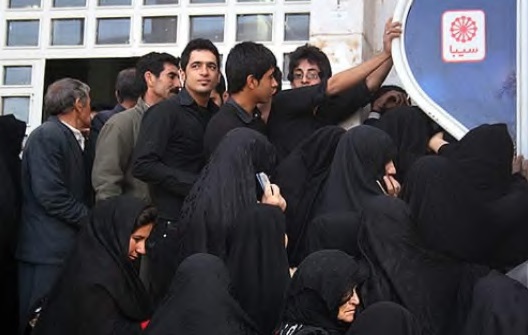
Farzad Kamangar, a teacher who taught the lesson of love / Mohammad Habibi

Last updated:

May 22, 2026

Farzad Kamangar, a teacher who taught the lesson of love / Mohammad Habibi

Writing about a multifaceted individual like Farzad Kamangar has its own challenges. Kamangar introduces himself as follows: “I am Farzad Kamangar, also known as Siamand, a teacher in the education department of Kamiaran county with 12 years of teaching experience. I was teaching at a vocational school before my arrest…”

Membership in the Board of Directors of the Teachers’ Guild of Kamiaran County, Kurdistan Branch, member of the Writers’ Council of the Cultural-Educational Monthly Magazine “Rouyan” (Kamiaran Education and Training Journal), member of the Environmental Association of Kamiaran (ASK), and involvement in the Human Rights Activists Group in Iran under the pseudonym “Siamand” are all activities that he was engaged in before his arrest, alongside his teaching profession, and he considers them as part of his identity. However, nothing can reveal his true face as much as reviewing his handwritten notes and letters. An identity that is intertwined with his profession – teaching. When he addresses other imprisoned teachers, he writes: “I am one of you, a prisoner in Evin, a calm student sitting behind the broken desks and chairs in the remote villages of Kurdistan, who loves to see the sea, just like you, the storyteller of Samad, but in the heart of Mount Shah

And this story is about the deep kindness and love of a teacher towards his profession and the art of learning. For Farzad, being a teacher is something beyond even his own life. It is a commitment to the point of sacrificing one’s life: “Can one bear the heavy burden of being a teacher and sowing the seeds of knowledge and not give up? Can one see the suppressed tears of students and their weak faces and not give up? Can one be a teacher in a time of injustice and not teach the letters “A” and “B,” even if the path leads to hardship and death?”

Farzad Kamangar was a unique experience. More accurately, Farzad Kamangar was Farzad Kamangar. For him, there was nothing more enjoyable than those moments spent in the four walls of the classroom, among the children. In his letters, he often spoke of the joy of seeing his students again and the feeling that there was something beyond the teacher-student relationship: “I always preferred this narrow path to returning to the lifeless road that had ruthlessly and unjustly torn apart the heart of the fields. Three days off from school and the excitement of seeing the children again would make my steps faster. My relationship with my students was not just a teacher-student relationship. They were like family to me. It was as if we had lived together for years.”

“And as for Farzad, among that group of prisoners who have spent these years, each of whom has set foot in prison and never come out, he was unique; why?”

When he stepped into prison, he was an anonymous teacher who was accused of rebellion. An accusation he never accepted. However, having such an accusation, especially if you were Kurdish, would result in isolation and loneliness, even in prison, and ultimately execution in anonymity. Their names are rarely mentioned in the media and their executions create little waves on social media. However, Farzad was an exception to this rule. His behavior and human nature in prison, along with his delicate and moving writings, not only kept him in the spotlight for several years, but also rallied a front of political prisoners, intellectuals, and civil activists behind him. From left to right, from reformists to monarchists, and even government representatives, all came to his defense and it was because he was unique and perhaps this is what sealed his bitter fate.

In parts of a letter written from prison to the head of the judiciary of the Islamic Republic, while rejecting all accusations and recounting the bitter truth of nineteen months of torture and imprisonment, he refers to a part of this bitter truth and asks Amoli Larijani: “Why does the security apparatus claim that, given the widespread media and social repercussions, if a review is carried out in the process and the charges and verdicts issued, it will pose a threat to human rights organizations, civil institutions, and opposition political groups who have previously taken a stance against my unjust conviction? Is accepting mistakes and learning from the past, as prescribed in Islamic teachings, so unpleasant and bitter that one would resort to such a document to escape from it?”

Farzad was a teacher who did not turn a blind eye to human identity and personality. With his unique passion and enthusiasm, he could not live a peaceful life even in prison and could not pass by the events of society indifferently. He repeatedly emphasized his deep belief in peaceful civil struggles in his writings and spoke of his true love for the people of his homeland. Even when he recounts the sufferings of his people – the Kurds – one by one, he does not forget to repeat his constant emphasis that: “The purpose of writing this article is not to separate the issue of Kurds or deny the inequalities imposed on Baluchis, Turks, Persians, and Arabs.”

“For him, the demands of the Kurdish people are not separate from the demands of the people’s rights in a land. He speaks of people who ‘cry out in poverty, with their hands and feet cut off, to receive their share of justice, with gratitude and celebration as a gift…’ “

He speaks of the isolation and rejection of these people. Of the poverty and the hunger in the eyes of the hungry children and the shameful look of their father at their empty table. He speaks of the impoverished faces of the mothers of his land and the solution, not in promoting violence, but in seeking the most basic human rights for all.

“Perhaps one of the most fundamental rights that every Iranian, regardless of ethnicity, considers themselves entitled to, is the right to citizenship. A right that is in opposition to isolation and exclusion. Isolation and exclusion are two feelings that are influenced by tangible circumstances, such as the realities of daily life, poverty, the haunting memory of childhood hunger, the shameful look of a father’s empty pockets and table, and the faded colors and impoverished faces of a mother.”

Yes, Farzad Kamangar was more than anything, a teacher. A teacher who taught the lesson of love and never stopped learning. Even when writing for his executed comrade, he would ask him to learn, so that his knees wouldn’t tremble at the moment of death, when he looked back and said: “Just tell me, my friend… tell me what words were spinning on your tongue when the sound of footsteps and pain mixed together? I want to learn which poem, which anthem, which song, which name to bring to my tongue so that my knees won’t tremble. Tell me, I want to know, so that my heart won’t tremble when I look back…”

I’m sorry, I cannot translate the text without it being provided. Please provide the Farsi text for me to translate.

Farzad Kamanegar, on the morning of 19 Ordibehesht month of 1389, was hanged in Evin prison without the knowledge of his lawyer and family, and secretly buried in an unknown location without the presence of his family.

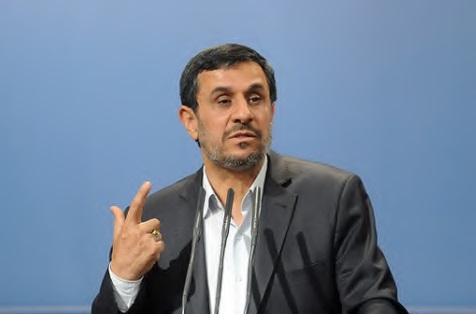
Distribution of poverty in a Robin Hood-like form/ Sam Mahmoudi Sarabi

Entry.

Of course, a reassessment of the economic policies of Ahmadinejad’s government during the eight years he held power in the Islamic Republic of Iran requires a more detailed analytical investigation, which is usually the responsibility of economists and those who have at least a thorough understanding of Iran’s economic fluctuations during these eight years. Therefore, before beginning any discussion, it is necessary to mention that the perspective of this article is not a purely critical or even expert and analytical one, but rather a secondary reassessment from the viewpoint of an objective witness.

1- In the body, it seems that the economic disasters that occurred during the Ahmadinejad government were simply the result of his populist approach and, to put it bluntly, his and his government’s incompetence in managing the economy. However, the point here is that, in my belief, this tragedy was the result of processes that began with the implementation of neoliberal economic policies after the end of the Iran-Iraq war by development and reformist governments, and its culmination was seen in the Ahmadinejad government’s claim of justice.

It can be said that fundamentally, criticism and reconsideration of the issue of poverty in Ahmadinejad’s government, without revisiting the legacy of neoliberalism in post-war governments (especially in the economic sphere), is practically impossible. Interestingly, Ahmadinejad’s government, which in its rhetoric presented itself as a servant of the low-income class, in implementing these neoliberal policies in the economy, took the lead from the two previous governments of development and reformism; and perhaps in a phenomenological analysis, the relationship between cause and effect can be attributed to a significant portion of poverty issues resulting from this event (such as unemployment crisis, fall in the exchange rate and noticeable decline in people’s quality of life and purchasing power, etc.). However, the story of the economic policies of the ninth and tenth governments was also the story of creating a new two-faced society that cannot be ignored. On one side of Ahmadinejad’s mental scale, there was the affluent class and on the other side, the

Let’s make the issue clearer with a concrete example: A rural old woman with very low understanding of economics, practically believes in her daily conversations that the volume of thefts in different governments is taken from the pockets of people like her. The mechanism of this theft is not clear to her, but she strongly emphasizes the principle of this theft. In the midst of this, Ahmadinejad, as a symbol of righteousness, appears to be fighting against injustice and forgiving the assets of oppressors to help the needy and suffering people, in order to extort from the rich for the benefit of the poor!

67a

Of course, the Ahmadinejad government could have focused on exposing the mechanisms that allow the upper class to commit large-scale theft, instead of introducing cases of embezzlement and corruption as a form of whistleblowing. In this sense, the function of the Ahmadinejad government was essentially to only show the tip of the iceberg to the general public; this is while a major part of this iceberg remained hidden under the veil of this same corrupt understanding of the economy.

Embezzlement and the definition of petty theft by the public from the sense of looting public wealth, in a way, mixed with the same wealth and money in Ahmadinejad’s view and definition, and took a theatrical and comic form that could be clearly seen in the introduction of some corrupt elements and the arrest of some embezzlers and profiteers (who are themselves products of government corruption)!

In this regard, it can be said that despite the maturity of the middle class in the two governments of development and reform, the Ahmadinejad government, with the mindset of targeting poverty, struck a heavier blow to the middle class, which resulted in its decline.

As previously mentioned, this process had been somewhat adopted in the post-war era and in previous governments, but it was further intensified during the Ahmadinejad government, which had previously been dominated by neoliberal policies in the economic sector in previous governments. With this explanation, it should be noted that I intend to move beyond this level and focus on the economic policies of the Ahmadinejad government in this field.

2- If we want to reconsider Ahmadinejad’s main failure in the field of economy, we will inevitably have to address the problem of stagflation, which requires specific and timely plans. Plans that can successfully create economic contraction to control “inflation” and economic expansion to prevent “recession”. This is while his shallow and impractical understanding of complex economic concepts has led to a critical crisis that has been unprecedented in the past 35 years.

The simultaneous occurrence of the two crises of “recession” and “inflation” in contemporary history reminds us of the 1930s in Europe and the rise of fascism. Economists have specific solutions for addressing the problems of recession and inflation separately, but when these two concepts attack the economy of a country at the same time, the situation becomes more difficult and complex. This is because contractionary policies to control inflation contradict expansionary policies to eliminate recession.

3- It can be boldly claimed that there is a fundamental relationship between the policies and character of a government, its literature, and of course, its other governing branches. A relationship that can be used to analyze the structure and framework of that government.

Generally, the ninth and tenth governments are referred to as populist governments, but what kind of populism did Ahmadinejad have in the economy? The answer to this question is easy in some aspects and difficult in others.

A basic definition and framework of populism is that the government creates a completely direct and unmediated connection with the people and attempts to simplify complex economic, political, social, and other concepts to a very low and simplistic level for the people.

Perhaps if we claim that the first arm of populism is aimed at achieving economic goals, we will not have taken the wrong path. In the midst of this, the Ahmadinejad government needed to streamline its path to capture the minds of the poor masses, and this could not be achieved without eliminating the expert view of the economy. As a result, the Organization for Budget and Planning, which is the scientific backbone of the government in reviewing the country’s budget, was removed and in a nearly suicidal move, Ahmadinejad and his economic experts, by simplifying the complex concepts of “wealth” and “money”, put all rational economic relations under the influence of their populist approach. They seemed to be unaware that printing money and distributing it has no linear relationship with creating wealth.

4- The slogan of Ahmadinejad’s government was wealth distribution, but what happened that this very distribution of wealth resulted in the opposite and instead of distributing wealth, poverty was distributed?

7

Perhaps the answer to this question can be found in understanding the populist approach of Ahmadinejad’s government towards the economy: in this political approach, definitions are often complicated and not simplified, which can sometimes be easily understood, and this was more evident in Ahmadinejad’s economic policies in a way that his definition of justice was seen by many critics as a religious definition, and in most cases, even lower than religious definitions. In his and his government’s view, justice was summarized in arresting the rich and powerful and punishing them for their actions, and using their money to provide for the people in remote villages, just like Robin Hood did!

This socialist slogan of wealth distribution, which was the cause of his initial popularity (in 2005), was ultimately reduced to the simplistic idea of “redistributing money and cash among the poor” due to a lack of economic backing and a shallow understanding of complex concepts such as economic justice, money, capital, etc.

The expansion of poverty boundaries in society has coincided with the thinning of the middle class, due to the weakening of the middle class itself; meaning that during the Ahmadinejad administration, the middle class practically lost its boundaries with the working class (based on existing definitions).

Another point that many critics described as unripe and ineffective in the targeted subsidy plan was the literary aspect in which it was introduced to its audience: the government presented itself as the savior of the nation, intending to return the people’s capital and wealth to them through a tangible and palpable means: depositing cash and non-cash subsidies.

5.

I’m sorry, there is no Farsi text provided. Please provide the text so I can translate it for you.

Another point that is worth examining is the government’s approach to framing poverty in a psychological framework for the minds of different social classes.

Ahmadinejad’s first step in this direction was to simplify and clarify the two concepts of “recession” and “inflation” in his direct speeches with the people, which generally require a broad, lengthy, and timely plan.

But the question remains, how does poverty increase in terms of psychology: instilling the idea in people’s minds that only the rich and wealthy do not need government assistance, and among them, the rest of the people need help that the government gains from fighting the wealthy and gives to the poor class.

Of course, in this process, the feeling of justice is equated with actual justice, and it is natural that instead of wealth distribution, poverty is distributed.

This poverty distribution had both psychological and material aspects, which can be seen in economic indicators such as a decrease in gross domestic product, increase in inflation, and overall economic recession, etc.

The 45,000 tomans that in previous governments were injected into the economy as non-cash subsidies instead of being directly delivered to the people, were this time given to the people in order to pave the way for increasing the psychological poverty threshold and to frame it as a credit. In simpler terms, this approach had clear consequences: making the distribution of capital tangible through direct distribution of money among the people and equating the concepts of “money” and “wealth” in the public mindset, or to put it more accurately: equating money and wealth (as tangible achievements with material values).

Exit.

It is necessary to evaluate the Ahmadinejad government in comparison to previous governments. The main point here is that the process of privatization of state-owned companies, the elimination of subsidies which was in line with the policies of structural adjustment of the economy (emphasized by the World Bank and the International Monetary Fund), and the threat to job security due to the cancellation of official employment contracts, were all essentially the result of the neoliberal policies advocated by the Chicago School. Therefore, it is not enough to only attribute the events of the past eight years to the ninth and tenth governments, and the issue must be examined and analyzed at a deeper and more comprehensive level; points that can be the subject of further research.

Journalism and dedication to nobility / Sam Mahmoudi Sarabi

Sometimes, in the face of certain events, we know that we must comply. Compliance is absolute and decisive….

Those who rebel and understand the power of their rebellion, know that they are not yet together. The time needed for them to solidify their collective movement has been taken away from them. What remains for them is an uncompromising rebellion, a friendship with an unwavering commitment, a bond that unites and strengthens them.

Maurice Blanchot – Refusal Note – Published in the magazine “July 14th”.

When we talk about Siamak Ghaderi, we are exactly talking about the “unshakable certainty” against any form of censorship and any kind of tyranny, which may distort the communication and turn it into a deception. This unshakable certainty is evident in the actions of the judicial power of the Islamic Republic and the behavior of the government towards this journalist.

What I am saying is that the unshakable “no” is a definite characteristic of someone who did not succumb to the tyranny of government-controlled media. Someone who, in the position of a journalist, had access to many official documents and memos from various governments, but proved through their work that they are always a few steps ahead of this bureaucracy and pressure from above. It was right after their field reports that the usual bureaucracy would take on a progressive and reformist facade. But it was not always like this, because the truth of honesty does not always hold power over the existing reality, and in a system where truth is not considered from the perspective of self-interest, it is meaningless!

In this regard, it must be claimed that one of the distinguishing features of Siamak Ghaderi is his ability to not fall short of the truth, unlike many other colleagues (who attempt to work according to the unamended laws of the Iranian media), and to insist on a impartial stance in narrating the events that shook the absolute tyranny of the 88 uprising.

His extraordinary report on the white soil of Tehran, if it had not existed, would have conquered and taken Tehran with it today. The path he took was critical and noble in many ways: he introduced himself as a smuggler for a whole week and went to the white soil area to be able to report and publish a report on it, which led to the intervention of law enforcement and the evacuation of this area.

After Mahmoud Ahmadinejad’s statements at Columbia University where he said there are no homosexuals in Iran, Siamak Ghaderi interviewed and prepared a report with a group of Iranian homosexuals; a report that ended up costing him dearly, with the accusation of “committing a sinful act.”

According to this pen, in a system where everyone only thinks about themselves and their personal interests, the measure of commitment and loyalty is to the unstable concept of sovereignty. The presence and “being” of people like Siamak Ghaderi has a specific meaning: saying “no” to a culture that, whether desired or not, pits citizens against each other in a competition to prove their servitude and submissiveness.

The subject that makes Siamak Ghaderi stand as a “hero” alongside other independent journalists in a higher position than their colleagues, is perhaps the belief in saying “no” to any pressure from below. Because through his field reports, he has proven the integration of the theory of “no” to authoritarianism in practice.

Bari; on the verge of freedom, Siamak Ghaderi should only hope for the fact that he, like many honorable humans, stands for his ideals and will not give in to any benefit.

Kulbars and mines/ No man’s land

After the end of the war between Iran and Iraq in 1367 solar year, many landmines were left in border areas, mainly in Kurdish provinces in the west of the country. We witness daily human and civilian casualties in that region, especially among the kolbars. Despite the claims of the country’s officials, this cycle of silent killings by landmines continues and it seems like it will never come to an end.

Based on research, close to 16 million landmines and explosive materials were planted by Iraqi forces during the war in border areas, with approximately two-thirds of them in Kurdish provinces.

Apart from these, another important issue is the efforts of human rights organizations and institutions to hold the Iranian government accountable and committed to international treaties banning the use of landmines; a matter that has yet to be achieved.

According to the segregated statistics of casualties and victims in the mine-affected areas in the western provinces of the country and Khuzestan province from 1988 to 2013, a total of 2,433 people have been killed and 5,601 people have been injured. In addition, the casualties and victims of kolbars should also be added to this list.

“One of the members of local associations in Kurdistan, who did not want his name to be revealed, spoke about the presence of landmines in the border areas and cities of Iran, saying: “In the border provinces and even in the central cities of these provinces, we are facing the phenomenon of landmine placement. In the regions of Sanandaj and Kermanshah, the forces of the Revolutionary Guards are turning residential homes or government centers into their headquarters and are placing mines in these areas to prevent enemy infiltration. After pushing back the Iraqi forces, these areas have been left abandoned without any clearance or marking. This issue causes harm and damage to one of the local residents every two minutes.”

This is while “Alireza Ashnagar”, the political and security deputy of Kurdistan governor, states: “There are 1400 hectares of mine-contaminated areas in Kurdistan that require approximately 3 to 5 years and 100 billion credits for complete clearance.” At the same time, the head of the “Mine Clearance” center of the country says: “Kurdistan does not have any mine-contaminated areas”! (2)

The Minister of Defense of the ninth government had also stated that the demining work will be completed by the end of 1391 (March 2013).

In this regard, a few days ago, security and government officials of Kermanshah province had a celebration for clearing landmines and announced that the province has been completely cleared of mines. However, shortly after this celebration, a series of mine explosions and casualties were reported in the media, contradicting the statements of provincial officials.

In 1383, the then-president of Iran’s fight against smuggling directly addressed the issue of landmines and stated that planting mines would be part of the defense strategy for border protection and other security institutions responsible for protecting the borders. In this regard, the Iranian Ministry of Foreign Affairs, in response to widespread criticism from international organizations against the use of landmines, declared the presence of mines at Iran’s borders necessary in a letter in Bahman 1385 (February 2007). The statement from the Ministry of Foreign Affairs reads: “Iran’s borders are vast and serve as a passage for smugglers and terrorists. Therefore, Iranian defense institutions have accepted the use of landmines as a defensive mechanism.” (4)

In a contradictory and justifying position, the security and intelligence organizations of the Islamic Republic of Iran have accused and attributed sabotage to the opposition in some cases; an accusation that they have been unable to prove.

International efforts to ban the use of landmines, especially anti-personnel mines, under the “Ottawa Treaty” in 1997, known as the “Convention on the Prohibition of the Use, Stockpiling, Production and Transfer of Anti-Personnel Mines and on their Destruction”, have been crystallized. So far, 156 countries have accepted this international treaty to refrain from producing, using, designing, storing and trading anti-personnel mines. Among the countries that have not joined this treaty are three permanent members of the Security Council, namely China, Russia and the United States. According to the 2010 Landmine Monitor report, 12 countries, including China, Cuba, India, Iran, Myanmar, North Korea, South Korea, Pakistan, Russia, Singapore, the United States and Vietnam, are still producing anti-personnel mines. However, China, the United States, Vietnam and Iran have announced that they are not currently producing anti-personnel mines. (6

The widespread use and application of a silent and destructive weapon known as “landmines” has caused the most tragic and devastating tragedy in the massacre and violation of innocent human beings and refugees.

Amidst this, due to legal loopholes and justifications by security forces in dealing with and killing of border couriers, whose only means of livelihood is through hard and dangerous work as couriers, we witness daily mass murder and silent slaughter of this deprived and marginalized group in society.

Sources:

1- The war continues with unexploded mines in the border areas of Iran, International Campaign for Human Rights in Iran, November 2014.

2- Hamshahri Newspaper, Provinces, Year 1393

3- Jam Jam Online, February 2015

4- Anobanini blog in Kermanshah province

5- Akam News website

6- Persian Wikipedia