


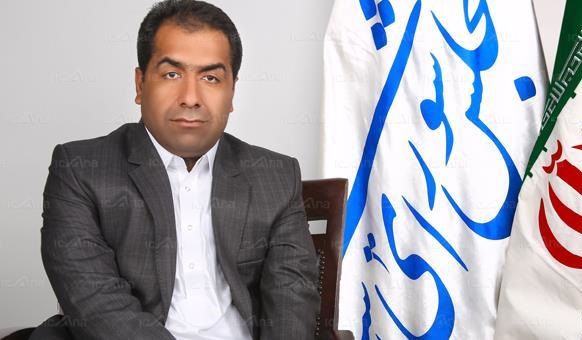
Discrimination between provinces and lack of budget for school reconstruction; in conversation with Mohammad Basit Darazehi / Ali Kalaii.
This is a caption
این یک عنوان است
This is a caption.
The conversation is with Ali Kalai.
“The budget problem and lack of financial resources for the reconstruction and renovation of schools, especially in the field of education in the country, was a topic of discussion by Mohammad Basit Darazehi, representative of the Islamic Consultative Assembly from Sistan and Baluchestan province, in the areas of Saravan, Suran, Sib, and Mehrastan, member of the Hope faction and first secretary of the Parliament’s Research and Education Commission, in an interview with Khat-e-Solh.”
This representative of the parliament also mentioned during the comparison of schools made of mud, brick, and clay in their respective province, that “the risks of mud schools are much lower than those of brick and clay schools, which are not resistant to even the slightest wind, rain, or storm and collapse.”
He continued, “There are many mud and brick schools in Sistan and Baluchestan, especially in southern Baluchestan, and in my opinion, their resistance is close to zero. These types of schools have no resistance against the violence of nature, especially heavy rains and occasional storms that come.”
Below is a summary of the peace talks with this representative of the parliament, focusing on the issue of education in the country, reconstruction of schools, and the issue of educational discrimination.
According to Article 30 of the Constitution, the Islamic Republic is obligated to provide free education for all children until the end of high school. However, we are faced with an increase in non-profit schools and the issue of deprived children who are unable to attend school in rural and urban areas. Therefore, it seems that this constitutional principle has been forgotten. Please share your analysis on this matter.
“Education is a very important topic and the key to salvation, development, and progress in a society is its education. In our country and in the Islamic Republic government, education has been the foundation since the beginning of the revolution until today. The Ministry of Education has also been one of the fundamental ministries in the direction of education and development of the country.”
I, as a member of the Education and Research Commission of the Islamic Consultative Assembly, believe that the government and the system should prioritize education and continue on this path, making education the top priority of the country. If there is education, surely the rest of the problems of the country will be solved or at least a solution will be found for them, but if the human resources are weak in education, there will definitely be a decline and weakness in other components.
In response to your question, I must say that yes, recently non-profit schools have somewhat changed their mission of education and knowledge and have become more focused on materialism. In my opinion, these issues have become more prominent day by day and in underprivileged and border areas – especially in Sistan and Baluchestan province where people have very low income – this class gap and divide is created and the dropout rate from education is increasing day by day.
In my opinion, education should be seen as a package and there should be no difference in education in our country. We should not have differences between private and non-private, profit and non-profit, government and cultural schools, and gifted and talented students; a school is a school. Unfortunately, there is a lot of division and labeling in our country and sometimes it feels like we don’t see education as a package. Hopefully, there will be a wise thought to reduce the distance between students across the country and everyone can benefit from the blessing and opportunity of free education.
Is there a law that prevents the collection of miscellaneous and illegal fees that some officials of public schools take from parents under various excuses?
There have been discussions and warnings about this matter, and representatives and colleagues in the parliament and the Education and Research Commission have given warnings. The honorable minister also believes that in public schools, efforts should be made not to charge parents and students for most of the extra educational expenses. According to reports, unfortunately, these fees are being charged and it has caused concern for parents and students.
This is a caption for an image.
Photo of Tasnim
You previously mentioned in a conversation with the House of Representatives News Agency (August 15, 2018) that we have a thousand mud and brick schools. Why, after four decades of the establishment of the Islamic Republic system, are we still facing this issue?
In this interview and other interviews, I have mentioned that we had a kite-flying ceremony, but I wish we had a kite-flying school. The dangers of kite-flying schools are much less than those of mud and brick schools that collapse due to the slightest wind, rain, or storm. I have heard that one of the selfless teachers in Balochistan was martyred due to the lack of resistance in the school.
There are many adobe and mud schools in Sistan and Baluchestan, especially in southern Baluchestan, and in my opinion, their resistance is close to zero. These types of schools have no resistance against the violence of nature, especially heavy rains and occasional storms that come.
Of course, the Minister of Education had a good perspective. The problem here is that we are currently facing financial and credit limitations in the country. However, the biggest perspective of the honorable minister has been to choose deputies and the head of the country’s reconstruction organization from Sistan and Baluchestan, and his first and last motivation is to bridge this significant and meaningful gap that has existed before and after the revolution and bring the situation closer to the soft and standard form of the country.
In your opinion, what actions could the parliament have taken regarding the low education rate and educational discrimination in the country? Where is the problem? Do you think the problem lies in the laws or in the implementation?
As I mentioned in the beginning of the interview, if we do not prioritize education as our top priority, these problems will arise. The government must prioritize education in the budget bill that is sent to the parliament every year. You are aware that representatives at a lower level can have a say in this bill, and the government must prioritize education.
In my opinion, the best way to save the education of our country is to define sustainable resources, such as oil income, taxes, value added, or any other method. The parliament has also supported this action. The tariff for water, electricity, and gas income that was created for universities last year was one of the major tasks of the parliament. The allocation of one trillion tomans for renovating schools and other support in the field of school renovation, teachers’ salaries, and other areas of education and training, shows the special attention of the parliament, especially the Education and Research Commission. Although these efforts are limited in scope.
The government must prioritize education and training by allocating a special budget and having a special focus on education and training in the 98 budget law; otherwise, the country will suffer. I believe that if education and training are not our first priority, we cannot save the country from these difficulties and problems. Human resources are the savior and the foundation of development for any country in the 21st century, which is the century of human development.
This is a caption for an image[/caption]
این یک عنوان برای یک تصویر است.
This is a caption for an image.
Photo of Tasnim
So, considering your perspective, is the budget allocated for education and schools – at least in the 97 budget – not enough and needs to be increased for the construction and reconstruction of schools for the next year?
Exactly. I believe that not only in 97, but also in previous years, there has not been enough attention paid to the budget – especially in the area of school renovation, which requires a significant budget – and even when attention has been given, it has not been fair; meaning that one province may have received attention, but another province did not.
In my opinion, we should consider distance, area, and population as the basis in all matters of the country. Whether it be in the field of education, transportation, or other areas of this land, we must make these the basis. However, sometimes we see that more assistance is given to certain provinces based on personal preference, providing better facilities and conditions for them. This is while some provinces, such as Sistan and Baluchestan, which do not have a supporter in the center of the country, have a significant and meaningful gap in their budgets compared to the second to last province in the country.
In any case, we hope that the respected officials, especially the Organization of Planning and Budget, will consider measures in the coming year that will help. For a province like Sistan and Baluchestan, positive discrimination must be applied in order to reduce these disparities. Sistan and Baluchestan is a vast province, with a very large area stretching 1200 kilometers from north to south, with 1100 kilometers of border and borders with several neighboring countries. I hope that the government, based on the valuable recommendations of the esteemed Leader, will pay attention to the province of Sistan and Baluchestan and apply special and positive discrimination to this province so that it does not face such problems, especially in the area of school hardware. Not only Sistan and Baluchestan province, but many other regions and provinces such as Kurdistan, southern Kerman, parts of Lorestan and parts of Hormozgan also have such conditions. I can even say that in the area
As the final question, should schools necessarily be built by benefactors? According to the explicit text of the Constitution, what duty does the government have? And why is the majority of school construction entrusted to benefactors?
Yes, it is the government’s responsibility to build schools, but due to financial circumstances, it is done in this way. Nowadays, many universities around the world are supported by philanthropists. Philanthropy culture in our country is very good and has helped the government in the past years. This is the fate of our children and future generations. We should not wait for the government. The government’s financial situation is not normal for us to expect them to solve all the problems. We should use all the capacities of our country; whether in the field of education, school building, or university building.
In my opinion, we should utilize the capacity of philanthropic assemblies and social groups that can be active, and this is a very good thing that takes the government’s hand in the current situation. This belongs to future generations and it is not right to wait until the government has credibility. The media owners will also have an impact on promoting and encouraging philanthropists and individuals who are concerned about the state of this country, whose hearts beat for the children of this country. If the media owners are willing and make an effort – although they have made a lot of effort – we will attract good philanthropists in the field of school renovation.
Thank you for the time you have dedicated to the peace process.
 Created By: Ali Kalaei
 September 23, 2018
Tags
Deprivation Education and Research Commission Education and training Mohammad Basit Darazehi Monthly Peace Line Magazine Paragraph peace line Reopening of schools School safety Sistan and Baluchestan The right to free education. پیمان صلح ماهنامه خط صلح ماهنامه خط صلح