


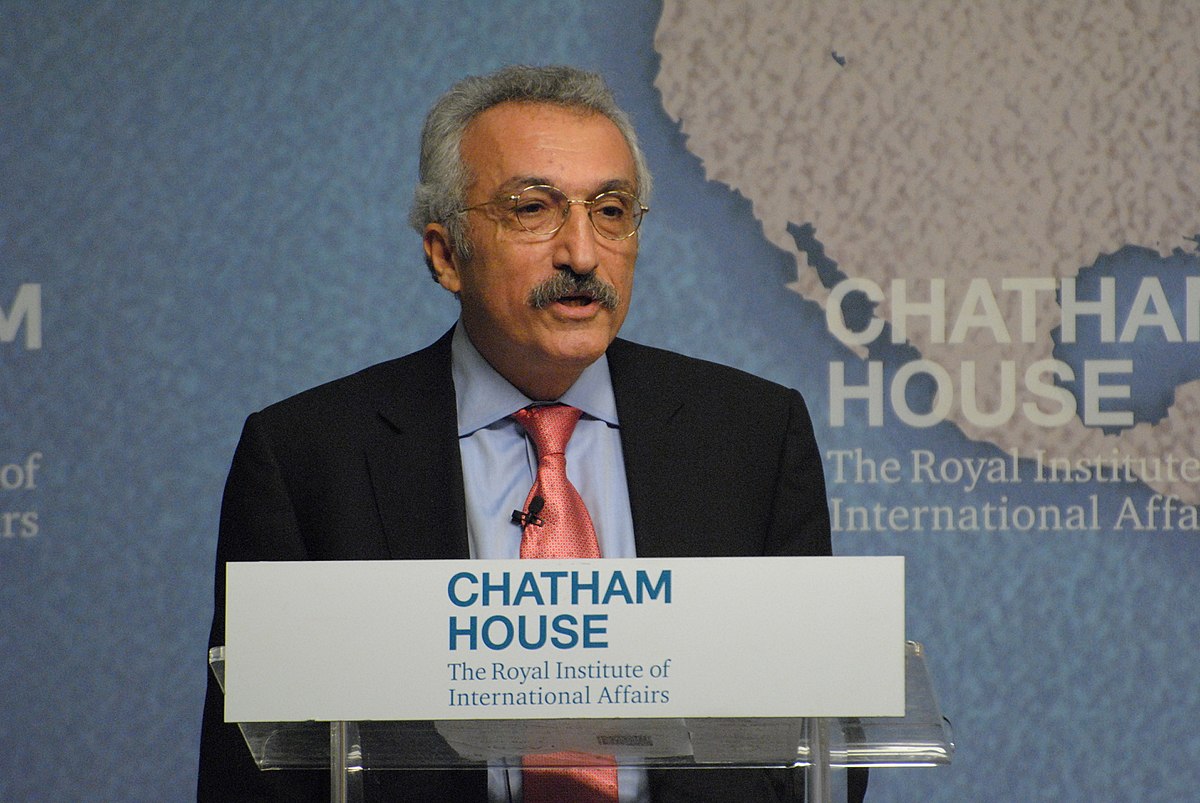
: Abbas Milani: The main responsible for undemocratic and tyrannical behaviors/ Morteza HamounianAbbas Milani: The main responsible for undemocratic and tyrannical behaviors/ Morteza Hamounian:
Dr. Abbas Milani is an Iranian theorist, historian, and writer residing in the state of California in the United States. He has been the director of the Iranian Studies program at Stanford University and also one of the heads of the Iran Democracy Project at the Hoover Institution. Some of his notable books include “The Mystery of Hoveyda”, “Revolution and Counter-Revolution in Iran”, and “The Shah’s Mystery”.
Dr. Milaní, in a conversation with the peace line regarding the nationwide protests in December, emphasized that “the Iranian regime will be forced to retreat through civil disobedience.” He stated, “Those who only criticized the people for condemning the violence, but turned a blind eye to the regime’s institutionalized violence that resulted in the killing and arrest of thousands, were not paying attention to these atrocities.”
The following is a description of the conversation “Peace Line” with Abbas Milani regarding the “January 2018 nationwide protests” passing through your opinion.
Dear Mr. Milani, what is violence and who is a violent person? And on the other hand, to what extent do circumstances or power play a role in interpreting an action as an effective act of violence?
Violence encompasses a wide spectrum; from physical and verbal abuse to structural discrimination and hindering the natural growth of deserving human beings. But the worst of it all is physical violence, execution, torture, and imprisonment.
We must consider that the relationship between the government and the people is a reciprocal one. In a harsh and tyrannical regime, aggressive and sometimes despotic behavior can also be found among the people. Sometimes, out of frustration and sometimes out of poverty, those who have been subjected to violence and tyranny their whole lives may exhibit undemocratic behavior. The primary responsibility for this behavior lies with the brutal tyrant. The next responsible party is the one who participates in this violence. The only way to save Iran is to break free from this cycle of violence. Society must come to the realization that in order to escape the repetition of the past and break free from the futile cycle of violence and tyranny, it must take a different path.
Do you think violence can be justified in certain circumstances?
Regimes and ideologies propose legitimate violence in a way that they consider themselves deserving of a special position. Whether it is Marxists who distinguish revolutionary violence from reactionary violence, or religious individuals who differentiate between Christian violence, Jewish violence, Buddhist violence, or Islamic violence. In my opinion, this is all nonsense. Killing someone for their beliefs – whatever those beliefs may be – is wrong and, in my opinion, has no legitimacy.
Can one speak up and defend themselves against a tyrannical oppressor, using legitimate arguments, when faced with your interpretation of a cruel dictator? Some also believe that the nationwide protests in December were accompanied by blind violence from a group of protesters. What is your opinion on this matter?
This issue depends on individuals’ interpretive perspectives. If you look at politics from a utilitarian perspective or a purely pragmatic perspective, you can definitely say that some of this violence was defensive violence. Some of this violence was blind violence and other definitions that are presented. But if you have come to the conclusion that the way to escape this vicious cycle is civil disobedience, not increasing violence in society or gaining the upper hand in violence, then each of these violence is a place for criticism. Of course, even in criticism, I should be aware of the creator of this vicious cycle. Those who only criticized the people in condemning this violence, but did not take notice of the violent regime that caused the killing and detention of thousands of people, did not care about those atrocities. If torture in prisons, daily violence of Basij forces, law enforcement, Sepah and clergy towards people is not paid attention to and only people’s violence is criticized, in my opinion, it is not a fair perspective
It is said that the way the government dealt with and the level of violence used in suppressing the nationwide protests in December was not as high as some may think. Even with at least 25 citizens killed and thousands arrested, some believe that the level of violence used was lower in comparison to the extent of the protests on one hand, and the history of repression by security forces on the other. What is your opinion on this matter?
“See, comparing and saying that this is “bad” but not “worse” is not a virtue. People should have the right to peaceful protests. A regime that has taken away this right from the people for 38 years, can no longer claim that killing 20 people instead of 2 and arresting 4,000 instead of 10,000 is less violent. During these same protests, the regime has preemptively arrested dozens of innocent students. What kind of non-violence is this?”
In my opinion, we should look at this issue within a historical framework. Even if we were to accept this perspective, we must understand that the reason for less violence is because the regime knew very well that as we Iranians say, “if you die, there is no one else to die for you!” Those who took to the streets this time were mostly hardworking urbanites, who until recently may have even been defenders of this regime. Therefore, in my opinion, they were concerned that excessive violence would lead to another uncontrollable explosion. As a result, it should be emphasized that non-violence resulting from caution is different from non-violence that is controlled by the law. This regime was not committed to the law, which resulted in less violence. In America, a week after the presidential election, two to three million people took to the streets and protested, but not a single person was arrested for political reasons.
While we are not even sure if we have the total number of casualties, detainees, and consequences, and if we include them alongside the protesting population, the violence may have been less. Even one casualty is too many. At least 5 people have been killed in prisons since the protests began until today. The deaths in prisons should also be considered as consequences of these protests.
You spoke about the relationship between violence and the Islamic Republic. Do you see violence as an inherent part of the Iranian government or do you think it is a tool that the authorities use? Can you even imagine a time when this government would not resort to violence?
If we consider violence in the English sense, the monopoly of violence is an inherent part of any power. This means that the state, in the concept of sovereignty, is the only entity in society that has the right to use violence, but the right to violence is subject to the law. This means that the state’s right to violence is changeable. Different regimes are different in this regard. Not only in terms of the amount of violence they use, but also in terms of their justification for violence. The Iranian regime uses concepts to justify violence that have no legal basis in the modern sense. Terms such as “punishment” used as religious laws, justify “torture” and “amputation”. Or justifying “spying” as a “religious duty” and justifying “violence against women” as a phenomenon that is justified by “religious deductions”. These make the type of violence used by the regime different. The Shah’s regime also used violence. But the violence of
As a final question, please explain what is the rational approach towards a government that has violence as an inherent part of its behavior? In the face of these circumstances, is it rational to be honest, tolerant, and peace-seeking or not?
I think there is no group in Iranian society that has been subjected to violence as much as women. This violence has become institutionalized and continuous. But the way women have faced this violence can be a role model for all of Iranian society. In a 38-year process, Iranian women have tried to push back and resist this regime and its anti-women laws and actions through civil disobedience. They did not resort to violence and instead engaged in widespread civil disobedience. In my opinion, it would be very easy to push back many of the policies of this regime through this widespread civil disobedience. Let me give an example. The ban on women’s presence in sports stadiums is a form of violence against women and they are fighting against it. But if Iranian men decide to stand in solidarity with women and refuse to attend any sports event in any stadium in the country, there is no doubt that this regime will not be able to tolerate empty stadiums; both financially and symbolically. It would be
Civil disobedience means refusing to accept a law that we consider immoral and inhumane, and refusing to comply with it in a legal manner and paying a price for it. Civil disobedience is not just saying that we will engage in civil disobedience in Birmingham until the police stop using dogs against black protesters, referring to the civil rights movement in the United States in the 1960s. They did not resort to violence, but they did not back down. Despite the violence (being arrested, beaten, paying the price, and even being attacked by dogs), they ultimately forced the segregationist regime to retreat through civil disobedience. I have no doubt that with civil disobedience and men standing in solidarity with women, the misogynistic regime in Iran will also be forced to retreat.
Thank you for the time you have given to the peace line.
 Created By: Admin
 March 20, 2018
Tags
Abbas Milani Morteza Hamounian Nationwide protests in December peace line Violence پیمان صلح