


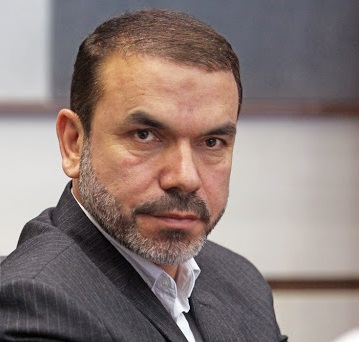
In Khuzestan, the number of coronavirus cases has increased; in an interview with Seyyed Razi Noori, representative of Shush, we spoke with Ali Kalai.

In an interview with ISNA, it was said that the 11th Parliament should prevent social corona. Sayyed Razi Nouri, a doctor and representative of Khuzestan (Shush) in the 10th Parliament of the Islamic Republic, was present. Considering his remarks and the various opinions of representatives such as Gholamali Jafarzadeh, who had said that the post-corona era in Iran is terrible, the peace line decided to have a short conversation with Mr. Nouri about the corona disease and the country’s situation. A conversation that was difficult to achieve and in the middle of the discussion, the aforementioned representative ended the conversation by announcing that it was time for iftar (breaking fast).
This parliament representative, who was not elected by the people in the 11th Parliament elections, spoke in a conversation with the peace line in the last days of his representation about the need to forget oil as a capital for the budget and
You said in an interview with ISNA on the 19th of Ordibehesht of this year that “the eleventh parliament should prevent social corona.” What do you mean by social corona?
The problems that exist in our society, such as unemployment, may not have been solved despite the potential for youth employment. This means that we should consider these social issues. Just as they were able to take advantage of opportunities in the field of coronavirus and innovative companies were able to accomplish great things, we can use this effort to solve problems and some social abnormalities that I call social corona and solve those problems. The same hands that were able to launch satellites and the thinking minds that were able to make the country self-sufficient in masks and other related items during this short time, so that we can be the exporter of these items! If we join hands and appreciate the value of these young groups and have confidence in our capabilities, have a good plan for them, appreciate innovative companies and have faith in the resistance economy, we can solve these problems, such as the problem of unemployment, which is a social corona.
One of the representatives of the parliament, Masoud Rezaei, had previously said, “Do not link economic and livelihood problems to Corona, the situation was not better before Corona.” Another representative, Gholamali Jafarzadeh Emamabad, had warned about the terrifying state of Iran’s economy in the post-Corona period about a month ago and had warned about the danger of the collapse of Iran’s economy. What is your opinion? Is Iran’s economy really at risk?
Issues related to coronavirus and its impact on the global economy are not hidden from anyone. But we have learned that we can always turn a threat into an opportunity. In the field of production and self-sufficiency, we have been able to reach a point where we can be exporters. By solving the economic problems that have been putting pressure on us for years and have been imposed on us, we can take advantage of domestic opportunities in the economic field and make Iran a voice for the world. This means that if we consider the threat as an opportunity, plan and consider a resilient economy as a successful formula for this issue, and forget about oil and only see it as a support, we can reach a position in the economic field where others see us as a role model.
How do you evaluate the government’s management of the COVID-19 crisis? Has the government been successful in addressing the livelihood and economy of the people?
Wherever the government and people have been able to be together and act with one heart and one voice, they have accomplished great things. In the case of the coronavirus, the government has made every effort and entered places where it could take action and has done relatively well. But alongside the government, the Imam’s Executive Command, Basij forces, and the collective forces of the people have also entered and have been able to pass this test alongside the government. Surely, when the government hands over all tasks to the private, cooperative, and public sectors, especially knowledge-based companies, they will be able to successfully handle many of the country’s critical problems and issues in the future.
Has social distancing and encouraging people to stay at home been effective in controlling the coronavirus crisis in the country?
In my opinion, it has been done well. However, on the other hand, the issue of families’ economy is also raised. Until a vaccine is considered for the coronavirus, people can prevent the disease by following health guidelines and recommendations, and they can better tolerate the issue.
But let’s look at Khuzestan. Despite the fact that the situation of coronavirus is improving in many provinces, because these issues have been less observed in Khuzestan, the statistics have increased. This shows that in places where social distancing has been implemented, it has yielded results.
In this province of Khuzestan, there are some small businesses and seasonal workers who have suffered losses from staying at home. What does the government do to support them?
The government and the national headquarters for coronavirus have considered economic and health issues and medical treatment. Since it is not possible to always stay at home, economic activities must be carried out while following a set of health protocols. The government may use the amount allowed by the leadership to be withdrawn from the National Development Fund and allocate it to these organizations to see how effective it can be. We must define plans and health protocols so that people can generate income, have businesses, and make a living.
You mentioned an economy without oil. Some representatives talk about other solutions. They believe that the dictatorship and bureaucracy in the country should be eliminated in order to manage such crises. What is your opinion? Which ones are a priority and can be helpful?
Both must be done. As long as we are dependent on oil income, nothing will happen and we will not move towards other capacities and capabilities that exist in the country. There are countries that do not have oil, but have solved their problems through planning. Good planning on one hand and good management on the other. And we must also prevent paper games. We should consider oil as a support, not as capital, and not come and close all planning and budget on oil. As long as we are dependent on a particular product, we will definitely face problems in the future. And that is considering the fluctuation of oil prices and the uncertainty of the income generated from it in the country.
The tenth term is coming to an end. What approach do you think the next term can take to help the economy and people’s livelihood, especially in the post-COVID situation?
The concern of the people and leadership is the issue of economy and employment. And of course, in addition to cultural issues and other issues. This should be considered as a goal and the concerns that the leadership has every year and the instructions they give should be included in their program, and also their political issues should be toned down. It should not be the case that someone comes and eliminates someone else and takes their place. The parliament should enter as a revolutionary parliament and see the issues and livelihood of the people and plan for it and lay the rails for the future government.
Thank you for the time you have given to the peace line.
 Created By: Ali Kalaei
 May 21, 2020
Tags
Ali Kala'i Corona Coronavirus crisis Coronavirus market Khuzestan Monthly Peace Line Magazine Number 109 peace line Seyed Razi Noori Shush پیمان صلح ماهنامه خط صلح ماهنامه خط صلح