


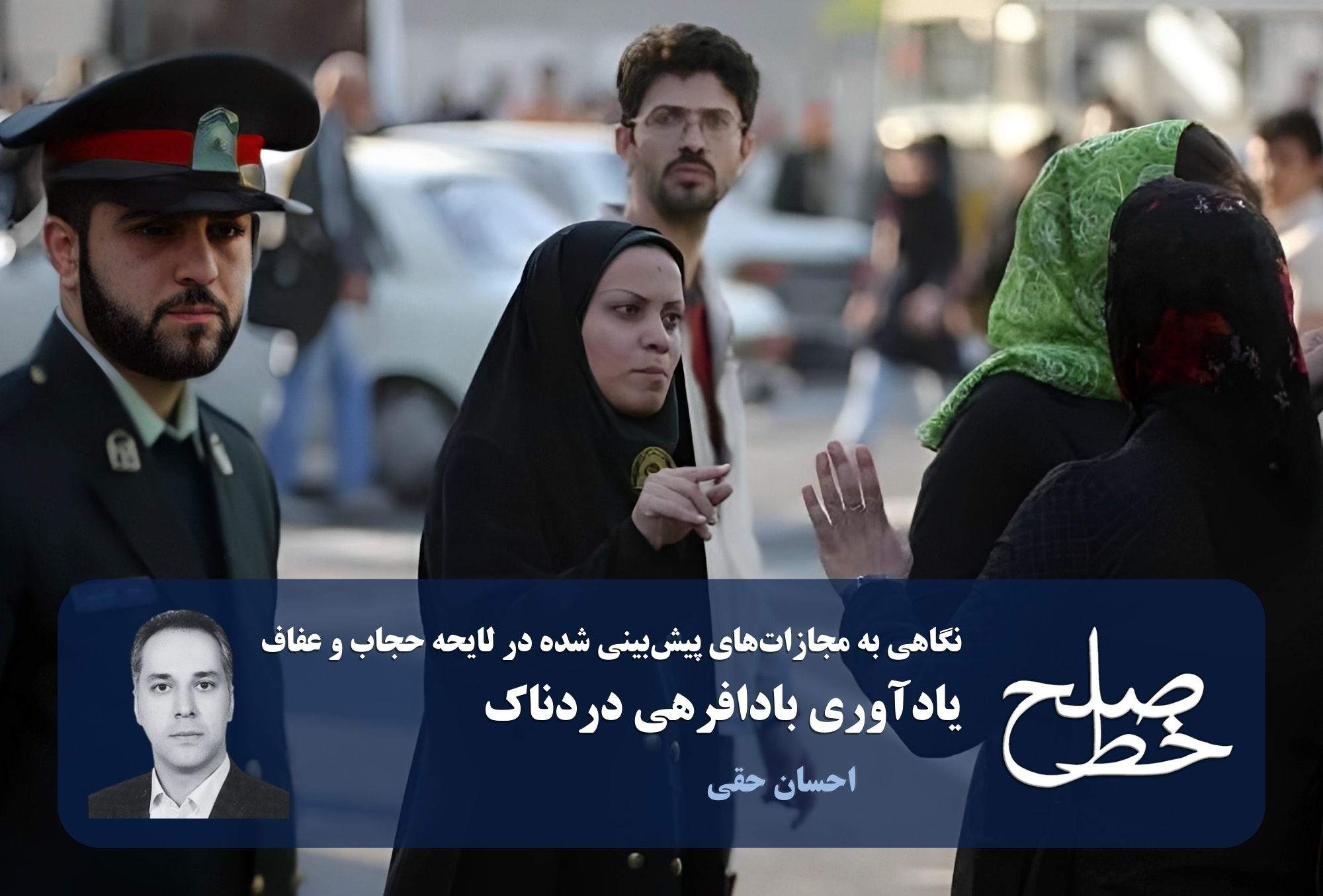
قتA Look at the Envisaged Punishments in the Veil and Chastity Bill / Ehsan Haghighat
In modern civilized societies, the establishment of criminal laws falls solely within the jurisdiction of the legislative body (parliament), which is derived from the will of the majority of citizens. The legislative authorities, using this legal capacity and taking into account the desires and will of the general public, as well as the necessities and interests of the public and, of course, the cultural realities of society, take the initiative to enact criminal laws. Based on this, and considering the differences and changes in the mentioned criteria, we witness diversity and variation in some criminal laws in different criminal systems and their changes and developments within one criminal system at different times. In addition, since criminalizing the behavior of citizens and consequently considering the criminal response (punishment) to these behaviors is a harsh and oppressive method that restricts the rights and freedoms of individuals, and some studies and investigations have shown the inefficiency and impact of this method in reducing social deviances and abnormalities. In most progressive and advanced criminal systems in the world,
In such circumstances and despite the profound changes that have taken place in recent years in Iranian society and in the issue of women’s clothing, a significant portion of the people of this land (both women and men) are demanding freedom in choosing their clothing and not being forced to wear Islamic clothing (hijab) by the government (like other countries in the world, including Muslim-majority countries or, in other words, Islamic countries). This demand has even been seen among religious segments of society and individuals who themselves believe in and adhere to Islamic hijab. The pillars of the apparent government, with special attention and continuous effort, have drafted a bill entitled “Family Protection Bill through the Promotion of Chastity and Hijab” and put it up for approval, which aims to impose hijab on women and, of course, men through widespread and strict criminalization and the use of unjust and unfair punishments, without any representatives in the legislative and executive bodies to enforce their collective will. A brief look
The main punishments outlined in this bill, which are included in articles 38 to 66, include imprisonment (fourth degree), fines (first to sixth degree) or payment of a portion of business profits, as well as a ban on leaving the country (from six months to five years), a ban on online activities (from six months to two years), and deprivation from employment and professional activities (from six months to fifteen years). These punishments, which are considered severe and heavy, are specifically designed for offenses such as “indecency”, “partial indecency”, “immodesty”, “unveiling”, “improper dress”, “unveiling of hijab”, and promotion of these actions. Regardless of the relative nature and interpretation of these titles, which provide grounds for arbitrary and unequal punishments, imposing such heavy punishments for these matters is in no way justifiable and will not only fail to reduce what they dislike, but will also lead to disrespect and disregard for the law
One of the punishments included in this draft as a criminal response to what the drafters consider a crime is “prohibition of leaving the country”. This criminal response, which was previously considered as a supplementary punishment in Article 23 of the Islamic Penal Code – passed in 2013 – is now considered as the main punishment in this draft, conveying a bitter, regretful, and perhaps realistic message to society that simply being present within the borders of this land and not being able to escape from it is a painful imprisonment. Considering this prohibition as a legal punishment will have negative and destructive psychological effects on citizens and will make their lives resemble that of a large prison.
According to what has been said, it is emphasized again that the criminalization of clothing is a significant part of society’s choice in order to impose a specific lifestyle and dress code, and is a clear example of the improper use of legislative tools and the deviation of the legislative path. There is no doubt that the existence of these heavy punishments, which are sometimes even harsher and more severe than the prescribed punishments for some dangerous crimes, will cause irreparable damage and harm to the dignity and position of the law in the public opinion. It is hoped that the limited foresight and wisdom remaining in the legislative body will prevent the approval and conversion of such a disastrous text into law, so that it can prevent the destruction and destruction of the law and the legislator; although the recent decision of the Islamic Consultative Assembly to delegate the authority to review and approve this bill to the Joint Commission on Article 85 of the Constitution (4) has made this hope more faint than ever before.
Notes:
1- Imprisonment for more than five to ten years.
2- A fine of more than one billion (1,000,000,000) rials.
3- Cash penalty from more than twenty million (20,000,000) rials to eighty million (80,000,000) rials.
Article 85 of the Constitution states that: The position of the representative is personal and cannot be delegated to another. The parliament cannot delegate its legislative authority to an individual or a group, but in necessary cases, it can delegate the power to draft certain laws to its internal commissions while observing Article 72. In this case, these laws will be implemented on a trial basis for a period determined by the parliament and their final approval will be with the parliament.
 Created By: Ehsan Haghi
 August 23, 2023
Tags
Compulsory hijab Coverless Ehsan Haghie Gender discrimination 2 Hijab Imprisonment Mahsa Amini Monthly Peace Line Magazine peace line Peace Line 148 The bill of chastity and hijab Unveiling Unveiling/Uncovering/Removal of the Hijab Violence Woman, freedom of life ماهنامه خط صلح