


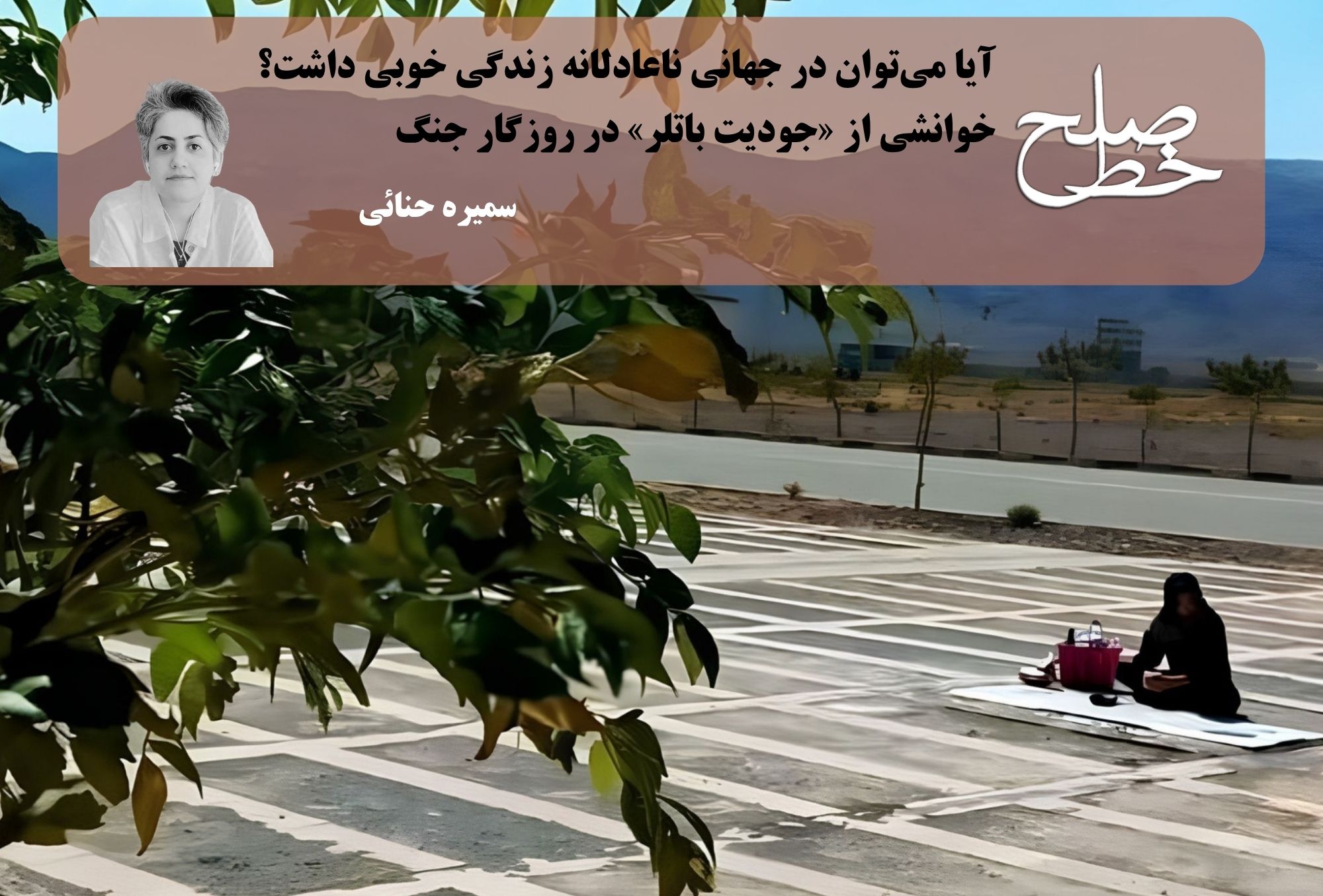
Is it possible to live a good life in an unjust world? / Samira Hanaei
The world has once again become accustomed to war. Images of destruction, displacement and death flash before our eyes every day; so much so that we sometimes forget that behind every image, there was a human being. However, not all victims are seen equally. For some deaths, official ceremonies are held, the media writes about them for days and politicians publish messages of condolence. But the deaths of others, even if they number thousands, are lost in silence. Sometimes families wait weeks and months to receive the bodies of their loved ones; as if the right to mourn is a privilege that is not granted to everyone.
In such a world, the question of the “good life” no longer seems like an abstract philosophical debate. How can we talk about happiness, morality, or living right when for some people even the essence of their lives is not of equal value? Do all people actually have the opportunity to think about the good life, or are some excluded from the circle of valuable lives before they can strive for a better future?
This is the question that Judith Butler poses in 2012, when she received the Adorno Prize in Frankfurt, in a lecture entitled “Is it possible to live a good life in a bad life?” She begins her speech with Theodor Adorno’s famous quote: “A good life is not possible in a wrong life.” But Butler does not stop at repeating this quote. She dissects it, reveals its hidden layers, and poses a question that is perhaps more important today, in the midst of successive wars and crises, than ever before: Who even has the opportunity to talk about the “good life”?
But what sets Butler’s speech apart from many moral arguments is the shift he makes in the question itself. The original question remains: Is it possible to live a good life in an unjust world? But instead of suggesting a way to be happy in difficult circumstances, Butler takes a step back and asks the question’s foundation.
“Are all humans fundamentally on an equal footing to be expected to have a ‘good life’?”
In other words, can we talk about morality, happiness, and living well without first answering the question of who has the right to a livable life in the first place?
Here Butler introduces one of the most important concepts of his thought, namely “grievability.” He shifts our attention from life to death, not to talk about death, but to reveal the value of life. In his view, society shows which lives it considers valuable and which ones it does not by the way it mourns its victims.
If a person’s death causes no public grief, if their name is never heard in the media, if their family faces political obstacles even to reclaim their body, is this disregard related only to their death? Or does it indicate that their life before death did not have the same social value?
At this point, Butler effectively re-reads Adorno’s famous line. The question is no longer simply how to remain morally human in a false world. The question is how the world itself distinguishes between lives; how it deems some worthy of protection, mourning, and sympathy, and marginalizes others, as if their lives were less worth living from the start.
Perhaps that is why this speech remains fresh more than a decade after it was delivered. The world has experienced war again in recent years, wars that are distinguished not only by the number of victims but also by the way in which their deaths are recorded in public memory.
Why are days of public mourning declared for the deaths of some people, but the deaths of thousands of others are reported as just a number? Why are there families who do not even get the chance to bury their loved ones and wait weeks or months for their bodies to be returned? If mourning is one of the most fundamental human experiences, what mechanism determines who has this right and who does not?
This is where Butler’s concept of “mourning” goes beyond a theoretical discussion and becomes a tool for understanding violence in the contemporary world. In her view, inequality is not only in the quality of human life; sometimes this inequality continues after death. A society that values some lives more often usually mourns the deaths of those same lives more often. For this reason, Butler’s question is not just about death; it is about the value that a society places on life itself.
In this short lecture, Butler neither contradicts Adorno nor attempts to find a simple answer to his question. By accepting Adorno’s premise, he goes a step further and forces the audience to think about a more fundamental question: if the world has defined the value of human life unequally from the very beginning, do all humans have the opportunity to talk about “the good life”?
In this perspective, inequality is not limited to quality of life; it sometimes extends beyond death. The way a society mourns victims, or even denies families the right to mourn, reveals how the value of human life is defined before death. Violence is not just the moment a bullet is fired or blood is spilled; violence can also be found in depriving a mother of the opportunity to say goodbye to her child, in delaying the delivery of a body that a family is eagerly awaiting, or in silencing a voice that is not allowed to be heard even after death.
Perhaps the most important achievement of this article is that it forces us to reread Adorno’s question. Before we ask how to live a good life in an unjust world, we must ask what mechanisms determine which lives are worth living, which deaths are worth mourning, and which human beings have the right to be remembered even after death. Perhaps the answer to this question is the first step in understanding violence in the contemporary world.
 Created By: Samireh Hanai
 July 23, 2026
Tags
Death Grief tolerance Happiness Judith Butler mourning peace line Peace Line 183 Samira Hanaei Survivors Theodor Adorno War