


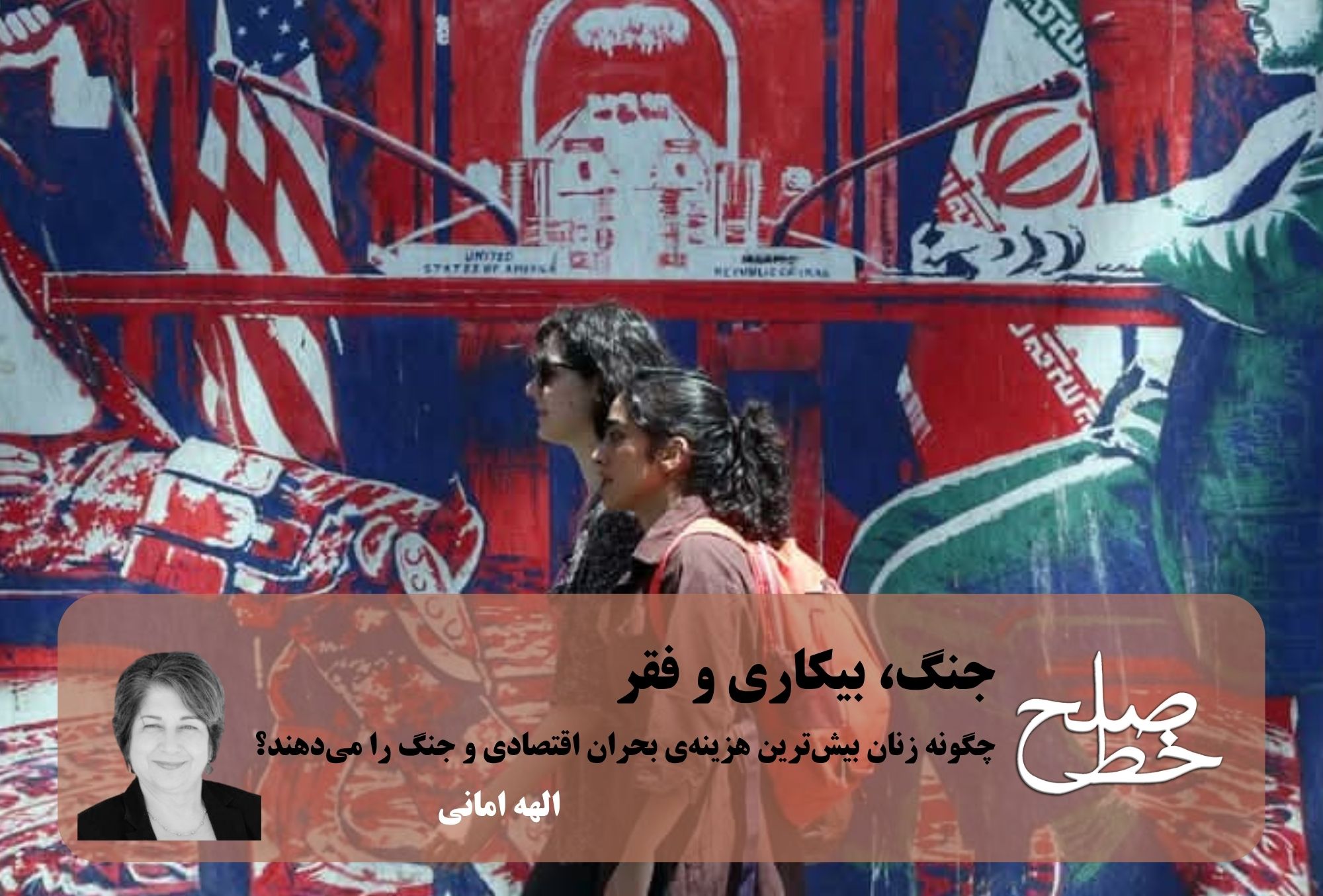
How do women pay the highest price for economic crisis and war?/ Elahe Amani
War fundamentally transforms the labor market by destroying infrastructure, massive population displacement, collapsing economic activity, disrupting education and health systems, and rupturing social networks. Although the consequences of war affect all segments of society, its economic effects on women are deeper and more lasting, as women not only face reduced job opportunities, income, and economic security in both the formal and informal labor markets, but also shoulder a greater burden of caregiving and social reproduction responsibilities that are vital for family survival and the survival of society during and after war.
An estimated 264 million women live in 36 countries and territories classified as “fragile and conflict-affected” (FCA) countries and territories, according to a 2019 estimate. The figure, based on an analysis by Georgetown University’s Institute on Women, Peace and Security, is an aggregate estimate rather than a new census, and is the most reliable indicator available for this group of countries. These women face challenges such as poverty, gender-based violence, displacement, discrimination, disruption of education, and limited access to employment and income sources.
The UN Secretary-General’s report on “Women, Peace and Security” of 20 October 2025 warns that the world is currently facing the highest number of active conflicts since 1946, a situation that has created unprecedented risks and suffering, food insecurity and unemployment for women and girls, with 676 million women now living within 50 kilometres of deadly conflict, the highest number recorded since the 1990s. The number of civilian casualties among women and children has also quadrupled compared to the previous two years, and cases of sexual violence related to armed conflict have increased by 87 per cent in two years. In addition to the above in the formal sector of the economy, women also face a range of structural damages. The closure or destruction of factories, economic institutions, government offices, schools, universities and health centres is leading to the loss of thousands of jobs; Opportunities that have been largely available to women. In addition to unemployment, wage cuts, delayed payments, the increase in temporary contracts, and job insecurity make women’s economic situation even more fragile. Sectors such as education, health, social services, retail, tourism, and public services, where women make up a large proportion of the workforce, are usually among the first to stagnate or close down as a result of war. The destruction of transportation infrastructure, unsafe travel routes, power and communication outages, and increased security risks also make it more difficult for women to be present in the workplace. In addition to these factors, the forced migration of female specialists, including doctors, nurses, university professors, researchers, and entrepreneurs, exacerbates the “brain drain” phenomenon and weakens the scientific, professional, and managerial capacity of countries for years. The International Labor Organization (ILO) emphasizes in its 2023 report that “crises exacerbate existing gender inequalities in the labor market and push women further into insecure employment.” The World Bank also estimates that military conflicts can reduce countries’ GDP by more than 20 percent in the long term, and that women’s return to the labor market is usually much slower than men’s.
The impact of war on women’s informal employment is even more widespread and profound. In many low- and middle-income countries, the informal economy is the mainstay of the livelihoods of millions of women. According to the International Labour Organization, more than two billion people worldwide work in the informal economy, and in many of these countries, more than 60 percent of employed women work in this sector. These activities include home-based jobs, peddling, domestic work, small-scale agriculture, handicrafts, textiles, food production and sales, and other small family businesses. War directly destroys these sources of income; markets are closed, supply chains are disrupted, raw materials become scarce, and the movement of goods and services becomes difficult or dangerous. Because women working in the informal economy often lack basic legal protections such as unemployment insurance, health insurance, paid leave, pensions or labor law protections, they have little or no support network to sustain their livelihoods during crises. Many are forced to continue working for lower wages, longer hours, in more insecure and exploitative conditions, or in activities that expose them to violence, abuse and exploitation, in order to meet their families’ most basic needs. As UN Women emphasizes, “Women’s livelihoods are often the first to be affected in crises and the last to recover.”
In addition to job losses, one of the most important but least-recognized consequences of war is the dramatic increase in unpaid care work, a part of the economy that is often overlooked in official statistics and economic policy. As war spreads, women take on the responsibility of caring for the wounded, the elderly, people with disabilities, traumatized children, and those suffering from war-related trauma. They also have to provide water, food, medicine, fuel, manage households in resource-poor conditions, keep family members healthy, and even help rebuild damaged homes and communities. According to a report by UN Women, women and girls perform more than three-quarters of the world’s unpaid care work, and war significantly increases this care burden. The increase in these responsibilities severely reduces women’s opportunities for gainful employment, education, professional development, and participation in economic decision-making. Noting the importance of these activities, prominent economist Nancy Folbre says: “Care work is the invisible heart of every economy.” Yet the economic value of these activities is rarely quantified or compensated for in post-war reconstruction plans, national budgets, and development policies, while without this invisible work, family survival and community continuity in times of crisis would not be possible.
Ultimately, these factors contribute to what economists call the “feminization of poverty.” With the deaths or disappearances of spouses, displacement, destruction of homes, land, and productive assets, hyperinflation, food insecurity, loss of savings, and rising costs of living, war has turned millions of women into primary breadwinners, while their access to economic resources is severely limited. The United Nations Development Program (UNDP) shows that women, even after the war, have less access to credit, land and property ownership, productive resources, and investment opportunities than men, due to entrenched patriarchal structures. These structural inequalities make their economic recovery more difficult and prolonged. For this reason, the United Nations and women’s organizations emphasize that if post-conflict reconstruction programs lack a gender perspective and do not address the specific needs of women, especially in the areas of employment, social protection, access to financial resources, childcare, and recognition of unpaid care work, gender economic inequalities will not only persist but will also be reproduced in future generations. Therefore, women’s economic empowerment must be one of the main pillars of post-conflict reconstruction and the achievement of sustainable peace, because no society can achieve just and sustainable reconstruction without women’s equal participation in the economy, development, and public decision-making.
Examples of the impact of war on women’s employment and livelihoods
Contemporary examples of wars and armed conflicts show that, although the political, cultural and economic contexts of each country differ, the consequences of war on women’s economic lives share common patterns. In all these crises, women have faced loss of employment opportunities, reduced incomes, increased informal employment, increased unpaid care responsibilities, displacement, poverty and limited access to economic resources. At the same time, they have become the mainstays of maintaining family livelihoods, providing social services and making communities resilient, without this role being sufficiently recognized in reconstruction and development policies.
In Gaza, since the start of the war in October 2023, the local economy has almost completely collapsed, and women’s economic participation has suffered unprecedented damage. According to reports from the International Labor Organization and UN Women, a large part of job opportunities have been lost, with women being hit hardest by this situation. Thousands of women working in education, health, government services and small businesses have lost their jobs as schools, hospitals, markets and workplaces have been destroyed. Many women’s micro-businesses, including home-based food production, sewing, embroidery, handicrafts and beauty services, have also come to a standstill. In addition to this economic collapse, the responsibility of caring for the wounded, children, the elderly and displaced families, combined with severe shortages of food, water, medicine and fuel, has significantly increased the unpaid care work burden on women. Describing the situation, UN Women warns: “This war has reversed decades of fragile progress in women’s economic empowerment.”
In Ukraine, the structure of the labor market has changed dramatically since the Russian invasion in 2022. Millions of women have fled the country as internally displaced persons or refugees, and many have entered the labor market in neighboring countries, while still being responsible for the financial and emotional support of their family members inside Ukraine. Within the country, women have also taken on a more prominent role in the health, education, relief, logistics, agriculture, and public services sectors. Many female entrepreneurs have also shifted their economic activity from the production of commercial goods to the production of relief equipment and supplies. At the same time, the responsibility of caring for children, the elderly, the injured, and other family members has also increased significantly. UN Women emphasizes that women in Ukraine have become “the main pillar of maintaining public services and social resilience,” and their role in maintaining the functioning of society has gone far beyond traditional participation in the labor market.
In Sudan, the civil war that began in 2023 has created one of the world’s largest displacement crises. Millions of women have lost their livelihoods in agriculture, local markets and the informal economy. Women farmers have been displaced from their lands, and women street vendors and market vendors are no longer able to continue their economic activities due to insecurity and the collapse of markets. Many female heads of households now live with no or very low incomes. The collapse of the banking system, disruption of supply chains and the destruction of local markets have had devastating economic consequences, especially for women working in the informal economy, leaving them increasingly vulnerable to poverty and food insecurity.
In Afghanistan, since the Taliban’s return to power in 2021, widespread and violent restrictions on women have affected almost all aspects of their economic participation. Women have been excluded from many formal jobs, female NGO workers have faced severe restrictions and the closure of many organizations, and many women-owned businesses have closed. In addition, the exclusion of girls from secondary and university education has seriously threatened the future economic participation of future generations of women. The World Bank estimates that these restrictions are costing Afghanistan billions of dollars in economic potential each year, seriously hindering the country’s growth and development.
The war that began in Syria in 2011 has fundamentally transformed the economic role of women. Millions of women have taken on the responsibility of leading their families after their husbands have been killed, disappeared, detained or have emigrated. Many of them have turned to home-based businesses, tailoring, food production, handicrafts and humanitarian activities to earn a living. As formal employment has collapsed, the share of the informal economy has increased sharply, and women bear a large part of the family’s economic burden in this sector. However, they continue to be deprived of equal access to property, financial credit, productive resources and economic reconstruction programs. UN Women describes Syrian women as “the main pillar of family survival” and warns that women have been largely excluded from economic decision-making processes and reconstruction programs even after Bashar al-Assad fled Syria on December 8, 2024, under Ahmed al-Sharaa.
In Ethiopia, the Tigray War (2020–2022) also had widespread economic consequences for women. Women farmers lost access to land, seeds, agricultural inputs and other productive resources, and many local markets were destroyed or closed. Women health workers continued to provide health services despite severe equipment shortages, insecurity and psychological stress. Widespread displacement also destroyed many of women’s small businesses and informal activities. In addition, the crisis was accompanied by widespread war-related sexual violence, which not only endangered women’s physical and mental health, but also severely reduced their ability to safely participate in economic activities and rebuild their livelihoods.
Comparing these examples shows that war is not limited to destroying physical infrastructure and the national economy, but also deepens gender inequalities, restricts women’s economic opportunities, pushes them into informal and insecure employment, increases the burden of unpaid care work, and intensifies the process of “feminization of poverty.”
The impact of economic crisis, war, and structural instability on the Iranian labor market with an emphasis on gender implications
The reality is that the recent economic crises, combined with the consequences of the war and the deepening economic uncertainty, have had a profound impact on the Iranian labor market. According to available data, the number of people who have either lost their jobs or have completely dropped out of the labor market has reached about four million. The prospect of negative economic growth in the coming months also reinforces the likelihood that this trend will continue, increasing workforce attrition, reducing employment opportunities, and expanding the number of households below the poverty line.
According to the Iranian Chamber of Commerce, between March 1403 and January 1404, more than 611,000 people insured by the Social Security Organization have left the formal employment cycle. At the same time, more than 3.1 million people have also given up looking for work; a phenomenon known as “exiting the labor force” or “despairing of the labor market.” Gholamhossein Mohammadi, Deputy Minister of Labor, announced that the 40-day war between Israel and the United States with the Islamic Republic has destroyed more than one million job opportunities and made about two million people unemployed. Hamid Haj Esmaili, a labor market expert, also estimated in an interview with Eqtesadnews that between three and four and a half million people in Iran have either become unemployed or have left the labor market since last winter until the end of Farvardin.
The latest data from the Statistical Center of Iran shows that the country’s economic participation rate has decreased to 39.7 percent in the winter of 2025. This indicator indicates that out of more than 66 million people in Iran over the age of 15 who are of working age, only about 26 million are present in the labor market; that is, they are either employed or looking for a job. In contrast, more than 40 million people are outside the economic cycle and have no active participation in the labor market. In economic literature, there is an important difference between “unemployed” and “economically inactive”: an unemployed person is someone who is able and willing to work and is looking for a job but cannot find one, while an economically inactive person is essentially not present in the labor market and is not looking for a job. Experts emphasize that the unemployment rate alone does not provide a complete picture of the employment situation, because a decrease in the unemployment rate can also be due to people leaving the labor market. While the average economic participation rate in the world is estimated to be over 61 percent, this indicator in Iran is less than 40 percent; meaning that a large part of the working-age population is neither employed nor participating in the job search process. Recent crises, especially the consequences of war, economic uncertainty, and the destruction of productive capacities, have exacerbated this situation. Similar to the experience of countries involved in war, Iran also shows that women are usually the first group to lose their job security in times of economic crisis and layoffs; because their presence in many economic sectors is already more fragile and they have less access to support resources, capital, and alternative job opportunities.
This crisis has particularly affected women. Data shows that about 73 percent of Iran’s economically inactive population is women. Of the approximately 33.3 million women over the age of 15 in the country, only about 4.77 million participate in the labor market, and more than 29 million women are effectively out of the labor force. Even among economically active women, the situation is unequal; according to data from the International Labor Organization and the World Bank, only about 14 to 15 percent of women aged 15 and older in Iran participate in the labor force, while the economic participation rate for men is about 67 to 70 percent. This level of female participation places Iran among the countries with the lowest rates of female economic participation in the world.
For comparison, the global average for women’s economic participation is around 47-48 percent, and the average for the Middle East and North Africa region is estimated at around 19-20 percent. Therefore, women’s economic participation in Iran is not only significantly lower than the global average, but also lower than the average of one of the lowest regions in the world in terms of women’s economic participation. The unemployment rate for women is estimated at around 15 percent, which is almost double the unemployment rate for the country as a whole. The war and its economic consequences, the closure or downsizing of enterprises, the increase in the cost of living, and the spread of job insecurity are deepening this gender gap. Women working in the service sectors, informal jobs, and small businesses, which are among the most vulnerable sectors of the labor market, are losing their jobs before other groups. In addition, the increased caregiving pressures on women during the crisis, from caring for children and the elderly to compensating for the lack of public services, further limits their ability to participate in the labor market. This trend shows that war is not only a security or economic crisis, but can also lead to the reproduction and exacerbation of gender inequalities in the structure of the labor market.
These cultural, economic, and structural factors, including the unequal distribution of family responsibilities, the lack of affordable care services such as daycare, limited opportunities for teleworking and flexible employment, gender discrimination in formal employment, and the lack of job opportunities commensurate with women’s expertise and education, are exacerbated in times of war and economic crisis. As a result, the widespread withdrawal of women from the labor market cannot be seen simply as a consequence of an economic downturn; rather, it should be analyzed as part of a structural process in which crises exacerbate existing inequalities and create greater obstacles to women’s equal participation in economic and social development.
The data also show a roughly 12 percent increase in one-person workshops, which is not necessarily a sign of entrepreneurship growth. Rather, it reflects the spread of “involuntary self-employment,” a situation where individuals turn to individual, less stable economic activities to compensate for the lack of stable employment opportunities.
Economic crises and wars often have disproportionate gender impacts on the labor market. Women are often the first group to lose their jobs in times of economic recession, production decline, and layoffs. Recent reports on the employment situation in Iran also show that women have suffered the most from the new wave of job instability.
According to some reports, around 200,000 women have not only lost their jobs but have also dropped out of the job search cycle altogether. High inflation, rising transportation costs, childcare costs and low wages have made it economically unviable for many women to remain in the workforce. As a result, some women have been forced to leave the workforce not because of free choice but because of job insecurity, inadequate pay and a lack of social protection.
Studies show that the damage caused by sanctions, currency fluctuations, and the shadow of war, especially in the service sector and online businesses, which were previously considered one of the important areas of employment for women, has been exacerbated by the closure and restriction of the internet. The important point here is not only the exclusion of women from the insurance and salary lists, but in some cases their replacement with the male workforce has also been reported; a trend that indicates the reproduction of gender inequality in times of crisis.
The barriers to women’s participation in the Iranian labor market are not simply economic, but have deep roots in social, cultural, and institutional structures that have faced numerous challenges for women’s participation over the past four decades. Despite their significant contributions to higher education and human capital production, Iranian women continue to face serious barriers to entering and remaining in the labor market. Employment discrimination, gender stereotypes about women’s managerial abilities, concerns among some employers about maternity leave and family responsibilities, and the lack of supportive infrastructure such as childcare services are among the factors contributing to the persistence of this gap.
Sociologist Mustafa Abroshen believes that the gender gap in economic participation is the result of a set of structural, cultural, and economic factors. Traditional norms, gendered division of roles, limited job opportunities, weak support for women’s employment, lack of infrastructure such as kindergartens, employers’ concerns about maternity leave and family responsibilities all play a role in shaping this situation. In times of economic recession, competition for job opportunities also intensifies, and women are usually excluded from the labor market more than men.
She also emphasizes that female unemployment is not just an economic issue, but has broad social consequences: “Employment is one of the most important foundations of economic independence, and long-term unemployment undermines this independence. Women who do not have an independent income face greater restrictions in many economic and family decisions, and their vulnerability to economic crises increases.”
From a social development perspective, the decline in women’s economic participation also means underutilizing a significant portion of a country’s human capital. Financial dependence, reduced opportunities to invest in education and skills training, and increased economic uncertainty can negatively impact family decisions, marriage, childbearing, and the economic security of families.
International economic forecasts also paint a difficult outlook for the Iranian economy. In its recent reports, the International Monetary Fund, while predicting positive growth for the global economy, continues to predict negative growth for the Iranian economy. This situation shows that the combination of economic sanctions, weak investment, political instability, and the consequences of the war have put additional pressure on the labor market.
Overall, the current employment crisis in Iran is not just an economic issue, but also a social, gender, and development issue. The feminization of unemployment shows that without reforming 47-year-old discriminatory gender structures, strengthening social protections, creating equal opportunities, and investing in sustainable employment, economic crises and war can deepen existing gender gaps and remove a large part of society’s human capacity from the cycle of development and fertility.
Footnote:
1- This article was written before the memorandum of understanding and ceasefire between Iran and the United States of America was officially broken.
 Created By: Elahe Amani
 July 23, 2026
Tags
Economic rights Elahe Amani Gender discrimination 2 Iran-US war peace line Peace Line 183 War Women's rights ماهنامه خط صلح