


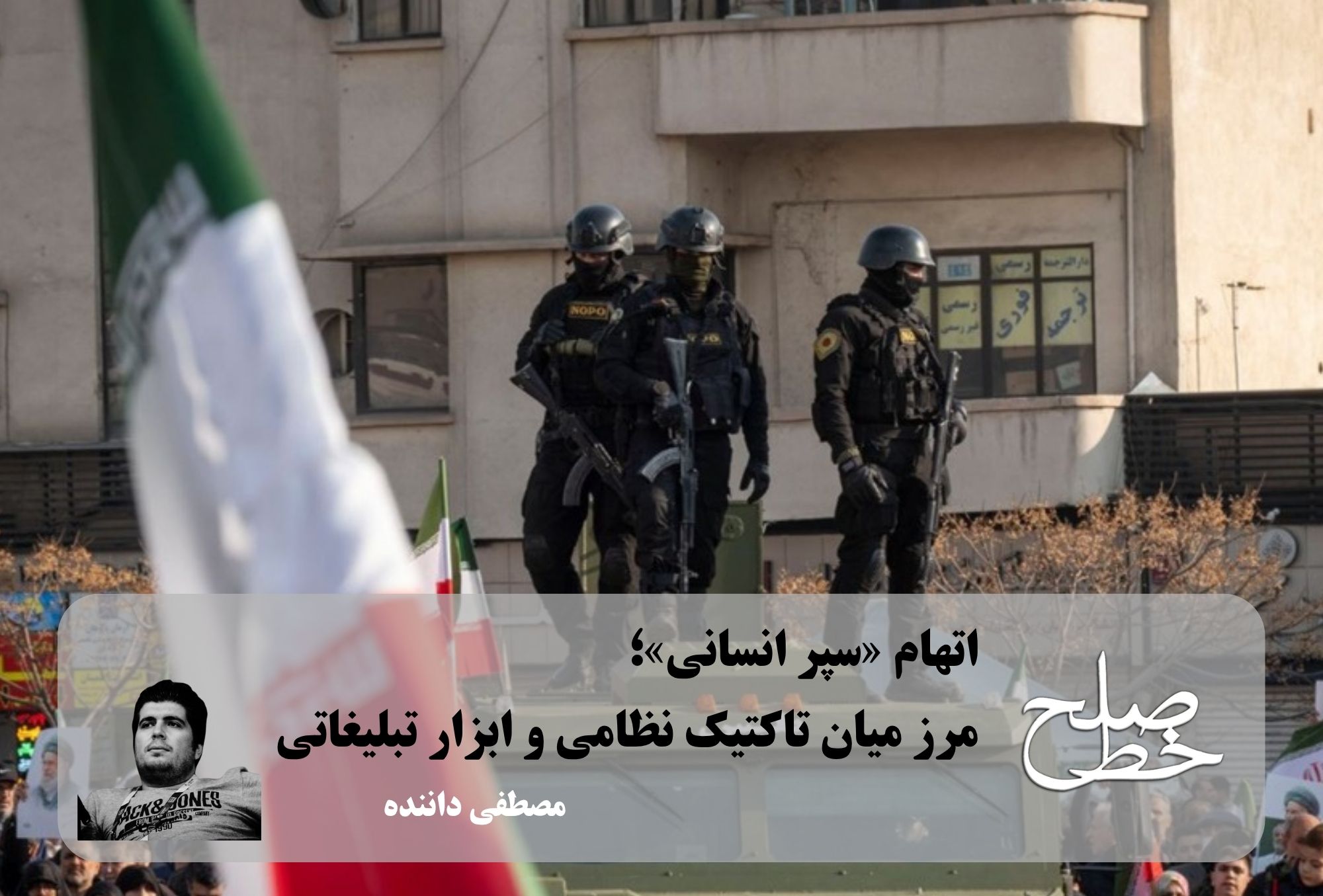
The Accusation of “Human Shields”: The Boundary Between Military Tactic and Propaganda Tool/ Mustafa Danandeh
Contemporary wars no longer unfold only on the battlefield. Alongside missiles, drones, and military operations, another battle also takes shape in the realm of narratives and legitimacy-building; a war in which each side seeks to justify its own actions within the framework of international law and present the actions of the other side as violations of the laws of war. In this context, few concepts have been used, misused, and contested as much as “human shields.”
In the literature of international humanitarian law, using civilians as human shields means deliberately placing civilians next to military objectives in order to prevent or complicate an enemy attack. The Geneva Conventions and their Additional Protocols prohibit such conduct and, in some cases, consider it a war crime. The main difficulty, however, lies not in defining this concept, but in proving it.
In many wars of the twenty-first century—from Iraq and Afghanistan to Gaza, Lebanon, Ukraine, and Iran—the claim of using human shields has become a fixed part of the military and political vocabulary of the parties to conflict. In almost every attack that damages civilian infrastructure or residential areas, the claim is made that the target actually had a military use or that civilians were used to protect it. This widespread repetition has caused the concept of human shields to turn from a specific legal term into a tool of the war of narratives as well.
The main issue is that proving the use of human shields requires relatively strict standards. The mere presence of civilians near a military objective does not mean they are being used as human shields. In many of today’s conflicts, war takes place in dense urban environments, where communications centers, energy infrastructure, transportation hubs, and government buildings are located alongside residential areas. Under such conditions, determining whether the presence of civilians is the result of coercion and deliberate exploitation or simply the product of urban structure and normal living conditions is not easy.
According to the practice of international bodies, proving the use of human shields usually requires the element of “intent.” That is, it must be shown that one party to the conflict knowingly and with the aim of preventing an enemy attack placed civilians at risk. This legal standard is highly important, because without establishing it, any deployment of facilities or military activities in urban areas could easily be presented as the use of human shields.
The problem becomes more complex when the accusation of human shields turns into a tool for justifying attacks against targets with a dual-use nature. In new wars, many infrastructures are neither entirely military nor entirely civilian. Telecommunications networks, energy facilities, transportation centers, ports, airports, and even some technology centers can simultaneously serve the needs of citizens and military needs. This feature makes the boundary between a legitimate military objective and civilian infrastructure more ambiguous than before.
Under such conditions, the claim of the existence of human shields may become a tool for reducing public pressure or diminishing legal responsibility for attacks. If every harm inflicted on civilians is justified by arguing that the other side used them as human shields, the fundamental principle of “protection of civilians” will gradually be weakened. The laws of war were designed precisely to prevent such a situation; meaning that even if one side commits a violation, the other side remains obliged to observe the principles of distinction, proportionality, and precaution.
In other words, even if the use of human shields is proven, this does not create an unlimited license to attack. Military forces must still assess whether the potential harm to civilians is proportionate to the anticipated military advantage. This point is one of the most important principles of international humanitarian law, which is sometimes ignored amid the clamor of the war of narratives.
On the other hand, absolute denial of the phenomenon of human shields is also mistaken. The history of contemporary wars has shown that various groups and states have, in some cases, truly exploited the presence of civilians to protect military objectives. Therefore, the issue is not the full acceptance or rejection of this phenomenon, but the necessity of examining each claim carefully, independently, and based on evidence.
In the age of satellite imagery, open-source data, and social media, the volume of available information is greater than ever before, but at the same time the risk of misinterpretation, incomplete information, and targeted narrative-building has also increased. For this reason, independent fact-finding bodies, international organizations, and professional media play a vital role in assessing such claims. Without independent verification, the accusation of human shields can turn from a precise legal concept into a political label used to justify almost any kind of attack.
Ultimately, the value of the concept of human shields lies in protecting civilian lives, not in becoming a tool for legitimizing harm to them. The more wars are drawn into cities and dual-use infrastructure than in the past, the greater the need becomes to adhere to precise standards of proof and avoid propagandistic exploitation of this concept. Otherwise, one of the most important humanitarian law mechanisms for protecting human beings will itself become part of the machinery of the war of narratives.
 Created By: Mustafa Danandeh
 June 22, 2026
Tags
Dual infrastructure Dual-use infrastructure Human shield Infrastructure Iran-US war Mustafa Danandeh Non-military The rights of war The war between Iran and Israel. Ukraine War War