


From Kiss to Whip/ Sussan Mohammadkhani Ghiasvand
Conversation with Golaleh Kamangar and Shahou Hosseini

Sousan Mohammadkhani Ghiasvand
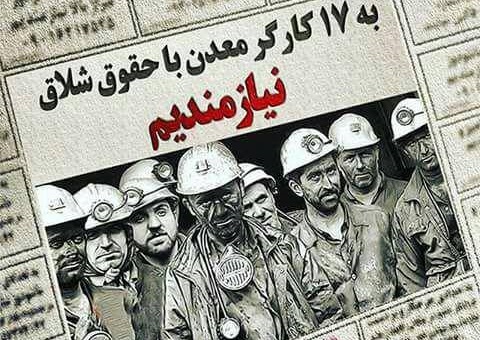
“Building housing for low-income classes and providing free “water, electricity, and bus” were promises made to the deprived people of Iran in the early years of the revolution. They asked the people not to be content with just this amount. They promised to elevate them to the level of humanity. They established a government that believed in the religion of Islam. A religion whose prophet had kissed the hands of the working class and whose Shia imams had many narrations and traditions in regards to protecting the rights of workers and addressing the situation of the poor. It was based on these narrations that they said, “In a school where its prophet kisses the hands of the worker, there is no need for schools of the East and West.” The leaders of the Islamic Republic considered the 1979 revolution as the revolution of the oppressed and made many slogans and promises in support of the deprived class. Now, after 38 years, the Islamic Republic finds itself in the opposite position of its slogans and claims
Golaleh Kamangar, a Kurdish writer, refers to the investment of the Islamic Republic on the weaker classes of society at the beginning of its rule in response to the above questions. According to her, this group, due to their large population, could have provided the backbone of the future military force (Sepah and Basij). This group, according to this researcher, had a strong motivation to support the new government due to their lack of access to power and wealth: “In fact, the slogan of supporting the oppressed in the whole world and in all eras is an effective tool for providing force; it is obvious that when the necessary force is provided, there is no longer a need for the oppressed class and kissing the hands of workers. Yesterday’s oppressed become today’s oppressors. Some of the oppressed class, who have moved from a state of oppression to a position of power and authority, recreate the same situation for other oppressed individuals; the difference is that they, due
The archer introduces religious spaces such as Hosseiniyehs, mosques, and assemblies as the domain of presence and authority of the oppressed class and says: “The pre-Islamic Republic rulers had no control over these religious spaces and tried to deal with them cautiously, but today these same places are fully under the control of oppressive forces. It is clear that the concerns and fears of the oppressive forces today (at least in central and culturally similar areas to the ruling power, such as Fars and Shia regions) are much less than in the past.”
Shahu Hosseini, a Kurdish journalist, also refers to the corruption that comes with power and says: “Absolute power absolutely corrupts. It doesn’t matter what narratives and stories are told about the era of the emergence of Islam, which are generally not reliable, what matters is that neither the leaders of Iran today are prophets or messengers, nor is today’s society the simple and primitive society of Arabia of that time.”
He also adds, referring to the relationships, complexities, and special features of today’s society: “When in a political system, the government does not derive its legitimacy, power, and authority from the society, it does not feel the need to be accountable to the society. The result is an unlimited and absolute power that ultimately leads to widespread corruption, injustice, and exploitation of the society. And of course, the social identity structure, greatly influenced by religious culture, leads to the formation of a supportive and obedient political and social culture, resulting in silence and obedience towards the tyranny and greed of the government, and acts as a complementary influential factor.”
“Beyond the government, there was a time in Iran when artists, athletes, and writers lived as the voice of the oppressed, their efforts aimed at helping the poor and the afflicted. Athletes who would collect money from people on the streets for earthquake victims, standing against tyranny. We had artists like Azar Shiva who, at the height of her fame, protested against the decadence in Iranian cinema by selling chewing gum in front of the Cinema Capri (Bahman) and then left the cinema forever. We had writers who depicted the ugly and harsh face of poverty. But today, we are faced with a generation of Iranian artists who take selfies with child laborers. Artists who are the creators of decadence themselves. We are facing athletes who have no desire to be present or seen at the multi-billion dollar auctions in Tehran. Athletes whose medals are dedicated to dictators. Our artists and athletes have become tools for advertising during elections. They praise the killers of Syrian children and sing
Shahu Hosseini responds: “Although there are artists, athletes, and writers today who do not hesitate to help the underprivileged community, they may have been less effective in addressing the complexities and problems of society.”
This journalist also refers to the increasing expectations from the artist and athlete community in the absence of civil society structures and civil aid institutions. He searches for the reason for this absence in the imposed mental structures in the process of accepting society and the education system, which in his opinion has caused a kind of stagnation, isolation, lack of interest, and the formation of an obedient society.
Hosseini believes that the process that has led to isolation, apathy, and the emergence of an obedient society is a political and social construct, and he identifies the educational system as responsible for it, which is also promoted and supported by the government. On the other hand, he believes that the nature of the ruling class and the possibility of benefiting from government privileges has created a suitable environment for this situation due to widespread corruption in the political and economic system.
According to Hosseini, “The sick and corrupt government has institutionalized corruption and illness in the process of social acceptance through its educational system and cultural structures.”
Golaleh Kamangar, however, prefers to separate the accounts of athletes from those of artists and writers, because she believes that “although they may appear similar in fame and popularity, they are completely separate in terms of intellectual origins.”
He says athletes have a story similar to the story of the oppressed. In Iran, there has always been a connection between institutions and religious figures with a group of athletes and wrestlers in a traditional way. In fact, athletes are divided into two groups; either they have been close to the court or they have been considered as a force of religious figures in neighborhoods and religious gatherings. In a period when Iran was heading towards modernization, athletes were defenders of tradition and usually under the command of religious figures in neighborhoods and cities. Therefore, from a historical perspective, their actions (even in defense of the oppressed) cannot be seen as independent and self-motivated, but must be viewed in opposition to religious institutions and government. Today, as the court and religious gatherings have merged, athletes also have no reason to not be in harmony with the government and sometimes they go so far as to resemble Abbas Javid and publish books on prayer rulings.
The archer knows “the story of artists and writers is another story” and believes that “in order to search for the reasons for the moral decline of this group, who are considered the intellectual class of society, one must also look at the political and environmental factors, as well as individual motivations, but also take a look at the intellectual space of society and its philosophical foundations.”
This researcher, emphasizing the difference between the worldview of the intellectuals of the 1980s and 90s and the worldview of the intellectuals of the 1940s, says: “If in the 1940s and 50s the struggle for equality is perceived as inspired by socialist and Marxist teachings, in the 1980s and 90s, individualism and personal freedom become the values of liberalism. Philosophically, the postmodern thought and the principle of uncertainty and multiplicity of its narratives are manifested in the sickly world of the East with much more lethality and indifference than the Western world. Promoting the principle of tolerance is seen as a way to suppress oppression (as we saw in the 88 movement, where the Iranian intellectual community called for tolerance against oppressive forces, but the result was unspeakable). The idea of the plurality of rights and the absence of a clear distinction between right and wrong is turned upside down, and even the oppressive government
According to him, the set of factors that have been listed for the intellectual decline of Iranian intellectuals form the underlying lines of thought, in which everyone, including Qasem Soleimani, can be considered righteous and worthy of praise.
The archer adds, of course in this particular case, the harmony between government and a part of the enlightened society in considering Iran’s intervention in neighboring countries as legitimate, should not overlook the role of Iranian nationalism and ambition for dominance, as well as the Iranian employees of foreign television channels who, in their dual behavior, have gone from opposing Iran’s support for Hezbollah and Palestine in the past years to fully supporting Iran’s direct military intervention in Syria and Iraq, and as a result, the people have also reached the interesting slogan of “Neither Gaza nor Lebanon, I sacrifice my life for Iran” in describing the “heroic acts of the martyrs of the defenders of the shrine”.
This is not just an Iranian artist and intellectual who has fallen into intellectual decline. A society that was once willing to sacrifice its own happiness and even its own lives for the sake of others, during the winter of 57 and the time of the oil workers’ strike, preferred that at least the oil produced in the cold season would reach the families who thought they were more in need. A society where protest was a characteristic and the Caesars came out of its belly, now smells of opium. It has turned into a spectator of executions and beatings. The silent observer has become accustomed to the acid attacks on women. There is no one to fall victim to injustice and tyranny. Its wealthy class has no qualms about flaunting their wealth, their billion-dollar cars, their swimming pools and Jacuzzis in their father’s villa, and their designer watches. All this in a country where, according to the deputy minister of labor, cooperation, and social welfare, nearly 40%
Golaleh Kamangar does not believe that counting the reasons and factors of the all-around moral decline in Iran is simple, and she believes that there are many factors involved. Despite this, she points to two main factors; two factors that, in the opinion of this writer, are very fundamental and simultaneous in this matter.
The archer considers the weakening of moral foundations in Iranian society as a result of the fading of religious beliefs and diminishing trust in religion. He explains, “In a society where morality is based on religion and is defined as a subset of religion, any slip or fluctuation in belief in religion will directly lead to the meaninglessness of morality. Whether this disbelief is a product of witnessing the weakness of religion against science, or a result of the manipulation of religious leaders using people’s beliefs and their lack of commitment to their own religious and moral claims. In any case, the outcome of fading religious beliefs and diminishing trust in religion is the slipping of the foundations of morality.”
According to him, people who believe that the reason for morality is God and the reward and punishment of the afterlife, without belief in these matters, will not have a reason to remain moral.
The archer, on the other hand, sees this materialism as the cause of the emptiness and weakening of traditional moral foundations. He believes that it is simultaneously accompanied by the prevalence of individualistic thinking in the world, which introduces personal gain as the ultimate goal of human life. This may lead society, due to its resistance to the modern social, political, and economic system, to instill in Western individuals the belief that there is nothing to worry about in society, and therefore, all their focus is directed towards personal gain.
The author of the book “The Quran in the Middle of Myth and Magic” refers to a considerable volume of books about commerce, market skills, and how to manage personal and emotional relationships. He sees it as a reflection of general intellectual directions in the world, which in his opinion, the Iranian society cannot completely ignore.
The archer believes that “this individualistic and profit-driven mindset, when introduced into a modern context and culture that is distancing itself from tradition and religion, and still has no alternative for ethics, can be disastrous and lead to a general disregard for causing harm and torture to others, and on a larger scale, a disregard for collective life and social and political issues.”
Shaho Hosseini believes that the moral decline of Iranian society is a result of the educational system, which in his opinion, is heavily controlled and dominated by the political system.
This journalist believes that the deepening of poverty and inequalities by the government, which has led to the displacement of social classes and strata, alongside “shaping dependent classes and strata arising from the government,” is one of the effective factors in the moral decline of Iranian society. They say, “A system that does not allow for the formation of independent classes separate from the government, a system that strongly opposes the modern values and meanings derived from humanism, a government whose educational system is rooted in a culture of religious and misogynistic nature and has a utilitarian view of human beings, it is natural that it will create a desirable and obedient society through the use of its power and force.”
“Now we must ask, those who promised to bring humanity to the people, how do they see humans today? What position and definition does the human have in the eyes of the Iranian government, society, and intellectuals?”
Golaleh Kamangar considers the definition of religious authority over humans as a misguided and lacking in discernment entity that must be guided, controlled, and sometimes punished by a superior force (i.e. the government as a representative of God).
In his opinion, “in this definition, the ruler (the supreme leader) and the group under his command have special privileges and do not need the same guidance and control. The rest of the society also has varying levels of dependence, and their need for control is reduced. It is in this atmosphere that proving dependence or even sometimes pretending to do so by members of society is seen as a way to escape from control and punishment.”
The archer also states: In this system of governance, known as the rule of the young ruler, the ruler is the young ruler and the people are the subjects and the herd (the word “subjects” means herd and the shepherd is the shepherd) It is clear that the relationship between the herd and the shepherd is nothing but obedience, and the shepherd considers punishing the disobedient to be his right.
He does not see this type of perspective as solely belonging to authority, and believes that it has a support called religion, which the majority of people in the Islamic society consider themselves obligated and bound to. They base their obedience to the ruler on the principle of “obey Allah, obey the Messenger, and those in authority among you.” This has become an internal duty for them, meaning that the perspective of authority and the masses towards the individual and their relationships with political authority are similar and close. The people also see themselves as sheep and the ruler as a shepherd.
This researcher says: “Among these, only intellectuals have a different understanding of the impact of modern teachings and do not adhere to religious definitions.”
Shahu Hosseini, however, knows in the eyes of intellectuals; subjects that give identity and meaning to their behaviors and motivations, independently creating values, standards and desired norms. Subjects that create government, power and mental and tangible structures as their creation. But in the eyes of authoritarian and totalitarian governments, including the Islamic Republic, the government is an independent subject from humans, guiding and directing them as their creation.
He says in his explanation: “If in the eyes of intellectuals, a government is a tool in the service of humans for comfort, order and greater welfare, in contrast, in the eyes of power-hungry and authoritarian governments, humans are tools in the service of supremacy and the continuation of sovereignty and power.”
This journalist also believes that the religious and ideological perspective on humans in the Islamic Republic government considers them as a herd in need of guidance and direction in order to purify themselves and take steps towards a different world.
 By: Sousan Mohammadkhani Ghiyasvand
 June 22, 2016
Tags
and free bus. Capri Cinema electricity Golaleh Kamangar Human dignity Low-income classes Monthly Peace Line Magazine peace line Shaho Hosseini Sousan Mohammadkhani Ghiasvand The gold mine of Agh Dareh Water Water, electricity, and free bus. Whip Workers' whip پیمان صلح ماهنامه خط صلح