


Lack of access for people with disabilities to public transportation; in conversation with Behrouz Morvari, disability rights activist / conversation by Mari Mohammadi.

All societies are made up of different groups, with each member sometimes being in the majority and sometimes in the minority. Each person is simultaneously a member of multiple groups based on gender, religious and spiritual beliefs, financial status, profession, ethnicity, and more. However, one of the major problems is that when someone is in the minority group, they are often subjected to discrimination, pressure, and injustice in various ways due to the majority or the government. Paying attention to the rights of minorities is considered a very important factor in evaluating the level of attention to human rights. Minority rights have various dimensions and their violation will have consequences and lead to protests.
The disabled community in Iran is one of the minority groups that has always been marginalized and faced with neglect and discrimination, leaving them deprived of the minimum necessities. Ignoring the rights of the disabled in Iran is considered systematic discrimination. These violated rights affect all aspects of the lives of the disabled and create many obstacles in their path towards progress and achieving a
You can read the conversation about the peace agreement with Mr. Morvati below:
On what basis are individuals with disabilities divided into categories? Is there official statistics on the number of disabled people in Iran? If yes, do you think these statistics are consistent with reality?
According to the World Health Organization, 11 to 15 percent of the population of each country consists of individuals with disabilities of varying types and severity. In Iran, there is no complete statistics available and in the last census conducted in 2016, individuals with disabilities were not counted.
According to news and reports from the Welfare Organization, the number of individuals with disabilities is estimated to be around 1.5 million. We also have approximately 550,000 war veterans, known as “janbaz”, who are also considered disabled. This number only includes individuals under the coverage of this organization and does not accurately reflect the reality, leading to various problems in this area, from lack of planning and policies to prevention and intervention.
Disabilities include physical, visual, hearing, intellectual, sensory, speech, and neurological impairments. 63 percent of these individuals are men and 37 percent are women. The percentage of individuals with physical disabilities is 39 percent, visual disabilities is 11 percent,
As you know, one of the fundamental problems of the disabled community is the lack of facilities and necessary resources for accessing public transportation and the difficulty of intercity trips. Please describe the problems of the disabled when using public transportation (provide a few examples).
Public transportation vehicles and systems are not accessible. For example, there are rarely metro stations with elevators or tactile lines for the visually impaired. There are gates that wheelchairs cannot pass through. The same is true for buses, but recently the BRT fast bus lines and stations have become accessible, although their problems have not been resolved yet. For example, the ramps leading to the bus floor are blocked and do not open. Drivers and transportation staff have not received enough training. Recently (late August of this year), a blind person at one of these bus stations (Farayiborg) in Isfahan was left behind when trying to get off the bus due to the long distance between the bus and the station and the sudden movement of the driver, and suffered severe injuries and died. After this incident, bus stations in Isfahan are still not accessible and suitable for people with disabilities.
Road transportation is also lacking in facilities. The situation is almost the same for rail transportation, and
What problems have these mentioned issues caused in the daily life and active and effective presence of people with disabilities in society?
These problems have firstly caused individuals with disabilities to be limited and somewhat isolated and excluded from social participation, and as a result, have led to occupational, educational, medical, and rehabilitative consequences. They are unable to leave their homes for rehabilitation and treatment, or to choose their desired occupation, or even find a job due to lack of accessibility in the city. Many individuals have dropped out of education and are facing psychological and economic issues. These problems are not due to their disabilities, but rather due to unequal opportunities and resources.
The lack of environmental suitability and lack of urban transportation facilities have caused cultural, social, and economic problems, as well as hindered access to educational and skill development centers for this group. To what extent has this affected the quality of life for people with disabilities?
The most common problems that arise from the lack of accessibility and facilities for people with disabilities are severe limitations for individuals. In a way, these individuals are excluded from society. The absence of facilities has created a range of social and economic problems. People with disabilities are not seen because they are not present in society, and because they are not seen, their problems are not addressed. Ordinary people who do not have concerns about disabilities are surprised when they hear statistics about the number of disabled individuals and say, “We don’t see this many disabled people.” The reason for this is that they are not able to be present in society. Public places are not made accessible, and public transportation systems and facilities are not accessible for people with disabilities. How many disabled individuals can use the services and facilities available in major cities? Even those who can use them are severely limited. We have metro lines that do not even have elevators at some stations. When I want to leave my house and go somewhere, the first
As you mentioned, the lack of accessibility for disabled individuals in urban areas leads to their isolation and exclusion from society, and forces them to be confined to their homes. It even affects their ability to access public places and recreational areas such as parks, cinemas, etc. What impact do these limitations have on the mental health of disabled individuals?
Depression, hopelessness, despair, frustration, aggressive behavior, and anger are some of the psychological problems that arise due to lack of social interaction and presence in society.
In your opinion, as a member of the disabled community and an advocate for disability rights, what are the solutions or strategies for overcoming these conditions?
Acceptance of individuals with disabilities as citizens who have rights and must have access to all opportunities and facilities like other individuals. This requires updating and implementation of the law by all institutions and the realization of the International Convention on the Rights of Persons with Disabilities.
Is a large budget needed to solve these problems, which officials will bear the burden of?
Officials claim that it is a large budget, but in reality it is not. I disagree with the title of “large budget”. Yes, a budget is necessary and the entire budget should be allocated for the implementation of the law. Obviously, compared to budgets that are wasted, embezzled, or turned into corruption, it is nothing.
Unfortunately, under the excuse of being a large budget, they do not allocate the budget. For example, the budget allocated for the implementation of the law in the current year was 12,500 billion tomans, but they only allocated 1,100 billion tomans, and so far only 712 billion tomans have been paid from this allocated budget. We have no hope of paying the remaining budget, which is about 355 billion tomans. For the year 2020, out of the required budget of 20,000 billion tomans, they have only allocated 1,300 billion tomans.
Despite the fact that facilitating urban mobility and improving the environment are considered as the rights of citizens with disabilities, international laws have emphasized on these issues and in the second chapter of the Law on Protection of the Rights of Persons with Disabilities, these matters have also been addressed. However, so far, relevant authorities have not taken any practical, effective, and widespread action other than recognizing these rights in writing. What is the criticism and the voice of the disabled community?
We have not seen the implementation of any articles or provisions of the International Convention on the Rights of Persons with Disabilities in our country. We are satisfied that the provisions of this law are enforced so that our conditions can change. Criticism and voicing the concerns of the disabled community is the implementation of the law. We have been confined to our homes for years and cannot use facilities. Nevertheless, we are pursuing the implementation of this law. There used to be no campaign and these rights were not pursued, but we are sincerely pursuing the implementation of each article and provision of these laws. We want to be able to leave our homes comfortably and travel to any part of the city and use its facilities. The per capita use of public transportation for the equipment and vehicles that we use is almost non-existent. Recent movements have been limited to major cities, especially Tehran. In remote areas, there are officially no facilities for the disabled. The disabled are isolated and distant from society. Economically, they are struggling
At the end, if there are any points, please let me know.
The problems of individuals with disabilities are structural. Until these problems are systematically solved, nothing special will happen. These structural or systematic problems exist in areas such as law enforcement, law supervision, pursuit and prosecution of legal cases related to the support of the rights of persons with disabilities, or the International Convention on the Rights of Persons with Disabilities. The executive bodies are failing to enforce the law. We do not have an efficient parliament to oversee the enforcement of laws. We do not have a specific monitoring system in all areas, especially in the field of the rights of persons with disabilities. On the other hand, government organizations do not file lawsuits against other executive bodies for not enforcing laws related to the rights of persons with disabilities. For example, the Radio and Television Organization does not enforce Article 21 of the Law on the Protection of the Rights of Persons with Disabilities. The Ministry of Culture and Islamic Guidance does not enforce Article 20. Municipalities do not enforce Article 2. Our responsible organization, the
“An image of a beautiful garden with colorful flowers and a small pond in the center.”
Javad Izadi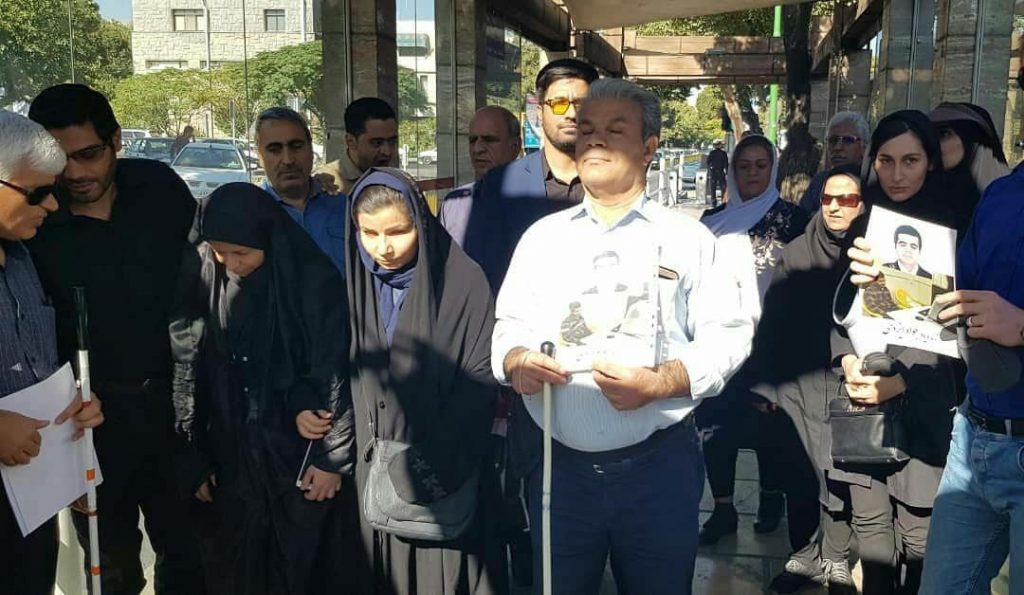
The funeral ceremony of Javad Izadi.
On the other hand, the parliament is obligated to address and oversee these matters. The representatives themselves say that the parliament has turned into a factory for producing laws. What good is a law if there is no oversight and no one to hold the officials of the executive branch accountable? We have protested so much about the budget. The most they have done is write a letter. So why have they initiated impeachment? When the issue of the law for the disabled is insignificant to the parliament, it is clear that the executive branches allow themselves the right and permission to not enforce these laws. Therefore, the law is enforced based on personal preference. With the continuation of this trend, I do not think anything special will happen, even though individuals with disabilities themselves are also following up on the enforcement of the law. But in the end, I do not know how much individuals with disabilities can compel the branches to enforce the laws, increase oversight, and have the resources to file lawsuits against the branches. Non-governmental
Thank you for the opportunity you have given us to use the peace line.

 By: Mari Mohammadi
 March 20, 2020
Tags
Behrouz Morvati Disabled Mary Mohammadi Monthly Peace Line Magazine Number 107 peace line Transportation Transportation by railway پیمان صلح ماهنامه خط صلح ماهنامه خط صلح