Reflection on the signing of the environmental education agreement in schools.

Last updated:

May 22, 2026

Reflection on the signing of the environmental education agreement in schools.

1

“One day, I was attacked by a donkey with a piece of wood firmly attached to its forehead. After the wood hit me, blood started dripping down from the middle of the donkey’s forehead… I was terrified and feared that at any moment, the injured donkey would charge towards me and kick me with its hooves. To my surprise, the donkey only came a little closer and stared into my eyes. Perhaps it wanted to ask me who I was? Am I a human and it a donkey?! This honest confession is from one of the authors of textbooks for the education system, presented at a conference on promoting environmental literacy and ethics in the official education system of the country, held on January 15, 2014 with the participation of textbook authors and hosted by the Environmental Protection Organization.”

One of the pastimes of children from poor layers of society in the 1940s and 1950s was to throw stones at stray dogs and torment animals in the absence of healthy entertainment. The dogs would howl in pain and the children would enjoy it. The elders would say that dogs have seven lives and tormenting them was a way to test their endurance. In folk tales, wild animals such as tigers, leopards, wolves, bears, etc. were portrayed as enemies of humans. The most exciting topic of family gatherings and night gatherings was the confrontation between humans and wild animals. Children would imagine a world without wildlife and believed it to be a safer world.

Self-centered and mixed with lies, the stories of hunters are sweet and exciting, holding one’s breath. For children, the important moment was when the hunter brought down the wild animal with a gunshot. In the end, in the stories of the grandmother as well, the wicked wolf, the cunning fox, the sharp-toothed panther, and the wild bear all received their just punishment for their actions and there was no mercy for them. A popular lullaby of those years seemed to be speaking with a gun, saying: “Gun! It’s a shame to shoot the deer, the deer is beautiful/ Gun! Your bullet belongs in the chest of the panther…” The belief was that attacking animals were lurking everywhere for humans. In reality, there was no proper understanding of animal behavior. Children grew up in such an environment and their beliefs took shape accordingly.

Only in some classic Iranian literary works such as Kalila and Dimna and Marzban Nameh, ethical and educational points have been expressed through the language of animals. The stories in which the lion is the king of the jungle and the relationships between animals are arranged based on a hierarchical pattern, and the new children’s literature, which is a modern phenomenon and based on child psychology, also portrays a completely different image of animals. In the scarcity of entertainment and recreation in the 1960s, foreign cartoons for children would captivate children and even adults in front of the television, and children would become familiar with lovable animal characters such as bears, lions, panthers, blue dogs, etc.

2

Modern children’s literature teachings do not have appropriate reflection in all aspects of life, including schools and families. While children’s perspective towards animals and nature has become more refined compared to previous generations, the mindset of teachers and official education programs still revolves around the past. As an example, in 1997, the principal of a school in district 2 of Tehran set a hamster on fire in front of students, which caused a lot of uproar in the media at that time.

Although the most attractive part of the environment for children is wildlife, environmental teachings are not limited to supporting the right to life for animals. Issues such as waste disposal, sewage disposal, air pollution, water and soil pollution, soil erosion, deforestation, desertification, ozone layer depletion, global warming due to increased air pollution, melting polar ice caps, the possibility of rising sea levels and the submergence of some residential areas, should be introduced into children’s literature through interesting stories and simple language. Including environmental topics in textbooks in a dry and boring manner may be the worst way to promote environmental concepts, as teachers say, “if you want to get a topic across to students, include it in the textbook!”

On the other hand, the closure of schools due to air pollution in Tehran and other major cities, although a precautionary measure and in line with health protocols, has a negative impact on environmental education. In fact, the more prolonged and severe the air pollution is, the more students’ enthusiasm and interest for learning decreases due to the increased number of closures. On days when the levels of pollutants are high, students and teachers are more interested in reading the news subtitles on TV, and when they hear about school closures due to air pollution, they shout with joy.

According to Article 189 of the Fifth Development Plan, all relevant organizations, including education, government media, and radio and television, are required to implement educational programs without receiving payment in order to promote public awareness and achieve sustainable development, in order to preserve the environment. The new memorandum of cooperation between the Environmental Protection Organization and the Ministry of Education is a step towards implementing this legal provision. This memorandum was signed on February 18th by Ali Asghar Fani, the Minister of Education, and Masoumeh Ebtekar, the head of the Environmental Protection Organization, with the aim of “promoting environmental culture in schools.” According to this memorandum, the culture, ethics, and environmental literacy will be promoted among the student community, and the level of social participation in environmental projects will increase.

Establishment of a post for the responsible expert and environmental specialist in the Health Office of the Ministry of Education, improvement of the quality and quantity of environmental education content in textbooks, design and implementation of environmental education programs for teachers, capacity building for quantitative and qualitative growth of student organizations in the field of environment, evaluation and measurement of the effectiveness of implemented educational-cultural programs in the field of environment, utilization of the human resources potential of the Ministry of Education for providing environmental education and promoting environmental culture and sustainable development, some of the commitments of the Ministry of Education in this memorandum of understanding. Preparation and presentation of educational content by the Environmental Organization for inclusion in publications of the Ministry of Education is another provision of this memorandum of understanding.

We must welcome the signing of such agreements, but at the same time, we must warn that these documents should not be archived in a corner. On the website of the Environmental Organization, there is still an image of the 88 agreement between the Ministry of Education and the Environmental Organization, signed by the highest authorities of the two institutions; the content of the December 88 and February 92 agreements is also very similar. The question is why the 88 agreement between the Environmental Organization and the Ministry of Education was not implemented, and if it was, what were its achievements and why they are not mentioned in the new agreement? What should we expect from the new agreement to achieve better results? Unfortunately, inter-sector agreements mostly remain on paper and are not implemented.

The reality is that in our schools, the prevailing thinking system among teachers and planners is still based on memory and mental training. The student must memorize information and in a process called written exams, provide answers that match the content of the books, with the measure of progress being the grade. In such a process, life skills education does not go beyond the minimum formalities and luxuries. Generally, the high volume of textbooks does not leave room for teachers and students to engage in unconventional discussions. If environmental education is included in textbooks, it becomes just another subject and if it is not included, there is no opportunity to address it in schools and it is not taken seriously by students and teachers, like non-graded subjects.

We can start with small and simple non-academic tasks in school; for example, we can teach children to throw away scraps of paper and disposable materials in the trash cans instead of littering in the schoolyard and classroom. Let’s assign a part of the school cleaning to groups of volunteer students. Let’s plant at least one tree in the yard of each school. Let’s put a few pots in each class. The educational instructors can hold nature camping trips and practically teach the children not to pollute water and soil, not to burn bushes, not to break tree branches, and to collect garbage upon their return. Let’s organize a hiking program to strengthen the children’s friendship with nature. These are small but effective actions. Of course, the key to the success of these programs is for teachers, managers, and instructors to receive sufficient training and truly be interested in environmental protection. One of the strengths of this agreement is the provision for environmental education for a number of teachers.
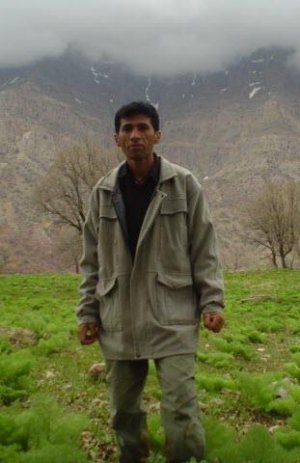

The argument of the 11th prisoner with the nightmare of death.

Asad-Taghi-Zade

Environment and forest guards are individuals who are at the forefront of defending the environment. Environment guards, employed by the Environmental Protection Organization, are responsible for protecting and controlling the natural areas and wildlife of the country, while forest guards are part of the forces under the authority of the Forests, Rangelands, and Watershed Management Organization of Iran. Environment guards are considered government employees according to employment laws, but due to their work conditions, they have a similar status to law enforcement or paramilitary forces.

Less than three thousand environmentalists (the official number being 2,700) are responsible for protecting the environment of Iran, while according to international standards, there should be one environmentalist for every 2,000 hectares of dry land and one for every 1,000 hectares of wetland. This means that Iran needs a total of 11,000 environmentalists, given its geography.

These individuals hold a high position in the administrative pyramid of their affiliated organizations, and many of them have chosen this profession solely due to their interest in forests and wildlife. They live and work far from their homes and families, with very limited facilities and equipment.

Environment guards, due to living in the habitat of animals, are familiar enough with their behavior; therefore, the greatest dangers that threaten them are not from animals, but from humans. According to Shahram Amiri Sharifi, the head of the Animal Rights Watch Association, since the establishment of the Environmental Protection Organization and according to statistics, 116 environment guards have been killed by hunters or those who have hunting guns.

The estimated number of people who have become disabled or injured in these conflicts is also about four times this figure.

Masoumeh Ebtikar, the head of the Environmental Protection Organization, announces this figure slightly lower and says, “In the past three decades, 113 environmental guards have been killed by invaders to the country’s natural resources, and in the past eight years, 7 environmental guards have also been killed in prison due to shooting by hunters.”

The number of prison guards, as Ms. Ebtakar says, is contradictory. Hamidreza Khildar, commander of the urban environmental protection unit in September 2013, told Mehr that there are 11 prison guards. This is while one of the guards is sentenced to death in Bam National Park, named…

“Ali Jamishi”

In July 2013, with the consent of the deceased’s family, he was saved from death.

Apart from “Asad Taghizadeh” and “Gholam Hossein Khalidi”, two of the rangers of the protected area of Dena who have been accused of murder by illegal hunters and their death sentences have been confirmed, the names and identities of other imprisoned rangers are not available in the media and it is unclear what fate awaits them.

Gholam Hossein Khaledi, a condemned environmentalist, has asked in a letter from Yasuj Central Prison to Masoumeh Ebtakar, to do something so that his youth does not perish in prison or under the axe. In this open letter to Ebtakar and her colleagues, he has wished for their success and the salvation of Iran’s environment from behind the bars of Yasuj Central Prison.

Environmental protectors are often sentenced to execution by the judiciary due to the lack of protective laws. According to Article 32 of the Executive Regulations of the Environmental Protection and Rehabilitation Law, “environmental guards are equipped with suitable weapons, the type of which is determined with the consent of the Ministry of Defense.” Article 33 of the same regulations states: “The organization is responsible for providing necessary training courses for officers who are required to perform duties in environmental protection.”

Despite all this, the judges of these cases say: “Environmental guards are not law enforcement officers and because they are not officers, they cannot use weapons.”

Contradiction in the law regarding the arming of environment protectors and the reason for issuing such orders – aside from the inhumanity of issuing and carrying out death sentences – is an ambiguous and questionable issue.

In such conditions, many environmental activists are opposed to the armed presence of environmental guards if they are not immune to dealing with offenders.

For more information, please visit environmental and ecological blogs.

The necessity of cultural education for the preservation of the environment.

“متن فارسی را به انگلیسی ترجمه کنید:”

“Translate the Farsi text to English:”2000

The pristine and beautiful Abbas Abad forest is drowning in garbage.

In these days, there is a lot of talk about the environment and its preservation, which itself can be a sign of the critical nature of this issue in our country. But before delving into the discussion of its correctness or incorrectness, it is necessary to clarify our definitions and remind ourselves of the difference between this phenomenon and the concept of nature. The difference between the environment and nature is that the definition of nature includes a set of natural, biological, and non-biological factors that are considered exclusively; while the term environment is described from the perspective of human interactions with nature. Therefore, in the discussion of the environment, we are mostly faced with the impact of human behavior on nature.

After this brief definition, let’s see where our country’s capacities and inherent position in nature are and then examine how we have utilized these facilities and capacities of our country’s nature, and in fact, what has been our approach towards the nature around us?

Perhaps for many Iranians who have witnessed serious environmental crises in our country, it may not be believable that Iran’s nature has unique capacities and prominences on a global level. The writer refrains from repeating common quotes such as “Iran has four seasons” or “the quality of the Caspian Sea beaches” or “the coral reefs of Kish Island” and only mentions two examples as a handful of samples. Iran has a diverse climate, with 11 out of 13 recognized climates in the world present in the country. Close to 8,000 plant species or units have been identified in this country, of which approximately 1,800 are native. This number of plant species is equivalent to the plant species found throughout the entire continent of Europe. (1).

And in the face of this abundance of natural wealth and geographical luck, where does our position stand in terms of preserving the environment in the world? In this regard, undoubtedly we have not only heard numerous news, but we have also experienced existing crises at the cost of damaging our health, skin, flesh, and bones. Again, as a handful of examples, we can mention numerous incidents of desertification. According to the latest report on environmental performance indicators, prepared by Yale University, the position of Iran has dropped from 67th in 2008 to 78th in 2010 and 114th in 2011 among 132 countries. Annually, nearly forty thousand citizens of Tehran die due to air pollution, which is four times higher than the death rate from AIDS. On the other hand, with the drying up of Lake Urmia and the conversion of 390,000 hectares of its lands into a desert, which has been called the largest desertification event of the

After giving Iran a yellow card (warning) and a two-year deadline, UNESCO has removed this park, which was also one of the most beautiful geoparks in the world, from its World Heritage List. In short, the situation has become so dire that it has even raised the voices of government officials. According to research centers, “severe air pollution in major cities, heavy clouds of Arab dust in the country’s sky, accumulation of oil pollution and agricultural toxins on the coasts of the sea and rivers, continued destruction and devastation of Iran’s wetlands, endangered wildlife, destruction of protected forests, along with thousands of other environmental problems, show that Iran’s environmental management has become even worse in recent years.” What is even more interesting is the confession of Mr. Mohammad Javad Mohammadizadeh, the head of the Environmental Protection Organization under Mr. Ahmadinejad’s government, that “Iran is one of the top ten countries in the world that destroy the environment.”

The summary of the statement is that Ahvaz is known as the most polluted city in the world, and Tehran ranks among the top 10 unlivable cities in the world. In other words, Tehran has surpassed cities like Damascus, which is caught in a civil war, and ranks 131st out of 140 cities. According to one expert, if we study the historical periods of Iran, from ancient times to the present, I can confidently say that Iran has never been on the brink of an environmental disaster like this before.

But who is responsible for this tragedy? There is no doubt that on one hand, the authorities are to blame. According to Deutsche Welle, the budget for the environment in Iran has been reduced by a total of 30% in the proposed budget for 1392. This decrease comes at a time when environmental problems in Iran have reached unprecedented levels and Iran’s position in terms of preserving the environment in the world has greatly declined. According to Kamal al-Din Pirmozhen, a member of the Environmental Commission of the Parliament, not only has the Environmental Organization not presented any new plans in the new bill to reduce air pollution and revive Lake Urmia, but the budget for preventing air pollution has also decreased by 39% compared to last year.

Despite all this, in this year’s month of Bahman, when a plan was proposed in parliament to reduce air pollution, it did not receive the necessary votes; an event in which both members of parliament and the government played a major role. This is while forty years ago, the government of Iran at the time took the issue of the environment seriously. For example, in 1973, the Ramsar International Convention was formed with an emphasis on preserving the rights of wetlands. Another environmental activity that can be mentioned is a treaty that Iran signed with Iraq and Saudi Arabia for desert reclamation, which helped stabilize desert soil and prevented, for example, sandstorms from reaching Iran from Saudi Arabia. However, we know that all of these actions were forgotten in the past decade and the country is now facing a tsunami of dust and polluted dust.

However, it is important to emphasize that in creating an environmental crisis, not only government officials are to blame, but also the shortcomings and negligence of the government should be considered as part of a cultural poverty that has engulfed the entire country, and sadly, many ordinary people also play a role in it.

As an example, it is not hidden from anyone that despite the water crisis in Iran, our consumption pattern as Iranians is far from the global standard. Most of us Iranians, who often accuse the Western world of excessive consumption and talk about Western consumer culture, knowingly or unknowingly ignore the fact that in developed countries, industrial production is consumed with care and resources such as water, energy, and fuel are used efficiently and even frugally, which is unbelievable for us.

Another example – apart from the disposal of municipal garbage trucks in nature by the municipality and the improper disposal of waste, which is a detailed discussion in itself – is the dumping of waste in nature by people, which leads to the destruction of the environment during the Nowruz holidays with even more urgency. Hooman Najafi, one of the tourism experts, had said about this: “If out of the approximately 70 million population of the country, only five million people travel during Nowruz and each of these individuals throws fruit peels or other waste out of their car, and this happens twice a day, 10 million pieces of waste are left in nature daily…” (2) Another similar case is the issue of household waste separation. The writer remembers several times in different areas of Tehran, the municipality spent time and resources on experimental projects to encourage citizens to separate paper waste from other waste, but despite the encouragement and preparations, these projects were unsuccessful due to the lack of cooperation from the majority

“Love is the most beautiful feeling in the world.”کارتن خواب های بهبود یافته به پاکسازی بخشی از تهران از پسماند سیگارها پرداختند

The improved sleeping boxes paid for the cleaning of a part of Tehran from cigarette waste.

But let us allow ourselves to be a little optimistic and appreciate some actions for promoting environmental conservation. One of these actions is a great initiative that, in addition to improving cardboard beds, cleaned up the route from Tajrish Square to Valiasr Intersection of cigarette waste on Tuesday, March 13th.

Furthermore, recently a news has been spread on social media as one of the good events of these days. According to this news, during the trip of the head of the Environmental Organization to Qazvin province, the director of environmental protection of this province, in the welcoming ceremony of Ms. Ebtakar, instead of sacrificing a sheep, made an interesting initiative and released a bird. (3).

He spoke about this action, saying: “I suggest that planting trees and releasing birds that are confiscated from poachers should replace the sacrifice of animals. The writer has wished that this proposal first be discussed among government officials and then through cultural education, media, speakers, and artists, it becomes a culture among the general public.”

In addition, it had been reported in the news that a group of veterans and disabled individuals of the country took part in a symbolic movement of swimming in Lake Zerivar in Kurdistan and through this action, they have demanded attention and preservation of the environment in this region. (4) The numerous marches that take place in various parts of our country for the protection and preservation of the environment are good signs that such civil concerns are emerging among a portion of the people. The main point of this speech is that the environmental crisis is serious and instead of blaming the government and being passive, we should all strive to promote a culture of environmental protection. Protecting the environment is not only the duty of the government or authority; it is the duty of all citizens and one of the signs of sustainable development.

1- For more information, visit the news-analysis website of the ecosystem.

2- Instead of advertising without any benefit, media should promote not littering in nature, ISNA news agency, 5 Ordibehesht month 1388.

3- Let’s replace these actions with “sheep slaughter”, ISNA news agency, Thursday, February 23, 2014.

4- Let’s all find Zariwar together, Kurdpress, 24 Esfand 1392.

The Islamic perspective on how humans should behave towards the environment.

abtahi92

The Holy Quran says: “And those who believe are strongest in their love for Allah.”

The one who believes, loves him and this love for God instills a deep and rooted affection towards all of his creations.

I am happy to the world because the world is happy with him. I am in love with all creation because all creation is from him.

Based on this, Imam Baqir (peace be upon him) said: Religion is love and love is religion. In another beautiful interpretation, he said: Is there any religion other than love?

Does it mean that the true religion is nothing but love?

The Prophet, whom the Almighty God describes as: “And We have not sent you except as a mercy to the worlds”, has come as an example and role model, inspiring the idea that he should be a source of mercy for all people, according to the same definition that God has for him.

Based on this principle, when passing by Mount Uhud, he would say: “Mount Uhud loves us and we love it.”

It means the mountain that loves us and we also love it.

He loves us and we love him too.

From his perspective, all the particles of this world and its creatures are alive, intelligent, and sentient, and we are immersed in a world full of consciousness and emotion.

“We hear, see, and understand.”

Yes, all the particles of the universe have a deep and everlasting feeling, understanding, and unbreakable love towards us.

Amir al-Mu’minin says in Nahj al-Balagha: God Almighty commanded the heavens and the earth to serve humanity, and they obeyed with all their heart and soul for our benefit and interests, as the Quran says: “When it said to them, ‘Come to us willingly or unwillingly,’ they said, ‘We come willingly.'”

“Somewhere it is said that all creatures say:”

“He has subjected to you whatever is in the heavens and whatever is on the earth.”

Also, He has created for you all that is on the earth.

The word “tsakhur” (with a strong emphasis on the “kh” sound) in the dictionary means that it is obligated to provide free and gratuitous service to me and you and fulfill our needs.

This collection is aware and sensitive to my and your interests and benefits, in both the earthly and heavenly realms. In this regard, no aimless, featureless, useless and futile being has been created.

And We did not create the heavens and the earth in vain. That is the assumption of those who disbelieve.

This assumption is for those who deliberately and maliciously ignore the truths.

He is a wise man, indeed the wisest of rulers. A wise man does not create in vain.

The Prophet of Mercy passed by a beast of burden that was heavily loaded and struggling under the weight; he became upset and asked its owner who it belonged to and where it was going.

They said he is busy talking with his friend.

He commanded to prepare himself to be responsive to the injustice towards this animal.

In the book “Mustadrak al-Wasa’il”, it is mentioned that it has been said: There are six qualities that a person should have towards their animal: to feed it when it rests, to offer it water when it passes by, to only strike it when necessary, to not burden it with more than it can handle, to only make it walk as far as it is capable, and to not make it carry more than it can bear. This is based on justice and not to overburden the animal. “Mustadrak al-Wasa’il, vol. 2, p. 50.”

“Amir al-Mu’minin (peace be upon him) said: By Allah, if I were given the seven continents with all that is under their skies…”

Ali, I would rather disobey God in the midst of a great harvest of barley, than do what I did.

If they give me the seven regions with all that is under the heavens, so that I may defy the Almighty by taking the skin of a disobedient ant from its mouth, I will never do it.

If this level of unkindness towards an ant is considered disobedience and rebellion in the eyes of Amir al-Mu’minin, how will behaviors that are much worse than this be justified?

In addition, the Prophet had a special recommendation in wars, that besides the innocent, women, elderly, and children, even those who were fighting and then fleeing, no animal, tree, or man-made wall should be harmed.

A collection of narrations has also been transmitted in Shia sources from the Holy Prophet and the Ahlul Bayt, advising to refrain from polluting water, gardens, fruit trees, and the environment in general, in order to fulfill one’s needs. Vol. 1 of Wasa’il al-Shi’a, pp. 228-231.

Peace Line Explanation: The above text has been published with consideration to the impact of religion in society and the significant percentage of people in Iran who follow the Islamic faith. It is hoped that this will lead to a change in human behavior towards the environment.

Preserving the environment; survival of humans or survival of others?

1111

It is not wrong to say that “environment” and related terms are one of the most commonly used words of the 21st century. It is a general term that, like the word “culture” in many texts, conversations, and speeches, is often used and in many cases, less accurately. For many, the environment is synonymous with a lush and dense forest with a roaring river and a blue sky, and anything other than that, such as deserts, urban spaces, or man-made structures, is not considered part of the environment.

It is clear that the environment has the meaning of “living space” and includes the place where the main pillar of life is located. For humans, it is their home, neighborhood, city, country, etc. The environment is like a single-celled amoeba, a container full of water in which it continues its life. This environment can provide very favorable conditions for living beings, or it can be damaged due to various factors, to the extent that it endangers the lives of the organisms within it.

As mentioned, the environment is interpretable from various perspectives for humans and, in general, it is a space that provides for their basic needs including the need for breathing, food, and safety. These needs are met through the assets present in that environment (which can be living or non-living) and the relationships governing them. Any changes in these relationships and conditions, whether short-term or long-term, will put human life at risk.

In general, nature is considered the most important environment for humans. Everything that humans have been successful in building and producing has come from nature. This is an undeniable fact. On the other hand, the first and most important principle in environmental science is the “web of life”. This means that all forms of life, from microscopic organisms to the largest animals like blue whales, are all connected in a vast and complex network (both directly and indirectly); and like any other network, the survival and quality of life of each of these elements ensures the survival of the entire network. This complex network of viruses, fungi, plants, and animals provides us with food, clothing, shelter, and medicine, and the interrelationships between these elements will ensure the dynamism and survival of nature (as the main environment). What is known today as “environmental activities” is an effort to preserve this network and its constituent elements. In fact, what these activities are trying to achieve is firstly the survival of the network

The right to life is the most fundamental human right. The environmental protection perspective extends this right to other living beings as well. From this perspective, humans have the right to live, but this right should not be interpreted as taking away the right to life from other living beings. In fact, according to environmental activists, the right to life is not exclusive to humans, because if other forms of life are harmed, human life is also at risk.

For example, until the 1950s, the “Hyrcanian tiger” species, also known as the “Mazandaran tiger”, lived in the forests of northern Iran. One of the main factors contributing to the sharp decline in the population of this species was hunting. Only “Masoud Mirza Zill al-Sultan”, the famous Qajar prince and governor of Fars, mentions the killing of 37 tigers in his memoirs. At that time, tigers were seen as a dangerous animal for humans and killing these large felines was considered a means of protecting humans. The last reported sighting of a tiger in Iran was in 1956, when a villager near Minudasht (in the current province of Golestan) chased and hunted one. Since then, there have been no reports of tiger sightings and this species is now considered extinct in Iran. At first glance, the presence of tigers in the forest may seem like a threat to the

One example of damage to the environment is the case of Heirkan tiger, which is caused by human interference and has also affected humans. However, there are other examples of this damage to the environment. In 1389, the residents of “Darreh Zereshk” village (a village near the city of Ardekan in Yazd province) discovered that the government intended to reopen the old and abandoned copper mine in their village. This mine was discovered in the 1340s, but due to low ore grade, it was not profitable to extract from it and was left abandoned. The mining activities in this copper mine posed a threat of water pollution, as Darreh Zereshk was located in the upper part of a vast plain called “Yazd-Ardekan plain” and on the other hand, this area was known as a recreational area in the dry province of Yazd due to the presence of springs and underground water sources. The process of extraction

The story of the copper mine in Zarshak valley is another example of harm to the network; a harm caused by humans as one of the components of the network, which could have a negative impact on the lives of other humans and could not be prevented by the resistance of the locals. There are many examples of this. But they all have one thing in common: harm to any part of the network will also harm other components of the network.

This is how environmental activists react to events such as the death of a panther, the construction of a dam on a river, or the cutting down of trees in a forest. What is important in these events is not just the loss of one individual from the population of panthers or the decrease in water input to a natural lake, but the endangerment of the survival of other living beings as parts of a network in which humans are also members. In fact, what the perspective of environmental protection relies on is the right to life in the sense of “survival”, not just the right to life for individual members of living species. From this perspective, the right to life as the most fundamental human right is dependent on the survival of other living beings; a survival that is achieved in a network of living beings and in direct connection with non-living natural objects.

Surely in such a network, focusing solely on human rights and survival will never lead to a solution and will only further threaten it. This is the most fundamental concept in environmental protection. In other words, what has been raised in recent decades as the idea of environmental protection has primarily considered the survival of humans and has come to the conclusion that the survival of the human species is dependent on the survival of other species. Naturally, the survival of other species is also dependent on the preservation of their environment and their natural connections with others.

Conversation with Ismail Kohram, consultant of the Environmental Protection Organization

Kahroum

Dr. Ismail Kohram has been appointed as the advisor to the head of the Environmental Protection Organization in the Department of Natural Environment in the eleventh government by the decree of Masoumeh Ebtekar. This environmentalist and activist has a long record of scientific and executive activities, including teaching at universities and higher education centers, consulting for the Ministry of Agriculture and the Central Bank of the Islamic Republic, managing the Wildlife Office of the Environmental Protection Organization of Iran, serving as a private environmental consultant in Iran and England, supervising biodiversity projects in various parts of Iran and England, and overseeing proposed projects by GEF and UNDP in collaboration with the Environmental Protection Organization of Iran.

Ismaeil Kohram criticizes the small budget of the Environmental Protection Organization in an interview with the “Peace Line” magazine and says that many of the organization’s plans face problems due to lack of capital and budget shortages…

Dear Kahrma, as the first question, please tell us what do you think is the biggest environmental challenge in Iran at the moment?

I believe the biggest challenge for us is first “water”, then “soil” and then “forests”; unfortunately, we consume water excessively. In fact, the balance of underground water is negative; in simpler terms, we do not replenish the same amount of water that we extract from underground sources. It’s like a bank account where you regularly withdraw, for example, ten thousand dollars a month but only deposit five thousand dollars, and eventually the account will run out and go into debt.

In terms of soil erosion, we rank first or second in the world and annually lose about 38 tons of soil per hectare. As for our forests, we lose 1.2% of our forests every year. This is a statistic announced by NASA, the World Bank, and the United Nations Development Programme.

When we lose the soil and forests, as a result, wildlife also decreases; because these are their habitats that unfortunately we are losing. Currently, some of our wildlife species such as “leopard”, “Iranian short-snouted crocodile” and “wild goat” or some birds like “black grouse” and “hoopoe” are at risk of extinction or are constantly decreasing. Therefore, these are the fundamental and very important environmental issues that make up our country.

Given the existence of drinking water problem in some cities of the country, has any specific planning been done to solve this problem and the overall water shortage?

We don’t actually have a problem with drinking water. Let me give you some statistics: 450 billion cubic meters of water enters our country and in this regard, we are in a good position in the region. However, we don’t have a plan for a large volume of this water and only 150 billion cubic meters are stored. Out of this 150 billion cubic meters, 93 to 94 percent is used for agriculture, 3 to 4 percent for industrial use, and a small percentage is used for drinking and direct human consumption. So we don’t have a specific problem with that 2-3 percent; even if people were to save 100 percent, our problem wouldn’t be solved and only that 2-3 percent would be included. Our problem lies in that 97-98 percent that we waste or misuse. We need modern irrigation methods. We are still using a system of agriculture and irrigation that was used during the time of Cyrus the Great! While

Of course, I should also mention that in comparison, the average Tehran resident uses 380 liters of water per day, while for example, a German uses 280 liters. Unfortunately, we use the very high-quality and scarce water of Tehran to wash our yards or cars, because they are not separated from each other. We have always been in a dry and semi-dry region, receiving 250 millimeters of rain per year, while the average rainfall in the world is 850 millimeters; meaning less than one third. Therefore, we cannot have a higher consumption than Germany as a European country…

As you are aware, according to the latest research by the World Health Organization, four cities in Iran are among the most polluted cities in the world and the problem of air pollution in Tehran continues to worsen. In your opinion, what effective solutions are there to overcome the air pollution crisis?

In the city of Tehran, we have guidelines to use clean energy to reduce pollution. For example, we use electric devices. Delhi has more cars and motorcycles than Tehran, but they use rechargeable batteries that do not produce smoke and can be charged at designated stations. As the second largest producer and holder of gas reserves in the world, we can use gas-powered cars. Vehicles must undergo technical inspections – currently, about 25% of cars have been inspected – to reduce the gas emissions. We can also increase the use of public transportation such as the metro and BRT buses to reduce the use of personal cars. A restricted zone has been created in the city center, where only 80,000 cars are allowed to enter according to the traffic plan. It is difficult to enter this zone and not everyone is given permission. This permission is given to public services, police, government officials, and taxis. We also have areas within the city that are larger than the restricted zone. These areas are

We must increase green space in this way. We have considered all these measures and are currently implementing them, but for example, when we come across a land of 11-12 million tomans per square meter in this green space development plan, it becomes a problem. How are we supposed to fund this expense? Currently, every resident of Tehran has about 17 square meters of green space, and the municipality and parks and green space organization are trying to increase this green space, but these efforts are slow. We are currently moving towards the outskirts of Tehran and areas above 1800 meters and are busy with reforestation in those areas to develop green space.

These are tasks that we can do step by step. Of course, many of these tasks have already been done, for example, out of the eight refineries we have in Iran, four of them produce Euro 4 gasoline, or we removed lead from gasoline overnight. Well, these are tasks that we have done and should continue to do.

In any case, we have 8 polluted cities after Tehran and Ahvaz, including Arak, Isfahan, Shiraz, Sanandaj, Kermanshah, and Yasuj, and we must use modern methods and technologies to clean up the air.

Therefore, do you not know the solution to Tehran’s air pollution problem, contrary to some officials, in transferring the capital?

No, unfortunately; the occurrence of such a problem in Tehran was predictable. It is a fact that the construction of so many towers and buildings attracts people to the capital, or when 33% of Iran’s industries were brought to Tehran. On the other hand, the capital must have certain characteristics, such as population, means of communication, roads, and suitable buildings, and currently no other city besides Tehran has these characteristics, and only Tehran has all these characteristics in all aspects. If we remove people from the capital, the second city will gain attractiveness and will still be troublesome.

In the field of reducing the population of a big city like Tehran, there was a time when sending an employee to a city like Zahedan was considered an extraordinary mission. Now, coming to Tehran should be considered an extraordinary mission; just like London, where sending an employee from a small city for a mission is considered an extraordinary mission due to its problems such as high cost of living and pollution, causing reluctance in the employee. Therefore, Tehran has reached a level of undesirability where people themselves will come here reluctantly. Now, on the night of Eid, the traffic is so heavy that it took me three hours to travel a distance of 3 kilometers; meaning one kilometer per hour…

One of the problems that people are facing these days is satellite parasites and their consequences. Why doesn’t the environmental protection organization take a clear stance on this issue?

See, Dr. Ebtakar expressed her opinion about parasites and took a stance against them. Parasites are a big problem and have various effects such as miscarriage and neurological diseases, but unfortunately we do not know the origin of their production and where they are. When you don’t know which of your neighbors is dumping garbage in the river, you can’t prevent it either.

Does that mean you really can’t find the source of parasites? It seems like this technology for detecting the origin of parasites must exist in Iran…

See, I am not certain that such technology exists, while we must first determine whether we are talking about the Environmental Protection Organization or the government of Iran! It’s not about the Environmental Protection Organization. We are not equipped with this tool. If the Environmental Protection Organization had this tool and could find the source, they would definitely do it, but we do not have such a tool at our disposal.

Dear Mr. Kahrarm,

Another question that has been raised regarding hunting is: Ms. Ebtakar has always emphasized in her interviews that hunting for recreation is not permissible and is not desirable, and this view is in line with Shia jurisprudence. However, I see that your organization issues hunting licenses that usually have a recreational aspect. Is this a contradiction between views within the Environmental Organization or a difference in management opinion?

The Environmental Protection Organization never asks anyone what their purpose of hunting is. Last year, four hundred hunting licenses were issued and we never questioned the hunters’ intentions. Yes, recreational hunting is not allowed in Islam, meaning that Islamic teachings do not permit taking the life of a living being for the sake of pleasure and enjoyment. However, it is up to the hunter to what extent they believe in these principles. I should also mention that all indications currently suggest that we will not issue hunting permits next year. This issue is still uncertain and under investigation because we are afraid that if we don’t issue hunting permits, those who are after hunting will still go and if this issue takes on a secretive form, it will not be controllable at all. This is a sensitive matter and we are hesitant and thoroughly examining all aspects of the situation.

Given the specific duties and objectives that exist within the structure of the country’s environmental protection organization as part of the governing body in managing the country, is the reason for the inefficiency of the organization in certain areas, such as the issue of air pollution, due to inadequate current or previous management planning or lack of coordination and cooperation between different government institutions, or the lack of necessary resources?

See, air pollution is a global issue. On the other hand, two million and eight hundred thousand cars and the same number of motorcycles, where each motorcycle produces pollution equivalent to eight cars, or an old car produces pollution equivalent to eight regular cars, have been dumped in the city and this causes pollution everywhere; the number of these vehicles is increasing day by day. I think the environmental protection organization is doing a good job with its limited budget and staff, but please note that the problem is very widespread and there are many pollutants. Therefore, the efforts of the environmental protection organization in addressing pollution and pollutants have unfortunately been lost.

Thank you Mr. Kahrarm for the opportunity you provided for us in the monthly magazine of “Peace Line”.

Naser Karami: Iran is becoming Somalia.

Karami

Dr. Naser Karami is a climatologist and one of the most renowned researchers, writers, and journalists in the field of environment. In recent years, Dr. Karami has been able to draw significant attention to environmental issues in Iran through his efforts in publishing news and articles. He has also authored the best-selling book “Iran Pathfinder” which describes the geography of Iran.

Naser Karami, who is currently teaching at the University of Bergen in Norway, calls the drought the biggest environmental crisis in Iran in an interview with Khat-e-Solh. He says, “We are turning into Somalia! A barren and endless desert with hungry and displaced people!”

We read this conversation together, which is mostly focused on wildlife.


Mr. Karami, Iranian environmentalists are struggling with many problems. In brief, what are the main issues they face?

In my opinion, being an environmental protector in Iran is a job that is kept at a very low level, and this low level is due to three reasons: one is the salary; meaning the compensation they receive for their work as environmental protectors is among the lowest in Iran, and in my belief, it’s not even one-third of the minimum they should receive. For a job where individuals spend consecutive days away from their families and in the toughest conditions in nature, and more importantly, are at risk of being killed or even facing execution, their basic needs should be met and provided for. Therefore, the salary for an ordinary environmental protector should be at least three million tomans per month. However, the current salary for environmental protectors is around one million tomans, or even less, meaning they only receive one-third of their actual compensation. It’s only natural that someone who receives one-third of their actual salary is not satisfied and stable in their job. The second problem is that unfortunately

This collection of factors makes being an environmentalist a difficult and challenging job in Iran, resulting in low productivity. Every time I spoke with environmentalists, they always wished to become a group leader or a second-degree officer, which was their ultimate desire…

Masoumeh Ebtikar had previously encouraged the environment protectors in a video message to continue their work despite all the difficulties. In your opinion, how reasonable is this expectation and to what extent is it possible for the environment protectors to remain faithful to their mission and continue their work in such conditions, which you have described well?

Well, encouraging won’t solve any problems; in my opinion, until we at least triple the salaries of environmental guards, as I mentioned, nothing will change. In fact, as long as we can’t do anything in this area, we shouldn’t expect anything from the guard. The guard who is supposed to stay in the desert for a week in the worst conditions and not see his family, and the wage he receives is not even equal to the cost of renting an apartment, and he is really ashamed of his wife and children in terms of providing for their living expenses; with our encouragements and slogans, we cannot provide bread and water for him. My emphasis is on tripling what they currently receive. Currently, the salaries of environmental guards range from 600-700 thousand tomans to 1 million and 300-400 thousand tomans. Someone with 25 years of experience as an environmental guard and valuable information such as complete supervision of the area and knowing each animal by name,

A few days ago, news was published by an Iranian environmental and wildlife observer that the fourteenth Iranian leopard was killed and its body was stuffed. This is happening while environmental officials have not yet reported on this matter and have not taken a stance on it. Do you know the reason for this?

See, we need to separate two subjects from each other; one is about the reality of life in Iran’s wildlife and the other is about Iran’s Environmental Protection Organization. The Environmental Protection Organization of Iran has the ability to manage only 10% of the country’s area – the same 4 protected areas. In the best conditions, if the number of its stations is increased five times and the number of its environmental guards is tripled – which is almost impossible – they can only manage 10% of the country’s nature well. The other 90% is completely out of their hands. Regarding this 90%, 10% is coasts, cities, villages, and areas that are human-made and manipulated by humans, and 80% are forests, pastures, deserts, and mountains, which are under the control of the Forest and Pasture Organization and the Environmental Protection Organization has no control or management over them.

Regarding the story of panthers, not all panthers mentioned in the four mentioned regions are present, many of them are in free areas. Another point is that in Iran, among the large felines, the panther is an animal that has been less endangered. Because the panther, due to its special nature and character, can adapt to environmental conditions more than tigers and leopards, it has a series of morals and behaviors similar to dogs and foxes, which makes it easier for it to adapt. But the fact that panthers are constantly being killed on the side of the road shows that sensitive areas and main habitats of panthers are being occupied by humans, and humans are going to more remote natural areas, leaving no safe place for panthers; it wanders and reaches the edge of the road, city, and village. Ordinary people, because they have no information or knowledge, kill it. Even in newspapers, they still write that “a wild panther was killed

Of course, it’s not that the Iranian leopard is outside the scope of the responsibilities of the Environmental Protection Organization; this organization has direct responsibility for the leopard, but the Environmental Protection Organization is heavily involved in its own internal issues. You see, tripling the number of environmental guards means 1000 new employees for the government. Or tripling the salaries of environmental guards means a new expense for the government. So until these problems are solved, nothing can be done. The current and previous officials are well aware of these issues…

Mohitban-parke-melli-golestan

The Environmental Organization primarily issues hunting licenses for what individuals? Essentially, what restrictions does this license include?

I am not in favor of hunting, I consider it an undesirable act and have never engaged in it in my life. However, the problem of environmental issues and wildlife in Iran is not due to legal hunting and permits issued by the environment. We should not waste our time on this issue. The environmental problem in Iran is the result of one million illegal guns in the hands of people. These illegal guns are not owned by university professors, students, or journalists, but rather by those who happen to be living in the same nature and see an Iranian yellow deer, a rare and endangered species, as a 30-40 kilogram piece of meat that needs to be stopped and transferred to the refrigerator. For these individuals, animals are divided into two categories: halal meat and haram meat, and they do not care about biodiversity and endangered species. One million people have guns and wherever they see an animal, they shoot it; that is our problem. We have not been able to solve these

With this account, we actually have one million illegal hunters! Is there any way for the environmental protection organization to deal with such a large population?

One million and nine; I think out of the 75 million population of Iran, 74 million and 595 thousand of them are illegal hunters! This means that most people in Iran have this characteristic and even if they don’t have a gun, when they see an animal in nature, they throw a stone at it!

See, those who go to nature and harm the environment by leaving trash and setting trees on fire, have just as much impact on the destruction of the environment and wildlife as someone who builds a villa in the middle of the forest. These individuals are all like hunters with guns in hand. As the saying goes, “We must build a new world and start over.” The situation is very complicated. Nevertheless, it is not without reason that our wildlife has lost more than 90% of its population in the past 35 years; a wildlife that has been the result of a million years of trial and error by nature, we have destroyed in just three decades and the reasons are exactly what I mentioned.

Regarding the five-year ban on hunting, in your opinion, to what extent can this plan help the survival of the country’s wildlife?

Allow me to present three points to you: I proposed this plan in a more comprehensive way four years ago; my proposal was based on the 5-year “Nature Life” of Iran. Now, what does “Nature Life” mean?

Firstly, all construction activities in natural areas of Iran should be stopped until relevant criteria are developed. This means that the most important pressure and stress on our environment is destruction and occupation, not even pollution. Without environmental assessment, they build roads, dams, bridges, and towns without any approval from the Environmental Organization.

Secondly, there is a ban on logging in forest areas and harvesting plants in pastures. Do we even have a relative advantage in wood production!? A country with a forest per capita of one-sixth of the world average, why should it produce wood? On one hand, we have imposed heavy tariffs to prevent wood imports, and on the other hand, people can easily harvest wood from the forest! In my opinion, logging should be completely banned in Iran and instead, we should allow for the free import of wood, which is more natural.

And finally, that hunting also be stopped in these 5 years, which in my opinion is the least important of these matters.

In addition, in order to obtain a hunting license, there must be three prerequisites.

We must know how many animal species are living in the habitat where we are hunting.

2- We need to know the capacity and biological carrying capacity of that environment. That means we should have assumptions and know, for example, in that valley, based on the coverage and conditions, 200 animals can live. As an example, I will use the sheep: based on their reproduction rate, we know that there are 50 extra animals and we also know that if these 50 animals remain in nature, they will damage the vegetation and this number needs to be reduced. Hunting permits should also be issued based on the knowledge of the existence of leopards and tigers. But the important point is that we do not have accurate statistics of our habitats; no one can say with certainty that the number of this species in this particular habitat is exactly this much and the excess above their environmental capacity is this number, or find empty habitats and neighboring areas to transfer the excess animals there.

On the other hand, for example, it is possible that we have only obtained 100 hunting licenses, but there are 1000 people in nature who have guns and claim to be legal hunters with a license! Of course, the license they claim to have is not valid.

This also applies to forest protection; it is said that we have only given a limited number of permits, and that too only for old and dry trees! But according to documents and evidence, this is not the case. Just stand by the Abbas Abad road; trucks after trucks are taking wood out of this forest. Well, were all these trees old too!?

But if you say based on a 5-year plan that every person must be detained with a gun in hand and an axe in hand, because there is no permit, any truck or even a bicycle carrying a piece of wood must be stopped; this will prevent misuse. These actions make the work of environmental and forest guards easier and also provide an opportunity for the Environmental Protection Organization to establish its position; an environmental organization that is above ministries and is part of the presidential institution! But it cannot stop the Ministry of Industries, nor the Ministry of Roads, nor the Ministry of Oil, nor anyone else!

palang

Mr. Karami, in your opinion, can increasing penalties lead to a decrease in hunting or a decrease in harm to wildlife?

It is definitely like this, but we must have the leverage to enforce punishment. People must have the culture of this matter. Let me give you an example: in this very city of Tehran, don’t people know that if we don’t have traffic regulations, the city will fall apart? Don’t they know that if they run a red light, or double park, etc., it is impossible to live in that city? People see the police who fines their car as a cruel criminal! We do not accept that the police should fine us! It is the same in nature.

How much do you know about your share and duty in protecting animals, especially felines?

We must divide people into two groups: unfortunately, those who are knowledgeable are not the ones who have the tools for hunting. Those who are in nature are local people and tribes, and they are often not the ones we can advise; so in fact, the ball is in the government’s court. But I firmly state that there is no serious will to preserve the environment. On the other hand, it is a fact that the demand of the people is not to preserve the environment, and it is natural that the government’s priority is not to preserve the environment. The people’s demand is to control inflation and lower the price of the dollar and similar issues, and the government also gives importance to these issues; now how successful it has been is another matter. Let me give you an example: Mr. Chananeh, who was the director general of public relations for natural resources for a long time, used to tell me that when Mr. Ahmadinejad went on provincial trips and people raised

Of course, informing and raising awareness in these areas is the responsibility of the government.

What is the current state of our environment and wildlife?

“It couldn’t get any more tragic! Let me be completely clear that we are rapidly losing everything. We are losing our natural heritage at an alarming rate, especially now that we are entering a period of drought. This drought means that water sources and vegetation are disappearing, soil erosion is intensifying, and what humans couldn’t do, nature will do this time! I am deeply concerned about our future and with all my scientific authority, I say that we are turning into Somalia! A barren and endless desert with hungry and displaced people!”

Mr. Karami, as a final question, please tell us what is the biggest crisis currently threatening the environment in Iran?

I believe that it is a drought crisis and this crisis will continue for years and will turn us into a completely desert and dry country and will change the outlook of Iran as a whole. The 10 countries that are known as the poorest among the world are countries without water and are suffering from drought, and we are on the verge of entering these 10 countries. This is a very important issue, but since everyone is busy with politics, they do not pay attention to it.

Thank you for taking the time to participate in the peace line.

Jalal Jalali Zadeh: The execution of Sunni youth does not change anything.

Jalal2

Jalal Jalali Zadeh, the representative of Kurds and Sunnis in the people of Sanandaj, Divandareh, and Kamiarans in the sixth parliament, in an exclusive interview with the peace line, says: “In my opinion, the best solution to solve the problems of Kurdistan is to respect the demands of the Kurdish people, establish justice, and remove discrimination.”

He emphasized that while a security approach may seem to calm and quiet the people on the surface, it can never extinguish the flames of demands. He added, “Just as in the fight against drugs, with executions and similar actions, we have not been able to prevent such a phenomenon in the country, dealing with an ideology, thought, and belief by killing its followers and supporters has never been effective. I believe that the best way is peaceful methods such as the best struggle, dialogue, and negotiation.”

Recently, a wave of death sentences has been issued for Iranian citizens, with the common accusation by security forces being membership in Salafi groups. It is worth noting that the majority of these individuals are Sunni and Kurdish. Mr. Jalali Zadeh, could you please explain what these Salafi groups are and what their beliefs or political agendas are?

As you know, “selfie” is derived from the word “self” and means “predecessors”. The term “pious predecessors” is a common term among the people of the Sunnah, and it refers to the way and method of the Companions, followers, and the tradition of the Prophet. Therefore, the discussion of Salafism and Salafism has always been common among Muslims. However, in the last two centuries, after the emergence of Muhammad ibn Abd al-Wahhab in Arabia, this issue became more prominent among Muslims and attracted more supporters and followers in different Islamic countries. Among scholars of different sects, individuals became attracted to this Salafi movement and became advocates of Salafism. In Kurdistan, among some of the enlightened, reformist or modernist religious scholars, there were individuals who were against superstitions and tried to eliminate the superstitions that had entered religion and prevent people from being inclined towards them. Individuals like Mulla Hadi

But this Salafi group, which has gained popularity in recent years in Kurdistan and has many supporters, unfortunately does not have prominent scholars, thinkers, and well-known individuals; it is mostly an emotional group. Due to various national and religious issues and insults and disrespect towards the beliefs of Sunnis, many young people have joined these groups and have become influenced by specific emotions and biases in matters of faith and religion. Unfortunately, in recent years, some actions have been carried out by individuals associated with this group, leading to the arrest and imprisonment of some of them in various prisons such as Tehran, Karaj, Zanjan, Sanandaj, etc., and death sentences have been issued for some of them. The government believes that these individuals are affiliated with so-called Takfiri Jihadi groups, and the policy of these groups is armed struggle and violent actions. Salafi groups deny such a policy, but in any case, what is important, in my opinion, is that as long

From your perspective, to what extent do the demands of these groups conflict or align with the demands of the people of Kurdistan?

See, the people of Kurdistan are either religious or Shia or Sunni. Sunni Kurds in Iran have different tendencies such as being part of a school, Ahl-e-Haqq, or Salafi, and some have also been active under the cover of Sufi and Dervish groups in Kurdistan, and perhaps even some of their actions have not been considered appropriate or correct according to their own Shafi’i beliefs, but in any case, the level of tolerance and understanding of the people has been suitable. However, sometimes the presence of Marxist groups or nationalist groups among the Kurds and their anti-religious statements, as well as government pressures and insults from group media towards the beliefs of Sunnis, have led to the emergence of a faction against them. Considering the various issues such as difficult selections, unemployment, and incitement of young people’s emotions, it has led to the growth of sectarianism and the increase of these groups in Kurdistan.

Do you think that by executing these individuals and other political and security prisoners, the security problems in the region, which officials believe will decrease, will actually be reduced? Is execution a suitable solution?

See, I do not believe in physical confrontations or harsh actions such as killing, torture, assassination, and other similar matters, as well as other harsh measures like long-term imprisonment, expulsion from offices, and economic pressures. I believe that just as the government has not been able to stop drug trafficking through execution and similar actions, dealing with an ideology, thought, and belief by killing its followers will not yield positive results. I think the best way is peaceful methods such as the use of the best argument and dialogue and negotiation to preserve freedom of expression and belief. So that everyone can freely express their beliefs and the other party can be convinced through dialogue and negotiation. Seeking physical confrontations and violence in the fight against the opponent is wrong and doomed to failure from both a Quranic and a modern society perspective, and will not lead to positive results.

Why have such groups mainly grown in Kurdish areas? Have the changes and developments in the region played a role in this, or have these groups been active and under the influence of these changes, it is the government that is dealing with them?

In any case, the developments in Iraqi Kurdistan have been effective in creating these Salafi groups, as seen today in Kurdistan. The emergence of these groups is also due to the weakness of mosque leaders and religious schools in Kurdistan, as well as the presence of superstitions and innovations among the people in Kurdistan. The approach of secular groups or even the actions of the government in Kurdistan towards the Sunni people may also be among the factors contributing to the emergence of these Salafi groups in Kurdistan.

Jalal-3

In your opinion, to what extent is the security approach to Kurdish regions, which has existed since the early years of the revolution, correct and why does such a view exist?

The security gaze may appear to calm and silence the people, but it can never extinguish the flames of hope and demands in their hearts and attract them to the government. In my opinion, the security gaze creates grudges and animosity among the people and as soon as the space and freedom open up, it reveals itself and may even lead to the formation of underground groups and cores in society. In any case, in my opinion, the security gaze cannot have a positive result in society.

Do you think, as a former representative of Kurdistan, considering the autonomy of Iraqi and Syrian Kurdistan and other developments, alongside historical roots, do you imagine the discourse of independence in Iranian Kurdistan society, as many claim, to be a serious matter?

In Iranian Kurdistan, the discussion of independence is not taken seriously, but considering that physical borders have become meaningless in today’s world and people are always aware of news and various events through group media, undoubtedly such events that have occurred in Iraqi and Syrian Kurdistan directly affect Iranian Kurdistan and Kurds in Iran. I believe that the government, especially in the cultural realm, should give more freedom to the people. Now that the Minister of Education and Mr. Rouhani have mentioned in a 10-point statement about teaching minority languages in schools, I think it demands more attention to Kurdish issues in Iran, including economic, cultural, and political demands, to fill the political, intellectual, and economic gap that is clearly visible in Iranian Kurdistan, so that Kurds do not have a narrow view of other Kurdish regions.

The issue of Kurdistan, from a cultural and historical perspective, as well as in terms of ethnicity, language, religion, and international relations, is a complex issue in the political landscape of Iran. In your opinion, what is the real solution to solving the problems of Kurdistan?

In my opinion, the best solution to solving the problems of Kurdistan is to respect the demands of the Kurdish people, establish justice, eliminate discrimination, and also implement the constitution and use qualified Kurdish forces in various responsibilities, eliminate deprivation in Kurdistan, fight against poverty and addiction, and other demands and problems that exist. In other words, in my opinion, the best solution in the current situation, considering the promises made by Mr. Rouhani, is to create positive developments in Kurdish areas. Considering the eight years of imposed war in which Kurdish areas were deprived of economic resources and did not experience development and progress, officials should make efforts to truly compensate for the damages of the past few years in these areas and take action towards the development of universities and educational centers, as well as the establishment of factories and extraction of underground resources, and the development of infrastructure such as airports and the construction of highways, and also the creation of free zones, so that the people can witness a fundamental transformation in Iranian Kurdistan and

Mr. Jalali Zadeh, as you are aware, recently five border guards in the Sunni region of Balochistan have been taken hostage by the Jeysh al-Adl group. This group has always carried out such attacks under the pretext of violating the rights of the Sunni people, and you have also expressed sympathy for the families of these border guards and mentioned discrimination against Sunnis during your trip. Where does this discrimination stem from and what expectations do we have from the new government?

See, the root of these discriminations among the Sunni people of Iran is caused by prejudice that unfortunately exists among some officials and religious authorities towards Sunnis. No official is willing to bear the cost of implementing the constitution and showing solidarity with their fellow Sunni citizens, nor are they willing to delegate responsibility to Sunnis. In my opinion, we need to create a humane perspective towards Sunnis in Iran today, and considering the emphasis on justice in Islam and the Quran, we must pay more attention to our Sunni compatriots who live in different regions of Iran and have been guarding and protecting the borders of our country for years.

According to research that has been conducted, there are many rich mines and resources in many Sunni areas that are considered deprived and poor regions; however, unfortunately, this same security and religiously biased perspective has hindered the extraction of these resources, which could have a significant impact on the growth and development of the region and the well-being of its inhabitants. It is not right that in Iran, which has a rich civilization and history, we see 15% of our compatriots being deprived of their talents and being prevented from progress and utilizing their financial and spiritual capabilities, simply because of their different beliefs or ideologies from the majority of the population. This goes against the teachings of religion, the Universal Declaration of Human Rights, and human morality. Today’s officials must allow the Sunnis to be utilized in Shia regions with a different perspective from a religious point of view. Nowadays, it has become impossible for any Sunni to hold a government position in Shia regions, and even in Sunni regions, as far

Mr. Jalali Zadeh, do you think that the Jaysh al-Adl group will release their hostages? What message do you have for them?

In my opinion, the world today is no longer a world of war and killing. The fight for justice must be carried out peacefully and through legal means. We should not think that by killing a few innocent soldiers who are just doing their duty, we will achieve our goals. Fratricide and any kind of violence only lead to more division, revenge, and hatred, and it also causes pessimism among others. We must not resort to violent methods for the sake of justice. Of course, some may be happy with creating violence and insecurity in Sunni areas and use it as an excuse to prevent Sunnis from using these areas. Now, with the promises made by Mr. Rouhani regarding Baluchistan and the efforts of the Baluchistan governor to eliminate discrimination and utilize Baluch forces, as well as attracting investors to invest in the region, making the area unsafe will only harm the Baluch people. We should not engage in such actions that would make people lose hope in investing or

Now that you have spoken about the new government, and as a final question, let us ask you: To what extent have the drafters of the Bill of Rights for Citizens emphasized the rights of minorities in this charter and adequately considered those rights?

The Citizen Rights Charter in the discussion of respecting the rights of Sunnis is very weak and, in fact, I have repeatedly mentioned these points since its publication. In the Citizen Rights Charter that is being drafted, the demands of Sunnis and other ethnic groups should be highlighted so that officials pay more attention to these rights that have not been respected so far, and the ground is provided for equal treatment of Sunnis with other compatriots in various areas such as cultural, political, and economic rights. I hope that the drafters of the Citizen Rights Charter, after considering the opinions and suggestions of various individuals, will be able to realize a complete Citizen Rights Charter, along with the implementation of all principles, especially the forgotten principles of the Constitution, so that all Iranians can enjoy equal rights.

Thank you for providing us with your time for our monthly magazine.

88 years of Iranian black groups defending human rights

images

About a decade ago, Ardalan was celebrated and Darius was praised.

“The year of falling, the year of escape, the year of fleeing and waiting. The season of breaking metal. The black year…”

But this time, it wasn’t the year 2000. It was the year 1388 in the Persian solar calendar. A year that can be described as both heaven and hell for human rights activists in Iran. It was heaven because the capabilities of human rights activists in Iran became apparent. A year in which all human rights activists continued their work despite being under the oppression of the Islamic Republic, leaving behind one of their best records. No human rights website, to the best of the writer’s knowledge, stopped its work; not even for a day. However, the following year, some organizations faced internal conflicts. But the year 1388 was the peak of pure and tireless activism for human rights activists.

And the black year. A year in which no one could be found who had not been injured by the wounds of the Islamic Republic’s prison. From all spectrums. All classes. From human rights activists and the three main organizations that were active in Iran, namely the Human Rights Reporters Committee, the Human Rights Activists Organization, and the Human Rights Defenders Association, to activists for the right to education, to labor activists and women’s rights activists; they took them all. It was as if the June 88 coup regime was afraid of any human rights movement that exposed their crimes.

It can be said and statistics show that 9 members of the Human Rights Reporters Committee were arrested in 2009. More than 30 members of the human rights activist community and members of the Human Rights Defenders Center were also arrested. There were widespread arrests of civil activists such as women’s rights activists, labor activists, religious minorities, and strange attacks on human rights activists. The names are familiar, from Shiva Nazar Ahari and Kouhyar Goudarzi of the Reporters Committee to Zia Nabavi, Majid Dorri, Mahdieh Golroo, Peyman Aref, Navid Khanjani, Mahdi Khodayi, and many others in the activist community in February 2010, and Narges Mohammadi Shojai from the Human Rights Defenders Center and many others. Dozens of names can be added to this blacklist. Activists who sacrificed everything for human rights in Iran.

But perhaps after 4 years have passed from those difficult days, we can highlight a few things and talk about it.

The first difficult days of life are under the conditions of detention and torture by allies. The first condition for the peace of mind of a person and their comfortable life is security. Security means being able to leave the house in the morning and return home at night, and this was taken away from human rights activists in all years of the Islamic Republic’s rule, especially in 1988. Every morning departure from the house felt like the last one. Especially after the sentences of over ten years for Majid Darri and Zia Nabavi, this issue became more prominent. The atmosphere of fear and terror, the atmosphere of oppression and violation, and fear that ruled over the people. Many human rights activists (at least in the committee and group that the writer is aware of) spent days and maybe even more than a month in their friends’ houses, under surveillance, and slept there in order to be able to report and at the same time escape from the information and the Revolutionary Guards who were after

But in addition to this atmosphere of horror and fear in society, despite it, the fear of rulers from spreading news was dominant. Human rights news and the activism of activists in spreading these news was like a storm on the head of the corrupt regime. All efforts of interrogators and security forces in Iran were to pluralize the space, polarize the forces, and separate them using military power to prevent any human rights group from following the situation of a group of political prisoners belonging to this organization and that political group. However, human rights activists in Iran were not imprisoned in such an atmosphere and in that year, and this game of domination was also defeated.

And alongside all of these, let us not forget: interrogations of those who were free, threats, insults, and security forces’ insults to anyone involved in human rights activities.

Sometimes difficult times make people tough, and those tough times in 1988 trained human rights activists who will definitely be useful in the future of Iran.

A few days have passed since the election. I am sitting in cell 209 in Evin, where the post-election detainees have been brought. I asked one of my friends, who was a member of the youth movement for freedom, who has been detained and found out that almost all young activists from reformist and pro-democracy parties, as well as those from the revolutionary movement to the freedom movement, have been arrested.

After my release in July, one of the questions that I had from before June 2009 until after that was: Who is free?! A question that until the end of 2009, no one had an answer to. They took everyone, even the indifferent ones. I remembered that famous poem by Bertolt Brecht…

But the disgrace was that human rights activists, in the context of the Islamic Republic, were all without exception affiliated with the People’s Mujahedin of Iran (as an example of an armed, militant, and anti-government organization with an interpretation of the Islamic Republic). A scholar or a mujahid was considered a hypocrite. Even if they were not themselves, their website (despite being lifeless and needing someone to give it life) was affiliated with the Mujahedin. A bitter irony that brings both laughter and sadness. And on this basis, the initial charge for activists after their arrest was usually Article 186; meaning waging war against God. There was even discussion about the possibility of executing Shiva Nazar Ahari and the atmosphere was so heavy that the slogan “Free Shiva” changed to “Don’t execute Shiva”. In other words, the demand shifted from her freedom to her survival. The level of demand for human rights activists in that year was survival.

In 2009, from the very first days of finding the statistics of martyrs and organizing them until the last days and the atmosphere of fear and terror after the widespread arrest of human rights activists, it was difficult and heavy for human rights in Iran. However, it can be said that Iranian human rights emerged victorious from this affliction and the Islamic Republic system was defeated. Despite all the attempts to suppress and control, it could not prevent the progress of the free flow of information and defense of human rights by these pioneers.

And all the disagreements between human rights activists and the Islamic Republic were about one thing: the security of the system’s founders. Part of the opposition, who were affiliated with this group or that group, generally considered themselves outside the realm of humanity. And human rights, based on the Universal Declaration of Human Rights and international covenants, are the rights of all human beings regardless of their race, skin color, or blood. In fact, as George Orwell said in Animal Farm, for the system, everyone was equal and some were more equal than others, and for human rights, everyone is equal without any discrimination. The basis of the conflict between the understanding of security of the system’s founders and supporters of absolute power in Iran was about human rights. A subject that is actually a disagreement about being human, whether we are human or not, and our approach to the ruling system in Iran; the self-centeredness of the rulers is also the root cause of this issue.

Winter of 88 was brutally cold. The arrest of over 30 human rights activists made it even colder. It was winter, and in Iran, until human rights are respected, it will always be winter.

The night of 11th of Esfand, as narrated by Mehdi Khodayi.

This is not a complete sentence and cannot be translated accurately. Please provide a complete sentence for translation.
Reza Moridi, representative of the Ontario Parliament in Canada, supports the campaign of November 11 and Mehdi Khodaei – photo of the peace line – Siavash Bahman.

The time of my arrest was midnight on February 11, 2009. As I was leaving my house, I was arrested by plainclothes agents of the Sepah Pasdaran Intelligence. When I asked for the reason for my arrest and requested to see the arrest warrant, among several warrants, they showed me a paper that accused me of “acting against national security of the country”! After my arrest, without being informed of my transfer location, I was taken to prison with handcuffs and a blindfold. Based on my previous experience with arrests, I realized that I was in Evin prison and when I was placed in solitary confinement, I remembered a picture of Mohammad Ali Abtahi on the internet, showing him reading the Quran in solitary confinement in Band 2-A of Sepah prison; but for 10 days after my arrest, the interrogators did not give me any information about my location and only after they were sure that I was aware of where I was,

The first questions were about the membership and responsibilities of children in the human rights activists group in Iran, as well as the relationship between the children themselves. At the same time, I could hear the interrogators shouting at Mahboubeh Karami from the adjacent interrogation rooms.

I was questioned extensively about the student section of the collection and the sessions defending the right to education that we had organized before the 88 presidential election in Tehran and several other cities, as well as the meetings I had with other members of the group. Of course, these questions were accompanied by beatings and threats; threats of execution and the use of electric shocks and being put in the same cell as smugglers, emphasizing that I may be violated multiple times a day. (I truly couldn’t understand the reason for these actions towards human rights activists). It was only when I was almost unconscious from the punches that the first interrogation session ended! And I was transferred to my cell. For the next 10 days, no one came to see me, and during those 10 days, I witnessed my other friends being taken to the interrogation room through the small window at the bottom of my cell door. Later, when I was placed in a cell with Nasour Naghipour, Abdolre

The interrogators’ questions revealed that they had no information about us and the activities of the human rights activists in Iran; it seemed as though they had arrested us first and then searched for a reason for our arrest! They initially spoke about our connections with various countries, including America and England, and accused us of trying to incite people by reporting on the killings and injuries of the Green Movement. However, in the end, they accused us of blackening the image of the Islamic Republic by publishing cases of human rights violations in the country. Every time I emphasized during the interrogations that even if there was any blackening, it was the result of the actions of the agents and commanders, and that all of our activities were in accordance with the constitution and we had not done anything against it, but their response was always a meaningless and nonsensical sentence: “You do not have the authority to interpret the constitution!”

In the following, we were under a lot of pressure to obtain a televised confession. A confession that was forcibly obtained through beating and mistreatment, including for some of the children, such as Abdolreza Ahmadi. However, my interrogator first tried to pressure me into giving a televised confession by promising my freedom and then threatening me with long-term imprisonment, but ultimately failed. After my interrogators became aware of the independent nature of the work and tried to convince individuals to not cooperate and cut ties with this human rights institution after their release, they resorted to tactics such as threatening individuals, creating distrust among them, or accusing other members of moral wrongdoing. For each individual, depending on their mental state and religious beliefs, they would choose different methods to cut off cooperation.

During this time, what was most surprising was that in the widespread arrests that took place on February 29, 2010, sometimes individuals were mistakenly arrested due to their similar names. Interestingly, one of our friends named Mr. “Sama Noorani” was interrogated in several sessions instead of Ms. “Sama Bahmani”, another one of our friends, and the interrogators did not realize this mistake! This and similar incidents were evidence of the haste and lack of planning in dealing with human rights activists during that period of time.