When cheering for the national team is prohibited / Jila Bani Yaghoub

Last updated:

May 22, 2026

When cheering for the national team is prohibited / Jila Bani Yaghoub

Peace Line – That night, some of my friends said: Tomorrow the volleyball competition will start at Azadi Stadium, we all remembered that the World Volleyball Federation had promised the Islamic Republic of Iran to allow women to attend the stadium to watch the World Volleyball competitions.

How great, how much we wanted to see the competitions up close, and now that there is no legal barrier for women to enter the stadium. It didn’t even exist until just two years ago. We couldn’t understand why suddenly they decided to ban women from entering the venue of volleyball competitions, football was banned but not volleyball. Officials used to say that the atmosphere in the volleyball stadium was not suitable for women like it was for football. I don’t know what made them change their minds and also ban women from watching volleyball. But now there was no need to worry, anyway the federation had accepted women’s presence again and we could cheer on our national volleyball team against Brazil up close.Zilla_4[1]

That night, we planned to arrive half an hour before the start of the competition. Our group wasn’t very big… There were six or seven of us who wanted to watch the volleyball match at the 12,000-seat Azadi Stadium.

Tomorrow arrived and we, six of us, made our way to the gates of the grand Azadi Stadium. Along the way, we bought a few Iranian flags from the same vendors who sell flags, wristbands, and hats on the street leading to the stadium. We wanted to wave the flags and cheer on the Iranian team, was this too much? Was it illegal? We saw no reason for it to be illegal to support our country’s team. We stood calmly and happily in front of the stadium gates, holding the Iranian flag and taking a few pictures.

Before we arrived, there were also young girls there. Some of the girls were wearing white headscarves, some with a chador, and some with a mantoo. The girls said, “We want to be spectators of the volleyball game today.” We said, “Us too.” They said, “It would be great if, as promised by the federation, they let us all into the hall today.”

But the officials of the stadium did not allow women to enter and we were left behind closed doors. The young girls in white headscarves were saying, “What happened to the promise of the Volleyball Federation?” They had said that there was no problem with this.

The Islamic Republic once again violated its commitments regarding women’s rights. That day, a few women, apparently wives of officials or relatives of ambassadors and Brazilian volleyball players, were able to enter the stadium. When a few women were allowed in, they were faced with the question of why they were allowed in while we were not. The officials responded, “They have passports, Brazilian passports.” One of our friends (Mira) said, “We also have passports, Iranian passports. Can we enter?”… There was no response.

We didn’t want much. We just wanted to support the Iranian volleyball team against foreign competitors. With the tricolor flag of Iran, did we want too much? …But they didn’t allow us and easily opposed our minimum and legal demands.

Zahra Bani-Yaghoub

Journalist

A conversation with Parvaneh Alaa about the Iranian poet Simin Ghazal.

This is not a valid Farsi text. It appears to be a caption for an image.پانته آ بهرامی
Pantea Bahrami


Simin Behbahani, a protesting poet who was able to not only bring about changes in classical forms of poetry, but also make her ghazals a reflection of the social issues of her time, passed away on August 19th of this year.

“Peace Line Magazine on the occasion of Simin Behbahani’s visit, sitting in conversation with the radiant light of Ala, poet and literary critic. She is a member of the Writers’ Association of Iran and also a member of the Writers’ Association in exile. She is one of the founders and the editor-in-chief of the website “Peyvand Sera”.”

The first poems of Simin Behbahani were published in 1329 with the title “Broken Arrow” when she was only 24 years old. This collection includes poems that Behbahani wrote between the ages of fifteen and twenty. Simin’s poems before the revolution were mostly romantic and humanistic with classical forms. How do you see this period of her poetry?

Simin Behbahani, from her youth, imitated her mother, Mrs. Arghoon, who was an educated woman, artist, and poet. Mrs. Arghoon had recited Simin’s early poems for Parvin Etesami, and Parvin had admired them. According to Simin herself, these encouragements were one of the factors that strengthened her passion for writing. As you mentioned, Simin’s first poems were published in the book “Broken Three Strings”. After this book, she published “Footprints”. These poems are in four parts, with a social theme and a focus on women’s issues. In her later books, such as “Chelcheragh” and “Marble”, she composed ghazals and most of her love and personal poems were written in this form. Simin’s early poems not only have strong social, personal, and emotional themes, but also have a new feature, which is the poet’s femininity.

Although Sim

You said that Simin has completed her education in the field of law, but has never worked in this field. Is the reason for this clear to you?

No, I really don’t know the reason, but I guess because she had learned literature from her mother and had become proficient in it, she didn’t feel the need to choose this field in university. Also, maybe because of her sense of justice, she thought she could help the underprivileged and the marginalized by becoming a lawyer, but the bureaucratic systems and relationships showed her otherwise, or perhaps legal work was not compatible with her spirit. In my opinion, a teacher, especially in teaching and educating young people, is always exposed to intellectual, mental, emotional, and cultural exchanges. Her mind always remained young…

After the 1957 revolution, Simin Behbahani’s work underwent a transformation in terms of form and content. Her work shifted from mostly romantic themes to more social issues. However, she also had social poems before the revolution. Due to restrictions on freedom of expression in Iran, the work of artists became limited and people were under more pressure from social problems. She is remembered as a rebellious and unique poet. What is your evaluation of these changes in Simin’s work?

In terms of form and structure, yes, the changes in Simin’s poetry are related to the era of the revolution and after. However, I do not accept that Simin’s poetic thoughts were transformed by the 1957 revolution and turned towards expressing social poetry. Before the revolution, Simin’s fifth book, titled “Resurrection,” was published. It was full of social issues, but in the same form of ghazal and traditional meters. Although before the revolution, Simin’s poetry was considered remarkable and prominent in Persian literature in terms of poetic values, eloquence, beautiful imagery, and expression of the poet’s inner and outer states, it did not reflect in the intellectual circles, especially among the disillusioned youth. Simin’s detachment from the ranks of Nimaic poets, ghazal writers, and her absence in intellectual circles was a question. A generation that was familiar with new poetry and sometimes recognized poetry in its most slogan-like form did not know what to

You talked about changing the content of poetry, but you also mention about the form itself that I have brought new styles in my current ghazal and give an example, saying that incorporating a story in a ghazal, or the flow of the mind, drama and psychoanalysis, also adds that my ghazal does not have the traditional meter and is in fact against ghazal. What is your opinion on this matter?

Yes, that’s completely correct. Although Simin still addresses themes of poverty, suffering, and pain in her poems, she does not speak in general and abstract terms. She is not just an observer and narrator of poetry, but she becomes a part of it. She has actually immersed herself in the social context, which is why the pulse of her poetry beats with the pulse of society and its people. Now, new social, political, and human themes are emerging that the classic form of ghazal cannot contain. The limited use of the classic form and meters is not sufficient for this new content, and Simin is forced to innovate or, as she says, discover new meters that have not been used before or have rarely been used by some classic poets. Of course, Simin still maintains the meter and rhyme in her poetry, but she invents completely new meters and unexpected rhymes. Just like Nima, who, although has a great role in innovation in classic poetry, also

Can you list the features of a ghazal for our readers to become more familiar with it?

Yes, Ghazal is one of the forms of classical poetry in Iran; like Masnavi, Qasida, Tarji’band, Tarkibband, Chaharpareh, Masmat, etc. Ghazal is also one of the forms of Persian prosody that, like other forms of poetry, has a meter and rhyme.

The most notable poems of Simin that show the harmony of meter and content are poems such as “Look at the Camel”, “Hit One – Hit Two”, or the poem “He Has One Leg”, and so on.

Simin Behbahani said in interviews that the secret to Hafez’s immortality is his being in the present and in sync with his time. Hafez is always flowing towards eternity. His poetry is timeless. To what extent do you think this being in the present and in sync with his time is present in Simin Behbahani’s ghazals, and to what extent are her works timeless and universal?

Usually, poems that do not have the stamp of a particular event, or that the reader can interpret and interpret according to their own needs, become timeless, of course, if the poet has the beautiful, intelligent, simple and powerful language of Hafez. But poems that refer to specific issues are less likely to be interpreted and interpreted at all times. I do not value them. For example, some consider the timeless poems of Hafez, while others value poems that are based on a specific event or incident. For example, patriotic and national poems of Simin, anti-war poems, poems that expose the ignorance of the powerful, from both sides of the war, destruction, homelessness, killings, disabilities, etc., all bear witness to specific periods of our homeland. Undoubtedly, Simin’s poetry will remain eternal in the history of contemporary literature and the future of Iran and the region, but I cannot say today that these poems will have the quality of being timeless. Without saying whether

“کپشن: عکس شماره ۲۶۴۳، چپ چین، عرض ۲۶۲”

“Caption: Photo number 2643, left aligned, width 262”پرتو نوری علا - نویسنده، شاعر و منتقد ادبی
Parvaneh Noori Ala – Writer, poet, and literary critic.

Simin Behbahani played a prominent role in advocating for women’s rights as an artist. She actively collaborated with younger generations of women to fight for these rights, from participating in protests at the age of 80 to writing statements, poetry, and attending parliament sessions. She also received numerous human rights awards. Many artists try to distance themselves from social and political activities, but she consciously entered the field as a committed artist. What do you think this approach meant and what impact did it have on her life and work?

Yes, Simin Behbahani was by the side of women during the first women’s protests on Women’s Day in 1979, which took place in major cities of Iran and were met with suppression by the regime’s thugs. Unfortunately, many of our men, not only non-political men, but also men from some leftist parties, and even their women, did not support the women’s protests against the hijab, claiming that it was not an urgent and important

Can you share memories of Simin with our readers?

One of the stories that Ms. Behbahani used to tell from her student days was that the university president would hit her on the head for her political statements. Simeen, who had no role in broadcasting these statements, bravely stood up against the situation and struck back at the university president in front of the students, which apparently led to her temporary expulsion from the university.

Mahmoud Dolatabadi, a contemporary Iranian writer, said in an interview that he has reminded Simeen multiple times to not be so harsh, as the young people are with her. This shows how much she was in tune with the times and the younger generation, despite her advanced age.

Yes, she maintained her courage and alertness until the very end. I read a note from one of Simeen’s friends, describing her visit with Simeen in the hospital when it seemed like she couldn’t understand anything anymore. She takes Simeen’s hand and, even though she doesn’t

This text does not contain any Farsi text. Please provide the Farsi text to be translated.سیمین بهبانی
Simin Behbani

Simin Daneshvar’s two books, “The Line of Speed and Fire” (1361) and “The Plain of Arg” (1362), are in search of the identity of Iranian women and have been able to explore many dimensions of women’s existence. What is your opinion about these works?

As I mentioned before, Simin, as a female poet, a brave woman, always had a presence in her poems. Whether in quatrains, ghazals, or her “anti-ghazals.” The limited number of poems that have been left by women in the history of Iranian literature have a strong identity as a woman. Of course, this is a detailed discussion that is not the place for it now. Simin’s poetry had this quality from the very beginning of her writing and it was always increasing. As I mentioned, she spoke of the deprived and suffering woman, the courageous and fearless woman, the educated woman, the mother, and the beloved. As she progressed, she became more explicit about the emotional and physical needs of human beings. It is interesting to note that the more the regime drew red lines, the more Simin’s poems became fearless and explicit. The more the regime tried to suppress women, Simin, along with young women, tore off her

A poem by Parvaneh Noori Ala for Simin Behbahani.

You were, you are, you will remain.

For Simin Behbahani.

Your words strike like lightning, illuminating the dark night and the ashen sky of Iran. Your words are a healing balm for the scorched earth, for you are the “poetic composition” and the “teardrop” that falls. Darkness accuses you, causing chaos; your pen draws on the curtain of night, and the world turns green in the cascade of your words, for you are the “poetic composition” and the “teardrop” that falls.

Your poetry rests on the Nile, while the slanderers whisper in the darkness. How dull is the language of ignorance compared to your colorful rainbow. The bird of love sings from your throat; your words are the light and dew that fall on the stars and lilies, for you are the “poetic composition” and the “teardrop” that falls.

The darkness of fear turns into dawn at the tips of your fingers, and autumn gives birth to spring in your words, for you are a

Watcher

didebaan

A look at the assassinations of opponents of the Islamic Republic outside the country; in conversation with Hamid Nozari.

Hamid Nowzari is the head of the Iranian Political Refugees Association in Berlin, who, along with Mehran Payandeh and Abbas Khodagholi, have written two important books about the foreign assassinations attributed to the Islamic Republic of Iran and conducted extensive research on what is known as state terrorism of the Islamic Republic. In the following interview, I asked him about the history, command team, and reasons behind these assassinations.

Please first provide a general overview of the history of assassinations of opponents of the Islamic Republic.

Assassination has a long history in the vocabulary of religious extremists in Iran. I do not want to delve too much into the pre-Islamic Republic era and only mention the assassination of Kusrowi as an example. Assassination has been a type of political and social action. During the Islamic Republic, physical elimination of opponents was put on the agenda shortly after the revolution. The first period can be considered the first ten years after the revolution, before the death of Khomeini. He clearly gave orders for murder, and Qasemlou can be mentioned as an example, as Khomeini said after the events in Kurdistan that Muslim forces should eliminate this element wherever they find him. Orders such as those of Khalkhali against Dr. Bakhtiar and a few others who were accused of collaborating with the previous regime can also be mentioned, which were issued based on Khomeini’s fatwa.

As long as Khomeini was alive, there were various forces around him who carried out these assassinations and orders. What is certain is that he must have approved of these actions.

2

Assassinations during the early years of the revolution were organized in three areas until the establishment of Vavak in the fall of 1364. One was under the supervision of Reza Shahri at Khomeini’s office, another under the supervision of Keshvar Tehrani at the Prime Minister’s office, and the third in the security section of the Revolutionary Guards, under the supervision of Forutan.

The court documents and evidence from the Mikonos trial showed that even in the surroundings of Khomeini, various groups were sometimes involved in the assassination of a person. We know that three teams were working on the assassination of Masoud Rajavi, two or three teams for the assassination of Abolhassan Banisadr, and two teams for the assassination of Hadi Khorsandi. A group of forty people, appointed by Khomeini, were responsible for drafting the manifesto of Vavak a few months before the autumn of 1985. Abolqasem Mosbah, also known as Shahed C, testified during the Mikonos trial that there were two different opinions within this group of forty. One group believed that the goal of the Ministry of Intelligence should be to gather information, evaluate and prevent threats to the country, while the other group believed that aggressive operations should also be carried out. This dispute was not resolved and was eventually brought to Khomeini

With the death of Khomeini and the rise of Khamenei in a council called the Special Affairs Committee, which included several leaders of the regime, decisions were made outside of the constitution, including assassinations. The members of this council were the leader, the president, the foreign affairs official (who did not necessarily have to be the foreign minister), the Vavak minister, the leader’s security official, one member of the Guardian Council, and one member of the security forces. The leader and the president usually sent their representatives to preparation and discussion meetings, but they personally attended the final decision-making meeting. For example, when the assassination of Sharafkandi was approved in the Special Affairs Committee, the present members were Khamenei, Rafsanjani, Ali Akbar Velayati, Ali Fallahian, Ayatollah Khazali, Reza Shahri, and from the security forces, Seifollahi. These individuals had issued the order for

In addition to foreign assassinations, has the Special Affairs Committee also issued orders for domestic assassinations? For example, did the person in charge of foreign affairs also play a role in issuing orders for domestic assassinations?

Yes, the Foreign Affairs Minister has expressed his opinion about the global reaction and international situation regarding any assassination. The Foreign Affairs Minister at that time was Ali Akbar Velayati, who happened to also be the Minister of Foreign Affairs. However, being the Foreign Affairs Minister was not mandatory, but rather someone chosen by the leader to participate in the Committee for International Affairs.

This committee has been making decisions regarding domestic assassinations from the time of Khomeini’s death until the Mykonos assassination. Even the decisions of this committee were not limited to only domestic and foreign assassinations, and they have examined any issue that was deemed necessary by the leaders of the regime and was outside the constitutional law. For example, preventing the activities of the Freedom Movement has also been approved by this committee. In fact, they mostly dealt with cases that they believed could pose a long-term threat to the security of the regime.

You call the physical elimination of opponents of the Islamic Republic as state terrorism. Did regional terrorist groups also play a role in this state terrorism?

1

It was revealed in the court of Mykonos that many of the assassinations and kidnappings by Hezbollah were ordered directly by Iran. This means that in situations where Iran wanted to release hostages, they would either apply pressure or reduce pressure. Especially in relation to the kidnapping of several German citizens in the 1980s by Hezbollah, the Iranian security officials were responsible for negotiating their release, such as Abu Al-Qasim Musbah and Saeed Emami. Evidence and photos of their entry into Germany for negotiations with the Germans are available, while Hezbollah was responsible for the kidnappings, they were the ones negotiating. In foreign assassinations, for example, Anis Naccache, who is Lebanese, can be mentioned. The presence of these groups in the assassinations of opponents of the Islamic Republic was very clear, including the clear presence of three Hezbollah members in the Mykonos assassination commando team.

What benefit does the Islamic Republic gain from these assassinations?

My colleagues and I have written a book called “Still a Judge in Berlin” and a translation called “The Crime System” which includes documents related to state terrorism and the physical elimination of opponents from the mid-1980s to the mid-1990s outside of the country. From the end of the war and immediately after the start of President Rafsanjani’s term, a new wave of assassinations occurred outside of the country. The leaders of the regime thought that opening up the country’s economic space and establishing relationships with the World Bank and the Western world would lead to waves of protests on the outskirts of Iranian cities, and they decided to eliminate those who could potentially lead these protests. They killed Qasemlou in 1989, Kazem Rajavi in 1990, Dr. Bakhtiar in 1991, Mikonos in 1992, Noghdi in Rome in 1993, and Zahra Rajavi in Turkey in 199

There is a theory that says after the death of Ayatollah Khomeini, a group within the Islamic Republic turned towards establishing relations with America and strengthening ties with the West, and as a result, assassinations intensified. The goal of these assassinations was to isolate Iran in order to exert control, especially from the leadership of the Islamic Republic. What do you think about this?

In my opinion, an organization like the Special Affairs Committee shows that this is not the case. Both the former president Hashemi Rafsanjani and the leader Khamenei were present there. However, I do not think that the assassinations of Bakhtiar or Qasemlu were related to Iran’s relationship with America. For example, the assassination of Qasemlu and Sharafkandi was because the leaders of the regime believed that this region could be dangerous for Iran and its leaders could launch movements in Iran. The assassinations of Iranian Kurdish leaders were to prevent them from playing a role in such situations. Now, as we review these events, we see that this analysis was not entirely unfounded and we have seen how Kurdistan played a major role in the region after 1991 and the US invasion of Iraq and the creation of the Kurdish autonomous region.

Human rights, majority martyrs, and the 1957 revolution in conversation with Farokh Negahdar.

We are determined to sit down with one of the revolutionaries or analysts in each issue of the peace line and discuss the position of human rights in the 1957 revolution, and seek their views on the dominant discourse of the revolution and the stance of political groups and the masses towards human rights. In this issue, Mr. Farrokh Negahdar, the secretary of the People’s Mojahedin (majority), will answer our questions.

Dear Mr. Negahdar, you have said in various places that during the 1957 Iranian Revolution, human rights were neglected and disregarded. If we accept this statement, how would Iranians interpret human rights to the same extent?

Both from the perspective of leftist groups and from the perspective of Islamic groups, individual rights were seen as a means to diminish social and bourgeois collective rights, whether liberal or arrogant. In fact, among leftist or Islamic groups, there was a kind of pessimism towards the universal theory of human rights. The left recognized social rights, such as the right to employment, independence, housing, and free education, and in the systems of attention, these were the main focus of human rights.

Generally, in our perception and that of other leftist groups, freedom of expression was conditional or limited to not being against social rights and the communist ideal. And of course, the Islamists also saw freedom of expression as conditional on not attacking Islam. Therefore, the general understanding of human rights was based on the social aspect of these rights, which had identity, class, and national aspects, and their individual aspect was overshadowed by the social aspect.

Given the social understanding of the left and Islamists about human rights, was it possible to reduce the level of violence and violation of human rights after the 1957 revolution?If the evaluation of the various forces that participated in the revolution was closer to their capabilities and the balance of social powers, they would have avoided unjust attacks to gain inaccessible power resources, and this would have reduced the likelihood of bloody conflicts. The ruling faction believed that other groups and factions in society were essentially insignificant and were greedy, and that eliminating these groups could be beneficial for society. The government believed that if it was necessary to close universities or pass through the sword of all these groups, it did not matter because the opposition was a small minority and they also believed that Iran had reached a level of political development or social support for them that could withstand the wave of the Islamic Republic government, which was seeking to establish itself, and turn the pages of history in a different direction. Both of these evaluations, in my opinion, were unrealistic.

We, the leftists, the Mujahideen, or the nationalist groups, did not have enough power in the early years of the revolution to stop this turning

Does this mean that if the opponents of the Islamic Republic were less opposed or did not challenge the Islamic Republic in that way, their rule would have tolerated them?In my opinion, the word “tolerance” may not be appropriate. At least I can say that if, for example, the Mujahedin organization had not expected to remain an armed organization and have a share of power, and had not resorted to assassination and violence, the level of killings would have been lower. This means that perhaps the regime could have tolerated the passive existence of the Mujahedin organization to some extent, or postponed attacks on political organizations. The argument and disagreement I had with the leaders of the Mujahedin organization at that time was that I believed that postponing this confrontation with the system could reduce the explosive power of this clash, analyze the mass support base, and the Islamic Republic could suppress with less force.

As you have said, delaying the confrontation with the Islamic Republic has been the majority’s tactic. The criticism that is brought up against this tactic is that the majority has gone so far down this path that it has convinced its supporters that even if the Islamic Republic imprisons or executes us, it is still justified in its fight against imperialism. Are you aware of this criticism?We did not understand that the regime was justified in imprisoning or executing supporters of the organization. Many times, in the bottom of the newspaper, we would print photos of members of the organization who were either handed over to the Islamic Republic of Iran’s courts for execution or killed by personal clothing, and on the other hand, photos of those who were killed on the fronts of Iran and Iraq in defense of the Islamic Republic of Iran, and we would criticize and condemn this contradiction in various ways. We never justified our arrest or trial as a just act. We only saw the fight against imperialist rule as just. We condemned the suppression of members of the organization and criticized the government’s contradiction in dealing with those who were defenders of the revolution.

When the forces of an organization are arrested or prosecuted by the government, it will show a strong reaction to the government’s actions. However, the majority did not show this strong reaction. What was the reason for this behavior?
This is a very interesting question. Perhaps the majority organization is one of the few organizations that even when its members are under attack, they still do not abandon the principles they believed in at that time. For other organizations, especially the Mujahedin-e Khalq, which was in a way a sister organization to us, it was very influential in determining how others behaved towards them. This way of thinking stems from the belief that their organization is the standard of truth. In this belief, anyone who attacks them is of a demonic nature and an enemy. This method was used by this organization in dealing with all opposing forces of the Mujahedin-e Khalq.

This resistance within the majority organization continued until 1985, several years after the attack on the organization and our escape from the country, and it was only from 1985 to 1998 that the suppression of our members intensified and under their pressure, the organization took a more aggressive stance towards the government. In other words, for

Some critics refer to the majority of the organization as not showing any reaction when the organization was under attack, but when the leadership of the organization became the target of the government, you fled the country and took a more aggressive stance than in the past. Are you aware of this criticism?Firstly, those who were targeted were mostly officials and staff of the organization, and the organization’s supporters were not attacked in the years 59, 60, and even 61. Except in small cities where left-wing activists were known, and they were also immune from attack when they migrated to other cities. Secondly, when the security forces’ attacks on ordinary members of the organization intensified, the slogan of overthrowing the organization became the main slogan, and this was in the years 64 and 65. This is because the departure of central members of the organization took place in early 62. Therefore, it is not accurate to say that we were soft until ordinary members of the organization were attacked. As I said, in the early days of the revolution, most of the staff were persecuted. In total, eight members of the central organization were arrested and executed. In the following period, when the organization was attacked, the central apparatus was no longer under attack, and one of the criticisms

Do you accept this criticism?Of course, my conscience is in agony when I see some people sitting in a safe place and encouraging others who are under attack to fight hard.

The majority organization to some extent encouraged civil actions, including dialogue between opponents and the Islamic Republic, and the establishment of a rule of law. Why were these advancements not fully realized? In other words, why did the discourse of the majority organization not shift from fighting imperialism to promoting freedom and human rights?The reason goes back to the first question. The capacities of the semi-grown democratic organization in the majority only existed to the extent that it could avoid violence and conflict, accept the rule of law, support dialogue with opponents, and enthusiastically participate in it. I add that we were the only armed organization that handed over our weapons to the government after the revolution and disarmed ourselves. This was a very big step at the time. All opposing groups, including left and right and nationalist, took pride in having weapons. At the same time, the majority devoted all their time and effort to expanding civil institutions in society. We made great efforts to expand labor unions, student organizations, and so on.

Your question is why these values are not so widespread that the issue of human rights becomes the basis and the struggle against imperialism becomes the greatest demand of the organization. The reason is that the global atmosphere at that time was so polarized that it did not allow society to distance itself from the negative feelings towards the

In discussions related to the role of human rights in the 1957 Revolution, as you also mentioned, the fight against imperialism by the Islamic Republic is often brought up as a factor in disregarding or downplaying human rights. What was the basis of the fight against imperialism by the Islamic Republic? Did it have roots in opposition to modernism and have a reactionary approach, or was it influenced by modern teachings and have a humanistic and egalitarian approach, or was it a combination of both?
I agree with your final interpretation. The maturation of desires within the Islamic Republic has proven that it was not just anti-modernity that was considered. Although the ruling elements used the fear of citizens having less cultural maturity than modernization as a means to create a material force against America, a review of the events of the early years of the revolution showed that the struggle against imperialism was not only a “struggle against modernity”. Rather, the fear of people towards modernity was a means to advance policies that would harm the interests of America and England in Iran and the region, and ultimately lead to their downfall in Iran and the region. The central issue of the struggle was the extent to which America, England, and other countries would have power and influence in Iran and the region, and the extent to which the people of Iran and the region would have power.

Now, thirty years after these struggles, it seems that the idea that foreign powers were controlling our country and, for example, turning

Mr. Banisadr and his supporters believed in independence and freedom, and as a result, human rights were their main demand in the 1957 revolution. They generally consider their eleven million votes as the most important reason for supporting independence and freedom. What is your opinion on this matter?Today, I read an article from Bakhtiyar and I am quoting it for you. He says that Mr. Bani Sadr is not Bani Sadr without Mr. Khomeini, but Mr. Khomeini is still Khomeini without Bani Sadr. In other words, it became clear in the midst of events and incidents that if Mr. Bani Sadr’s words, which were in favor of independence and freedom, had been taken into account and this sentiment had been present in each vote that was cast, because Mr. Bani Sadr is with the Imam, therefore it is good and my vote for him has no problem, at that time we would not have witnessed the demonstrations that were organized against Bani Sadr in Iran and we would have seen demonstrations that Ayatollah Khomeini is not Iran’s Pinochet. While in the streets they were saying that the commander-in-chief of Pinochet is not Iran’s Pinochet and

As a final note, if there is anything else, please let me know.
Just one note: Mr. Banisadr made a deal with the Mujahedin organization and they also had a violent nature and were willing to do anything to achieve their goal, which was overthrowing the government. They resorted to violence and also attacked Saddam and other victims of the Iranian revolution. However, there were other forces who criticized the removal of Mr. Banisadr and were not satisfied with the government’s treatment of him, but they remained in Iran and relied on national resources and tried to change people’s minds and move forward. Specifically, I mean the two groups that formed around Iran Tomorrow and Kian, and especially the Iran Tomorrow movement always has an impact on me, wondering why we, as the majority organization – with the justification that nationalist religious groups and Mr. Bazaar are not so keen on intensifying anti-imperialist policies and support some freedoms and people’s rights – did not see this scene and why we took such a aggressive stance against this movement. The biggest

Thank you very much for participating in this conversation.

The most dangerous situation for journalists in recent decades.

May 3rd was World Press Freedom Day. This year, the situation of press freedom is particularly alarming. Journalists and reporters are facing imprisonment, abduction, and death as a result of their work. On World Press Freedom Day, there is very little freedom to speak about in this field. Reports from several relevant organizations indicate that this situation has become increasingly dangerous for journalists and reporters in the past decades.

Joel Simon, executive director of the Committee to Protect Journalists (CPJ), says: “Unfortunately, we don’t have much to celebrate on this day. If you look at the statistics, this is essentially the worst situation for journalists in the history of CPJ. We are witnessing a record number of imprisoned journalists [around the world].”

This statistic includes the imprisonment of Oustrouski from Vice News in Ukraine and three Al Jazeera reporters in Egypt. And hundreds of other cases (211 cases until December 1, 2013) that have not received enough attention. In honor of World Press Freedom Day, the Committee to Protect Journalists highlighted 10 imprisoned journalists in countries such as Eritrea, China, and Iran who have been in prison for years on charges of “anti-government” (or without any charges).

The Committee to Protect Journalists is not the only organization warning about the increasing danger for journalists in the world. “The House of Freedom” in the 2014 report on media freedom, noted: “Global media freedom has fallen to its lowest level in the past decade.” Reporters Without Borders says the index of journalists and reporters killed in 2013 was “very high”; in addition, there was a 129% increase in the number of journalists abducted. The organization emphasizes in its annual report on the World Press Freedom Index that even in countries that claim to support democracy, there is a trend to use national security as an excuse to limit freedom of information. One should not think that the United States is a shining beacon for media freedom. Compared to last year, the US has fallen 14 places and dropped from 32nd to 46th place. Reporters Without Borders writes about the US: “Whistleblowers are enemies.”

Simon says, currently, among the most dangerous countries for journalists, Syria (with 28 journalists killed in 2013 and two so far this year), Ukraine (several journalists have been abducted and attacked in recent conflicts, and one was killed earlier this year), and Pakistan (a country close to a complete record of impunity for the murder of journalists) can be mentioned. Simon points out that there has been some progress, as Pakistan recently tried six men who were responsible for the murder of a journalist in 2011. In Colombia, the level of violence against media outlets has significantly decreased. However, these improvements have only taken place in countries that are willing to cooperate.

Simon adds: “Governments that recognize this issue, it is their problem, we can work with them and we are witnessing progress during this event. But there are many countries in the world that refuse to cooperate, do not consider this issue as important and do not respect journalists’ work.”

The purpose of World Press Freedom Day is to remind everyone how important a truly free and independent media is, so that we can see how it behaves and support members of the media who are currently being tortured and harassed for their work. By coincidence, this year’s World Press Freedom Day coincided with the trial date of three Al Jazeera journalists in Egypt who have been imprisoned since December. Simon hoped that this day would also be the day of their freedom.

Simon said about this: “If they are not freed on this day, it will be a great shame.”

The judge congratulated them on World Press Freedom Day and opposed their request for bail, sending them back to prison.

carte2014_fa

Persian-language media have a partisan function!

80885890-5104849

The problem with media and specifically news media in Iran is a structural problem. This is because in the eyes of statesmen and rulers, media and news media should serve the government’s propaganda.

This is a perspective that brings the media under control and believes that every message published by the media, is like a needle in the mind of the audience and the audience accepts it.

This absolutist, polarizing, and single-minded view aims to control the media on one hand, and on the other hand believes that the function of media is to align public opinion with the desires of the government and state, and whatever they broadcast is directly implanted in the minds of the audience. This theory dates back to the 1940s and 1950s, with its roots in totalitarian regimes such as Nazi Germany and Goebbels; it is essentially based on the policies and methods of totalitarian governments. In totalitarian governments, leadership and the system of leadership are hierarchical, and the people are viewed from the top down. They must listen to and act upon any message sent by the leaders, and the lower classes must follow the same ideology. Therefore, this view of the media is common in totalitarian governments, whether it be in North Korea or a religious dictatorship.

Based on this, the approach of the Islamic Republic towards the media and the system of media politics is a decisive and hegemonic view to suppress and censor them and bring them under control. The goal is for the general audience to align with the government and spread state propaganda among the people. This view has existed for the past thirty years, particularly in state radio and television, and has been seen in guided and supportive cinema and in the media in a clear and open manner. The media must have a license, and the editors-in-chief usually have a background in the military and security, and even the paper they use is provided by the Ministry of Culture and Islamic Guidance. This means that if we imagine all stages from zero to one hundred, they are all under government control. Now, this has gone beyond the censorship imposed by editors and editorial boards, and has even reached self-censorship by writers themselves.

Another problem is the party’s approach towards the media. In this totalitarian religious system, there is a certain approach that makes the situation of news media, including newspapers, radio, and television, much worse, both inside and outside the country, and prevents them from functioning professionally. As a party, you create a news website, newspaper, weekly or monthly magazine, which is essentially the party’s propaganda platform. You either use the party’s name directly (for example, the Kargozaran newspaper) or you don’t. Those who work in these media outlets are also committed to promoting the party’s ideology and the party’s leaders. Therefore, we are faced with party journalists who are more focused on media activities rather than political activities. This trend, which has grown in recent years and after the second of Khordad (Iranian presidential election), is in conflict with the goals and framework of journalism because the ethical rules of journalism prevent you from having official party activities.

1234

Journalism ethics has principles that should be respected in any situation, and one of the major flaws of partisan journalism is ignoring such principles. If you are interviewing someone who has officially violated and attacked your country, you must adhere to these ethics; do not destroy the subject, do not eliminate it, and do not turn it into a one-time use. Something that has also become a trend outside the country is taking so-called challenging interviews, which is done by reporters whose usual job is to conduct interviews and it seems more like a way to gather customers for one or two partisan reporters.

The approach of the Islamic Republic and the party’s approach to the media are two fundamental problems that we are facing. Both of these issues have caused our media situation to remain generally unprofessional and amateur, and the majority of media outlets are either single-minded and under the control of the ruling party or the reformist opposition. As a result, there has not been a truly independent media outlet, and even if there were, it has not been able to compete with the mainstream media.

Currently, about a year has passed since the presidency of Rouhani and during this time, despite the reform promises made by the Rouhani government in their election slogans every four years, we have not only not seen any significant changes in the atmosphere, but in some cases, the situation has worsened. In our discussion, the continuation of website and social media filtering, the continuation of parasitism on some satellite networks, censorship and confiscation of newspapers, and the summoning, threatening, and arresting of journalists all indicate this lack of change.

The issue that has changed in this year and needs to be addressed is that during the Ahmadinejad era, those who were simply opposed to his faction and government would criticize the government as a whole and even challenge it with satire in many cases. However, now those who voted for Rouhani are preventing any kind of criticism and believe that he should be given a chance.

This means that, in fact, while no changes have occurred, the space for freedom of expression and media has become more restricted by supporters of the government. Now we are also facing another group who immediately defend Rouhani’s government as soon as criticism is made. In the midst of all this, the role of partisan journalists and their affiliation with their own economic interests should not be forgotten in guiding this poisoned and monopolistic movement.

Currently, domestic media in the country mostly promote the views of conservative parties, while foreign media mostly promote the views of reformist parties and have left no room for opposing voices. With such a view towards the role and function of media, which serves as a gatekeeper of news and a promoter of certain agendas, and also in the selection of human resources, there is little hope for improvement in the situation of Persian-language media until media associations or international institutions related to media openly adopt a non-partisan approach. This can only happen if Iranian journalists gain a new level of self-awareness and independent and professional media outlets are able to grow.

Continued suppression of the media in Rouhani’s government.

mehr

Freedom of speech, thought, and pen are fundamental principles of human freedom that are declared in the Universal Declaration of Human Rights as an international covenant and agreed upon by nations to establish a mutually beneficial relationship based on agreed principles and supported by various principles of this declaration.

Print media, as the fourth pillar of democracy and the vigilant eyes of the people, serves as a watchdog over the actions of the rulers and a platform for writers and thinkers to present their ideas and opinions. It is one of the most important tools for having the right to express oneself and using it to share their thoughts and ideas without any restrictions. This right is unconditionally granted to writers and thinkers to express their thoughts, opinions, criticisms, and words.

According to the 2014 report by Reporters Without Borders, the Islamic Republic of Iran ranks 173rd out of 180 countries in terms of media freedom. Based on this organization, the most dangerous country for journalists is Syria, which is currently at war.

The fundamental principles of this organization for ranking countries in the issue of media freedom are: “level of suppression and pressure, pluralism, independence, public space and self-censorship, legal frameworks, transparency, and infrastructure capacity.” Based on reports and in addition to its own ranking, Iran has been recognized as one of the top 5 countries in the world with 50 imprisoned journalists and bloggers.

It is enough to know that based on this report, our neighboring country, Afghanistan, with a rank of 128, has a significant gap with Iran’s rank at the bottom of this ranking. Afghanistan, which still has the shadow of the Taliban over some of its states. This ranking was published before the start of the recent presidential election process in Afghanistan and in February 2014.

The emergence of the Rouhani government as a moderate government with the slogan of “prudence and hope” has not been able to bring about any significant changes. According to the laws of Iran, the responsibility of media censorship falls on the Press Supervisory Board in Iran. The members of this board are: “one judge appointed by the head of the judiciary, the Minister of Culture and Islamic Guidance or his representative, one representative from the Islamic Consultative Assembly appointed by the parliamentarians, one university professor appointed by the Minister of Higher Education, one media manager appointed by them, one professor from the Qom Seminary appointed by the Supreme Council of the Qom Seminary, and one member of the Supreme Council of the Cultural Revolution appointed by the Council.” Among these members, as mentioned and based on the authority and power of the President stated in the Constitution and relevant laws of the Islamic Republic, only one member can have any influence with the approval of the President and in fact, they are under

The newspaper “Bahar” was the first victim of this era. An article by Dr. Seyyed Ali Asghar Ghorooye Esfahani, who is also responsible for the Isfahan branch of the Iranian Freedom Movement, caused its confiscation in this newspaper. This article was about the issue of imamate by Dr. Ghorooye. A discussion that he and his late father, Ayatollah Ghorooye Esfahani, had repeatedly raised. But this discussion and its publication in the “Bahar” newspaper led to the confiscation of “Bahar”.

After the spring, when it was seized on the sixth of Aban month in 92, newspapers of Nashat and Ham-Mihan did not even reach publication and were confiscated before being published. It seemed as if spring had not come and the afternoon of moderation, planning, and hope was turning towards autumn.

Among the newspapers of moderate and reformist views and close to the president, the newspaper “Aseman” was also a victim of confiscation. The newspaper “Aseman”, which was previously a weekly publication with the same name, was confiscated after being converted into a daily newspaper and under the pretext of publishing an article titled “Inhumane Retribution Bill”, which was actually a transcript of Dr. Davoud Hermidas Bavand’s (a member of the central council of the National Front of Iran and a professor of political science) memories. In that speech, Dr. Bavand was discussing the National Front’s position on the Retribution Bill during the 1960s, which was not tolerated and led to the confiscation of “Aseman” by the authorities.

Of course, the arrests were not just a gift for the supporters of the president. The fundamentalists and the extreme right-wing were also not left out of this gift. On January 7, 2014, the publication of the magazine “Yalasarat al-Hussein”, one of the extremist and weekly publications of the Ansar Hezbollah organization in Iran, was arrested. On February 6, 2014, the magazine “Nuh Di” also tasted the arrest, firstly to make the number of publications arrested by both sides equal, and secondly to announce the beginning of a struggle for power in the media in Iran. The meaningful arrests of publications close to the reformists, under the pretext of insulting the Shia imamate and religious issues such as retribution, and the arrest of two main publications of the most extreme fundamentalist and pro-government movements, reveals a struggle in the media between the obvious media managers.

The new year was not a happy year for the press. After the black Friday and severe beatings of political prisoners in Evin Prison’s Ward 350 and the removal of Ismaili, the former head of the prison organization, the Ettelaat newspaper published a headline about his dismissal, which led to the confiscation of the newspaper for three days. On April 29, Ettelaat returned to the media scene in the country. However, the latest victims of the Iranian press were the newspaper and websites of Ghanoon and Dana News, which were seized according to the announcement of Abbas Jafari Dolatabadi, the prosecutor of Tehran, for publishing news about the arrest of General Rouyaniyan and his release on a bail of 100 billion tomans. A news that seemed unbelievable and first Dana and then Ghanoon, quoting Dana, celebrated their own confiscation.

The first season of the year has not yet ended and the media landscape in Iran is very tumultuous. As mentioned, there have been seizures and undoubtedly, even unborn fetuses that have been suffocated in the womb can be observed in the media, whose work has not even reached the stage of obtaining a license to be seized.

However, these detentions were not without protest. After the detentions, the government’s defenders in the media criticized the president for his ignorant and uneducated policies and demanded the presence of university professors and experts in relevant fields. This issue seemed to only involve those in power and only a few days later, Dr. Mohammad Maleki, the first president of Tehran University, reported threats of arrest and harassment of himself and his son. This behavior and similar actions towards students in detention showed that the president’s invitation did not receive a positive response from security institutions and also affected the state of the system.

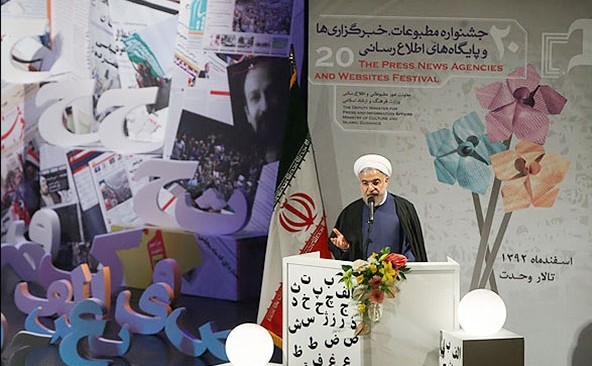
After the media exhibition, Hassan Rouhani announced during his speech at the closing ceremony of the media festival: “Undoubtedly, if in a society mouths are shut and pens are broken, public trust will be lost in that society and eyes and ears will turn towards the communication facilities of foreigners. Let the field of pen and the field of expression be open so that truths can be explained to the people and society. Of course, freedom of expression must take into account the historical, cultural, religious, and social conditions of that country and society.” He also continued to talk about the freedom of government opponents and supporters, saying: “How is it that some are free today and some have a small share of this freedom? Critics and opponents of this government are free and will remain free. But let supporters of the government also have freedom and security. They can criticize, especially constructive criticism. This is the honor of the government. I have told the ministers that there should be no complaints from the government towards

What appears to be, is not a good omen for the media in the era of Hassan Rouhani. Considering the two sources of legitimacy of the Islamic Republic system and the legal superiority of the appointed pole by the Supreme Leader over the elected pole by the government, there is a legal superpower in this structure that can neutralize the efforts of the elected branch. However, the Rouhani government has shown at the end of 2013 that it is a proponent of confrontation and retaliation. In the face of the detention of his supporters, he turns the game towards the detention of the opposing party, and of course, in the midst of all this, the main victims are journalists, media, and freedom of speech.

It is worth noting that the fourth pillar of democracy and the watchdogs of civil society have never been recognized by the rulers of Iran. The media, and of course other news outlets, have always been seen as a tool for promoting the ideas of the rulers. Any movement that has come to power has attempted to strengthen its approved forces and has either tried to keep independent media alive (such as the Iran Outlook of Engineer Meisami) or has resorted to confiscation, closure, and revocation of their licenses.

Furthermore, another issue that has started quietly is the involvement in the February 2016 parliamentary and Assembly of Experts elections. In addition to the usual sensitivity surrounding parliamentary elections, this time the simultaneous occurrence with the Assembly of Experts elections has doubled the sensitivity of the issue. The advanced age and illnesses caused by old age, as well as the assassination of the current leader of the system in July 1981 and the eight-year term of the Assembly of Experts, have complicated the issue and sparked conflicts between the two factions, which is also a major reason for the arrests of members from both sides.

In general, Iran is still one of the top 5 countries for imprisoning journalists, and with a record of 9 media outlets being shut down in the past 10 months, after the inauguration and signs of increasing tensions, there is no hope in sight. President Rouhani makes beautiful speeches, but given the limited power he has against the appointed branches of the judiciary, they are more like slogans and words rather than actions. And in fact, as history shows, the media has always been the main victims of internal conflicts within the system. Until now, Rouhani’s situation is unclear and the future is uncertain.


1- For more information, refer to the Reporters Without Borders website.

2- You can read the full text of President Hassan Rouhani’s speech at the closing ceremony of the 20th Press Festival on the President.ir website.

A brief history of censorship in Iran from the beginning until today.

matbouat1

Before delving into the history of censorship in Iran, we must clarify what we mean by this term and how it differs from censorship.

What is censorship? Definitions and explanations of terms.

Censorship is the inspection of books, newspapers, and plays before their release; the inspection of private letters before reaching their destination; or the inspection of speech and expression before delivery, in order to ensure that their contents are not harmful to public morality or the interests of the government or ruling authority. Censorship is usually imposed by government or religious authorities, and sometimes by powerful pressure groups. In Persian, synonyms such as monitoring, examination, inspection of beliefs, supervision, and evaluation are used for censorship. The person who determines the prohibited items is disrespectfully referred to as a “censor” and officially and administratively as an “inspector” or “examiner.”

The word censorship is derived from the Latin root Censere, meaning evaluation, or Censura, meaning suppression. Some consider the Latin word Censere to have Sanskrit roots and have given it the meanings of official announcement, official description, evaluation, and assessment. In ancient Rome, censorship referred to two judges who recorded and monitored the statistics of citizens and their public morality. (1)

As it can be inferred from this definition, censorship refers to the organized efforts of controlling media, especially written media, by the government or other interested groups and institutions in power in order to secure the interests of the government or power structure. What is important in this definition is the discussion of organization, systematic structure, the existence of regulations and policies for implementing this control, and most importantly, the presence of pre-planned and systematic mechanisms and procedures for this purpose. In other words, simply facing difficulties in expressing opinions or facing obstacles due to biases and prejudices of individuals outside the power structure does not fall under the exact definition of censorship.

And based on what has been said, if any mechanism is designed to control and exert power over the media in order to preserve the interests of the ruling class, using any other title such as inspection or evaluation or expertise will not make a difference in the essence of the phenomenon. In other words, words like inspection or evaluation are just more polite titles for the phenomenon of censorship.

Censorship history

According to documents, censorship has a long history dating back to the time of printing. Censorship was first implemented for religious purposes. In Europe, since the publication of printed works in the mid-fifteenth century, the publishing of books and other publications was accompanied by inspection by Catholic Church officials. However, even before that, religious and non-religious authorities in Europe imposed strict regulations against writings.

“Four decades after the invention of printing, at the same time as the beginning of the inspection of beliefs in the 15th century, restrictions on book censorship intensified. The mayor of Mainz in Germany was the first person to make pre-publication censorship common in 1485. Government and church authorities strongly favored this method and implemented it. In Mainz, many committees were responsible for studying books before sending them for printing, and if they did not find anything contrary to religion, government interests, and public morality, they would issue permission for printing with the phrase “no objection.”

Henry VIII, the King of England, in 1534, in order to ensure more control over the inspection of books, deemed it necessary to obtain permission for all books and publications through a decree, and this permission was issued or revoked at the will and desire of the king personally.

In France, the first regulations regarding censorship in the media were established by King Henri II through a decree on December 11, 1547, in order to prevent the spread of Protestant beliefs through religious books.

But when did the story of censorship begin in Iran? Some, citing the book “The Fires of Mahmoud Ghaznavi” and other sources, attribute the beginning of censorship in Iran to that period, with reference to the hostile behavior of Abdullah Masoud towards Abu Ali Sina and his works. Others, citing the difficulties faced by Iranian scribes during the first and second centuries of the Islamic era under Arab occupation, believe that censorship dates back to 1300 years ago and consider the symbolism of poets like Saadi, Hafez, and Molana as a result of censorship in Iran. Some even go further and attribute the beginning of censorship in Iran to the suppression of Zoroastrians and Christians by the Mobeds and Sassanid kings, dating back to a more distant time. They, along with some Westerners, also consider the beginning of censorship in the world to be during the ancient Greek era, with the persecution and threats against philosophers like Socrates and Sophists.

The beginning of government censorship in Iran coincided with the reign of Naser al-Din Shah Qajar and the publication of the first official newspaper in Iran called “Rozname-ye Vaghaye’ Ettefaghiye”. This newspaper, which was established to inform the public about domestic and foreign issues, quickly turned into an official mouthpiece for the government. Its political articles, instead of reporting on events accurately, praised the court and exaggerated the events happening there. At the same time, multiple Persian-language newspapers were being published outside of Iran by Iranians living abroad. These included “Qanun” in London, “Habl al-Matin” in Kolkata, “Thuria” in Cairo, and “Akhtar” in Istanbul. Since these newspapers were not under the control of the government, they were able to freely express social and political criticism. The widespread distribution of these newspapers throughout the country and their critical content led the Minister of Publications at the time, Mohammad Hassan

During the period after the dismissal of the commander-in-chief in the year 1300 AH, with the establishment of the “Ministry of Information” and the “State Translation Office”, under the direct supervision of Sani al-Dawla, all printing and publishing affairs and books were placed under his control. With the decrease in the influence of the commander-in-chief in the government and the increase in the power of the anti-national regime, as well as the direction to suppress more and prevent any expression of opinion and free writing, the first censorship law in Iran was created by a person named “Count Du Montfort” Italian in the year 1296 AH and by the order of Naser al-Din Shah, called “The Book of Criminal Law of 1296”. Thus, the Italian Count’s criminal regulations became the first official law of censorship of the press and inspection and censorship of writing and expression, which was announced and implemented by the ruling regime.

After the issuance of the Constitutional Decree by Mozaffar al-Din Shah (August 5, 1906), the constitutionalists, who were themselves some of the press owners, allocated the thirteenth principle of the Constitution to the press and freedom of speech and expression. This principle rejected censorship and monitoring of the press, emphasizing that “no matter should remain hidden and no one should be suppressed.” However, the freedom of the press during the constitutional era was short-lived. With the rise of Mohammad Ali Shah Qajar and the closure of the parliament, followed by the assassination of journalists, the press faced another difficult period.

With the rise of Reza Shah Pahlavi’s power, censorship regulations were established more seriously than before in the country. Reza Khan, after reaching the throne, shut down and confiscated all opposing newspapers and imprisoned some of the opposing journalists, such as Farrokh Yazdi and Dr. Taghi Arani. The most famous censor during Reza Shah’s reign was a man named “Mehrmali Khan”. He served him until Reza Shah’s downfall, but from September 1941 to the coup of August 19, when the media atmosphere of the country was relatively open and free, he became practically isolated and unemployed. The murder of Mirzadeh Eshghi, the editor of the 20th century newspaper, is also among the horrific examples of this era.

There are many stories of illiteracy during the time of Mirza Ali Khan and the city’s censors. Anwar Khamei writes in his book “Fifty-three People” that for three years, the only newspaper allowed to be published by the city’s censors was the Iranian Communist newspaper. This was because Taqi Arani, with his cleverness, used the term “dialectical materialism” instead of “communism” and the censors, thinking that the articles were related to physics, gave permission for the newspaper to be published. It was also said that a list of forbidden words was given to the censors, who were required to use harmless synonyms instead. For example, instead of the word “worker,” the censor had to use a verb or action in the text, as in “actions of workers united around the world,” which had no danger or significance. In this way, the censors automatically replaced provocative words with harmless equivalents. However,

It seems that despite more than fifty years passing, these jokes still hold relevance in the present day.

Censorship in the present era

In any case, during the period after the victory of the February 1979 revolution, regardless of the first months of the temporary government of the Islamic Republic, where due to the favorable atmosphere (Spring of Freedom), there were no restrictions on the publication of newspapers, from mid-summer 1979, according to the Press Law passed by the Revolutionary Council on August 11, 1979, various cases of confiscation and closure of periodical publications were predicted. Although the Iranian Constitution explicitly prohibits censorship of the press and only allows it in special circumstances, in practice this did not happen after the revolution and censorship is now carried out more seriously and through various means.

However, critics believe that the idea of censorship in the 21st century is not justifiable from a moral perspective, but also from a rational and practical perspective. The advancements in modern communication tools have disrupted all equations. Fifty years ago, even twenty years ago, censorship may have been considered necessary and justifiable from a logical perspective of those in power, but today it is no longer practical. Censorship may harm writers and publishers, but it cannot control the thoughts of society. Here, censorship has become a losing game for both sides.

Nowadays, the creator has learned to put their work in the virtual space, or publish it outside the country, or have it printed in underground versions within the country, and dozens of other ways that are being added every day. Controlling what is written and published is not possible, but the censors, as they claim, have their own say and cause trouble for the writers. It costs a lot for the thinkers and writers to be harassed and turned into enemies of the government, and it costs a lot of money and energy for the censors to buy infamy and shame for themselves and to have their opponents accuse them of dictatorship and oppression. And a lot of money is taken from the people’s pockets, causing harm to the publishers, writers, translators, creators, and official sellers of the country, while some profiteers and black market operators benefit.

Critics wish to make the realities known to the agents that they have become like Don Quixotes, causing harm to themselves and their own interests, as well as causing distress and suffering to the people. Despite all of this harm and damage, new ways are found every day to express and present works. The flood of technology cannot be stopped, but this reckless and useless game of Don Quixote can be put to an end, and a win-win game can be entered into where the agents can easily get rid of this infamy and unnecessary expenses, and the book market can become organized and serve the community in a legal and professional manner. 

1- The Encyclopedia of Library and Information Science website, entry: Censorship.

Wikipedia cites: Ekhtiar, 1994, pp 258-262.

Censorship and censor, a sword on the throat and a bone in the throat.

censorship_

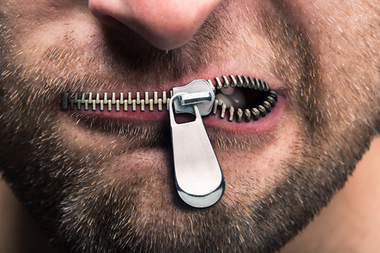
The sharp sword of censorship is always hanging over the neck of the media, and it has been cut so much that only a thin layer of skin and bone is left. But it is enough to cause complaints about the sword, which is wielded by government and ruling censors, and no one dares to speak out against it. These censors are only interested in securing their own personal and group interests within the media.

Governments and their supervisors always find thousands of excuses and ways to restrict the media. One day, they use national interests as an excuse to censor writings, and another day, they give permission to the censors to strike and harm the hands and feet of the press. These excuses have become so common that some media groups and journalists have adopted the same mindset as the censors, limiting the space for writing and narrow thinking.

Internalization of censors in line with national interests

National interests and their protection, under any type of clothing, whether real or symbolic, defensive or covering, serve as a one-sided means to preserve and safeguard the limited or even widespread interests that have been given a national name. This gives the creators and implementers the power and ability to push the rights of others to the margins. In these margins, one can even find the right to knowledge and the cycle of free information. These titles usually have no external equivalent and even their claimants are punished.

This ring of pressures and outside-the-law and rule checkpoints, which by fate are always present with us, have had such heavy costs in recent years that the censors have been forced to take on respectable titles within the editorial boards and then within individuals. For every word and letter and point, before writing, it is necessary to weigh it on the scale of that same line, and if the weight is equal on both sides, then it can be published. Repeated filters constantly question the right to know. Knowing will no longer have a meaning, but those interests that have now become hierarchical, ranked, and transformed from unconscious to a combination of self and unconscious. Each one has its own specific reasons for its own filtering, but the content remains. In the midst of this, the type of survival for the audience has no room for maneuver and the concept of knowing becomes completely meaningless for a better life. Although this cycle does not bring the level of demands to zero, just as the censors have

Self-censorship, remaining bones in the throat.

The restriction of media and press and the suppression of the fourth pillar of democracy has never been a slogan, but it has always been an external, political message that has never been more important. The term censorship has become synonymous with a government that, with various assumptions and with the aim of maintaining its own power, tries to cover up, eliminate, and manipulate news and information, and opens or closes channels of information based on its own interests. Or even the arrows are directed towards the media that, with the same goal and only with a different cover, are implementing and internalizing censorship, but these arrows and messages have never been directed towards the inside. If the first one is spoken in international forums and is definitely reflected in rankings, the second one remains at the level of warnings and whispers, although the result of both is the same. Although in the end, news becomes the gatekeeper and passes through the filter. The only difference is that in the first one, it is called national interests,

This is how it goes, one person suddenly wears a righteous outfit and the other becomes unsuccessful. The first one has reached a media position and knows well how to maintain their status and position. Here, if some people come who have respect and closeness with the media, writing and reading is their goal and they have thousands of tricks to bypass censorship and censors. Many more have come to tie their own burden and also demand from fate. The first group, if they obtain information to publish and fulfill the people’s right to know, the second group obtains information to threaten and secure their short-term and long-term interests. And they pass the time. Although both groups pass the time, the second group passes it with more ease.

Censors, no matter how they enter, ultimately manipulate the media and profit for themselves. External censors have been criticized for years and it is constantly emphasized that they have their foot on the throat of the media and there is little hope for reform. In different periods, the severity and intensity of their actions may vary, but the second type of censors, who are like a bone stuck in the throat, are growing day by day and expanding, and there is still no unity to fight against them and remove this blade and bone.

Although the appearance and interests of censors may vary, they at least agree on one thing: the rights and privileges of the audience. In both perspectives, the audience has the right to know based on their desires and needs. In essence, the audience is passive in both perspectives, like a liquid that takes the shape of any container and is devoid of any feedback, reaction, or demand. Ultimately, the audience and the media are just pawns in the game, moving between censors and passing from hand to hand.