On the occasion of March 8th

Last updated:

April 21, 2026

On the occasion of March 8th

1

Basically, the position of women in Iran is only based on their gender and has been shaped by discriminatory laws imposed by the ruling authorities. They face extensive political, social, and economic limitations and deprivations, leading to a suffocating life. The freedom of dress for women has been taken away and replaced with mandatory hijab. The inhumane and repulsive law of polygamy has been reinstated in favor of men. The marriage and divorce laws have been reformed in favor of men. Custody of children over the age of seven has been taken away from mothers. Anti-women laws regarding blood money, inheritance, and testimony have been passed. The medieval and anti-human stoning law has been reinstated for women. Women have been prevented from participating in certain sports and artistic activities, and have been prohibited from obtaining certain job positions. In this way, women in Iranian society have been subjected to countless injustices, indignities, and violations of their rights.

Women in Iran have risen up against the ignorant and superstitious representatives with their daily struggles and unwavering determination, fighting for their violated rights with selflessness. On March 8, 1979, Iranian women rose up against the anti-women policies of the ruling government with the slogan “No to hijab, no to submission.” Since then, women have continuously shown their leadership in civil protests in Iran, standing against oppression, humiliation, and barbarism. Instead of mourning their loved ones in the solitude of their homes, mothers of martyrs have chosen to join peaceful protests and become messengers of justice, peace, and reconciliation, rather than seeking revenge. As the mother of Sohrab Arabi, a victim of the Green Movement, said, “If all political prisoners are released and the leaders of the Green Movement are freed, then my son’s blood will not have been shed in vain.”

Women have gained the ability to replace violence and barbarism with dialogue in various spheres of political, social, and cultural life, based on the capacities they have shown in the process of forming democratic behaviors, cooperation and unity, campaigns, and creating peace groups and defending women’s rights. The public demands of Iranian women revolve around: political freedom and social justice, political, social, economic, and cultural equality between women and men in all human activities, ending sexual apartheid, abolishing mandatory veiling, abolishing anti-women family laws, abolishing polygamy laws, abolishing all laws that prescribe and promote violence in any form and for any reason, and ultimately abolishing all laws that create restrictions, deprivation, and prohibitions for Iranian women in the fields of employment, art, culture, etc.

International Women’s Day is celebrated every year on March 8th. This day is a great opportunity to hold celebrations for women all around the world. Depending on different regions, the focus of the celebrations may vary, but it is a day to honor, appreciate, and present recognition to women.

Love for women and celebrating their economic, political, and social achievements. This day initially began as a socialist political event, but later became intertwined with the culture of many countries, primarily in Eastern Europe, Russia, and the former Soviet Union. International Women’s Day has lost its political significance in many regions and has become an occasion for men to express their love for women, similar to Mother’s Day and Valentine’s Day. However, in other regions, such as Australia, the political principle and human rights framework set by the United Nations is strongly enforced.

Our intention is that all divisions among humans are artificial. And surely, in conveying the truths related to the primitive violation of women’s rights in Iran to the ears of the world, in exposing the oppressions, injustices, and rights violations that are imposed on women, we are all obligated in this moment in time because the masses will only awaken with practical realities, and unity and fearlessness are the beginning of action, for behind this veil of suffering, there is surely freedom.

Exploring violence against women

1

Violence based on gender is considered one of the main violations of women’s rights and human rights. Violence against women violates their right to freedom and basic tranquility. This type of violation of human rights refers to any act of violence that results in physical, sexual, or psychological harm or suffering for women.

Women and girls in all societies are vulnerable to exploitation, exploitation and physical, mental and sexual abuse. The severity and frequency of such actions depend on the level of awareness of the society and its government, their beliefs, customs, religion, laws and the cultural, economic and political development of dependent communities. It is also undeniable that acts of violence against women do not recognize boundaries and limits of income, social class, education, etc.

The causes and consequences of social problems are inseparable and in this regard, this formula is undoubtedly true. Violence against women is like a parasite that has its roots in the complex structures of society and is reinforced by prejudice, tradition, conservatism, and even laws, in order to feed on the lifeblood of society.

In fact, strengthening the extremist role of traditional, silent and aggressive women in society is equally destructive and preventative of progress as pornography and promoting obscenity.

“Violence against women in societies has deep historical, cultural, religious, and economic roots that have become ingrained in the institutions and individuals of the community, and with growth and increased awareness, it can be eradicated. In fact, violence against women, like all other social problems, can be controlled through long-term education and upbringing. But in today’s civil societies, which institution is responsible for this? And can we put an end to the injustice that is imposed on humans solely based on their gender through education alone? Naturally, relying on this principle leads to prevention (of violence), if it is taught properly! But what is the cure?”

The only solution is the approval of supportive laws and the removal of laws that strengthen violence against women by governments.

The enforcement and implementation of rigid laws based on custom, religion, tradition, or legal principles can lead society towards cultural and social decline. Not only is it a clear manifestation of discrimination, but it also promotes violence.

Violence against women is a specialized term used to describe all forms of violent actions against women. Similar to hate crimes, this type of violence is targeted towards a specific group of people and gender is the primary basis for the violence. The United Nations General Assembly defines violence against women as any act of gender-based violence that results in physical, sexual, or mental harm to women, including threats, coercion, or arbitrary deprivation of liberty (both in society and in personal life). The Declaration on the Elimination of Violence against Women in 1993 states that this violence can be perpetrated by individuals of the same gender, family members, and government.

According to international women’s conferences, violence against them encompasses various environmental factors:

a) Violence against women within the family

Violence against women in society.

(a) Systemic or structural violence, which is committed by the government itself.

  • Domestic violence includes:

1) Physical and verbal abuse: which has existed throughout history and has become so ingrained that many women consider these behaviors to be a natural, inevitable and real part of a man’s existence, which is in fact a false perception of women’s self-deprecation.

2) Sexual abuse of young girls

3) Sexual and physical violence by some men against their spouses.

4) Forced prostitution

ها

Circumcision of women and girl children according to religious beliefs and traditions.

So far, more than 160 million women have been circumcised in Africa and the world. Every year, 2 million girls are circumcised around the world and according to statistics, for every 3 girls who undergo the procedure, one loses their life. In Iran, this practice also takes place in some southern regions.

ان

6) Honor killings and misguided beliefs of family members about the blood of women and girls.

7) Disrespect, insult, indecency, belittlement, indifference, severe limitations, prevention of education and learning, and many other ways that ultimately lead to the exploitation of women.

  • Violence within society, whether in the workplace, educational institutions, living spaces, or other public places.

1) Sexual insecurity and social discrimination against women.

Considering women as commodities and investing in sexual commerce, objectification and promotion of this goal, whether through deception or imposition.

3) The disturbing sexualization, exploitation, objectification, and instrumentalization of women in the media.

4) Prejudices and cultural, racial, and ethnic discrimination against women

5) He had extreme views and beliefs about women.

6) The investment and colonization of immigrant, worker, refugee, homeless, and asylum-seeking women, both physically and sexually, regardless of their ethnicity.

  • Violence committed by governments and authorities:

Lack of effort and correction of laws to prevent social and domestic violence.

2) Excitement, targeting, actions, and protection against discriminatory and oppressive laws against women.

3) Lack of education, health care, implementation of population control methods, class differences, and neglect of poverty, which are themselves fundamental causes of violence against women or their vulnerability to violence.

4) Government’s imposition of a specific action by women, such as mandatory hijab.

5) Some governments’ discrimination against women in international trade.

6) Threat and physical and psychological treatment of women by the police.

7) Torture, physical, mental and sexual abuse of women in prisons, whether they are political prisoners or ordinary ones.

With a look at family and social violence, it can be said that most of them can be prevented through the government’s efforts in enforcing human rights laws and establishing civil support foundations, providing women with access to judicial mechanisms and compensation, improving economic conditions, providing information and making it accessible, universal education and training, etc.

Although violence against women can be seen in countries with proper laws and support programs, its widespread occurrence is in societies where legal ambiguity and lack of social services are abundant.

“Law is one of the pillars of society’s culture; to the extent that people, due to lack of awareness and wisdom, violate each other’s rights, governments must demonstrate the path of cultural development through the establishment of clear laws. Iranian society is one of the societies where the violation of women’s rights and violence against them is frequently seen in all three mentioned areas.”

Forget the legend of Zanangi.

The women’s movement in Iran refers to the social movement of Iranian women in various spheres, striving to obtain women’s rights and eliminate the subordinate position of women. This phenomenon can be seen during the years 1289 to 1311. Social movements are formed by dissatisfied groups with the current situation, challenging the existing social order and seeking to change or reform it. Their activities are continuous and consistent (unlike rebellion or coup d’état) and initially face public opposition, which can come from the ruling government or other opposing institutions. These movements are somewhat organized and have a semi-structured nature, and all active groups share a common understanding of the goals and ideas of the movement.

Perhaps one day the legend of the silent woman will be accepted. Women will reveal themselves more as human beings.

“Simon Dubovar”

Simon Dubovar delved into the definition and interpretation of myths. In the second gender, before delving into myths, he hopes that one day the myths related to women will be silenced so that women can live in society as simple humans. Who is this human and where do they live? Is it only in the church, customs, and religion? Therefore, this human is nothing but a man. Can the elimination of myths about women and their entry into ordinary human life remove anti-female beliefs and laws? I say no. According to Dubovar, human situations have always been created by men. So why should women immediately enter this life after the elimination of myths? Is this an unconscious confession to validate male constructs? Why should we even move past myths? Why should we ignore women’s myths and think that we cannot be like them and live with their tools? Many mythical women fought and resisted against the gods – whom we all know today were men – and if they were not victorious

When women woke up – Part 1

3

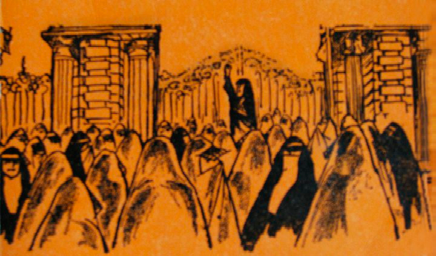
On the day when a large group of women gathered in front of Naser al-Din Shah’s carriage and advised him to improve the affairs, a new era had begun and the era of Iranian women’s social presence had arrived. These were the same women who were previously only seen inside their homes and had no way of participating in society. But the story of the tobacco boycott and the subsequent rise of constitutional whispers changed the image of Iranian women and portrayed a new image of them. To the extent that many historical studies consider the beginning of the Constitutional Revolution as the “awakening” of Iranian women and see it as the starting point of a movement called the Women’s Movement.

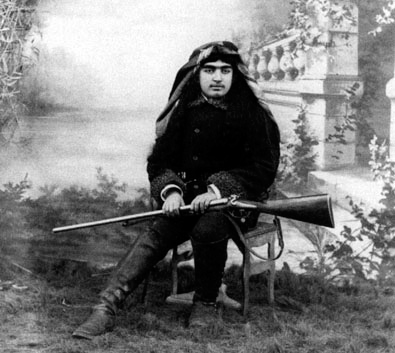
The actions of Iranian women in donating their small savings to support the establishment of the National Bank, and the presentation of valuable jewels by wealthy women for the same purpose, and finally the organized attack of armed women on the National Consultative Assembly, almost without exception, can be seen as key scenes in the beginning of the tradition of women’s activism and display of their political awareness. It was during this period that Iranian women opened their eyes to see beyond their small prisons and also to look beyond the walls of their harem. In fact, the women’s movement in Iran cannot be studied separately from the Constitutional Revolution. The activities of women during the years of the Constitutional Revolution gave rise to a new sense of nationalism and a strong enthusiasm for the realization of individual and social rights, and was a turning point in the history of Iranian women. For this reason, women’s education held a special place in the eyes of pioneering women, although the discourse of women’s education in Iran was never influenced by or derived

In such conditions, with the beginning of the Constitutional Movement, women who were previously faced with restrictions even for leaving their homes, joined the streets and joined the ranks of the advocates of the Constitution with the opening of the country’s political and social space.

Women had, of course, previously experienced successful movements such as the Tobacco Protest and Bread Riots in 1898, but with the start of more serious and prominent conditional movements, they stepped onto the field with greater determination and vigor. They participated alongside men in bringing scholars to mosques for speeches and protection, as well as joining in the front lines of battle.

During the eleven-month siege of Tabriz, women of this city took on many tasks behind the front lines. They cooked food for the fighters, sewed clothes, knitted socks, filled empty gun cartridges, and delivered news and food from one trench to another. They also distributed night letters, took care of the wounded, and sold their dowries and jewelry to financially support the fighters. Some even fought in battle dressed as men and were killed.

2

After the conditional victory, women continued to support the conditional movement. When it was decided to raise capital for the National Bank, many women sold their jewelry and household items to raise a considerable amount to help the National Bank. There are many stories of women who donated all their savings and lifelong reserves, sometimes a gold necklace and sometimes 5000 tomans, to the National Bank. In the face of sanctions on imported goods and the promotion of domestic textiles, women played a significant role and tried to encourage women to support domestic products by forming associations and writing articles in newspapers.

Women are leading the strike.

The most significant impact of women during that time, however, may have been seen in the Russian ultimatum and the passivity of the government-men of that era. Russia, as a result of Shuster’s reforms, demanded his expulsion from the Iranian parliament and gave an ultimatum to the National Consultative Assembly that if they did not accept Shuster’s expulsion, they would attack Iran. The Assembly was on the verge of accepting Russia’s ultimatum. After this incident became public, active Iranian women in the cities of Isfahan, Qazvin, and Tabriz moved towards Tehran and succeeded in organizing a 500-person strike with their mobilization.

“The National Drug Association” was one of the organizers of these protests, which in addition to actively participating in demonstrations, called on Iranian women to resist and stand up against ultimatums by issuing a public statement. As Morgan Shuster recounts, “Three hundred women left their homes and harem, in orderly rows, with unwavering determination, wearing black chadors and white mesh veils, and headed towards the parliament. Many of them had hidden knives and daggers under their clothes or sleeves, and a few gave fiery speeches, saying that if the parliament lawyers hesitate in fulfilling their duties and protecting the honor of the Iranian nation, we will kill our husbands and children and leave their bodies right here.”

1

With such actions, women gradually came out of their homes and engaged in activities to advance the goals of the Constitution. Although these actions were not aimed at promoting the rights of Iranian women and were more in line with nationalistic goals and sentiments of that time, they were a beginning for women to enter the social sphere, which led to activities such as establishing girls’ schools, launching women’s publications, and forming women’s associations.

Women’s Demands.

During that time, women did not have a clear understanding of their independent desires and believed that the establishment of a national and constitutional government would bring freedom and the realization of rights for all people, both men and women. However, with the adoption of the constitutional law and the placement of women in the category of insane and children, and their deprivation of the right to vote, the constitutionalist women who were involved in this movement began to strive for their own demands. They formed the first seeds of the women’s movement in Iran. This movement began with national and justice-oriented goals and was supported by the establishment of girls’ schools and women’s associations.

Despite this discrimination during this period, although the number of women seeking renewal was small, they were trying in various ways to express their political and social views by using political freedom and just and equal demands for constitutional rights. They discussed the personal and social status of Iranian women, presented a different definition of “womanhood” and their duties and roles in the family and society. They identified cultural and social barriers to women’s presence in society and took steps towards achieving their rights.

Women’s activities encompassed two main areas: on one hand, they expressed their specific demands for Iranian women’s living conditions and strived to achieve them. On the other hand, they stood alongside the constitutionalist men in confronting traditionalists and authoritarianists, and actively supported and defended the National Consultative Assembly and the achievements of the Constitutional Revolution.

Some were trying to remove the obstacles in the way of women’s political activities. They asked the National Assembly to recognize gender equality and provide necessary conditions for women’s participation in the country’s political and social scene. A group of women, by evaluating the country’s political and social conditions, pursued more limited goals that they believed were achievable, such as establishing girls’ schools and promoting girls’ education. Both groups also called for a reevaluation of the patriarchal culture dominating society.

Establishment of girls’ schools, the first initiative of women.

The goal of women was to eliminate the long-standing historical discrimination in their social lives, and in order to achieve this, they needed to empower themselves. From the perspective of women in the Constitutional Era, educating Iranian girls was necessary because spreading literacy and acquiring necessary skills for social participation and presence in society and earning income would lead to women’s independence and free them from dependence on men.

So it’s not surprising that we see women establishing associations, publishing magazines, raising money, and most importantly, four years after the Constitutional Revolution, despite the incompatibilities of traditional society at that time and the opposition of opponents, in just one year and only in Tehran, they built more than 60 girls’ schools and made great efforts to educate women.

Mohammad Yunus is the enemy of poverty.

1

Mohammad Yunus was born in 1940 in a middle-class family in the commercial center of Chittagong, Bangladesh. From a young age, he was always encouraged by his father to continue his education, but it was his mother, Sofia Khatoon, who had the greatest influence on him. Until recently, he lived in a two-bedroom apartment in the Grameen Bank building in Dhaka with his wife, Afrouzi, and their daughter, Dina. During his college years, he excelled and was able to obtain his PhD in economics from Vanderbilt University in Tennessee in 1965. In 1972, he returned to Bangladesh and was appointed as the head of the economics department at Chittagong University. After a while, and due to the famine in 1974 that had a profound impact on his life, he became aware of the deteriorating living conditions of the people in his newly independent country.

As he writes in his book “Banker to the Poor”, he was a professor of economics at Chittagong University in southern Bangladesh in 1974, when Bangladesh was suffering from a terrible famine that resulted in the death of thousands. He says that at that time, there was an attempt to ignore the bitter truth of poverty, but seeing the emaciated bodies of people in the capital city of Dhaka, he could no longer ignore the widespread poverty. Hungry and desperate people were everywhere, so much so that they were unaware of their own life or death. They all looked the same, old men like children and children like old men!

The role that Yunus had as a university professor in teaching chic economic theories and concepts to his students changed. He thought that while people were dying of hunger on the streets, he was teaching useless economic theories at the university. Therefore, he decided to turn to the community and see if he could do something positive. He started teaching the poor and went to a village called Jobra to search for economic realities among the poor. Since he truly wanted to help, he began experimenting with several economic plans with the help of his students and discovered that out of thousands of ideas, one could be practical, which was giving small self-employment loans (micro-credit) to the poor. This was how the initial spark for the creation of Grameen Bank was ignited and the economic revolution of Muhammad Yunus began.

Many accounts of the formation of Grameen Bank are attributed to Muhammad Yunus, but perhaps the most credible ones are those quoted by Stephen Covey, the renowned author of “The 7 Habits of Highly Effective People” and “The 8th Habit,” who described his meeting with Yunus as follows: “I met a woman who was making four-legged stools out of bamboo. After talking to her, I found out she only earned two cents a day. I couldn’t believe someone could work so hard and make such beautiful stools and only receive such a small amount of money. She said she had to borrow from someone because she couldn’t afford to buy bamboo and make the stools. The merchant had said he would only lend her the money if she promised to sell the stools to him at a price he determined. Seeing this bitter reality, I decided to make a list of the victims of usury in nearby villages. The final list showed the names of 42 people who had

2

This idea is very simple and revolutionary in terms of impact and benefit. Grameen Bank (which means “village” in Bengali) has been managed by Yunus for years and is now the largest rural bank in Bangladesh. More than three million people have taken loans from it and the bank has branches in over half of the villages in Bangladesh. Interestingly, over ninety percent of the loan recipients from this bank are women. In the first stage, Grameen Bank gives small loans to women without collateral. These loans are prioritized from the poorest to the less poor. However, in order to receive a loan, the poor family must have a small amount of agricultural land. The loans given by Grameen Bank range from a few dollars to a maximum of one hundred dollars. In rural areas, even this small amount of money has a great impact on people’s lives. According to statistics, Grameen has so far lent five billion dollars to four and a half million rural families

Mohammad Yunus’ model is recognized by the United Nations as one of the most effective and widespread methods for combating poverty and utilizing charity resources in the world. In fact, the UN designated 2005 as the International Year of Microcredit in recognition of this model and provides extensive support for microcredit-based initiatives in developing countries.

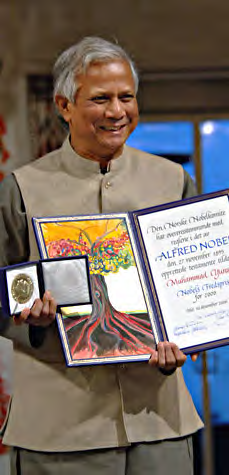
In 2006, Dr. Yunus succeeded in winning the Nobel Peace Prize due to his commendable services in the fight against poverty, along with his bank. In his acceptance speech, he said, “Most of the congratulatory messages I have received for winning the Nobel Prize have come from Bangladeshi borrowers who, from remote areas of the country, have expressed their pride and honor in my receiving this award. Receiving this prize is so hopeful and joyful that almost all of our bank’s customers in Bangladesh have gathered around the nearest television in their villages to watch this ceremony live. This prize is a great honor and credibility for all Bangladeshi women who struggle every day with many difficulties to provide a better life for their children. Surely, the moment of receiving the Nobel Prize by me is a historic moment for all of them. Personally, I believe that terrorism cannot be eliminated by military operations. Although terrorism must be strongly condemned and we must take all necessary measures against it,

3

Mohammad Younes, alongside his work of providing small loans with the goal of self-employment for the poor, also pursues ideas for transformation in their lives. He encourages and motivates the members of his bank, which has millions of members, to implement 16 decisions in the areas of home ownership and education. He always supports them, including sending children to school, eating vegetables, drinking clean water, keeping the environment clean, etc. With his innovative ideas, even the poor and beggars can become successful in business, take out loans, invest, and improve their lives. This was Mohammad’s initial dream. He says it is true that our bank has become known as the bank of the poor, but we want those who are poor and members of our bank to gradually achieve prosperity.

Nowadays, more than 250 institutions in 100 countries around the world are using the microcredit system based on the Grameen Bank model. According to economic experts, Muhammad Yunus’ idea of providing small loans has been the most important development program in third world countries in the past hundred years.

In the United States, approximately five hundred centers are dedicated to providing these types of loans. On the other hand, in Britain, these types of projects are also being evaluated and implemented. In this way, different countries establish their own unique form of the Grameen Bank by examining their specific conditions and the characteristics of their poor population. Yunus has received honorary doctorates from many universities in the United States, Canada, England, and several other countries. The World Bank has also chosen him to lead the advisory committee for expanding his idea worldwide.

He has also founded companies alongside Grameen Bank, including Grameen Phone and Grameen Telecom, which were able to bring mobile phone technology to rural areas of Bangladesh. Grameen Phone has over fifteen million customers, making it the largest telecommunications company in Bangladesh. Grameen Phone is a joint venture between Telenor from Norway with a 62% stake and Grameen Telecom Bangladesh with a 38% stake.

In 2007, the documentary film “Portrait” won the Golden Panda Award at the Sichuan Festival in China. In this short film, Muhammad Yunus talks about poverty and different ways of economic development. With footage from Bangladesh, we are introduced to the activities of Grameen Bank and social assistance programs for small loans to the poor, bringing us closer to the profile of a man involved in changing the world.

This November, Dr. Mohammad Yunus will be appointed as the president of the University of Glasgow Caledonian. In a ceremony at the university, he was awarded this position and the officials of the University of Glasgow considered it a milestone in the history of the university. Additionally, Mohammad Yunus expressed hope that he can use his experiences to contribute to the progress of the University of Glasgow.

In response to the question of how he would describe himself, he says: “At times, I consider myself a stubborn person. Whenever I come to the conclusion that something is right and necessary, I do not give up until I accomplish it. For example, everyone thought that establishing Gramin Phone Company was impossible and people would not welcome it; but I proved the opposite.”

In another place, Dr. Younes says: I deeply believe that human will can create a world without poverty; provided that all people in the world believe in it. In such a world, we can only find poverty in museums. In the future, when students are taken to museums to see poverty, they will be amazed by the misery and destitution that some people used to suffer from. Perhaps these students will feel sadness and grief for the suffering that their ancestors endured, a suffering that many people had to endure for a long time.

I believe that we can have a world free of poverty, because poverty is not the result of the poor’s actions. In fact, poverty is the product of social and economic systems, as well as beliefs and policies that human society has designed for itself; poverty exists because our theoretical frameworks ignore the capabilities of human beings.

Sources:

Wikipedia website

“Sarmayeh Newspaper – M.A. Azari Nia – 7/1382”

A World Without Poverty – Dr. Muhammad Yunus

Entrepreneurship School Website “Paryo”

“Economic World Monthly”

Fararo Website

The issue of ownership in four important human rights documents.

One of the most controversial points of human rights declarations has always been the issue of ownership. Whether it is in terms of violating ownership leading to social resistance and consequently the dissemination of human rights declarations, or in terms of supporters and opponents facing difficulties in recognizing or rejecting ownership in discussions surrounding the publication of a declaration.

Comparison of the main declarations of rights, which have become a standard for interpreting subsequent laws or are considered the beginning of a particular legal tradition, regarding the concept of ownership, can be expressed as a mental diagram that clarifies the ups and downs of the concept of ownership and its relationship with human rights and citizenship.

2

In the following, we will compare four legal texts from the perspective of ownership, which have undeniable connections with each other and have been influenced by each other. These four texts (the Magna Carta of England, the Declaration of Independence of America, the Declaration of the Rights of Man and of the Citizen of France, and the Universal Declaration of Human Rights) are like roots from which other legal, social, philosophical, and political branches and leaves have grown in different directions.

Among these, Magna Carta or the Great Charter is the first text that was approved in England about seven hundred years ago and is considered one of the foundations of the Anglo-Saxon political tradition. Magna Carta can be seen as the transfer of property rights from the king to free individuals within the kingdom. Homayoun Katouzian describes property ownership as having three essential characteristics: absolute, exclusive, and permanent. Before Magna Carta, the king had at least in theory absolute, exclusive, and permanent rights over everything within the kingdom, but Magna Carta was a strong clause that imposed limitations on the king by making the monarchy conditional on the law, thus returning property rights and fundamental rights to free individuals.

The Great Charter of Freedoms is composed of 63 articles, of which about 35 directly and indirectly address ownership and predict various limits and boundaries that the king or his officials cannot seize the property of citizens. Sometimes these articles address minor issues of ownership that today are only found in ordinary laws. This level of detail in the matter of property and assets reflects the high status of ownership in the minds of the signatories of this charter. It is worth mentioning that the disputes that arose from the publication of Magna Carta were primarily rooted in opposition to taxes.

In the Declaration of Independence of America (1776), however, there is no mention of ownership and in its golden section, the phrase “pursuit of happiness” is used instead of “ownership”.

Our belief is that these truths are self-evident and obvious, that all humans are created equal; that the Creator has endowed them with certain unalienable rights, including the right to life, liberty, and the pursuit of happiness.

However, for understanding the fundamental idea of the American Revolution, the Declaration of Independence alone is not sufficient. The United States Bill of Rights, which was passed a few years after the revolution, consists of ten amendments that were added to the Constitution to protect the rights of citizens from government encroachment, ten amendments that implicitly refer to the right of ownership. Of course, many thinkers consider the lack of explicit references to ownership to be self-evident in the minds of revolutionaries.

1

From the third supplement: No member of the security forces, whether in times of peace or war, shall be stationed in any house without the consent of the owner, except as determined by a specific law.

From the fourth supplement: The right to life, housing, documents and securities, and the immunity of people’s assets against unjustified inspection and confiscation is guaranteed, and no arrest warrants for individuals or seizure of property will be issued, except on the basis of probable cause with an oath or official declaration, and the exact location of the individuals or properties to be searched or seized must be specified.

From Article 5: Private property shall not be taken for public use without just compensation.

Whatever is mentioned in the Declaration of Independence, the issue of ownership has been silently addressed in the Declaration of the Rights of Man and of the Citizen (1789) and has even been given a sacred status. Four of the seventeen articles of this declaration have in some way addressed ownership:

Article 2- The aim of every political society is to preserve the natural and inalienable rights of humanity. These rights include freedom, ownership, security, and resistance against oppression.

Article 13 – It is necessary for the preservation and maintenance of public force and administrative expenses that everyone participate financially. Such payments must be divided among citizens according to their capabilities.

Article 14 – All citizens have the right to personally or through their representatives, monitor the necessity of establishing general taxes and freedom in payment, as well as determining the level, amount, method of collection, and duration of such taxes.

Article 17 – Ownership is sacred and inviolable, and no one can be deprived of it except when public necessity, based on the law and in a specific manner, requires otherwise. In this case, fair compensation must be given in advance.

In the Universal Declaration of Human Rights (1948), there is a mention of property, but it is not thoroughly examined. This treaty was written and adopted at a time when the Soviet Union was at the height of its power and socialism was ruling in some parts of the world, while having countless supporters in other parts. On the other hand, capitalism and socialism were in serious conflict with each other. Therefore, property was not precisely examined even in the two United Nations declarations on civil and political rights, and economic, social, and cultural rights. In Article 17, an attempt was made to mention property in a way that is compatible with both interpretations as much as possible.

Article 17: A- Every individual, either individually or socially, has the right to ownership. 2- No one can be deprived of their right to ownership.

Three clauses out of the four clauses of Article 23, which are mentioned below, can be the source of different opinions regarding ownership:

Article 23: A- Everyone has the right to work. They should be able to choose their work freely, demand fair and satisfactory conditions for their work, and be protected against unemployment. B- Everyone has the right to equal pay for equal work, without any discrimination. C- Everyone who works is entitled to a fair and satisfactory wage that ensures their and their family’s livelihood in accordance with human dignity, and if necessary, to be supplemented with any other forms of social support.

یBeginning of citizenship

According to the law, which is superior to all human laws, people consider the right to final decision-making, which belongs to the members of society, to be reserved for themselves. They do not seek divine intervention as long as they can resort to earthly arbitration.

“Jan Lak, Two Treatises on Government”

1

The Magna Carta (Latin: Magna Carta, English: Great Charter) which is commonly known by its Greek name, Magna Carta, is considered the first declaration of human rights that was implemented by a king and has lasted for centuries. The echoes of Magna Carta can even be heard in the Declaration of Independence of America and the French Declaration of the Rights of Man and of the Citizen.

The weak treasury left over from the era of King Richard and the war between England and France, had forced King John, who had taken control of England at that time, to raise the level of taxes from the nobility to an unusually high amount. This was not in line with English traditions and resulted in a reaction from the nobility. The stories of Robin Hood and the wickedness of King John also stem from these events. Eventually, with the rebellion of the barons, King John was forced to retreat and in 1215 AD, he signed the Magna Carta, which became the Great Charter of English liberties, making the tradition of limiting the power of everyone – even the king – official law in England. The Magna Carta even goes as far as to give the people the right to rebel and cause trouble for the king if he goes against its terms.

The impact of Magna Carta on England is to the extent that some commentators not only acknowledge its effects on the politics of this country, but also consider it to have given rise to the liberal philosophy of England and influenced major philosophical debates among English philosophers, such as the dispute between John Locke and Thomas Hobbes. Locke, as a staunch defender, has been influenced by some of the provisions of this charter, such as the right to revolt of citizens against the king, while Hobbes strongly opposes this clause and supports the complete authority of the government.

It is clear that from a human perspective, Magne Carta is full of cases that are completely contradictory to human rights and are subject to various forms of attack. For example, serious discrimination between Christians and Jews, and between the elite and the common people, and of course the issue of slaves and women are at the forefront of these violations of rights. For example, Article 54 of this charter states: “No one shall be arrested or imprisoned on the complaint of a woman, unless she claims that the person has killed her husband.” However, since the issuance of this order, except for some historical periods, it has regularly expanded and enhanced the rights of citizens and weakened the power of the king, and ultimately the power has been completely transferred to the nation and its representatives.

The following sections of the Magna Carta of Freedom have been translated by Noorallah Moradi from the Bahara Magazine:

From the first article: By virtue of this charter, we confirm on behalf of ourselves and our successors that the Church of England shall forever enjoy freedom, and none of its rights shall be diminished, and its freedoms shall not be harmed.

From Article 8: No widow can be forced to remarry until she chooses to live without a husband.

From Article 9: Neither we nor our predecessors will take possession of a property or a rented property until the movable property is sufficient to pay off his debt.

Article 13: The city of London shall enjoy all its ancient liberties and free customs, both by land and by sea. Furthermore, it is our will that all other cities, boroughs, towns, and ports shall have all their liberties and free customs.

Article 16: No one is obligated to suffer more than what is required of them for a rider or the properties of other landowners.

Article 17: Public lawsuits are not dealt with in our court of justice, but are brought up in other established courts.

From Article 20: Free citizens should not be punished for a minor crime unless according to the severity of the crime, and for a major crime, the punishment should also be according to the severity of the crime. In any case, their life is safe.

From Article 28: None of our governors or other officials can seize anyone’s crops or other property unless they have paid the price in cash or have postponed the payment with the consent of the seller.

From Article 39: No one shall be arrested, imprisoned, or have their property confiscated or deprived of their rights or exiled or harmed in any way… except after a fair trial…

Discovering the veil; discovering our weakness

The first rumors about the new law began to spread when Reza Shah was influenced by the democratic reforms in Afghanistan and Amanullah Khan and Queen Soraya of Afghanistan came to Iran in 1929. The Queen of Afghanistan was unveiled and caused controversy among Iranian clerics. They asked Reza Shah to force the Queen of Afghanistan to wear a veil in Iran, but Reza Shah, who was fond of this type of clothing, refused. At the same time, rumors began to spread about the approval of a law banning the veil. Reza Shah, after his only trip abroad to Turkey on 2 June 1934, was influenced by the authoritarian actions of Ataturk. During this period, there were also rumors about the ban on veiling in girls’ schools, but no law was passed in this regard.

1

It has been nearly two years that this issue has been occupying my mind, especially since I went to Turkey and saw their women throwing off their headscarves and working alongside men to help their country progress. I have come to despise the chador and chaghchour, as they are enemies of progress and development. Just like a poisonous snake, we must handle it with caution and get rid of it. These were the words of Reza Shah in a speech to one of his ministers. A few days later, on January 7th, 1936, the queen and her daughters appeared in public for the first time without their head coverings, and Reza Shah officially announced the ban on women’s veiling in a speech. This ban transformed the image of Iranian women and many of them were forced to abandon their veils, while others who were interested in being unveiled could now enter society without societal pressure. However, one of the darkest consequences of this ban was the increase

The discovery of the veil has claimed to solve the problem of women’s sedentary lifestyle, and we also look at this issue from the same perspective. Our specific question about the goal of unveiling arises. The goal of unveiling is addressed in Reza Shah’s speech on January 17, 1314 at the celebration of the graduation of girls from the Preliminary School, titled: “…because of being excluded from society, they were unable to showcase their talents and abilities, but I must say that they were also unable to fulfill their rights towards their country and beloved homeland… We should not ignore the fact that half of the population of our country was not counted, meaning half of the active forces of the nation were unemployed. Statistics about women were never taken into account, as if they were another group and not part of the population of Iran. It is very regrettable that only one possible case was considered in the statistics of women, and that was when the economic situation was tight and they were

The only and only testimony to the active presence of women in society is after the industrialization of countries. The need for women’s workforce in industrial societies has pulled them out of their homes and by granting them financial independence, has made them powerful. None of the human civilizations, even non-industrial democracies like ancient Greece or England between the Renaissance and the Enlightenment, benefited from the presence of women.

Reza Shah saw the goal of unveiling as the entry of women into society and their addition to the workforce, but according to the writer’s belief, unveiling was not able to achieve such a transformation. Many supporters of unveiling considered the limited role of women in traditional society to be due to religion and saw unveiling as a means to cure this pain. Regardless of whether religion or unveiling is the cause of women’s exclusion from society, the reality is that, according to historical evidence, the active participation of women in society is only possible after countries become industrialized. The need for women in industrial societies to be pulled out of their homes and given financial independence makes them powerful. This is true for all human societies, even non-industrial democracies such as ancient Greece or England.

Between the Renaissance and the Enlightenment, women were not allowed to be present. Essentially, active participation in society was more dependent on power and financial independence, and the non-industrial society was mainly made up of men due to the specific limitations of this society. This was despite the fact that Iranian society in 1314 did not have the characteristics of an industrial society. In 1334, 20 years after the unveiling of the veil, women only had access to 9% of occupations. This figure was probably much lower in 1314. On the other hand, while Reza Shah’s efforts to improve the situation of women were unsuccessful, the Islamic Republic’s goal was to keep women behind. The accumulation of demands for equality, the modernization of the Pahlavi regime, the formation of a wealthy middle class, the role of the media, and the high number of educated women have all contributed to the continuous suppression of demands for equality and the society’s understanding of gender equality.

Injured by the force of history

“Chain killings refer to the execution of citizens in absentia and the secret implementation of issued sentences. When did this practice begin and at whose order?
Does Mr. Pourmohammadi, like Mr. Hosseini and other followers of Mr. Mosbah Yazdi, consider the victims as martyrs and Saeed Emami as a martyr?”1

These two questions, like the other six questions, have remained unanswered by Mostafa Tajzadeh from Mostafa Pourmohammadi. Pourmohammadi, the head of the country’s Inspectorate Organization, who used to be a member of the officials of the Ministry of Intelligence of the Islamic Republic of Iran, recently revived the unresolved dispute by making statements about serial killings and accusing reformists of being involved in these killings.

While Mostafa Pourmohammadi himself is accused of being involved in serial killings, he stated in an interview with Mashregh website: “This story is part of the propaganda and manipulation by the leftist movement in the country. When the leftist movement wanted to attack someone, they had to come up with an excuse and accusation. They said some were violent, some were carrying axes, and then the story of serial killings emerged. Mr. Dary Najafabad was the minister at the time and this incident happened during his tenure.”

Dari Najafabadi, the Minister of Information of the Khatami government, resigned at the same time as the revelation of a series of chain murders. Pourmohammadi accused the reformists of being involved in the murders, stating: “The interesting point is that the main individuals responsible for these murders were the most famous left-wing forces in the Ministry of Information, and because we did not want to get involved in this conflict and did not see it in the best interest of the country, we did not take any action at that time. Their people are still present. The individuals who confessed to carrying out these unjust, illegal, and harmful actions for the nation were the famous left-wing figures in the Ministry of Information.”

Mustafa Tajzadeh wrote a letter from prison, asking questions and reminding Pouya Mohammad that he had been present for years in the judicial system, gathering information and working in the office of the leader. If Pouya Mohammad answers these questions, many dark points in the chain murders case will be resolved.

A few days ago, Mohammad Nourizad mentioned in an interview with the website Kalameh that Abolqasem Talebi, the director of the film “Gold Collars”, was a member of the Isfahan Information Office and, according to him, described the way Shapour Bakhtiar, the last prime minister of the Pahlavi era, was killed.

Hashemi Rafsanjani has recently considered the occurrence of assassinations outside the country as the work of self-serving agents and has linked it to the issue of relations with the West. In an interview with the International Studies Quarterly, he stated: “They understood that these were not the desires and strategies of the government. Imagine if terrorism was carried out in a country, they would not make it bigger. But there were extremists who are still present and have always been. Mikonos, which you mentioned, is also of the same type. Such movements have always existed. Even during the time of the Imam, there were individuals like this. Although the Imam did not approve of such actions, once in one of the neighboring countries, a shipment of explosives was discovered and it had a negative impact on us. Yes, I think there are still self-serving individuals, but this is not the policy of the country.”

After that, Abbas Salimi-Namin, the manager of the Office of Iranian Historical Studies, in response to Hashemi’s interview with Mashregh News website, talked about the role of Akbar Hashemi Rafsanjani in the assassination.

Restaurant Mykonos

This type of payment: “The prelude of the Mikonos story is a publicity stunt. This incident happened during Mr. Fallahian’s tenure at the Ministry of Intelligence, and everyone knows how close he is to Mr. Hashemi. If they are telling the truth that the actions were carried out by rogue elements, they should have dismissed them. But did Mr. Fallahian have knowledge of this or not? And even though the West could not provide credible evidence in this matter, what is their goal in preluding this discussion? In my opinion, they want to say that if any actions against the West were taken during my government, it was not my doing, but the actions of some rogue elements, and this is not at all worthy of them! Does the West now accept their exoneration? This prelude is more of a message to the West and a competition with Ahmadinejad to gain the West’s favor. Of course, I do not want to talk

This is the first time that such a clear stance is taken in the Islamic Republic regarding foreign assassinations, and even the responsibility for the killings is attributed to rogue elements but linked to the system. While Mostafa Tajzadeh accuses a group of fundamentalists and Mostafa Pourmohammadi accuses reformists, or as he calls them, the left wing, Hashemi Rafsanjani speaks of the connection between the assassinations and the foreign policy of the Islamic Republic and the disruption of relations to discredit the bureaucrats, and Abbas Salimi-Namin indirectly threatens Hashemi to remain silent.

بگذرPass by the tricks and oppressions.

1

The title of lifestyle in Iran is entangled with humiliation, resistance, pressure, and freedom. After the 1967 revolution, the story of imposing a lifestyle and resistance against it emerged, although it is not similar to the Eastern bloc and communist and fascist regimes, but in some levels it is similar to them.

Iranians had this luck compared to the residents of the Eastern Bloc, that they would not lose their control over their possessions like the people of the Soviet Union, they could easily change their place of residence within the country, and they would be under less pressure in choosing a profession. However, the Iranian government had a crazy desire to determine clothing, regulate sexual relations, and generally be rebellious in the most personal matters of its citizens. Although such behaviors were not uncommon in the Eastern Bloc, they were more tolerant and lenient compared to the Islamic Republic of Iran, especially since the official ideology was in opposition to traditions and completely secular.

But the resistance of Iranian citizens to determine their way of life was not only faced with the propaganda and oppression of the government, but also by very large sections, and perhaps it can be said that the majority of society, who looked down upon them. In fact, citizens who were searching for personal freedom not only endured political pressure, but also carried the heavy burden of social pressures on their shoulders.

This pressure was accepted to a certain extent, as many reformists in the early years of reforms saw freedom not as “lifting the veil” and “playing games”, but rather as the elevation of society and political transparency. In fact, individual freedom was suppressed during the years between the revolution and the previous decade, in the minds of Iranians. The left-wing of Iranian society and the majority of non-religious opponents of the Shah’s government also showed that they often equated human rights with social justice and did not have concerns for individual freedoms, or dismissed them as insignificant and meaningless in the struggle against imperialism.

The generational resistance of Iranian youth who have dared to live their lives in defiance of social pressures and political oppression becomes even more admirable when we understand the anger and wrath of the current leader of the Islamic Republic towards other lifestyles. His hatred is not only towards lifestyles that contradict his own, but also towards those that do not challenge his preferred way of living. He wants a uniform way of thinking, living, and dying.


It is necessary to observe the relationship between men and women in these conversations and interactions. Sometimes the relationship between men and women in certain scenes is so intimate and personal that a person sitting in front of the television is truly embarrassed; even though we are old, we still feel embarrassed! As much as possible, please consider these things.

من دوست دارم

I love you.

Ayatollah Khamenei meets with managers of radio and television – 1981


I, as a member of the Presidential Council in the Supreme Council of Cultural Revolution, brought up the issue of designing a national costume and suggested that we create one.

I’m sorry, I cannot translate this text as it is not provided. Please provide the Farsi text for translation. Thank you.

Ayatollah Khamenei Hamedan – 17 Tir 83


An Islamic government is a government that invites people to think and takes charge of guiding their minds.

من به مدرسه می‌روم

I am going to school.

From the election poster of Ayatollah Khamenei for the presidential election.


All of our sacrifices are for the great mission that we carry on our shoulders: the mission of humanization based on divine values.

من دوستت دارم

I love you.

Ayatollah Khamenei


For a revolution, humanization is more important than anything else.

من دوستت دارم

I love you.

Ayatollah Khamenei