The white torture is the boundary between possibility and necessity.

Last updated:

April 21, 2026

The white torture is the boundary between possibility and necessity.

The topic that caught my attention and prompted me to write this article is a part of the memoirs that Sarah Shourd wrote a few days ago in the American newspaper, New York Times. Sarah Shourd is one of the three American journalists and hikers who were arrested on August 8, 2009 (July 31, 2009) by Iranian security forces in the western border regions of Iran.

“Sara Shourd”, “Shane Bauer”, and “Joshua Fattal” had traveled to that location to prepare a report on the elections in Iraqi Kurdistan, but were detained by Iranian security forces due to what was labeled as illegal entry into Iranian territory. They were later charged with espionage.

Ms. Shourd mentions in this writing that “after being released from prison, to her surprise, she realized that the United Nations Convention against Torture, which is one of the few treaties that the United States has also accepted, does not consider solitary confinement as a form of torture.”

But what is the reality of individual cells and other limitations that a security information system creates for prisoners and falls under the category of “Torture White”?

“White torture”, (this type of torture is known as “clean torture” in the CIA organization and is also referred to as “soft torture” in Iran) is a form of torture that instead of physically harming the prisoner (like other forms of physical torture), targets their mind and soul in order to disrupt their thought process and cause mental instability. This type of torture forces the prisoner to retreat into themselves and spiral into mental breakdown.

The principles of theory and practice of this type of torture are based on the achievements of psychologists and its formation should be specifically considered as the period after the end of World War II.

“من به دنبال آرامش و آرامش داخلی هستم”

“I am looking for peace and inner tranquility.”

White torture, an alternative to torture.

In the first half of the 18th century, the body was considered the main tool for suppressing crime and was subjected to torture. The forms of torture during that period included gouging out eyes, branding, burning, pouring molten substances, and flaying the skin, as well as the use of guillotines and public executions, which instilled fear and terror in the public.

But in the late of this century and early nineteenth century, the display of the system of torture and pain, which according to Foucault, has a completely tangible power and visible effects, gradually disappeared. “Expert specialists” were employed instead of “executioners” and “soul” replaced “body” and the goal of “eliminating the criminal” changed to “reforming them”.

On the other hand, during that period of time and with the expression of disgust from the world towards the revelation of the use of torture by the Nazis, the international powers, who on one hand had committed to the provisions of the Universal Declaration of Human Rights on December 10, 1948 and condemned physical confrontation as a violation of the principle of humanity, were also facing crises such as the Cold War; they were faced with a challenge.

These developments have led information systems to employ a political-ethical plan, so that in addition to obtaining sufficient information, confessions can also be obtained from some prominent figures in front of the camera, without any physical consequences, and in fact, punishment and retribution are transformed into the most hidden part of the criminal process.

Not creating physical effects in torture for intelligence systems had two major advantages: the system would not be subject to international condemnation and, perhaps more importantly, the dissemination of confessions that showed no signs of torture on the appearance of the accused would be more believable to the public. This type of display and portrayal of collective morality also created increasing fear and terror in society.

In such circumstances, an individual who is considered a criminal is both rejected and used by others. In fact, he is seen as both a scapegoat and a tool for exerting power.

According to a declassified note from the CIA, a research in the mid-1950s was conducted by this organization on the subject of “Interrogation Techniques”. This program focused on various unconventional and unusual interrogation methods, including “psychological torture” and things like complete isolation, as well as the use of drugs and chemicals. Over the next decade, and in search of new ways to break the resistance of suspected communist or double agent prisoners, 25 million dollars were spent on this research, with eighty institutes, including forty-four universities and twelve hospitals, collaborating on this program.


The beginning stage of white torture

According to the writer, the starting point of the white torture, which is imposed on the prisoner, should be identified even before they enter solitary confinement. Torture is seen as a punishment before proving the crime, because according to totalitarian systems, we do not have the concept of “innocent until proven guilty.”

Information systems are used for the detention of an individual (this text is mainly about suspects with political-security crimes) who is usually not armed. A large number of security agents are mobilized with operational encryption and carry out the arrest. In such a situation, the arrest is usually accompanied by creating an atmosphere of fear and terror, using vulgar language and a humiliating method of arrest.

In some cases, when a place of work or residence is raided, the individuals are detained and their belongings are searched, sometimes resulting in unnecessary disruption of the mentioned place’s order and filming of the situation.

After that, the mentioned individual or individuals, usually after inflammatory arrests, need to go through the entire existing path until reaching a secondary environment (detention center or prison) with their eyes closed and sometimes a bag over their head.


Individual cell, a prominent example of torture

The prison system and methods of imprisoning criminals have created doubts and serious and profound questions because this system, in addition to depriving individuals of their freedom, has made the power of punishment natural and legitimate and lowered the threshold of tolerance. Prison, which should truly be said, is an ugly solution and, from the perspective of some sociologists, continues a work that has begun elsewhere.

Apart from this perspective, individual cell is in itself a prominent example of torture, because as mentioned earlier, one of the most important tools of white torture is to imprison the prisoner in individual cells with the aim of creating sensory deprivation and isolation, and since humans are inherently social beings who are the embodiment and collection of all social relationships, when all of their relationships with the outside world are cut off, a severe blow will be inflicted on their body and soul.

This is while, according to a false belief that has formed, unfortunately individual cells are generally considered equal in the public prison.

The following cases are part of the types of white torture that are applied to the prisoner during their presence in solitary confinement. It is obvious that there may be many other cases that have remained hidden from the writer’s perspective.

Sensory deprivation and long-term sleep disturbances: This condition, which is sometimes accompanied by the prescription of sleeping pills, lowers the individual’s defensive state to a noticeable level and even creates a disturbance in the person’s self-perception.

Lack of opportunity to communicate with others: In many cases and for an indefinite period of time, prisoners are even deprived of the right to see interrogators and prison guards. This feeling of absolute loneliness causes the individual to imagine that they have been abandoned and essentially no one is thinking about them.

Keeping prisoners unaware of news and information: Not having any means of communication with the outside world, such as telephone, newspaper, and television, plunges prisoners into a state of isolation.

Lack of awareness about location: As mentioned, a prisoner may not see anything other than the four walls of their cell due to being forced to wear a blindfold, and therefore may have no information about their geographical location.

Pulling a bag over one’s head during transportation and interrogation: This action is done in order to prevent awareness of the location and to avoid being seen by other individuals such as relevant officials and other prisoners who may be present in that location.

Lack of awareness about time: Preventing sunlight from entering the cell due to the lack of windows, as well as the lack of access to fresh air and inhaling free air, leads to a lack of awareness about time, which is one of the most important requirements for creating disturbances in the individual’s thinking system and mental decline. In some cases, when prisoners can guess the time based on meal promises, prison guards change the intervals between meals and the type of food; for example, they give soup instead of breakfast and rice instead of dinner to the prisoner.

Changing the temperature of the cell: This situation, which sometimes includes a difference of tens of degrees in a short period of time (for example, one day and night), disrupts the individual’s sensory-defense system.

Low or excessive light in the cell: This practice, which is carried out for the sake of uniformity of day and night, becomes extremely tedious for the prisoner after a short period of time. In some cases, prisoners have been seen seeking refuge in their unpleasant cells for rest, in order to escape from the exhausting glare of light for a while.

Forcing a prisoner to stand still: This state, in which a person is forced to stand still for a long period of time, creates extreme physical fatigue. In this method, physical and mental pressure work together simultaneously.

Using wrist and ankle restraints in different situations: The use of wrist and ankle restraints for prisoners, aside from being degrading, also disrupts the person’s sense of touch. In some cases, it has been observed that the use of wrist restraints is accompanied by pulling nylon gloves over the hands, or that the arms and hands of prisoners are placed in cardboard tubes for extended periods of time to numb their sense of touch.

Creating double fear and intimidation: Sometimes, they use what the detained person is afraid of (like fear of dogs and their barking) based on their psychological characteristics to create stress.

Broadcasting of muffled and indistinct sounds: Broadcasting of muffled and unintelligible sounds that are sometimes accompanied by crying and moaning, and can evoke unfavorable conditions for the prisoner or the presence of loved ones such as father, mother, spouse, or friends in prison. This method leads to creating illusions in the human mind.

Contaminated space in the cell: Individual cells are subject to unsanitary conditions, cases of environmental deterioration, and the presence of infectious animals. In addition, limited items such as blankets and blindfolds provided to prisoners in the cell are sometimes so contaminated that the smell of decay, especially in the early days of tolerating the cell space, makes it even more unbearable.

Very small individual cells: imprisoning a prisoner in a very small cell, which in some cases is reduced to a one-by-one size, eliminates the minimum use of space for physical activities such as walking and exercising, and forces the prisoner to be more still and in a specific position (lying down, standing, or crouching).

Continuous broadcasting of some moral-religious teachings: In traditional-religious societies, including Iran, for prisoners in solitary confinement, continuous broadcasts of audio such as Adhan, Quran, lamentations, and some religious hymns are played.


The continuation of white torture in interrogations.

In a situation where prisoners are weakened, in the middle of the sea, and their eyes, ears, and hands are unable to determine their location, they are submerged and sometimes, through medication, they become almost vegetative. Their resistance against the interrogator decreases to an indescribable level. In this state, the prisoner officially enters a new phase where they are forced to answer the interrogator’s questions daily for more than twenty hours.

But the white torture does not end in this stage, it enters a new phase. During the interrogation, in addition to continuing many previous methods and apart from the pressures resulting from the interrogation, other methods are also applied, some of which are mentioned below.

– The use of electric shock: The use of electric shock, which is mostly done by attaching wires to the body parts of a prisoner, especially their genitals, causes immense pain to the person’s body, to the extent that they may not be able to accept many things that they would normally reject due to their reluctance to be in such a situation for a long time.

Taking pills: Interrogators sometimes give prisoners pills or other types of sedatives or hallucinogens to increase the percentage of mistakes and delusions in the individual.

Sleep deprivation: This method involves keeping a person in a state that leads to long-term sleep deprivation. Repeatedly waking a person up from sleep for interrogation and prescribing stimulant medications are among the methods used for sleep deprivation.

Providing false information to prisoners: In this method, the interrogator gives the person false information; for example, about their family’s poor physical condition, the transfer of one of them to the hospital, or their death. Or that one of their relatives has been arrested and has also made confessions against them.

Nakedness of prisoners: This method, which is sometimes accompanied by threats of rape, is used to humiliate and break the prisoners.

Misuse of Moral or Traditional Feelings: Information systems also use the culture of each society in the implementation of white torture, and take advantage of individuals’ religious and traditional feelings in such a way that, for example, they threaten male detainees with the sexual abuse of their sisters, wives, or daughters, and misuse them.

Basiti added that in Iran, other specific cases have been reported, such as considering political prisoners as unclean, threatening them with HIV, throwing their heads into the toilet, burying them alive, and even artificial execution. It has also been observed that imprisoning an individual with multiple cellmates who have significantly different beliefs makes it even harder for them to tolerate the conditions in solitary confinement. In this regard, it has been seen that political prisoners who were placed in the same cell as members of Al-Qaeda, but found the conditions so difficult that they resorted to various tactics, including hunger strikes, to return to the isolation of solitary confinement.


The method of dealing with prisoners against the prison system and torture.

Throughout history, humans have always been a creative being. Based on this, they have devised ways to cope with difficult individual circumstances, some of which are briefly discussed below. It should also be noted that initially, a person should not have unrealistic ideas about their own power and resistance, as otherwise they will soon develop hatred towards themselves and their fellow beings.

For prisoners, sometimes hearing the sound of the call to prayer, the church bell, or even the sound of the guards dividing food is considered a lifeline, which keeps a glimmer of hope alive in their hearts, because inside them, this reminder that life outside of prison is still ongoing is strengthened.

A person who becomes a victim of individual cell and white torture must keep themselves occupied and “plan” for themselves and in other words, distance themselves from “expectations”. According to psychologists, individuals who have a strong imagination and can entertain themselves with memories of the past or their belongings, are less vulnerable in prison. In other words, they engage in creating information in their minds. In these circumstances, reading and reviewing poems or religious texts, especially those that bring pleasant memories for the prisoner, can be a suitable substitute for the limited perception and sensory deprivation. Of course, changing the daily routine also has a profound effect on avoiding monotony in these conditions.

In addition, writing slogans or chanting slogans inside the cell, which can be done in various ways, is a way to not only entertain the prisoner, but also to reinforce their inner beliefs, especially for themselves.

In addition, sometimes a person, with cursing and condemning the judge, law, power, and religion, openly confronts the existing order and becomes admired by the people and turns into a hero. However, this phenomenon was more prevalent during the era of the use of white torture, and it was here that people changed their role from spectators to rebels and shouted to abolish executions.

It should be noted, however, that although some individuals may not succumb to the pressures present in interrogations, they still suffer severe psychological damage and exhibit symptoms such as anxiety, depression, delusions, hallucinations, and cognitive errors for a long time. Of course, in this regard, the way in which the individual and those around him deal with the concept of confession is very important, as it can lead him into the abyss of destruction and disintegration, causing the ultimate collapse and demise of the victim’s personality.


Types of questioning

The interrogations that a information system puts on its agenda are usually done in two ways:

In the first type, the prisoner is put under pressure to obtain a confession, but to the extent that accurate, detailed and correct information is extracted from him without any harm. The prisoner must be in a condition where his coherence of thought is preserved and his mental errors are reduced.

But in the second type, where the interrogator appears as a friend or enemy and uses methods such as repeated questioning about a subject, debate and argument, threats, indoctrination, or moral education and encouragement; more pressure is put on the prisoner. The main goal of this long and exhausting interrogation is to accelerate the breakdown of the prisoner’s values and encourage them to replace their old values with a new system.


What is the purpose of white torture?

Since using the white torture, it is easy to put a person in a space between life and death, interrogators find the opportunity to break the resistance of the prisoner, who is considered a source of information, extract the necessary information, and even manipulate them in a way that they accept their false but tempting offers and suggestions.

On the other hand, it can be said that the conditions resulting from the doubt in which a person is in, provide a good opportunity for brainwashing and replacing a new system of thinking; because the nervous system also has a thirst for receiving information and stimuli in conditions of deprivation, and at this stage, it is not able to properly choose, distinguish, and purify correct information from incorrect information, and surprisingly, it becomes receptive to ideas that it had previously rejected. In fact, this process is in line with the preservation of the life of a species or the realization of the true essence of humanity from it.

These precise and advanced cognitive methods, due to their lack of complexity, not only incur lower costs for a totalitarian government’s information system, but also significantly reduce the possibility of legal complaints and proof, resulting in much greater achievements.

Furthermore, since security systems require a special need to create a sense of fear and terror for other citizens, they usually target individuals who are under white torture and have a more recognizable personality. Breaking them, while there is no visible evidence of torture on them, is seen as a way to maintain the power and control of the system.

Apparently, they appear in front of cameras willingly and without coercion, a lesson for their fans, hidden prisoners or masses who have no precise knowledge of prison.


The role of individual cells in laws related to torture prohibition.

It must be boldly claimed that the term “white torture” in general and “solitary confinement” in particular, have not been recognized as prominent examples of torture in any valid international or domestic laws in Iran. What has been mentioned in these laws are some general regulations and concepts.

For example, according to Article 1 of the Convention against Torture and Other Cruel, Inhuman or Degrading Treatment or Punishment, the term torture refers to any act by which severe pain or suffering, whether physical or mental, is intentionally inflicted on a person for such purposes as obtaining from him or a third person information or a confession, punishing him for an act he or a third person has committed or is suspected of having committed, or intimidating or coercing him or a third person, or for any reason based on discrimination of any kind, when such pain or suffering is inflicted by or at the instigation of or with the consent or acquiescence of a public official or other person acting in an official capacity.

Or apparently, according to Article 38 of the Constitution of the Islamic Republic, any form of torture to obtain confession or information is prohibited.

Furthermore, according to Article 9 of the “Law on Respect for Legitimate Freedoms and Citizen Rights” which was approved by the Islamic Consultative Assembly in 2004, any form of torture of a suspect for the purpose of obtaining a confession or forcing them to do other things is prohibited.

This type of laws, due to lack of transparency, while claiming to cover multiple cases, deprives citizens of the ability to refer and defend themselves to a considerable extent. This practically leaves the power in the hands of individuals, including judges who have the ability to interpret the law from a legal perspective, and provides a basis for the abuse of the security system to violate the rights of citizens. However, it should be noted that this criticism does not mean that laws should cover all details; but ultimately, it is obvious that more transparency, especially in important cases, as mentioned, also facilitates the defense against the law.
Sources:

Shourd, Sara, an article titled “Tortured by Solitude”, published in The New York Times on Friday, November 3, 2011.

“Foucault, Michel, Care and Punishment: The Birth of the Prison, translated by Nikoo Sarkhosh and Afshin Jahandideh, Tehran: Nashr-e-Ney, Tehran 1378.”

Klein, Naomi, Shock Doctrine, The Rise of Disaster Capitalism, translated by Mehrdad Khalil Shahabi and Mirmahmoud Nabavi, Ameh Publishing, Tehran 1389.

Masdaqi, Iraj, Neither Life Nor Death, Volume One of Prison Memoirs (Sunset), Alphabet Maxima Publishing, Sweden, 1385 (2006).

The website of the United Nations Studies Center – Tehran.

Conversation between Forough Hossein Pour and Dr. Wank Anson, psychologist at the Center for the Treatment of Torture Victims in Berlin.

Philosophical Anthropology, Hans Dirkx, translated by Mohammadreza Beheshti, Hermes Publications, Tehran 1384.

Conversation with Maryam Rasoulian about facial makeup

The Iran-Iraq War and its Consequences over Time

In international law, the relationships between countries are not always friendly and without problems, and in many cases, the relationship between countries is referred to as a “hostile state”.

There are usually two solutions for resolving a hostile situation:

A) Peaceful settlement of disputes based on the principles of public international law.

b) Non-peaceful resolution and separation, commonly referred to as war.

War, due to the destructive effects it has on the overall structure of a society from all aspects, and the terrible costs it imposes on a government, is the last resort for resolving conflicts between two countries. From a logical perspective, countries try to make war their last option in order to solve their problems with the other party.

No text provided.125
Enter a link for Shani

The Iran-Iraq war was not without its unpleasant consequences; a war that was the longest conventional war of the 20th century and, after the Vietnam War, the longest war in terms of duration in the same century, costing the two countries approximately 190 billion dollars.

Spending these billions of dollars on this war happened at a time when many developing countries were beginning their period of growth and prosperity, and with budgets much lower than this amount, they were able to achieve high ranks in the global system.

Examining the dimensions of the Iran-Iraq war, its consequences, costs, and problems for both countries cannot be contained in one article or a few pages. Aside from the political aspect, the destructive economic, psychological, cultural, and social effects of this war were so significant for both sides that even decades after its end, it is not possible to escape from these consequences and repercussions for the two countries.

This bitter truth is that the cost of war was a loss for both Iran and Iraq. Because during the war, huge budgets of both countries were being consumed and each side was spending billions of dollars on buying military equipment to destroy the other side. On one hand, the country’s development, education, and welfare budgets were being spent on buying war weapons and managing the war, and on the other hand, each side was trying to destroy the industrial, financial, educational, and other infrastructures of the opposing side using these weapons. This means that on one side, the budget that should have been spent on developing the country was being used to buy war weapons, and on the other hand, due to the war policies of both sides, each of the two countries, Iran and Iraq, were losing a part of what they had previously built due to attacks from the other side. This was happening at the same time as the rapid growth of countries like Turkey, South Korea, and Malaysia.

Of course, the Iran-Iraq war also affected other countries, as much as it caused damage and expenses for both sides and put the people of both countries under pressure, destruction, and economic, psychological, cultural, and educational difficulties. There were also countries that benefited from the Iran-Iraq war as a blessing and used this historical opportunity to elevate themselves. Countries like Turkey, United Arab Emirates, and South Korea were among those that positioned themselves as a bridge between Iran and other countries to supply the needs of the war and were able to progress with more ease and make the most of this war.

But the war between Iran and Iraq and its damaging effects are not limited to the time when the two countries were directly involved. In fact, the consequences of war for a country after its end are much greater than the period when it was directly engaged in war. The reason for this is that during a war, the pressure that people endure is justified by the state of war, and people have a high threshold for tolerating economic, psychological, and educational problems. But after the war, the pressures resulting from enduring the crisis of war and the decrease in people’s tolerance threshold, along with their increased expectations from the government to improve their living conditions, with the justification that they were also part of the society that was involved in the war, and the attainment of better conditions than the war period – which is the least expectation they can have – causes a flood of social expectations and demands from the government after the end of the war, which puts the government in a worse situation. All of this is happening

This process is a natural occurrence because in the event of a war, not only the reserves of a country are destroyed and the country is forced into borrowing, but also the income of a country greatly declines, which is a logical result of the destruction of economic infrastructure and resources, as well as the loss of partners and foreign markets.

108

Furthermore, the damages that are inflicted on non-combatants in terms of financial and physical harm, lead to a disruption of their livelihoods and, on the other hand, a generation is created that, in terms of norms and values, is significantly contradictory to the pre-war generation and even suffers from the effects of war. Researchers believe that citizens who have been directly involved in the war, whether through being present on the front lines or through close encounters with bombings and other war parameters, experience psychological and emotional stress and difficulties, the effects of which can even be passed on to future generations.

On the other hand, the costs of war do not end with its conclusion and are not limited to rebuilding the country and repaying domestic and foreign debts. They also include expenses such as clearing minefields, supporting families who have lost their breadwinner in the war, and caring for war veterans, making the list of war costs very long.

The war caused certain subcultures to form in Iranian and Iraqi society that, in terms of values, were almost reflective of instances of violence, massacre, and war as a means to achieve a goal. These subcultures, which led to the growth of religious fundamentalism in both countries, had even more devastating and destructive effects given the events that took place in Iraq after the war. These same effects had a different impact on the ruling class in Iran, leading to the growth of a certain type of political extremism within the right-wing ruling party and the formation of radical movements in the political scene of Iran.

In Iran, another unfortunate event that was caused by the war was the growth of a force that initially was semi-military, but later, with the help of the war, became a part of the war machine. This force, due to its numerous ideological and moral connections with the rulers, not only did not leave the military and political scene, but also entered the economic sphere with the support and coordination of those same rulers after the war. It became one of the political and economic players of the war and this institution is now known as the “Islamic Revolutionary Guard Corps”.

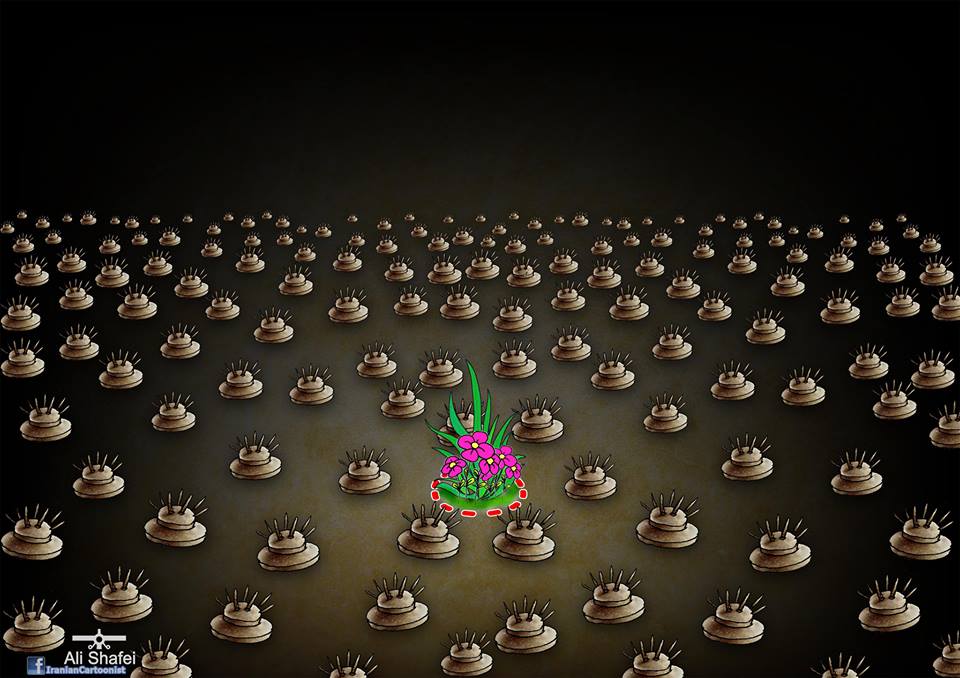
Alongside this topic, we should not forget one of the most important issues that may seem small on the surface, and that is the legacy of “mines” left over from the war, which continues to claim victims from both sides. These mines, these ever-vigilant soldiers, seem to have decided to pass on to a generation of young people who are filled with memories of war, who have spent their childhoods in shelters and dark undergrounds, writing their lessons under the light of a candle and learning the alphabet from television teachers, but have now returned to their normal lives; to remind us that the war is not yet over!

Almost every day, the residents of western borders of Iran are faced with the bitter reality that the possibility of an explosion from one of the leftover mines from the eight-year war and the rekindling of their wounds is still present. Those who have suffered the most physical and financial damage from the war are now witnessing the continued victimization of this ugly legacy of the war.

According to official government statistics, there are currently sixteen million unexploded mines in Iran, which have rendered over two million hectares of the country’s land unusable and dangerous. Due to the sporadic detonation of these mines throughout the day and night, an average of 2.2 people are killed or permanently disabled every day. According to a university study, over the past six years, an average of seven thousand mine explosions have occurred annually in various border areas of Iran, with 95% of the victims being civilians and between 13% to 25% being children. The majority of mine-affected areas are located in cities and villages in five provinces: Khuzestan, Ilam, West Azerbaijan, Kurdistan, and Kermanshah, which were the front lines of the war between 1959 and 1967.

112

In this regard, the existence of some contaminated lands from mines has caused agricultural lands and residential areas in Khorramshahr to still be in the grip of neutral mines, despite 22 years passing since the end of the war. This has made it impossible for some villagers in Khorramshahr to return home.

Mustafa Motavarzadeh, the representative of the people of Khorramshahr in the Islamic Consultative Assembly, said in an interview with Mehr News Agency that despite 22 years passing since the end of the eight-year imposed war, there are still 18 villages in this county that are uninhabited.

Mustafa Motavarzadeh stated: “Due to the numerous operations carried out by both sides during the eight years of imposed war, many minefields and military obstacles were created in the city of Khorramshahr. After the end of the war, extensive efforts were made by Iranian combatants to neutralize the remaining mines, but some areas of this city still face the danger of unexploded mines and remain a war zone.”

With a little attention, it can be seen that the unresolved problem of landmines has not only prevented certain areas of the country from living a normal and natural life, but also constantly poses the fear of unexploded landmines causing not only financial damage, but also potential loss of life.

Therefore, the more we pay attention, the more we realize that regardless of the original intentions of both sides involved, the war and political inclinations and perspectives of different factions and groups towards this war, and disregarding its right or wrong and hidden agendas and political constructions, and the equations of major countries and their role and impact in the war between Iran and Iraq, we understand that the effects of the eight-year war, both materially and spiritually, are much greater and more destructive than what we limit it to a few specific options and examine it within the framework of eight years.

Carton-Min

Sources:

1 – “The Victims of War and their Human Consequences,” Dr. Rahmat Sokhani, Imam Khomeini Educational and Medical Center website in Urmia, 7 Khordad 1388 (May 27, 2009).

2- The most desirable dates of the country in the hands of Min, Tabnak news website, 20 Shahrivar 1390.

Massacre 67: Why and How?

After a quarter of a century has passed since the massacre of thousands of prisoners (according to Hossein-Ali Montazeri’s memoirs) in the summer of 1367, today, based on the reports of witnesses and some officials of the Islamic Republic during that period, there is no doubt about this crime against humanity. The two questions that stand before us today are: why did the Islamic Republic hand over several thousand prisoners who posed no immediate threat to the survival of the regime to execution squads, and who were the individuals, with what kind of education and training, who had the capacity to carry out this crime?


Why?

The killing of thousands of prisoners who are serving their prison terms by the authorities of the Islamic Republic, under the pretext of the “Eternal Light” operation (Mersad), to ensure the survival of the regime and the assassination of officials by prisoners and prison organizations in connection with the Mujahedin-e Khalq in Iraq has been justified. However, in 1988 and after the killing of about eleven thousand opposition forces in the years 1980 to 1988, the Mujahedin-e Khalq or any other political group could not overthrow the regime through armed operations from within the prison. Therefore, other reasons must be sought for this massacre.

There are four possible reasons for this massacre from the perspective of the regime authorities that can be raised.

1- The concern of the leader of the Islamic Republic and his close associates about the fate of the Islamic Republic after him. Since 1986, the close associates of the leader of the Islamic Republic knew that he would soon pass away. Therefore, they tried to pave the way for a peaceful transfer of power to one of the members of his inner circle. In this regard, three key actions were considered:

A. Changing the constitution in a way that gives the country’s leader more power and reduces the role of the people and councils in it. The management of state radio and television was transferred from the council composed of representatives of the three branches of government to the leader, or the dissolution of the Supreme Judicial Council and the removal of the prime minister’s position was carried out for this purpose.

B. Removal of Montazeri from the representation of the Supreme Leader. Akbar Hashemi Rafsanjani, Seyyed Ali Khamenei, and Seyyed Ahmad Khomeini did not want power to be transferred outside of their circle. For this reason, they created political and judicial grounds for his dismissal. In the process, some of Montazeri’s close associates also became victims.

The opposition survivors inside the country, who were all in prison and could potentially cause trouble for the regime after their release during the next leader’s era and power transfer, had to be eliminated. That’s why a fatwa was issued by the leader of the Islamic Republic for the killing of those who were against his position. In these killings, the responsibility is usually placed on a three-person team for issuing and carrying out the sentence, while the political decision is made by the five-person circle of government managers during the illness of Mr. Khomeini (the five-person group of Khamenei, Rafsanjani, Mousavi Ardabili, Mir Hossein Mousavi, and Ahmad Khomeini).

2- Costly but permanent measures. Despite claims of tolerance by critics, dissidents, and opponents, the Islamic Republic has never had the capacity for such measures and, fundamentally, the legal and ideological perspective of Islamists has prevented the creation of such capacity. The authorities of the Islamic Republic (loyal to the rule of the jurist, as advocated by Mr. Khomeini) were aware from the 22nd of Bahman 1357 (February 11, 1979) that there was no place for liberals, nationalists, Marxists, and anti-jurist Muslims in the political society. It took about four years for them to be able to execute, confine to house arrest, imprison, or force into exile all active members of these groups. The confined (broken in prison and under torture) and exiles did not feel much danger, but political prisoners could always be released from prison and play a leadership role in times of crisis; a fact that the authorities

In this way, it can be said that the authorities were waiting for a day to release political prisoners. The massacre was a solution that came to the minds of security officials and, considering the background they saw in the leader of the Islamic Republic, they went to him and took the fatwa of murder from him. The operation of “Eternal Light” and the end of the war actually provided a suitable time to implement a decision that had been made beforehand.

The Islamic Republic’s authorities have also denied the existence of political prisoners in the years after 1967. Sometimes they have denied their existence altogether, and other times they have labeled them as “security prisoners.” The regime did not want and does not want to have political prisoners, even if hundreds and thousands of political activists are in prison. One of the suspended principles of the Constitution is the trial of political prisoners with a fair jury, which has never been implemented.

3- Decline of the Government’s Basij Power. In the final years of the war, the regime’s capacity to send forces to the front lines had greatly diminished and Basij members no longer had enough motivation to go to a war that had no chance of victory. The government was willing to take any action to boost the morale of its forces, from issuing a fatwa to kill Salman Rushdie for apostasy to massacring opponents in prisons – one for incitement and the other for displaying power.

4- The rise of protests by political prisoners in prison and their families outside of prison. In the years 65 to 67, political prisoners and their families were more active in fighting for their rights compared to previous years. This factor also added to the government’s exhaustion of political prisoners towards the end of the war. In regimes that constantly cover up the issue, killing political prisoners to get rid of them does not require much cunning or intelligence.

The executive factors of this crime are: students of the Shiite Islamic school of thought.

Put yourself in the place of Mr. Khomeini and the closest circle of politicians to him. When you decided to carry out such a massacre (after repeated back and forth between members of the circle, the country’s leader, and security and judicial authorities), how did you implement it and who besides the authorities were involved in the trial, massacre, and torture of opponents? The decision-making and execution process was not that Mr. Khomeini suddenly thought of it and then appointed people to do it; rather, the issue was formed from high-ranking political authorities, namely the closest circle to the leader of the Islamic Republic, then approved by him, and then transferred to lower levels of information, security, and judicial authorities for implementation.

The three-member committee appointed by the leader of the Islamic Republic to make decisions about executions were the same individuals who had spent a decade in the judiciary and prisons, engaged in suppressing and executing opponents. He could not trust anyone other than these individuals. Hossein-Ali Niri (the spiritual leader of Evin Prison), Morteza Eshraghi (the prosecutor of the Islamic Revolution in Tehran), and Mostafa Pourmohammadi (the deputy minister of intelligence) were all intelligence and judicial officials. These individuals were all followers of the school of Islamic fundamentalism of Ruhollah Khomeini (using Islam as an ideology to gain power), who prioritized gaining and maintaining power above all else. They were all around 28 to 32 years old in 1988, and the rewards they received from the government for issuing and carrying out death sentences for thousands of people later on, shows that ambition was one of their common traits.

Those who want to understand Shia Islamism (note that this school is different from Shia Islam as a religion, Shia Islamism is a political school) well, should not only rely on the texts of this school, which are the works of Morteza Motahhari, Ruhollah Khomeini, and Mohammad Taghi Mesbah Yazdi, but also look at the actions and behaviors of the devoted followers of this school based on those texts. The most serious followers of this school, who were educated in the Haqqani School in Qom and then became key members of security and judicial institutions (including Mostafa Pourmohammadi from the three-member execution committee), are those who, at any cost, defend the regime that was formed on this basis. The core of defending the ruling elite is made up of the security, military, and judicial institutions that are managed by these Haqqani School students and their supporters, such as Mesbah Yazdi.

The massacre of 67, like other cases of human rights violations by the authorities of the Islamic Republic, such as the massacre of protesters in the streets and alleys in 88, bombing at the shrine of the 8th Shia Imam, burning of the Rex Cinema in Abadan, mass killing of unarmed Mujahedin in Ashraf Camp, assassinations outside the country, bombing at the Jewish center, mass and individual executions after brief trials, serial killings of opponents and dissidents, three decades of massacres of Baha’is and Christian evangelicals, torture of political prisoners, stoning of women, and amputation of limbs and fingers of those who oppose the ideology of Islam, are all reasons why Islamists cannot disassociate themselves from these actions.

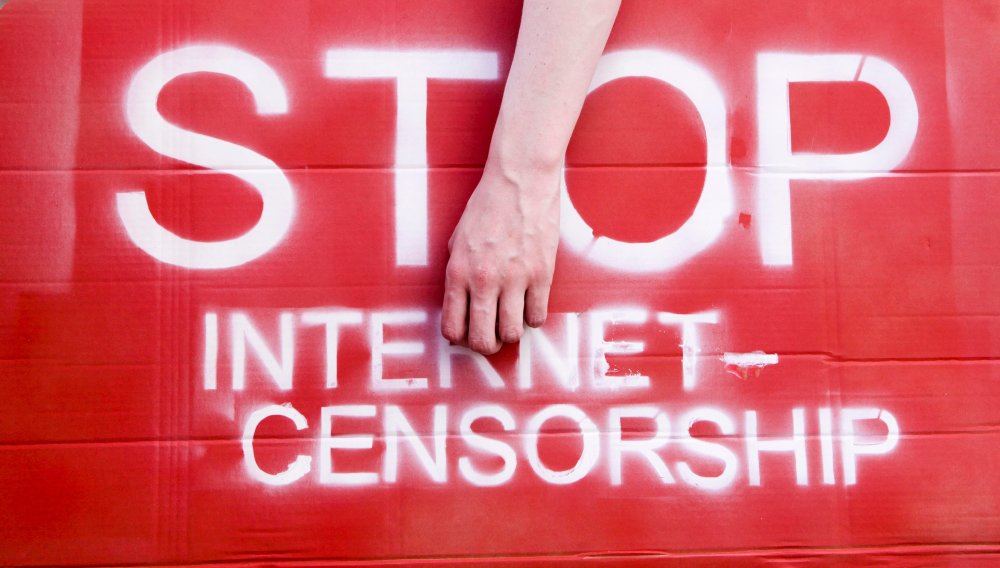
تInternet freedom and the right of the population.

“Collective Rights” is a topic that is often overlooked among Iranian intellectuals. Discussions about human rights usually focus on individual rights, and less attention is paid to collective rights. If we were to define “collective rights,” we could refer to the definition given by the Stanford Encyclopedia of Philosophy, which states: “Group rights concern the rights of groups as groups, rather than the rights of the individual members within them.” An example of this would be the “right of the people or nation to determine their own destiny,” which is not an individual right but rather a right of the “people” or “nation” as a group. One of the most important characteristics of group rights is the right to “exist” as a whole or as a part of a whole, which is assumed as a default in this text and attempts to briefly highlight the violation of collective rights in the realm of the internet in Iran.

The role of technology in advancing the human rights approach is significant and effective. With the increasing use of technology, many human rights defenders and organizations have been able to make a great transformation in achieving their vision and goals. In this regard, many organizations such as Google and New Tactics have been trying to promote the use of technology in regional or international organization programs through training courses and festivals. For example, in Egypt during the protests in Tahrir Square, a website was launched to register cases of sexual harassment and verbal abuse against women, in an effort to raise awareness among people. In India, a non-governmental organization has been registering the amount of bribes paid, in order to warn their country’s officials.

Net-ali-nikouei

In such countries, the government helps with the expansion of infrastructure; however, in Iran, the situation has taken a different turn and the Iranian government has become a major obstacle to the growth of organizations, especially in the virtual space. Unfortunately, during the events following the 2009 elections in Iran, a law was passed to address “cyber crimes”. This law has been so hastily and without expert consideration focused on cyber crimes that it can be said to have only addressed three areas: “insulting government officials or Muslim beliefs”, “propaganda against elections or their results”, and “pornography”. This law, for example, does not address cases such as electronic theft, hacking, and digital signatures, or they have been overlooked with generalization.

The point that this law creates an obstacle for the use of the internet by civil organizations is article 21, which states: “Service providers are required to, according to technical regulations and a designated list by the committee, determine instances of criminal content, including content resulting from cyber crimes and content used to commit cyber crimes; and filter them. If they intentionally refrain from filtering criminal content, they will be dissolved.” The group responsible for determining instances of criminal content in section (j) (content against public security and tranquility) refers to the criminal nature of internet groups and states: “Forming gatherings, groups, or organizations in the virtual space (cyberspace) with the purpose of disrupting the security of the country (article 498 of the Islamic Penal Code) [is a crime].” These restrictions are not limited to just this article, as articles 11, 16, 18, 22, 25, 32, 33, and sections 3, 5

But other limitations can be summarized in the following categories:

In the monopoly of the government, keeping the internet.

The government, with the implementation of the “National Internet” plan and spending over 1500 billion, is attempting to “purify” the internet space. If this plan is successful, public access to the internet will be eliminated. In addition, the government’s neglect of communication infrastructure and keeping internet speeds low has caused disruptions in the implementation of such plans. It is enough to mention this point that according to Article 46 of the Fifth Development Plan, it was expected that by the end of the period, Iran would rank second in the region in terms of “bandwidth per capita and other communication and information technology indicators”. However, in a recent report, Iran has one of the slowest internet speeds in the world.

Distorting the Persian web space.

In recent years, especially after the presidential election of 1388, the Iranian government has attempted to distort the Persian web by “producing fake content”, “arresting and threatening cyber and media activists and their families”, “blocking websites and critical online posts about the government”, “creating fake websites of personalities and media outlets such as BBC Persian”, “establishing an internet police and monitoring social media users”, and “officially supporting certain hacking groups” such as “Gerdab”, “Ashiyane”, “Cyber Army” or “organizing official hacking competitions” and “posting official job advertisements for hackers in the police and intelligence agencies”.

army-soldiers-laptop-370x229

It is enough to search for data about a name, such as “Taraneh Musavi”, in search engines to be faced with a huge amount of data that has been censored by state media. In addition, after Behrouz Kamalian (manager of Ashiyaneh hacking company) was placed on the European Union’s sanctions list, Iranian state TV praised his activities in a live program. Furthermore, in 2008, Iran blocked more than 5 million websites and according to Alexa rankings, the official filtering website is the 6th most visited website in Iran.

The issue of sanctions against Iran and its impact on internet freedom.

Unfortunately, the obstacles facing organizations in the virtual space are not limited to pressures and limitations within Iran. We must remember that sanctions on technology companies themselves are a major barrier to their cyber activities. Recently, Google and Apple have lifted some of their restrictions for Iranian users, but these restrictions are not limited to just these two technology giants. Unfortunately, the sanctions have also affected smaller companies in this field, such as Samsung, which in April 2013 prevented Iranians from purchasing their programs from their online store.

The explanation of why and how sanctions have affected internet freedom cannot be contained in this article, but we will try to demonstrate the impact of sanctions by providing examples in two areas: services and communication equipment.

The severity of these sanctions was to the extent that amidst the protests of the Green Movement – a movement that became famous for the Twitter Revolution – internet service companies such as Facebook and Twitter, under the law of “Trading with the Enemy Act,” suspended the accounts of Iranian users. If it weren’t for Obama’s order to revoke this directive, Twitter may have never received over 400,000 tweets per minute about Iran; an event that astonished Twitter executives. These were the events that Eric Schmidt (former CEO and Chairman of Google) spoke about in February 2012, in response to the limitations on services for Iranians: “Although I am with you, these restrictions are determined by the US government and we have no role in this decision-making.”

Postscript:

Recently, the Volunteer Activists Institute has published a report titled “International Campaign for the Freedom of Associations”, which serves as a window into this report and takes a look at this issue with the approach of existing restrictions for Iranian associations in the realm of the internet.

For studying the “Computer Crimes Law” and “Examples of Criminal Content”, please refer to the website of “Working Group for Determining Criminal Content”.

Part of the “Iran Sanctions Regulations” states: Export, re-export by a third party, sale, direct or indirect supply from the United States or by individuals with American nationality to Iran or the government of Iran is prohibited unless there is an exceptional law for it. This law also prohibits non-American companies from exporting products that are entirely or partially produced in the United States to Iran. President Obama’s executive order, which later became an amendment to this law, states: “Export of services and software related to personal communication through the internet, including web browsing, web hosting, email, instant messaging and chat, social networks, and sharing of videos and photos from the United States or American individuals to individuals residing in Iran is allowed.”

History of International Sanctions against Iran

Economic sanctions between nations are imposed based on the seventh chapter of the United Nations Charter by the United Nations Security Council.

According to the seventh chapter of the United Nations Charter, the Security Council has significant and broad powers to evaluate decisions made in situations of “threat to international peace, breach of peace, or acts of aggression” at a global level.

After accurately stating the legal status of a situation and accepting it as a threat to peace or a violation of peace or an aggressive act, the Security Council first takes temporary measures (non-military decisions) to prevent the situation from becoming more complicated. Then, if necessary, it can consider penalties such as complete or partial cessation of economic relations, ground, air, sea, postal, telegraphic, wireless, and other means of communication, as well as severing diplomatic relations, and all member states are obligated to implement them.

Gas flares from an oil production platform are seen at the Soroush oil fields.

The first experience of sanctions against Iran by Western countries, specifically America, dates back to before the revolution and the first term of Prime Minister Dr. Mossadegh. At that time, the countries of America and England, in response to the nationalization of the oil industry, refrained from buying Iranian oil and the United Nations Security Council issued a resolution against Iran.

The sanctions of America and the international community continued after the 1357 Iranian Revolution for various reasons, and although it was accompanied by many ups and downs, it ultimately led to the referral of Iran’s nuclear case to the United Nations Security Council.

The closure of the American embassy in Iran in the first months after the revolution led to the severing of diplomatic relations between the two countries and the beginning of US sanctions against Iran. The US also blocked Iranian assets worth $12 billion, including gold, bank deposits, and other properties. US officials claim that most of these assets were released in exchange for the release of American hostages, but according to Iranian officials, assets worth $10 billion are still blocked. Although American officials mention a much lower value for the blocked Iranian assets.

We can see the history, reasons, and scope of the most important sanctions imposed against the Islamic Republic after the 1357 Revolution in the table below:

Date.

Reasons for imposing sanctions.

The scope of sanctions.

1981-1979.

1981-1979.

The hostage crisis and occupation of the American embassy in Tehran.

Freezing all of Iran’s assets in America and failure to deliver purchased equipment from America.

1983-1987.

The explosion at the American military base in Beirut and the Islamic Republic being accused of supporting international terrorism.

Prohibition of granting loans and facilities to Iran, prohibition of issuing spare parts and equipment to Iran, sanctions on the import of Iranian oil from America.

1991-1989.
1991-1989.

Iran’s accusation of attempting to obtain and acquire chemical and biological weapons.

Sanctions on the export of materials and equipment related to chemical and biological weapons.

October 1992.

Iran’s access to advanced military weapon technology.

Sanctions on the export of dual-use goods to Iran, cancellation of the Congo contract.

May 1993.

The threat to America’s interests in the Persian Gulf by the Islamic Republic.

The Dual Containment Strategy of Iran and Iraq.

May 1995.

Iran’s interference against establishing peace in the Middle East, support for terrorism, and efforts to acquire weapons of mass destruction.

Comprehensive sanctions are imposed in all areas of trade and investment.

August 1996.

Support and financial backing for terrorism, European companies investing in Iran.

Approval of the ILA Law: Prohibition of investment of more than 40 million dollars in the oil and gas industries of Iran by all countries and companies.

2002-2001. (This is a date range, so it does not have a direct translation. It could mean “from 2002 to 2001” or “2002-2001” in English.)

The accusation against Iran is based on sheltering terrorists, coming to fruition with the emergence of Bush.

Extension of the ELSA law, introducing Iran as the axis of evil.

2006-2005. (This is a date range, so it does not have a direct translation. It could mean “from 2006 to 2005” or “2006 and 2005” depending on the context.)

Iran’s efforts to acquire nuclear weapons.

The decision to refer Iran’s nuclear report to the Security Council will be made at the 1+5 group meeting in London.

September 2006.

Support for Hezbollah in Lebanon and terrorism.

Sanctions on Export Bank.

January 2007.

Financial support for the production of weapons of mass slaughter.

Sanction on Sepah Bank of Iran.

June 2007.

The pursuit of obtaining weapons of mass destruction.

Sanctions against 27 individuals and organizations from Iran.

October 2007.

Supporting terrorism.

Sanctions on the Quds Force and the National Bank of Iran.

September 2008.

Nuclear program monitoring.

Sanctions on trading with Iranian shipping and airlines.

October 2008.

Tracking Iran’s nuclear and military program.

The European Union has imposed sanctions on Iran’s Export Development Bank.

September 2010.

Violation of human rights by the Iranian government.

Restrictions on the Revolutionary Guards, freezing of assets and interests of sanctioned individuals, prohibition of financial transactions and issuance of visas for individuals.

2011.

Iran’s insistence on pursuing its nuclear program.

Sanctions on the Central Bank of Iran and all its monetary and financial activities.

December 2011.

Iran’s insistence on pursuing its nuclear program.

Sanction of 180 individuals and Iranian companies by the European Union.

s2.reutersmedia.net

In addition to the cases mentioned in the above table, in January 2012, after the sanctions on the Central Bank of Iran, the oil sanctions on Iran were also put on the agenda of Western countries, both directly and indirectly; the direct method being the sanction on purchasing oil and the sanction on buyers, and the indirect methods including insurance sanctions on oil tankers and banking sanctions. With the implementation of oil sanctions on Iran, importing countries gradually reduced their oil imports from Iran and in some cases replaced it with other producers.

In March 2012, Swift company also terminated all its collaborations with Iranian parties and banks, while about ninety percent of Iran’s foreign trade was being conducted through Swift. The impact of the oil sanctions on Iran was such that in addition to reducing the production and sale of oil in August 2013, it was announced that Iran would not have access to half of its oil sales revenue.

Sanctions against Iran continue, both by the international community and by the United States and the European Union. In the latest development in August 2013, just two days after the start of sanctions on Iran’s shipping industry, the Foreign Affairs Committee of the US House of Representatives sent a letter to President Obama, requesting further sanctions against Iran.

Human rights in Iran should be the top priority.

Rey-TakiyeHassan Rouhani, the new President of Iran, has claimed that he is not only seeking more transparency about the country’s nuclear activities, but also has a focus on civil rights. Meanwhile, Washington is once again seeking to establish a relationship with Iran. The important question here is: what role will the US Congress play?

In recent years, the US Congress has focused heavily on sanctions, actions that have targeted Iran’s economy, but it is time for Congress to elevate its policy by establishing a “Committee on Human Rights in Iran” and paying more attention to human rights violations in the country.

Congress must be smart and use the experiences of the Cold War, such as the experience of the Helsinki Commission. This was an action that helped empower dissidents in the Soviet Union bloc. The Committee on Human Rights in Iran must put pressure on the Iranian government to improve the human rights situation by clearly defining red lines.

The religious government of Iran not only violates international human rights standards through torture, arbitrarycongress

With continued alarming disregard for human rights in Iran, Western diplomats convey the belief that as long as they fulfill their commitments regarding arms control, it is acceptable for them to also violate some international norms.

If Iranian religious leaders believe that a subjective interpretation of international laws is acceptable, they will believe they can also violate their commitments to arms control when they are in a bind.

Sanctions and economic pressures may force Iran to sign nuclear agreements, but it gives their leaders the mindset that after being released from the burden of economic problems, they can still resort to violence and violate the rights of the people.

Furthermore, Western diplomats who have refrained from addressing human rights issues create ambiguity in the minds of Iranians, suggesting that international treaties are just a list of options that can be accepted or rejected based on individual preferences.

Rouhani undoubtedly faces many challenges, and adopting a different policy on the nuclear issue is just one of them. Congress can take another important step by putting pressure on human rights issues, so that

The wound of sanctions on the bodies of suffering patients.

In the past year, the decrease in production and import of medicine in Iran has reached a concerning stage; to the extent that, according to official statements from members of the Pharmaceutical Importers Union, there is a shortage of over 100 types of medicine in the country.

According to experts in this field, the drug situation in Iran is in turmoil and is affected by international sanctions and, of course, the ineffective economic policies of the tenth government, leading to an economic crisis within the country.

In addition to its military and nuclear dimensions, the economic sanctions on Iran have had a severe impact on the country’s economy. Indirectly, they have also affected the pharmaceutical and medical sector, causing serious problems for the health of patients in the country, especially those suffering from specific diseases such as cancer, as they have limited access to necessary treatments and have even resulted in the death of some patients.

Despite being repeatedly stated by Western countries that “medicine is not on the sanctions list”, the tools and instruments of the pharmaceutical industry have been subject to sanctions for purchasing raw materials and importing medicine from foreign countries.

The European Union and America have imposed strict sanctions on Iran’s banking system, financial transactions, and oil sales, which make up a large portion of the country’s exports. This has caused significant obstacles for importers of medicine and food due to difficulties in banking and transportation.

According to the claims of the authorities of the Ministry of Health of the Islamic Republic, currently 96% of the drugs consumed by the people are domestically produced. However, since only about 40% of the raw materials for these drugs are currently produced within the country, drug manufacturers are facing difficulties in importing the necessary raw materials from abroad.

Drug importers say that despite using more expensive financial methods such as changing (bank account) from a European bank to another bank, or resorting to intermediaries and unofficial transactions, drug shipments are not timely or sufficiently imported into Iran.

Siamak Afazeli, the manager of “Sahay Halal Red Crescent” pharmaceutical company, says in an interview with Fars News Agency: “It is true that they have not sanctioned the medicine, but we are dependent on oil, so we have to pay in dollars and get the raw materials for medicine. On the other hand, money transfer is expensive and it causes the cost of raw materials to become expensive, which ultimately leads to the company either suffering losses or increasing the price, both of which are harmful to the patient who needs to take the medicine.”

The newspaper “The Guardian” also writes about the relationship between Western sanctions and the drug crisis in Iran, stating that “Iran has been deprived of vital medicines due to the sanctions imposed by the United States and other Western countries. According to the publication, the volume of delivery of drugs to fight cancer and hemophilia – diseases affecting hundreds of thousands of Iranians – has significantly decreased.”

The CEO of “Darou Pakhsh” company, the largest pharmaceutical company in Iran, has also said in an interview with The Guardian: “Sometimes companies agree to sell us drugs, but we are deprived of the possibility of paying them. There was a time when our money was stuck in the bank for four months and during that time, our requests to transfer the money were rejected multiple times.”

Reuters news agency also reported on this issue in an article titled “Import Problem: From Children’s Clothing to Medicine,” addressing the problem of financial transfers and settlement of imported goods by Iranian merchants. The report mentioned items that, despite receiving permission from the US Treasury Department for export to Iran, face difficulties in sales due to banking sanctions, particularly in the case of health and pharmaceutical products.

The problem of drug shortage in Iran has become so critical that on October 5, 2012, Ban Ki-moon, the Secretary-General of the United Nations, also reacted to it and said: “The sanctions imposed against the Islamic Republic of Iran have had significant effects and consequences on the people of Iran, leading to an increase in the prices of consumer goods and energy expenses, a rise in unemployment rates, and a shortage of essential items such as medicine.”

According to Ban Ki-moon, “Even companies that have obtained the necessary license for exporting food and medicine to Iran are facing difficulties in finding intermediary banks for financial transactions. As a result, medicines for treating rare diseases, including cancer, heart and respiratory illnesses, have become scarce.”

As the Secretary-General of the United Nations has pointed out, the shortage of medicines for diseases such as cancer, asthma, and thalassemia, which are referred to as specific diseases, has greatly concerned the situation of these patients and put their lives at risk.

According to the statistics presented in Iran, the number of cancer patients reaches approximately 200,000 per year.

The important point is that many years before the start of Western economic sanctions against Iran, cancer patients in Iran were struggling with many difficulties and hardships, and now with the intensification of sanctions and the resulting economic crisis, there is increasing pressure on the families of these patients and their lives are in serious danger.

Majid Arasteh, the head of the Iranian Thalassemia Society, also said in an interview with Tehran Today newspaper that the impact of sanctions on medicine is inhumane. He stated, “All international communities know that sanctions should not include medicine and food, but when they sanction the currency supplier bank, how can we import medicine?”

Of course, this is not the only issue that has become a concern for the families of special patients, but also the strict and rigorous sanctions on the import of radiology and chemotherapy equipment, which include nuclear technology, have become another problem in the way of treating these patients.

It is very clear that individuals who are diagnosed with cancer must have a good mental state and proper nutrition in order for their chemotherapy to be effective, but in Iran, the cost of treatment is so high and obtaining medication is so difficult that some patients or their families use most of their energy to gather money for their next rounds of chemotherapy.

Alongside the difficulties of obtaining medication for special patients, the situation of sick children has also reached a critical point.

A while ago, following the death of a child with hemophilia in Dezful city due to lack of access to necessary medication, the board of directors of the Iranian Hemophilia Society sent an open letter to the President of the World Federation of Hemophilia and the Director-General of the World Health Organization, warning about the dangers of economic sanctions on Iran and their impact on the health of hemophilia patients and children.

Reuters news agency wrote in their report in April 91 that American companies, from the giant pharmaceutical company “Merck & Co.” to small baby diaper manufacturers, have faced difficulties in receiving their debts from Iranian merchants for the sale of medical items and other essential human-friendly goods.

On the other hand, reports also indicate the scarcity of dry milk for infants in the Iranian market. The shortage of dry milk has caused problems for infants, especially those with diseases such as diarrhea, leading to hospitalization in some cases. This is because if these children consume any food other than dry milk, they will experience diarrhea and vomiting.

All of this is happening while political authorities in Iran and the West are still engaged in unknown diplomatic negotiations and maneuvers, and the Iranian government has not yet untangled the knot of the nuclear dispute with the West during recent months. Patients and their families, who are currently enduring pain and suffering, are still waiting for the resolution of this dispute and the resolution of the problems caused by it.

Has the time come to put an end to the glorification of war in literature?

With the beginning of the eight-year war between Iraq and Iran, government and non-government writers tried to open a field in literature that, although had a history and tradition in many countries, was considered insignificant and weak in our narrative literature. This branch of literature, although small and weak, also became trapped in numerous cognitive problems. Since the war was still ongoing, authorities tried to use literature as a tool to incite and provoke popular resistance against the enemy. Therefore, the emergence of slogan-based, government-sponsored and commissioned literature in that critical period is understandable and even justifiable. The formal and content-related damage of this branch of literature is a detailed topic that cannot be addressed here, but it should be noted that in such literature, due to fear of the enemy’s exploitation, nothing is said about how war destroys the world of children and if they survive its deadly disasters, how their minds and souls may remain poisoned until the end of their lives. Similarly, we do not find much about the suffering

This is how the term “anti-war” became a label for discrediting and suppressing any call for peace and any critical view of the phenomenon of war; and we said that although this approach was understandable during times of war, it was expected that with the end of war and the removal of the war atmosphere and conditions, we could look at other aspects of war, such as the lost childhoods, the lost beloved women, the mothers and fathers who lost their children, and so on. But unfortunately, on the same path, the proponents of war continued to spin different narratives with the heavy weapon of being “anti-war”. The best works of our war literature, from “Burnt Land” by Ahmad Mahmoud to “I Am the Killer of Your Son” by Ahmad Dehqan, from “Suddenly a Flood” by Sahabi to “The Night of the Bat” by Mojabi, and from “Mahagh” by Kooshan to “Scorpion on the Stairs of

Therefore, I believe the time has come for us to redefine our definitions of these words and free ourselves from the burden of political and ideological labels after the passing of these not-so-short years since the end of the war. We must ask, what is war literature and what is anti-war literature?

War literature refers to literature that describes and depicts the phenomenon of war and its indirect effects on societies and humans – such as the conditions behind the front lines, the impact of war on the environment and civilians, and the consequences of war such as famine, poverty, unemployment, etc. Based on this definition, a work may be considered part of war literature without directly portraying the front lines, soldiers, guns, and cannons.

Jang-adabiyat

But anti-war literature is essentially a type of literature that emphasizes the negative aspects of war and expresses hatred towards it, in addition to advocating for peace. However, these definitions are not necessarily accurate, as what we call war literature is not always war-mongering, and in many cases, literature about war is considered as a form of defense and resistance against invasion and aggression.

The truth is that whether we like it or not, we are faced with a type of conflict. Whether knowingly or unknowingly, we also include anti-war literature under the title of war literature. Therefore, there is no solution other than to consider any work that has a connection to the subject of war – whether they view it positively or negatively – as part of war literature. But then we are forced to also branch out for this title, and categorize different works.

In this categorization, we can list different titles such as: anti-war literature (usually for invading countries but defeated like Germany in both World Wars), resistance literature (for victim and occupied countries like France in World War II), patriotic literature (for invaded countries but ultimately victorious like the Soviet Union), front literature (which describes the front line of battle between two opposing forces), home front literature (which focuses on the impact of war on non-military spaces), captivity literature (which describes the experiences of war prisoners), escape literature (which tells the stories of war escapees), exile literature (which includes the experiences of refugees caused by war), and civil war literature (which mainly involves groups within a country in conflict with each other instead of an external enemy).

This list can continue with other titles, but the truth is that all of these lists are practically known under the literature of war.

But another joke is that we in Iran often use two titles to refer to war literature: literature of the Sacred Defense and literature of sustainability. The truth is that among these two, I personally prefer the title of sustainability. One of the reasons for this preference is that the word sustainability or defense, whether we like it or not, also carries a positive connotation. Another reason is that when we use the title “literature of the Sacred Defense”, even if our intention is to refer to defense, we have exempted and prohibited it from any criticism and evaluation. Are we not allowed to criticize a literary work that praises our defense against enemy invasion? And if we are allowed, why do we insist on calling this literature sacred? Another point is, is sanctity only exclusive to us? Can’t the partisans of Yugoslavia or the victims of Nazi crematoriums be as honorable and noble as our martyrs? Will our sanctimoniousness prevent any criticism and evaluation in a biased and dog

In my opinion, despite exceptions and inaccuracies in this statement, let us accept that any preferred defense and any war-mongering is condemnable. And if there is any value in judgment, let us be careful not to call warmongers defenders of stability, nor portray those who oppose violence and bloodshed as against defense and stability in the path of freedom.

Politics 2

One.

We have a group of conspirators who are plotting to support the wearing of girls’ clothing.

Deception.

Behind the scenes of Obama and Netanyahu, the curtain has been lifted on “Conquering Tehran”.

Translation: Urdu language.

The donations from the Zionist lobby are eye-catching and then they go on to influence.

Naeema.

Taheri’s result of the revolution, which his picture was in the ceremony of awarding a video app for Canadian dining, among millions of participants, was by his mother.

Naima.

Ashrafi Photoshop was. Apparently, Naeema’s tight pants and mesh sleeves were not suitable for the result of the 1957 revolution, which was published in a black tableau by the grandson of the revolution and was completely removed after the protest of the people. The informed ones speculate that the photo was of the probable name of the Imam.

Naeemoo.

Naeemoo.٬

“Personnel 4×6 should be published.”

Two.

Oh my! This Mr. Zarif is so charming! He’s also very diplomatic.

“Kitchen”

They go to his official Facebook page and leave comments, likes, and such, so that it almost becomes suspicious that they are supposed to do something, for example, not everything is from him.

Up.

They’re giving me a hard time, this servant of God comes and likes the comments, even replies and makes people laugh. They’re active on my Twitter and that’s how we found out that 6 million Jews didn’t just disappear and there was only one person in Iran who denied the Holocaust. But people are still in denial.

Deception.

They broke their promise and went to the website, but it has been filtered. They keep checking their demands.

Three.

No way! Everyone is quiet! Don’t say anything at all! What does it mean? You chose the president, you made a fuss, even if…

Stubborn.

“And you were an atheist, as Mr. said, you’re speechless! They have appointed Pourmohammadi as the Minister of Justice. You don’t understand anymore. It’s all politics. Even the executions of 1967, which happened to be its 25th anniversary a few days ago, the gentlemen are still afraid that a commemoration ceremony will be held for it, that too was political. This Pourmohammadi has been all about politics this whole time.”

Deception.

He was executing the people on the surface, but deep down he was moderate. He might even become a reformist one day. Have you seen the devil? If you look closely, even execution is a form of reform. Hashemi, who was the prime minister yesterday, is now the savior of the nation; and in the next 8 years, perhaps he will become a candidate for reform between bad and worse, in the name of the five Larijans.

Translation: Urdu-speaking.

“Don’t do it, the first hundred years are on top, then it falls under the roller.”

Four.

Hossein Ronaghi, who sometimes we think is like that liquid metal man in Terminator, never gives up, even when he was on a hunger strike in prison. There was also an Iranian person in front of the embassy in Vienna who had put up a placard and a picture of Ronaghi on the ground as a symbol.

Deception.

“And empathy and support. The Iranian embassy official angrily took one of these placards and handed it over to the news unit 20 and 30 to create an anti-enemy scenario. He probably didn’t think that in other places with Iran, the police are ultimately just bicycles and when a crime occurs, they are like a hammer stuck in the ground, it makes a difference. But the boy…”

Urdokush.

The officers were told that they have stolen my placard and they must return it! Now they only know how to say this one sentence in English! In short, the embassy is a big liar, they couldn’t take the land and gas, so the police, Steven Segal style, did something to make himself put the placard back in its place. And that’s what happened.

Freedom.

How are you?

Funeral processions

javid_tahmassebi

Javid Tahmasbi, born in 1345 in Tehran, was arrested on November 24, 1360 at the age of 15 while he was a student, on charges of supporting the Mujahedin-e Khalq organization.

In continuation of our monthly face-to-face conversations with victims of torture in prisons, we have gone to visit someone who, despite being young, has spent around 5 years in prison.

Mr. Tahmasebi believes that the psychological and emotional effects of prison, after a period of imprisonment and the restrictions that are imposed on prisoners in society, make the individual’s situation much more difficult than during their time in prison.

He, referring to the fact that he was arrested twice but was released after about 10 days on the first occasion (in August 1981) in a house belonging to a committee with no name or address, talks about his second arrest: “My second arrest, which happened three months after the first one, took place in November 1981. The officers who came to arrest me (around 2-3 am) were very hostile; after entering the house, I escaped through a window, but they shot at me. I was shocked and even thought one of the two bullets hit me! Anyway, a few of them caught me and forced me to the ground, hitting me with batons and searching my whole body. They dragged me inside the house. During this time, they had already ransacked the house and confiscated some books, tapes, and other items. They took me in the same clothes I was wearing at home, blindfolded me, and before leaving,

Mr. Tahmasebi describes the days he was waiting for interrogation as follows: “We were in the prison yard for several days. Then we were transferred to the interrogation hall. I waited for two days to be interrogated. They blindfolded me and tied my hands and feet to the other prisoners. That means all the people in this hall were chained together. In the hallway of Branch 7 – where the Mujahideen were interrogated at the time and the most terrifying and ruthless interrogators of Evin were in this branch – we could hear the screams, lashes, and beatings of the prisoners. I even saw the scene of blood flowing under the blindfold several times. According to some accounts, the interrogators used recorded tapes of constant cries and screams to torture us. Their goal was to break our spirits. We were not allowed to speak to each other at all, and even the slightest word would result in severe beatings from the guards. Only during meal

He adds about the interrogation process: “My interrogations were not very long and complicated because we had already been exposed and later I realized that they knew everything about me. The duration of my interrogation was once for 2 hours. They put a sheet of questions in front of me and for example asked if I had participated in the June 30th demonstrations with the Mujahideen or Amjadiyeh, to which I gave a positive answer. Regarding June 30th, they accused me of stabbing one of the guards with a knife, and this led to me being severely beaten for about 2 hours, but since I hadn’t killed anyone, I didn’t accept such an accusation. In any case, even the words of the person who had exposed me were confirmed and this led them to stop beating me… On the second day of interrogation, the interrogator hit me hard on the head and my whole face was covered in blood. Then, perhaps out of fear or compassion,

This former political prisoner says that after severe bleeding from his nose, his interrogations stopped and he was kept in the prison yard for a few days. “After two days of interrogation and three days of being kept in the prison yard with all kinds of threats, like killing us as hypocrites, no one has ever left this place alive, or being beaten like Putin, we were transferred to another open space and there they said to close your eyes. After opening our eyes, we saw the horrifying scene of several people hanging from a tree with their tongues hanging out. According to them, those people were the perpetrators of the martyr’s assassination, members of the Islamic Republic Party… In the evening of that day, we were taken to Evin Prison as a caravan, in a closed line. Our transfer to Evin Prison was without any court order, and no one had any idea about their fate the next day. It was there that this large number of people were divided and the women went to

We slept in shifts and our time for going to the bathroom and showering was limited. When our time was up, they would bang on the toilet curtain (there were no toilets, just a military blanket hanging in front of it) and forcefully pull us out no matter what state we were in. There were several old men in our room who couldn’t hold their urine, but the guards wouldn’t open the door for them. Later, the children prepared some containers for them to urinate in right there.

He continues: “Our room was close to a courtyard where executions were carried out, and every night – usually from 6-7 pm when the executions began – until morning, we could hear the sound of the executions, the verdicts being read for them, and the arrows and bullets that took about 45 minutes to finish. We even heard the sound of prisoners’ last wills being taken to the room before their execution, where they were asked to write their wills and recite Surah Al-Asr for them. After the wills, someone would always say loudly: “Line up, ready, fire!” and then a long burst of gunfire would follow.

Prisoners were calling out from inside the cells, either in groups or individually; now it depended on the events outside and for the sake of compensating for every assassination or protest, they would kill several times more. Of course, after the years 1982-1983 when the number of executions had decreased, they would only execute on Wednesday afternoons, but in the first year, it was every night… This issue still affects me and bothers me, the sound of explosions that comes, I jump out of my place.”

I ask Mr. Tahmasebi about the different execution methods and their reasons: “The hanging method was mostly used in the 67 massacres. In our time, they mostly hanged those who had committed serious crimes; for example, members of the Mujahedin organization or Fedayeen, or those who had been arrested in a special operation and had confessed to their own crimes. The rest of the people who were executed by firing squad were those who had been arrested in protests such as the 30th of Khordad and their execution sentence was approved in a few minutes in court. Usually, the religious judge of these people was from Gilan and would ask if they accepted the Mujahedin organization or not…”

I asked Javid Tahmasebi, who was only 15 years old at the time of his arrest, about his separation from his peers and age-mates in prison: “I was with older inmates for about 5 months. After that, we were transferred to the juvenile section. They used us, who were younger, for propaganda. Laajvardi was leading this idea and after preparing special clothes, they would take us out of prison for Friday prayers and to visit the martyrs’ cemetery, etc. They also used me several times for these excuses to take me out of prison, and it was not voluntary. They also used younger inmates for farming and cleaning the prison environment, and in return, they gave us warm food. Well, since I went there, they didn’t give warm food to anyone under the excuse of kitchen repairs, and the meals were things like bread, cheese, and cucumber yogurt. That’s why getting warm food created the necessary motivation to do such

This political prisoner from the 1960s continues: “They used young individuals for executions or for collecting and transporting corpses. This was the worst form of torture. Fortunately, they never chose me for execution, but I was often chosen for collecting bodies. The individuals who were taken to execute others would return with severe depression and mental pressures…”

I ask him to explain a little more about the collection of bodies: “You see, they usually didn’t touch the bodies of those who were executed. Well, we considered them impure according to their beliefs. We had to wait a few days after they were killed (this interval was for the blood to drain out of the bodies so that it wouldn’t spill out of the trucks during transportation), and then we would put them in compressed trucks.

There were several bodies there. Some belonged to executed individuals and some belonged to people who had been killed in various operations. Well, whoever they captured, they used different methods to create fear and terror; they would show the confessions of some ordinary people through radio and television, and they would also show us prisoners the bodies. The first bodies they brought out were for the 19th of Bahman in 1360 (February 8, 1982) when leaders of the Mujahideen such as Musa Khiabani and Ashraf Rabiei were there. They had brought about 34-35 bodies. I remember at that time the weather was very cold and they had placed the bodies in front of the kitchen and, in addition to filming, they brought groups of prisoners to see these bodies. They did this under the pretext of identifying the bodies, but it was just an excuse; because I saw with my own eyes that they had put a sign around Musa

“The painful issue that I myself did not witness, but other prisoners would talk about, was that during the transportation of bodies after a mass execution, it was possible for one or two bodies to move, and according to Islamic law, these individuals would be considered alive after the execution. However, there were people who would come and shoot the same half-dead body again, killing the person.”

He recalls: “Another form of torture that happened to me as well was artificial execution. They took me to the execution room and from there to the execution squad, and after they put the gun to my head, someone came and said that these are not for the condemned ones! In fact, they had started a fake execution. This is the most inhumane act towards our fellow citizens… If I want to summarize, I have to say that the security system of the Islamic Republic is very complex and with the use of psychology, they know how to break prisoners and it’s not just physical torture.”

Javid Tahmasbi talks about the way his court was held: “I can say that my court was very comical. There was no sign of a defense lawyer or a fair jury, and the interrogator’s report was mostly the judge’s guide for action. The main judge was Mohammad Gilani, and later a young judge named Neiri came, who later became the main judge in Evin, and most of the executions of ’67 were carried out through him. My judge was also Neiri.”

After a year and a half, one day without any notice of a court hearing, I was called and taken blindfolded to the courthouse. The whole trial lasted 5 minutes and there was no understanding of the charges. Almost 3 months later, a guard came to me with a paper and told me to sign it, and that’s when I saw my prison sentence. Despite it being a prison sentence, I was actually happy because I knew I wouldn’t be among the executed and I would stay alive. However, later on, under these same sentences, some of the convicts were executed while others were sentenced to imprisonment. My sentence was 4 years, but they had counted my time in prison from the day of my trial, not from the day of my arrest.

He talks about his time and how he was freed: “I was finally released in late 1364 (1985). I had to have a government employee vouch for me and also provide a document as collateral. I should also mention that government employees were usually banned from leaving the country and the documents were kept with the prosecutor.”

I wanted to mention something about the prisoners who were being released. After being released from prison, their behavior in society was more terrifying than in prison. For me, there were many times when I wished I had been executed. I was not allowed to study for two years, and even after that, I had to struggle to obtain a letter from the prosecutor’s office and get my high school diploma from a night school. When I was accepted into university, I was disqualified and not allowed to continue my education. I was deprived of all job opportunities in life. I was not allowed to leave the country. We were even not allowed to serve in the military and were given a military service ban, which meant being deprived of all government jobs. We had to have a bad record for everything. In fact, even smugglers in Iran had a better reputation than us.

Javid Tahmasbi, who has been living in Switzerland for years, said at the end: “Unfortunately, these events that happened years ago still haunt my body and soul, and even after many years, I still see the nightmare of prison. I am currently not affiliated with any group, but I collaborate with anyone or any organization that investigates human rights issues in Iran, in the hope that by exposing the atrocities that have happened to me, at least in the future, they will not happen again for me or others of my generation.”