


Civil society

Hossein Simaie is a money changer and a student of “Bistareh”/ Hermoz Sharifian.
One of the darkest aspects of the performance and history of the Islamic Republic of Iran’s government is the denial of the right to education for critical students and the expulsion and suspension of university professors who act critically towards the government’s policies. In such circumstances, not only the future and life of a student […]...
Read More Created By:
Hormoz Sharifian
Created By:
Hormoz Sharifian September 22, 2024
A Look at the Path of the Iranian Student Movement from 1378 to 1401 / Ali Taghipour
The Iranian student movement has played a central role in the social, political, and cultural transformations of the country from the late 1970s to 2022. After the suppression of leftist, nationalist, and religious forces in the early years of the revolution, the student movement emerged as a critical and independent force. Universities became a platform […]...
Read More
Created By:
Ali Taghipour September 22, 2024
How can music create active citizens? / Sara Nadafian
Songs for solidarity. Can music play a role in creating cohesion in societies and strengthening civil society? This is a question that some “community-based institutions” are trying to create experiences for through music education. One example of these institutions is the “Community Music Works” (CMW) located in Providence, Rhode Island in the United States. This […]...
Read More
Created By:
Sara Nadafian July 22, 2024
The Iranian civil society continues to support women’s rights / Hermoz Sharifian
In the past, I had trouble with the phrase “women’s rights” and would ask myself: Can “rights” have a gender? With a belief in “human rights”, women’s rights should also be seen within the same concept and respected. But in a meeting with lawyers, especially experts in “fundamental rights”, I learned that women, and at […]...
Read More
Created By:
Hormoz Sharifian May 21, 2024
Relentless suppression of Bahai’s/ The love of perfection
When I was reading the novel “Thursday Train” (1) by Anisa Dehghani, I came across a strange question: “It is possible to endure pain that is unique to you, but how can you endure pain that you must share with someone else?” “Thursday Train” delves into the lives of Iranians in the years after the […]...
Read More
Created By:
Mehrak Kamali December 22, 2023
Why can’t they hear our voice? / Majid Shia Ali
In recent years, what has separated our society from serious governance and has led to widespread despair from any political action, is the lack of response from the government to the demands of the majority of our society. During these years, these demands have been expressed in various ways, such as through participation in election […]...
Read More
Created By:
Majid Shia’ali September 23, 2023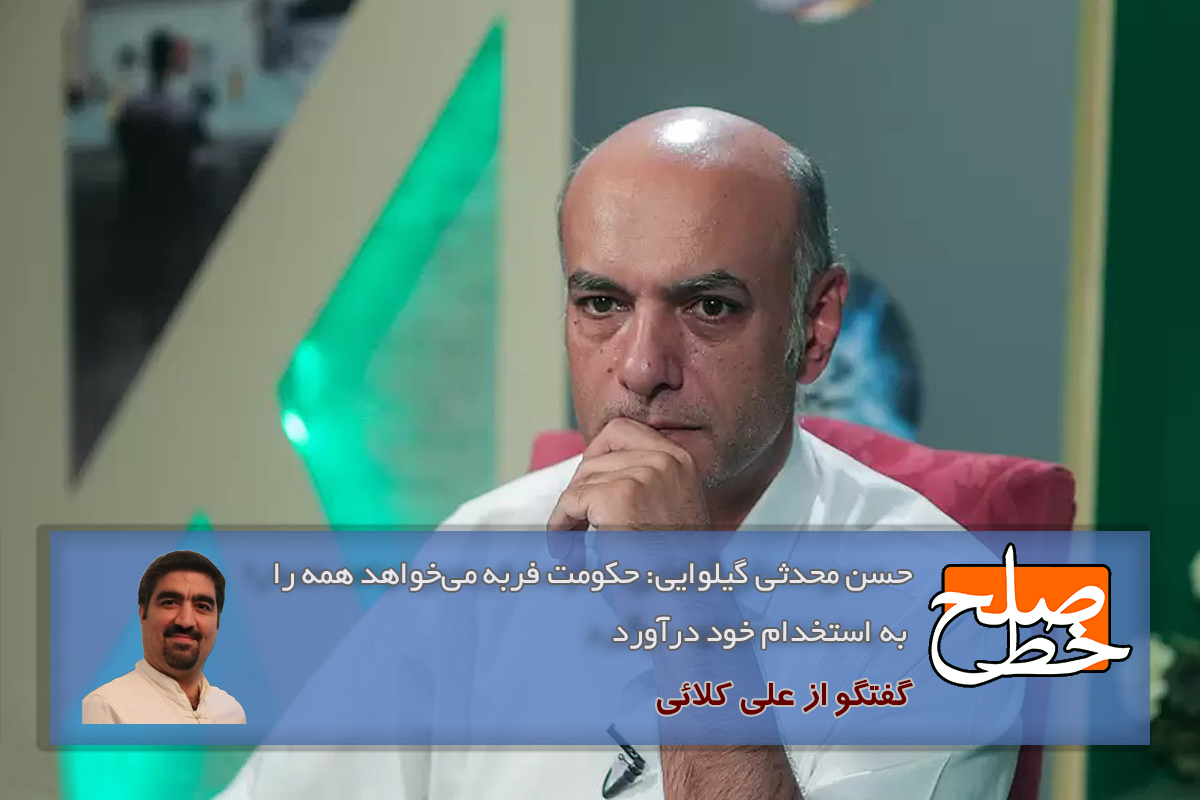
Hassan Mohaddesi Gilavayi: The government wants to employ everyone / Ali Kalai
People’s organizations in Iran, and specifically what is referred to as religious NGOs, are a problem that has sparked many challenges. In some countries, the interpretation of religious NGOs is recognized officially, but there are sociologists who say that such an entity goes back to the historical and social status of that society, and the […]...
Read More
Created By:
Ali Kalaei May 21, 2022
Saeed Modani: Samanis in Iran only fight for survival / Azad Mohammadi
The importance of non-governmental organizations, their role in development, and their ability to help solve social problems were among the topics discussed in an interview with Dr. Saeed Madani, a writer and sociologist, in the monthly magazine “Khat-e-Solh”. He emphasized that, in his opinion, “in the current situation, the government, with all the resources at […]...
Read More
Created By:
Azad Mohammadi May 21, 2022
Civil institutions, from illusion to reality; what are the challenges facing civil institutions? / Ahmad Faal
The history of Iran is a history of various connections and discontinuities in the social, economic, and political spheres. One of the reasons for the continuity of democracies is not the existence of democratic governments, but the existence of civil society. To the extent that civil society and its affiliated institutions have more power, position, […]...
Read More
Created By:
Ahmad Fa’al May 21, 2022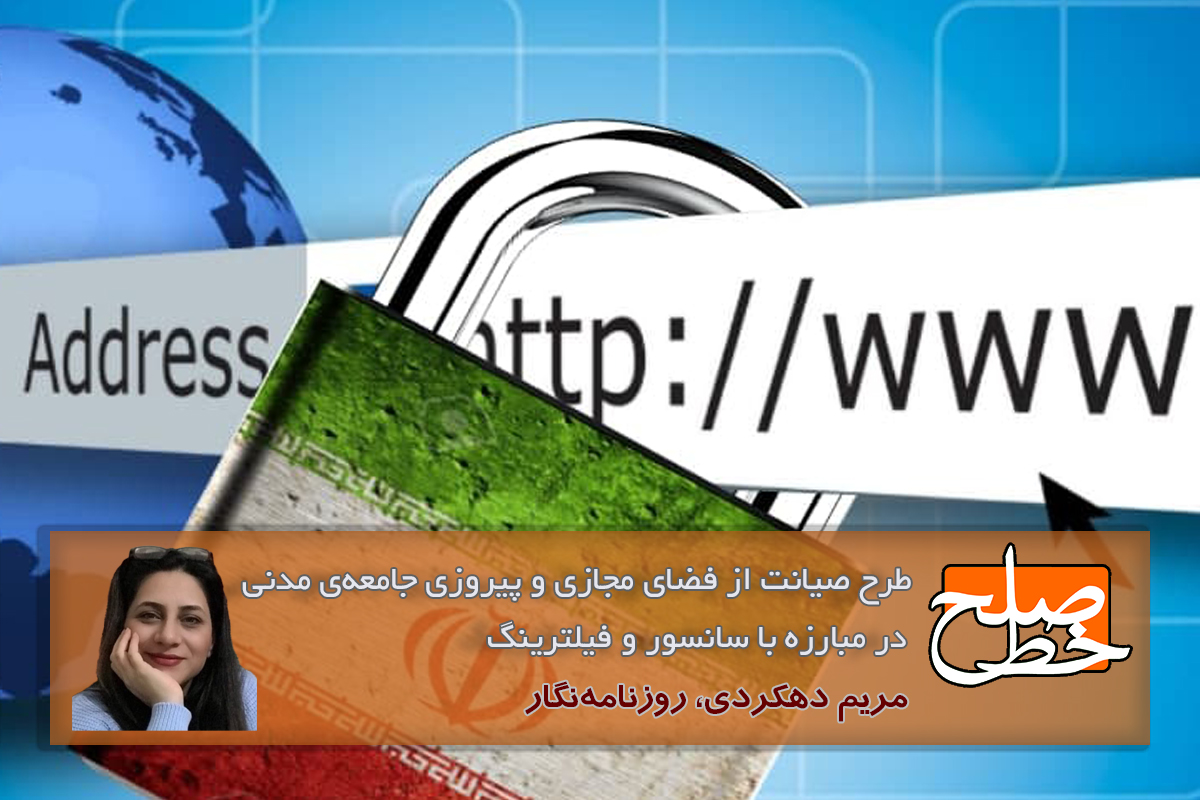
“The plan for protecting the virtual space and the victory of civil society in the fight against censorship and filtering / Maryam Dehkordi”
Morteza Agha Tehrani, the head of the Cultural Commission of the Islamic Consultative Assembly, says “We have firmly stood behind the protection plan” because, according to him, laws have been considered in all countries for “managing the virtual space”. He spoke at the conference “Jihad of Explanation: Strategies, Obstacles, and Solutions” on Friday, 14th of […]...
Read More
Created By:
Maryam Dehkordi March 21, 2022
Civil society is the background for human rights/ Ahmad Faal.
Introduction: Human rights are the foundation of a civil society. Without a strong civil society, the concept of human rights is not possible. The media, political parties, people’s organizations, and professions are all part of civil society. All of these institutions and elements share two common characteristics. First, they are independent of the government and […]...
Read More
Created By:
Ahmad Fa’al April 21, 2021
: Shadi Sadr: The protesters of December changed the equations/ Simin RouzgarShadi Sadr: The December protesters altered the equations/ Simin Rouzgar
Simin Rouzgar Nationwide Protests in December – Especially in comparison to the closest similar example in terms of timing, namely the protests of 2009 – were neglected; meaning that not only did these protests not receive significant media coverage, but even those who were killed during these protests did not attract much attention. Although […]...
Read More
Created By:
Simin Rouzgard March 20, 2018
