


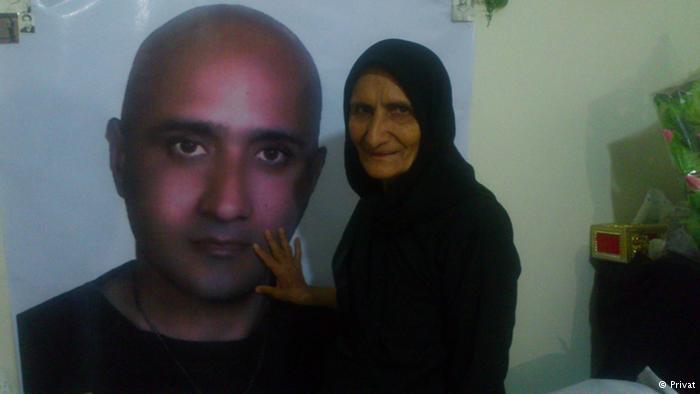
Investigation of the issued verdict for the accused in the murder case of Sattar Beheshti in an interview with Mohammad Oliayi Farad.
Fereid Rahnama
Sattar Beheshti (1356-1391) was an Iranian laborer and blogger who was arrested by the FATA police on November 9, 1391. He was detained and transferred to an unknown location on charges of “acting against national security through activities on social media and Facebook”. During his interrogation, Sattar was severely tortured by the FATA police and ultimately died. In the process of investigating the complaint filed by the Beheshti family, after many twists and turns, the killer was sentenced to three years of imprisonment, two years of forced residence (exile) at a designated location, and 74 lashes for the charge of semi-intentional murder of one of the FATA officers. This sentence was considered insufficient and unjust by many human rights activists. In this regard, we have interviewed Mohammad Olyaeifar, a lawyer and prosecutor, whose comments follow.
Dear Mr. Olyaie Farad, you must be aware that a three-year prison sentence has been issued for the murderer of Sattar Beheshti under the charge of semi-intentional murder. A labor activist and blogger has been killed in the police’s FATA prisons and it has been almost determined who committed this act. A three-year sentence has been considered for him and unfortunately, it has been finalized. How do you see this sentence and its controversies from a legal perspective? Thank you.
See, intentional murder is referred to in three clauses in the new law, in Article 290. In each of these three clauses, if the criteria is met, it is considered intentional murder. Manslaughter is mentioned in Article 291. Here, I want to point out that in some cases, the difference between intentional murder and manslaughter is very subtle and their distinction is very narrow. It requires the case to be carefully examined and determined whether it is intentional murder or manslaughter. However, in the case of Sattar Beheshti, there was no such subtle difference. In other words, based on what I am telling you, it was clear that the murder was intentional and not unintentional, and the distance between it and unintentional murder was very large.
According to Article 290 of the Islamic Penal Code and Article 206 of the old law, intentional murder is considered in three cases. There is a time when the law says in clause (a) of Article 290 of the
Dr. Mohammad Olyaie Farad – Lawyer
We want to see if the statement in paragraph A about the celestial star is true. We say it is possible that it is true because the celestial star had mentioned in his confession in paragraph 350 that the interrogator had told me that if you do not confess, I will kill you. Therefore, it becomes clear that this interrogator had the intention to murder the celestial star if he did not confess, whether the blow would result in death or not; meaning the intensity of the blow does not make a difference here.
So if we consider paragraph A, it meets these conditions. Now let’s assume that the interrogator did not have the intention to murder, but his actions in two other cases are considered intentional crimes.
In paragraph B, it is mentioned that whenever someone commits an intentional act and it results in a crime or something similar, even if they did not have the intention to commit the crime, but were aware that their actions would result in it, it is still considered intentional. And
Therefore, according to your request, the question arises here that, considering all legal aspects, as you mentioned, why is the charge of intentional murder mentioned instead of premeditated murder? Do you think something has happened in the judicial system or for that judge that led to the mention of premeditated murder? What is the reason for this?
See, I believe that this goes back to your judicial record. Look at the judiciary, every time a government official, judicial official, security force, or even at the level of these enforcers, they have been violators or accused, or have not even dealt with the case, like the case of Zahra Bani Yaghoub, a young doctor from Hamedan who was killed in detention and her case has not been dealt with yet, or if they have dealt with the case and the killer has not been identified, like the case of Zahra Kazemi where the killer was not identified and the sentence was reduced. Or if they have dealt with the case and the killer has been identified, they have tried to give a light sentence to the criminal using unconventional and abnormal legal definitions and arguments, like the case of Kahrizak crimes where it was carried out in such a way regarding Mr. Mortezaei, and this was the last case, the case of
“The jewel of love, the mother of heavenly stars, upon her grave.”
Mr. Doctor, a question arises here that, given your expertise in this case and the points you have mentioned from the legal articles, even if the person did not intend to kill, but their actions resulted in the murder that happened, firstly, do you think that the interrogator or the security apparatus that arrested Sattar Beheshti as a blogger, worker, or social activist in the cyber space actually intended to kill him? And why does the security apparatus suddenly treat a social activist in this way, considering your knowledge of the judicial and security system?
It is really not possible to speculate whether the interrogator intended to kill or not. What we said was based on evidence, which means that Sattar Beheshti himself had told his cellmates that my interrogator had said that if I didn’t confess, he would kill me. Therefore, what we said about the three charges of intentional murder was based on evidence and the judge could have made a ruling based on this evidence. The judge cannot speculate or make assumptions.
If there is enough evidence, a charge of intentional murder will be issued. If there is not enough evidence, it will be considered manslaughter. But in my opinion, there is enough evidence for intentional murder in this case, and the treatment of such cases by the Iranian security apparatus is, in my opinion, harsh. The security apparatus is there to protect the people and must confront issues that threaten the security of society. However, unfortunately, the approach of the security apparatus is harsh and targets even civil activities, and deals severely
Mr. Doctor, the question now is whether, despite the definitive sentence that has been issued and the follow-ups that have been done, legally speaking, can this case be reopened and any action be taken regarding it?
If this file is in a state where a final verdict has been issued and no further complaints are made by the guardians, the file will be archived; because the court has announced that in the case of semi-intentional murder, the guardians have been asked to file a complaint and this matter should be pursued, but the mother of Setareh Besheti did not do so and the case went without a complaint and had more of a public aspect. However, if they pursue the case and hold a retrial in the case of intentional murder, the same file that has been turned into semi-intentional can be pursued as a basis. Yes, the head of the judiciary can declare the verdict of semi-intentional murder against the law and send it to another branch for reconsideration. Therefore, if the head of the judiciary wants to take action for this case, in my opinion, it is possible.
Mr. Doctor, since you have been practicing law in Iran for years and have expertise in handling cases involving the Islamic Republic’s security apparatus, including the lawyers of these cases who are under pressure, please talk about these pressures. What kind of actions are taken and how are these pressures exerted? And which institutions are responsible for these pressures?Unfortunately, the view of the Iranian security apparatus towards lawyers is a security-oriented one; meaning that they believe if a lawyer takes on a human rights case, they intend to engage in political opposition. This belief is incorrect. Lawyers carry out their professional duties in all their cases, even in their regular cases. If a lawyer takes on a political case or accepts a human rights case, it does not mean they are engaging in political opposition. It does not mean that a lawyer is an opposition to the system. This is not the case. In fact, lawyers are not political opposition to the system. However, they are opposed to the policies that lead to human rights violations in Iran.
Therefore, a lawyer never engages in political opposition by taking on their legal work in the field of human rights. This does not mean anything at all. In this case of Ms. Gitipour Fazel, she has made every effort based on the law, the same law that was approved by its own parliament. Therefore
In your opinion, how much can these pressures affect lawyers in their activities? Since 2009, with the various security cases that have actually happened and lawyers have come and defended, how much of these pressures have contributed to the decrease in the presence or activities of lawyers?
It is truly influential; it is not the case that our colleagues do not take on human rights cases, no; we are now witnessing our colleagues taking on human rights cases, they also take on the cases of political activists. An example of this is when just a few weeks ago, Ms. Nasrin Sotoudeh, along with Ms. Giti Pourfazel, took on the representation of Mr. Kourosh Zaim, and went to court. But unfortunately, the head of Branch 15 did not allow Ms. Sotoudeh to enter the courtroom and stated that he does not recognize her license to practice law. This is, of course, against the law and could lead to legal consequences for the judge, because her license is completely legal and in accordance with the laws of Iran and the law of the Islamic Republic system itself, therefore she should have been able to go and defend herself in court. My point is that despite these pressures, our colleagues accept
I am grateful, Doctor, for the time you have given us.
 Created By: Fereydoun Rahnama
 August 28, 2014
Tags
Monthly magazine number 40