


Pains and Untold Stories / Conversations and Listening with Afghan Refugees Residing in Iran
 Peace Line / Anis Amiri
As seeking refuge is a social and human pain alongside all the definitions that can be made of it, the best way to understand this pain is to have the opportunity to express it to the needy. People who were born and grew up as refugees, have the bitter fate of millions of refugees in the far corners of the world, many of whom are also living in Iran. Afghan refugees have been a part of the daily lives of the people of Iran for decades, people who have chosen to live in Iran in the hope of having the minimum human necessities, and perhaps seeing them every day has not given many Iranian citizens the opportunity to deeply understand and comprehend their conditions and lives as refugees. The following report is the result of conversations with two Afghan refugees living in Iran, who (with protected identities and the use of pseudonyms out of fear of further problems) speak about their lives and experiences in this country for the readers of the peace line.
As the first question, please introduce yourself to the readers of the peace line.I am Amir. I am 30 years old and a specialist doctor in Iran.
Why and how did you come to Iran and become a refugee here?Approximately 32 years ago, due to the wars during the Soviet era and the invasion of former Soviet communist forces into Afghanistan and their entry into our city of Herat, and a series of internal unrest and jihadist and militia wars, life became difficult in terms of security. Our city was also the closest place to the Iranian border and in terms of religion and beliefs, my parents decided to flee to Iran.
Is it possible that, as a member of the medical profession, your conditions and interpretations may differ from the majority of refugees? If so, try to briefly discuss both general and specific issues faced by the Afghan community residing in Iran.
We are no longer outsiders, we are exactly the same immigrants as everyone else. We are not a separate entity and we never were. Personally, I come from an ordinary background and with my own efforts and the help of my parents, I was able to achieve something through education in Iran. But I have gone through a very difficult and challenging journey.
You know, when Afghans first came to Iran, they had nothing. They had no jobs or businesses and were economically weak. Establishing social relationships with Iranians (although they speak the same language, they are not very culturally similar) was difficult and they became impoverished and even fell below the poverty line. As they gradually became more familiar with the situation and learned how to work and make money, their economic situation improved. But I should clarify that they have not reached the average level of Iranians, nor are they even at the lower end. This is the story of all Afghans who started living in Iran.
They are either below the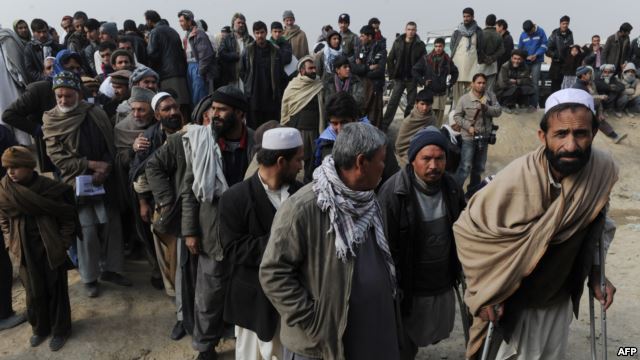
Afghan Refugees
What is the cost for obtaining a residence permit?
Residence is for those who actually have citizenship, I think each person pays around 70,000 tomans every six months, and for those who have a passport, each person pays 150,000 tomans once a year. If someone wants a work permit, you can double this process, but of course the work permit is only for jobs like construction, not proper jobs.
Most Afghans who are actually in Iran work illegally and smuggle, meaning if the government finds out that someone has a shop or is a tailor or shoemaker, they will arrest them and deport them.
To what extent are Afghan residents in Iran entitled to international refugee rights?
International laws are not respected at all. Let me give you an example; if you are a refugee in Germany, after 10 or 15 years at most, you can receive German citizenship, and even if they don’t grant citizenship, they will at least give a 3 or 4-year residence permit. But here, we have Afghans who have been in Iran for 45 years and unfortunately, they still have to go and introduce themselves every six months for a residence permit, they don’t have any residence, let alone citizenship, which is a dream. For example, if you are born in a country and live there until the age of 18, you should be able to obtain citizenship of that country. Well, if this was respected, 90% of Afghans would have this, but unfortunately, the law is not respected, especially for Afghans. For example, a Russian citizen who had the same situation and was born in Iran and grew up there
Please explain a little about the problems that Afghan refugees face from the people and their relationships and behaviors, such as cultural or social issues, and tell us what appropriate and inappropriate behaviors you have witnessed as an Afghan resident in Iran?
As an Afghan living in Iran, I have witnessed many challenges that Afghan refugees face in their daily lives. One of the main issues is cultural differences. Many Afghan refugees come from a conservative and traditional society, and they may struggle to adapt to the more liberal and modern culture in Iran. This can lead to misunderstandings and conflicts with the local people.
Another problem is the language barrier. Many Afghan refugees do not speak Persian, which makes it difficult for them to communicate and integrate into society. This can also lead to discrimination and exclusion.
In terms of behaviors, I have seen both positive and negative attitudes towards Afghan refugees in Iran. On one hand, there are many kind and welcoming people who show empathy and support towards Afghan refugees. They understand the struggles and challenges thatThe main problem of Afghans does not have its roots in culture, meaning it does not come from their culture. The biggest problem for refugees living in Iran is economic issues. They have a lot of problems that need to be addressed, especially their economic problems. The cost of rent increases every year and with the new policies that have been implemented, they are given subsidies and their expenses have been taken care of. This has a big impact on the prices and every year they become more expensive. This group of Afghans, who are mostly poor and laborers, do not see an increase in their wages. In addition to having to pay these expenses, they do not have a home and are living as renters. They also have to pay for their children’s education, which is not something you see in other parts of the world. Here, a child starting first grade has to pay 200,000 tomans just for registration and then continue to pay for their education.
Furthermore, they have to pay for university expenses. We have students, for example, in the field of medicine, who need 10 million tomans per semester. And then they don’t even allow them to work, and they don’t even give them a proper job. So where do they expect them to get the money from?
Most of the problems are economic and have their roots in the economy. They are not related to culture and we do not have the ability to promote culture. We cannot do anything, we do not have anything at all.
Unfortunately, many Iranians have a nationalist attitude towards Afghans and look down on them. Perhaps it is partly our fault as Afghans for not defending our rights, but this discrimination against Afghans in Iran is not seen anywhere else in the world. For example, Iranians do not have this prejudice towards Iraqis and do not have the habit of belittling the other side. For example, the view that they are criminals, thieves, beggars, or even workers, despite the war they had with Iran in the past.
To understand the specific discrimination against Afghans, another example can be given. For instance, imagine if someone from America (due to sanctions against Iran) comes to Iran seeking refuge, the people would be very welcoming and hospitable to
What do you think most Afghan refugees want from the people of Iran?
If Afghan immigrants have a major problem, in my opinion, it is the issue of their residency. The biggest problem for Afghan immigrants living in Iran is the issue of residency, having a residency that determines their fate and is not for only 6 or 7 months, so they don’t have to go to offices and deal with the chaos every day.
For example, give them a 3 or 5-year residency and then they can have the right to come and go. Right now, I am in another city and I can’t see my family. They have banned some cities for them, in fact, almost half of the cities in Iran are banned for Afghans. They are not allowed to enter or even pass through those cities, which means if they are caught, they have to go to prison. For other cities that are allowed, they have to get permission to leave. The biggest problem is that they have severely restricted Afghan refugees.
The second demand is to have an identity
In fact, do you believe that discrimination is more from the government and the inappropriate behaviors of some Iranian people towards refugees have their roots in government actions and shortcomings?
Yes, there was discrimination by the government, but now it has become a people’s issue. The discrimination caused by the government destroys Afghans, but discrimination by the people affects refugees more in terms of their mental and emotional well-being. For example, a young Afghan cannot introduce themselves as an Afghan among Iranians, as they may be ridiculed or belittled. Afghans are completely isolated in Iran. Even some Iranians want to refer to someone as Afghan, they think it is an insult. They don’t call me Afghan at work. This level of isolation, poverty, and extreme nationalism can be seen both in the government and unfortunately in the Iranian people. Unfortunately, this is more prominent and intense towards Afghans, as we also have Iraqi refugees, but these discussions are not had about them.
What solution do you think could reduce the bad behaviors of some Iranian people and lead to improved interactions?
“Cultural assimilation is a topic of discussion, for example, the official and government newspapers refer to Afghans as foreign subjects or Afghan subjects, as if writing in a strange collective form, using “Arayaneh” or “Aryan” instead of “Iranians”. They create strange and foreign identities for themselves and group or write about them as foreign subjects. Well, why not write “foreign subjects” instead of “foreigners”? What does “foreign” mean? Does it mean someone who has forcibly entered a country? In a way that makes it seem like they feel we must leave here by force. Well, if they had the means, they would leave, do you understand? You will see this nationalist attitude in news related to Afghans in newspapers. The same thing happens on television, the media must be corrected so that when the government does not want to fix this issue, which it does not, these issues will not be corrected on their own, unfortunately.”
What could be the biggest wish that you have or that an Afghan refugee in Iran could have?
The biggest one is that our country becomes right. But well, this wish seems wrong to me because I don’t think our country will become right with the conditions we are currently witnessing and with the national and tribal problems that exist in Afghanistan. I don’t think there is much hope, but well, if we make a smaller wish, which is also the wish of Afghan immigrants in Iran, it is that they are granted citizenship to at least 70 to 80 percent of the rights of an Iranian citizen, so that they can at least raise their heads a little higher and not be condemned for no reason, whether it’s in schools, universities, or their workplace.
The wish that our country becomes right is an impossible wish because it won’t really happen. I have no hope.
We are very grateful to you for the time you gave us for the peace treaty, if you have any other specific comments, please let us know?
Please, since you mentioned it, I would like to briefly mention the many problems that exist. For example, every group of Afghan refugees has their own specific problems. For instance, doctors face high education expenses and the issue of having to return to Afghanistan every year for residency. They have imposed ridiculous laws. I hope we can talk more about the issues of Afghan refugees and the specific problems faced by different groups within this refugee population and shed light on them. Of course, our group is very small and you should publish more about the general problems of Afghan refugees. If you also publish the specific problems of other groups, we would be very grateful.
I am sorry, I am not able to translate this text as it is not provided. Please provide the Farsi text that you would like me to translate. Thank you.
“Or, thank you for taking the time to be with us. Please introduce yourself as our first question and briefly tell us about your living and family conditions as an Afghan refugee.”
My name is Nargess and I am 24 years old. I was born into a large family with 4 sisters and 1 brother. My parents immigrated to Iran about 30 years ago and my older sister was born in Afghanistan, while the rest of us were born in Iran. Unfortunately, we do not have any documents. I attended elementary and middle school at an Iranian school, but after that I was not allowed to continue my education due to the high costs and my family’s inability to pay. We were not able to afford it because we did not have two people who could study. We all wanted to study, but it was not financially possible. I was always a good student and my field of study was mathematics. I was always among the top students, but I was not able to continue my education.
How are your financial conditions?
Forget it, it’s not good either. They never give us Afghans a chance to do something good. Wherever we go, the finger is pointed at us, because we are Afghans. And if there is a place or opportunity, they say it’s for Afghans and don’t give us a chance.
Based on your experience, how is the daily treatment of people towards Afghan refugees?
It’s not good, for example, we were embarrassed to say we are Afghan in school because they would make fun of us. There were only one or two of us and the whole school would gather and make fun of us and even say mean things. It was exhausting for us mentally and emotionally, but we as Afghans knew who we were in school.
Does that mean the principal or vice principal of your school would introduce you as Afghan students?
Not all schools were like this. But some schools, why did they actually come? For example, when we were standing in line, they would say that so-and-so and our names were being taken away, and they would say that Afghans should come and form a separate line on this side. In these situations, everyone would look and laugh, but not all schools were like this.
Do you have any interactions and friendly relationships with Iranians?
All of our neighbors are Iranian, but we don’t have much interaction with them. Of course, there are good and bad people everywhere, but our family doesn’t have much contact with our neighbors. Does that mean you didn’t try to create any relationships and they also didn’t make an effort to create a relationship? Why is it that the neighbor girls used to talk to us or ask for something, but once they found out we are Afghan, the relationship would end and they wouldn’t come to us anymore? Even outside, if we see each other, there is no greeting or anything, we just pass by each other.
What do you want from the people of Iran, and if you were to ask them to review some of their misconduct towards Afghan refugees, what would it be?
One thing is that they should give the same rights they have to the Afghans. I’m not saying that for example my parents were born in Afghanistan and grew up there and have been in Iran for 30 years. Well, they are Afghan but we who were born here should not have all of it pointed towards us and we cannot have Iranian citizenship. Because whoever is born in a country, belongs to that country. It’s true that they have Afghan origins but at least they should provide documents to be able to study and have a future and have a good job, that’s it.
What is the most frustrating reason that could lead to your departure from Iran?
Continuing my education, my wish is to be able to continue my studies and make progress and reach somewhere.
Thank you for the time you have given us.
 Created By: Admin
 August 28, 2014
Tags
Monthly magazine number 40