


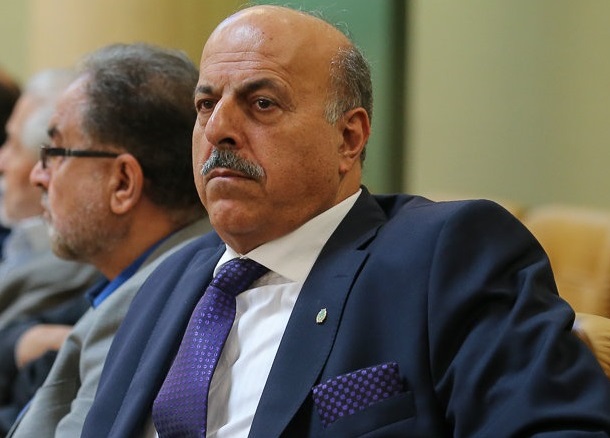
“Qasem Sholeh Saadi: To stay in parliament, one must become a state attorney/ Simin Rouzgar”

Simin Rouzgar
In late Mehr month of this year, “General Election Policies” with 18 articles were announced by the leader of the Islamic Republic of Iran to the heads of the three branches of government and the head of the Expediency Discernment Council. Abbas Ali Kadkhodaei, the spokesperson of the Guardian Council, also announced a few days later in an interview on a state television network that “according to the General Election Policies, the supervision of the Guardian Council will continue after the approval of the credentials of the parliament members and will continue throughout their term”. Mr. Kadkhodaei, citing article 13 of this plan, has spoken about the continuation of the supervision of this council.
In this regard, there has been a peace dialogue with Qasem Sholeh-Saadi. Mr. Sholeh-Saadi is a professor of international relations at the Faculty of Law and Political Science at the University of Tehran and holds a PhD in political science from the University of Paris. He represented the people of Shiraz in the third and fourth terms of the Islamic Consultative Assembly.
“Abbas Ali Koddakhodai, spokesperson of the Guardian Council, in the program “Negah” based on general election policies, has spoken about the continuation of supervision during the term of parliamentary representatives. Why is such an interpretation of supervision being presented today?”
See, supervisory authority has a history. The Constitution has considered three powers for the Guardian Council: supervision over elections, interpretation of the Constitution, and conformity of the decisions of the Parliament with religious and constitutional standards. However, in 1991 and on the eve of the fourth parliamentary elections, the Guardian Council, by misusing its power of interpretation, also interpreted its supervision over elections. They interpreted and said that this type of supervision is supervisory authority and in fact, the foundation for deviation was laid from here. This is while the interpreter should seek the opinion of the legislator, not impose their own opinion. For example, do the interpreters of the Quran, in places where there is ambiguity, try to understand the opinion of God or do they impose their own opinion!? The Guardian Council committed a violation and presented such a desired interpretation and said that my supervision is supervisory authority. According to this same interpretation, in the fourth parliamentary elections, action was taken and many independent and leftist
Keep in mind that this constant surveillance is in contrast with the concept of “parliamentary immunity” which is accepted globally. This means that the duty of representatives is essentially to monitor the government and hold them accountable; however, if they do not have immunity, the government can easily create cases against them and remove them from their position, considering the vast resources at their disposal. Therefore, the world has come to the conclusion that representatives must have immunity, which is usually absolute. This means that even if representatives commit a crime, they cannot be prosecuted easily. There are formalities involved, such as the prosecutor providing evidence and informing the parliament, and if the parliament agrees that a certain representative has committed a crime, they can remove them from their position and prosecute them as a regular citizen. In fact, the world has come to the conclusion that even if a representative is accused of a crime, it could be a government conspiracy. Therefore, mechanisms have been put in place to prevent representatives from being easily
The world is like this, and the Iranian Constitution before the revolution (the Constitutional Law) was also like this. But step by step, they moved away from it.
In your opinion, how feasible is the continuation of monitoring and how much fear do you have about its implementation?
In my opinion, they are carrying it out. As I mentioned, the supervision has been wrong from the beginning, and now it’s even extending to the length of the term of representation. The result is that if during the “appointment” process, a representative happens to lose their position, they either have to become subservient and be replaced with a “state attorney” instead of a “people’s attorney”, or they are told by the sword of supervision that they are not qualified and are expelled from the parliament.
It seems that this constant monitoring conflicts with some of the principles of the constitution; some emphasize this issue. On the other hand, it ignores the mechanism of self-monitoring or self-control of the parliament. What is your opinion on this matter?
If you want the truth, the problem lies with the constitution; in a situation where the Guardian Council has been given the authority to interpret the constitution, there is no mechanism in place to hold the Guardian Council accountable. This means that the constitution has stated that the interpretation of the constitution and the supervision of elections is the responsibility of the Guardian Council. The Guardian Council has taken advantage of this power and has interpreted its own supervision as legitimate.
150 years ago, Mr. Mirza Yousef, the advisor to the state, had a newspaper called “One Word”. In this newspaper, he said that the country’s problems can be summed up in one word: “lack of law”. Later, the constitutional monarchy was established, parliament was formed, legislation was enacted, and the judiciary and court of justice were established to judge the laws passed by parliament and make decisions based on them. On that day, the country’s problem was summed up in one word: lack of law. Today, I also want to say that the country’s problem is still summed up in one word, but that one word is “law” itself. Because it is the law that gives these unaccountable powers to a group and appointed institutions – who are not accountable but are active in their own interests. So the law itself must be reformed.
As a result, I believe that this constant monitoring does not contradict the constitution. Because in our constitution, there is a combination of contradictions. For example, in Article 57, it states that the three branches of government are under the supervision of the Supreme Leader, meaning absolute guardianship is recognized. On the other hand, in many principles, it considers civil rights for the people. These do not go well together. Meaning, there are a number of conflicting cases that need to be corrected and until they are corrected, the situation remains the same and we will continue to witness such problems.
Dear Mr. Shahele-Saadi, if this continuous monitoring is implemented, in your opinion, to what extent will representatives stand against it?
Among the current representatives, there are one or two, including Mr. Mahmoud Sadeghi and Ali Motahari, who have something to say, but unfortunately, I am not very optimistic in general. In fact, I generally do not see such courage and bravery to speak about the rights of the nation and even the rights of the representatives themselves.
It is worth mentioning that in the recent example, Ms. Minoo Khaleghi, although she was rejected by the Guardian Council and was elected as a representative by the people of Isfahan, was not allowed to enter the parliament and no one did anything about it; while the parliament could have approved her credentials. As a result, I do not see such determination in the parliament.
Some believe that this issue is contradictory to some of the fundamental positions of the Islamic Republic, such as “the parliament is at the forefront of affairs.” What is your opinion on this matter?
See, Mr. Khomeini had many such positions. In another place, he says, “The measure is the vote of the people,” or “The parliament is the center of all powers and laws.” Mr. Khomeini took positions according to the circumstances of the time, but what is now the criterion is the constitution itself, and – as I mentioned – there are flaws within it. He has given certain authorities to some institutions and has gathered a set of contradictions within himself. For example, see in all the world (meaning democratic systems and systems in which the right to rule belongs to the people), the role of the parliament is legislation and supervision. While in the second principle of the constitution, it is stated that sovereignty and legislation (meaning legislation) belong to the Almighty God and the people must also submit to the command of God. The second paragraph also states that laws are communicated through revelation and prophecy. Well, if sovereignty and legislation belong to God and the people must also submit
On the other hand, Mr. Khomeini himself says in his book “Guardianship of the Jurist” that we do not have a legislative power or institution in Islam that can make laws. Therefore, all of this shows that the parliament in Iran does not have the same position as it does in the rest of the world. Just a few days ago, they even blocked the deputy speaker of the parliament, Mr. Motahari, from giving a speech in Mashhad. Where else in the world do you see such an example?!
Therefore, when Mr. Khomeini said that the parliament is at the forefront of affairs, it was necessary for that time and I really don’t know what he meant.
As a final question, I wanted to ask you if the Guardian Council can be considered a supra-parliamentary institution?
Undoubtedly, yes. Currently, the Guardian Council is above the parliament and there is no doubt about it. The Guardian Council can invalidate the parliamentary elections, and even the representatives themselves, who must pass through the filter of the Guardian Council during the elections, will also be under its supervision. With these circumstances, there is no longer any authority left for the parliament in front of the Guardian Council.
Thank you for the opportunity you have given us.
 Created By: Simin Rouzgard
 November 25, 2016
Tags
Ali Motahari Constitution Council of Guardians Islamic Consultative Assembly Mahmoud Sadeghi Monthly Peace Line Magazine peace line Qasem Sholeh Saadi Representatives of the parliament Simin Daytrip State lawyer Supervision and accuracy پیمان صلح ماهنامه خط صلح