


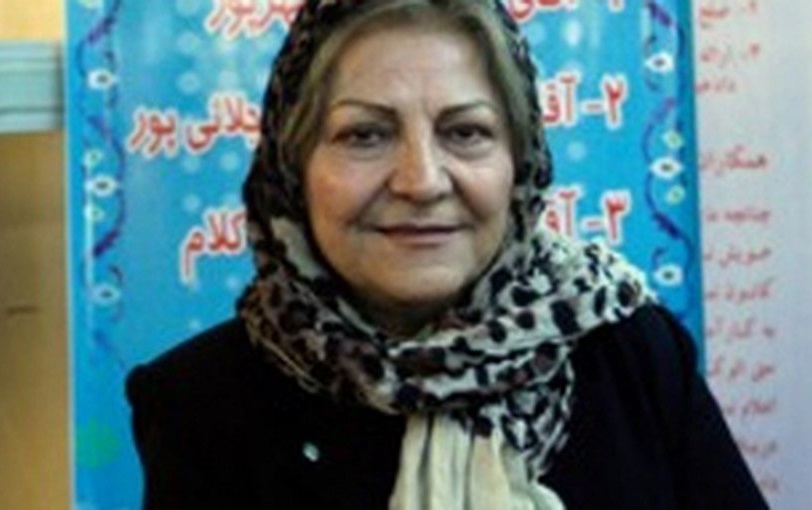
Giti Pourfadel: The Iranian judicial system is complicit in administrative corruption / Ali Kalaii
.
Conversation with Ali Kalai
Giti Pourfazl, a first-degree lawyer and member of the Bar Association, received her lawyer’s license in the last year before the revolution, in February 1979. After the victory of the revolution, due to her criticisms of the new legal structure established in the new system, her license was revoked in 1983. This revocation continued until 1997, and in that year, after the Bar Association elections and her case being reviewed, her license was returned to her. Ms. Pourfazl has recently retired.
The peace line has discussed with Giti Pourfazl about the issue of administrative corruption in Iran, focusing on her perspective as a lawyer on the origins of these corruptions and the obstacles to their elimination.
Mrs. Porfazl, if we accept that fighting against economic corruption is naturally a social struggle towards eliminating a type of crime and should not be mixed with political factions, how can we combat this crime?
The main issue is that unfortunately in our society everything is intertwined and as a result, the economic problems of the country are not separate from its policies and political issues. Therefore, we are forced to ask why this has happened. Before anything else, while mentioning the incompetence of the ninth and tenth governments, we must ask why these two governments burdened the people with such heavy financial burdens by wasting the national treasury and committing embezzlements. It has been said that a total of 90 million dollars in discrepancies have arisen or that this amount has not been calculated and their documents cannot be found. Every day, a new case is opened… At the same time that Mr. Ahmadinejad dissolved the Planning and Budget Organization, it was clear that he wanted to commit illegal acts, but it is questionable how our politicians did not realize this and supported him.
As a result, I believe that in our society, economic problems have merged with political problems and cannot be separated. However, in my opinion, the way to deal with them is to take legal and judicial action against all those who, for whatever reason, have engaged in illegal activities and looted and spent the national treasury. Keep in mind that when Mr. Khatami’s presidency ended, we had a lot of foreign currency in the country, but during Mr. Ahmadinejad’s governments, they not only withdrew from the foreign currency reserves, but also became indebted to the central bank. When they suddenly raised the price of the dollar, their intention was to pay less in rials due to their debt to the central bank.
You mentioned the judicial confrontation with the perpetrators of corruption. Can it be said that legal loopholes and the lack of a transparent system of laws and punishments contribute to administrative corruption? If so, in your opinion, to what extent can administrative corruption in Iran be attributed to the country’s judicial system?
My belief is that our judicial system, at that time, turned a blind eye to these issues. Is it possible that ministers are not involved in government decisions?! As a result, these issues cannot be ignored by our judicial power. In fact, either the judicial power has turned a blind eye to these issues, or it has been involved in these matters itself. When Mr. Ahmadinejad is not prosecuted, it is clear that there is a chain of people who are connected like links in a chain. That is, if Mr. Ahmadinejad were to be prosecuted, he would definitely have evidence against other government officials and that is why the judicial power turns a blind eye to this issue.
But these issues, which in the best case are far from the eyes of the judiciary, cannot stay away from the anger of the people. In fact, the people have fallen into such poverty and misery that they cannot overlook or forget this issue. It is true that we have been under the yoke of colonialism, despotism, and exploitation for three hundred years – which cannot be separated from each other – but today’s people are no longer the people of the past, for example, a hundred years ago, when only ten percent of them were literate. Currently, ninety percent of the people are literate. In addition, even those who are illiterate have opened their eyes and ears and fully understand what is happening in the country.
Many countries have established separate and mostly independent institutions to detect, pursue, and combat administrative corruption; do you agree with such an approach? If so, why are separate institutions not created to confront corruption in Iran?
Yes, the root of corruption is this. In Iran, from today, a committee of honest individuals (those who truly are) must be formed to address the issue of corruption. We must address the violations that have occurred in the ninth and tenth government and the disasters that have befallen society. But unfortunately, all the power is in the hands of those who are connected in a chain and are not willing to create such a platform to combat corruption in the country. As a result, we see that instead of this, all the blame is placed on Mr. Rouhani and his government; while he has been in office for 3 years, what could he have done during this time? They constantly sabotage him and put obstacles in front of him.
Even in the previous regime, we had an inspection organization (called the Imperial Inspection) . At that time, when the name of this organization was mentioned, the four pillars of an institution would tremble! Those who worked in that organization were constantly busy collecting information and preparing reports. So everything was in its place. Of course, I do not mean to say that there were no violations and no problems, but the level of administrative and economic corruption at that time is not comparable to today.
What kind of relationship should this organization that you are referring to have with the judiciary or the government? Should it be an independent and separate entity, or should it have a relationship with the legal structure of the system?
I believe that among our judges in the judiciary, there are also honest individuals. In fact, in this country, we still have men and women whom we can trust, in addition to their high abilities in their field. As a result, a specialized committee, consisting of three branches, can be established to handle these matters; because according to our administrative system, every penny spent must be accounted for, including the date it was withdrawn, and recording all expenses and details of transactions and contracts is mandatory.
Previously, in the Organization of Budget and Planning, according to the usual procedure, experts would draft the budget and send it to the parliament. But the question arises, why when the Organization of Budget and Planning was dissolved and Mr. Ahmadinejad sent the budget in two pages to the parliament, the parliamentarians did not ask what these two pages meant!? At that time, not only the parliament, but also the judiciary and even the Leader’s office did not object to this issue. In this regard, the majority of the blame falls on the parliamentarians; because they are directly elected by the people and based on this trust, they are responsible for such events. It is the parliamentarians who form various commissions and have defined tasks in relation to investigating and examining matters. But unfortunately, we witnessed that everyone joined hands to create such a situation and lead the society and the country towards poverty and destruction.
These tragic events must be spoken of. Not just me, but every lawyer who cares about this country and loves their homeland, is so upset and angry about these issues that they cannot stay silent. Nevertheless, we cannot expect too much from ordinary people who may be more concerned about their livelihood and basic needs. But every society has an elite group who are responsible for addressing these issues.
Currently, which institution in Iran is responsible for dealing with offenders? How crucial do you consider the roles of the Court of Accounts and the General Inspection Organization to be?
Look, everything depends on what kind of people, with what level of sincerity and honesty, are in these organizations. Of course, it is also important to have the courage to speak the truth. In fact, it is possible for someone to be sincere and honest, but not have the necessary courage and be afraid to speak the truth because of the risk to their interests. Therefore, we need braver individuals who act transparently and take positive steps towards informing the public. In any case, people have the right to know what has happened in those eight years.
We must not forget that no matter how much we try to hide the truth, eventually it will come out. Deception cannot last forever and history will judge for itself. Those who leave a good name for themselves in history are not among the infamous.
In your opinion, is punishment and dealing with a few individuals (even the harshest punishments and executions) the only solution for combating administrative corruption?
The first high-profile case of administrative corruption in Iran was related to embezzlement in a deal involving a piece of land owned by the Foundation of the Oppressed and Disabled Veterans. Mr. Fazl Khodadad was executed in this case to silence any protests. When the first case of public economic abuse was concluded in this manner without proper and logical handling – meaning that all parties involved were not identified and dealt with – it paved the way for future abuses. In fact, there is no root solution and it is a personal issue. No organization is held accountable and responsive to the people. Even when Mr. Khatami came into power, with all the good intentions he had, he was not allowed to implement his plans in various economic, political, and social fields. In any case, there are hands at work that do not allow even clean governments to take action.
Therefore, I am going back to the point I made at the beginning; that our political and economic issues have become intertwined.
But regarding your question, yes, I definitely think that this method is not correct and should be fundamentally changed. Because when things are done in a fundamental way in a society, the level of crimes, whether political, economic or social, will automatically decrease. Otherwise – in addition to the fact that no proper plan will be allowed to be implemented – it is clear that society will face chaotic conditions; just like we have now. It’s as if the government is not directly chosen by the people and should respect the people’s vote. Unfortunately, there are conditions in place where the necessary power is not given to the government and, figuratively speaking, everyone speaks for themselves.
When Mr. Rouhani came to power and announced his plans, I personally felt that the country was on the right track, but now I am disappointed…
In some countries such as the United States, methods of bribery are used for government employees, but in contrast, in countries like India, petty corruption (corruption at lower levels of employment) is largely ignored and the ability to address it is focused on fighting political and high-level corruption. In your opinion, which approach can be more effective in the long run?
See corruption, whether it is in lower ranks or higher ranks, it must be dealt with or else it will spread. I think in fact the government of America and similar countries are doing the right thing by scrutinizing lower levels to prevent its spread to higher levels. For example, if someone has not paid their taxes or committed even the smallest violation, they are immediately questioned. On the other hand, we are currently witnessing questions being asked of Mrs. Clinton regarding her emails, or her providing all documents related to her tax payments to the public, and essentially being forced to prove to the public that she has not had any issues. These are the points of a system.
As a result, I believe that when it comes to corruption, individuals at all levels should be accountable to public opinion and the people. But let’s not forget that in a society where high-ranking officials are not accountable to the people and there is no transparency in top management levels, it is not possible to expect these incidents to not occur at lower levels.
If there is a point you have in mind at the end, please do tell.
See the events happening inside the country, including these corruptions, are currently vague and incomprehensible to us, and we do not know exactly what the story is and what is behind the curtain; we only piece together each event that is happening and we become aware of it, like pieces of a puzzle. As a result, our analyses in many areas will not be deep and accurate.
Furthermore, internal developments are not completely separate from regional developments, which only makes the situation much more complicated.
Thank you for the opportunity you have given us.
 Created By: Ali Kalaei
 August 23, 2016
Tags
Administrative corruption Ali Kala'i corruption Gitipour Fazl Judicial encounter Monthly magazine issue number 64 فساد ماهنامه خط صلح