


Interview with Sepideh Jadiri, translator of the book “Blue is the Warmest Color” by Masoud Lavasani.
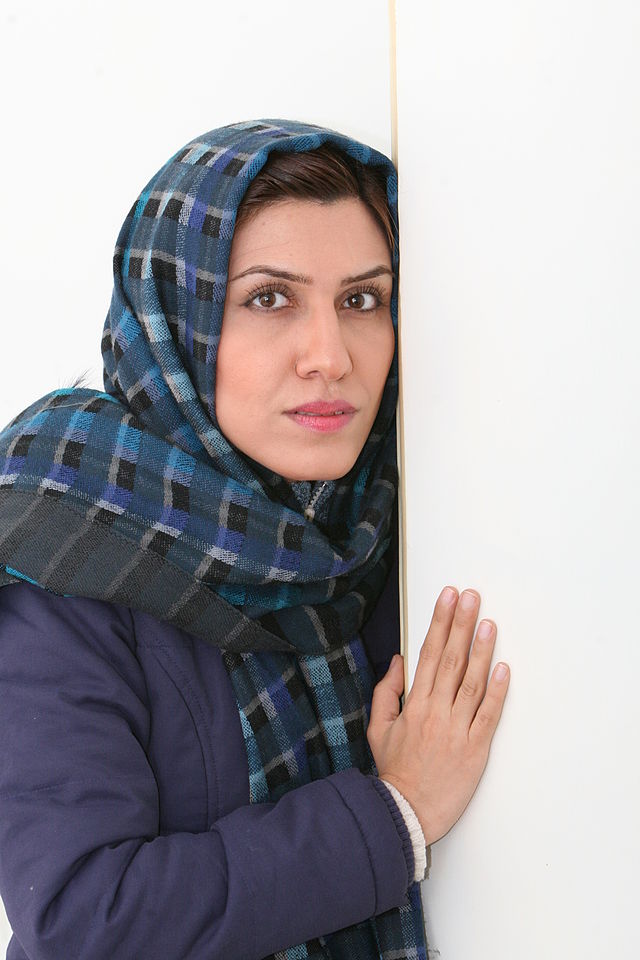
A look at Sepideh Jodeiri’s literary activities in recent years reveals the fact that she is accustomed to going against the norm. From founding the Feminist Women’s Poetry Prize (Khorsheed) to translating a lesbian story, she strives to challenge the male-dominated literary space. Jodeiri has become a pioneer in the Iranian and Persian-speaking LGBTQ+ community, and her translation of a lesbian story has opened up a space for other literary activists to create or translate serious works with LGBTQ+ themes.
It is unpredictable what new activity will be heard from this poet, translator, and journalist tomorrow, but we know just as much that translating a non-fiction book written by an autistic author is as engaging. We only spoke to him about the translation of “Blue is the Warmest Color” from every door as an excuse.
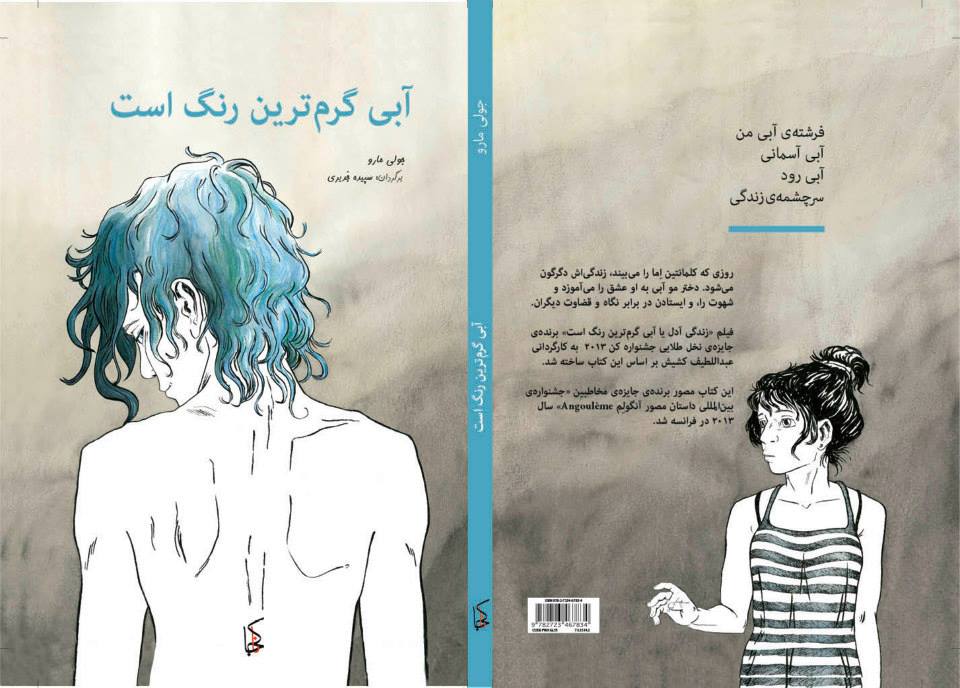
About “Blue…”, regardless of the story theme and plot, the narrative style and structure of the work are very strong. A style that is less explored or can be explored in comic strips. This means that for illustrated books, they usually go for a linear and straightforward narrative. But here, “Julie Maro” pulls her reader along from a curious and eager perspective to read the content of the blue notebook.
I agree with you. But for example, the fact that in the very beginning of the story, Julie reveals the ending (meaning the death of Clementine, one of the main characters), and yet, the story’s appeal for the reader is not lost, in my opinion, goes back to the good structural techniques that have been chosen for writing the story. I was reminded of this in terms of the narrative style in “Chronicle of a Death Foretold” by Marquez or several other stories that have used the same technique in narration… I myself had not seen such a thing in the genre of illustrated stories. Of course, as a translator of the book, I must admit that the literary value of it was not my main concern, and if it was only the literary value that mattered to me, I would not have even considered translating the illustrated book and would have continued writing and translating poems, for example, by Borges.
The theme and the structure of the work have a suitable attraction for creating suspense, but the comic strip format itself also helps the reader’s effort to continue the story. However, what was the most difficult aspect for you in translating this work?
To be honest, what was hidden from you, was actually not that difficult to translate from the same perspective that there were more images than text. The point that I tried to consider during the translation was to render the conversational parts of the book in a language that would be acceptable to Iranians. As much as possible, I tried to use words that Iranians use in their conversations. The difficulty of the work was that in Persian, we do not have logical equivalents for many words; for example, in my conversation with Elham Malekpour, which was published on the Radio Zamaneh website, I also said: After consulting with Mr. Tinoosh Nazemjoo, who compared my translation from the English text with the original (French), I came to the conclusion that it would be better to directly translate some words into Persian. For example, Mr. Nazemjoo and I translated the sentence:
Oh God, her body, her body, bare against mine.
We were forced to translate it in this way: Oh God, his sex, his naked sex right on top of my naked sex. Because the meaning of sex in the English sentence was sexual organs (genitals + breasts). We couldn’t translate it as his naked genitals on top of my naked genitals (because we were ignoring the breasts at that time) and we couldn’t just write naked body on top of naked body (because the intensity of the sexual feeling in the sentence would become very faint). “His naked sexual organs on top of my naked sexual organs” also seemed heavy and ridiculous. That’s why we directly translated the word “sex” to mean sexual organs in the text.
Is it sometimes difficult to bring these linguistic subtleties in a place where there is limited space for text?
I have completed my translation and had no involvement in the matter. It was probably difficult for the publisher to fit my translated text in that limited space.
We read a feminine story in every direction, it is a feminine story. The characters and setting are feminine. How much has this feminine voice taken hold of you? Is it because the feminine voice is heard everywhere?
Yes, her voice, her language, and her gaze are feminine, especially since the author is a woman and I, as her translator, am also a woman. The story is mainly about a romantic relationship between two women. You know, not just in this work, but in any writing by a female creator, I believe it must have a feminine language. Yes, in my opinion, language has a feminine and masculine aspect. Gaze also has a feminine and masculine aspect because it is influenced by personal experiences, which will be different depending on whether the person is a woman or a man, especially in society.
When you decided to translate this book, what category of audience did you have in mind?
I would love for the book to be read by more people, especially by the opposite-sex audience in the Iranian society (both inside and outside the country). Because homosexuals are often familiar with the subject matter discussed in this book, but it is the opposite-sex individuals who are unaware and have not been culturally educated to recognize the rights of different human beings. I did not censor any words from the text just because they do not conform to the norms in Iranian society, and I did not diminish any of its emotional, sexual, or other burdens. My hope is that, considering the possibility of purchasing the electronic version for only 15,000 tomans in Iran (which is much cheaper than the price the publisher has set for its print and electronic versions on this side of the water), Iranian readers residing in Iran will also read it and become aware of these issues.
So far, how satisfied are you with the amount of feedback you have received? It seems like you were upset with the reaction of some members of the community?
What about this book? No. I haven’t had a negative encounter yet about the translation of this book. Except for a few comments on my Facebook from people who were overly ignorant and mistook homosexuality for pedophilia, and in fact, my goal is to educate this group of people. But there have been good critiques about the book and my translation, one from my dear friend Sudeh and one from you. In the past two months since its publication, I have had as many interviews about this book as I have hairs on my head (hahaha). So in my opinion, the feedback has been good. But I still haven’t heard from the audience I had in mind (the audience in Iran) about their thoughts after reading the book. Although I have seen a lot of enthusiasm from my friends in Iran to read it.
How close is the general atmosphere of the society you have been living in for several years to the setting of the story? It may seem far-fetched to an Iranian reader who is not familiar with French society that a lesbian would be under such pressure, even though these things happen frequently in Iran.
To be honest, in all these nearly four years that I have lived in Europe (Italy and the Czech Republic), I have not felt that sexual minorities and in general, different people, have a very comfortable life in these countries. Of course, compared to Iran, their conditions are better because the law supports them, not against them. But the general public (which in my opinion is the same everywhere and there is no difference between Iran and other countries), still do not accept or accept with difficulty people who are different from them. For example, it is very rare in Europe to see two gay or lesbian people kissing in public, while you can see a man and a woman kissing in public every hour and every step. This itself can be a sign of the non-acceptance of homosexuals in European society. But for example, in a multicultural country like Canada, this issue is largely accepted and I think every minority in that country experiences a more comfortable life compared to Europe.
Do you agree with the perspective that the literary space of the other-sex Persian speakers is very limited and not much significant work is found?
In my opinion, it is unfair to ignore the works that have been produced by the diverse Iranian society and only focus on the works that have been written by a different gender and have some passing mention of this subject… I would like the novels and poems of Payam Filiz, Ramtin Shahrezad, and several lesbian friends who may not be pleased to be mentioned, to be remembered because they have a high quality. But the discussion about the book “Blue…” is another matter: one is that it is an illustrated story and in this regard, its Persian version can be a unique and singular work in Persian literature, and secondly, it is focused on social criticism and is not just a love story about sexual minorities.
Is the gender of the writer important in this matter? Generally, in literature, can we say that men should write for men and women for women? How do we even know the sexual orientation of a writer? Is this important or should the work itself be of quality?
Gender is not important, but sexual identity is. This means that when we talk about Queer literature, it is better to consider literature that has been produced by the Queer community, rather than literature that is about the Queer community. As a non-binary person, I can never fully understand the experiences of a homosexual person in society because I have not experienced those conditions myself, so I cannot write about them. The discussion was about a writer who wanted to write a story about an autistic person and the conditions they experience in society based solely on their own imagination. Well, I will not read such a work because this writer cannot provide an accurate perspective on the feelings or conditions of that person because they have not experienced them… If you pay attention, I also said the same thing about women’s language. I said that women’s experiences are different from men’s experiences in society and for this reason, the language used by a woman in her work should be different from the language used by a man
This idea has also been set aside in today’s writing classes, that in order to write about the origin of a writer, one must definitely experience this feeling…
In my opinion, topics related to specific groups of people (such as homosexuals, autistic individuals, and other minorities) are very sensitive and any promotion of wrong ideas in works created in these areas can cause problems for these groups in society. Therefore, I believe it is better for someone who has no direct experience in these areas to not get involved in these topics. This is my opinion, of course, as I am concerned about the vulnerability of these minority groups.
Do you think, with this account, the current feeling between a lesbian couple, as you observe from the outside, has been well portrayed by the author in the book Blue?
The author of the book “Blue…” is a lesbian herself and I think she has portrayed the feelings between two women very well. However, one of these women, Clementine, is not a lesbian according to the evidence presented in the book, but rather is bisexual.
And here, although we have a lesbian story ahead, love is the main focus of the story.
How can one say that the author has not entered the realm of queer? Throughout the book, the author speaks from the perspective of Emma (a lesbian) and Valentine (a gay man) about the acceptance of sexual minorities in society. Love is certainly a topic in the book, but it is the love between two women, not just any love. Because of this love, they are ostracized from society and are seen as strange and deviant individuals at best, and as sexual deviants at worst. This is described throughout the book and even affects their relationship.
Thank you for the opportunity you have given us in the monthly magazine “Line of Peace”…
1- “Coming out” or “outing” is a term that sexual minorities choose to publicly declare their sexual identity to their family, friends, and community, and this decision is made by the individual themselves.
 Created By: Masoud Lavasani
 October 24, 2014
Tags
Monthly Magazine Number 42