


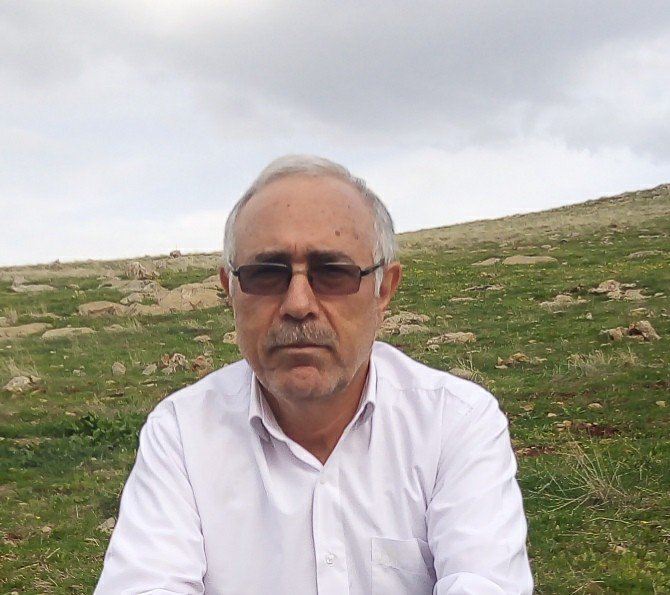
All labor laws are anti-worker; in conversation with Javanmir Moradi, a labor activist / conversation with Mari Mohammad.

Retirees, as a part of the working class, have always been discriminated against and deprived of their rights. Retirees, who were once active workers, are now being exploited both during their employment and in retirement. The written laws in the Islamic Republic provide a situation where a powerful minority, who have no understanding of the struggles and concerns of the working class, can make decisions and determine the fate and rights of this group for their own benefit.
In this issue of the peace line, we spoke to Mr. Javanmir Moradi, a well-known activist in the labor field and a member of the Trade Union of Electrical and Metal Workers in Kermanshah, to hear his opinions on the problems of retirees. Mr. Moradi has been a political prisoner for years in Kermanshah prison. He was also arrested in 1996 for organizing a ceremony for International Workers’ Day in Kermanshah and was later acquitted. In 1998
The conversation will be explained in more detail below:
At first, please tell us which groups and occupations are included in the working class and what percentage of the society it makes up?
The working class includes many layers. From factory workers and workers in various work environments, both production and service, to teachers, nurses, retirees, unemployed individuals, and all humans who must sell their labor in order to manage their lives. Even doctors who do not have private practices and work in hospitals, clinics, and medical centers and receive monthly salaries for their work are also part of the working class. It is clear that all layers of the working class, in terms of living standards and thinking, are not the same as other parts of society and have different layers. However, the working class as a whole includes all sections that earn a living through selling their labor. Regarding your second question, I must say that according to current estimates, perhaps more than two-thirds of society consists of various sections of the working class. According to statistics, nearly twenty-three or four million people are covered by social security, from workers to teachers and others. In addition, we must also include unemployed individuals, nurses,
As you know, according to Article 41 of the Labor Law, the Supreme Labor Council is obligated to determine the minimum wage of workers every year, which, as you mentioned, should be more than two-thirds of the society, based on the specified criteria. There have been many protests regarding the minimum wage set for this year. Can you explain a little more about this?
Article 41 of the Labor Law, which you mentioned, is one of the articles that are against the interests of workers and do not represent any of their benefits. Article 41 of the Labor Law has two clauses, the first of which refers to inflation, which must be added to the minimum wage of workers every year, and the second clause refers to the cost of living. However, both clauses determine the level of inflation and especially the cost of living by the government and state actors, including the Islamic Workers’ House Council. These have no connection to the interests of the working class and are organizations that are against the interests of the working class and have been created by the government and state, but claim to represent workers. For this reason, I have no credibility for not only Article 41, but also for any of the articles of the Labor Law and consider all of them to be against the interests of workers. However, protests over minimum wages have been ongoing for years and this year,
Increasing the nominal wages of workers (in fact, decreasing their real wages considering inflation) and paying it in the form of benefits rather than increasing the base salary, what impact does this have on the rate of wage increase for workers in the coming years and also on their retirement benefits? Who determines whether wage increases should be paid in the form of benefits or result in an increase in base salary?
Increasing wages in the form of benefits and such is a deceptive tactic. They use titles such as bonuses and assistance to consider benefits for the worker. Then, with various excuses, they can say at any time that you no longer need assistance and cut off the benefits. This way, they can easily undermine the worker’s wages and eliminate them. Or they can turn the benefits into a weapon against the worker, causing them to put more pressure on themselves and do more work in order to receive something under the name of encouragement and reward, only to have the benefits cut off whenever the employers desire. Increasing the base wage is part of the worker’s basic rights. In the current situation, the base wage is considered vital for the worker and cannot easily be taken away from them because it is determined as the base wage and must be paid to the worker for a certain number of hours worked. As a result, they cannot take away a significant portion of the worker’s rights under various excuses such as laziness
How does employing workers on a contractual rather than official basis affect their retirement status?
The use of contract workers, both during employment and retirement, has significant differences compared to permanent employment. Permanent employees have more benefits and perks compared to contract workers, and these differences also exist during retirement. Retired permanent employees have benefits and advantages that are not considered for contract workers, such as the fact that the retirement age for permanent employees is much shorter and is calculated based on their continuous employment. Someone who has a permanent and official contract does not experience any interruptions in their employment and can retire after thirty years of continuous work, while a contract worker may have their contract terminated multiple times, experience periods of unemployment, and these interruptions can delay their retirement. Someone who is officially employed and starts working at the age of twenty-four or twenty-five, can retire at the age of fifty-four or fifty-five, while a temporary contract worker who starts working at the same age may not be able to retire until the age of sixty or sixty-five, only because of the interruptions that occurred during their employment. This
The retired individual is the same employed worker from yesterday whose opinion on determining their minimum wage was insignificant to the Supreme Council of Labor. But what is their position during retirement for increasing their retirement benefits? Considering they are no longer employed and cannot fight for an increase in their minimum wage, which determines their retirement benefits.
A retired individual has a significant impact during retirement in the struggles for defending their livelihood rights. We have witnessed numerous gatherings and protests by retirees fighting for an increase in their basic rights. It is not fair to say that retirees have no place in the fight against inadequate rights. While employed workers can go on strike and express their protests in their workplace, retirees also have a significant platform for protesting. We have seen many protests and gatherings in front of relevant organizations and government offices in the streets and cities, demanding an increase in their rights – the same increase that employed workers are fighting for. Retirees have also supported and advocated for this increase as their own right and demand. Therefore, in my opinion, the position of retirees in the fight for wage increases is not insignificant, and they have a significant place, importance, and impact, just like employed workers.
In fact, my intention was to what extent the struggles and protests of retirees are being considered by the Supreme Council of Employment in determining their retirement rights?
Not only the opinions of retirees, but also the opinions of working laborers do not matter much to the Supreme Labor Council. What is important is the struggle of laborers and retirees. Without these struggles, none of the involved parties in the Supreme Labor Council will listen to the demands of laborers and retirees. As a result, the pressure of labor strikes and retiree protests on the streets grabs the attention of the public and ultimately forces the Supreme Labor Council to pay attention to the demands of laborers and retirees. Otherwise, they won’t even listen to the working laborers. As we have seen for years, if a laborer stops protesting and striking, they easily announce that there will be no increase in their annual salary. If we see a very small amount being added every year, it is the result of the pressure that the working class puts on the government, ruling party, and the Supreme Labor Council as their representatives. As a result, retirees are also in the same situation and their
As you mentioned, delayed payments and lack of salary increases are reasons that cause retirees, both independently and alongside employed workers, to protest and take refuge. However, most of the time, instead of responding to demands and holding accountable the relevant factors, these protests are met with security measures. How much do employers and those responsible for paying retirement benefits benefit from securing the protests of retirees and workers? Some labor activists believe that having an independent union alongside effective protests is crucial. What is your opinion?
Securing the struggles of workers and retirees and any other protests in society is not a new phenomenon and has been ongoing for forty-one years. They use security forces against any protest and gathering and attribute baseless accusations such as actions against national security and disruption of public order to the protesters. With these false excuses, they attack the ranks of workers, retirees, and any other protesting segment of society. The same treatment is also considered for retirees. Retiree protesters have been repeatedly suppressed, attacked, arrested, and harassed in front of government offices and centers. But the solution, like other workers’ segments, is to continue united struggles to be able to overcome these confrontations, resist against them, and appear with strength to force the other side to retreat. It is clear that if there were no independent organizations, both national and regional, they would be more easily suppressed and attacked. However, this does not mean that if there is no organization, workers and retirees no longer have the ability to protest
One of the main focuses of Article 29 of the Constitution of the Islamic Republic is the right of all citizens to social security, including retirement, unemployment, and so on. How much attention has the government paid to implementing the principles it has written and approved? Does the government even think about enforcing its own laws?
Some laws may have supported some social rights, but others are against them. In these forty-one years, no supportive action has been taken by the government and authorities to secure the interests and welfare of the retired, unemployed, and others. The conditions we see today are evidence of this reality. Providing for the livelihood of individuals is a fundamental and essential right in any society, and governments are obligated to ensure the livelihood of the people. However, in our country, this has never happened, and the demands of the people for their livelihood, including the unemployed, retired, employed, etc., have always been met with suppression, detention, and psychological and emotional pressures. Not only Article 29, but none of the other principles and laws in force are in line with serving the interests of the people. In written documents, and especially in practice, there is no sign of defending the rights of the people, but we see very aggressive and security measures taken against people whose lives are under pressure and who demand
With the arrival of retirement and meeting the specific needs of the elderly, to what extent has the determined retirement salary improved the quality of life for retirees and their families? Can they live a life with human dignity and meet their basic needs with the salary that is determined for them, even if it is delayed for several months? How would you describe their situation?
The living conditions of retirees are much more difficult than their working years, due to their advanced age and entering the retirement stage. It should also be noted that the pension they receive is only a percentage of their average salary in the last three years of their employment, not the entire amount. Therefore, it is natural that the standard of living for retirees is lower than that of employed workers and they face more pressure. The quality of life for retirees is not defined. Individuals who have worked for many years and have gone through a difficult and laborious life, live in conditions that are not worthy of any human being.
If you have any points in mind, please let me know at the end.
At the end, two points need to be further explained. First, the actions of the government and ruling system are not in conflict or inconsistent with their own laws. Regarding Article 29 of the Constitution, which apparently obligates the government to provide for the people’s livelihood, this determination of duty for the government is only a deception if they do not fulfill their duty and preserve the people’s right to protest and demonstrate. Every principle and clause of Iran’s laws that appears to support the interests of workers and people, if carefully examined, will reveal that they are related and conditional on other principles, articles, and clauses that have completely put the power of the government and ruling system in violating the rights of the people.
The second point is that retirees have a great power of protest and have demonstrated it many times. Retirees, like employed workers, do not have the power to stop production through strikes, but they have the power to close streets and shut down the city. We have witnessed many
Thank you for the opportunity you have given us to use the peace line.
 Created By: Mari Mohammadi
 June 21, 2020
Tags
Elderly Javanmehr Moradi Labor law Mary Mohammadi Monthly Peace Line Magazine Number 110 peace line Retirees Workers پیمان صلح ماهنامه خط صلح ماهنامه خط صلح