


Taqi Rahmani; Economic Benefits in Security Zones
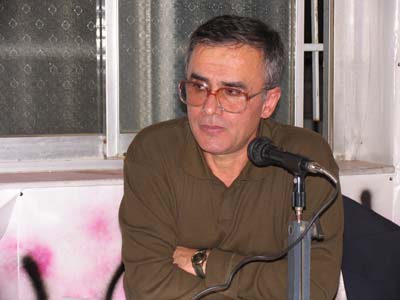
Taqi Rahmani, a member of the National Religious Activists Council who has spent nearly one-third of his life in prison, is a familiar face among civil activists.
He, who has direct experience of facing deprivation and underdevelopment in Sistan and Baluchestan through participating in two projects of “Basic Skills Development” and “Formation of Entrepreneurship Groups and Bank Acceptance Training” with his friends, strongly criticizes the existing security situation in this province and considers the Revolutionary Guards and extremist forces in the region as justifiers.
Mr. Rahmani also believes that in order to improve conditions, development and even a development with a positive form of double discrimination should take place, a kind of cultural tolerance should emerge, and a type of civility should be created…
Sistan and Baluchestan has always been deprived in various aspects, especially economically, and has always been considered a sensitive region in terms of security. What do you think is the reason for these issues?
See, in general, the structure of the new government in Iran – which began with Reza Shah – is inherently centralized and has dismantled the old tribal kings. The old tribal kings were formed with the positive intention of Amir Kabir, who wanted to create a modern government structure, but the reforms of this structure, so-called modern, were stopped and it turned into a dictatorship of Naser al-Din Shah. This dictatorship, with the failure of the fundamental goals of the Constitutional Revolution, led us towards a modern but centralized national government with a unified language, dress, and center. On the other hand, the Sistan and Baluchestan region of Iran, in general, faced various problems such as deprivation for two to three centuries, religious differences, and insufficient attention to the geography of the region. Later, when rebellions took place in that region, the central government increased its security approach. Even in my opinion, this issue exists in Ahvaz and Khuzestan
For example, in the year 1385 when I went to Baluchistan to invite Molana Abdul Hamid for the Peace Council, the most noticeable thing for me in this region was the presence of the Revolutionary Guards and their various actions, which, with a kind of radicalism (like the issue of Riggi at that time), justify each other. In such a situation, constructive forces and so-called moderate forces and civil and civic views are automatically weakened in these areas and the insecurity of the region also eliminates investment opportunities.
The reality is that when you enter these areas, there is a double deprivation and there is basically no basis for work. At that time, they sit in the center with a set of criteria and issue judgments about the behavior of the people in the region, such as smuggling goods. This is while “smuggling goods” does not mean “smuggling” there; whether on this side of the border or the other, they are all Baloch (or in western regions of Iran where both sides of the border are Kurdish) and they are also poor, and their only source of income is exchanging goods. This smuggling of goods has a different meaning in Tehran; it is a legal issue and also shows its own problems at the legal level. On the other hand, for example, they come and establish border markets, which are a good thing, but the reality is that some of the legal and regulatory issues in the economic sector that we face in the center lose their meaning there.
These are the points that, in my opinion, exacerbate deprivation in that place; there is no work, equal opportunities, jobs, or, for example, lack of sufficient educational opportunities (such as quality universities in Tehran and other major cities that do not exist in those areas) which prevent them from reaching higher levels. All of these create a kind of distance and a kind of backwardness that causes them to protest, and naturally, their elites become protesters themselves. These are issues that can be seen in both Kurdistan and Sistan and Baluchestan.
What is the situation in Sistan? Are the people there also as deprived as Balochistan?
See, even in Sistan, where the religion of the people and officials is almost the same and Shia, these problems still exist; now imagine in areas where after the Iranian Revolution, the factor of religion has also been added, meaning in addition to the national oppression that existed and was imposed on them, a religious factor has been added, making the distance greater and the work more difficult…
Mr. Rahmani; Another question that arises is what qualities exist there that would lead security forces to believe that the completely civil projects that your friend, Mr. Hadi Saber, implemented in the area are becoming more secure and showing strange reactions?
See, this sensitivity is partly due to interests. In these secure areas – in these large cities – they find a field of influence and believe that in this field of influence, we should not give in to civilian forces. On the other hand, when you are supposed to engage in civilian activities, you automatically push back security forces, political forces, and military forces.
The presence of security and military forces in this region creates a series of economic, social, and political benefits for all of those forces. In that place, there are rents that if the space becomes civil, these rents will disappear. They also justify extremists, which is a reality in this region. For example, the level of Iranian military involvement in the Kurdistan and Sistan and Baluchistan regions is linked to economic issues and a strategic output, and when the Revolutionary Guards and military personnel are not involved in economic projects, that region is no longer attractive to them. For successful civil development in a region, the space must first become non-military, as economic development does not occur in a military space, and that is why they would clash with each other, and of course, their goal was also national-religious, meaning outside of government control, which is a major issue. On the other hand, it was an organized force, meaning the power of the goal was not like a classic national
Let me tell you about an experience: Even during the period of reforms when we were active, the Ministry of Intelligence, under Mr. Khatami, did not easily accept us in small towns and the people who dealt with us faced restrictions. As the saying goes, they would say that change is possible but they would leave us in the middle of the field. This is a rule that the government has and it’s not easy for us to be accepted; now they are a little more accepting in Tehran. This was only during the reform period and in areas that were not considered military zones; now, if in a military zone, even during the Ahmadinejad era, a trace of civil culture is left, of course there will be a bad reaction.
What is your perspective on economic benefits? Considering the region’s climate, these economic benefits that you mentioned should not be so. There must be a more important reason for such security pressures to occur…
First of all, do not underestimate the economy. Sistan and Baluchestan region also has its own special attractions. I do not have much information in this area, but in any case, some of the drugs that enter the country pass through this region, and some smuggled goods enter from here; we hold fifteen billion dollars of smuggling and we have underground entrances, which is not a small amount. The second issue is control. Let’s say you put Mullah Abdulhamid, a religious figure, next to Reigi, who is also a religious figure. Reigi becomes stronger, Mullah Abdulhamid becomes weaker. When they execute a civilian figure like Ya’qub Mehrnahad in Sistan and Baluchestan, more radical individuals automatically emerge and the path is opened for the IRGC. Or even in Kurdistan, when civilian figures like Kurdpoors become weak, they become stronger against extremist figures. This is essentially a characteristic. So see how by hitting
I’ll give you an example: I was talking to Mawlana Abdul Hamid in 1385, and he was saying that we can launch a bit of prosperity with the help of some of these classes and tribes and improve the space a bit, but the central government of Iran is not willing to let a Sunni leader take charge of this matter. Now people like Hadi intended to bring Shiites and Sunnis closer together with a civic perspective, but the military perspective put it under radiation.
However, in the meantime, the violation of the rights of ordinary people in this region, in terms of economic, social, political, and overall human rights parameters that we know, has become a common practice. What solutions exist to improve this situation? Of course, the situation you have depicted does not have a definitive cure and we can only talk about improving it…
See, this has political, cultural, and economic implications. When the government announces a twenty-year centralized development plan, we must see what the province’s share of it is. On the other hand, one government comes to Iran and makes a twenty-year plan, but eight years later another government comes and tears apart all those plans and throws them out! Part of this problem is related to the same center; meaning, the center itself does not have a clear economic and development policy, not just for that place but for the whole of Iran, and this instability multiplies in the region. If an economic failure in Baluchistan increases the potential for drug trafficking, for example, it will also increase drug consumption in Isfahan.
But in general, the solution is clear and not strange or unusual. These areas need development and even a development with a positive multiplier effect; meaning more investment needs to take place there. These areas also need a type of cultural tolerance; meaning that moderate faces should come forward. These areas also need a type of civility; meaning that there should be more civil faces and activists. If the economic, cultural, and of course civil space changes, political tensions will naturally decrease and this requires certain factors. It is almost not impossible, but as I said, only if these measures are implemented can extremism be controlled.
I’ll give an example: If the issue of rigging is controlled, but with the continuation of the state of war, another rigging will emerge. So if the issue of rigging is controlled, the phase must change and the space must move towards a direction where people like riggers cannot go there and attract forces, or if they do attract, isolate them. However, you see that in the past eight years, Mawlana Abdul Hamid has not been allowed to enter Kurdistan or Baluchistan, even though he is a moderate person. Or they should not have executed Ya’qub Mehrnehad, his execution shows that they do not accept any civil movement; now suppose this person had a few meetings and conversations with a few people, an action that he did not do to be executed. Even if people commit a crime, they should be dealt with according to their social action, not with the heaviest punishment, which is execution. For example, the Kurdpoors
Let me tell you one thing, there is a very complicated game in Iran which is a game of politics with politics that costs civil and cultural work. Now this political game is also linked to a security-military game in some areas and the two sides get so involved with each other that the civil parties become weak. In this situation, the central government is more to blame and responsible. That means if a problem arises, it is at fault and it is the central government’s responsibility to plan and pay attention to the demands.
In any case, the countries that have gone in this direction have been successful and have alleviated deprivation. Although alleviating deprivation does not happen overnight, eventually a process must be put in place to address the issues. Although Balochistan is very unlucky; Balochistan in Pakistan is even more deprived than Balochistan in Iran… In summary, this province is defined within Iran and the government is responsible for it, and these inequalities will continue to exist as long as there is no attention given to them.
Thank you for taking the time to be with us.
 Created By: Admin
 July 24, 2014
Tags
Issue number 39