


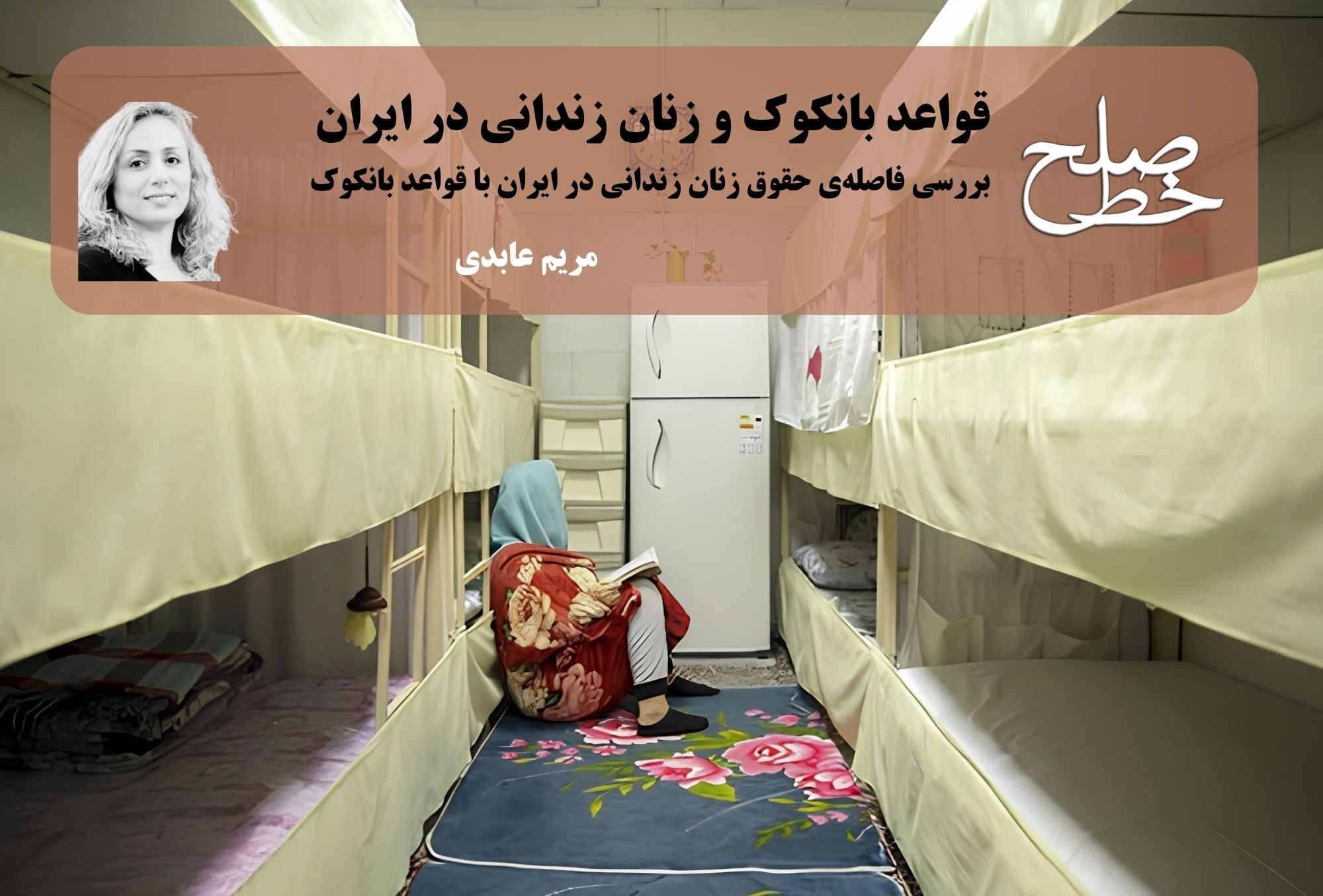
Bangkok Rules and Women Prisoners in Iran/ Maryam Abedi
The protection of human dignity is a fundamental principle of international human rights law and the basis for the treatment of persons deprived of their liberty. Deprivation of liberty refers solely to the deprivation of freedom of movement, and states are still obliged to guarantee the fundamental rights of prisoners, including the right to health, security, human dignity and humane treatment.
However, the experience of penal systems has shown that applying the same rules to women and men does not always lead to the realization of justice. Women prisoners, due to their biological, psychological and social characteristics, including pregnancy, motherhood, reproductive health, family responsibilities and experience of gender-based violence, require special protections that can be justified within the framework of the principle of substantive equality.
In this regard, the United Nations General Assembly adopted the “United Nations Rules for the Treatment of Women Prisoners and Non-Affective Measures of Release for Women Offenders” (Bangkok Rules) in 2010. These Rules, supplementing the Nelson Mandela Rules, set out specific standards of protection for women prisoners in the areas of health, pregnancy, maternity, prevention of gender-based violence, protection of human dignity and the development of non-avoidable measures of release.
In the legal system of the Islamic Republic of Iran, protection of prisoners’ rights has also been addressed in documents such as the Constitution, the Islamic Penal Code, the Criminal Procedure Code, and the Executive Regulations of the Prisons Organization. However, the question arises as to whether these regulations fully provide the specific protections envisaged in the Bangkok Rules or whether they are still based on formal equality.
Accordingly, the aim of this study is to assess the extent to which Iran’s legal and penal system complies with the standards of the Bangkok Rules. Using a descriptive-analytical method and a comparative-critical approach, this study, while explaining the most important standards of the Bangkok Rules, compares Iran’s domestic laws and regulations with these standards and examines the extent of their alignment or conflict in the area of protecting imprisoned women.
The innovation of this research is that, by focusing on the concept of substantive equality, it does not limit itself to simply introducing the Bangkok Rules or describing domestic regulations, but rather attempts to evaluate the extent of the realization of gender justice in the Iranian criminal system from the perspective of international human rights standards and to explain the existing legislative and executive gaps.
The Origin of the Bangkok Rules
The increase in the number of women prisoners in the last decades of the twentieth century confronted the international community with the fact that general standards governing the treatment of prisoners, although emphasizing the principle of equality, did not in practice respond to the specific needs of women. The biological, psychological, social and family characteristics of women, including pregnancy, motherhood, reproductive health, experience of gender-based violence and care responsibilities, required the criminal justice system to adopt an approach based on gender justice. However, for many years international human rights instruments lacked a comprehensive set of rules specific to women prisoners, and the existing regulations were largely drafted with a gender-neutral approach.
In response to this gap, on 21 December 2010, the United Nations General Assembly, through Resolution 65/229, adopted the “United Nations Rules for the Treatment of Women Prisoners and Non-Affective Measures of Release for Women Offenders,” a set of 70 rules known as the Bangkok Rules, due to the active role of the Thai government in their development. The document is the first international instrument to specifically address the needs, rights and conditions of women at all stages of the criminal justice system, from detention to post-release.
The formulation of the Bangkok Rules should be seen as the result of the gradual transformation of international law from the concept of “formal equality” to “substantive equality”. Formal equality emphasizes the equal treatment of all individuals, while substantive equality requires attention to real differences between individuals and the adoption of special measures to realize equal opportunities. From this perspective, the Bangkok Rules, by recognizing the specific needs of women, attempt to pave the way for the realization of criminal justice based on human dignity and true equality.
Objectives of the Bangkok Rules
The main objective of the Bangkok Rules is to ensure respect for the human dignity, fundamental rights and special needs of women in the criminal justice system. The Rules are based on the principle that genuine equality between women and men cannot be achieved solely through equal treatment, but also requires, in some cases, the adoption of protective and differentiated measures tailored to the specific circumstances of women. Therefore, the Bangkok Rules are not a special privilege for women, but a tool for addressing structural inequalities and achieving gender justice.
Among the most important objectives of these rules are to ensure access to gender-sensitive health services for women prisoners, to protect pregnant women and mothers with children, to prevent sexual violence and abuse, to prohibit degrading examinations, to preserve family ties, to promote mental health, to provide specialized training for prison staff, and to develop non-deterrent measures. The Bangkok Rules also encourage governments to use, wherever possible, alternatives to imprisonment for women, especially pregnant women, mothers with children, and women who have committed non-violent crimes, as the imprisonment of these groups has consequences beyond the individual prisoner, especially for children and the family system.
In summary, the philosophy underlying the Bangkok Rules is that the implementation of punishment should not lead to a violation of human dignity or the deprivation of women’s fundamental rights, and penal policies should be designed and implemented taking into account their specific circumstances.
From the perspective of international law, the Bangkok Rules are classified as soft law instruments. Unlike international treaties, these rules do not create a binding contractual obligation for states, and states do not become bound by treaty law by ratifying them. However, the lack of legal bindingness does not mean that these rules lack normative or practical value.
In the literature of international law, soft law instruments play an important role in the interpretation and development of human rights standards. The Bangkok Rules, as one of the most important international standards in the field of women prisoners’ rights, are also the basis for assessing the performance of states by human rights institutions, UN Special Rapporteurs, the United Nations Office on Drugs and Crime (UNODC) and other monitoring mechanisms. In addition, many of the principles contained in the Bangkok Rules are rooted in the binding obligations of states under instruments such as the International Covenant on Civil and Political Rights, the Convention on the Rights of the Child and the rules against torture and inhuman or degrading treatment.
Therefore, although the Bangkok Rules are formally considered a non-binding document, from an interpretative and implementation perspective they have a prominent position in determining standards for the treatment of women prisoners and are today recognized as one of the most important criteria for measuring the compliance of penal systems with international human rights standards.
The relationship between the Bangkok Rules and Nelson Mandela Rules
The Bangkok Rules cannot be considered a stand-alone document separate from other international human rights standards; rather, they complement the “United Nations Standard Minimum Rules for the Treatment of Prisoners,” which were revised in 2015 and renamed the “Nelson Mandela Rules” in honor of former South African President Nelson Mandela. The Nelson Mandela Rules set a general framework for the humane treatment of all prisoners and emphasize principles such as respect for human dignity, prohibition of torture, access to medical care, segregation of prisoners, contact with family, and the right to adequate conditions of detention.
Despite the importance of these rules, many of their provisions are based on a largely gender-centric model and do not address the specific needs of women. The Bangkok Rules, while preserving the foundations and principles contained in the Nelson Mandela Rules, address this gap by providing specific standards for women. In other words, the Bangkok Rules do not replace the Nelson Mandela Rules, but complement them, supplementing the general principles contained in the Mandela Rules with gender considerations.
Therefore, in assessing the compliance of penal systems with international standards, the Bangkok Rules and the Nelson Mandela Rules should be studied together, because only by combining these two documents can a comprehensive picture of international obligations in the field of protecting the rights of imprisoned women be obtained.
The most important standards of the Bangkok Rules:
A) The principle of non-discrimination and the principle of substantive equality
One of the most fundamental principles governing the Bangkok Rules is the recognition of gender differences and the need to take special measures to ensure women’s real equality in the criminal justice system. In contrast to the traditional understanding of the principle of equality, which emphasizes the equal treatment of all individuals, the Bangkok Rules are based on the concept of substantive equality. According to this approach, justice is achieved when the criminal justice system takes into account women’s biological, psychological, social and economic differences in policy-making, legislation and the implementation of punishment.
In this regard, Rule 1 of the Bangkok Rules stipulates that the implementation of the general rules for the treatment of prisoners shall be carried out with due regard to the specific needs and characteristics of women and that the adoption of special measures for women shall not be considered discriminatory. This rule in fact indicates that differential treatment aimed at eliminating structural inequalities is not an example of discrimination, but rather a requirement for the realization of justice.
The second rule also emphasizes the need for an initial assessment of the situation of women upon entry into prison. This assessment should include information about physical and mental health, history of violence, child care responsibilities, pregnancy, addiction, medical needs, and other specific circumstances so that subsequent decisions can be made based on an accurate understanding of the prisoner’s situation.
From an international law perspective, these rules are consistent with the principle of non-discrimination in Articles 2 and 26 of the International Covenant on Civil and Political Rights, Articles 1 and 2 of the Convention on the Elimination of All Forms of Discrimination against Women (CEDAW), and Article 2 of the Universal Declaration of Human Rights. However, the Bangkok Rules go beyond the prohibition of discrimination and call on States to take positive measures to effectively protect women prisoners.
In practice, this principle underlies many subsequent Bangkok rules and is considered a criterion for assessing the legitimacy of states’ penal policies towards women.
b) The right to health and medical services appropriate to women’s needs.
The right to health is a fundamental human right that must be guaranteed without discrimination in prison settings. However, the Bangkok Rules, recognizing that women have different health needs than men, provide a set of specific standards in the field of medical services and reproductive health.
Rules 6 to 18 deal with the issue of health services. These rules require States to ensure that women prisoners have access to comprehensive medical services, reproductive health care, specialist gynecological examinations, menstrual services, prevention and treatment of infectious diseases, mental health and addiction treatment programmes. These services must be provided with due regard for medical confidentiality, informed consent and the professional independence of health care staff.
One of the important innovations of the Bangkok Rules is the special attention paid to the mental health of women. International studies show that a significant percentage of women prisoners have experienced domestic violence, sexual abuse, mental disorders or drug dependence before entering prison. Therefore, Rules 12 and 13 emphasize the conduct of psychological assessment at the beginning of the period of detention and the provision of specialized mental health services.
Rule 5 also requires states to provide women with the necessary sanitary facilities for menstrual hygiene management, including free access to sanitary products and sufficient water, without humiliation or restriction. Today, this issue is recognized as part of the right to health and human dignity, and human rights institutions consider it one of the indicators for assessing conditions in women’s prisons.
At the international level, these rules are consistent with Article 12 of the International Covenant on Economic, Social and Cultural Rights, Article 12 of the Convention on the Elimination of All Forms of Discrimination against Women (CEDAW), and Rules 24 to 35 of the Nelson Mandela Rules, and emphasize the principle of equality in access to health services and the need to pay attention to the special needs of women.
c) Support for pregnant women, imprisoned mothers and accompanying children
One of the most distinctive features of the Bangkok Rules is the special protection afforded to pregnant women, nursing mothers and children living with their mothers in prison. This protection is based on the premise that the effects of imprisonment should not be passed on to the child, who has played no role in the commission of the crime, and that the best interests of the child must always be taken into account in decision-making.
Rules 48 to 52 require States to provide medical care before, during and after childbirth in accordance with public health standards. Childbirth should not be carried out in conditions that would violate the dignity of the woman or endanger her safety and health or that of the newborn.
Rule 24 prohibits the use of restraints, such as handcuffs, shackles or chains, on women during childbirth, during transport to medical facilities and during the postpartum period. This prohibition is now considered one of the accepted rules of international law prohibiting inhuman and degrading treatment.
In the case of children with their mothers, Rules 49 and 52 state that the decision on the child’s presence in prison must be made on the basis of the principle of “the best interests of the child” and that the child must not be treated as a prisoner. States are also obliged to provide adequate conditions for the child’s nutrition, medical care, education and development.
These rules are directly related to the Convention on the Rights of the Child, in particular Article 3 (Best Interests of the Child), Article 9 (Right to Family Life), and Article 24 (Right to Health), and reflect an approach that targets punishment on the convicted person, not on their family members.
d) Prohibition of humiliating inspections and protection of human dignity
Human dignity is the foundation of all rules governing the treatment of prisoners. In the case of women, repeated experiences of degrading body searches and sexual abuse led the Bangkok Rules to set stricter standards in this regard.
Rule 19 states that body searches should be carried out only when necessary, on the basis of the principle of proportionality and with full respect for human dignity. Rule 20 encourages States to use modern technologies, such as scanners, instead of strip-searching, to prevent physical and psychological harm caused by such searches.
Rule 21 also emphasizes that if a body search is unavoidable, it must be carried out by trained female staff and with full respect, privacy and confidentiality.
These regulations are to be interpreted in light of Article 7 of the International Covenant on Civil and Political Rights, the Convention against Torture, and the Nelson Mandela Rules, and their aim is to prevent degrading treatment, sexual abuse, and violations of the dignity of women prisoners.
e) Preventing gender-based violence and supporting affected women
Recognizing the fact that many women prisoners have been victims of gender-based violence before detention or during the criminal process, the Bangkok Rules oblige governments to adopt special preventive and protective measures.
Rules 6, 7 and 25 emphasize the identification of affected women, the provision of medical and psychological services, protection from violence, the establishment of confidential complaint mechanisms and effective investigation of allegations of abuse. They also emphasize specialized training for prison staff in the prevention of gender-based violence and adherence to professional ethics.
The philosophy of these regulations is that the prison environment should not become a place for the continuation or escalation of violence against women, but rather should provide an environment for their rehabilitation, treatment, and return to society.
f) Development of non-negative measures of freedom for women
One of the most innovative parts of the Bangkok Rules is their emphasis on the use of alternatives to imprisonment. Rules 57 to 61 encourage States to use measures such as suspended sentences, supervised release, community service and other non-custodial sentences for women, especially pregnant women, mothers with children and perpetrators of non-violent crimes.
These rules are based on the premise that the imprisonment of women has far-reaching effects on the family, especially children, in addition to the convicted person. Therefore, decisions on the imposition of punishment should be made taking into account the principle of proportionality, the best interests of the child and the possibility of the individual’s reintegration into society.
This approach is in line with modern criminal justice policies, the principle of individualization of punishment, and international documents related to reducing the use of imprisonment, and today it is considered one of the most important indicators for evaluating penal systems in the field of women’s rights.
A review of the Bangkok Rules shows that this document is the first comprehensive international framework that recognizes the specific needs of women in the criminal justice system with an approach based on gender justice. By emphasizing human dignity, substantive equality, protection of physical and mental health, care for pregnant women and mothers, prevention of gender-based violence, protection of privacy and development of non-negative measures of release, these rules provide standards that go beyond the general rules for the treatment of prisoners. From this perspective, the Bangkok Rules are not simply a set of implementation recommendations, but rather reflect the evolution of international law from formal equality to gender justice and effective protection of women in the criminal justice process.
Having explained the most important standards of the Bangkok Rules, we can now ask the question of how well the legal and executive system of the Islamic Republic of Iran is aligned with these international standards. Therefore, the next chapter will assess the extent to which Iranian laws, regulations, and practices comply with each of the aforementioned standards, using a comparative-critical approach.
Assessing the degree of compliance of Iran’s legal and penal system with the standards of the Bangkok Rules:
A) Evaluation of the principle of non-discrimination and substantive equality in the Iranian legal system
The Bangkok Rules I and II emphasize the principle of substantive equality and recommend that governments, in addition to respecting the principle of non-discrimination, take into account the specific needs of women prisoners in policy-making and the implementation of sentences. They emphasize the need to recognize the special circumstances of women, including their health status, family responsibilities, and gender-based vulnerabilities.
In the Iranian legal system, Articles 19, 20, 22, and 39 of the Constitution emphasize the equality of individuals before the law, the protection of human dignity, and the prohibition of indignities against prisoners. The Executive Regulations of the Prisons Organization (1400) also consider respect for prisoners’ rights and human dignity to be among the principles governing prison management. However, domestic laws and regulations—unlike the Bangkok Rules—do not provide a comprehensive framework for identifying and supporting the specific needs of women prisoners and achieving substantive equality.
Therefore, although the Iranian legal system recognizes the principle of equality and non-discrimination, its approach is largely based on formal equality, and the special protections envisaged in the Bangkok Rules are not fully reflected in domestic law. Therefore, the degree of compliance of the Iranian legal system with the first and second Bangkok Rules can be assessed as “relative”.
B) Evaluation of the right to health and medical services of imprisoned women
Rules 5 to 18 of the Bangkok Rules recognize the right of women prisoners to access health services appropriate to gender needs, including physical and mental health care, reproductive health services, prenatal care, addiction treatment, and the protection of medical confidentiality as part of the right to health and human dignity.
In the Iranian legal system, the Executive Regulations of the Prisons Organization and Security and Educational Measures of the Country, approved in 1400, are the most important domestic document in this regard. Article 117 of this regulation, in implementation of the Note to Clause “C” of Article 38 of the Law on Permanent Provisions of the National Development Programs approved in 1395, obliges the Ministry of Health, Treatment and Medical Education to cover penal institutions with comprehensive health services. Article 118 also obliges the Prisons Organization to develop and implement a comprehensive health and treatment services program. In addition, Articles 138, 140 and 144 of the same regulation emphasize, respectively, the medical examination of newly admitted prisoners, immediate access of prisoners to medical services and the provision of mental health services in collaboration with a doctor, psychiatrist and psychologist.
Despite the provision of these protections, domestic regulations mainly focus on general health services, and many of the specific protections stipulated in the Bangkok Rules, including comprehensive reproductive health services, gender-specific care, and addressing the specific needs of women prisoners, are not explicitly and independently provided for in Iranian laws and regulations. Therefore, the degree of compliance of the Iranian legal system with Bangkok Rules 5 to 18 can be assessed as “relative” because, although the right to access health services is recognized in domestic law, the specialized and gender-specific protections of the Bangkok Rules are not fully reflected in the Iranian legal system.
c) Assessment of support for pregnant women, imprisoned mothers and accompanying children
Rules 24 and 48 to 52 of the Bangkok Rules oblige States to ensure special protection for pregnant women, imprisoned mothers and their accompanying children, including prenatal, delivery and postnatal care, adequate nutrition, the prohibition of the use of restraints during childbirth, consideration of the best interests of the child and the adoption of alternative measures to imprisonment in appropriate cases.
In the Iranian legal system, the Executive Regulations of the Prisons and Security and Educational Measures Organization of the country, approved in 1400, are the most important regulations in this regard. Article 158 of this regulation stipulates that imprisoned mothers can keep their infant child in the penal institution until the age of two, and if the classification council determines otherwise, this period can be extended to six years. This article also obliges the institution to provide hygiene supplies, proper nutrition for the mother and child, and to implement a special diet for pregnant women, nursing mothers, and accompanying children. In addition, social workers are required to provide the basis for handing over the child to the family or a welfare organization if it is not possible to keep the child with the mother.
Despite these protections, domestic regulations, compared to the Bangkok Rules, lack explicit provisions on the prohibition of the use of handcuffs and other restraints during pregnancy and childbirth, the guarantee of specialized pre- and post-natal care, and the prioritization of non-detrimental measures of liberty for pregnant women and mothers with young children. Therefore, although the Prisons Organization’s regulations provide for some special protections, these protections do not cover all the requirements set out in Rules 24 and 48 to 52 of the Bangkok Rules; therefore, the extent to which the Iranian legal system complies with this part of the Bangkok Rules can be assessed as “relative compliance.”
d) Assessment of the prohibition of humiliating inspections and the preservation of human dignity
Rules 19 to 21 of the Bangkok Rules emphasize respect for human dignity in body searches of women prisoners and require states to conduct searches only when necessary, by trained female officers, in privacy and, whenever possible, using alternative methods such as electronic devices. The rules also consider strip searches to be contrary to human dignity and emphasize the prevention of any sexual abuse or violence.
In the Iranian legal system, Article 22 of the Constitution declares that the dignity, life, property, and rights of individuals are inviolable, and Article 39 of the Constitution prohibits any insult to the dignity of arrested, imprisoned, or exiled individuals. In addition, the Law on Respect for Legitimate Freedoms and Protection of Citizens’ Rights, approved in 1383, specifically Article 6, prohibits any humiliating, harassing, or inhumane behavior toward defendants and convicts. In addition, the Executive Regulations of the Prisons Organization and Security and Educational Measures of the Country, approved in 1400, also stipulate that respecting human dignity, protecting prisoners’ rights, and prohibiting degrading behavior are among the principles governing the administration of penal institutions.
However, domestic regulations do not comprehensively address the specific and detailed provisions of Bangkok Rules 19-21, including the priority of using alternative body search equipment, special requirements for searches of women by trained personnel, and specific standards to prevent degrading searches. Therefore, although the Iranian legal system recognizes the principle of preserving human dignity and prohibiting degrading treatment, its level of compliance with Bangkok Rules 19-21 can be assessed as “partial compliance” because there are general protections in domestic law, but the specific provisions governing the search of female prisoners are not fully aligned with the standards of the Bangkok Rules.
E) Assessment of gender-based violence prevention and support for affected women
Rules 6, 7, 25 and 31 of the Bangkok Rules oblige governments to identify women prisoners who are exposed to violence or have a history of gender-based violence, provide them with the necessary medical, psychological and social support, provide confidential complaint mechanisms and prevent any violence, abuse or sexual harassment in the prison environment.
In the Iranian legal system, Article 22 of the Constitution emphasizes the inviolability of the dignity and rights of individuals, and Article 39 of the Constitution emphasizes the prohibition of insulting the dignity and honor of detainees and prisoners. The Law on Respect for Legitimate Freedoms and Protection of Citizens’ Rights, approved in 2004, also prohibits any illegal, humiliating, and unlawful behavior toward defendants and convicts. In addition, Article 2 of the Executive Regulations of the Prisons and Security and Educational Measures Organization of the Country, approved in 2001, declares respect for human dignity, citizen rights, consideration of gender conditions, preservation of privacy, and enjoyment of fair rights without discrimination as fundamental principles of the administration of penal institutions, and Article 107 emphasizes the protection of prisoners’ rights, addressing cases of violations of their rights, and cooperation with supervisory authorities.
However, compared to the Bangkok Rules, domestic regulations do not provide for specific and comprehensive mechanisms to identify women victims of gender-based violence, provide specialized psychological services based on trauma, establish an independent and confidential system for handling complaints related to sexual violence, and provide special protection for affected women. Therefore, although the Iranian legal system emphasizes the preservation of human dignity and the prohibition of degrading treatment, its level of compliance with the Bangkok Rules standards in the field of preventing gender-based violence and protecting affected women can be assessed as “partial compliance.”
f) Assessment of non-negative measures of release and alternatives to imprisonment
Rules 57 to 62 of the Bangkok Rules encourage States to use, to the extent possible, non-deterrent measures and alternatives to imprisonment, particularly for pregnant women, mothers with children and perpetrators of non-violent crimes. The rules emphasize the principles of individualization of punishment, proportionality, preservation of the family structure and consideration of the best interests of the child.
In the Iranian legal system, the Islamic Penal Code of 1392, by providing for institutions such as postponement of the issuance of the verdict (Articles 40 to 45), suspension of the execution of the sentence (Articles 46 to 54), alternative punishments to imprisonment (Articles 64 to 87), conditional release (Articles 58 to 60), and the semi-liberty system (Articles 56 and 57), has paved the way for the use of non-negative measures of freedom. In addition, the Criminal Procedure Code of 1392, by providing for appropriate security orders, including the obligation to appear on oath, the obligation to determine the amount of the bond, and the receipt of bail and bail (Articles 217 to 247), emphasizes the principle of necessity and proportionality in restricting the freedom of individuals.
However, domestic regulations do not provide for special privileges or protection for women, especially pregnant women, mothers with young children or vulnerable women, in accessing respite facilities, and the operation of these facilities is largely subject to general legal requirements. While the Bangkok Rules recommend the use of non-negative measures of liberty with a gender-sensitive approach, taking into account the best interests of the child and the specific circumstances of women, Iranian law has not explicitly adopted such a specific approach.
Therefore, although the Iranian legal system has significant capacities in terms of providing for leniency institutions and alternative punishments to imprisonment, the lack of provision of special criteria for female prisoners means that its level of compliance with Bangkok Rules 57 to 62 is assessed as “relative compliance.”
delayed
As the first international instrument specifically addressing the rights of women prisoners, the Bangkok Rules, with an approach based on human dignity, substantive equality and gender justice, provide standards beyond the general rules for the treatment of prisoners. By recognizing the specific needs of women in the criminal justice process, these Rules recommend to governments to adopt protective measures in the areas of health, pregnancy, maternity, prevention of gender-based violence, preservation of human dignity and development of non-detrimental measures of liberty.
A comparative study of the domestic regulations of the Islamic Republic of Iran with the standards of the Bangkok Rules shows that although principles such as preserving human dignity, prohibiting degrading treatment, the right to access medical services, and the provision of some relief institutions have been taken into account in the Constitution of the Islamic Republic of Iran, the Islamic Penal Code, the Criminal Procedure Code, and the Executive Regulations of the Prisons Organization and Security and Educational Measures of the Country, these regulations are mainly based on general protections for prisoners and, in many cases, do not explicitly and systematically reflect the specific and gender-based protections foreseen in the Bangkok Rules.
The findings of this study show that the most important gap between the Iranian legal system and the Bangkok Rules is not in the acceptance of general human rights principles, but in the failure to institutionalize the approach of substantive equality and gender justice in criminal policy and regulations related to women prisoners. In areas such as protection of pregnant women and mothers in prison, reproductive health, identification of women affected by violence, prevention of gender-based violence, and the use of non-deterrent measures, domestic regulations are still far from international standards.
Accordingly, it can be concluded that the level of compliance of the Iranian legal system with the Bangkok Rules is relative; meaning that although some general principles and protections are foreseen in domestic laws, many specific requirements of these rules have not yet been realized at the legislative and implementation levels. Therefore, reviewing the regulations related to women prisoners, strengthening gender-specific protections, developing alternative punishments to imprisonment, improving physical and mental health services, and reforming enforcement procedures can be an effective step in aligning the Iranian penal system with international human rights standards and promoting protection of the dignity and rights of women prisoners.
 Created By: Maryam Abedi
 July 23, 2026
Tags
Bangkok Rules Family foundation Human dignity Islamic Penal Law Maryam Abedi Mothers of prisoners Prisoners' harassment Sexual violence Women Prisoners