


Latest Posts

The Face of the Capital from the Past to Today / Reza Dehlooi
Tehran has been experiencing unbalanced and chaotic growth since the Safavid period, especially since it was chosen as the capital of Iran by Agha Mohammad Khan Qajar. Despite occasional attempts to establish official boundaries and limits for the city, it has continued to expand and develop without proper oversight or control from national authorities. As […]...
Read More Created By:
Reza Dehlavi
Created By:
Reza Dehlavi February 19, 2025
City as a Territory: Reproducing Inequalities through Spatial Policies in Tehran / Mina Javani
The division between center and periphery is one of the fundamental mechanisms shaping economic, social, and cultural inequalities in modern societies. This distinction, which is reproduced in historical and structural contexts, is not only evident in macro-level policies, but also in the smallest elements of urban life. The recent decision by the Tehran City Council […]...
Read MoreCreated By:
Mina Javani February 19, 2025
Makran in the trap of politics/ Mohsen Behbahani
A while ago, the government spokesperson announced that the medical government intends to relocate the capital from Tehran to the Makran region and this matter is under consideration. (1) Many countries throughout history have changed their capitals for various reasons, the main reason being the increase in population in the capital and balanced development in […]...
Read MoreCreated By:
Mohsen Borhanzehi February 19, 2025
The Thought of Possible Transfer of the Capital from Tehran to Makran: Opportunities, Challenges / Ahmad Alavi
The idea of relocating the capital in Iran, especially from Tehran to the Makran region, has recently been raised due to environmental challenges, population density, and Tehran’s vulnerability to natural disasters. This plan aims to achieve goals such as balanced regional development, strengthening geopolitical position, and reducing centralization. However, implementing such a plan can have […]...
Read MoreCreated By:
Ahmad Alavi February 19, 2025
The game of transferring the capital to Makran has no players/ Parvaneh Ahmadi
In the month of Dey 1403, the government spokesperson announced that relocating the capital to the Makran region is one of the serious options in the country’s major plans. This plan has not been fully rejected or approved in terms of implementation, and according to Jafar Qaempanah, the executive deputy of the president, regarding the […]...
Read MoreCreated By:
Parvaneh Ahmadi February 19, 2025
Makran, a strategic capital or a game with public opinion? / Fereshteh Goli
The topic of transferring the capital from one city to another is a story with a long history. The records related to the most important cases of capital transfers in the world show that the transfer of capitals took place in 1800 in America, in 1868 in Japan, in 1871 in Italy, in 1912 in […]...
Read MoreCreated By:
Fereshteh Goli February 19, 2025
Environmental damages of transferring the capital to underdeveloped areas/ Masoud Lahout
Regardless of the fact that the transfer of the capital to Makran, which has recently become a topic of discussion, is environmentally friendly and in accordance with the country’s top documents – especially the Land Development document – or not, the proposal for such an important matter, meaning the necessity of transferring the capital to […]...
Read MoreCreated By:
Masoud Lahout February 19, 2025
Not participating of local communities in the plan of transferring the capital/ Sina Yousefi
Concentration and centralization have become one of the structural characteristics of governance in Iran after the establishment of the Islamic Republic system. This centralized approach has gradually led to the creation and intensification of deep social, economic, political, and cultural problems. In the midst of this, plans such as relocating the capital from Tehran to […]...
Read MoreCreated By:
Sina Yousefi February 19, 2025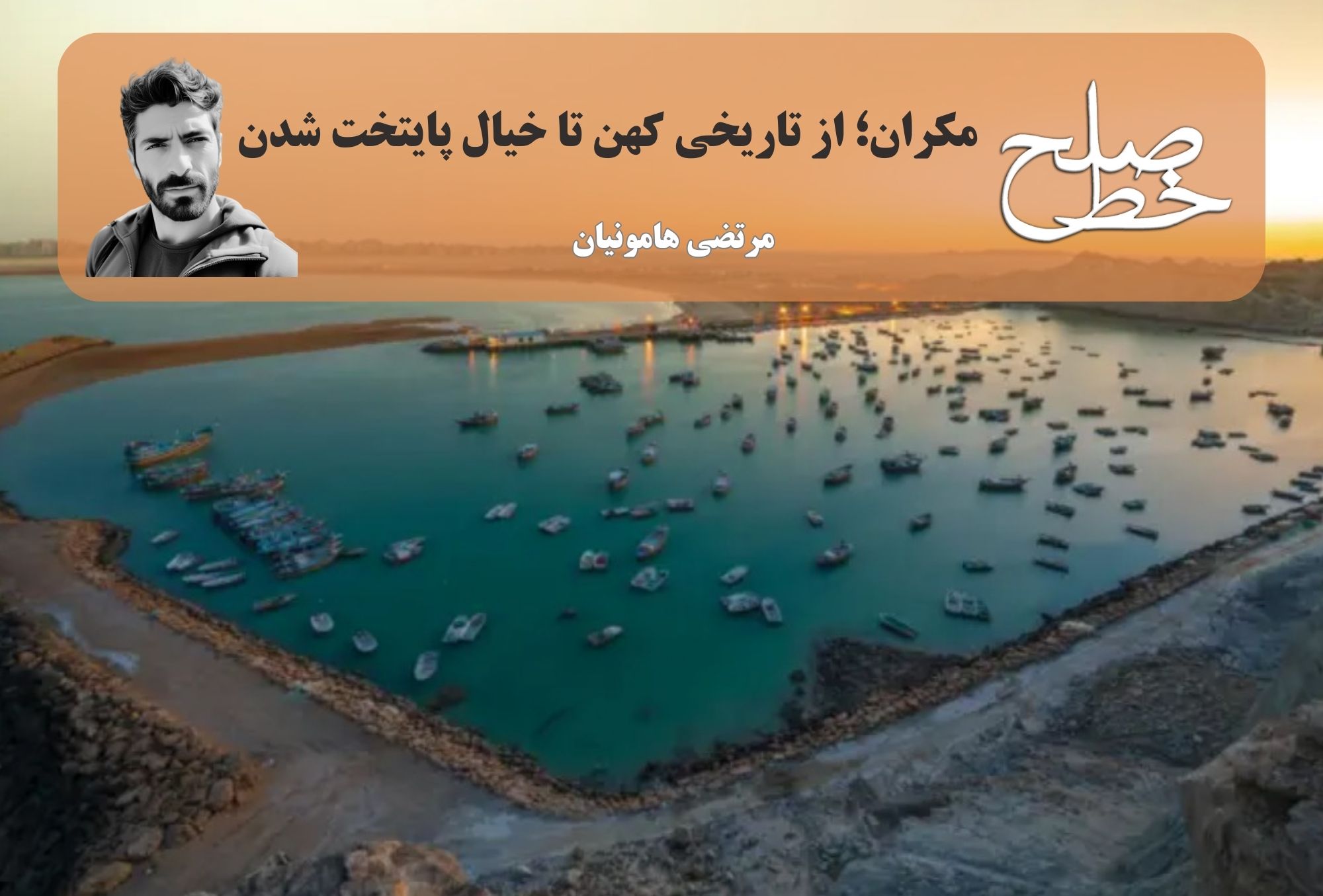
Makran; From Ancient History to the Imagination of Becoming the Capital / Morteza Hamounian
In the beginning of the winter month of 1403, Mohammad Reza Aref, the first deputy of the new government of the Islamic Republic, openly declared among the members of the Foreign Economic Relations Committee that if they come to a conclusion about the transfer of the capital, one of the regions that will be seriously […]...
Read MoreCreated By:
Morteza Hamounian February 19, 2025
The correct solution is the development of Balochistan by the Baloch and through the Baloch themselves / Ahmad Baloch
The discussion of transferring the capital of Iran from Tehran to the coasts of Makran in Balochistan, goes beyond a mere administrative and infrastructural decision, and will have profound cultural, social, and demographic consequences for Balochistan. This decision, made without the genuine participation of the indigenous people, will not only fail to lead to sustainable […]...
Read MoreCreated By:
Ahmad Baloch February 19, 2025
