


Latest Posts

Execution in Numbers / Alireza Goodarzi
In 2024, Amnesty International recorded a total of 1518 executions in 15 countries, which was 32% higher than in 2023. This statistic does not include the number of executions in China, as the number of executions in China is confidential. Obtaining statistics from other countries such as North Korea and Vietnam has also been difficult, […]...
Read More Created By:
Alireza Goodarzi
Created By:
Alireza Goodarzi April 21, 2025
Execution in the Islamic Republic; Symbolic Violence and Reproduction of Power/ Raha Sabat Sarvestani
In recent years, the significant increase in laws and executions in Iran, especially after the recent nationwide protests, has raised deep questions about the social, political, and ideological function of this punishment in the Islamic Republic. This essay seeks to analyze execution not only as a means of criminal punishment, but also as a mechanism […]...
Read MoreCreated By:
Raha Sabet Sarvestani April 21, 2025
Execution as a policy/ Ahmad Alavi
Based on the recent report by Amnesty International (published on April 8, 2025), (1) the Islamic Republic, with a minimum of 972 executions, accounts for more than 64% of all recorded executions in the world. This figure puts the regime ruling over Iran in the first place among the countries carrying out executions in the […]...
Read MoreCreated By:
Ahmad Alavi April 21, 2025
Protecting lives is the duty of the government / Mohammad Hadi Jafarpour
Based on the evidence remaining from ancient times, what has always been a fundamental and eternal question and challenge for humanity is human rights, especially in the form of natural and fundamental rights, namely the “right to life”. The embodiment and tangible manifestation of this right has been the source of other human rights, which […]...
Read MoreCreated By:
Mohammad Hadi Jafarpour April 21, 2025
A look at dealing with supporters of the hijab law/ Fereshteh Goli
Nowadays, most people in Iran are familiar with the term “hard core of the system”. This core, according to the laws of the Islamic Republic, refers to the leader and his inner circle. According to this definition, the inner circle of the system must be made up of high-ranking military commanders appointed by the leader […]...
Read MoreCreated By:
Fereshteh Goli April 21, 2025
Capital; a series that had no water for the people but had bread for the radio and television/ Parvaneh Ahmadi
In recent years, the television series “Paytakht” has always been a subject of attention with its social and political statements. Despite attracting a large audience, the seventh season of this series received criticism from viewers. Many viewers criticized the decline in the quality of writing. They believe that without Khashayar Alvand (one of the writers […]...
Read MoreCreated By:
Parvaneh Ahmadi April 21, 2025
Gender Equality: An Unfinished Battle with Growing Challenges / Elahe Amani
The Commission on the Status of Women (CSW or UNCSW) is one of the most important committees of this organization, which was established in 1946 with the goal of gender equality and helping the progress of women. This commission was founded as a mechanism for promoting, reporting, and monitoring issues related to women’s political, economic, […]...
Read MoreCreated By:
Elahe Amani April 21, 2025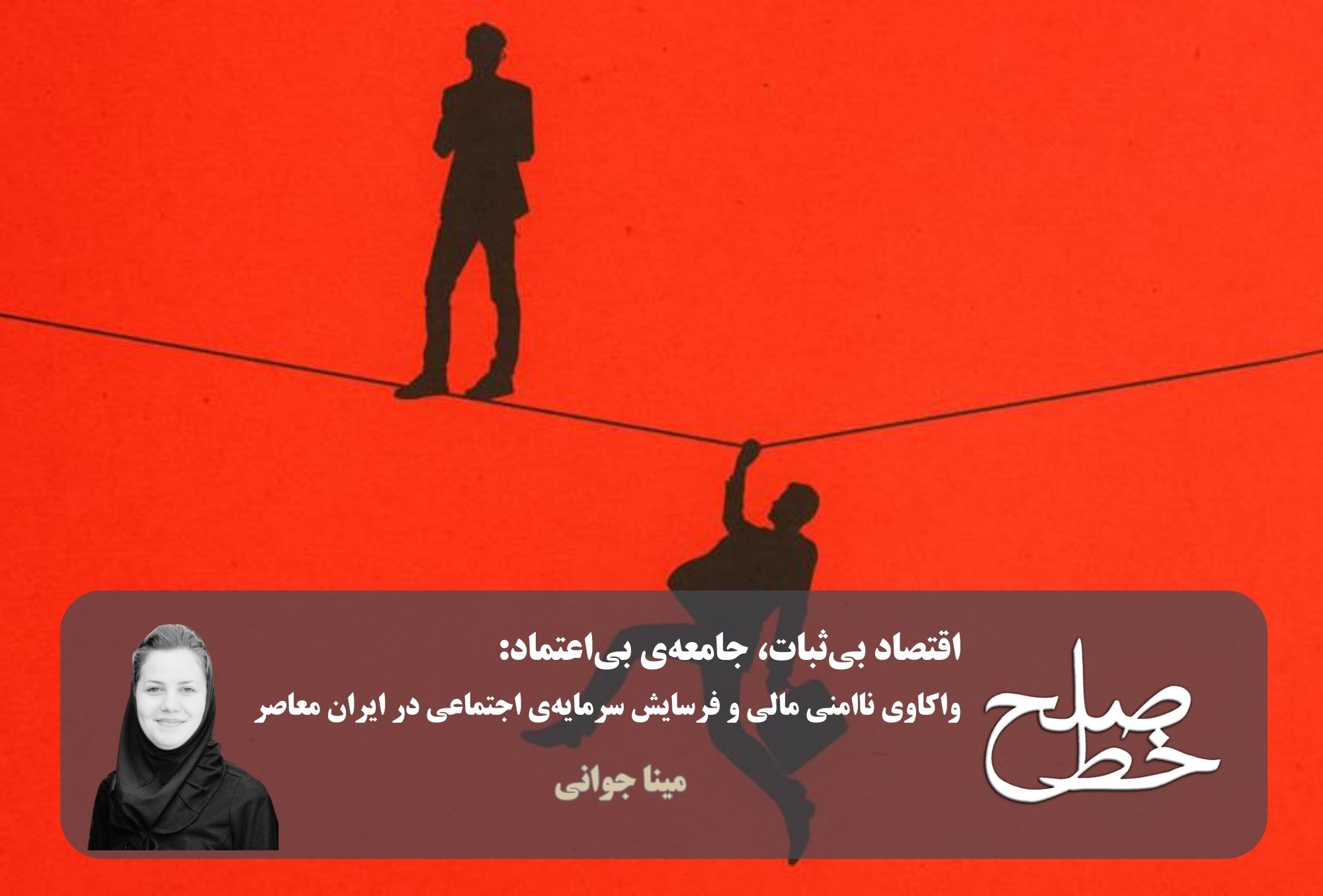
“Exploring Financial Insecurity and Erosion of Social Capital in Contemporary Iran / Mina Javani”
In the midst of the recent years’ intense transformations and chronic instabilities, Iranian society has been faced with a multifaceted erosion of social fabric; a situation that is not only observable in economic and political indicators, but also in the lived experiences of citizens. Among the key components of this multi-layered crisis, three phenomena stand […]...
Read MoreCreated By:
Mina Javani April 21, 2025
Psychic Industry: From Free Exchange to Fraud / Amin Ghazaei
Philosophical schools of thought in legal theory differ significantly on the legal legitimacy of activities such as fortune-telling, amulet writing, palm reading, psychic readings, mind reading, and all services based on claims of supernatural powers. Libertarians argue for the legality of these businesses, claiming that as long as individuals voluntarily and willingly purchase such services […]...
Read More Created By:
Amin Ghazaie March 21, 2025
Created By:
Amin Ghazaie March 21, 2025
Why has superstition taken hold in Iran?/ Mehdi Ambari
Divination and fortune-telling, as activities that claim to predict the future or interpret events, have existed in various societies since ancient times. In Iran, due to specific economic, social, and cultural conditions, these activities have developed in different forms and have had a profound impact on individuals and society. This article attempts to briefly examine […]...
Read MoreCreated By:
Mehdi Anbari March 21, 2025
