


یکA brief overview of the rights and responsibilities of prosecutors and prison organizations towards prisoners / Hossein Tajik
[/caption]
There is no text provided to translate. Please provide the Farsi text to be translated.
Hossein Taj
Prison is a secure place; it detains citizens whose freedom has been restricted by the court for any reason.
Prisoner is a trust with the prison organization.
The warden is trustworthy.
The prosecutor is responsible for overseeing this trust.
The prosecutor and prison organization are responsible for preserving the health of prisoners, safeguarding human dignity, human and natural rights, and legal rights of prisoners.
Creating restrictions on access to anything beyond the confinement of prisoners for a limited period of time, or imposing limitations on visits for specific prisoners, especially political and security prisoners, is against the constitution and human rights.
“Rank above mentioning is a basic principle that is not observed in some prisons, both inside and outside the country. The regrettable situation of Tehran’s Great Prison and Fashafouyeh Prison, such as the lack of basic standards such as inappropriate space, lime water, lack of adequate and clean sanitary facilities, as well as the existence of numerous problems in Rajai Shahr Prison and the imposition of certain restrictions in Evin Prison, are examples of this, based on information provided by clients.”
Yes, there are deficiencies and imperfections everywhere; but not accepting them is unfair; especially in a situation where these deficiencies directly harm the rights of others…
Article 36 of the Constitution acknowledges: “The judgment and execution of punishment must only be carried out through the court and in accordance with the law.”
Free from multiple flaws in the field of legislation, in accordance with the provisions of Islamic Penal Code and Criminal Procedure Code, Political Crimes Act, Press Law, and the Executive Regulations of the Organization of Prisons and Correctional Measures of the country, every action must be carried out in compliance with and adherence to the Constitution of Iran and within the framework of relevant laws.
From the standpoint of principles 19 and 20 of the Constitution, individuals of the nation are entitled to equal protection under the law regardless of any circumstances. There is no reason to discriminate individuals in front of the law. The law must be enforced for all people and if necessary, any benefits that may be created for certain individuals must be proportionate to all individuals.
Firstly, the visit of prisoners with their families and lawyers is a right that, according to the Constitution and religious law, belongs to all prisoners. Secondly, according to the mentioned regulations, as a specialized law, it has been prescribed and its method has been explained. The legislator has also emphasized this matter by granting leave to prisoners in Article 180 and its footnote, according to the Constitution, although in case of meeting special conditions, he/she may be in favor of temporarily prohibiting prisoner visits. This means that the principle is the existence of such a right and the exception to the mentioned principle is nothing but a temporary obstacle, and this temporary prohibition is not a permanent restriction.
In article 188, arrangements for visitation have also been mentioned, stating that a prisoner can have a visit at least once a week and the duration of each visit should not be less than 20 minutes.
However, the prosecutor and prison officials limit the rights of prisoners, their families, and lawyers in this regard. Firstly, it is practically impossible to visit the Tehran prosecutor. Secondly, visiting the special deputy for security and political crimes is limited to two days a week, meaning that the families and lawyers of political prisoners can only visit the responsible authority for two days, and of course, a significant portion of legal demands must be directly requested from the prosecutor. Thirdly, generally and practically, lawyers are not allowed to meet with their clients (prisoners – suspects or convicts) more than once a month. Fourthly, the prison organization has limited the meetings between lawyers and their clients (which was previously possible with a permit from the prosecutor) to three days a week. Fifthly, the prison organization and officials have set the maximum (not minimum) time for lawyers or families to meet with prisoners at 20 minutes.
Given that the listed cases are not statistical and there are other numerous cases, it is necessary to refer and refer to circular number 1/79/10618 dated 21/07/79 of the head of the judiciary regarding the prohibition of inappropriate bail, unjustified detentions, solitary confinement, prohibition of prisoners from meeting with lawyers or authorized persons, telephone summons, etc.
Although the writer believes that relying on and adhering to the law in belief and its implementation does not require the issuance of a circular, and simply the existence of the law and even in its absence, with reliance on ethical principles, the executors and responsible parties are obligated to observe and implement it and respect individual rights and freedoms; however, perhaps the above-mentioned circular, due to the existence of such actions by some judges or authorities, currently needs to be reminded.
It is obvious that, as stated in the mentioned circular, failure to observe the legal rights of individuals by judicial authorities and affiliated institutions such as prisons, intelligence and security agencies, will result in the guarantee of legal action and will be pursued and prosecuted.
In recent events and in regards to the issue of some branches of the Revolutionary Courts not accepting lawyers, we have once again faced the explicit statement of the head of the judiciary that honorable judges do not prevent lawyers from entering the courtroom, although it has not been effective; as we have witnessed some cases of arbitrary behavior as in the past.
At the end, it is once again mentioned that there is no establishment under the name of “restricting the rights of prisoners” in regards to visitation and granting furlough, and some arbitrary actions are against the law and internal regulations of the judiciary power. It is hoped that it will be reformed and we are taking steps towards its reform through legal means.
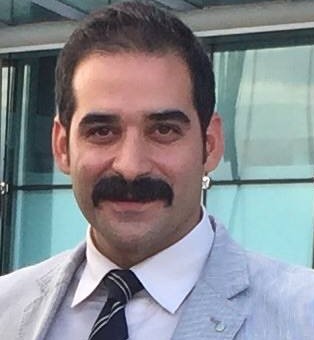 Created By: Hossein Taj
 October 23, 2018
Tags
Hossein Tajik Monthly Peace Line Magazine peace line Prisoners' rights Rajaii City Prison Tehran Grand Prison