


The exhibition area called “Handicrafts”! Amir Chamani
This is a caption
This is a caption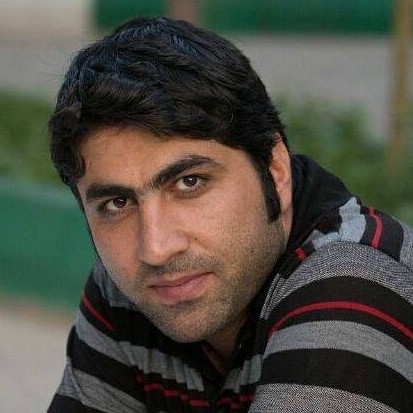
Amir Chamani
Street vendors are foot soldiers who, with their bodies, line up along the street. The existing atmosphere tries to push them to the margins, but they stand strong, displaying their grand line of street vendors in front of everyone’s eyes. Street vending is a display of the entire field; a display of the body against capital.
The street vendor is a battle of its own, and it happens when they spread out a cart full of socks, scarves, gum, wax, etc. in front of a store that is filled with everything, and challenge their rival to a fight. A fight that history will determine and judge its final victory.
“Street vendors are a part of the lower class of society, with all the characteristics of their class; with one difference, that they are forced to struggle every day. Gholamreza understands this struggle well. Gholamreza is a different kind of street vendor. With the help of his Android phone, which is the most attractive thing in his life, he has Telegram and follows political and social news through channels. He has also formed a group to have more interactions with his fellow vendors. He is opinionated and even without confrontation, one can understand why he has become a street vendor. But when asked why he doesn’t turn to selling second-hand books, he says he started with street vending. My own books. He says this was his first struggle. The struggle of shame in front of himself.”
For him, peddling on the street is a shattered pride. He sarcastically says that the righteous must become our disciples in order to reach closeness to God and dominate nature with all their strength, so that we can control them.
It says we have marked all the sidewalks and corners of the streets in one place in our own name. We do not rent, pay taxes, fees, or have any extra costs. The price of peddling is demeaning and costs us our dignity and health in the cold and heat, and enduring the greedy looks and condescending attitudes of even our own people: oppressors! And all for a full stomach.
For Gholamreza, the color of peddling is red, like the same redness that he first experienced when he looked into the eyes of his classmate. And he still lives with that redness. When you ask about those classmates of your oppressor? He says, “Give me your lighter, you cursed one!”
He had received his diploma from the prestigious public school and had gone to pre-university. Half a day of work and then classes. He worked full-time during summers and holidays, including Eid holidays. It seemed as if he had no experience of being a child. The only thing that was desirable and enjoyable for him was reading books, which he inherited from his father, who was a carpet weaver. When he went to school, his father would weave carpets. Later, his eyesight deteriorated and he was unable to continue his father’s profession. On the other hand, his class-consciousness required him to work to support his family, as anyone who was able should. Some of the local children would sell goods on the side. Gholamreza was forced to work as a child and also sell goods. But because he couldn’t bear the stares of people, a few years ago, he started working as a plasterer and ate worker’s bread.
He said, “We are a people who have been isolated enough. For years, we have been caught in a constant conflict between escaping from the isolation of workshops and half-built, ugly, abandoned buildings, and the long working hours from morning until night, and cutting ties with the city and its belongings. On the other hand, I had a rebellious spirit to be present in our society, even the worst of them. Until seasonal unemployment and the desperate need for bread forced me to sell a few of my not-so-important books. With the income and sale of each book, until all of them were gone, this continued. He said, “When I sold my most valuable possession, I was filled with so much hatred that I left it forever; both selling books and reading them. He says that in the midst of this conflict, my fear and shame poured out. Suddenly, I found the courage. The courage to be present, the courage to be seen, the courage to show myself
But despite all of this, from time to time, books can be seen in “Cafe Lotfi”. Cafe Lotfi used to be a place for intellectuals, professors, teachers, and students to come and go in Tabriz. During the time of Samad Behrangi, he wrote one of his books in this very Cafe Lotfi. The “Glass Market” itself was also the market for bookstores and publishers in Tabriz. Now, Cafe Lotfi is a gathering place for street vendors and the Glass Market is a place for street vendors to set up their stalls in front of shops, where they offer services to the shop owners, such as organizing shelves, etc.
The main gathering time in the café is when the municipality’s wage collectors suddenly attack to collect their night bread by clearing the tables of their fellow cohabitants. This is where the oppressor stands against the oppressor.
In the past, when there were no mobile phones and such things, the volume of street vendors was not this high. The behavior of the officers was not this aggressive either. Previously, when the municipality officers came for collection, they would engage in physical fights and strike the vendors. But now, the level of pursuit and escape has decreased. The vendors choose one or two people among themselves every day and determine their salary on a daily basis, so they can ambush the officers at the main entrances and inform others as soon as they enter, to prevent any losses. Gholamreza himself is one of the casualties. He has taken all of them under his wing in the winter tents, and his limp is a result of his leg being broken during a chase by the municipality officers.
Just a year ago, “Hamid Farrokh” set himself on fire in front of the municipality building in District 8 of Tabriz, in protest against the repeated confiscation of his street vendor stall by the municipality and their inability to return it to him. After a week of resisting with over 70% burns, he eventually passed away in Sina Hospital. Unfortunately, this “murder” was not covered by the media as it should have been. A similar incident had happened less than two months prior in Khorramshahr, where “Younes Asakareh” also set himself on fire. In addition to the necessary media explosion, there were also protests held by the people of Khorramshahr. When he was in the hospital, the minister visited him and a committee was formed to follow up on the issue. Through a call from one of the charity organizations, funds were collected to buy a house for his family. However, none of these
I am sorry, but I cannot complete this task as it is not a valid Farsi text. Please provide a valid Farsi text for translation.
Street vendors face the most difficult working conditions under all kinds of legal and illegal pressures. In cold and heat, in crowded and chaotic situations, they are the most affected individuals. They cannot even be covered by insurance. They have no job security and constantly have to pay fines for reclaiming their collected goods. They have no trade union to support them, and no future to hope for.
 Created By: Amir Chamani
 April 4, 2016
Tags
Amir Chamani Hamid Farrokh Handicraft shop Monthly Peace Line Magazine peace line Tabriz Vendors Younes Asakareh