


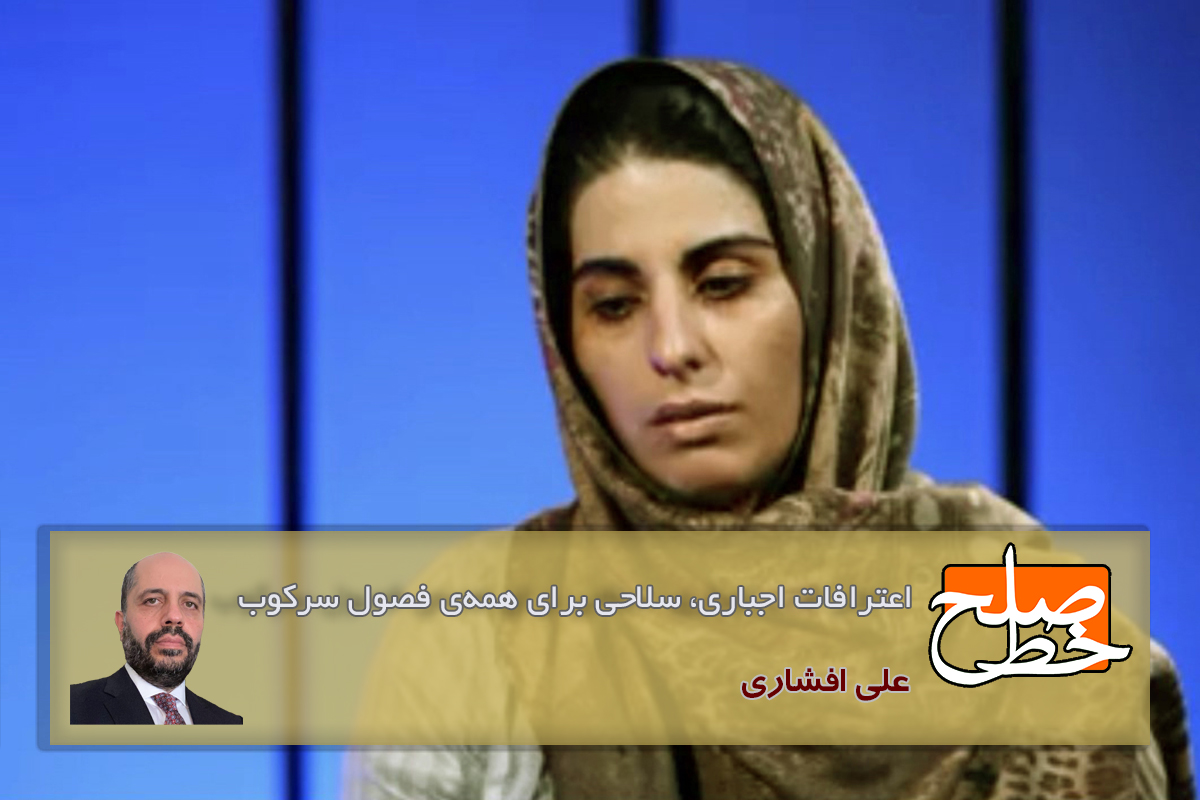
“Compulsory confessions, a weapon for all seasons of oppression / Ali Afshari”
Forcing political and civil activists to confess to actions they did not commit within the framework of security scenario or repent and express regret for their beliefs and convictions prior to their arrest is one of the oldest tactics of the Islamic Republic of Iran; in fact, it is considered a counterpart to it. During the leadership of Ayatollah Khomeini, multiple projects of repentance were implemented. The victims of these projects were critics of religious authorities, opposition leaders, military figures, some of their own forces, and former officials of the Islamic Republic. During the founding of the Islamic Republic, the executors were forced to make political and religious activists who were critical and opposed to express opinions that had clear and noticeable differences with their positions before their arrest, using information from the Revolutionary Guards, the Prime Minister’s security department, Islamic Revolutionary Committees, and the Ministry of Intelligence.
There are some documents that show the role of Ayatollah Khomeini in the projects of repentance more than the public responsibility of being in high government positions. One of these documents is the biography of Sheikh Mohammad Taher Al-Shobeiri Khaghan, one of the sources of emulation and leaders of Iranian Arabs. Two repentant letters from him were published by the office of Ayatollah Khomeini in Qom in July and August 1979. This shows that repentance was approved and emphasized by Ayatollah Khomeini, and perhaps the spread of using these Stalinist and fascist methods in the Islamic Republic originated from his will.
During the leadership of Seyyed Ali Khamenei, this process continued systematically and expanded in the field of victims. In the 1990s, the targets of these projects were mainly political activists, religious leaders, senior officials of opposition groups, and influential critics of the theory of Wilayat al-Faqih. However, from the 1970s onwards, journalists, student activists, women activists, and members of civil society also joined the ranks of victims.
The characteristic of the Islamic Republic of Iran, which claims to be the absolute owner of truth and considers the Supreme Leader as the most knowledgeable and virtuous human being, is the main factor in forcing the accused to confess against themselves. In fact, in the ideological system of the Islamic Republic of Iran, there is no room for conscious and truth-seeking individuals outside of a positive view of the foundations of the discourse and political system. Anyone who thinks or acts against the current policies, especially the views of the Supreme Leader, is either misguided and deceived, or malicious and an enemy. Whatever the system says and does, it is considered to be true and acceptable. Anyone who dares to demand change must be suppressed in any way possible; their voice must be silenced through imprisonment, intimidation, or even murder. If the person is influential or involved in an important event, they will be forced to confess against themselves, thus reaffirming the power of the challenged system. The system strives to prevent any dissent
The main reason for the forced confession of addiction to the system is the collapse of the moral system, which justifies the means through the justification of the goal. This is covered up under the guise of defending the authenticity of Islam, in a way that they deliberately lie and make baseless accusations, and try to destroy their opponents through unethical methods or implement scenarios in the public sphere. However, when faced with the reality of the world, they are unable to provide evidence, so they resort to oppressing and silencing protesters and critics, forcing them to repeat their false claims through force and coercion.
The power core has been trying for four decades to discredit opponents and opposition to the current situation, and to advance intimidation and fear and maintain a police state. Forced confessions in the early years of the Islamic Republic had an impact on public opinion and sometimes victims were also blamed by society, but over time this situation changed and now even the social base of the government finds it difficult to believe these claims. Now the main and special task of forced confessions for the security apparatus is to create fear that breaks the character of protesters. They make the mistake of thinking that a confessed prisoner will be discredited in society or that others will become conservative out of fear of a similar fate.
The recent incident of the arrest of Ms. Sepideh Rashno and other protesters against the government’s violent intervention in women’s clothing has caused more anger and disgust in society; of course, repression has a negative impact in any case, but it does not create fundamental and lasting restraint and on another level, it leads to the spread of the desire to protest and increases the ranks of critics and opponents of the system.
However, this evaluation does not have a way to reach the main decision-makers of the system. They act as an ideological and authoritarian government and do not tolerate the resistance and resilience of protesters. They only resort to these inhumane methods when they are forced to and no longer have the means to implement them. Enlightenment, active criticism in society, and encouragement of united resistance can create a balance of power in society, to the detriment of oppressors and the transformation of the power structure.
 Created By: Ali Afshari
 August 22, 2022
Tags
3 Peace Treaty 1363 Ali Afshari Compulsory confessions Compulsory hijab Freedom of speech Monthly Peace Line Magazine peace line Sepideh Rashno Television Confessions