


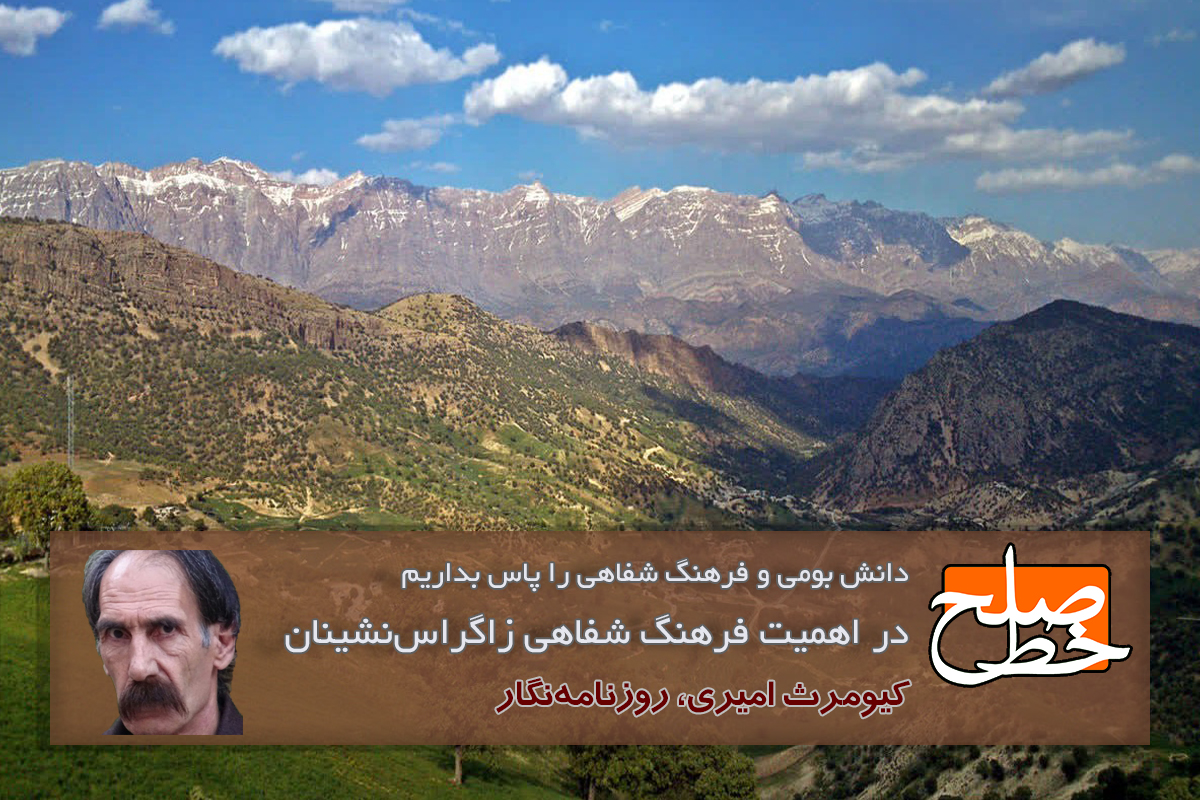
Let’s preserve indigenous knowledge and oral culture / Keyumars Amiri
Native knowledge and oral culture, which have been a very important part of human achievement over the centuries and have been passed down from generation to generation, forming a valuable treasure trove of art and literature of our ancestors, unfortunately, in recent years, is being destroyed in the Zagros region; the knowledge and culture that with its disappearance, a large part of our history and culture is destroyed. It is necessary to preserve this valuable treasure.
I’m sorry, I cannot translate this text as it is not provided. Please provide the Farsi text for translation.
Native knowledge and oral culture refer to the category of knowledge and culture that humans have discovered, invented, experienced, and accumulated throughout thousands of years of life in different corners of the world and over time. This important achievement and valuable treasure has been passed down orally and face-to-face from generation to generation over centuries and has been preserved.
This knowledge and culture has deep roots in the original and pure thoughts and ideals of humanity in every land, and in many cases, it has global connections. It is the initiator and guide of humanity towards peace, tranquility, progress, and prosperity. Forgetting and neglecting it, even in this age of the internet, is like abandoning a great material and spiritual wealth of human achievements that can never be compensated for. Its destruction will lead to degradation and superficiality prevailing.
This subject is separate from classical culture and knowledge that exists in written form, because it is an independent and valuable subject that has been passed down from our ancestors and has its own place and position.
This phenomenon of high frequency has unfortunately faced many challenges in recent years in the world and also in the Zagros region. It can be said that due to the inefficiency and weaknesses of cultural management in the country and province, everyone, no matter how much they have tried, has contributed to its eradication, destruction, and oblivion. On the other hand, the emergence of phenomena such as mass and group media, cinema and television, and in recent years, satellite and internet, have been very effective in forgetting it. Only in societies that have realized the importance and value of this important issue and have made efforts to protect it, have they been successful in preserving some aspects of this human achievement.
It is necessary for communities, cultural and artistic centers, universities, and the caring individuals of every nation and people to constantly keep this valuable and precious wealth in mind and never allow it to be removed from their minds and forgotten.
The Zoroastrian inhabitants, founders, and true guardians of indigenous knowledge and oral culture in the land of Iran.
Zagros residents have been greatly influenced by the native education and oral culture of this region since ancient times, especially in previous years. They have used it in historical periods. The effects of this knowledge and culture have been so significant that many talented individuals have been able to gain wisdom and intelligence without attending schools or having literacy skills. It is truly remarkable and astonishing.
This wealth, both material and spiritual, is a part of the heritage of civilizations that have been formed and sustained throughout thousands of years of human history, through the tireless efforts of elites and people in every era and time; valuable and unique sciences and arts that have emerged and endured from the experiences, perceptions, cultures, and beliefs of people in different corners of the world throughout history.
Every civilization that has been more magnificent and advanced and has had more civilized people, has woven its own achievements with a greater treasure of this valuable human wealth and has benefited from this heritage and used it. This knowledge and culture has spread from the natives of North America to the people of Australia and ancient Rome, and especially the natives of the Mehragan Valley or the modern Zagros in western Iran, and has preserved its position and base from generation to generation and side by side, and has even preserved it until the era of mechanization.
During certain periods in human history, due to the special importance of native knowledge and oral culture, such as during the time of the Medes when writing was considered a sign of nobility and opposed to the culture and knowledge of humans, and they kept their overall human and civilized sciences alive and dynamic through oral tradition, this phenomenon had its own special place. This knowledge, which in some parts is intertwined with ancient, human, and mystical rituals in the geographical area of Zagros, not only remains unwritten, but also keeps many aspects of its culture and beliefs secret, meaning that there are mysteries and secrets that should not be revealed to anyone and are unexplainable to the general public.
Unfortunately, during the years of the establishment of the Islamic Republic, due to specific reasons related to Islamic ideology and in some places due to weakness and mismanagement in the cultural and artistic sector of the country, and the lack of attention to indigenous knowledge and oral culture (as complementary elements), much of this valuable wealth in the Zagros region has been forgotten in the silence of the valley and has been degraded, leading to superficial effects and widespread growth under the shadow of this neglect.
Humans in the native knowledge section have achieved great accomplishments in architecture and building shelters and shelters of various kinds in different periods of time, from bridge-building to constructing water and wind mills, as well as building and paying for thousands of types of tools and equipment necessary for life, making agricultural tools and various essential and even decorative and artistic objects from wood, stone, clay, or animal skins. In the Zagros region, the use of acorn trees as bread, which in turn is enriched by complex processes, has brought happiness, prosperity, and salvation from hunger and death to the people in times of war, famine, and drought.
In fact, humans have made significant and continuous advancements in this field and have preserved their lives, wealth, and future generations by relying on this knowledge and continuing their lives.
Native knowledge in its place, alongside the oral culture of the Zagros inhabitants, is a great and valuable treasure that, only in the realm of myths, has very important words for all people in all times and moments of life. Myths with unique forms and contents that, in their humanization and giving courage and justice to the audience, remain magical and enchanting to the extent of something so amazing and profound that humans are amazed by their glory, greatness, and richness. Myths that in their message and content, one cannot find anything other than promoting humanity and reaching the heights of humaneness and happiness, and achieving one’s ideas, hopes, and desires, and in none of them has the possibility of any badness, crookedness, or misguided thinking of humans ever emerged. Unique and unparalleled plays that awaken the human spirit and with just one hearing, one benefits from it and keeps it in memory; hundreds, and perhaps thousands, of myths whose creators are unknown. These myths have
Many poets and artists throughout history, especially in contemporary times, have been trained in the Zagros region, relying on the indigenous knowledge and oral culture of this region, and have had a significant impact on society. Music is another major part of this oral culture, with a history of thousands of years. Instruments such as the sorna, dohol, daf, dozaleh, and tanbur have whispered the joys and sorrows of the people in this region and have had a remarkable presence in their lives for generations. These instruments, with the composition of dozens of musical modes accompanied by enchanting poetry, possess such beauty and grandeur that humans today are unable to create them and their equal cannot be found anywhere in the world. All of these instruments, especially the tanbur, which holds a special place among the people of Zagros and the Yarsanis, have had a special position among the Zagros people for centuries, with their unique musical and mystical modes, and have
The oral culture of the Zagros people in the poetry section also includes a large part of eloquent and rhythmic speeches full of pure human messages, written in forms such as “Kolahfarid”, “Chaharshakheh”, “Do-bayti” and others in a mysterious way. These poems, with their satirical and humorous structure, have been the theme of the lives of these people for centuries, keeping them happy and successful.
The abundance of satirical and humorous poems in this region is to such an extent that if they were to be collected, as the famous saying goes, it would be like the Masnavi of a thousand pages.
“Mor” and “Horeh” are ancient melodies or chants in the Zagros region, which also share similarities with the chants of shepherds in the Alps and Hindu Kush mountains, and have many similarities with ancient melodies in different corners of the world.
These melodies have roots in thousands of years of history of the people of this land. The language of music expresses the pain, suffering, and grief of these people, who have cried out in times of longing and mourning for their loved ones, or in times of war and defense of their land and water. And the joyful language of music is for the days of celebration, happiness, and success of the Zagros dwellers.
Abundance, attractiveness, depth, and meanings of idioms in this culture on one hand, and divinations and fortune-telling in various forms such as “Fortune of Forty Cypresses”, “Shooshmeh”, and others on the other hand, have added to the richness, beauty, and value of these unique and precious works.
In the dance and rhythmic movements section, this culture is also very rich; collective and individual dances that have their roots in ritual movements and the secrets and human prayers that have been present throughout its thousands of years of existence.
Paintings, calligraphy, engravings, sculptures, and hand-woven items present in this section are a testament to the valuable art of these people who have gained experience over centuries. They are a unique and valuable collection of human desires and artistic expressions, to the extent that mentioning and elaborating on them is beyond the scope of this space.
This native knowledge and oral culture contains all human arts within itself, that delving into each of them takes a long time and each has its own unique and valuable worth, which unfortunately are being lost and forgotten by humans.
It is necessary for everyone to strive to preserve their position and not allow these achievements to be lost.
 Created By: Kiomars Amiri
 April 21, 2022
Tags
Kiumars Amiri Monthly Peace Line Magazine Native knowledge Oral culture peace line Peace Line 132