


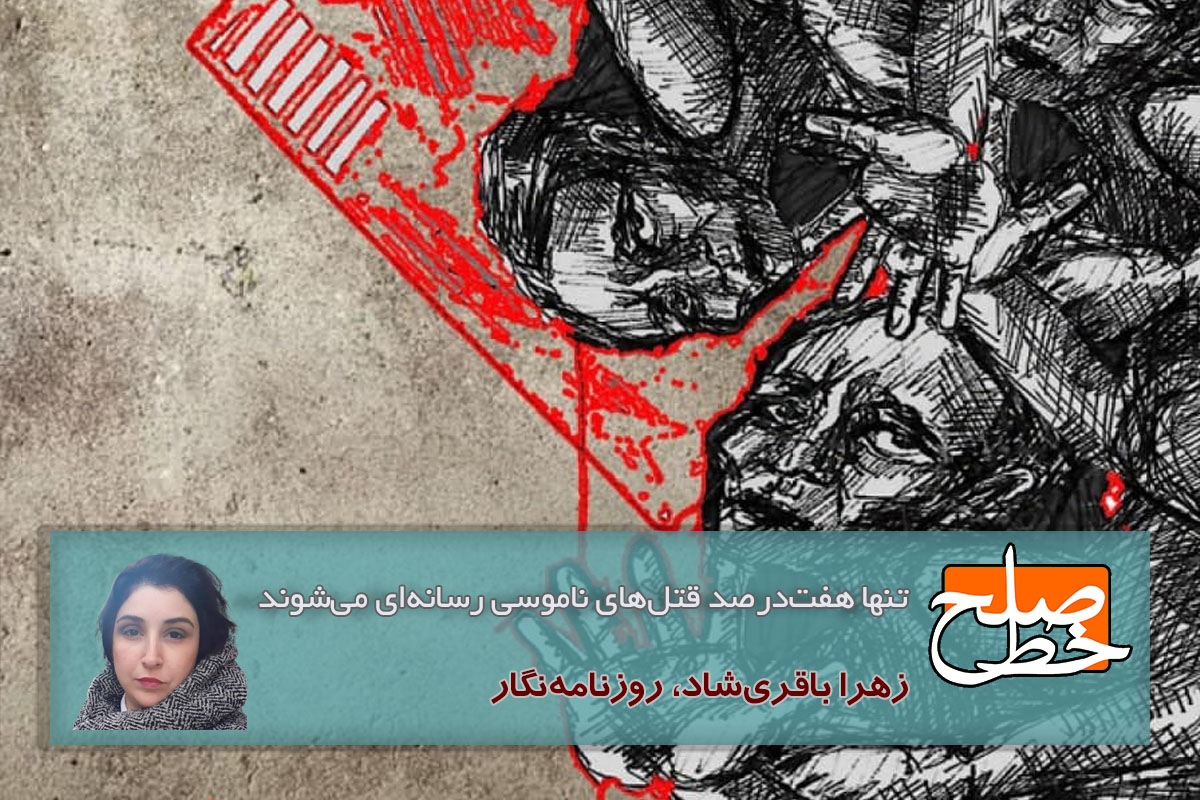
Only seven percent of honor killings are reported by the media/ Zahra Bagheri-Shad
Analysis of Persian-language media content about honor killings.
Report on the Men’s Network Against Honor Violence
The first research report on the analysis of Persian-language media content regarding honor killings was published on November 25th of this year, which examines news related to thirty honor killings in 1399 (2020-2021) in Persian-language media and discusses preliminary hypotheses about the phenomenon of honor killings in Iran.
In the introduction of this research report, honor killing is defined as the most severe form of honor violence, in which women are killed due to “dishonoring their family’s reputation” or “breaking honor norms” such as having a relationship with the opposite sex, refusing forced marriage, having a relationship with someone other than their fiancé or spouse, divorce, or even being a victim of sexual assault. This research report also highlights the honor killings of LGBTQ+ individuals and mentions that honor killings of LGBTQ+ individuals may also occur due to the exposure of their sexual orientation and gender identity. In other words, the control of sexuality by men is the most important factor in the occurrence of honor violence and killings, which can also encompass the control of sexuality of both women and LGBTQ+ individuals.
One of the most important findings of this research report is the very low statistics of honor killings reflected in Persian-language media; to the extent that in 1399, only about thirty cases of honor killings were reported in Persian-language media, both inside and outside of Iran, and in all of these cases, the motive of the murder was not referred to as “honor killing”, and only in fourteen cases was “honor killing” mentioned as the committed crime. In the rest of the cases, the media used phrases such as “killing of women”, “self-immolation of women”, “suicide of women”, and “family disputes” to explain the murders, while the information provided indicated that the motive was honor-related. In other words, we rarely see media coverage and information about honor killings that are included in official statistics. This is despite the fact that even accurate statistics of honor killings are not announced by authorities and official institutions in Iran, and according to scattered statistics presented in some
In explaining the limited media coverage of honor killings, which also contributes to the public silence about these atrocities, one of the most important hypotheses raised in this investigative report is the imposition of restrictions on journalists, reporters, and human rights activists who are engaged in social issues such as violence against women and violence against children. These restrictions are sometimes imposed in cases related to the pursuit of news about women’s suicides, in the form of official notifications, and sometimes in the form of detention, threats, and banning and imprisonment of journalists.
Mosquito killing is not a newsworthy event.
One of the results of this media content analysis shows that out of thirty cases of honor killings reflected in Persian-language media in 1399, there were no reported cases of honor killings of transgender individuals. Only one reported case of honor killing of a 23-year-old transgender man named “Siavash” is found, which took place in Khorramabad in August 1396 and was mentioned in the news as “due to what was considered preserving honor.”
The results of this content analysis confirm that women are the primary victims of honor killings and men are generally the perpetrators of these murders; a fact that indicates the root of patriarchal dominance in honor-based violence through the control of sexuality and the body, especially women’s bodies.
Geographical scope, premeditation of murder, and youthfulness of victims
One of the other results of this content analysis is the widespread geographical distribution of honor killings. Contrary to some beliefs that associate honor killings with specific regions of Iran or specific ethnic groups, the geographical distribution of honor killings includes various regions of Iran and does not decrease to a specific ethnic group or province/city/village. This claim that honor killings are a “tribal and ethnic” phenomenon and are specific to certain “cultures” may have its roots in discriminatory approaches that label and stigmatize different ethnic groups. Research shows that this claim that honor killings are related to a specific geographical region, certain ethnic groups, or specific ideologies is not valid.
Although honor killings can happen to individuals of all ages, the results of this content analysis show that the main victims of honor killings are young women between the ages of fourteen and twenty. It is explained that young women are more likely to challenge traditional norms, and this challenge can result in a stronger reaction from fathers, brothers, husbands, etc. This reaction can manifest in the form of honor violence and, in its most extreme form, honor killing. Additionally, the killing of daughters by family members is much more prevalent in honor killings compared to other cases. This highlights the sense of ownership that fathers have over their daughters, a factor that is less noticeable in other forms of violence against women.
In honor killings, it is very rare for us to be faced with elements of self-incitement or unintentionality. The results of this content analysis show that the methods and means used in honor killings, including forcing women to eat rice and acid, cutting off their heads with a knife, and shooting them with a gun, not only demonstrate the deliberate nature of these killings, but also show their extreme brutality. The goal is to instill fear and intimidate other women, and deliberately display the most violent face of patriarchal power.
Pride of brothers in avenging dishonor.
Furthermore, the results of this content analysis show that in nearly eighty percent of honor killings, there is no information available about the fate of the victims and how their cases were pursued. In honor killings, the accused individual often speaks proudly of their violence and is even praised and encouraged by some of their peers. “Legitimizing honor killings” is a phenomenon present in society, even portrayed in some cultural and cinematic productions, including Persian films. This legitimization may not always be accompanied by loud voices, open support, and expressions of pride, but may manifest in various forms, such as not pursuing the case of honor killings, reducing legal punishment, satisfying the complainants, and silencing the case, which can be done by both the families of the victims and the Iranian judicial and legal system, which enables this behavior; an act that contributes to normalizing these honor killings in society.
The results of this content analysis show that out of thirty reported cases, the majority have been carried out by the brother; however, suicides resulting from honor pressures, especially among women residing in their “parents’ home”, have also been among the highest cases. This issue can have a legal justification; meaning that by forcing someone to commit suicide or subjecting them to honor violence, the possibility of pursuing this event as “honor killing” is eliminated.
“Announcing suicide instead of honor killing”
One of the important findings of this media content analysis shows that some of the murders that have been referred to as suicide or self-immolation by women, have actually been committed due to honor-based motivations and the severity of honor-based violence against women; however, there is no information available about the accuracy and prevalence of this issue, whether these suicides are the result of “staging” by fathers or other men who have committed honor killings, but present them as women’s suicides.
The results of this content analysis show that the coverage of Persian-language media about honor killings or honor-related deaths is insignificant in nearly seventy percent of cases, and is only limited to copying and republishing articles. In three cases, the coverage was very minimal and only consisted of one-line news. The news coverage of these killings has only been thorough in some cases, such as the honor killing of Romina Ashrafi, Reyhaneh Ameri, and Fatemeh Bariehi, with more follow-up reports and multiple interviews with experts.
Considering the fact that in Iran there are many legal and customary restrictions that hinder the pursuit of honor-related murders, it should be noted that mechanisms of “denial” can normalize and increase honor-related violence. In a research report by the Men Against Violence Network, it is emphasized that the issue of honor-related violence should be approached from a middle-ground perspective; highlighting the voices of those who have been affected by honor-related violence and preventing the escalation of ethnic prejudices. Therefore, in order to amplify the voices of the “victims” of this violence, media and civil activists should increase their sensitivity towards honor-related violence. Honor-related violence cannot be reduced to just “murder” and should not be normalized to the point where it leads to murder and then the media and public opinion react. The more the voices of the “victims” of honor-related violence are heard, the more civil activists and media produce and disseminate content about these instances of violence and shed light on this important issue
 Created By: Zahra Bagherishad
 December 22, 2021
Tags
Monthly Peace Line Magazine Mosquito killing peace line Peace Line 128 The Men's Network Against Honor Violence Zahra Bagheri is happy.