


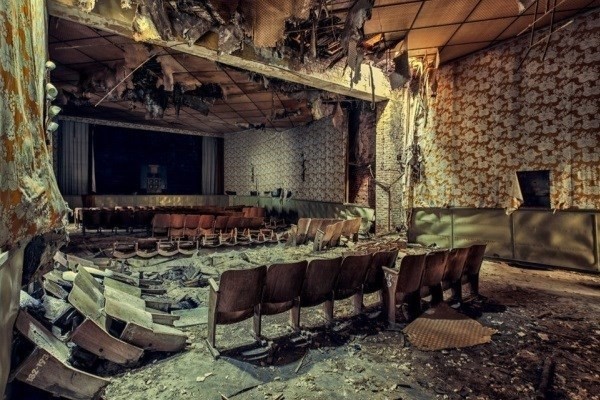
Kermanshah, with a population of over one million, does not have a cinema. / Keyumars Amiri

The twelve cinemas in this city, which date back to before the revolution, have been abandoned in a dilapidated state for four decades.
Note:
Cinema is a great achievement of humanity in the 20th century, which holds a special place in human society. This amazing phenomenon, based on human needs and with their ingenuity, has been discovered and established, and today it has an inseparable connection with human life. Critics consider it the fourth pillar of democracy in the world, and cinema is considered a powerful and popular medium, and one of the most important resources and fundamental pillars of the growth and development of human civilization. It can shape human values, growth, cultural development, and bring about changes and transformations in all dimensions of human thought and society.
This valuable art, along with six other human arts, is one of the achievements of human civilization over the centuries, created by humans and has played a very important role in the growth and flourishing of human achievements. The seventh art is a powerful and popular medium that plays a fundamental role in shaping and preserving the basic principles of democracy and social justice in human societies, and as a major
The status of cinemas in the major city of Kermanshah.
Kermanshah, which is considered the ninth largest city in terms of population in the country, does not have a cinema hall. It only has two cinema halls, one in the former French city which was renamed to Azadi Cinema, and the other one is Cinema Farhang which has short and unacceptable periods of activity.
One of the main reasons for the closure of cinemas is the ideological, religious, and political views of government officials towards this art form. This has caused many problems for cinemas and their enthusiasts, and has played a significant role in their closure. According to this view, all cinemas in the country are officially closed for three months during the lunar months of Muharram, Safar, and Ramadan, and apart from that, religious ceremonies and holidays also cause cinemas to be closed for more than a month throughout the year.
Another factor in the closure of cinemas is the strict regulations imposed by the security units stationed in cinemas, which do not allow women to enter without a
The twelve movie theaters in this city, which date back to before the revolution, are now in ruins and have been abandoned for four decades.
After the revolution, Iranian society has been facing a crisis in relation to cinema, in general, and the destruction of cinema halls, in particular, along with deliberate efforts to eliminate this important phenomenon. In this regard, the city of Kermanshah has not been spared from this cultural tragedy.
Before the victory of the revolution, Kermanshah had a population of less than 600,000 and had 12 cinema halls, all of which were left abandoned and in ruins after the revolution. Before the revolution, there were two open-air cinema halls and ten indoor cinema halls that were continuously active in Kermanshah.
With the start of protests in 1978, all of these cinema halls were set on fire by revolutionary protesters, and some of them, such as the Metrople, Diana, and other cinema halls, were completely destroyed by these fires. The remaining cinema halls suffered heavy damages and were confiscated after the revolution, becoming the property of the Revolutionary Foundation.
 Created By: Kiomars Amiri
 August 22, 2020
Tags
Cinema Kermanshah Kiumars Amiri Leisure time Monthly Peace Line Magazine Number 112 peace line Recreation rights Social activity The seventh art