


Revisiting two reports by the government and parliament about the trustees of Imamzadeh named Hijab/Aasieh Amini.
This is not a complete sentence and cannot be accurately translated. Please provide a complete sentence for translation.
Asieh Amini
During the seven-month period from Bahman 1396 (January/February 2018) to Mordad 1397 (July/August 2018), two sensational reports were published by two important institutions of the Islamic Republic government, namely the Center for Strategic Studies and the Parliamentary Research Center. The most important aspect of these reports was the revelation of the inefficiency of all laws, programs, and government and state organizations regarding hijab, after nearly four decades of planning in this area. The strange and common point of these two reports was that they had no new information to offer and presented statistics and information that had been prepared, collected, and even published in previous years. So if the government and parliament had this information before, what has caused these reports to be published by two fundamental organs of the Islamic Republic within a seven-month period? What new information did this report, which received widespread reactions from the media and social networks, have about hijab? By looking at the “
But this new approach of the rulers, despite the lack of new statistics and information, was met with media reception. But what aspects of this report were not seen and reflected? Can we evaluate this approach of the government and parliament as a new way of intervention in the phenomenon of hijab? What process has this government intervention gone through in the four decades since the birth of the Islamic Republic and how can we analyze the reaction to this planning and organization? In this article, I will try to answer these questions by relying on historical and media evidence and also by reviewing these two reports.
Hijab; a phenomenon.“
Legal- Religious“
Or.“
Optional – Mandatory“؟
In a report published by the Research Center of the Islamic Consultative Assembly in August 2018, two definitions of hijab, cultural and religious, have been presented which, according to the explanation in this report, refer to the social interpretation of “hijab boundaries”. At first glance, it seems that these two phrases are constructed by this research; because before that, they did not have much media usage, and on the other hand, what is heard and read in recent years in the media, civil activities and social networks is the compulsory or optional nature of hijab, not its cultural and religious aspect.
In fact, the term “hijab” refers to the cultural and religious veiling and the political and social competition between these two interpretations and the misunderstanding of what Islamic hijab is and how it is defined, dates back to years before the beginning of the social and political debate about hijab after the Islamic Revolution.
Just 23 days after the victory of the Islamic Revolution, Ayatollah Khomeini’s important speech at Feyziyeh School in Qom about the Islamization of women’s clothing was reflected in the newspaper Ettelaat (dated March 6, 1979). He had said: “Islamic women must come out with hijab, not that they should belittle themselves. Working in offices is not forbidden, but women must have Islamic hijab.”
The point that caused confusion in defining the boundaries of the Islamic veil was this part of Khomeini’s statements: “Now, the ministries – I say this so that it reaches the government, as it has been conveyed to me – still have the same form as during the time of the tyrant. The Islamic ministries should not engage in disobedience. In the Islamic ministries, women (without veils) should not come, women should go but with veils. There is no problem if they go, but they should work with the Islamic veil, with the preservation of Islamic principles.” (Sahifeh Noor, Ayatollah Khomeini, vol. 6, p. 329, and Ettela’at newspaper, 16 Esfand 1357).
This speech was delivered in a time when society was not receptive to such orders regarding hijab. Two days after the publication of this opinion, which was on February 6, 1980, coinciding with International Women’s Day, a large protest was organized by the committee for the celebration of this day at the Technical University of Tehran, in opposition to the opinion of Ayatollah Khomeini. According to the newspaper Vaghaye Ettefaghieh (issue 10656), 15,000 women participated in this protest. Two of the slogans of the protesting women were: “We fight against compulsory hijab” and “A free woman has the right to choose her hijab.”
The separation and boundaries began. Women’s understanding of Khomeini’s speech was clearly forced to be veiled. With this description, the son-in-law of Ayatollah Khomeini, Sheikh Shahabuddin Ashrafi, discussed the interpretation of this issue in an interview with Kayhan newspaper (issue 10656). Although his words were not without ambiguity: “Islamic laws must be implemented as much as possible… The meaning of Islamic hijab is not just a chador. Chador is one of its uses, which of course covers women better… People should not create chaos and should not reject one evil with another evil in forbidding evil. This is not Islam…”.
This category was about hijab, and also followed the reactions of political groups and leaders of these groups. One of the most prominent of these was the famous headline of the newspaper Ettelaat on February 20, 1979, quoting Ayatollah Taleghani, who emphasized the non-compulsory nature of hijab. Ayatollah Taleghani had defined Islamic hijab as the veil of personality and dignity, which has no compulsion involved. However, there was still controversy over the definition of the boundaries of religious hijab and resistance from women against compulsory hijab continued until two years later, when following a direct and harsh warning from Khomeini in criticism of the Bani Sadr government, the Revolutionary Council approved on July 7, 1980 that the entry of women without Islamic covering into government offices is prohibited (Sahifeh Noor, Ayatollah Khomeini, vol. 12, p. 486). This law, which
The first law regarding women’s clothing was the Penal Code of 1362, which stated that “women who appear in public places and streets without proper Islamic hijab will be punished with up to 74 lashes.” This law was later amended in Article 638 of the Islamic Penal Code of 1375, which states that “anyone who publicly commits an act of immorality in public places and streets will be punished with imprisonment of 10 days to 2 months or up to 74 lashes, and if the act does not carry a punishment but violates public decency, they will only be punished with imprisonment of 10 days to 2 months or up to 74 lashes.” As it is evident, there is ambiguity in definitions such as public decency or immoral act, which extends the scope of the hijab law. The same Article 638 adds in a clause: “women who appear in public places and streets without proper Islamic hijab will be punished with imprisonment of 10 days
Grey means immodest.
If we refer back to the published report by the Parliamentary Research Center, despite the fact that the basis of this report is to prove the gap between public opinion and legal-Islamic expectations regarding hijab, a precise definition of these two concepts is never understood and one definition leads to another interpretation. For example, someone who does not adhere to the legal boundaries of hijab is defined as “bad-hijab”: “In this report, the difference between the two concepts of “legal hijab” and “cultural hijab” is mentioned and referred to as bad-hijab according to the cultural hijab, 60 to 70 percent of women in society are considered bad-hijab according to the legal definition, of which 10 to 15 percent are considered severely bad-hijab or, in other words, hijab-breakers. This report states that only 13 percent of women wear hijab traditionally and 70 percent of women fall into the gray area” (summary
Based on this, 70% of the Iranian people, who do not specify exactly which new research and scientific method they have been studied on, fall into the category of non-veiled people, meaning supporters of customary hijab. But in reality, these two definitions, instead of clarifying the current situation, end with an ambiguous and uncertain statement; because the report, without providing interpretation or introducing colors, says: “70% of women in society are in the gray area.”
This disorder and inconsistency in meaning that exists throughout the report presents scattered information that cannot be interpreted and analyzed to provide a clear understanding. For example, the opinions of the participants regarding hijab in the law, inclination and taste, as well as their actual behavior in the real world, virtual world, public places, and private places. Are the individuals being studied truly representative of the entire society? Is this data, which is from the latest research on women’s behavior towards hijab in 1391, indicative of the current situation in Iranian society?
A look at the sources of this research shows that the foundation of this document is unclear and why the information in the text (and not in the abstract, which is the basis for the use of many media) is scientifically questionable.
They are talking statistics.
The first expectation that comes from such a detailed report from the Research Center of the Parliament is that the statistics and information presented are documented based on a specific time sequence, with equal data and conditions in the research. For example, if in 88, the National Youth Organization conducted a national survey on the values and attitudes of young people towards the issue of hijab, it is not possible to compare the results of this research with a research conducted by the Student Opinion Center with a different statistical population and research method in 93. Such a comparison is neither logical nor based on scientific methods, as it did not have the same specific questions about the survey and did not consider the same scales in measurement. With this assumption, it must be added that some of the statistics and information in this research report are based on data collected in a university paper at the master’s level. Can such research be generalized to the entire Iranian society? Can a university paper, written with limited tools, financial and specific facilities and
The scattering and lack of connection of research resources on such an encompassing and important subject becomes even more strange when we see that the sources of production and publication of some of these researches are religious and ideological institutions; institutions that have examined and studied the phenomenon of hijab with value-based assumptions and in a non-scientific manner.
For example, in a research conducted by the Basij organization and the Basij Research Institute in 2014, the relationship between the independent and dependent variables of age and the phenomenon of “deviance” was examined. This is while even in the simplest social science research, using an adjective to determine scientific components renders the evaluation invalid. Furthermore, it is clear that the biased assumption towards the value of deviance cannot place the audience of this research in a neutral position; in a way, this research – if it can be called that – has laid the first brick of its path in a crooked way.
In another section of this report, the gendered perspective of researchers on a subject that is inherently gendered can be clearly seen; when evaluating the factor of puberty in girls, which is accompanied by physical changes in their bodies, and disregarding all physical, psychological, social, and identity-related characteristics, adolescent girls of this age are described and summarized with the vague term “improper covering”. Or when the observance of religious hijab is solely attributed to the decrease in women’s physical beauty as they age. This gendered perspective, like a rooster’s tail, stands out from the pages of this report and I will only focus on this one: “More vulnerable groups are found in the young age group, and as they get older, their level of improper covering decreases. However, this trend is consistent until the age of 62, and from then on, we are faced with an increase in improper covering among women, which cannot be attributed to factors such as immodesty, but
Scientific research centers or report writing workshops.
Returning two reports from two government and parliamentary affiliated research institutions to the statistics and documents of research that have passed years of their life and are only used for historical review, while there is no new and up-to-date information alongside them, is actually more than a general report of past consumption history with a flashy appearance. Behind these researches, there is neither a defined questionnaire nor testimony and witness. There is no scientific method or approach. On the other hand, relying on reports and articles whose scientific credibility is uncertain, and for example, have been written with an educational and practical approach and within the limitations of a master’s degree research, or using the results of non-scientific and ideological centers, raises the question of the existence philosophy of a research center. Is the work of government and parliamentary research institutions merely a compilation and report writing based on other sources and references (both scientific and non-scientific), as seen in these reports?
Let’s keep in mind that the last research work on the topic of hijab (re-examining the policies and actions of the Islamic Republic of Iran regarding chastity and hijab), which was conducted by the Research Center of the Islamic Consultative Assembly and mentioned in this report, dates back to 1394 (2015-2016) and the report of the Center for Strategic Studies of the government is based on statistics that, at the time of its publication, had been conducted for more than three years. This center, which has requested 12 billion and 438 million tomans in the proposed bill of the government in 1397 (2018-2019) and claims to “act as an advisory body to the President and to conduct policy studies and research and provide final proposals on national strategies and public policy studies in the country,” does it have a function beyond that of a desk-bound report writer? The reasons are from us, and the judgment is up to you!
“Girls of the Revolution and the historical consumption statistics.”
What is happening in today’s society in Iran? What is happening in the government and parliament? The divide that was created between the government and a portion of the people from the early days of the revolution with the start of the mandatory hijab debate, remains a valley that even a common understanding and comprehension of the issue cannot be reached. A look at the opinions of the managers of the Islamic Republic, both former managers and those who are still in power, at different levels of execution or legislation, and in all political spectrums from reformists, moderates to fundamentalists, show that their concern is more about the danger to religion, non-implementation of the law and Sharia, being labeled as opponents of the government, turning into a security issue and similar consequences, rather than concern for the citizens’ right to choose. It seems that a predetermined agreement has recognized this red line. In fact, the inefficiency of laws related to hijab, in criticizing and examining these individuals, has made
The Vice President of the Islamic Consultative Assembly says: “I am against optional hijab because it leads to nudity, but mandatory hijab does not mean it should be taken too seriously. For example, many women do not currently observe proper hijab, but no one objects to them. These strict measures are harmful to the state of the revolution.”
Ayatollah Naser Makarem Shirazi, a religious authority and teacher at the Qom seminary, believes in positive discrimination in favor of supporters of hijab in society: “We must give privileges to those who observe hijab and reduce privileges for those who do not, as this will lead to universal observance of hijab.” Faizeh Hashemi, who is known for her defiance among famous politicians and technocrats, is more concerned about religion and the system than the people: “Forced hijab strikes at the foundations of our religious system… We should not tie this issue to the integrity of the system so that we cannot make a decision about it. These are wrong interpretations.” Even in the words of Leila Jannidi, the legal deputy of the president who emphasizes the right to legal security of citizens and criticizes the morality police for playing a dual role as both a judicial and law enforcement officer, the issue is about enforcing legal methods against opponents of hijab,
This “if and but” is an unspoken word that reveals the reason for the simultaneous release of these two reports by the main institutions of the government.
Because the report is being published in a situation where the voice of people’s protest against not adhering to the legal hijab has become so loud that it cannot be ignored, unlike three years ago (the gap between the last investigation in the parliament’s report), on the other hand, the grip of the hijab law has been loosened by the continuous and widespread social movements of the people against the rulers, and denying it is not a solution. The protest against the hijab, along with demands for freedom and protests against injustice, corruption, and inefficiency of the policies of the Iranian government, which began in December 2017 and occasionally flares up from social, political, and economic divides, has led to the government and parliament releasing a report that is at least three years behind the latest information, with a lively introduction that reflects some of the most affordable political and social demands of the people. It’s strange that no one asks them why today?
But in these reports, if we look deeper, we are faced with major contradictions that violate the intended purpose. In addition to all the divisions, ambiguities, statements, and unscientific methods – which I have briefly mentioned in this report – what reflects the protests of women and especially the movement of revolutionary girls in raising their symbolic hijab in public places, is the issue of voluntary or forced hijab. While what the government and parliament present is the desire of the people to introduce hijab as customary or religious. Nowhere in these reports is there any mention of the people’s desire to remove the hijab. This is itself a justification for using statistics that have been used for at least three years.
On the other hand, the difference between these two definitions is that considering the veil as customary or religious places emphasis on the certainty of the veil, while when we talk about the optional or mandatory nature of the veil, half of the emphasis is placed on the possibility of not having a veil. This research has been cleverly designed to take action against mandatory veiling in a way that “No to mandatory veiling” and “Veiling becoming customary” are expressed. The prerequisite for such a goal is to maintain mandatory veiling in society and to push its boundaries. The cost that the government has incurred in the form of this comprehensive report is to prevent what Ali Motahari had predicted in a note in 2017: “It is unlikely that this half-veil will be so intrusive that people will be willing to put themselves in danger to remove it, but the goal is for after the removal of the veil, other forms of covering will be targeted until we reach the final point,
The reality is that the documents released by the two government and parliamentary research centers in a span of seven months, contrary to their claims, have more to do with political statements rather than a genuine scientific and social investigation about the hijab. It is actually an indirect political statement with a direct suggestion and message; inviting the protesting people to retreat from “No to compulsory hijab, yes to accepting cultural hijab.”
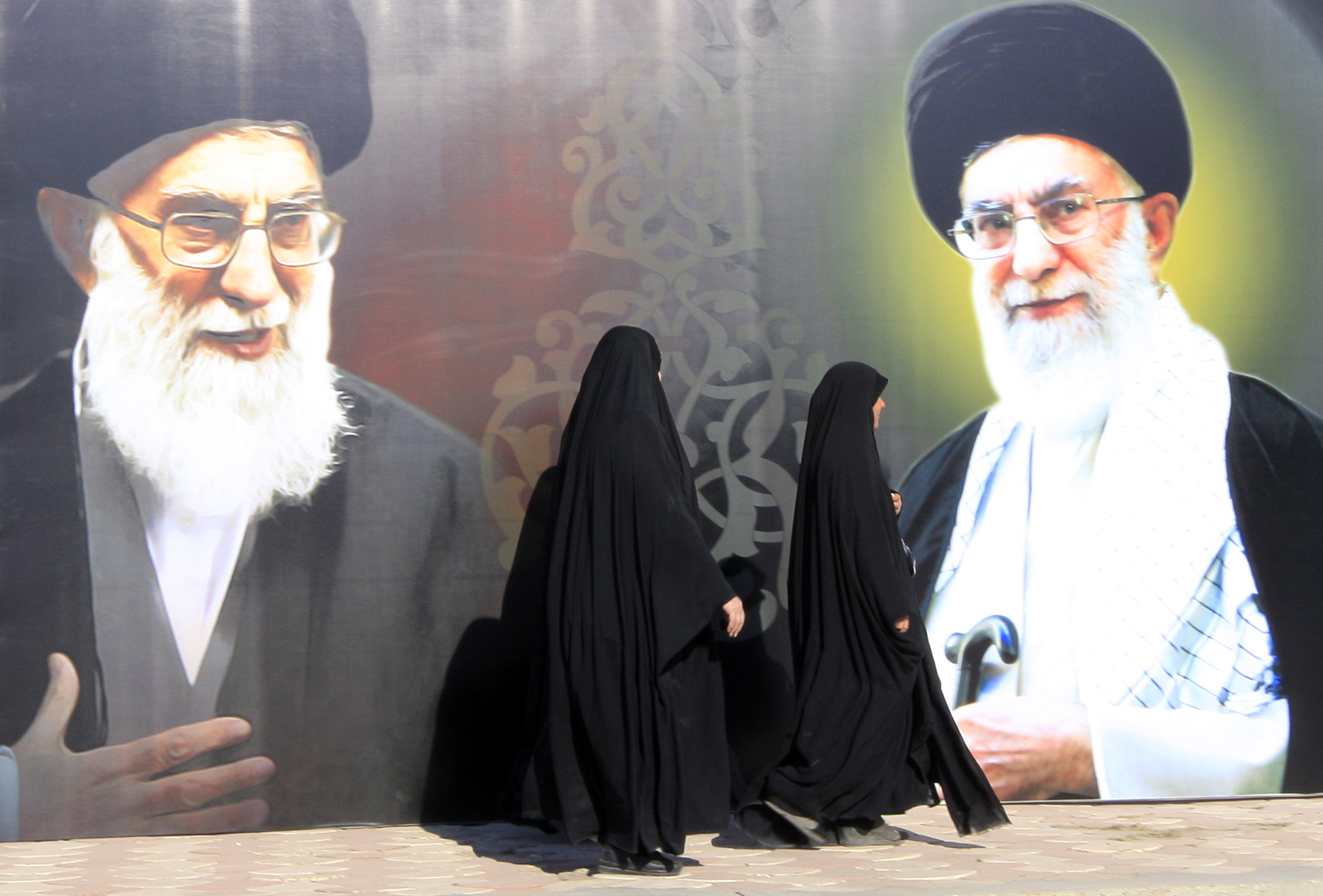
Photo at the top of the page from Reuters.
Picture of the author Javad Montazeri.
 By: Asieh Amini
 August 23, 2018
Tags
Asieh Amini Compulsory hijab Hijab Monthly Peace Line Magazine peace line The Research Center of the Parliament ماهنامه خط صلح