


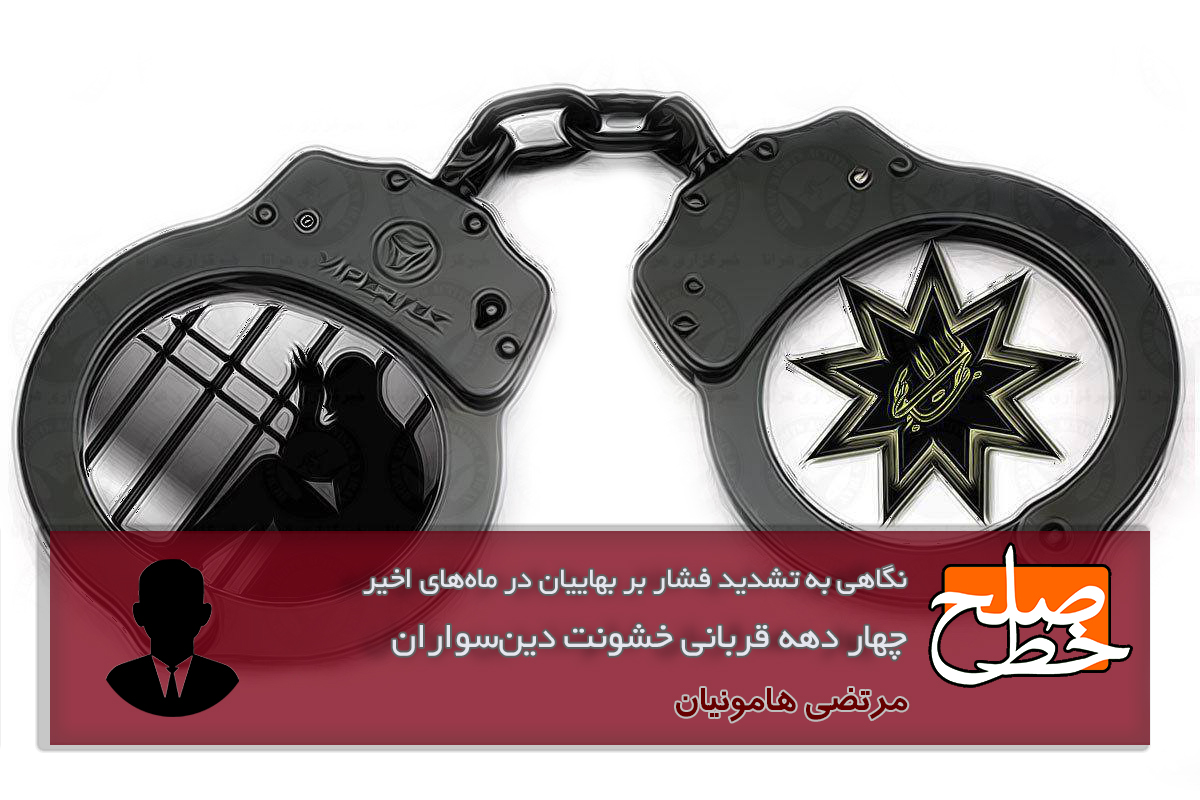
A look at the intensification of pressure on prices in recent months / Morteza Hamounian
Four.
Decade of Sacrifice of Religious Warriors.
The violation of the rights of religious and ethnic minorities and violence against them is not a story unique to Iran or even the Middle East. The history of humanity is filled with such violence against individuals with different beliefs and thoughts. Although after World War II, in the Universal Declaration of Human Rights and its various principles, such as Articles 18, 19, and 20, the right to freedom of religion and belief and the right to life based on it were recognized for all individuals, we still witness the violation of the rights of believers with different beliefs and thoughts in the far corners of this planet. The situation has become so difficult and heavy that in 2019, the United Nations General Assembly declared August 31st as the International Day of Remembrance of Victims of Violence Based on Religion or Belief. (1) Every year, thousands of people lose their lives in the name of religion and beliefs due to violence and extremism in the world. One of the countries where this happens is Iran
It seems that the followers of this religion have not been safe from persecution and harassment in their homeland, from the beginning of its inception until today. The founder of this religion was Mirza Husayn Ali Nuri, known as Baha’u’llah, who was born in Iran over two hundred years ago. However, the followers of this religion have faced various forms of discrimination and oppression from the beginning, and have generally been deprived of their human and citizenship rights during the Qajar, Pahlavi, and Islamic Republic regimes. Although these pressures and treatments decreased after the Constitutional Revolution, they did not disappear completely. In the era of the Islamic Republic, this religion was not officially recognized in the constitution, but in principles such as 14, 22, and 23 of the Iranian Constitution, the government was obligated to treat non-Muslims with absolute fairness and justice and respect their human rights, and ensure the inviolability of the dignity, life, property, rights, housing,
Rights activists and lawyers themselves say that “violating the fundamental rights of Baha’i followers in Iran has no legal basis.” Mazdak Etemadzadeh, a judicial attorney, also continues to say that “there is no authority in Iran to address unlawful actions against Baha’i citizens, and even if a judge rules in favor of Baha’is, they will be removed from their position because they have violated Islamic principles. Therefore, judges do not have judicial independence.” (2) What we call the judicial power today is miles away from what is known in the world as a normal and independent judicial system. Despite the separation of powers principle stated in the constitution, our current judicial system, due to the appointment of its head by a non-governmental authority with maximum responsibility based on the constitution, does not have complete independence from other powers and institutions, as we see in the modern world. However, the bitter reality is that even in this situation, if we can recognize something
The issue here is that the acts of violence and violation of the rights of Baha’i citizens in Iran even has serious opponents among the scholars and religious authorities. Sheikh Hossein-Ali Montazeri Najafabadi, a Shia religious authority, during the early years after the victory of the revolution and from traditional scholars, has a historical fatwa regarding the Baha’is. In response to a question in Khordad 1387, he wrote: “Since the Baha’i sect does not have a heavenly book like the Jews, Christians and Zoroastrians, they are not considered a religious minority in the constitution. However, as they are citizens of this country, they have the right to water and land and are entitled to citizenship rights. They must also benefit from the Islamic compassion that is emphasized in the Quran and by the religious leaders.” (3) On the other hand, Mr. Sayyid Hussein Sadr, another religious authority in Iraq, in response to
But it seems that among the rulers, the judiciary, the military and security forces of the Islamic Republic, as well as from the top to the bottom of the Iranian government, there is no listening ear for the multiple principles of the Universal Declaration of Human Rights, which includes respect for human rights in the constitution of this government and the fatwas of the Shia scholars. What has happened is that from the day of the victory of the revolution until today, the Baha’i community in Iran has not seen peace. What has happened during these four decades is actually a systematic violation of the rights of religious minorities, especially the Baha’i community in Iran, which has been carried out by all factions of the government and no group with a history of being in government or being present in the legislative or judicial branches or other institutions in post-revolutionary Iran is exempt from this rule. Since the victory of the revolution and under the pretext of the presence of a few Baha’is in the previous government
In the past four decades, Baha’is have systematically been deprived of their livelihood and employment. Their employees, teachers, and students have been expelled and deprived of work and education. Their marriages are considered illegitimate and not registered, and the offices that registered Baha’i marriages were accused of promoting obscenity. The Islamic Consultative Assembly has banned Baha’i parents from educating their children in the Baha’i faith, and schools refused to enroll Baha’i children. Baha’is were not given ration cards for food, and their youth were prevented from pursuing higher education, with no public qualifications for admission to universities. (7) and (8) Baha’i homes also have no peace and are destroyed and confiscated by various security and government organizations in Iran. (9) and (10) Add to all of this the psychological pressure on the Baha’i community in Iran, which even fears socializing with their Muslim neighbors and is afraid that their Shia Muslim neighbor or friend will
Only Bahai individuals have not been included in this violation of human rights. Bahai deceased individuals in post-revolution Iran also did not have peace from violators of human rights. Since the beginning of the revolution, several cases of destruction of Bahai cemeteries and exhumation of their bodies have been seen in various cities. (7) This is while desecrating graves is also considered incorrect in Islamic jurisprudence and is seen as a form of disrespect towards the deceased individual and their loved ones. (11)
Bahais in Iran face daily human rights violations and live in constant danger of arrest and imprisonment. According to the latest report by HRANA, the news agency of the Iranian human rights activists, at least fifteen Bahai citizens were arrested or sent to prison in the current Iranian solar month of Tir. This brings the total number of Bahais arrested, summoned, tried, or imprisoned in the month of June to forty-four. This is the daily reality for these citizens who have become victims of religious and ideological violence by a group that does not value the Universal Declaration of Human Rights, does not pay attention to the country’s constitution and its human interpretation, and even disregards the opinions and fatwas of prominent jurists who have respected the human rights and citizenship of Bahais.
Bahais in Iran are one of the religious and spiritual minorities who have been victims of religious violence. The history of human rights violations and violence against believers of different beliefs, religions, sects, and ideologies, from Sunnis to Christians, Jews, Zoroastrians, Mandaeans, followers of the Yazidi faith, and other believers in different ideologies in post-revolutionary Iran, is a bitter and long one; it is full of executions, imprisonment, and violation of the basic rights of humans, and even the violation of the rights of their deceased. This is not just a religious issue. The power of the rulers and their weapons and throne is based on this rigidity towards those who have different beliefs, and this is the power and rulership that, by using the tool of a religion and law, violates the basic rights of citizens of any belief. The powerful in Iran violate human rights in order to prolong their reign. As Dr. Ali Shariati puts it,
Notes:
1- .
The United Nations declared August 22 as a day of remembrance for victims of religious violence, ISNA, 8 Khordad 1398.
2- . (This text is incomplete and cannot be translated accurately without more context.)
Abassi Touloli, Javad, a judicial lawyer: Violating the rights of Baha’i citizens has no legal basis, Radio Zamaneh, 4 December 2020.
3-
Ayatollah Montazeri: Baha’is in Iran have the right to citizenship, Radio Farda, 4 Khordad 1378.
4- . (This is not a complete sentence and does not have a translation.)
New fatwa of Ayatollah Sayed Hossein Sadr on the permissibility of socializing with Baha’is, the Baha’i faith website.
5- . (This is not a complete sentence, please provide more context.)
Moamouri, Ali, Conversation with Ayatollah Seyyed Hossein Sadr about the status of human beings, religious government, minority rights, etc., online religion, 24 Ordibehesht 1393.
6-
Judge, Angel.
, . (This is a punctuation mark and has no direct translation in English. It is similar to a comma and period, used to indicate a pause or end of a sentence.)
Baha’i gatherings in Iran; those who were stolen and those who were showered with bullets, Radio Farda, 9 September 2021.
7-
“Qahari, Kivan Dokht, A Look at the Reasons for Suppression of Baha’is in Iran, Deutsche Welle Persian, 30 Mehr 1396.”
8-
Announcement of “Public Ineligibility” of Iranian Bahá’ís for Higher Education, Deutsche Welle, 13 Mehr 1400 (October 4, 2021).
9-
Several houses of Baha’is in northern Iran were destroyed with the presence of security forces, Voice of America, 12 August 2021.
10-
Global Baha’i community’s concern over the increasing trend of confiscation of Baha’i properties in Iran, BBC Persian, 28 Bahman 1400 (February 17, 2022).
11-
Ma’mouri, Ali, Bahaians of Iran, from the corner of the grave to the destruction of the cemetery, Bibisi Farsi, November 24, 2018.
12-
Arrest, detention, trial, or imprisonment of forty-four Baha’is in Iran in one month; the most suppression in Shiraz, Iran International, July 7, 2022.
 Created By: Admin
 July 22, 2022
Tags
Baha'is Freedom of speech Monthly Peace Line Magazine Morteza Hamounian peace line Religious minorities Suppression