


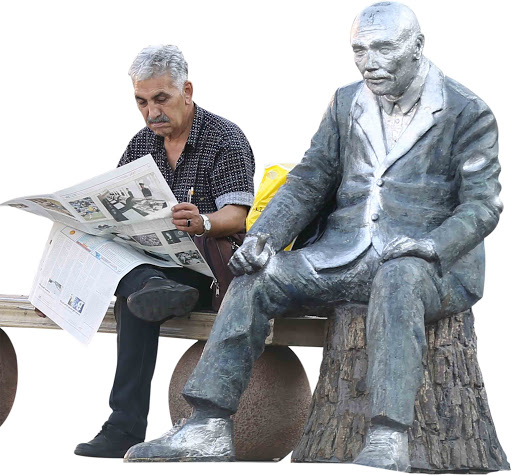
Urban beautification suitable for the elderly / Aban radiance
One of the important points in the field of aging is the necessity of participation and increased presence of this group in society. Because one of the most important ways to achieve sustainable development is for all age groups to be able to participate, have a presence in society, and benefit from social facilities fairly.
Elderly people are among the vulnerable citizens of society, both physically and mentally, who are quickly pushed out of the social sphere and it is necessary to create conditions for their presence in urban spaces. This is while in many cases, independent access to urban spaces is accompanied by physical and mental difficulties. Since society belongs to all its members and in order to achieve social justice, it is necessary for urban planning projects to be designed in a way that allows the elderly to use all urban spaces independently and with the least need for help from others.
Without a doubt, appropriate urban planning can provide conditions for establishing social relationships, active citizenship participation, and a platform for constructive activities for the elderly and improve their situation
Elderly and the phenomenon of aging
The label “elderly” is applied to someone who has spent many years of their life and we expect them to have a shorter remaining lifespan. In other words, the phenomenon of aging refers to the years taken from the average human lifespan. This number has changed over the years, along with the increase in human life expectancy, and now, at the beginning of the 21st century, the life expectancy for people around the world has passed 66 years. It should be noted that this number varies in different countries and has a direct relationship with the cultural situation and the improvement of economic and social conditions in a society.
Aging causes changes in humans, changes that can lead to diseases. However, aging itself is not a disease and is a natural process that affects the human body. These changes can be observed in a person’s physical abilities, mental and social characteristics over time. In fact, the phenomenon of aging is a result of a natural process in which physiological and psycho-social changes occur in
The elderly population growth in the world and Iran.
Currently, many countries around the world, especially developed countries, are facing the issue of an aging population. In fact, the global population trend is towards an aging population, and this issue has become a major concern in these societies. It is said that currently, Europe has the highest percentage of people aged 60 and over (24%). But this trend is also rapidly growing in other regions. It is predicted that by 2050, in all major regions of the world except for Africa, about one-fourth or more of their population will be over 60 years old.
In Iran, despite the fact that the country’s population reached around 83 million in 2019 and we have seen a 1.24% growth in population, the growth rate of the elderly population in our country has also been on the rise, with a growth rate of 3.62%.
Therefore, in Iran as well, the phenomenon of an aging population and attention to it has become a major and fundamental
Old age and cities
One of the main issues that arises in relation to the elderly and the increasing aging population is the issue of urbanization and the citizenship status of these individuals. In fact, the issue of the elderly is considered a urban issue in today’s world, as in rural areas, the elderly often hold onto their traditional status in society.
The point is that countries around the world, in addition to the issue of aging population, are also facing another common trend, which is urbanization. Currently, the trend of aging is progressing in parallel with the trend of urbanization. This trend has both positive and negative dimensions. On one hand, the growth of the elderly population is considered a sign of development and improvement in a society, due to the improvement of people’s health and economy and an increase in life expectancy. On the other hand, it has brought about new challenges for communities.
The Necessity of Age-Friendly Urbanization
Every society needs to consider the needs of all its members in order to achieve sustainable development and take steps towards achieving social justice. In fact, it is expected that the city and urban space provide a place for the activities and actions of all citizens. However, sometimes conditions arise where improving the environmental conditions for one group leads to limitations and difficulties for another group. Therefore, it is necessary to consider the needs of all groups, especially vulnerable groups, in the planning of urban spaces.
We expect an ideal urban space where social justice is respected and everyone, especially vulnerable groups such as the disabled and the elderly, can equally benefit from the available spaces and facilities.
This is while in many cities in the country, the urban space is not suitable for the elderly and they struggle to participate in society.
ان
The city of elderly lovers.
According to the model presented by the World Health Organization under the title “Age-Friendly Cities”, these cities should reflect efforts to develop urban spaces in support of older individuals, in order to promote “active aging” through optimizing opportunities for health, participation, and security to improve the quality of life for older people.
Based on this framework, the World Health Organization has identified eight key indicators as global criteria for age-friendly cities. These indicators include: “indicators of open urban spaces, buildings and public places, transportation indicators, safety and ease of movement indicators, indicators of social respect, indicators of social participation and relationships, health and medical indicators, and cultural and recreational indicators.”
Based on these indicators, it is expected that these criteria will be considered in any urban development. However, in Iran, many of these criteria are not taken into account in urban planning, construction, and social and cultural programs.
These indicators, which fall under the mentioned components, are essential points that address the needs of older individuals
Final words
Adapting cities for the elderly requires a general change in perspective that demands awareness and cultural determination. As long as this perspective is not institutionalized at various levels of management and related organizations do not have constructive interaction with municipalities in this regard, the elderly will continue to be excluded from society and a significant portion of their potential will be wasted in silence and stillness.
 By:
By: June 21, 2020
Tags
Aban is a ray of light. Elderly Monthly Peace Line Magazine Number 110 peace line Retirees Sustainable development The elderly-friendly city.