


“Why did the student committee dissolve in the conversation with Babak Ghiyasi and Shahab Tajri/ Azar Taherabadi?”
Peace Line – Student Committee of the Human Rights Commission of the Bar Association of Kermanshah and Ilam was formed in Ordibehesht month of 91 (April/May 2012) with the presence of a group of students and civil activists from Kermanshah province. This committee, which was a subsidiary of the Human Rights Commission of the Kermanshah Bar Association, was formed with the aim of expanding education, development, and promotion of human rights concepts in society, especially among students.
This committee, however, after more than two years of effective activity, was dissolved for reasons that were not very clear. In order to clarify the reasons for this dissolution, in this issue of the monthly magazine “Khat-e-Solh”, we have had conversations with Babak Ghiasati, the secretary of the student committee, and Dr. Shahab Tajri, the head of the Bar Association of Kermanshah and Ilam, which will follow…
Babak Ghayasi: Some people in the Bar Association consider human rights activism as political.
Mr. Ghaeithi, please kindly inform me when the Bar Association decided to have a student committee and what was the reason for establishing such a committee?
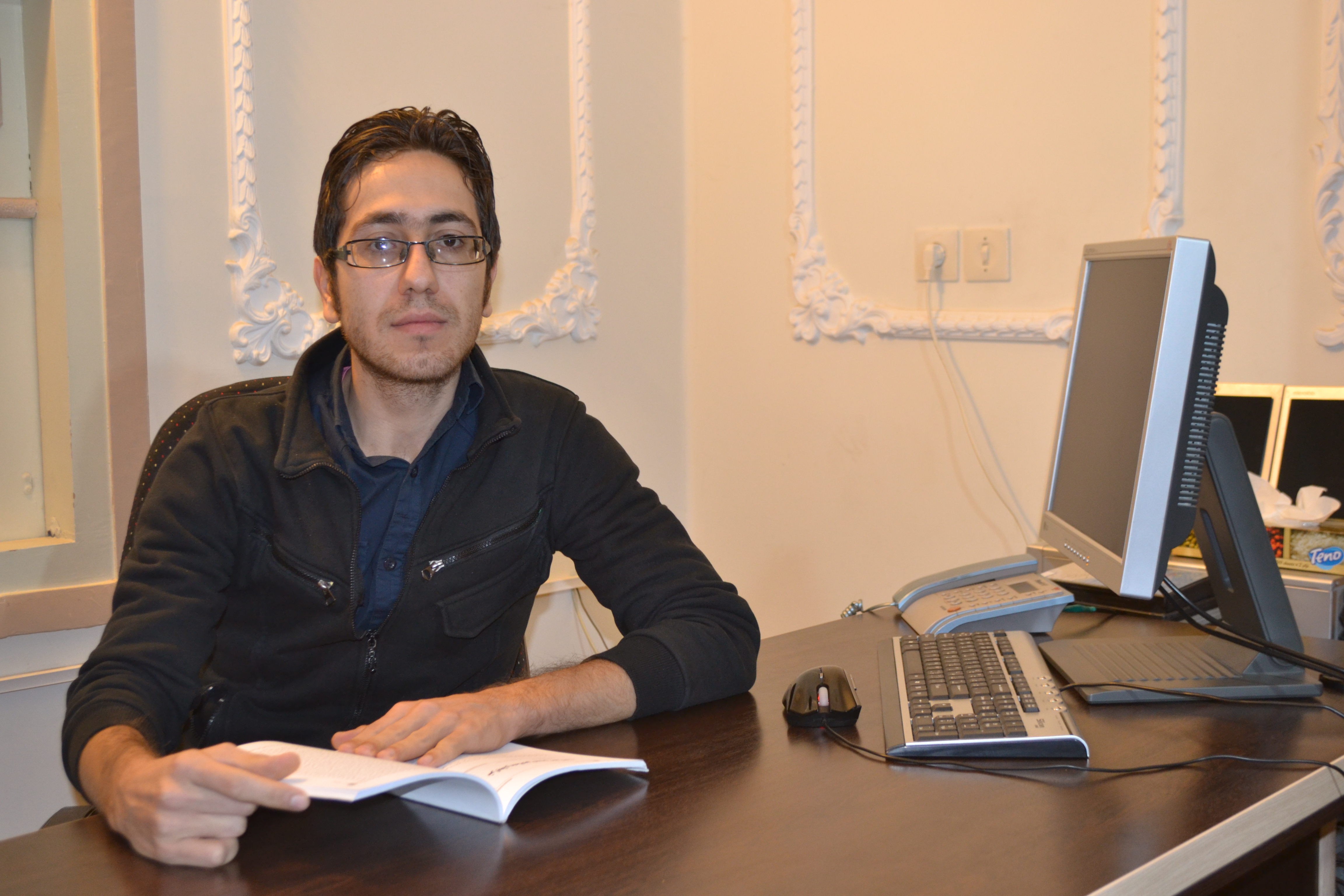
In fact, it was towards the end of the 90s that a group of students from Razi University in Kermanshah decided to form a committee under the Human Rights Commission of the Kermanshah Bar Association, with the intention of familiarizing the student community with human rights discourse and culture. This committee was named the Student Human Rights Committee (full name: Student Human Rights Committee of the Kermanshah Bar Association). Our main goal was to promote a culture of human rights, which is why we decided to form this committee. However, the Kermanshah Bar Association, especially its Human Rights Commission, had already passed a resolution several months prior to this event, to form a committee where students could engage in human rights activities.
Was there anything in the main charter of the Bar Association that supported this basis? In other words, was this committee originally included in the charter, or was it later given an opportunity for students to come and form this committee for the sake of further development of the student movement?
Well, such a matter was not mentioned in the association’s charter and in fact, it was among the executive decisions; the commission decided to have such a committee and the board of directors had also agreed. On the other hand, it is true that we had independence in our activities, but in terms of organization, we were considered as a subsidiary of the Bar Association and the board of directors could make decisions about us whenever they saw fit. As for the second part of your question, yes, it is correct; this was actually due to the good intentions of the members of the Bar Association’s board of directors; especially the head of the human rights commission at that time who allowed us to work in that space when the tenth government was in power and it was difficult to work in universities. Let’s come inside the association and use its capacities and facilities.
What happened that after two years of activity, growth and flourishing, the fundamental foundations of the student committee became so shaky that it ended up dissolving?
The root of this problem goes back to two reasons: the first reason being internal issues that arise in any organization. We were at the peak of our activities, however in April of this year, which is April 2014, some internal conflicts arose which, according to the bylaws, were resolvable and the higher authority, which is the board of directors of the Bar Association, could make decisions about us…
Are these issues expressible?
What was the issue? Could it have been a security issue? Have security institutions forced you into conflict or something similar?
No, there has never been such a thing, because in the two and a half years of our activity, we have not received any warning or criticism from security institutions. As I mentioned, the internal issue goes back to a series of conflicts regarding the committee’s performance. We felt that some changes needed to be made to the committee’s charter in order to utilize our capabilities more effectively. However, we felt that our initial charter was incomplete and needed to be completed. This led to conflicts between two groups of friends; some were in favor of one plan and others were in favor of another plan. This resulted in a high level of conflict and a division, and ultimately the committee was suspended, meaning it was practically no longer functioning, and the board of directors also decided to suspend it. However, the second reason that I want to mention to you is that although part of it was related to us, the main reason was related to the bar association and the board of directors itself. Because from the
What was the reason for these differences in the board of directors of the club? One of your friends had said a few days ago in one of the local newspapers that essentially the reasons that the board of directors had brought to the student committee were baseless and had brought up the issue of giving girls and boys and the religious issue and so on. Was part of this difference related to this issue?
See, as our friend said, those reasons were baseless. Most of them were related to internal issues of the committee and those issues were not baseless. There were disagreements within the committee. Some said that the Bar Association is essentially a professional institution and should not engage in human rights work; according to them, human rights work in Iran is a political act. However, during these two years, these disagreements, which sometimes reached our ears, did not hinder our work. Ultimately, the internal conflicts that arose were resolved and, in fact, became an excuse to justify the decision. The Board of Directors, based on the fact that the Student Committee for Human Rights is an institution that may engage in political work, made this decision. Although this was not the opinion of all the Board of Directors, it is a decision that we can respect.
Of course, it is true that we gave the excuse to the board of directors, but I feel that in the long run, even if there was no excuse from the board of directors, considering the disagreements that existed there, the committee would have dissolved. In any case, the board of directors could have acted as a mediator here and reduced or eliminated the internal conflicts within our organization, but instead they chose to clean up the situation and dissolve the entire committee…
The student committee that you were actually the secretary of, what activities did it do during its lifetime and is it possible for you to form this committee in another place and gather together and continue its structure and operations?
As I mentioned before, we started our work with the general goal of promoting human rights culture. I feel that the people of Iran are only familiar with the term human rights, but they are not familiar with its principles and content. Well, alongside the Universal Declaration of Human Rights, we believe in something called human rights culture, which has not taken root in Iran. This groundwork and growth and awareness about humans must take place, and the Universal Declaration of Human Rights must have a local place in Iran. We have focused on this issue at the university and have worked on it through education, research, and information dissemination. In any case, students are a group that is familiar with media, books, newspapers, and magazines, and their thoughts are more involved in such issues and they are more concerned. That’s why we invested in students to go out into society as human rights ambassadors and promote the discourse of human rights. In fact, we created a term called human rights officers and we addressed each member
“These were routine tasks that we used to do. But as for being able to form such a committee in another place, well, I don’t think it’s possible in the short term! In any case, the Bar Association, as a legal institution and union, operates independently and for this reason, they have given us permission to start a committee and in fact, it is not practical for us to obtain a license under our own name. Another option is to work under the umbrella of a party or another organization, but considering that the majority of organizations and parties in Iran are only interested in political issues, I don’t think it would be beneficial. Also, after the committee was dissolved, our 60 members scattered and are now involved in various activities (political, civil, etc.) and no one is currently working under the name of human rights.”
How much oversight did the Kermanshah and Ilam Bar Associations have over you and your work, and how much were you actually under the control of the Bar Associations?
From the very beginning, they allowed us to have a separate charter. This charter was based on the statute of the Human Rights Commission; meaning that the Human Rights Commission had a statute that we couldn’t go beyond and we had to incorporate our charter within the framework of that statute. Well, we did that and we can say that we had relative independence. We held our own meetings and even implemented our own decisions, and the existing hierarchy did not interfere or cause any problems. But as I mentioned, we should not have gone beyond the general goals of the Commission and the frameworks and limitations of the Bar Association, which we never did in the two and a half years.
Do you think that with the dissolution of this organization, it can be said that a void has been created in regards to the same human rights issues in Kermanshah?
Forming or dissolving a student committee with 60 or 70 members does not have a significant impact on society, but we believe that we could have had a great positive influence in the long run. During the life of the committee, all the elites of Kermanshah and universities knew us and we were in contact with most political and civil organizations and grassroots groups, and we were able to make a good impact; at least we expanded our name. In any case, I think the student committee of Kermanshah Lawyers Association was the first of its kind in Iran, and it was a breakthrough for other universities and cities to be able to do the same. In this way, we could have joined hands across Iran and made a big movement; while we were also negotiating in Tehran, Sanandaj, and Hamedan, and the student committee for human rights in these cities was also taking shape, but with this dissolution, those negotiations were left unfinished…
Is it possible to re-enter into a negotiation with the Bar Association and lawyers and rebuild the committee? That is, to reconstruct this committee, taking into account the directions and gaps that existed among its members, and continue the process that you had?
See, some members of the Bar Association’s board of directors were supporters of the committee. Meaning, they were the ones who are currently supporting the committee and it was their support that led us to form this committee. These friends’ argument is that this dissolution and suspension is likely temporary and in the coming months, if conditions change in the Bar Association or negotiations take place, this committee will resume its work. We have also received signals and indications from the board of directors themselves that this may happen. However, as someone who has lived with this committee for two and a half years, my argument is that if such a move is to be fruitful, it is better for it to happen nationwide; meaning, we should first go and talk to the Bar Association’s unions across the country to have them pass a resolution and issue a directive for such an institution to be formed within all bar associations.
Do you think this safe margin will exist for committees such as the student committee, so that you can continue your work without any worries?
See, we launched this committee during the time of Mr. Ahmadinejad and the tenth government. It was a time when the political and social conditions were not favorable at all; civil institutions were under pressure and sometimes dissolved or suspended and had no activity. However, the Bar Association of Kermanshah took a very positive approach to this issue and formed the committee. I believe that now, in the new government, the situation is much better and we expect from Mr. Rouhani’s government – and rightfully so – that political parties, groups, and civil institutions will revive. Although there is still a long way to go to reach higher peaks, I think the political and social conditions are conducive to the formation of such institutions. But ultimately, it depends on the board of directors of the Bar Association, as I mentioned, some have a political view on human rights and say that because it is non-governmental, it has no place in the overall goals of the Bar Association.
Mr. Ghaeethi, if you have something to say, please go ahead.
I hope that the civil institutions in Iran and the various NGOs that are formed in other provinces take the issue of citizenship rights seriously; because even the President himself presented the Charter of Citizenship Rights last year and I believe that with these circumstances, there is a good potential for the discussion of citizenship rights to be taken seriously, so that hopefully positive events can also be the source of change in Iranian society.
Thank you for the opportunity you have given us.
Dr. Shohab Tajri: The student committee has not been dissolved!
Mr. Tajri, if possible, please explain the reasons and process of formation and dissolution of the student committee.
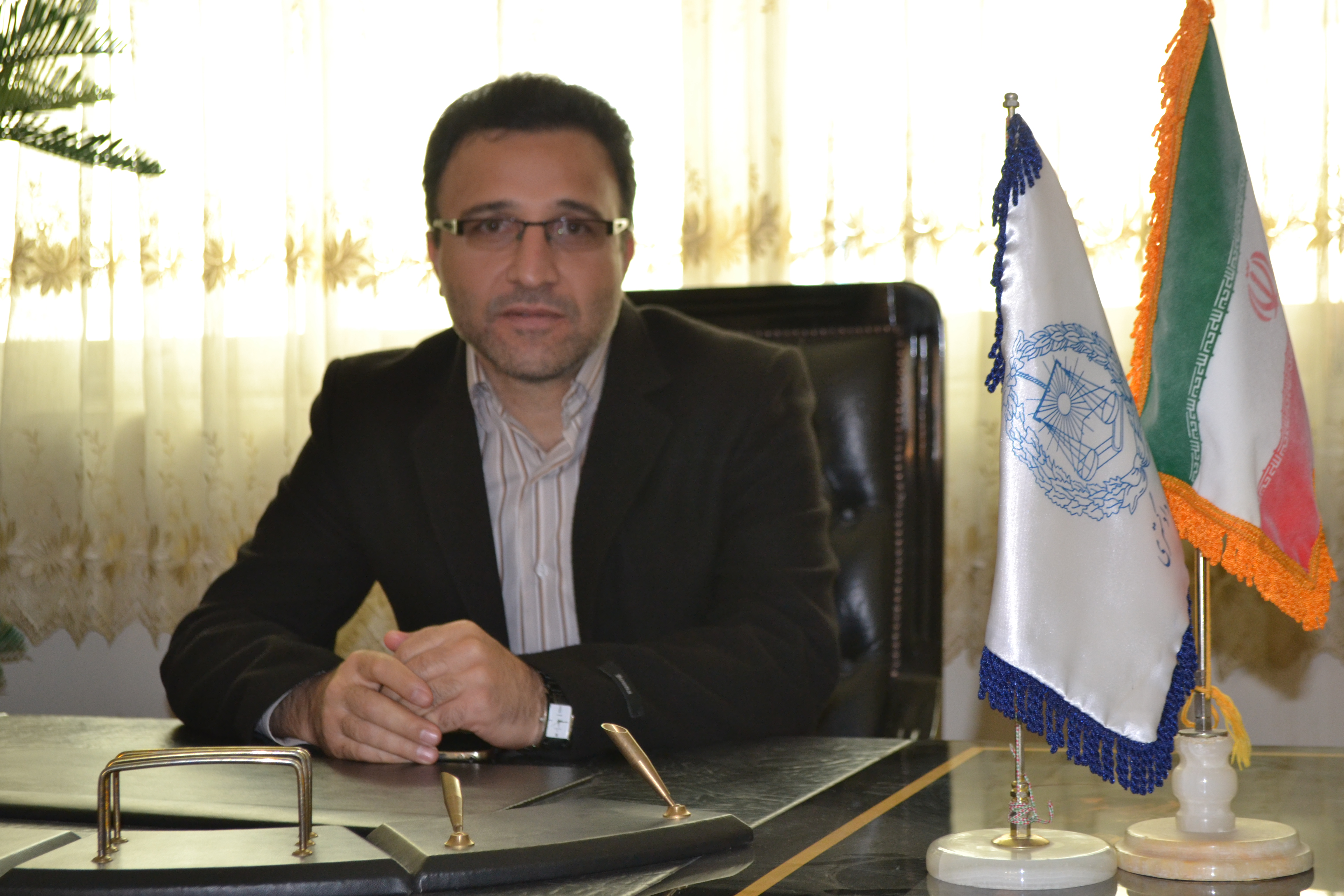
We were in the year 88 (2009-2010) after the elections, when we saw that social activities were limited and it was not possible to engage in activities as before. We tried to make the Human Rights Commission of the Bar Association, which had been previously established but had no practical activity, active. So we came with some friends who were sometimes university professors and lawyers, and we activated the commission. Our goal was to promote human rights and the culture of human rights, considering the limitations in our society. On one hand, the issue of human rights was a sensitive one and many people were sensitive about it, and on the other hand, we were trying to continue our activities while considering these sensitivities. Therefore, we started our activities with many limitations and restrictions.
One point that came to my mind at the beginning and I tried to achieve it, was that our students have a great potential for social activities in various fields, and we said that we should take advantage of this potential for our goal in this period. On the other hand, there was no possibility for students to engage in activities at the university and in society, but the Bar Association was in place and could carry out activities. With these considerations, we tried to bring students who are interested in this field under the umbrella of the Bar Association by creating a student committee and providing them with the opportunity to engage in activities – I emphasize, within the limitations we had.
The constitution of the Bar Association does not accept non-lawyer membership; how did you reconcile this issue with the constitution, considering that students are generally not lawyers?
Reality, this was a very difficult issue and from the very beginning, some of our colleagues’ main criticism was exactly this. The Bar Association has a law; the Law of Independence of Bar Associations, which is a legacy of the late Dr. Mosaddegh, was approved in 1331, but after the coup, they re-approved it and accepted some of Dr. Mosaddegh’s laws in the same way, and the date of its legislation became 1333. In this law, which later its regulations were also prepared and after the revolution in 1376, another law was approved for the re-activation of Bar Associations, in none of these cases, non-member activities (of lawyers themselves) were not foreseen within the framework of the Bar Association. All activities, goals and issues that are raised in the Bar Association must be pursued by its members; except for administrative tasks of the Bar Association, which the Bar Association can employ individuals in this regard. This was
After the eleventh presidential election, the atmosphere became slightly more open and the possibility for social activities increased. Universities are now experiencing a slightly more open space compared to the past. The initial and fundamental issue was raised again and friends were saying that now there is no excuse; students must return and engage in activities in their own spaces. I was, and still am, opposed to this kind of thinking that exists mainly towards lawyers’ associations. I have arguments to support my opposition, which is that lawyers’ associations should strengthen their social activities and their connection to the community. In fact, the turning point and convergence of this matter is human rights, which is both a legal issue within the framework of the lawyers’ profession and is also completely social, keeping us connected to the community.
Mr. Tajri, you see human rights as a legal issue and view it from this perspective. However, Mr. Ghiasati, the secretary of the student committee, believes that one of the reasons for the dissolution of this committee is the politicization of human rights work by some members of the board of directors. What is your opinion on this matter?
I will explain that no decision has been made by the board of directors to dissolve the student committee and the board of directors has not announced that this committee should be dissolved. These are false assumptions that have arisen as a result of incorrect information. Some of our colleagues are against student activities, but the decision to dissolve this committee has not been made yet. Another point is that human rights are inherently a legal matter, but due to the issues that are raised, various political, cultural, and civil issues also arise. You are aware that after the Universal Declaration of Human Rights, two international covenants that complement the declaration were adopted by the organization; one is the Covenant on Civil and Political Rights and the other is the Covenant on Economic, Social, and Cultural Rights, all of which are included in the framework of the Human Rights Charter. It is not true to say that if someone engages in political activities, they are outside the realm of human rights. I personally do not accept such arguments; even
So I am fundamentally opposed to such arguments; just as students have not had any sensitive activity during this period and the main problem was the same legal issue that I mentioned to you.
So, are you saying that this committee has not been dissolved yet?
No, it hasn’t been dissolved…
Is there any hope that the safe margin of the Bar Association and students can continue their activities?
It is definitely like this, but it depends on the judiciary not taking independence from the bar associations and lawyers. However, if this independence is taken from the bar associations, it is the effort of the judiciary and now there is a bill in this regard in the parliament, the bar associations will lose their basis of formation and main axis of their activities; for this reason, it is not clear what will happen after that.
But regardless of the discussion of the independence of the association that I mentioned, I give this promise to the students. I have emphasized many times and I say it again that my main activity is in the university. For almost 14 years now, I have been teaching at the university and I have a special interest in active students and students who excel in various fields. This interest has not only decreased, but it also increases day by day. And I am definitely in favor of students being active in this association both intellectually and emotionally, and I want this activity to continue.
Thank you for the opportunity you have provided us with to reach a peace agreement.
 Created By: Azar Taherabad
 November 24, 2014
Tags
Azar Taherabad Babak Ghaeithi Gender discrimination 2 Gender equality Peace Agreement Number 43 Peace Agreement of Azar Month Peace Line Magazine Issue 43 Shahab Tajrish The Student Committee of the Human Rights Commission of the Kermanshah and Ilam Bar Association. Women تبعیض جنسیتی