


Abdolsamad Khoramshahi: We should not expect forgiveness from the victims of acid attacks / Simin Rouzgar.
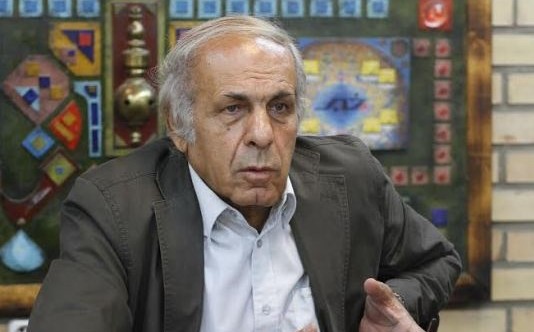
Abdolsamad Khoramshahi is one of the most famous and controversial criminal lawyers in Iran. He was born in Qazvin in 1328 and has handled cases for individuals such as Shahla Jahed, Delara Darabi, Fatemeh Matin (the oldest prisoner accused of murder), Neda Agha Sultan, and Reyhaneh Jabbari, as well as the victims of the attack on Tehran University. In addition, he is the lawyer for Masoumeh Ataei, one of the victims of acid attacks in Iran.
Masoumeh Ataei, in the month of Shahrivar in 1389 (August/September 2010), after rejecting requests to reconcile with her ex-husband, became a victim of acid attack by her father-in-law. Mrs. Ataei recently, due to gaining custody of her young child, has waived retribution from her ex-father-in-law.
Abdolsamad Khoramshahi, in an exclusive interview with the peace line magazine, emphasized that in many cases, acid attacks are worse than murder. He said, “How can we expect someone like Masoumeh, who is a victim of such a crime and suffers the greatest and worst pains, to easily forgive and move on from seeking retribution…” This lawyer also believes that there is a legal loophole in this area and the failure to implement retribution punishments for acid attackers has led to the disappearance of the horror of the issue in the country…
Mr. Khoramshahi, without further ado, I ask my first question; Masoumeh, your client, has passed the statute of limitations for taking custody of her child from her ex-husband. If her former husband did not propose such a condition, was she actually seeking retribution? How much were you in favor of retribution in the first place?
This article is thought-provoking. We should take a moment to put ourselves in Mousomeh’s shoes and see what crime has been committed against her. She had many difficulties and hardships in her marriage even before the acid attack, as she complained that her husband was unemployed and not looking for work, and she was forced to work herself. These were all added pressures for a young girl. Now let’s see what has happened to her after this incident…
Well, we know that acid attacks are one of the biggest crimes and atrocities. Imagine the acid that destroys solids, stones, bricks, and iron, what deal will it make with the skin, flesh, and bones of a human? You know that after that incident, Masoumeh lost her eyesight, lost her beauty, suffered great pain, and underwent multiple surgeries on her face. I truly believe that acid attacks are a heinous crime and in many cases, worse than murder. Because ultimately, someone who is murdered, all their problems and difficulties come to an end, but someone who is a victim of acid attack, their suffering only begins. Understanding such conditions and the torture that a victim of acid attack endures is unimaginable and cannot be easily understood and comprehended. With these circumstances and with the amount of hardships and difficulties that a young woman has endured and struggled with – from physical and emotional pain to the hardships imposed by family and society – how can we expect forgiveness and
Well, these days, especially due to the case of Reyhaneh Jabbari, the discussion of forgiveness in society has become more serious than before, but it seems that your approach to this issue is different…
No, my approach is not different. I do not promote violence and I do not say that we should respond to violence with violence; I look at the issue from a different angle. I say we should put ourselves in the victim’s shoes, and then we will understand how difficult it is for them to come forward and forgive. Forgiveness is very good and has a tremendous impact on society, and violence certainly cannot be the solution. Violence cannot be answered with violence, and it has been said since ancient times that blood cannot be washed with blood. However, it is particularly difficult in this case for a victim of acid attacks to easily forgive someone who has committed this crime against them, unless they are under special circumstances. Acid constantly eats away at the flesh, skin, and bones, and constantly destroys the body more than before. Both physical torture and the terrible psychological and emotional effects, such as a dirty heart and a dead heart and depression, which the victim of the crime always lives with,
As I mentioned before, I believe forgiveness is a good thing, but asking for forgiveness from a victim of acid attack is a difficult task. If the victim does not want to forgive in such cases, we should not take it hard. In summary, if Masoumeh is willing to give up her rights under certain circumstances, she must have been influenced by other issues, such as the custody of her child and allowing her to live with her child without causing any disturbance.
To what extent do you know the retribution of the acid attacker? Do you consider it to be a deterrent in practice?
The impact of punishment and the analysis of its effects on reducing and deterring crimes is not a simple issue where we can quickly make a judgment and say that this action is good and that action is bad. However, the discussion of punishments and their objectives has been a topic among criminologists, lawyers, crime analysts, and sociologists since ancient times, and it is not easy to judge how the impact and proportionality of punishments should be. In any case, the conditions of societies are usually different from each other, and we know to some extent that punishments can have a deterrent role and to some extent can provoke criminals. There are those who have an inherent tendency to commit crimes, and we should not ignore the role of punishment in deterrence or in reducing crimes, even temporarily, in a society where many issues are ignored and the level of culture is not high enough for the language of the law and civility to be effective. We need to think more about developing or underdeveloped societies
See, I have asked this question more than once, that the implementation of retribution punishment for acid attacks, which is considered under Article 393 of the Islamic Penal Code that specifies six conditions for retribution, is practically impossible and, in fact, criminals may even commit acid attacks with knowledge of this fact. With this explanation, is there no better punishment than retribution (which is not actually carried out) that can be considered for such events?
Yes, the difficult conditions and equality of retribution in Article 393 of the new Islamic Penal Code have made retribution impossible in crimes such as acid attacks, and I have not seen, heard, or read about any instances of retribution being carried out. As you mentioned, this may be one of the reasons for the increase in acid attacks in recent years, as the flaw in the execution of retribution in acid attacks diminishes the severity of the issue. In any case, this is a legal loophole and it must be addressed in some way. I believe that other punishments can be predicted or implemented to hold the criminal accountable and prevent potential repeat offenders, using this heavy punishment as a temporary tool to curb the growth of such crimes.
But what alternative punishments may be possible… In the 1337 law, we also had imprisonment with hard labor and exile. I have repeatedly pointed out that this legal loophole and defect, which results from the lack of proportionality between crime and punishment, can be somewhat remedied with the enactment of new laws and punishments that are appropriate to the type of crime. We must also consider the factors that contribute to the increase in crime; what factors are effective in the rise of crimes.
Let me give you another explanation: Some may immediately say that punishment in itself is not a solution. I myself believe that without preventive measures, without security and educational measures, and without identifying the causes and factors of crime and the environments in which it grows, and striving to eliminate them, and without eliminating the grounds for the occurrence of crime, naturally any punishment, even severe punishments, will not be the ultimate solution.
Mr. Khoramshahi, what support have the government and officials provided so far for Masoumeh Ataei, as a victim of acid attack, in her treatment?
In any case, in the beginning, some help was provided by kind individuals, people, and doctors, but you surely know that victims like Amina or Masoumeh, or individuals who have been severely physically assaulted and victimized, need treatment, care, and continuous monitoring. As I mentioned, in the first few months, some help was provided, but currently, there is a shortage. Masoumeh, who is a very modest woman, usually does not mention her problems and does not complain, and she continues to endure her painful suffering. However, the last time I saw her, I realized from her words that she truly needs help and support. In any case, her continuous treatment, the medications she takes, and other issues require expenses, and as I have heard from doctors, this acid is constantly active and breaking down. I am certain that Masoumeh is enduring and patient, but she definitely needs help…
This is an image caption.
این یک عنوان تصویر است.
Masoumeh Ataei and Ameneh Bahrami, two victims of acid attacks.
How much can acid attacks, especially recent chain acid attacks, have a private aspect that we reduce it to a private crime? Does it not lead to violence in society or hurt public emotions and feelings?
Every crime is divided into several parts from different perspectives; from one angle, crimes have both public and private aspects. However, it is undeniable that acid attacks have extremely negative and undesirable effects on society, disrupting the security of the community and causing disturbance, concern, and fear among individuals. The consequences of acid attacks on society are certainly terrifying and it is not a problem that can be limited to just one or a few individuals and remain at that. The harmful effects of acid attacks on the pillars of society and the overall mental and emotional security of the community are undoubtedly significant and I do not think anyone would disagree with this belief.
I believe that officials should pay special attention to this issue. It demands that laws be amended or new laws be enacted. Therefore, investigation and field work must be carried out; to determine the causes and factors that contribute to the growth of this issue in society, and to find effective solutions to combat this type of crime so that we can see a decrease in it in the future, and even if possible, a reduction in the negative and undesirable effects of this crime.
As a final question, what is your opinion on the recent acid attacks in Isfahan and the response of the judicial system to them? Have you represented any of these victims?
From the very moment I took on the responsibility of representing Masoumeh, and even before that, I repeatedly warned about the issue of acid attacks and urged for it to be taken seriously. Unfortunately, this did not happen and the events in Isfahan led to a crisis in the country. However, I believe that even the authorities themselves realized that this issue needed to be addressed, as acid attacks have a very negative impact on people’s sense of security and well-being. But as for how the situation was handled and what the outcome was, I cannot make a judgment because I do not have comprehensive information on the matter. My information is currently limited to what others have said and stated, and without personally investigating the issue, I cannot give my opinion. All I can say is that the destructive effects that this phenomenon can have on the mental security of society and individuals are undeniable.
…As for the victims of acid attacks in Isfahan, not yet, but despite my busy schedule and considering that these victims need legal follow-up and most of them do not have enough financial means to hire a lawyer or do not have enough information about the legal process of their case, I am interested in taking on their representation for free and without any fees if they come to me, and do the necessary legal actions to support these victims of acid attacks as much as possible.
Thank you for taking the time to be with us.
 By: Simin Rouzgard
 December 26, 2014
Tags
Abdolsamad Khoramshahi Acid spraying Acid spraying in Isfahan Magazine number 44 Masoumeh Attaii Monthly Peace Newsletter, Issue 44 Simin Daytrip