


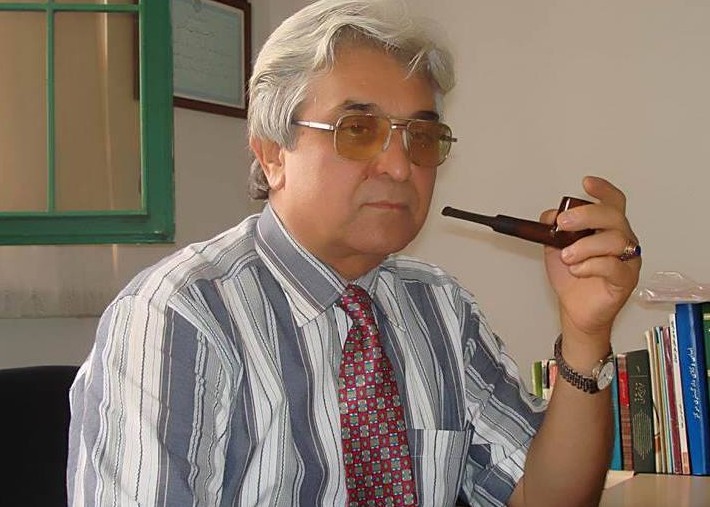
Mohammad Saifzadeh: Drug offenders should not be imprisoned / Morteza Hamounian
Seyed Mohammad Seifzadeh is a human rights lawyer. He is one of the founders of the Human Rights Defenders Association and spent several years in prison after the events of the 2009 presidential election. Seifzadeh has been actively working in various legal and human rights fields for years and has represented many political, security, and religious prisoners.
This experienced lawyer, in discussing the issue of capital punishment for drug-related crimes, proposes alternative punishments and rejects execution and even imprisonment for these prisoners through peaceful dialogue. He states that according to the goals of criminal law in Islam and modern law, which aim to reform the criminal, such punishments do not lead to their rehabilitation. He suggests alternative punishments, rejecting the religious and rational foundations of execution for suspects of drug-related crimes, which have been evaluated and proven effective through various tests in 12 countries worldwide and under the supervision of the United Nations.
You can read the full text of the peace line interview with this experienced lawyer and jurist below.
Given that the death penalty is costly for drug-related crimes at the international level, why do you think there is insistence on executing suspects in this field in Iran?
In my opinion, the reason for this is that authorities are somewhat trapped in jurisprudence, while there are capacities in Islam that can update laws. Many scholars believe that we should pay attention to the philosophy behind a certain ruling at the time it was established. When we look at the issue of criminal law in Islam from this perspective, it shows that the goal of Islam, like modern laws, is to reform the criminal. If this is the case, we must consider that execution cannot reform someone, especially when it has been proven in criminology that execution and even imprisonment – which are the oldest punishments in human history – not only do not eliminate crime, but also do not reduce it.
This is why the United Nations has been conducting experiments on alternative punishments in 12 countries since a few years ago, and it was supposed to be implemented by us (Human Rights Association) in Iran as well. Our experience is also based on this fact that in relation to drugs, the severity of actions has had no effect. If one day they were taking one gram of heroin or one kilo of opium, today they are taking hundreds of kilos, smugglers have become international and the number of addicts has also increased several times. As a result, we can see that this plan has failed in all dimensions.
Dear Mr. Saifzadeh, executions related to drug offenses do not have a specific basis in Islamic jurisprudence and are not considered as prescribed punishments or retribution. What do you mean by saying they are trapped in jurisprudence and why do you think we continue to see executions in this area?
The reason for this is probably that it has occurred to them that this issue is a type of corruption on earth and on this basis, they consider a legal basis for it and approve these executions; otherwise, Islam has no rational or logical basis for this matter. As I mentioned, the main goal was to reform the criminal, return them to society, and be useful. It should be emphasized that these executions and imprisonments are in conflict with the principle of personal punishment. The principle of personal punishment is based on the fact that the punishment should be determined in a way that does not affect the family and others; look and see what tragedies have occurred, how families have been torn apart, and what population has been inclined towards crime.
Recently, we have witnessed that judicial officials also refer to the lack of deterrent in relation to the death penalty for drug-related crimes. Is there hope that in the near future, the Assembly for Determining the Expediency of the System, as the decision-making authority in this matter, will reconsider and change the law?
Given the existing space and the numerous experiences that have proven the ineffectiveness of this process, I hope that all of these executions will be negated and alternative punishments, not only in the implementation and revocation of executions, but in all parts of the current and applicable Islamic penal code.
As a prominent lawyer, what alternative punishment do you suggest instead of execution for drug-related crimes?
Considering that these types of punishments – in addition to the issues I mentioned – are harmful to society, therefore a punishment should be considered that is beneficial to the current state of society. For example, as they say, as a criminal, you must work for 30 years in a public area under the supervision of a manager who regularly reports your work to judicial authorities. Or stay at home for 5 years and have your work tools there, and if you leave the house, the electronic monitor will immediately report your violation; if this violation is repeated multiple times, the punishment can turn into imprisonment.
Today it has been proven that execution and imprisonment are not effective. Therefore, I hope that these types of punishments, which are sometimes mentioned in the general section of the Islamic Penal Code (year 92), will not only be implemented in that section, but in all sections.
This type of punishment is a modern punishment and in fact has no roots in our history and traditions of punishments, and has only recently been implemented even in Europe. Is such punishments suitable for these crimes and for Iranian society?
Definitely there is an answer; especially since the experiment conducted in 12 countries including Finland, Denmark, the Netherlands, Switzerland, Sweden, and in several states in the United States under the supervision of the United Nations has been successful and families have not been separated. In fact, by doing this, one violence is not responded with another violence. Therefore, this issue is very positive and beneficial for society. We must consider this important issue that the world is moving towards.
As a final question, please state what should be said to those (in fact, to their families) who were executed if the execution of drug-related crimes is abolished?
“Look, laws are meant for the future, not for the past. There is a general legal principle that states laws do not apply retroactively. Therefore, that law, if God willing, will be implemented for the future and should be viewed with such perspective.”
Thank you for the opportunity you have given us.
 By: Admin
 September 25, 2016
Tags
Alternative punishment Alternative punishment to execution Alternative punishment to imprisonment Dr. Mohammad Seifzadeh Drug offenses Execution Glass Magazine number 65 Mohammad Saifzadeh Monthly Peace Line Magazine Narcotics peace line Power of attorney Prison پیمان صلح ماهنامه خط صلح ماهنامه خط صلح