


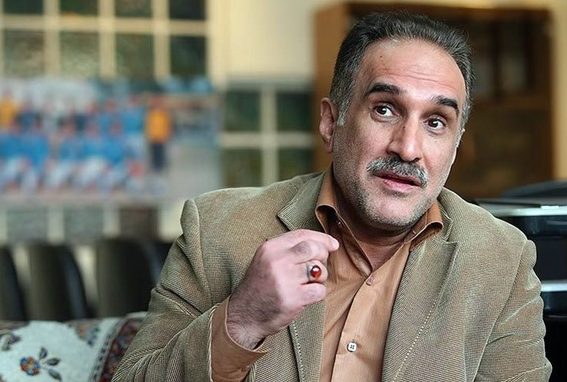
Ahmad Hakimipour: The performance score of the Tehran City Council’s supervision is below 10/ Ali Kalaii.

Conversation with Ali Kalai
Ahmad Hakimipour is a politician who, in addition to being present in the fourth term of the Islamic Consultative Assembly and being a member of the Central Council of the Assembly of Representatives of the Terms of the Assembly, has also been a member of the Islamic City and Village Councils in the first and fourth terms (current term) as a member of the Tehran City Council.
The Secretary-General of the People’s Will Party of Iran, who is also a candidate for the fifth round of city and village council elections, has always criticized the Tehran Municipality and General Qalibaf in his previous conversations.
In an exclusive interview with Dr. Ahmad Hakimipour, the peace line has discussed his experiences as a member of the Tehran City Council in order to improve the performance and impact of councils on the social scene and management. In this conversation, Mr. Hakimipour’s criticisms and suggestions in two sections of elections and supervisory performance of councils have also been addressed for guidance.
Mr. Hakimipour, as the council is considered a part of the country’s management system and an institution for influencing the fate of the people, as a member of the Tehran City Council, what weaknesses or shortcomings have you witnessed in the process of registration, selection, and elections of councils?
In my opinion, the structure of elections in Iran should change and become like many other countries in the world. However, the biggest weakness is that the electoral system in Iran is not partisan, and we see chaotic registration in both council and presidential elections. In any case, civil and political institutions should have a presence before the registration stage and an internal and organizational election should take place so that individuals do not directly enter the election arena. This is a major problem that exists and I believe that the election law in Iran should be amended to move away from a person-centered approach towards an organizational and institutional approach.
We must consider the plans. The emotional spaces of elections are temporary. It must be clear what people are saying and what they are going to do in the future. Someone who puts themselves in the position of elections must also be comprehensively evaluated for their actions and behaviors afterwards. It must be clear what they will receive and what they want to deliver. I call transparency in this area “program-oriented”. This means that people should vote more for the programs and not for the person. The people’s vote should not be emotional and based on populist slogans and individuals who have not spent time working with a civil institution and only come with the popularity they have gained in other fields and put themselves in areas where they may not have the necessary skills. Of course, there is nothing wrong with an artist, actor, athlete or any individual coming and being in the position of election. In fact, this is not prohibited by law, but I want to say that these individuals must also have worked in intermediary institutions between
What is the main difference between the selection and qualification approval process in local council elections and the elections for the Islamic Consultative Assembly?
In any case, there is relatively little oversight in council elections and candidates are not scrutinized very strictly. The reason is that the nature of the work is different; it is not a political matter, but rather related to social and service issues for the people. Therefore, there is no political aspect to these elections and from the beginning, they were not closely monitored, resulting in the Islamic Consultative Assembly being responsible for overseeing this matter. From the very beginning, when the councils were formed, we witnessed the possibility of competition and diversity among candidates. This helps all tastes and all interested parties to have this opportunity, and in my opinion, this is a great advantage.
You mentioned two topics of political parties and civil society. What progress has been made in these two aspects during the process that you have witnessed from the first city council until today?
There have been differences and based on what I see in city life, significant changes have occurred. Most of the issues that our clients brought up in the first city council were personal concerns. For example, they would bring up problems with their buildings, or come to us about employment, or seek discounts on paying fees to the municipality. But now, in the fourth term – which we are coming to an end of – I feel that there have been significant qualitative differences and the concerns of our clients are mostly non-personal and related to the city and public issues. I call this culture “demandism”. In fact, the culture of social surveillance has grown in Tehran during this period. This growth is the result of both the four terms of the city council in Tehran and the role of the council’s institutions in this city. Currently, on one hand, we are witnessing the qualitative growth of the culture of demandism and participation, and on the other hand, we are demanding transparency and pursuit of public
I see these issues as strengths. Institutionalization has taken shape in a way. NGOs have become more active. For example, in the first period, we had no NGOs regarding tourism and historical buildings in Tehran. But now, these types of organizations have increased, formed unions, and are in contact with each other. This means that in regards to concerns such as air pollution, environment, green spaces, and social damages that have affected people and they have become sensitive to, non-governmental institutions have taken shape to pursue these issues. All of this shows that the change of people from “city dweller” to “citizen” is forming. As you know, not everyone who lives in the city is necessarily a citizen, and a citizen is someone who is aware of their rights and knows how to pursue them. Part of these issues must be attributed to the effects of the council institution during the four periods – even if it is minimal – as well as the councilary institutions.
How do you evaluate the presence of women in council elections and as members of this institution? Do you know the level of women’s participation in councils?
Despite the efforts and activities that have been made, especially in recent years, for women to have a more prominent presence in public spheres, we still have this backwardness and we do not see such balance in our society. In my opinion, this is something that will happen gradually and we are witnessing that women’s presence in this field is on a steady rise year by year. However, in councils, women actually have a good and active presence. In this period, there are also many female candidates and the efforts of reformists are to bring women in some way.
I think, apart from the important point that women should be familiar with social activities before entering councils, there is a belief that needs to be instilled in themselves. The late Akbar Hashemi Rafsanjani used to talk about this and it was that women do not vote for themselves. Women should come to the belief that they should be present in the scene; if this happens, half of the society is women and they will definitely vote. Unfortunately, this belief has not yet been created within the women’s community. This is a cultural issue that needs to gradually progress and cannot be solved with one law or directive. Of course, institutions should also gradually open up the space for this connection to be established. On the other hand, the further we get from Tehran and big cities in Iran, due to walking in traditional spaces, the presence of women also decreases. In any case, as I said, it will take time to reach a point of balance.
Many news about the existence of corruption, especially embezzlement and economic corruption, have been published about various city councils so far. In your opinion, why does this corruption exist and why is it mainly economic in nature?
In any case, wherever there is an economic institution and there is income, money, and benefits, the potential for misuse and corruption is also greater. Here, there is also a high financial turnover and it can be tempting for those who intend to misuse it. It should also not be forgotten that good and bad people and those who are corrupt can be found anywhere. So, it can be understood why this happens. But what is important is to take action to prevent these events from occurring.
The first issue is that we must not politicize and factionalize the issue of corruption. If this becomes a political and factional matter, it provides an active shield for those who seek to take advantage and engage in corruption, and they hide behind political divisions. The next point is that ultimately, we must shift our oversight from “case-based oversight” to “process-based oversight”. Case-based oversight is mostly after the fact and not very effective, it only serves as a warning. But process-based oversight is oversight before action is taken and does not allow corruption and rent-seeking relationships to form in the first place. Based on this, in the fourth term, we sought to establish such oversight and even created a special commission for it; however, in the end, in my opinion, this was not successful during the fourth term of the Tehran City Council, and we have not yet achieved the results we were aiming for. We must work harder for this process-based oversight to show its results more effectively
In your previous conversations, you have mentioned that the city council has not been successful and efficient in carrying out its supervisory duties since its formation. What is your proposed mechanism as someone who has experience in this field and has dealt with these issues?
One of the main functions of the council is oversight. This oversight should be based on the information we receive. A system should be established through processes of providing information on income and expenses, so that council members can have online access to it at any time; to see, for example, if legal procedures have been followed in a certain transaction or not. A system that is regularly circulated and monitored, and council members can oversee it. But currently, we mostly consider and monitor issues that have already happened. In fact, someone comes and reports or complains to the council, and its accuracy is monitored. For example, a neighbor calls and says they are cutting down a tree next to our house, and then a member of the city council has to go and see the issue. This style of oversight is no longer effective and does not solve the problem of Tehran. All processes should be transparent and accessible. A specialist should design a monitoring dashboard and make it available to council members so that they can have better
How can people monitor themselves on councils?
“It is the right of the people to know. In the first session of the council, we were pursuing a plan that aimed to broadcast council negotiations directly on television, and every week, the radio and television of Tehran would allocate a time slot to review the council’s one-year performance, so that people could see it. This plan was a good one and it gave people the right, but our friends did not handle it well and rejected it under the pretext of cost-saving. However, it was the people’s right that did not happen. The council is also subject to the majority vote, and in any case, we were in the minority and our plan failed; just like other plans that never yielded any results.”
How do you evaluate the performance of the fourth term of councils and if you were to give it a grade, what grade would it be?
I see some issues as relative and I believe that absolute judgment cannot be made. In my opinion, the current situation of the council is better compared to the past and we have made progress. We did not stay in one place and did not move backwards. In fact, some actions have been taken, but we are still behind in achieving the desired situation. I think in terms of supervision, we should spend more time and in terms of legislation, we should slow down the pace. We already have enough resolutions. It is better to follow up on these and review their results, rather than trying to have new resolutions, plans, and bills. If, for example, I have the authority, I will reduce the number of meetings that follow resolutions and bills and focus more on periodic supervision and closely monitoring the municipality system.
The score of the Tehran City Council in terms of supervision is below 10, but in terms of legislation, passing designs and bills, and approvals, its score is above 15. I have repeatedly said that there needs to be a balance between decisions and their implementation. We are lagging behind in implementing decisions and we need to make more effort.
If there is a point you have in mind at the end, please do tell.
I hope that with each passing period, we get closer to that council which is mentioned in the constitution and emphasized as a pillar of decision-making in administration.
Thank you for the time you have given to the peace line.
 Created By: Ali Kalaei
 April 23, 2017
Tags
Ahmad Hakimipour Ali Kala'i