


Water scarcity, economic crisis, or a political factor in Iran’s future? / Delbar Tavakoli
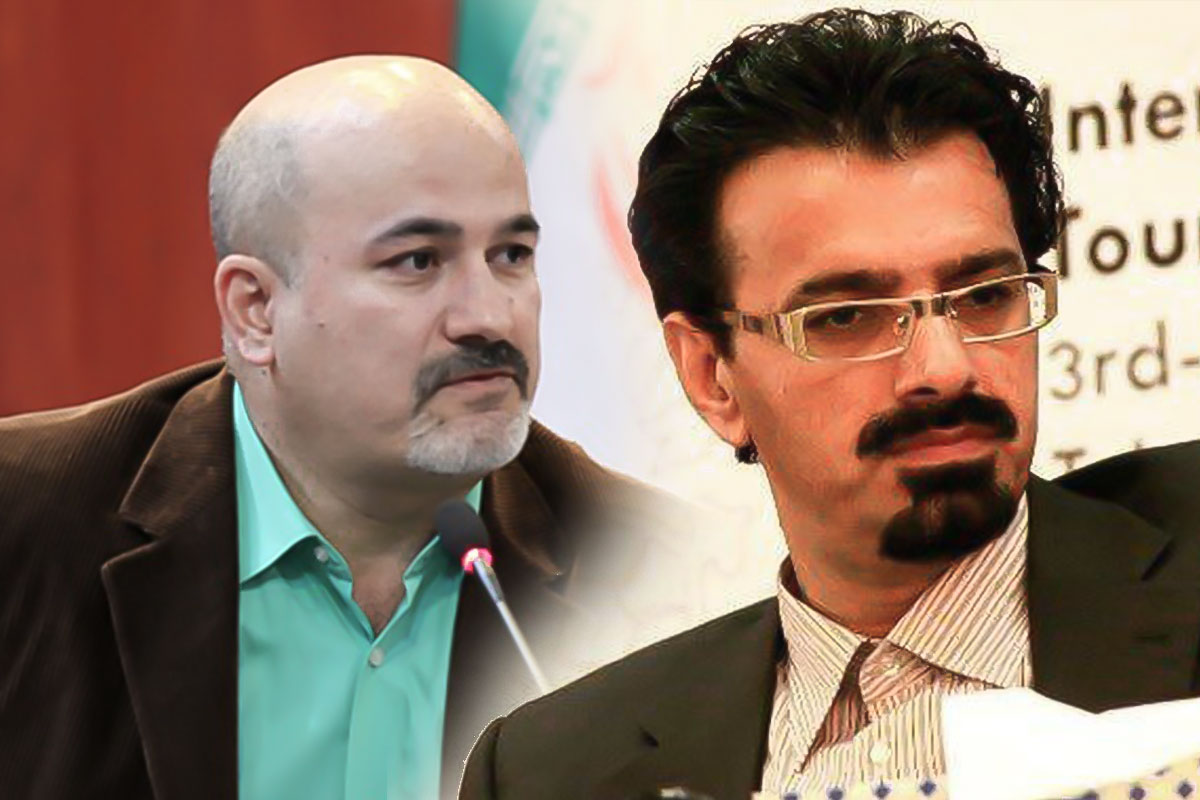
In conversation with Naser Karami and Mohammad Darvish.
This is a caption.
Delbar Tavakoli
From the time of the Constitutional Revolution until now, various militant groups have formed in Iran to establish democracy, freedom of speech, and other similar causes. Throughout different periods of history, individuals have been arrested, killed, and suppressed. However, it was unprecedented for security forces to use violence against protesters who were demonstrating due to water scarcity. Contrary to the fact that water scarcity has always been a chronic issue in some parts of Iran, for the first time, in the early days of July this year, we witnessed clashes between security forces and the government with the people of the southern part of the country. One of the people’s slogans was: “Irresponsible officials, salty water, salty water.”
The water crisis in the southern part of the country has reached a point where, on Thursday, July 6th, a young man from Abadan intended to set himself on fire in protest against the inadequate water situation in front of the water department of this city. He poured gasoline on himself and attempted self-immolation inside the water department building, but officials were able to prevent the fire by using a blanket. Protests in Iran against the water situation, including water scarcity and salinity, have become more widespread and these days, the streets of southern cities have become scenes of public gatherings. As a result, the water crisis in Iran has become a top headline in major international media and political forums both inside and outside the country.
While the water crisis is expanding day by day and spreading like an uncontrollable virus to other provinces of the country, some experts in the field of water believe that the main problem is the lack of proper and efficient management in this area, which has led Iran towards a drought crisis. Others believe that these incompetent managers have taken control of all water resources for themselves and their affiliated companies and close associates, including pistachio farms and dams, and now climate change and drought have worsened the situation and forced farmers to leave their lands.
Rumor of transferring water from Iran to neighboring countries.
Naser Karami, a professor at Bergen University in Norway, believes that the water crisis in Iran could be the foundation for future political changes in the country. He stated, “The water crisis is primarily an economic crisis, as we are talking about a commodity that is essential for people’s livelihoods. If the daily needs of the people are not met, this crisis could turn into a significant political crisis.”
Kermi continues by pointing out that in cases such as human rights or gender equality, if the people’s demands are not met, there is room for the government to make adjustments (in a way), but water is a basic necessity; people need it every day to continue their lives. Therefore, if the daily needs of the people are not met, all people from all walks of life in every corner of the country will strive to demand this basic commodity, and it will naturally turn into a widespread popular movement.
On the other hand, this university professor has opposed the idea that the main reason for the water crisis in Iran is its export to Kuwait and Iraq. He said, “As far as I remember, the history of the plan to transfer water from Iran to Kuwait dates back to the early 1980s. I remember that the journalist of Shargh newspaper was reprimanded for choosing an inappropriate and erotic headline for this news (the headline had a meaning that the Kuwaitis will now drink our water). In any case, it was planned that after the Karkeh Dam was built, water would be transferred to Kuwait through a four-hundred-kilometer pipeline from this dam. At the same time, in response to environmentalists’ objections, the Ministry of Energy argued that the amount of water evaporated from behind the dam is many times more than the water that will be transferred to Kuwait, and economically, this deal is completely beneficial to Iran. But the point is that due to incorrect
Karami also emphasizes that Iran does not continuously and systematically transfer fresh water to Iraq; although it is possible that Iran may have sent water to Iraq in some cases through tankers or in the form of donated bottled drinking water. However, it is unlikely that there is a pipeline for transferring fresh water between Iran and Iraq.
The claim of climate change in Iran is artificial.
Naser Karami, regarding the claim made by the head of the Passive Defense Organization a while ago that climate change in Iran is the work of enemies, said: “It is interesting to know that this claim (that there is no evidence of natural climate change in Iran) has been previously expressed by a group that has been a government contractor and has a very impressive scientific resume. This group has been present in a seminar in America and several other seminars in Iran, apparently as the executor of a joint project. Among them, a professor from the University of California, Irvine and several other prominent scientific figures can be seen. It cannot be said that this group has any knowledge of the fundamentals of climatology. In other words, their heavy scientific resume in this matter raises suspicion. University individuals who claim to manage water and the environment completely deny the occurrence of climate change in Iran. If they do not know about climate, they should have googled the keywords of climate change and the Middle East at
Karami, in response to the question of why these university professors have denied climate change in Iran, said: “I have not reached any conclusion. I only know that they have been in coordination with and have implemented projects on behalf of the Islamic Republic government. The main problem is that this group has disregarded all of our efforts over the years to convince the people and the Islamic Republic that this is a different fate and they must accept the realities of this new fate. They have convinced the system that the problem of drought is temporary and we can wait for the next year for a solution to the water problem. In any case, what the head of the Defense Organization says is based on the claims of those who have gone to Iran and have given hope to the Islamic Republic system that the problem is not as complicated as some claim and we will solve it for you.”
Government support for agriculture or keeping supporters of the government satisfied.
Approximately 90% of the country’s water is used for agriculture. The noteworthy point in this regard is the real contribution of agriculture to the gross national product and employment sector. Even disregarding the true cost of water consumption in agriculture and animal husbandry, it can be said that this sector has only survived with oil subsidies and without these subsidies, it will not have the ability to compete and survive. However, the role of this sector in the national economy cannot be denied. Although the current severe drought has limited opportunities and business prospects in Iranian agriculture since the 1970s, its widespread effects have become evident in recent years and, in fact, since the beginning of the 1990s.
Last year, due to the crisis of groundwater depletion and subsequent land subsidence, the government declared agriculture prohibited in half of Iran’s plains. It is predicted that the trend of limiting cultivable land will continue. It should be noted that with annual precipitation of less than 200 millimeters, agriculture in drylands is practically halted, and with the increasing cost of extracting and transferring water, the economic justification for irrigation will also decrease. Climate documents indicate that under the influence of climate change, precipitation in Iran has decreased by about 19%, and more farmers will become unemployed and more migrants will be forced to move to cities. The majority of farmers and villagers currently rely on subsidies, and the government will inevitably have to increase these subsidies day by day. It should not be forgotten that villagers are traditionally more supportive of the government than urban dwellers, and the Islamic Republic will do everything in its power to continue supporting them.
Drought is more dangerous than a water crisis.
Mohammad Darvish, a member of the faculty of the Forests and Rangelands Research Institute, believes that the crisis in our country is caused by our failure to recognize the realities of our climate and geography, and our tendency to plan without considering these factors. We hope and pray for rain to come. He also mentions that the water crisis is not limited to Iran alone; our southern neighbor, the United Arab Emirates, is also facing a severe drought and has had very little rainfall this year.
The beggar continued in his plea for peace: “The situation is the same throughout the Middle East, but they have no worries about this drought and lack of rain, and have never been concerned about their skies falling like we are. This is because their development is based on an economic model that has the least dependence on water and soil. These countries have invested in trade, commerce, tourism, technology industries, and renewable energy. Only Dubai alone had a tourism revenue of 14.5 billion dollars last year. Meanwhile, our vast country, which is several times larger than the Emirates, only had a revenue of 1.3 billion dollars.”
He emphasizes that a greater danger than the threat of drought is looming over the country, and that is the drought of managers who are not willing to change and do not understand the current situation; managers who are very conservative and stubborn. Given this situation, we are facing a danger that I call “management drought”.
گسترش تجارت
Strategies for expanding commerce
Confronting the Drought Crisis in Iran
A member of the faculty of the National Forests and Rangelands Research Institute believes that there are solutions to combat the crisis of water scarcity and drought in Iran. He said, “We live in a country where an average of 10,000 cubic meters of water is used per hectare for agriculture, which is one of the highest figures in the world. And yet, we cultivate sugarcane, which requires 35,000 cubic meters of water per hectare for production! The best thing we can do is to use the water available in this country for tourism development, development of single industries, and the drinking water needs of the people.”
The dervish continued, pointing out that we have established the most water-intensive industries in our country, saying, “That means there is no ‘water industry’ in the world that we do not have. The steel, iron, and nuclear industries are all extremely water-intensive. All nuclear power plants in the world are located next to rivers and seas, but we have built a nuclear power plant in the center of our country – in Qom and Isfahan – or we extract uranium from Yazd and are forced to transport large tankers of fresh water for the people of that region. This is foolishness and a disregard for the realities of our land.”
He emphasized again that building steel, iron, nuclear, and sugarcane industries in water-scarce areas is a mistake, and said in a peace-making tone: “Sugarcane should only be grown in areas with an average of 1000 millimeters of rainfall, while we proudly cultivate sugarcane despite the water scarcity and appoint someone who has proudly grown sugarcane as the head of the Environmental Organization and reward them. These are major mistakes that have happened in our country and continue to happen; and as long as this situation persists, we have no right to complain about the sky.”
The beggar continued, “The total water consumption of Iranians is 8 billion cubic meters. This means that 80 million Iranians only need 8 billion cubic meters of drinking water, and this 8 billion cubic meters is only 8% of the country’s extractable water, which even in the harshest droughts always happens. Compare this situation in Iran with Saudi Arabia, which only needs 3 billion cubic meters of water for drinking, but its total extractable water is only 1 billion cubic meters. So, if we have a drought in Iran, what is the situation in Saudi Arabia? We are ungrateful people who have behaved so badly in such a plateau with 180 permanent rivers, that we have taken advantage of the divine blessings so recklessly and foolishly that we have now fallen into such a disaster.”
 By: Delbar Tavakoli
 July 23, 2018
Tags
Agriculture Beloved Tavakoli Drought Khorramshahr Mohammad Darvish Monthly Peace Line Magazine Naser Karami peace line Water Water scarcity پیمان صلح ماهنامه خط صلح ماهنامه خط صلح