


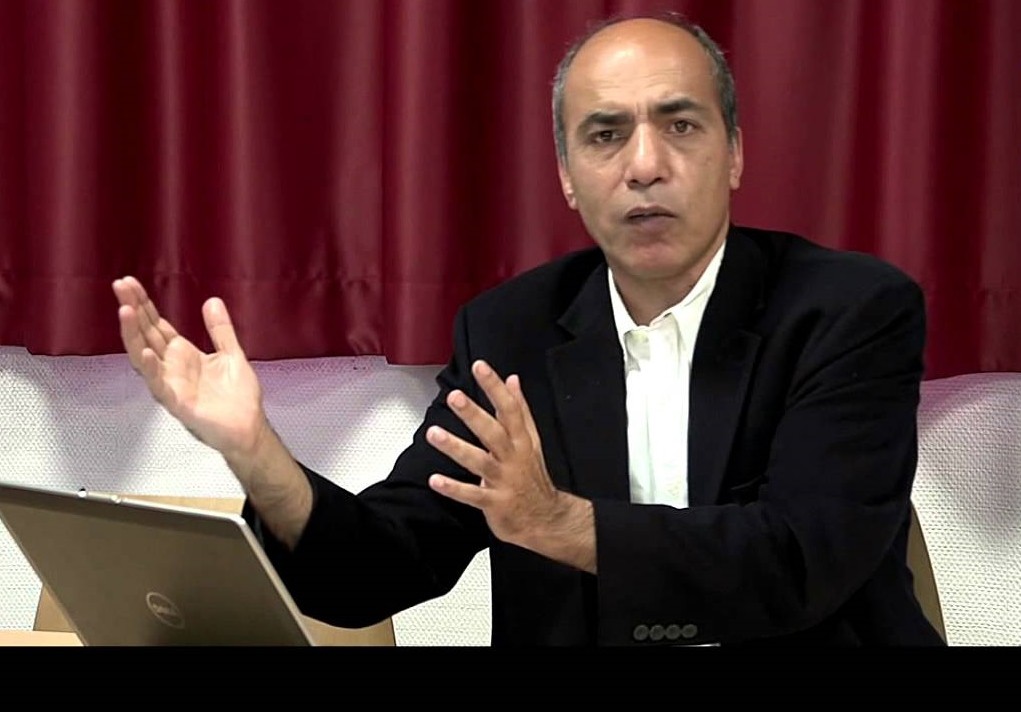
Saeed Peyvandi: Sepah should focus on preventing the presence of drugs instead of confronting drug addicts/ Ali Kalaei
This is a caption.
این یک عنوان است.
Conversation with Ali Kalai
With the plan of military forces entering the issue of addiction, which official and governmental authorities refer to as “openly addicted”, discussions about addiction have been raised again. Institutions such as the Revolutionary Guards and the Basij Organization have become involved in the issue and have taken responsibility for the care of openly addicted individuals. Recent news also indicates the establishment of several centers and camps for the treatment of addicts by these military institutions. Even the largest addiction center, named the “Shahid Ziyadian Rehabilitation and Employment Protection Center”, has been opened by the Revolutionary Guards with the presence of senior commanders of the Basij and Revolutionary Guards and law enforcement forces.
But the title of “show-off addicts” is a controversial topic. Dr. Saeed Peyvandi, by exaggerating this type of addiction, considers those who display their drug use as an example of it. However, another interpretation of this title includes all homeless and cardboard sleepers.
The peace line, however, has sat down for a conversation with Dr. Peyvandi, who began his sociology studies at the University of Tehran and received his doctorate in Paris, to find out who are the examples of this title according to him, and secondly, to examine the issue of addiction problems in Iran, and finally to investigate the issue of military personnel entering this particular field.
This researcher and university professor, in this conversation, discusses the failure of Iran’s government policies towards drug addicts and witnesses the expansion of addiction four decades after the establishment of the Islamic Republic system. He also responds to the question of the role of military institutions in this issue, saying: “If the Revolutionary Guards or all military and semi-military forces truly have an interest in dealing with the issue of drugs in Iran, they should focus more on their main task, which is preventing the entry, production, and distribution of drugs.”
In discussions about addicts, the term “overt addict” is often used. In your opinion, who is an overt addict and what characteristics do they have?
Everything depends on how the people who use this title interpret it. If the exact meaning of these individuals is that those who showcase their work (using their drugs) then in this case, the discussion should be about the public and unhidden use of drugs and the reasons behind it.
In regards to this matter, what are the consequences of this open addict for society?
From another perspective, the public display and openness of addiction in society can be damaging to those individuals. It answers the question of what causes these individuals to showcase a form of addiction in public, without fear of being exposed or feeling forced to hide it. Another aspect is the societal perspective on this phenomenon.
I think these two issues need to be distinguished from each other. Because each of them has a specific social meaning. If we apply this to ourselves as addicts, it can mean that the issue of addiction has become so widespread and normal in society that no one is afraid to show it or do it in public, and hiding it has lost its meaning from a legal and moral perspective. In countries where the use of some drugs is more socially acceptable, people, for example, have no fear of smoking marijuana in public. Because it is legal; in another country, it can be considered a crime at the same time. As a result, individuals try to use drugs away from the eyes of others.
But when addiction goes beyond a certain limit and becomes a widespread phenomenon, displaying it, even though it is illegal, is done on such a large scale and with such a large number of people that the fact that it is illegal is practically overlooked. Abnormal behaviors such as drug addiction are only considered deviant by the general public when they differ from the normal behavior of the majority of society. However, at the same time, the public display of addiction can be an indicator of the dire situation of those struggling with addiction. This means that alongside addicts who are homeless or have financial problems, they gather in centers and areas where other addicts are present. In such places, addicts are among each other and this shame and embarrassment caused by drug addiction is removed. Among themselves, addiction is not seen as abnormal, immoral or negative, and there is mutual understanding among them. They are among their own kind and are not judged. This is also one of the reasons for the existence of areas where addicts gather.
I think one of the problems that exists in Iranian society is that for the past forty years, we have not been able to control or gradually limit this phenomenon and important social harm, and the Iranian government has suffered a major defeat in this regard. The external problems and manifestations are the same titles that you mention or new names that are used for these individuals. While if you remember, it was supposed to decrease or disappear with the first wave of executions in the late 1950s and early 1960s. We are not only not witnessing such a thing, but this phenomenon has expanded greatly compared to that time.
Is there a difference between the harm of openly addicted individuals and the harm of other types of addicts?
In my opinion, this form of addiction with the title of “open addict” is an exaggerated dimension of addiction that we should seek its roots and provide a social explanation for this phenomenon. Considering that addiction and any type of drug use is illegal in Iran, there must be specific social reasons that explain this deviant behavior. Therefore, the damages that it causes to society and the social response to addiction are worth considering. Of course, it is natural that there is also an analyst of the situation; meaning that it shows that we have reached a level of drug use in society where even its display in public no longer has the ugliness and fear that it used to have in the past. This alarming level of addiction in society also reflects a dark image in front of our society. Because there is a danger that the scope of addiction will expand and attract new groups. In other words, if the visibility and prohibition of this phenomenon in the past forty years did not reduce the scope of addiction in Iran,
There are various statistics about addiction in Iran. In your opinion, how high is the rate of addiction in Iran?
Field studies show that we have about six million addicts in the country. Official authorities talk about one and a half million addicts in the country, which in my opinion is far from the social realities of Iran today. Officials from the Welfare Organization talk about permanent addiction and those who use drugs recreationally, and say that the number is around three to three and a half million people.
Therefore, our statistics show a range of 1.5 million to 6 million addicts in flux, and sometimes these variations come down to how we define addiction. In Iran, the concerning issue is the type of substances being consumed. For example, the use of lighter drugs – which are more recreational and common among young people in Western countries – are not a major threat to the overall health of society. In Iran, however, the majority of addiction cases are related to heavier drugs such as opium, heroin, and crystal meth. This type of addiction is more severe and individuals are more dependent on it. As a result, we should not only look at the statistics of addicts, but also pay attention to the type of substances being used and the level of addiction (chronic, severe, or recreational). One indicator that can shed light on the situation is the number of deaths caused by addiction, which reflects the severity of these addictions.
What does the use of recreational and non-recreational drugs mean and how does their social impact differ from each other?
In many Western societies, a portion of the population, especially those entering young adulthood, consume drugs. This is a behavior that receives attention from young people and can sometimes be seen as a sign of growing up or entering adulthood, similar to smoking. The number of casual drug users, even in recreational and non-permanent forms, can be high. For this reason, many countries have either legalized or are in the process of legalizing this type of use. This is because the secrecy surrounding this issue contributes to the flourishing of drug trafficking and makes it difficult to combat. Dealing with a hidden problem is much more difficult than preventing it and educating young minds about the dangers of this issue. It has also been concluded that something that can be done recreationally should not be treated as a complex police and judicial matter. The experiences of countries like the Netherlands and Portugal, where this has been legalized, have shown that this issue has not had significant negative effects on society and has not led to an increase in
But alongside this, we have a much more regular and permanent use of drugs that takes on the form of addiction and goes beyond recreational use. There is a difference between someone who smokes two or seven cigarettes with a small amount of drugs in them during the week, and someone who regularly engages in this behavior multiple times a day. In Iran, we are mostly faced with the second phenomenon and addiction has less of a recreational form. One of the issues that has been discussed for many years in Iran is that despite being prohibited, drugs are easily accessible and much cheaper compared to other places. It is said that one of the reasons for this is that Iran is on the route for transferring drugs from Asia to Europe.
What do you think are the reasons for the increase in the number of addicts in Iran?
In the past decades, we did not take the right approach in dealing with addiction to drugs or their distribution. The main tool used in our society was severe repression and execution for drug distributors or possessors. Iran had one of the highest execution rates in this regard. However, in recent years, there have been serious efforts and discussions to abolish these types of death sentences and decrease the number of executions in Iran, leading to a decrease in Iran’s position among countries that carry out executions.
“We have used methods of suppression and violence to deal with drugs, without addressing the educational aspects and social causes of addiction. The result and what our society has faced after forty years is not only a decrease in the number of addicts, but also a wider range of addiction. Therefore, it can be said that the efforts made in our society to raise awareness and warn the public have not been effective enough, and the violence used has not been able to address this issue. Some field research points to restrictions and prohibitions in society as one of the reasons for the spread of addiction. When young people are unable to easily attend concerts or places for dancing and joy, and their right to experience different aspects of youth is taken away, the only thing left for them is to engage in hidden activities that can be experienced during their student years and continue later on. This is one of the hypotheses that is raised in some analyses and research in Iran. That is, drugs serve as a means of escape or forgetting the
But this is just one of the hypotheses and we must look at addiction as a complex phenomenon from multiple perspectives and not seek a linear relationship between a specific factor and the level of addiction. The problem of societal depression, frustrations, and pressures is serious. However, at the same time, the methods and policies of past decades have also played a significant role in exacerbating this negative phenomenon. It seems that there has been no official will to nationally combat this public scourge, and addiction has grown underground like a cancer and now that its wounds have become visible here and there, its scope has become so extensive that dealing with it has become very difficult.
Does the increase in the number of addicts in Iran lead to an increase in other social problems? What is their ratio and how?
One of the exact issues that exists is that a major problem like addiction can lead to other damages; for example, damages within families in relation to violence among individuals. The drug economy itself is also a mafia economy that can lead to corruption and major damages. Therefore, in all of these areas, there is an organic or symbiotic relationship between the major problem of addiction and drugs, its widespread distribution in society, and other damages in society. Addiction can cause individuals to distance themselves from a healthy work environment and become a reason for unemployment. It can also be a reason for poverty, separation and disintegration of families, and the poor upbringing of young generations. In other words, all of these events and consequences of addiction can directly or indirectly affect much larger groups of addicts. For example, in the past ten to fifteen years, the issue of addiction at a younger age in Iran has been widely discussed. In all parts of the world, the age of onset of addiction is between sixteen and seventeen years
Recently, the Revolutionary Guards and Basij organization have entered the issue of addiction and openly addicted individuals, and even the largest addiction center in the country is being opened by the Revolutionary Guards. What do you think is the reason for this entry and what necessity can justify such an entry?
The first point is that I believe the Revolutionary Guards or all military and paramilitary forces, if they truly have an interest in dealing with the issue of drugs in Iran, should focus more on their main task, which is preventing the entry, production, and distribution of drugs. One of the issues in Iran is that without the cooperation and assistance of the military forces, it is impossible for such a large amount of drugs to exist. When you see that they are so focused that they can easily go after a few activists and arrest them for a small action in areas such as the environment or professional activities, and even monitor their private space, how can one think that in this country, thousands of tons of drugs are being moved around every day without the military forces being aware or able to stop it? I believe that if the military forces are going to do something, it should be their main task; the task that is related to their profession and job.
I believe that the entry of these institutions into such a field follows the rule of tribal kingship and weakens the government and official institutions in Iran. This means that the institutions responsible for this task are pushed aside, and those whose job is something else are brought into a project for which they have no expertise. In the past, we have seen disastrous results in other areas where military forces have entered, and they can only view a problem from a limited, non-specialized and often very stereotypical perspective, and they do not have a social, comprehensive and unbiased view. As a result, they think they are solving one problem, but in reality, they create hundreds of other problems alongside it. If we want to address addiction, we should entrust the task to specialized institutions, experts, and social workers. The same military intervention or the intervention of the seminary in the field of education also exists, and its result is nothing but disrupting education and further destabilizing the crisis-stricken educational system
In comparison to the experiences of other countries that you have in mind, what should Iran do to overcome the problem of addiction?
In discussions that have taken place in recent years, some have attempted to suggest that the same solutions that have been implemented in Portugal, Switzerland, or the Netherlands for dealing with certain drugs can also be applied in Iran. For example, instead of obtaining their heroin from illegal networks, those addicted to heroin could go to pharmacies and obtain their drugs with a doctor’s prescription. They claim that this would help to limit addiction in Iran. I am not sure if such methods can be effective in an unorganized society where corruption is rampant and the government and official institutions have little influence on public opinion and society as a whole. However, this approach may be beneficial for a limited group of individuals with severe addiction. I believe that we should, considering the current volume of addiction, pursue a long-term program of education, prevention, and intervention in the distribution of drugs, as well as providing assistance for addiction recovery and support for current addicts. For this, we must choose solutions that not only focus on treatment, but
We must be able to approach the issue of addiction with a humane and preventative perspective, and this takes time; it takes a lot of time. In one period, Mr. Khalkhali thought that, for example, by executing two to three hundred smugglers, the problem of smuggling would be solved. All of these have been tried and the problem has not been solved. Other oppressive and inhumane measures have also been implemented; such as collecting addicts on the streets and transferring them to a series of centers and forcing them to quit their addiction. None of these methods have yielded results. We must go back and look at the experiences of countries that have taken a patient approach. In a long-term plan, we must first control this phenomenon and then gradually prevent it from spreading to the younger generation so that we do not have a reproduction of addicts in the future. In other words, the most important thing we can do is to truly and effectively control the distribution of drugs.
We need a national program and determination to combat addiction, in which all experts from doctors, sociologists, psychologists, social workers, law enforcement forces, civil organizations, and educational institutions work together to fight a problem that has befallen Iranian society and threatens its health and future.
Thank you for the time you have given to the peace line.
 Created By: Ali Kalaei
 February 20, 2019
Tags
Addiction Ali Kala'i Monthly Peace Line Magazine Narcotics peace line Saeed Peyvandi پیمان صلح ماهنامه خط صلح ماهنامه خط صلح