


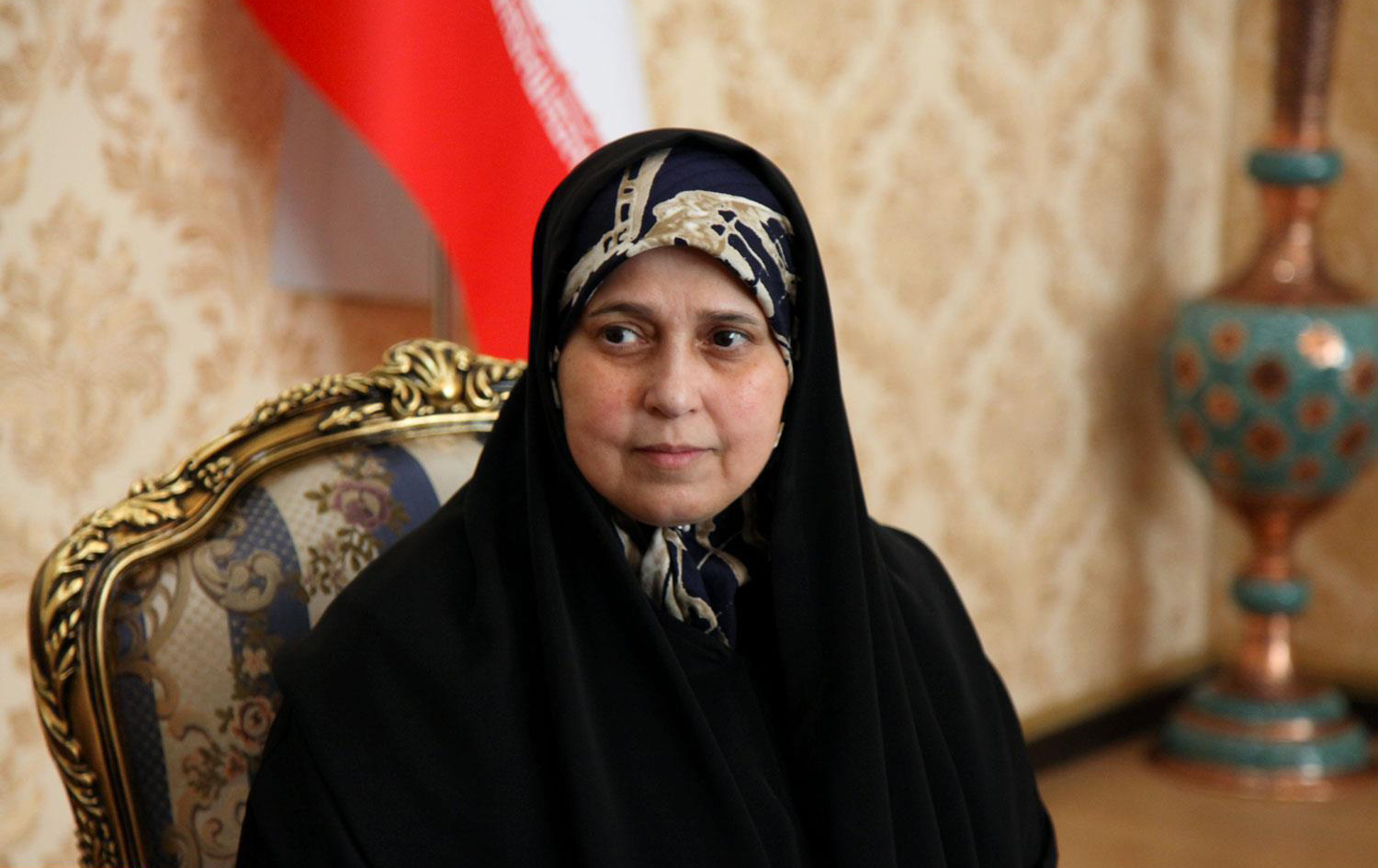
We cannot demand accountability from the judiciary in the parliament; in conversation with Parvaneh Salhashoori, representative of the parliament / Conversation with Ali Kalaei.

Parvaneh Salashouri is the representative of Tehran’s people in the tenth session of the Islamic Consultative Assembly. She, who holds a PhD in sociology, has been active in the cultural commission and the women’s faction of this assembly throughout her tenure. This reformist representative has made numerous statements on the civil issues of Iranian society during her time in office, which she says have led to attacks and harassment from her critics and opponents, especially for her involvement in cases such as the detention of civil activists.
In this issue of Khat-e-Solh (Peace Line), we sat down with this member of the assembly to discuss the recent heavy sentences issued by the judicial system of the Islamic Republic of Iran against civil activists. Salashouri also stated, “It does not seem that these individuals deserve such sentences.” She also mentioned that the cultural commission of the assembly has followed up on these sentences with official judicial and security authorities, but clarified that “if there is a criminal element and
In recent months, we have seen heavy sentences being issued by the judicial system against civil activists and human rights defenders, women, and workers. What do you think is the reason for this level of severity in punishment?
Despite being critical of this situation, I should not ask this question from a member of parliament, but rather from the judiciary. I have previously asked this question in a warning I gave, and I stated that it does not seem appropriate for these individuals to receive such punishments. Of course, I am waiting for a response from the judiciary to my warning and question to see what response the judicial system will give.
Legally, it is not possible for us in parliament to demand accountability from the judiciary. But where there is doubt, as a representative of the people and my duty to represent them, I inquire and question the matter. It should be noted that both during the previous head of the judiciary and the current one, the judiciary has cooperated with us. The Ministry of Intelligence and other intelligence agencies and parliamentary deputies have also come to our aid and responded to our requests, and we have been able to achieve results. This means that the relationship between the parliament and these institutions is not severed, but
وزارتخانه ها وجود دارد
We are hopeful, but the point is right here. Some of these cases have been created, constructed, and paid for by security institutions that are under the supervision of the parliament. The Ministry of Intelligence has organized the cases related to Haft Tappeh, Gam magazine, or Mr. Nasrollah Lashani, who are political prisoners and national-religious activists. The parliament also gives a vote of confidence to the Minister of Intelligence. Is there any effort to question and demand accountability from these ministries?
Has the Ministry of Interior taken any action regarding these proceedings?
Yes, efforts have been made. We are following up. As I mentioned, the Ministry of Intelligence is also cooperating. However, I must say that these processes take some time in our country, but we are not hopeless in being able to take actions towards peace and security in our country. Ultimately, if there are any criminal titles and someone has committed a crime, it does not matter who it is, security and judicial institutions must intervene and address the issue. This is common in any system and country and is not a strange issue.
Regarding these cases, I can say that we are following up and it seems that a hopeful process is underway.
Many women activists are being arrested and receiving long sentences. Recently, Narges Mohammadi also mentioned this issue in a letter from prison. What is the reason for the excessive focus of the government on women’s issues?
I have recently done an interview that you can use. My words are the same as I have previously stated.
Ms. Salshoori, in an interview with Independent Online, said: “There is a mentality in the country that wants to increase the cost of women’s political activities, so that no woman dares to take a step into the valley of political activities.”
The law enforcement forces and other security institutions also engage in violent behaviors in dealing with and arresting people. We witnessed the latest examples of this in the attack by the law enforcement forces and the confrontation with protesting workers of Hepco in Arak. What is the duty of the parliament in this area to prevent such actions?
It seems that the judiciary has announced its entry and those who were in detention have been released. Honestly, I have not followed the news related to these recent events and have been preoccupied with other issues that have been raised recently. Of course, thank God, it has been revealed that it is because of these statements and involvement in these cases that they are bothering me.
Do you believe that the presence of hidden powers is effective in both the field of detentions and in regards to sports stadiums and the presence of women? Why do you think such conditions have occurred?
I don’t think they are coincidentally involved. In my opinion, neither hidden government nor even political matters in this field are the issue. We have a cultural trait that says “a man’s word is one”! We think that if there is a change, it means we have given up and were not steadfast in our beliefs. This is a common characteristic. In my opinion, this is mostly the issue. It’s not about security and political dimensions and the like, that’s the issue.
In my opinion, the matter is a simple one that has now become complicated and seems important. While we all have more serious concerns. But rest assured that things will gradually improve.
The question here is what solutions have been proposed in the parliament for getting out of these conditions?
You have seen how much effort we have put in. We are in the legislative assembly and oversee the law. We can also speak or give warnings. Beyond that, it is not in our hands. In what was in our hands, we have made our efforts. Now other institutions must help.
I think even our people are traditionally very opposed to these issues. Maybe, and of course maybe they will ask me too; I say I won’t let my child go to stadiums! Of course, I said “maybe”. But I say that if there is no issue for women to attend stadiums, there are only a few who will go and demand it. It now seems like a demand from a large number of people. But it’s not really like that. It’s not that if it’s allowed, all girls will go to stadiums. It’s a matter of interest, whoever wants to can go. The important thing is that those who want to, can go.
Does the current laws and structure of power allow for conditions to move towards fulfilling the demands of the majority of the country’s young population?
Basically, there is no legal prohibition in the cases you mentioned. We have also entered the parliament and officials have said that providing conditions for us is important. You saw that a young lady (Blue Girl) recently passed away, causing serious distress. See, there is really no readiness. Because if there was, this would not have happened.
Readiness from whom?
My perspective is infrastructural; if these infrastructures were secure, strong, and safe, we would not have faced incidents like the recent loss of a six-year-old child during a sports match (Persepolis-Naft Abadan). The issue is the lack of proper facilities and conditions. As far as you know, even FIFA has criticized the sports fields and other facilities for international competitions. This means that such facilities do not exist to provide conditions for women’s presence. Even our men have been greatly affected by the constant coming and going to stadiums. Therefore, it is very important to have the prerequisite of providing infrastructures. And we hope that conditions will be provided in such a way that people can go to stadiums according to their interest.
These provisions require a budget. Is the budget considered for the Ministry of Sports in this regard?
We have received a large budget for the Ministry of Sports. I represented the Cultural Commission in the Integration Commission and suggested that 27% of the value-added tax be allocated to sports. However, later they took its hardware aspect and focused more on the mentioned areas such as expanding sports, providing facilities for athletes, as well as promoting mass sports, women’s sports, and disabled sports, which at that time with the amount of value-added tax would have been around 1400 billion tomans, which was a good help for this ministry.
The important point is that this budget was allocated for women’s sports. And the even more important point is that this budget was not supposed to go to Tehran. This budget is exactly allocated to the provinces so that each province can spend it according to its own needs.
But alongside the shortcomings, we must also pay attention to how much we hear about the successes of Iranian women athletes on a daily basis. In terms of population and facilities, our women’s sports
Thank you for the time you have dedicated to the peace process.
 Created By: Admin
 September 23, 2019
Tags
Ali Kala'i Butterfly warrior Monthly Peace Line Magazine Number 101 peace line Representative of Parliament پیمان صلح ماهنامه خط صلح ماهنامه خط صلح